Are Carbon Steel Pans Worth It?
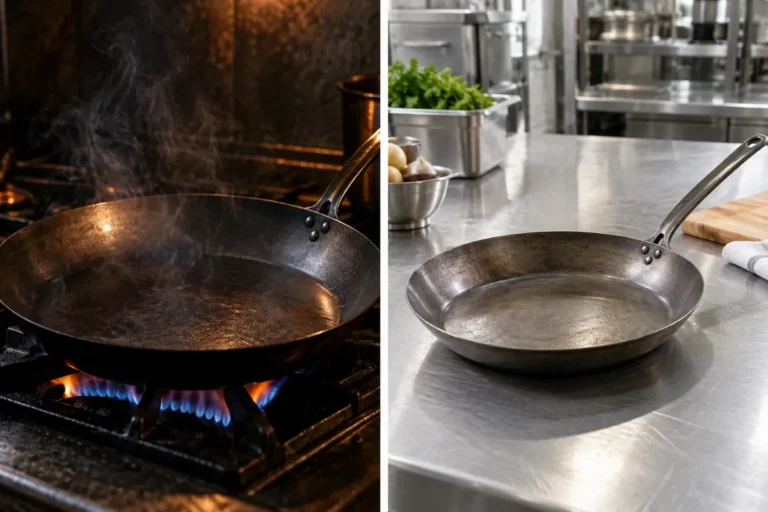
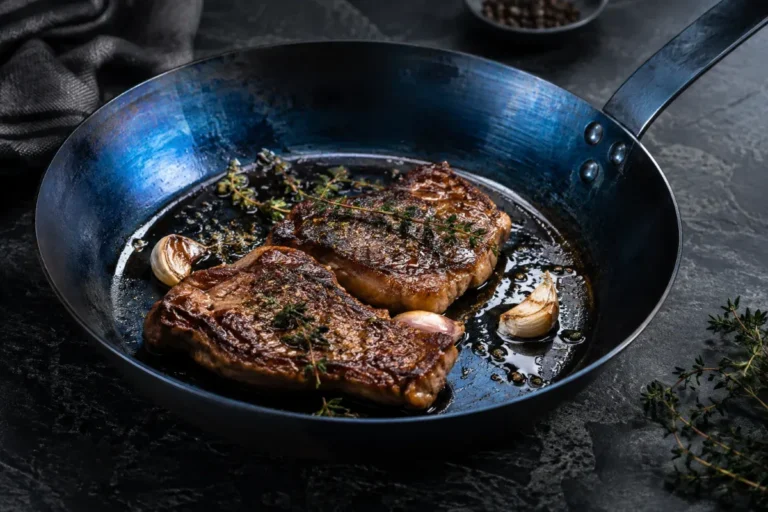
Worth it if you sear often and will keep the routine. One pan replaces seven coated pans over twenty years. Not worth it if you cook acidic food.
Light, fast, no coating, lasts decades. Also rusts, hates acid, and sticks for weeks. Every drawback is the direct consequence of an advantage.
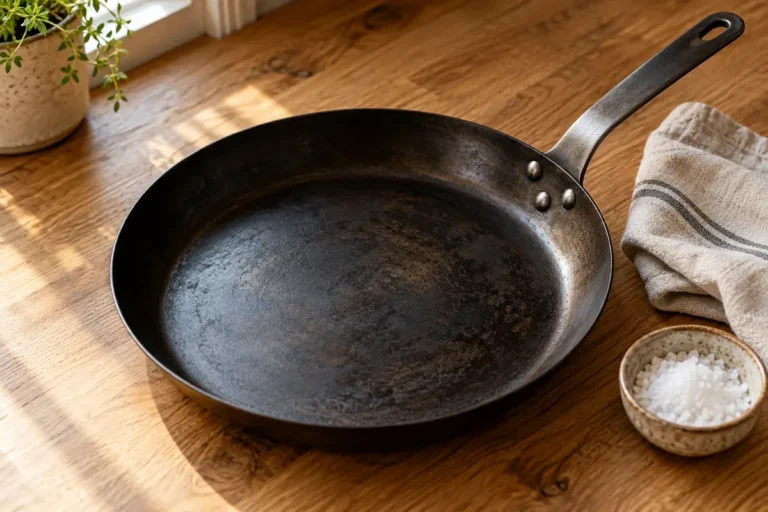
Not when you buy it. Carbon steel becomes non-stick through seasoning. Here is how good it actually gets and how long it takes.
Uncoated carbon steel has no PFAS, PTFE or PFOA and transfers small amounts of dietary iron. One exception: the 2024 Matfer Bourgeat recall in France.
Clean while warm with hot water and a brush, soap is fine, then dry on the hob and oil lightly. Made In lists the pan as hand wash only.
Made In pans arrive pre-seasoned with shea nut and coconut oil, so do not strip them. Wash, dry, then build your own layers by cooking fatty food.
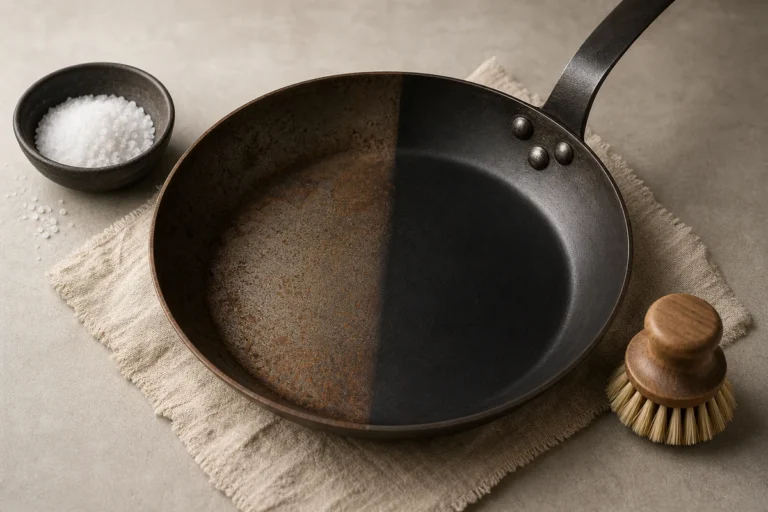
Scrub with coarse salt and oil, use steel wool for heavier rust, then reseason immediately. Rust on carbon steel is cosmetic and always recoverable.
Wipe on a thin layer of neutral oil, bake upside down at 425F for one hour, then cool in the oven. More even than the stovetop, but not for wooden handles.
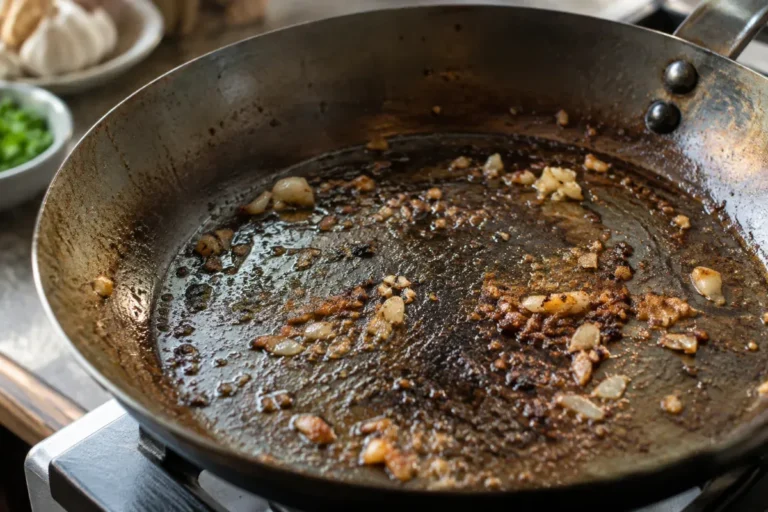
Scrub back the damaged layer, wash, dry, then apply two or three thin rounds of oil heated past its smoke point. Full stripping is rarely necessary.
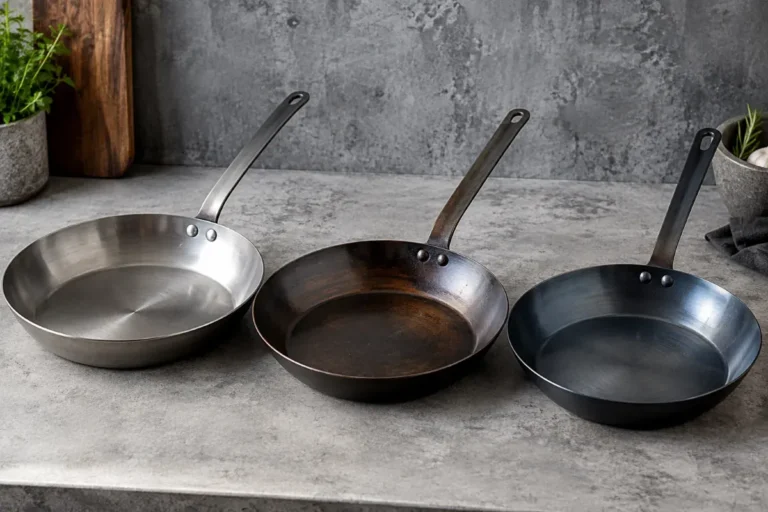
Frying pan, wok, griddle, crepe pan and paella pan all use the same steel. The shape decides the job. Here is which one to buy first.
No products in the cart.