Best Oil for Seasoning Carbon Steel
Grapeseed, canola, sunflower and avocado are the best seasoning oils. Flaxseed builds the hardest layer but flakes. Full comparison with smoke points.
A carbon steel pan is only as good as its seasoning. Get the care right and the surface turns glassy, slick and genuinely non-stick; get it wrong and food sticks or rust creeps in. This section walks through every part of looking after your pan — how to season it from bare metal, which oils build the toughest patina, how to clean it after cooking (and whether soap is really off-limits), how to strip and re-season when things go sideways, and how to rescue a pan that has warped or spotted with rust. Follow these guides and a single pan will cook beautifully for decades.
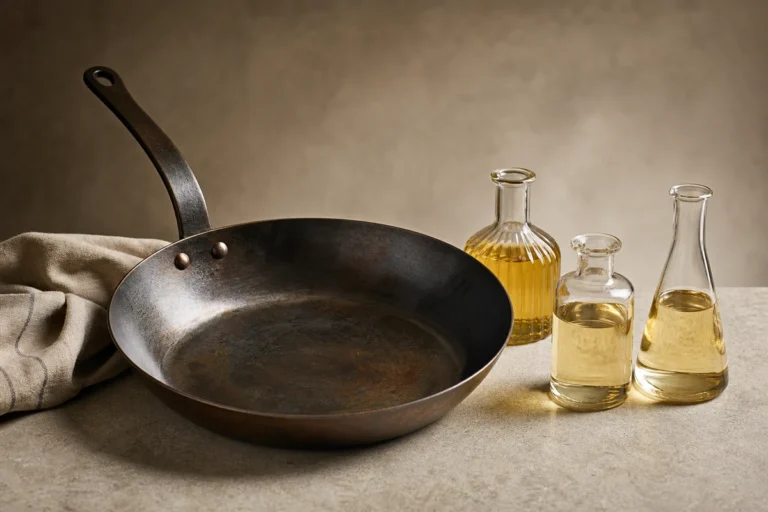
Grapeseed, canola, sunflower and avocado are the best seasoning oils. Flaxseed builds the hardest layer but flakes. Full comparison with smoke points.
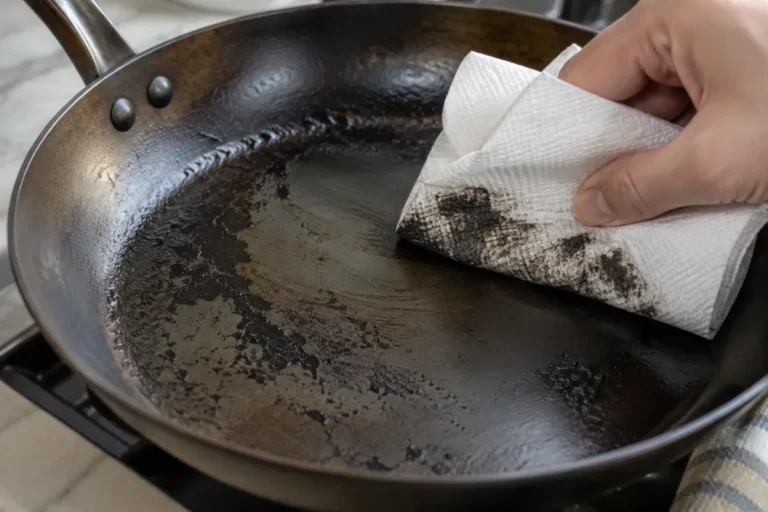
By the Carbon Steel Pan test team · Last updated September 2026 Black residue coming off a carbon steel pan is usually loose seasoning or carbon, not anything harmful. It shows up on new pans still building their surface, or when excess seasoning starts to shed. Clean the pan well, cook a few fatty foods…
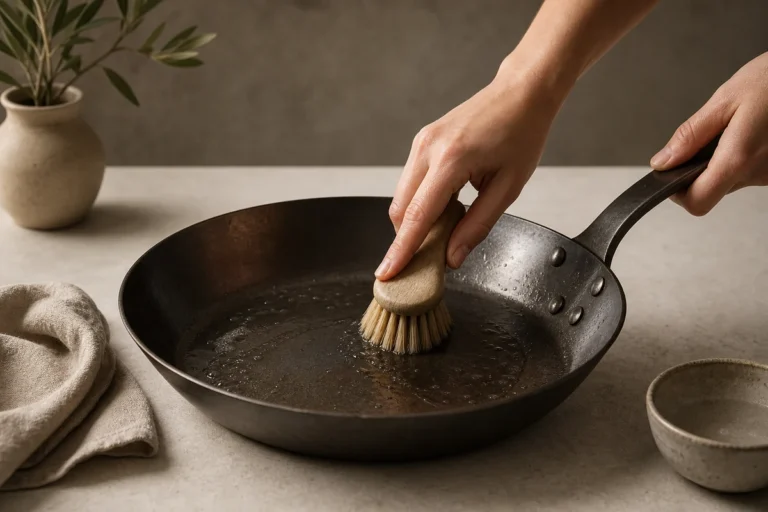
Wash while warm with hot water and a brush, use soap if you want, dry on the hob, then wipe on thin oil. Soap does not strip seasoning.
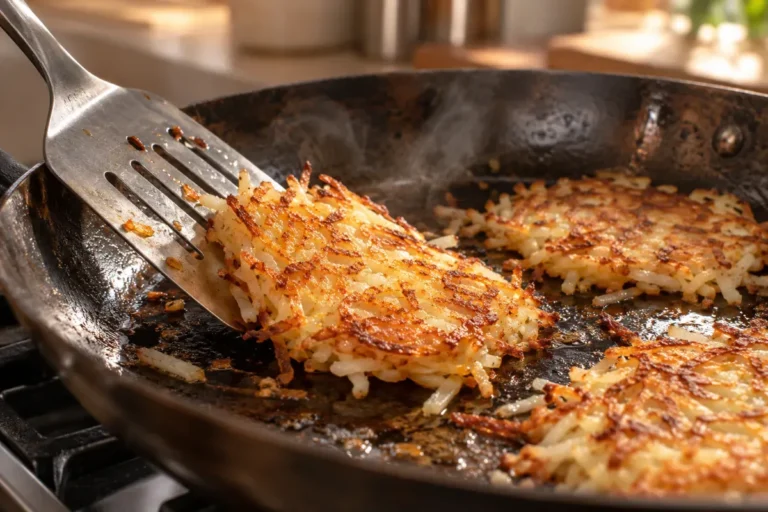
By the Carbon Steel Pan test team · Last updated September 2026 Yes, you can use metal utensils on a carbon steel pan. There is no delicate coating to scratch. The seasoning is bonded to the steel and tough enough for a metal spatula, and scraping actually helps keep the surface smooth and even. A…
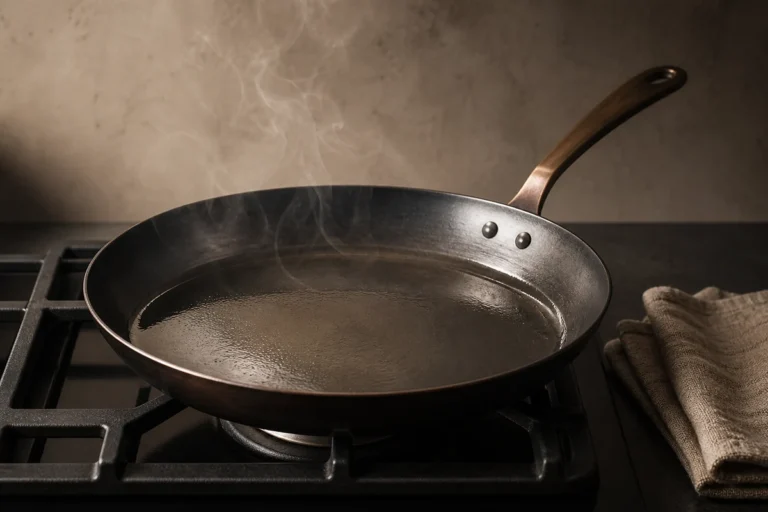
Scrub off the factory coating, wipe on a very thin layer of neutral oil, then heat until it smokes for two minutes. Repeat three or four times.
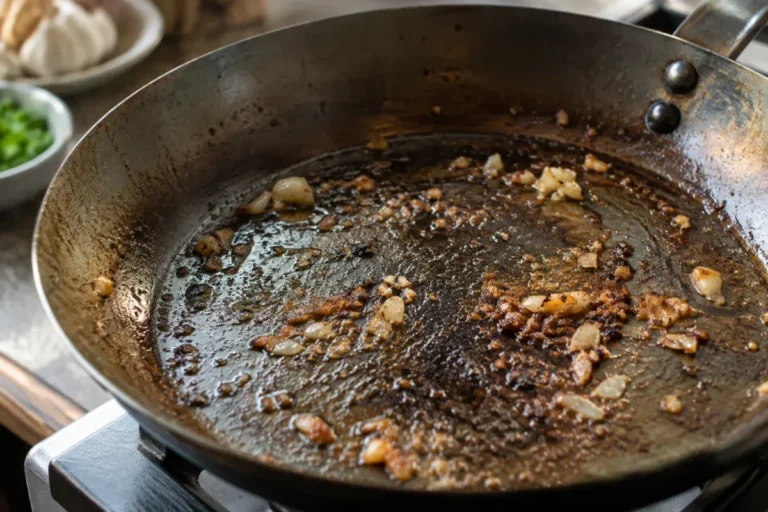
A sticky carbon steel pan is nearly always too much oil, oil that never smoked, or seasoning that is simply young. Here is how to tell which and fix it.
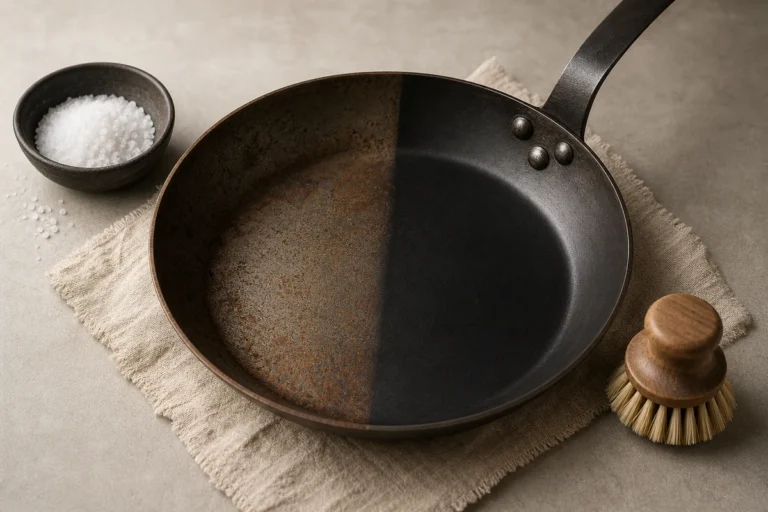
Scrub with coarse salt and oil, use steel wool for heavier rust, then reseason immediately. Rust on carbon steel is cosmetic and always recoverable.
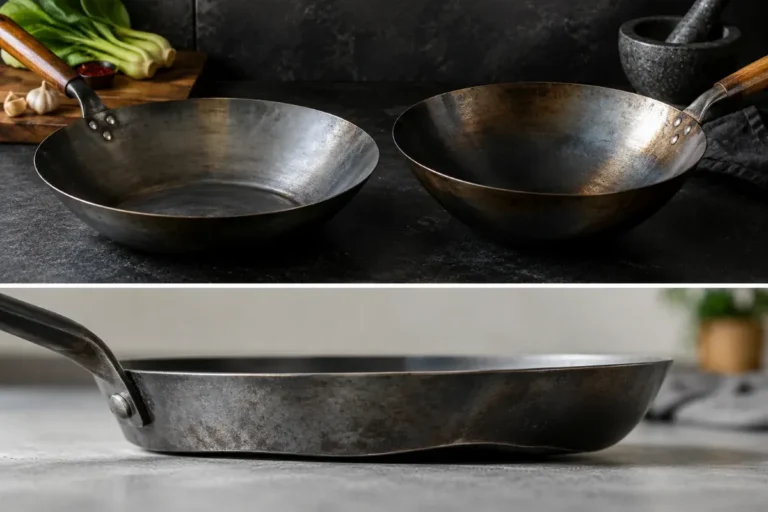
By the Carbon Steel Pan test team · Last updated September 2026 Carbon steel warps from thermal shock: heating a thin pan fast and unevenly, or adding cold liquid to a very hot pan. The sudden temperature difference makes the metal expand or contract in one area faster than another, and it deforms. Thinner pans…
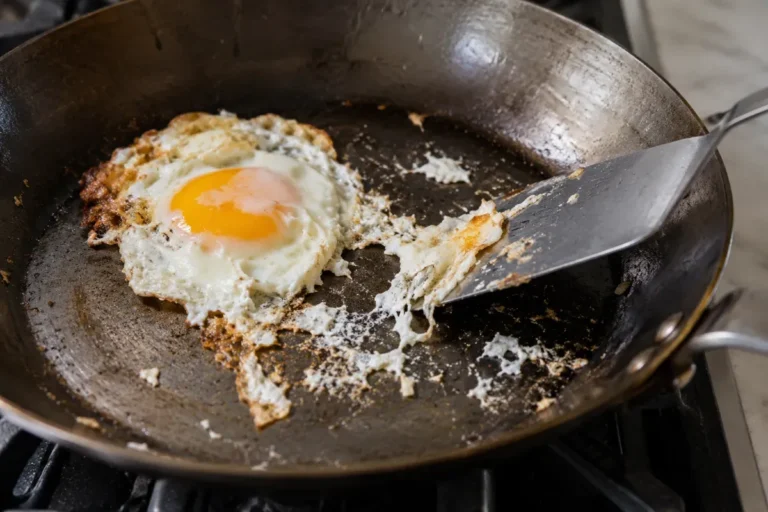
By the Carbon Steel Pan test team · Last updated September 2026 Food sticks in the middle of a cook for five reasons: the pan was not hot enough, there was too little fat, the seasoning is still young, the pan was crowded, or the food was flipped before it let go on its own….
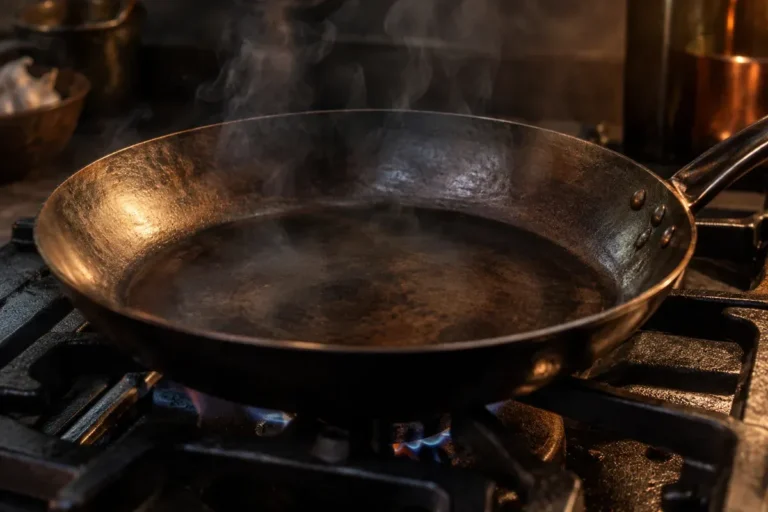
By the Carbon Steel Pan test team · Last updated September 2026 A little smoke from your pan is normal, especially while you season it or heat oil to its smoke point. Heavy smoke usually means one of three things: the pan is too hot, the oil has passed its smoke point, or old residue…