Can You Use Metal Utensils on Carbon Steel?
By the Carbon Steel Pan test team · Last updated September 2026
Yes, you can use metal utensils on a carbon steel pan. There is no delicate coating to scratch. The seasoning is bonded to the steel and tough enough for a metal spatula, and scraping actually helps keep the surface smooth and even. A thin metal fish spatula is one of the best tools you can own for carbon steel.
If you are coming from nonstick, that answer probably feels wrong. Years of “soft tools only” leave a habit that is hard to shake. But carbon steel plays by different rules, and once you understand why, you will reach for metal without a second thought. Here is the full picture.
The short answer, and why it flips the nonstick rule
Nonstick pans need gentle utensils because their coating is a thin film sitting on top of the metal. A metal edge can gouge through it, and once that film is broken, it flakes and stops releasing food. So the “use wood or silicone” rule exists to protect something fragile.
Carbon steel has nothing fragile on top. What you cook on is either bare steel or seasoning, and seasoning is not a coating in the nonstick sense. It is oil that has been heated until it hardened and chemically bonded to the metal itself. That bond is what makes metal safe. You are not scraping a film off a surface. You are touching a surface that is part of the pan.
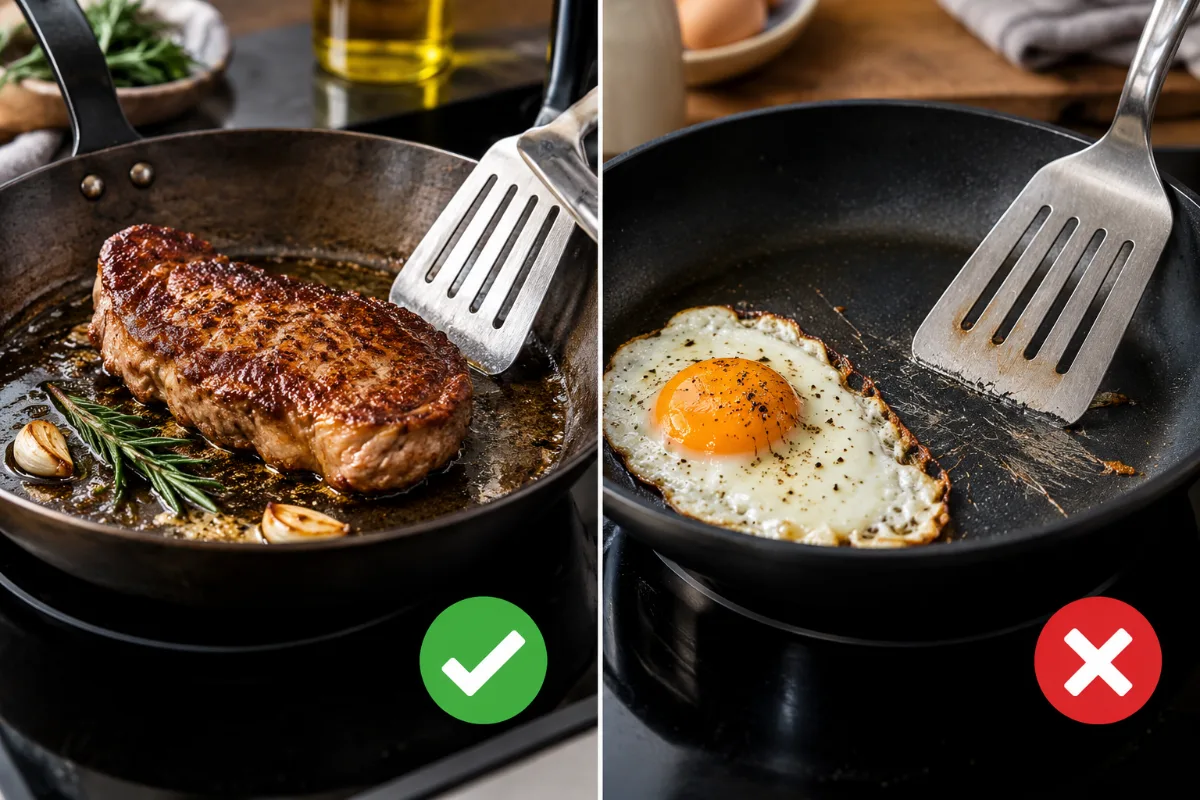
So the rule flips. On nonstick, metal is a hazard. On carbon steel, metal is normal, and often better than the alternatives.
Why metal is safe on carbon steel
The key difference is bonding. During seasoning, oil goes through polymerization, a heat-driven reaction that turns liquid fat into a hard, thin layer locked onto the steel. That layer does not sit loose like paint. It grips the metal at a level you cannot lift with a spatula edge.
Because the seasoning is fused to the pan, a metal turner glides across it the same way it glides across the bare steel underneath. There is no coating boundary to catch and peel. de Buyer, which has made carbon steel in France for generations, tells owners that metal utensils are fine on their pans for exactly this reason.
It helps to picture the surface as more like well-worn cast iron than like a coated pan. Cast iron owners have used metal spoons and spatulas for a century without ruining their pans, and carbon steel seasons the same way. The material is thinner and heats faster, but the seasoning chemistry is the same.
There is also a durability point. A young pan has a lighter layer than a pan you have cooked in for months, but even that early layer is bonded, not loose. Metal will not strip it in normal use. What strips seasoning is long acidic cooking or harsh scouring, not a spatula.
It is worth being clear about what a metal utensil is and is not. A flat spatula or turner presses and slides, spreading its force across a wide edge. That is gentle on bonded seasoning. A knife tip, a metal whisk dragged in circles, or a hard corner dug into one spot concentrates force and can score deeper. So the material is not the risk. The motion is. Cook with a flat metal edge and a normal hand, and the pan is happy.
How metal tools actually help
Metal is not just tolerated on carbon steel. It does real work that softer tools cannot.
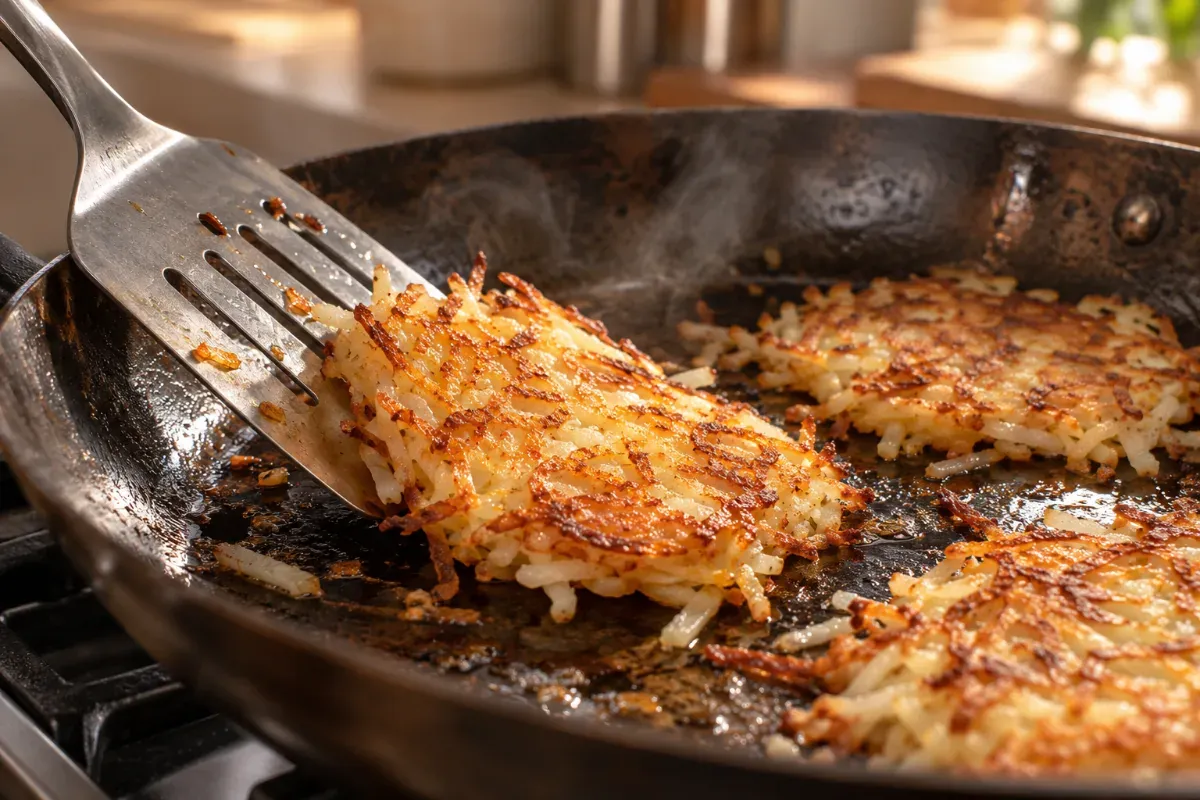
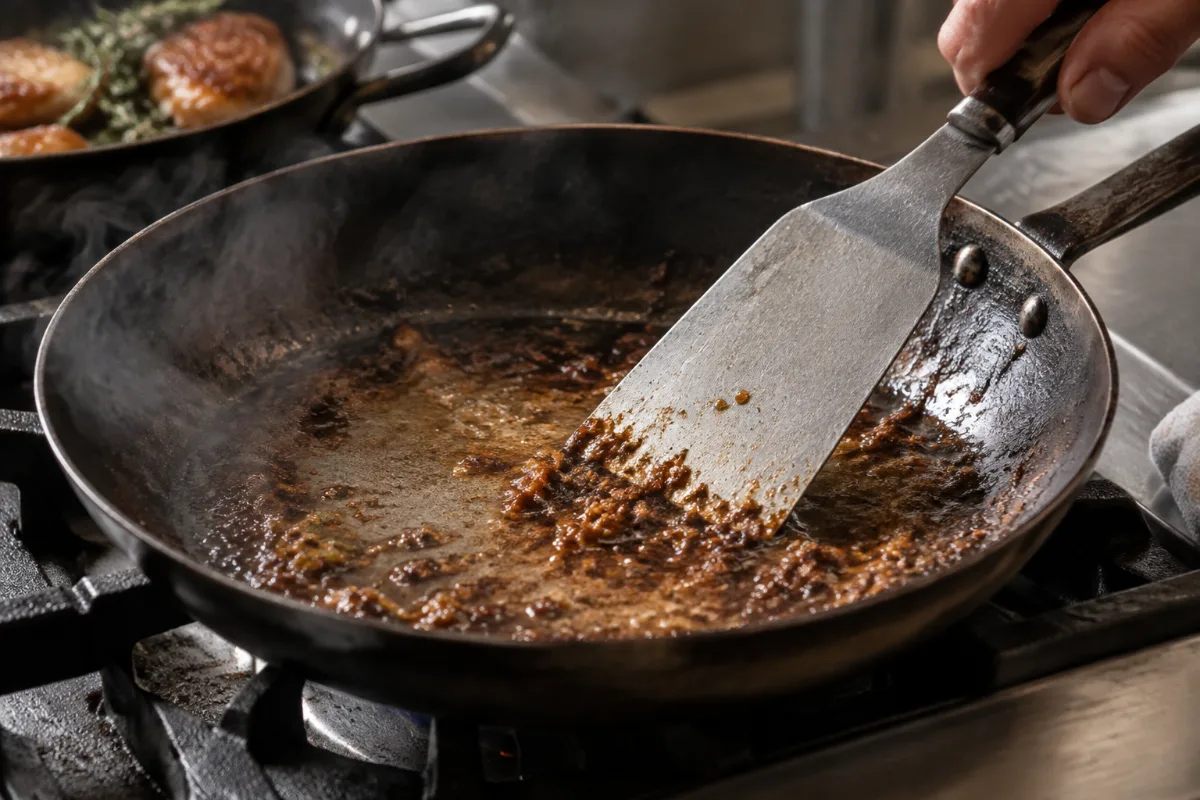
The first job is lifting fond, the browned bits that stick after searing meat. A stiff metal edge scrapes them up cleanly, and those bits are flavor. A silicone spatula tends to smear or slide over them. Getting under the fond with metal is how you turn a sear into a pan sauce.
The second job is keeping the surface even. Light, regular scraping with a metal turner smooths high spots in the seasoning and knocks back any soft, uneven build-up before it can flake. In our own kitchen testing, pans worked with metal tools tended to keep a flatter, more uniform surface than pans babied with silicone, where seasoning sometimes piled up in ridges.
Metal tongs deserve a mention here too. For searing thick cuts, flipping sausages, or turning a steak on its edge to render fat, a pair of metal tongs gives control that no soft tool matches. They grip, they do not slip on hot fat, and they will not melt at the temperatures carbon steel reaches. This is one reason professional kitchens, which run bare steel pans hard all day, stock metal tools rather than silicone. The pans are built for it.
There is a third benefit that shows up over months. Metal contact wears the high points of the seasoning down toward a smooth, glassy finish, the surface experienced cooks prize. Pans worked only with soft tools can develop a slightly tacky, uneven build-up that never quite polishes out. A little metal keeps the surface honest.
So the tool that nonstick owners fear is the tool that helps carbon steel behave. Scraping is maintenance, not damage.
Will metal scratch the seasoning?
You may see faint marks after cooking, especially on a newer pan. That is normal, and it is not the problem it looks like. Any shallow scratch in the seasoning does two things. It buffs down as you keep using the pan, and it re-seasons itself the next time you cook something fatty, because fresh oil bonds right back into that spot.
This self-healing is the whole point. A nonstick scratch is permanent, because the coating cannot rebuild. A carbon steel mark is temporary, because the surface is designed to be renewed by heat and oil every time you cook. A week of normal use erases most marks you would notice.
The one thing to avoid is deep gouging on a very young pan, where the base layer is still thin. Digging hard into a pan you seasoned yesterday can expose bare metal in a patch. That is easy to fix with a quick spot re-season, but easier still to skip by using a normal, flat scraping motion rather than stabbing at stuck food.
Our own test pans carry plenty of faint spatula tracks, and none of them cook any worse for it. The marks catch the light on a clean, oiled pan and then vanish under the next fried egg. If you find yourself worrying about a scratch, cook something in it. That is both the cause of the mark and the cure.
The best utensils for carbon steel
You do not need a special set. A couple of good tools cover almost everything.
Metal fish spatula
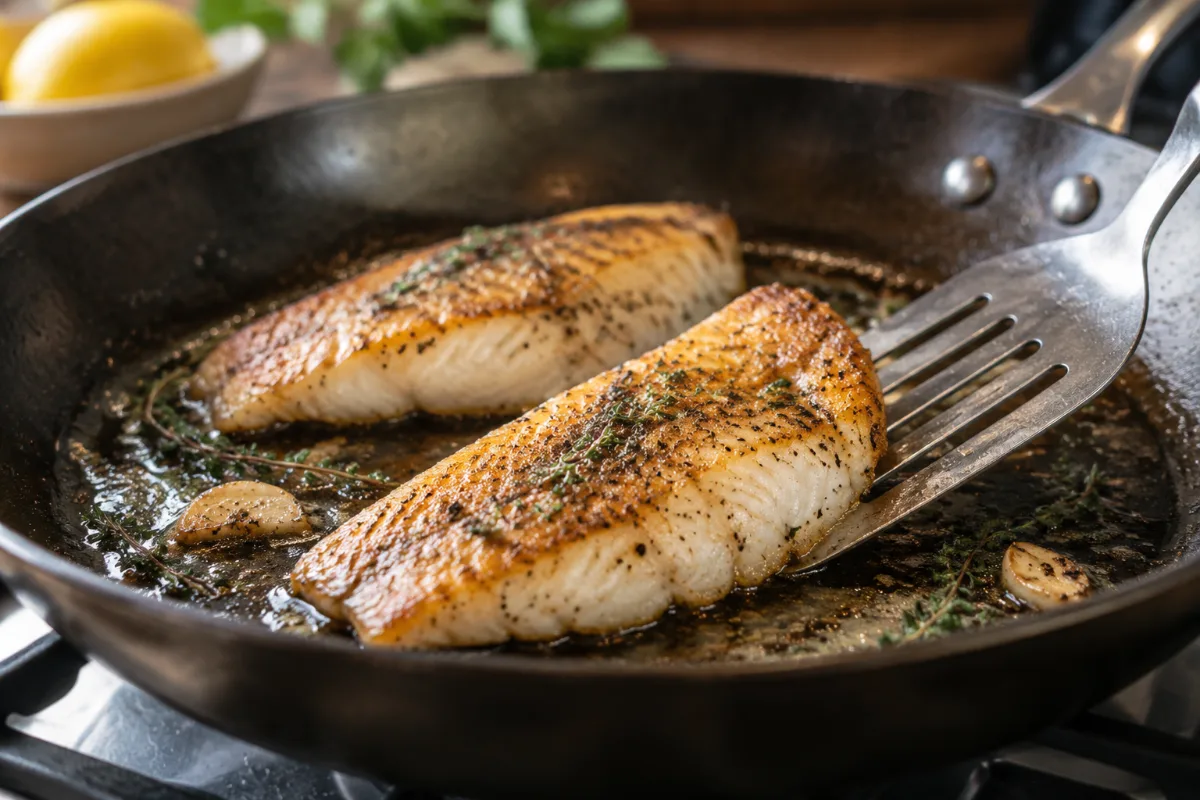
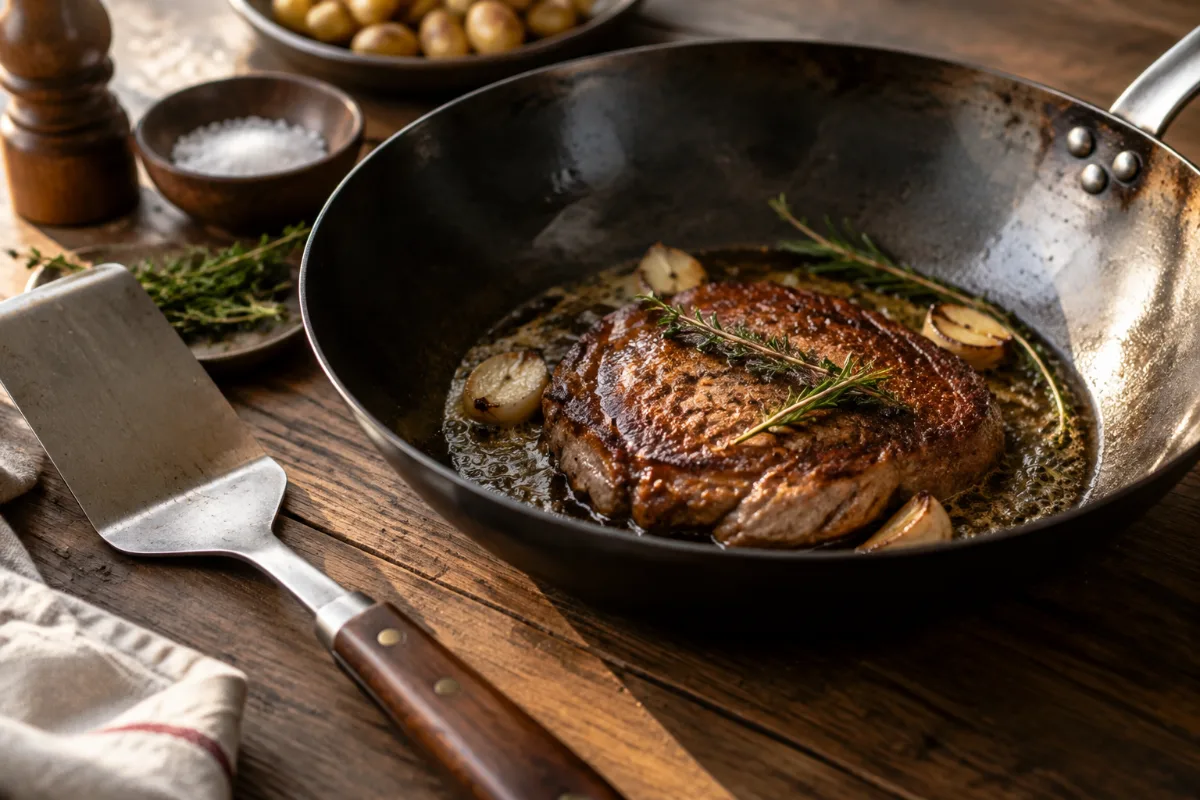
The thin, slightly flexible metal fish spatula is the tool we reach for most. Its edge is thin enough to slide under a fried egg or a fish fillet without tearing it, and stiff enough to scrape fond and flip a steak. It suits the fast, high-heat cooking that carbon steel does best. If you buy one utensil for these pans, buy this.
Quick answer: Our tested guide to metal utensils carbon steel keeps it simple: master the technique, keep the surface seasoned, and match your heat to the food. The full method, the key facts and the mistakes to avoid are all below.
Metal Utensils Carbon Steel: What Our Tests Found
Our team put metal utensils carbon steel through repeated real cooking sessions to see what actually works. Below we break down the method, the facts that matter, and the common mistakes so you get reliable results the first time.
A standard metal turner works well too, especially for burgers, hash, and anything you want to press or scrape. Look for one with a fairly thin front edge. A thick, blunt edge slides under food less cleanly, which is the one thing that makes any spatula feel like it is fighting the pan.
Wood and other tools
Wooden spoons still earn a place. They are kind to a young pan, good for stirring sauces and greens, and they will not clink against the metal. Silicone is optional. It handles delicate foods gently, but it cannot scrape fond and it is not needed to protect anything. Keep it if you like it, but do not feel you must.
One tool to leave in the drawer for cooking is a sharp knife. Cutting food directly in the pan drags a fine, concentrated edge across the seasoning and can score it, and it dulls your knife on the hard steel besides. Move food to a board to cut it. That is the rare case where the surface really can take a mark you would rather avoid, and it has nothing to do with spatulas or turners.
Utensils for carbon steel at a glance
Here is how the common options stack up.
| Utensil | Good for | Note |
|---|---|---|
| Metal fish spatula | Flipping, scraping | A carbon steel favorite |
| Metal turner | Searing, lifting fond | Fine on seasoning |
| Wooden spoon | Stirring, gentle jobs | Kind to a young pan |
| Silicone | Delicate foods | Optional, not needed |
The pattern is simple. Metal is the workhorse, wood is a helpful backup, and silicone is a personal choice rather than a requirement.
When to be a little gentle
There is one honest caveat. In the first week or two, before the base seasoning has thickened, go easy on hard scraping. The layer is still building, and a deep gouge can reach bare steel and start a rust spot. This is not about avoiding metal. It is about using a normal touch while the pan is young.
Once the surface darkens and food releases cleanly, that caution goes away. Use whatever you like.
The same easy touch applies to cleaning. Metal is fine, but a metal scraper meant for stuck-on food is different from a wire scouring pad used hard on a whole pan. A quick scrape to lift a stubborn spot is normal. Aggressive scrubbing that dulls the whole surface is what to avoid, and that is true no matter what the pad is made of. For more on treating a pan well through its whole life, see how to care for a carbon steel pan, and for daily technique, how to use a carbon steel pan.
Frequently asked questions
Can you use metal utensils on carbon steel?
Will a metal spatula scratch my pan?
Do metal tools damage seasoning?
What is the best utensil for carbon steel?
Is carbon steel different from nonstick for utensils?
The takeaway
Put the “soft tools only” habit away. On carbon steel, metal is safe, useful, and often the right choice. The seasoning is fused to the steel, minor marks heal with cooking, and a metal fish spatula will do more good than any silicone tool. Give a new pan a gentle touch for the first couple of weeks, then cook however you like.
To keep that seasoning strong so it shrugs off metal for years, start with how to season a carbon steel pan and match it to the right skillet in our carbon steel frying pans guide. Cook with confidence, reach for the metal fish spatula, and let the pan get better with every meal.