How to Use a Carbon Steel Pan: A Beginner Guide
As an Amazon Associate I earn from qualifying purchases, at no extra cost to you.
To use a carbon steel pan, preheat it for two to three minutes on medium until a drop of water skitters, add a thin layer of oil, then add food and leave it alone until it releases on its own. Most first-time problems come from an under-heated pan or from lifting food too early.
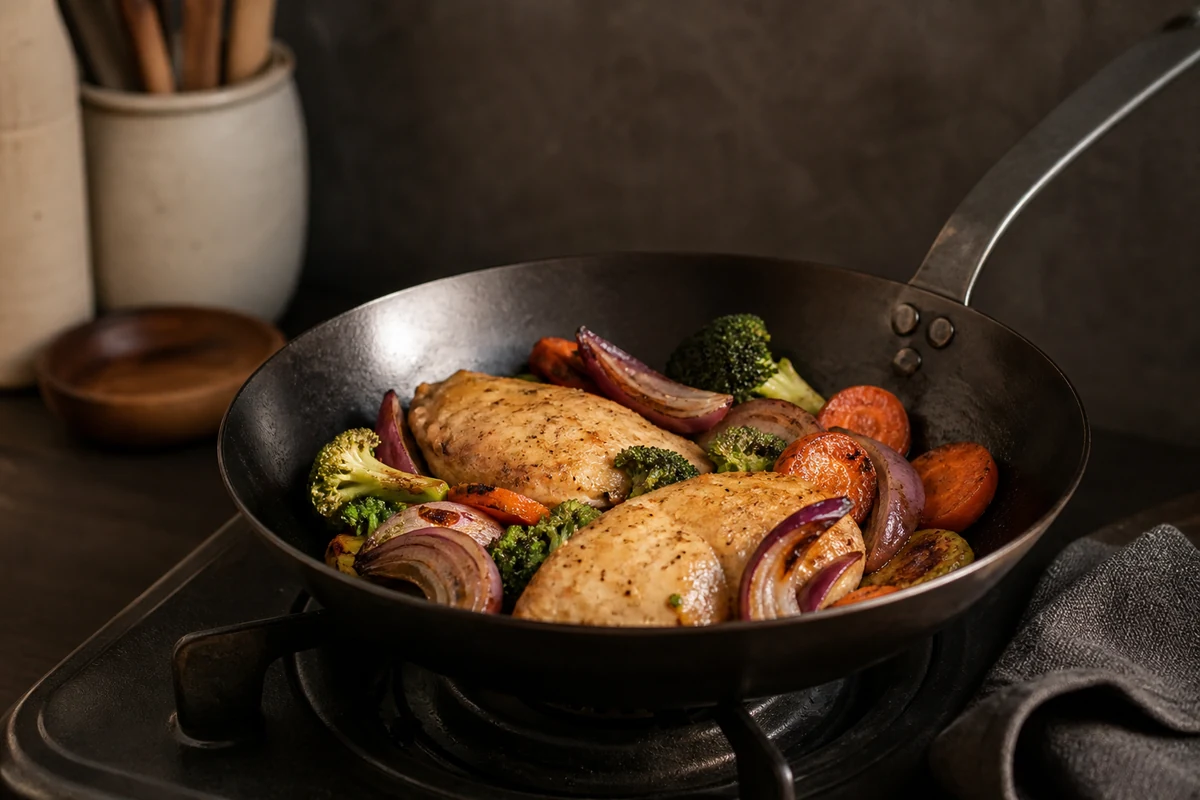
Quick answer: Our tested guide to how to use a carbon steel pan keeps it simple: master the technique, keep the surface seasoned, and match your heat to the food. The full method, the key facts and the mistakes to avoid are all below.
How To Use A Carbon Steel Pan: What Our Tests Found
Our team put how to use a carbon steel pan through repeated real cooking sessions to see what actually works. Below we break down the method, the facts that matter, and the common mistakes so you get reliable results the first time.
Before the first use: strip the factory coating
New pans ship with a protective layer to stop rust in the warehouse. Usually a lacquer, sometimes beeswax. Matfer Bourgeat pans in particular arrive with a thick wax coating.
It has to come off completely. Hot water, dish soap, and real effort. Steel wool is fine here, and this is the one time we will tell you to use it.
Skip this and nothing works. Your seasoning bonds to wax instead of steel, and the pan sticks no matter what you do next.
Pans sold as pre-seasoned still need a wash, just not a scrub.
How to preheat properly
This is where most people go wrong, so it is worth being precise.
- Put the empty pan on medium heat.
- Wait two to three minutes. Carbon steel is fast, but not instant.
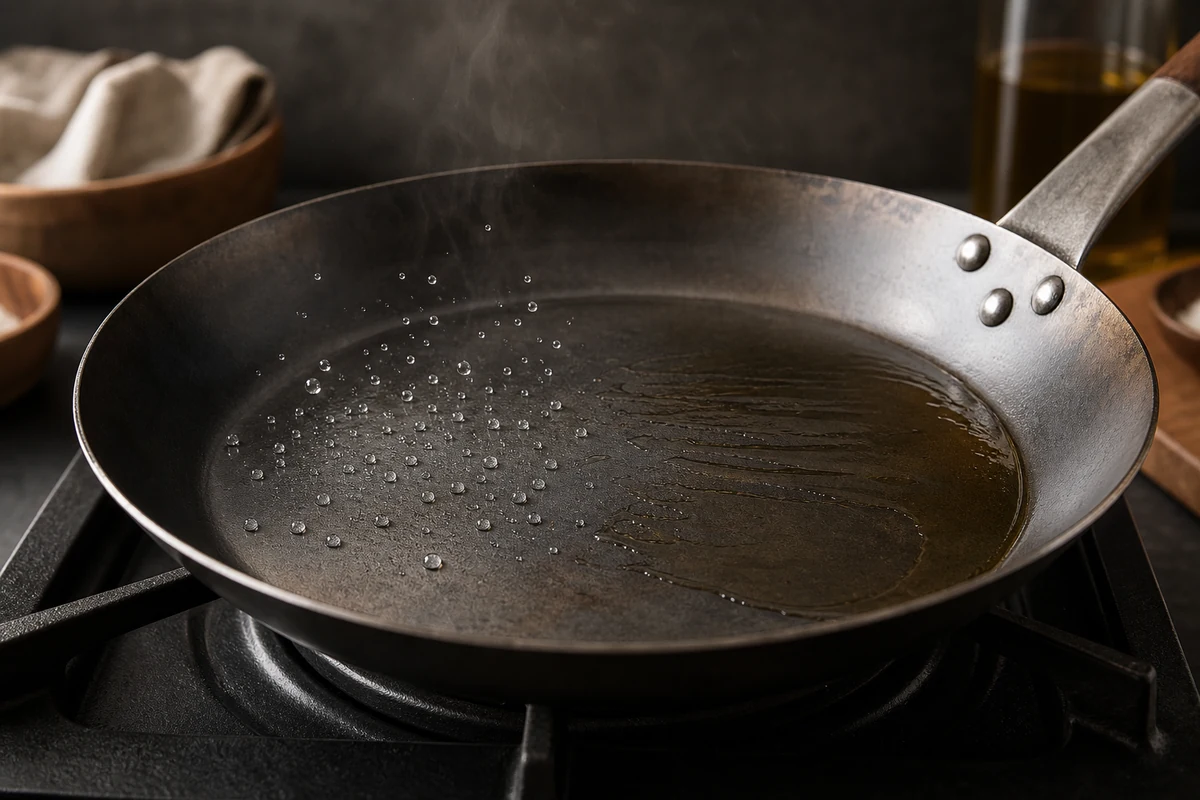
- Flick a few drops of water in. If they hiss and vanish, keep waiting. If they form beads that skate across the surface, the pan is ready.
- Add oil now, not before. It should shimmer within seconds.
- Add food.
That water test has a name, the Leidenfrost effect. Above roughly 380°F the water forms a vapour layer underneath itself and rides on it. It is a reliable temperature gauge and it costs nothing.
Cold pan, cold oil, cold food is the recipe for everything sticking.
How much oil, and which one
More than you would use in a coated pan. Less than you would use for frying.
A tablespoon in a 10 inch pan is a reasonable start. You want the base covered, not swimming.
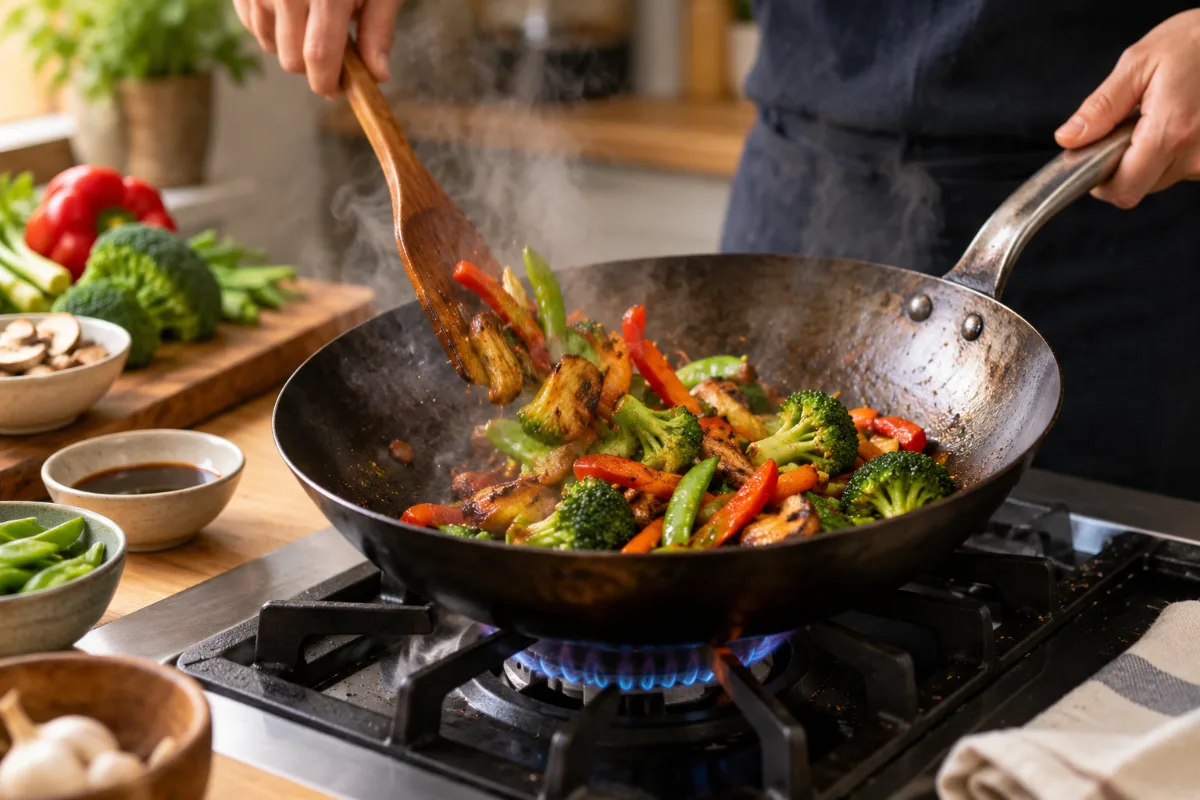
Use a neutral oil with a high smoke point for cooking: grapeseed, canola, sunflower or avocado. Butter burns before the pan reaches searing heat, so add it late for flavour rather than early for cooking. Olive oil sits in between and is fine for medium heat.
The rule that fixes most sticking
Put the food in and leave it alone.
Protein sticks when it hits hot metal. That is chemistry, not a fault. As a crust forms, the bond between food and pan breaks and the piece releases by itself. If you try to move it before that happens, you tear it and leave half behind.
Chicken thighs might take four minutes. A steak two to three. Fish skin can take five.
Test it by nudging gently. If it resists, wait. If it slides, it is ready. Salmon skin will let go the moment it is done, and not a second sooner.
What to cook first
Cook fatty things for the first few weeks. Every fatty cook lays down more seasoning, so you are building the surface while you eat.
Good early candidates: bacon, sausages, chicken thighs skin down, burgers, anything shallow fried.
Save eggs for later. Everyone wants to try an omelette on day one and everyone regrets it. Give the pan ten or fifteen cooks first.
Keep acid out entirely at this stage. No tomatoes, no wine, no lemon. A young seasoning layer has no defence against it.
Heat management
Carbon steel responds fast, which cuts both ways. It reaches searing heat in under two minutes, and it also overshoots quickly if you leave it on high.
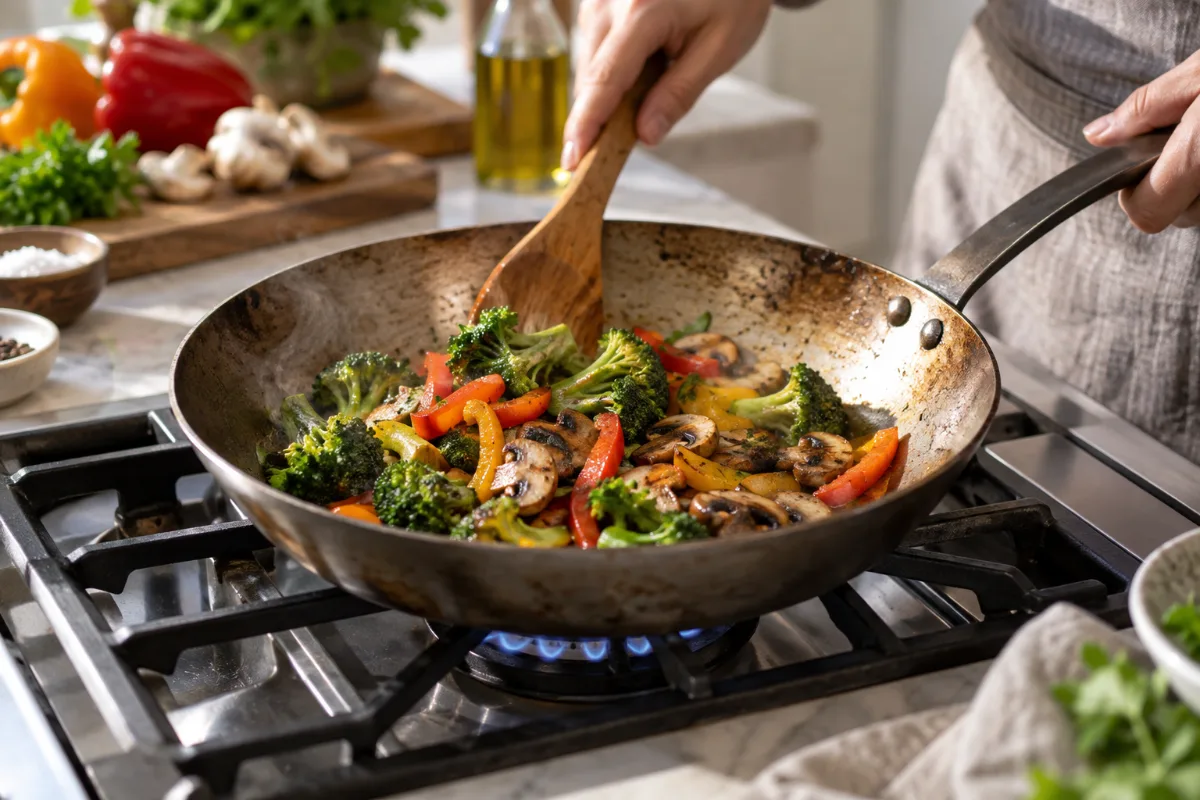
Medium does most work. High is for searing and for stir-fry, in short bursts.
One thing to watch on a thin pan: heat concentrates over the burner and the edges stay cooler. You will see it as a darker ring in the seasoning. Move food around, or rotate the pan, if you are cooking something that needs even colour.
Never run a hot pan under cold water. Thin steel can warp permanently from the shock, and a warped pan will not sit flat on induction.
After cooking
- Clean while the pan is still warm. Hot water and a brush usually does it.
- Use soap if you want. It does not strip polymerised seasoning.
- Dry on the hob over low heat, not on a rack. Water left in a carbon steel pan is how rust starts.
- Wipe a very thin film of oil on while it is still warm.
- Let it cool before storing.
The whole routine takes under two minutes. Full detail in the care and seasoning guide.
Mistakes that ruin a new pan
Cooking tomato sauce in week one. Acid dissolves young seasoning faster than you can build it.
Leaving it to soak. Bare iron and standing water rust within hours.
The dishwasher. The fastest way to destroy the pan.
Scouring the black off. That dark layer is the seasoning. Scrubbing it back to bare metal undoes weeks of work.
Giving up in week two. This is the real one. The pan is not broken and you are not doing it wrong. It simply has not built up yet.
If you do not own one yet
Read this once more after your first week, when the advice will make more sense. To get to that week, a 10 inch pan is the right first size for one or two people: the Lodge 10 inch at $39.90 arrives seasoned and forgiving. Cooking for a family, go to 12 inches with the Merten & Storck at $59.99. Compare usable cooking surface rather than rim size in our frying pan guide.