How to Clean a Carbon Steel Pan
As an Amazon Associate I earn from qualifying purchases, at no extra cost to you.
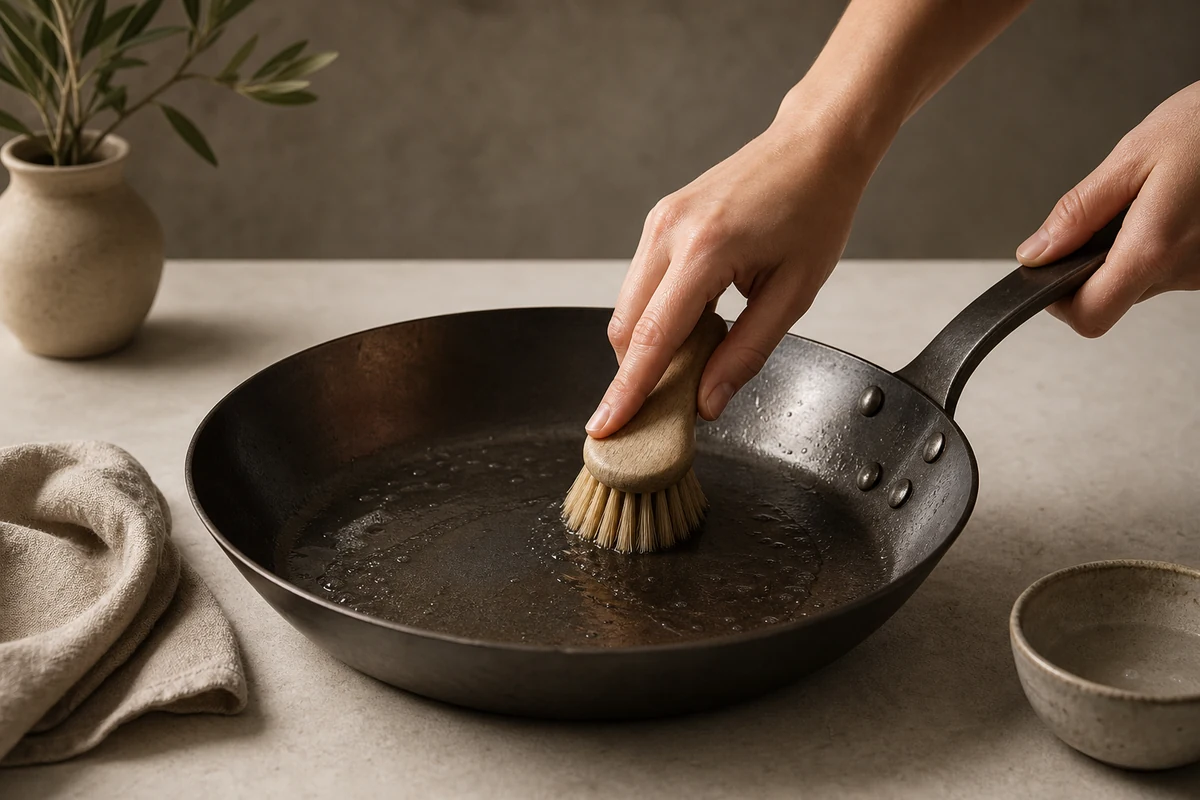
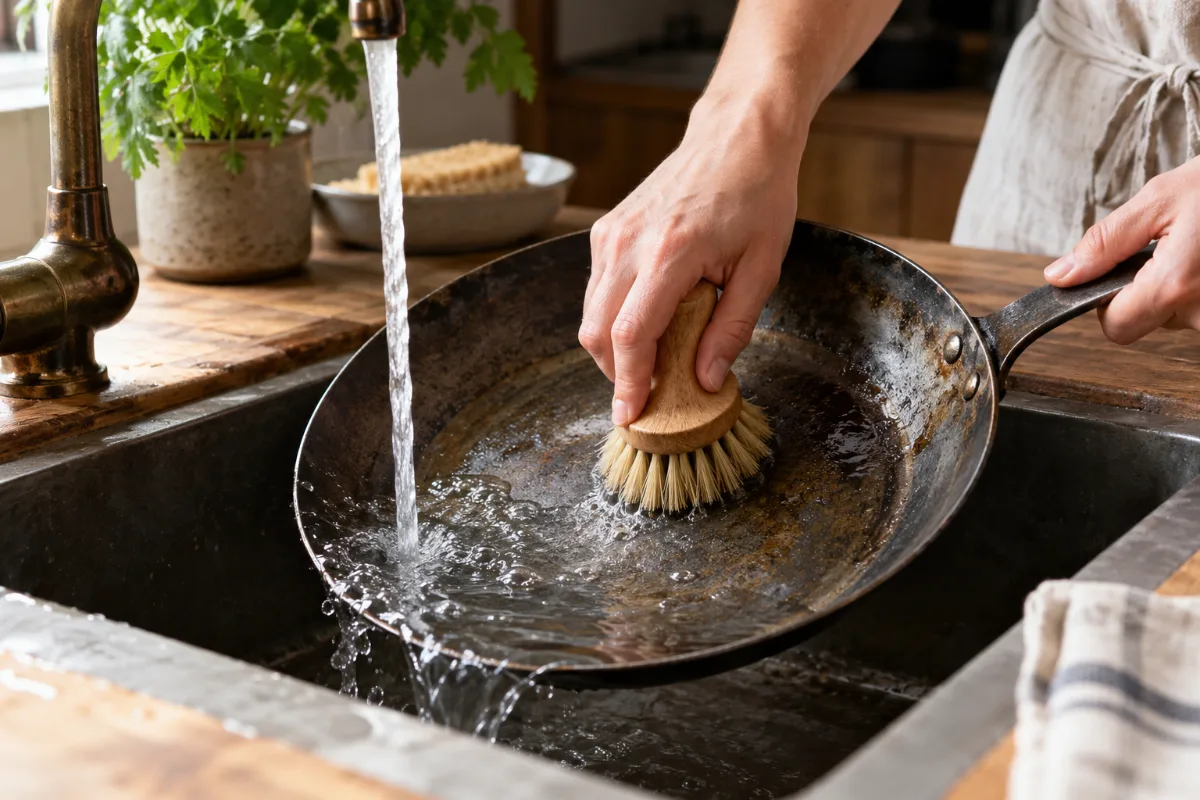
To clean a carbon steel pan, wash it while still warm with hot water and a brush, use dish soap if you want, then dry it on the hob and wipe on a thin film of oil. Soap does not strip seasoning. Soaking, scouring and acid do.
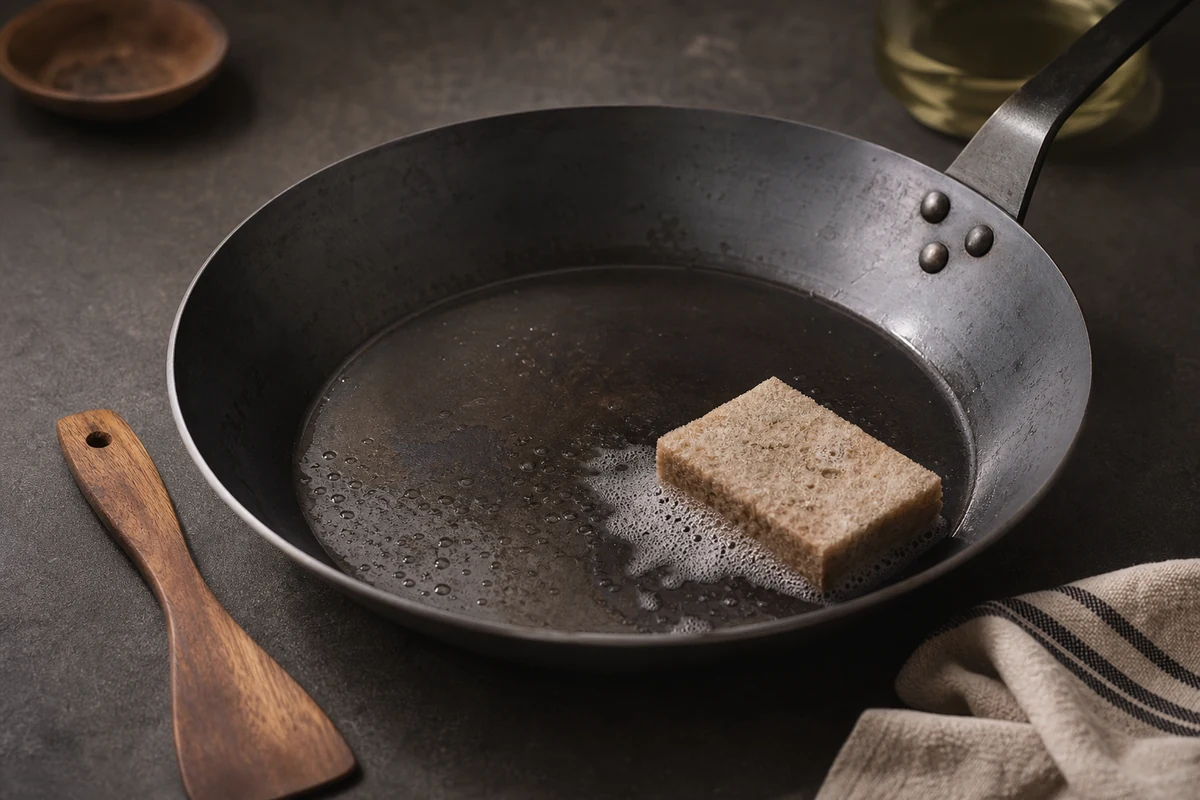
Quick answer: Our tested guide to how to clean a carbon steel pan keeps it simple: master the technique, keep the surface seasoned, and match your heat to the food. The full method, the key facts and the mistakes to avoid are all below.
How To Clean A Carbon Steel Pan: What Our Tests Found
Our team put how to clean a carbon steel pan through repeated real cooking sessions to see what actually works. Below we break down the method, the facts that matter, and the common mistakes so you get reliable results the first time.
The routine, in under two minutes
- Clean while warm. Not screaming hot, not stone cold. Residue lifts easily at this point and sets hard once cool.
- Hot water and a brush or sponge. This handles most meals on a seasoned pan.
- Add soap if you want it. A drop of dish soap will not harm polymerised seasoning.
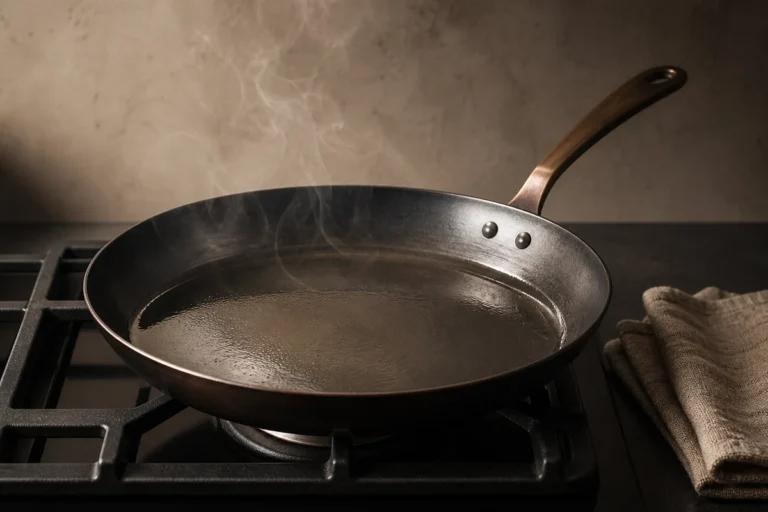
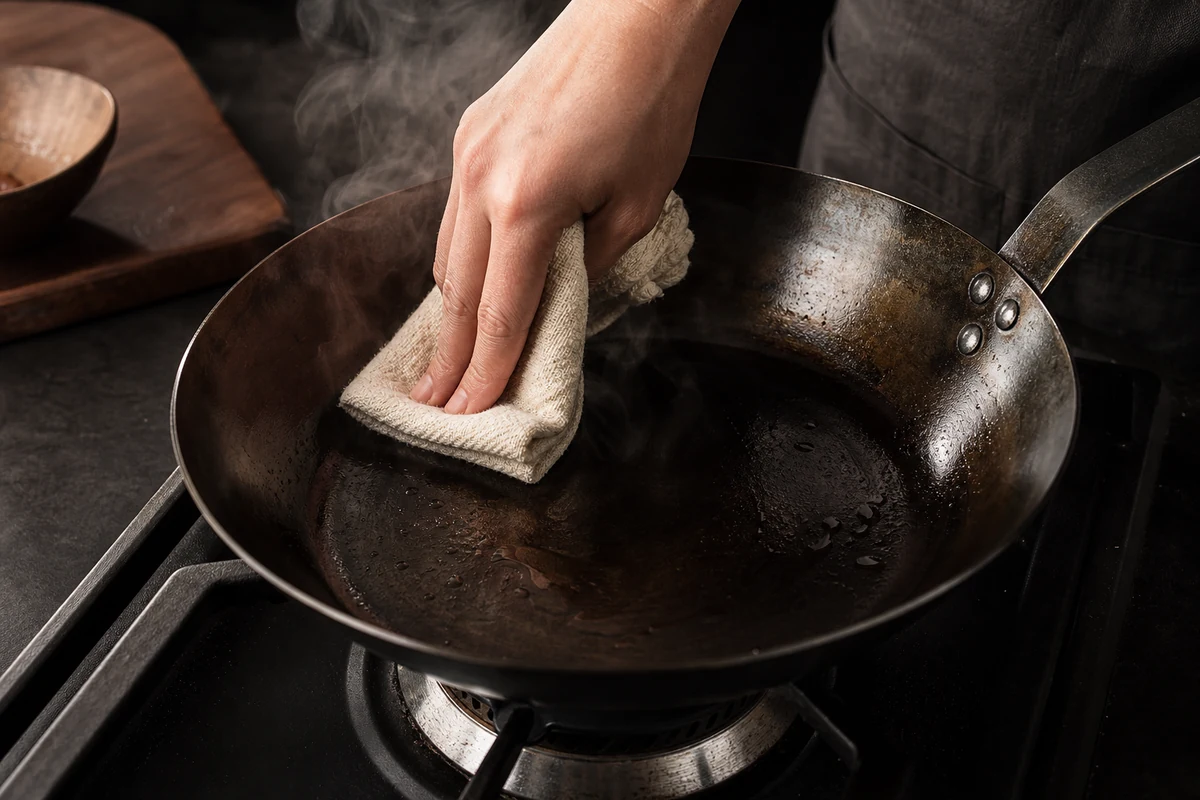
- Dry on the hob. Low heat, a minute, until every trace of water is gone. Not a drying rack.
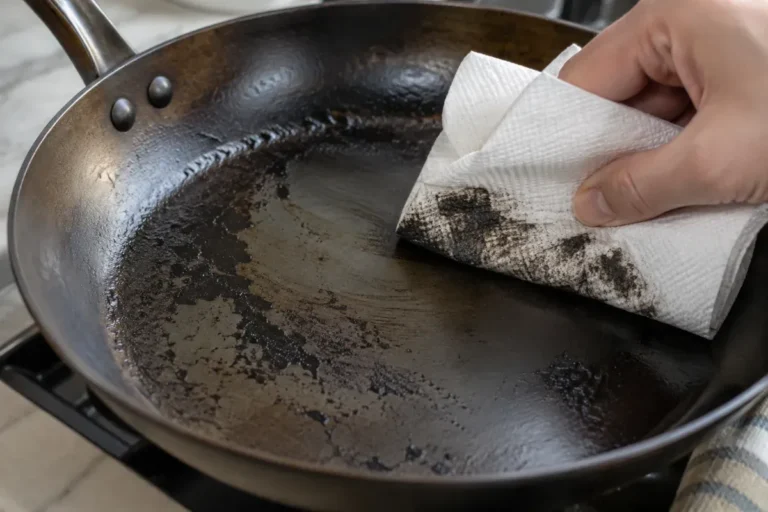
- Wipe a thin film of oil on while warm. A few drops on a paper towel, spread and wiped back.
- Cool, then store.
Step four is the one that matters most. Rust needs water and time, and a pan left to air dry gives it both.
Can you really use soap?
Yes. This is settled and it still gets argued about, so here is the reasoning.
Seasoning is polymerised oil. The molecules have broken apart and bonded into a hard film fused to the steel. It is chemically closer to a plastic than to grease.
Dish soap works by surrounding loose fat molecules and lifting them away. It has nothing to grab onto in a polymerised layer.
The myth comes from an era when household soap was lye-based and genuinely caustic. Modern dish soap is not.
What does strip seasoning: abrasive scouring, soaking for hours, oven cleaner, dishwasher detergent, and acid.
Stuck-on food
Work up in stages. Start gentle.
Deglaze while hot
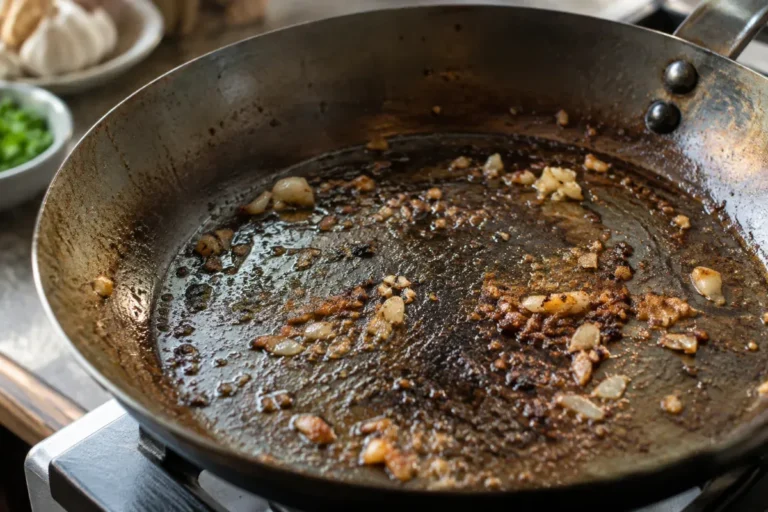
Pour a splash of hot water into the still-hot pan. The residue lifts almost immediately. This handles the majority of cases and takes ten seconds.
Coarse salt scrub
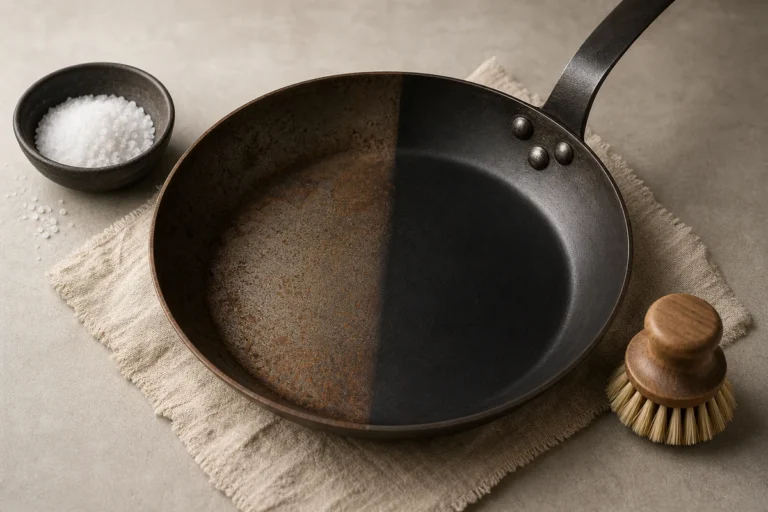
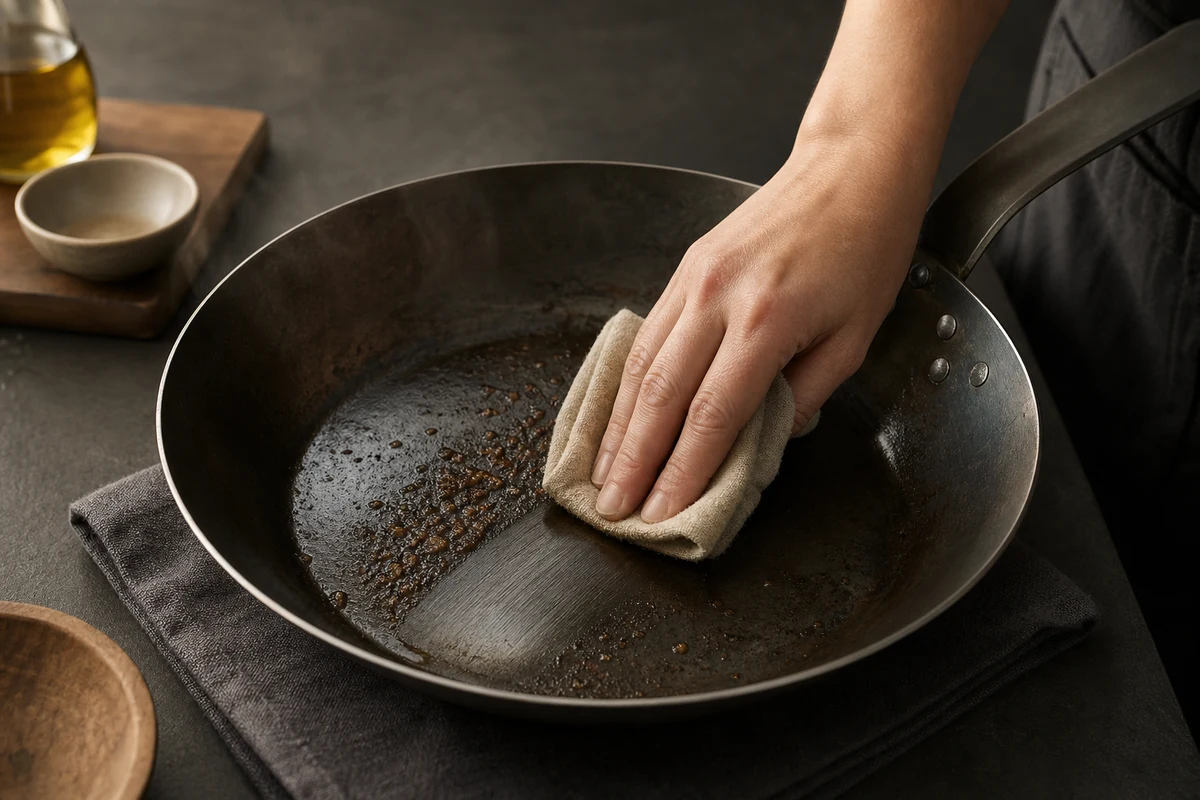
A tablespoon of coarse salt and a paper towel. The salt is abrasive enough for stuck food and too soft to damage seasoning.
Simmer water
For genuinely welded-on material, add water and bring it to a simmer for a few minutes. Then scrape with a wooden spatula.
What to avoid
Steel wool and chainmail take seasoning off along with the food. They have a place when you are stripping a pan deliberately, and no place in routine cleaning.
What never to do
The dishwasher. Detergent plus prolonged water is the fastest way to destroy a carbon steel pan. It will come out grey and rusting.
Soaking. Bare iron rusts within hours in standing water.
Cold water on a hot pan. Thin steel can warp permanently. A warped pan will not sit flat on induction.
Oven cleaner. It strips seasoning completely. Only use it if that is the goal.
Air drying. Even a little residual water leaves rust spots.
Cleaning after acidic food
If you have cooked tomatoes or deglazed with wine, the seasoning has already taken damage.
Wash and dry as usual, then apply one seasoning round: thin oil, wipe back, heat until it smokes. That restores the layer you just lost.
Better to avoid it. Acidic cooking belongs in stainless.
Dealing with rust
Rust is cosmetic on carbon steel. The pan is not finished.
- Light spots: scrub with a 1:1 paste of coarse salt and oil.
- Heavier rust: steel wool, a scouring pad or fine sandpaper. Be aggressive. You cannot hurt the steel.
- Stubborn patches: simmer equal parts white vinegar and water for a few minutes, then scrub. Do not leave vinegar sitting, it starts etching the metal.
Any rust removal takes seasoning with it. Reseason immediately or the rust returns.
How to store it
Dry, lightly oiled, and with air around it.
If pans nest inside each other, put a paper towel between them. Trapped moisture between two pans is a common source of rust that people never trace.
Hanging is ideal if you have the space. A damp cupboard is the worst case.
Cleaning by mess type
The routine handles a normal cook. Real kitchens produce worse, so here is the full ladder, from mildest to most stubborn.
| Mess | Method | Time |
|---|---|---|
| Oil film after eggs or bacon | Hot water and a wipe | 30 seconds |
| Fond after searing | Deglaze with hot water while hot | 1 minute |
| Stuck starch, rice or potato | Coarse salt scrub | 2 minutes |
| Burnt sugar or glaze | Simmer water, scrape with wood | 5 minutes |
| Carbonised food, black crust | Simmer, then salt scrub, repeat | 10 minutes |
| Rancid oil smell | Scrub back and reseason the area | 20 minutes |
Notice what is missing: steel wool, oven cleaner and the dishwasher. None of these belongs in routine cleaning. They are stripping tools, covered in how to reseason.
The two-minute after-dinner routine, in detail
The summary at the top of this page compresses what should be muscle memory. Here is each step with the reasoning, once, so the shortcuts make sense.
Clean while warm, not hot. A screaming hot pan flash-boils water and can warp. A cold pan lets fat set into a film that needs effort. Warm, meaning you can hold your hand near the surface, is when residue releases with almost no work.
Water first, soap second. Most cooks find hot water alone handles the majority of meals. Add a drop of soap when the pan cooked something pungent, fish especially, because polymerised seasoning does not absorb smells but surface oil does.
The hob is your drying rack. Thirty seconds over low heat removes moisture a towel misses, including the ring where the wall meets the base, which is where rust usually starts.
Oil while warm, then wipe it back. Warm steel accepts a thinner, more even film. The pan should look matte when you put it away, not glossy. Glossy means excess oil, and excess oil goes rancid.
What if the pan smells?
A properly maintained carbon steel pan smells of nothing. Two failure smells are worth knowing.
Rancid, like old nuts or crayons. Excess storage oil has oxidised. Wash thoroughly with soap and hot water, dry, and re-oil with a genuinely thin film. If the smell survives washing, the rancid oil has bonded into a soft top layer of seasoning: scrub that layer back with salt and oil, then run one seasoning round.
Fishy, after cooking fish. Surface oil holding aroma. Soap removes it. If it lingers, boil water in the pan for two minutes and the smell goes with the steam.
Cleaning the outside and the handle
Guides ignore the exterior, and then the underside turns into a sticky brown shell.
Wipe the underside each time you wash the pan, because oil migrates down the walls during cooking and bakes on gradually. Once a month, give the exterior the same salt scrub the interior gets. Riveted handles collect grease around the rivet heads inside the pan, so run a soapy cloth around each rivet when you wash, which takes five seconds and prevents the sticky halo that otherwise forms.
Wooden handles want a dry cloth only. Prolonged soaking swells and cracks the wood long before it hurts the steel.
Cleaning myths that refuse to die
Never use soap. False for half a century. Modern dish soap cannot dissolve polymerised seasoning.
Just wipe it, never wash it. This builds rancid oil and old food residue into the surface. Wash it. It is cookware, not a relic.
Salt cleaning is for cast iron only. Salt works identically on carbon steel and is the single most useful technique on this page.
A dishwasher cycle once will not hurt. One cycle strips seasoning measurably and starts flash rust in the drying phase. There is no safe number of cycles.
Boiling water damages seasoning. It does not. Simmering plain water is the gentlest heavy-cleaning tool you have. What damages seasoning is boiling acidic liquid, covered in what not to cook.
If cleaning is the part you dread
The routine above takes two minutes. Some pans make it easier than others. A nitrided surface such as the Armorbear 10 inch at $26.99 tolerates a proper scrub without losing much, because there is no thin factory layer to strip. Pans with a riveted steel handle, like the Merten & Storck 12 inch at $59.99, have no wood joint to keep dry either. Small thing. It adds up over a few hundred washes.