How to Clean a Carbon Steel Wok Without Stripping the Seasoning
By the Carbon Steel Pan test team · Last updated September 2026
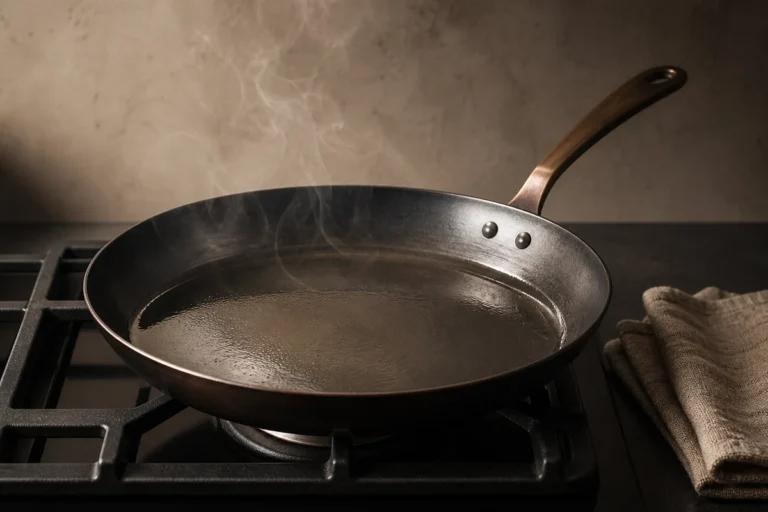
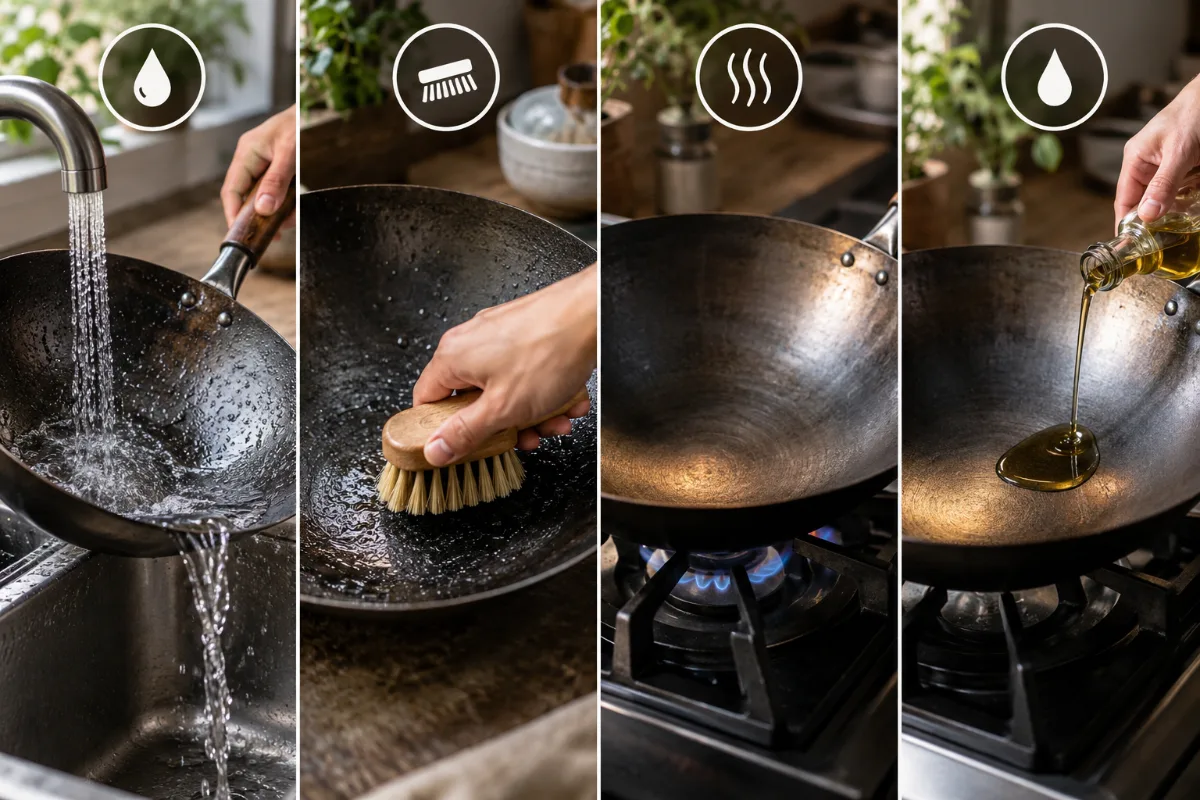
Clean a carbon steel wok while it is still warm. Rinse it under hot water, scrub any residue with a soft brush or a non-abrasive pad, and use little or no soap. Dry it fully over the burner so no water sits on the metal, then wipe on a thin coat of oil. This routine lifts food away without touching the seasoning underneath.
That is the whole method in five steps, and it takes about two minutes once you get the rhythm. The reason it works is that hot metal and warm food release each other easily, so you rarely need force. The rest of this guide explains each step, clears up the soap question, and shows how to handle stuck-on food and prevent rust.
Clean it warm, right after cooking
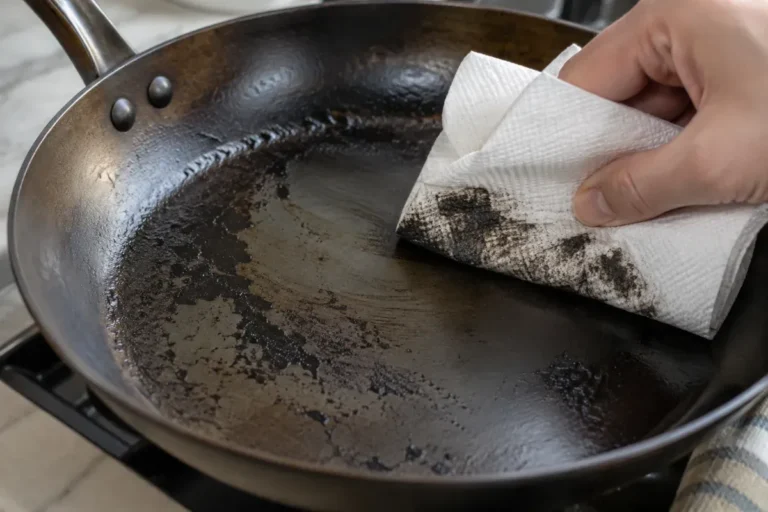
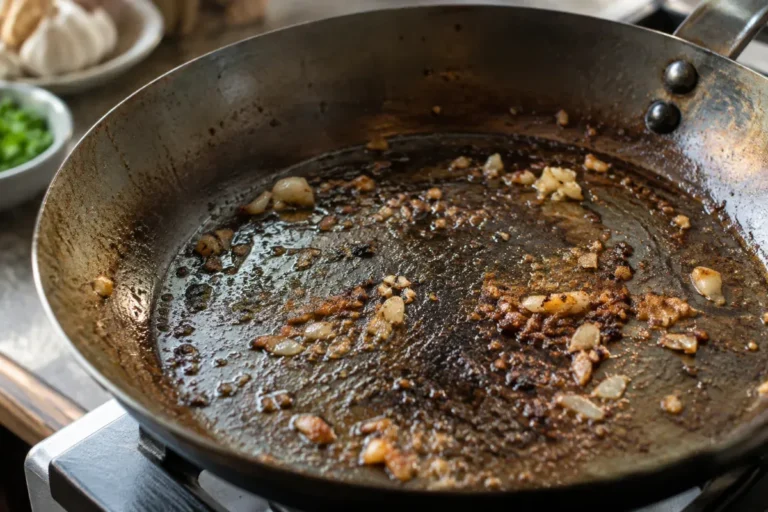
The single habit that protects your wok is cleaning it right after you plate the food, while the pan still holds heat. Warm residue wipes off. The same residue left to cool and dry turns into a hard crust that tempts you to scrub harder, and hard scrubbing is what wears seasoning thin.
So before you sit down to eat, run the wok under hot water and give it a quick pass. If dinner cannot wait, at least fill it with hot water to keep the residue soft. A cold, dry wok with cooked-on sauce is the one situation that leads people to reach for steel wool, and that is exactly what you want to avoid.
A carbon steel wok also cools fast because the metal is thin, so the window for easy cleaning is short. Catch it while it is warm and the job stays gentle.
There is a safety note worth adding here. A wok straight off high heat is extremely hot, and the sudden meeting of a screaming-hot pan and cold water can shock the metal. If you have been cooking on full heat, let the wok rest for a minute or two so it comes down from its peak, then rinse. It should still be warm, just not glowing. This small pause also protects the pan from the thermal stress that can warp a thin base over time.
The seasoning-safe cleaning steps
Here is the full routine, in order. Follow it every time and the surface only gets better with age.
Rinse with hot water
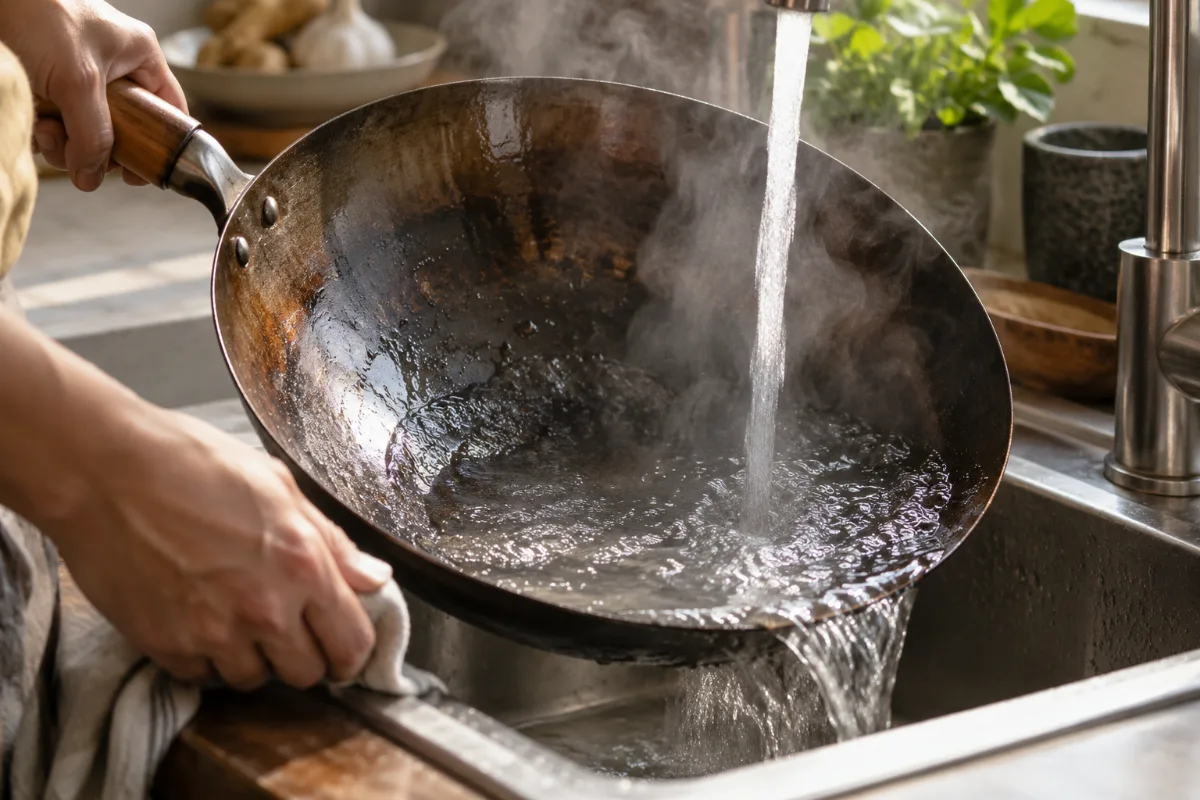
Hold the warm wok under running hot water. For a light stir-fry, this alone often clears most of what is left. Hot water loosens oil and softens starch far better than cold, and it means less scrubbing in the next step. Angle the wok so water runs down the sloped sides and carries residue to the bottom.
Scrub with a soft brush
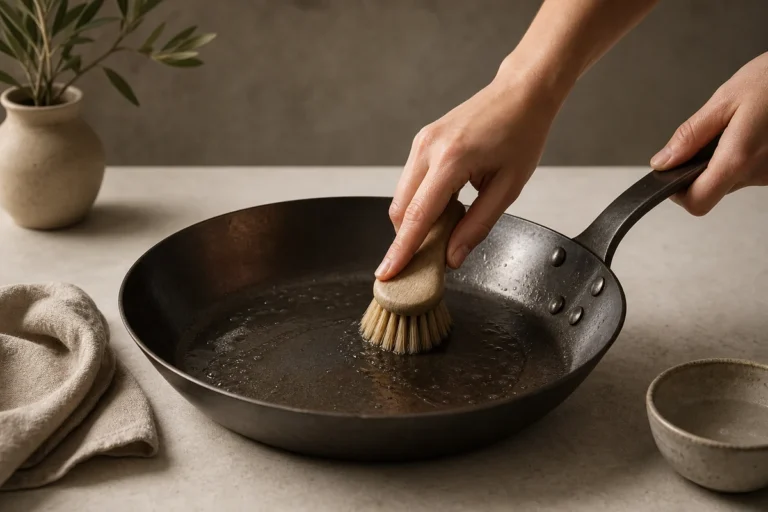
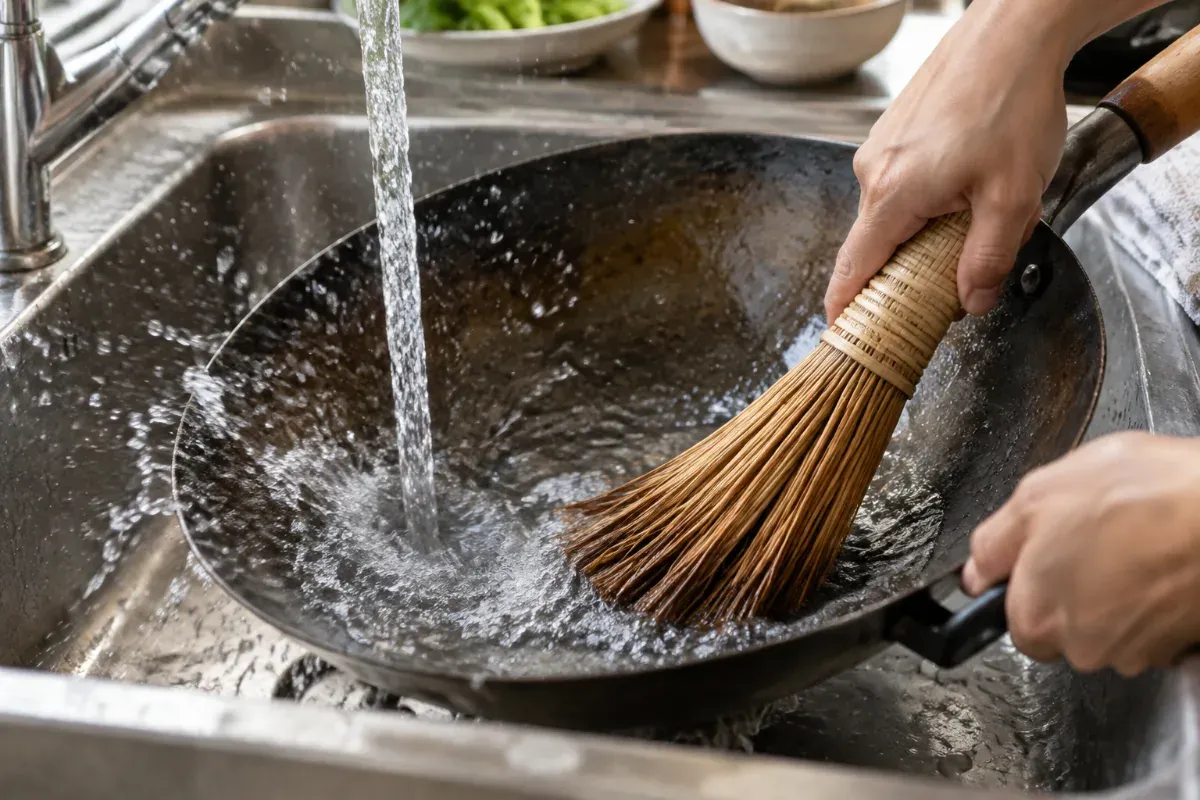
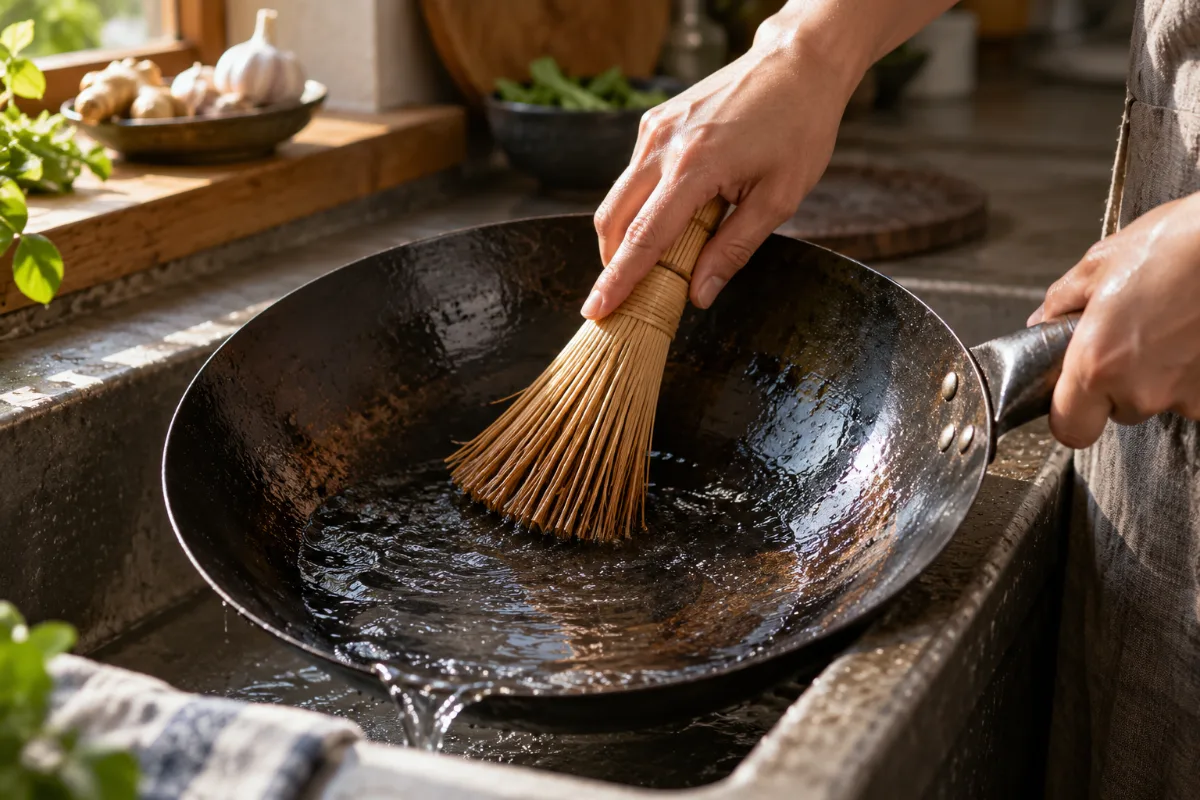
Use a bamboo wok brush or a soft nylon scrubber to work the surface in small circles. A traditional bamboo brush is stiff enough to lift food but too soft to cut into cured seasoning, which is why cooks have used them for generations. A non-abrasive sponge works just as well. Skip anything metal or gritty on a wok that has good seasoning.
The bamboo brush earns its place because of its shape as much as its softness. The long bundle of stiff fibers reaches into the curved bottom of the wok where food collects, and you can hold the handle away from the hot metal while you scrub. A soft dish sponge works for a light residue, but it struggles to get into that deep curve. If you cook in a wok often, a proper wok brush is a small purchase that makes the after-cook routine faster and keeps you from grabbing something harsher.
Dry over heat
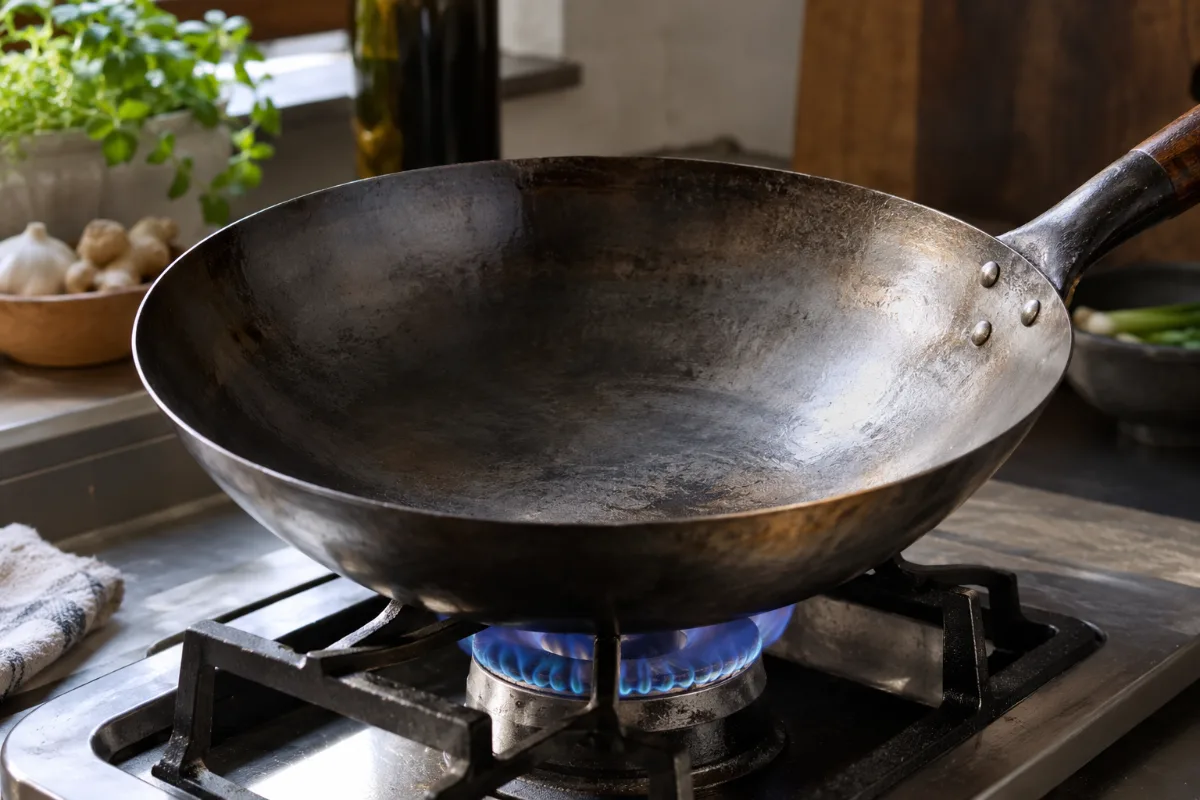
This step matters more on a wok than on any other pan. Set the rinsed wok back on the burner over medium heat for a minute or two until every drop of water evaporates and the surface looks dry and slightly dull. Do not let it just air-dry in a rack. Thin steel and a wide surface make a wok rust faster than a thick skillet, and standing water is the trigger.
Re-oil lightly
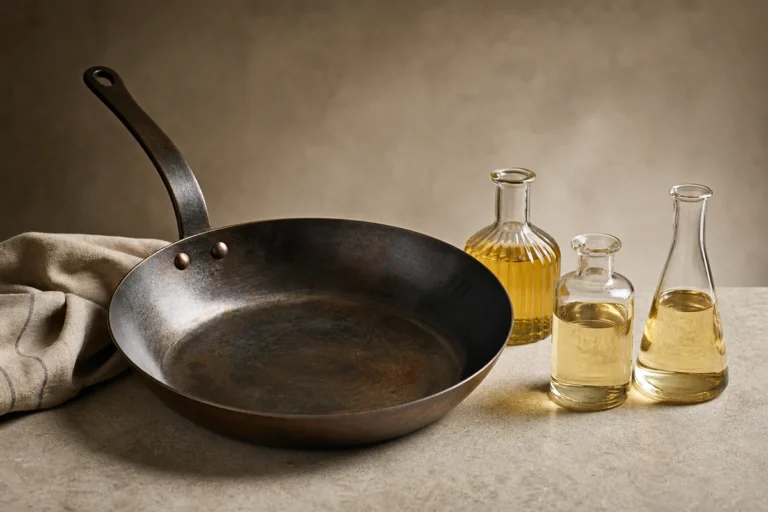
While the wok is still warm from drying, add a few drops of a neutral high-smoke-point oil and spread a thin film across the inside with a paper towel. Then wipe most of it back off. You want the surface to look dry, not shiny. This thin coat seals the metal against moisture until the next cook and quietly adds to the seasoning over time.
Can you use soap on a wok?
Yes. A small amount of modern dish soap will not strip cured seasoning. The old warning against soap dates to a time when detergents contained lye, which did attack the oil layer. Today’s dish soaps are mild surfactants that cut grease, not baked-on polymerized oil. America’s Test Kitchen and Serious Eats have both put this to rest in their carbon steel and cast iron testing.
So if a garlicky, fishy, or heavily sauced dish leaves a smell or a slick, a drop of soap and a soft brush are fine. What actually damages seasoning is not soap but abrasion and long soaking. Use soap when you need it, keep it light, and rinse well.
There is a limit worth knowing. Soap cuts grease well, but it does not remove the thin film of oil you rely on for rust protection, and it should not be used with a scouring pad that scrapes the surface. Think of soap as a tool for smell and grease on the days you need it, not a default for every rinse. Most stir-fries clean up with hot water alone, so save the soap for the strong-flavored cooks.
The one thing soap cannot fix is a wet wok left to sit. Clean with soap if you like, but always follow with the dry-over-heat step.
Removing stuck-on food
Sometimes noodles weld to the bottom or a sauce reduces into a hard glaze. Do not attack it with a metal scraper. Instead, put the wok back on the heat, add an inch of water, and bring it to a simmer for a few minutes. The steam and heat loosen the bond, and the debris lifts with a wooden spatula or a gentle brush.
For a stubborn spot, coarse salt is the classic fix. Pour a spoonful of kosher or sea salt into the warm, lightly oiled wok and scrub with a folded paper towel or a cut potato. The salt acts as a mild abrasive that scours off food while sparing the seasoning, then you rinse it away. This trick clears burnt bits without the scarring that steel wool leaves behind.
A cut potato deserves a mention because it sounds odd but works. The flat cut face holds salt against the surface and gives you a soft grip that will not scratch, and the moisture in the potato helps lift residue. It is a common trick in wok kitchens for a reason.
Whatever you do, stop before you reach bare, shiny metal. A little worn seasoning re-builds on its own with the next few cooks. A gouged surface takes real work to restore. If a stuck spot resists a simmer and a salt scrub, it is better to leave a faint mark and cook over it than to grind down to the steel chasing a perfectly clean look.
Drying to prevent rust
Rust is the main way people ruin a wok, and it comes down to one mistake: putting it away damp. Because the walls are thin and the surface area is large, a carbon steel wok can develop orange spots overnight if water sits on it.
Drying over heat is not optional. After the final rinse, return the wok to the burner and let the residual moisture steam off completely. You will see the surface change from wet to matte. Only then is it safe to store. The light oil coat from the last step adds a second layer of protection by keeping air and humidity off the metal.
If you cook in a humid kitchen or store the wok in a cabinet near the sink, the oil film is your friend. A pan that is used often and dried right almost never rusts.
Storage plays a part too. A wok hung on a hook or set on an open rack dries and breathes better than one stacked inside another pan or shut in a damp cupboard. If you do stack, slip a paper towel between pans to catch any trapped moisture and to remind you to check the surface. The goal is always the same: keep the metal dry and lightly oiled between cooks.
What not to do
A few habits undo everything else, so avoid these:
Do not put a carbon steel wok in the dishwasher. The long hot-water cycle, the harsh detergent, and the slow drip-dry combine to strip seasoning and start rust. It is the fastest way to wreck a pan.
Do not soak it for hours. A short soak to soften food is fine, but leaving a wok submerged invites rust and does nothing that a warm simmer would not do faster.
Do not scour good seasoning with steel wool or heavy scouring powder. Save the aggressive tools for a full reset when you actually intend to strip the pan back to metal and start over.
If rust does appear, it is not the end. Scrub the spots back, dry over heat, and re-season the area. Our guide on how to remove rust from a carbon steel pan walks through the full recovery.
Below is the quick reference for everyday cleaning.
| Do | Don’t |
|---|---|
| Clean it while warm | Let it soak for hours |
| Use a soft wok brush | Scour good seasoning with steel wool |
| Use a little soap if needed | Put it in the dishwasher |
| Dry fully over heat | Leave it wet in the rack |
| Wipe on a thin oil coat | Store it damp |
Quick answer: Our tested guide to how to clean a wok keeps it simple: master the technique, keep the surface seasoned, and match your heat to the food. The full method, the key facts and the mistakes to avoid are all below.
How To Clean A Wok: What Our Tests Found
Our team put how to clean a wok through repeated real cooking sessions to see what actually works. Below we break down the method, the facts that matter, and the common mistakes so you get reliable results the first time.
Frequently asked questions
How do you clean a carbon steel wok?
Can you use soap on a carbon steel wok?
How do I get stuck food off a wok?
Why does my wok rust after washing?
Can a wok go in the dishwasher?
Keep the routine simple
The best cleaning method is the one you will actually do after every meal, and this one is fast enough to become automatic. Rinse warm, brush soft, dry over heat, oil light. Do that and your wok darkens, slicks up, and cooks better each year instead of wearing out.
If your seasoning ever looks thin or patchy after cleaning, build it back with a few cooks or a light re-season. For the wider care picture, see how to clean a carbon steel pan, and if you are still choosing your pan, start with our guide to carbon steel woks.