Best Carbon Steel Wok for Induction and Electric Stoves
By the Carbon Steel Pan test team · Last updated September 2026
The best wok for induction and electric stoves is a flat-bottom carbon steel wok with a base wide enough to cover the heating zone. A flat, magnetic base gives full contact and fast heat, while a round bottom will not work without a flame. Look for at least a six-inch flat base and a heavier gauge for steady high heat.
Top picks for induction and electric
If you cook on induction or a flat electric hob, skip round-bottom woks entirely and buy flat. Here are our tested picks, each for a different buyer.
Best overall is the Yosukata Pow Wok 13.5-inch, around $63 (verify). It balances a wide flat base, good tossing room, and a fair price. For serious stir-fry, the Yosukata Blue 13.5-inch, around $94 (verify), adds heavier gauge and a blued surface that seasons fast. On a budget, the SUMEIGUAN 13.5-inch nitrided wok, around $40 (verify), gives the widest flat base of the group and easy care. The cheapest way in is the FGJ 13-inch with lid, around $34 (verify).
All four are carbon steel, all four have flat bases, and all four will work on induction and flat electric. The differences that matter are base width, gauge, and how much you want to spend. The rest of this guide explains how to weigh those, then breaks down each pick in turn so you can match one to your stove and your cooking.
Every pick below is chosen for one reason: a flat base that actually contacts your stove. That single feature matters more than brand or bowl shape on these cooktops. Prices above are recent ballpark figures and shift often, so treat them as a guide and check the current listing.
A note on why carbon steel and not stainless or nonstick for a wok. Carbon steel is magnetic, so it works on induction. It is light enough to toss, unlike cast iron. It takes the high heat a stir-fry needs, unlike nonstick. And it seasons into a slick, flavorful surface. On induction and electric, the only extra requirement is that flat base, which every pick here has.
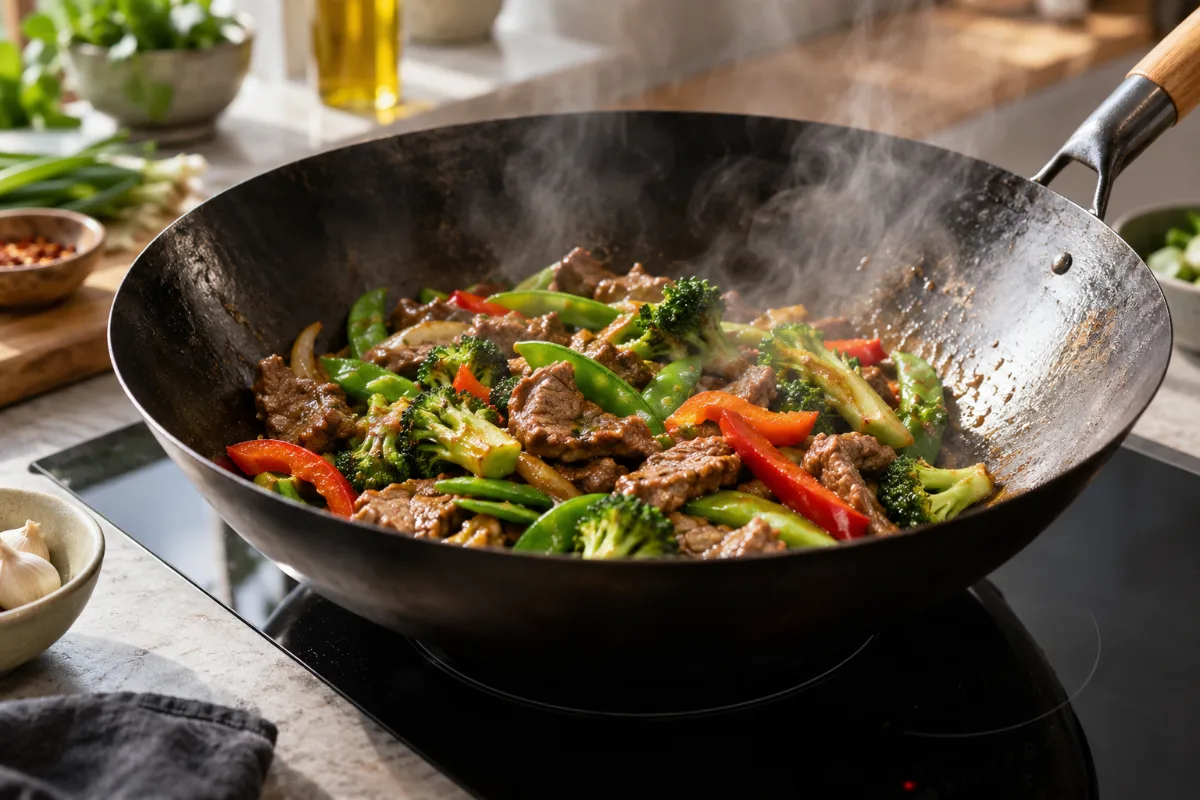
Quick answer: Our tested guide to best wok for induction keeps it simple: master the technique, keep the surface seasoned, and match your heat to the food. The full method, the key facts and the mistakes to avoid are all below.
Best Wok For Induction: What Our Tests Found
Our team put best wok for induction through repeated real cooking sessions to see what actually works. Below we break down the method, the facts that matter, and the common mistakes so you get reliable results the first time.
Why round-bottom woks fail on these stoves
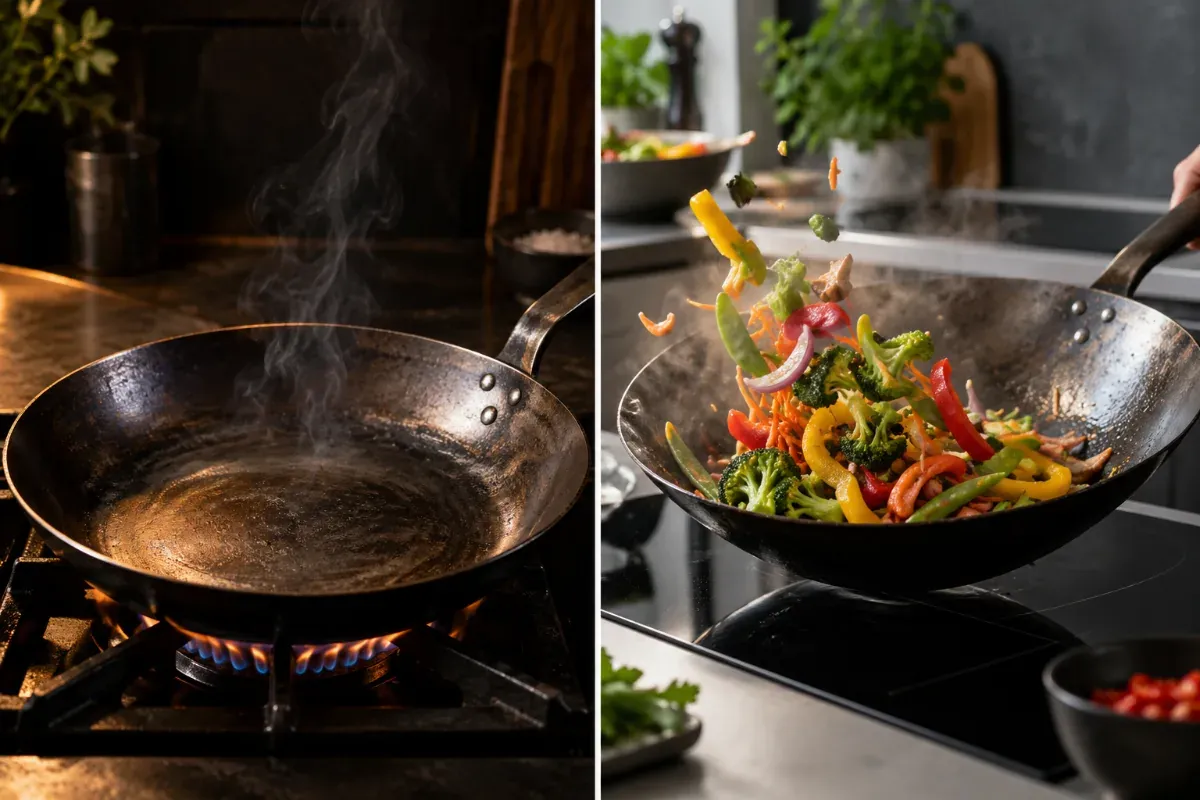
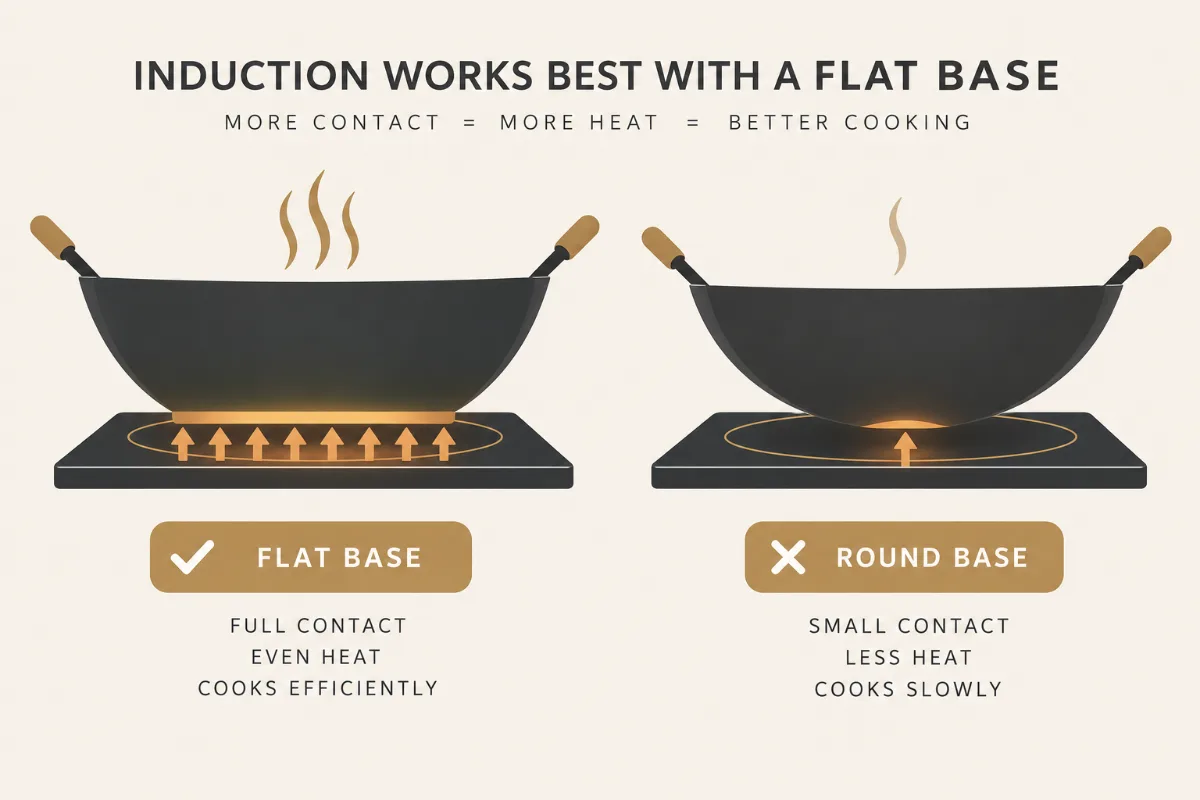
Traditional woks have round bottoms because they sit in a ring over a roaring gas flame that wraps up the sides. Induction and flat electric stoves do not work that way. They heat only the metal that physically touches the surface.
A round-bottom wok touches an induction hob in a tiny circle at the very bottom, if at all. Most of the bowl floats above the surface, cold. Induction may not even recognize the pan, and the small contact point scorches while the sides stay useless.
Flat electric coils and glass tops have the same problem. Heat transfers by contact, so anything not touching stays cold. A round wok wastes most of its surface.
There is a second problem with round bottoms on induction. Many induction hobs will not even switch on unless they sense enough magnetic contact. A round wok touching only a small circle may trigger an error or cycle on and off, never reaching cooking heat. The stove is protecting itself, but you are left with a cold wok.
That is why a flat base is not a nice-to-have here. It is the whole requirement. Cooktop makers say the same in their induction cookware guidance: the pan must present a flat, magnetic base to the zone. Wok specialists like The Wok Shop and Grace Young, a respected authority on wok cooking, make the same point about matching the wok to the heat source.
What to look for: base, gauge, size
Three specs decide whether a flat-bottom wok performs on your stove. Get these right and almost any brand works.
Flat-base diameter
This is the number that matters most. The flat section of the base must cover, or nearly cover, your heating zone. On induction, a base smaller than the zone leaves cold rings and confuses the sensor. Aim for at least six inches of flat base. Wider is better for even heat, and around 6.5 to 7 inches suits many induction rings well.
Gauge and heat retention
Gauge is the metal thickness. Thin woks heat fast but lose heat the instant food hits them, which steams your stir-fry. A medium-heavy or 15-gauge wok holds high heat more steadily, so the pan recovers quickly when you add cold ingredients. On induction, where you cannot get a huge flame to force heat back, that thermal steadiness helps a lot.
Handling
A 13 to 14-inch wok is the practical size for home cooking. Bigger overhangs the stove and gets heavy. Look for a long wooden or stay-cool main handle plus a helper handle on the far side, so you can lift and toss a full wok without burning your hand. A wooden handle is a real plus on induction, because the stove itself gives off no flame to char it and it stays cool to grip.
One more thing to check: the depth and slope of the bowl. A flat-bottom wok trades some of the classic round shape for a flat base, so the sides are a little more upright. You still want enough depth to toss without flinging food out, so look for a bowl at least a few inches deep with sloped sides you can push ingredients up against.
Best overall flat-bottom wok
Our overall pick is the Yosukata Pow Wok 13.5-inch. It has roughly a six-inch flat base (verify), a medium-heavy gauge that holds heat well, and a deep bowl with real tossing room. At around $63 (verify), it hits the sweet spot of price and performance.
In testing it made full contact on our induction ring, came up to searing heat quickly, and recovered fast when we added cold vegetables. The long handle and helper handle let us toss a loaded wok without strain. It ships needing seasoning, which is normal for bare carbon steel.
Our measured flat base sat right around the six-inch mark (verify), which covered our standard induction zone with a little to spare. Heat spread evenly across that base, and the sloped sides warmed enough by conduction to keep vegetables moving and searing rather than stewing. For a mid-price wok, it punched above its cost in our stir-fry runs.
It suits the everyday cook who wants restaurant-style stir-fry on a modern stove without overthinking specs. Season it well before first use and it turns slick within a couple of weeks of cooking. For the technique side, pair it with our how to get wok hei guide, and season it right with our how to season a carbon steel wok walkthrough.
Best budget flat-bottom wok
For value, the SUMEIGUAN 13.5-inch nitrided wok stands out at around $40 (verify). Its flat base measures about 6.7 inches (verify), the widest in our group, so it covers most induction zones with room to spare.
The nitrided finish is the budget perk. Nitriding hardens the surface and adds rust resistance, so the pan needs less babying than a raw steel wok while young. Gauge is medium rather than heavy, so it will lose heat a bit faster when crowded. Cook in smaller batches and it performs well.
The trade-off for the low price is a lighter build and simpler handle hardware. The nitrided surface also means it will not develop the same deep, home-built seasoning character that a raw steel wok does, though it still gains a working patina with use. For a first wok on induction, though, it is a lot of pan for the money, and the wide base makes it forgiving on a range of zone sizes.
If your induction zone is on the larger side, this pick’s extra base width is a real advantage. A base that covers more of the ring heats more of the wok directly, which cuts down on the cold spots that plague narrower bases on big zones.
Best for serious induction stir-fry
If stir-fry is a passion, spend up on the Yosukata Blue 13.5-inch, around $94 (verify). It uses a heavier 15-gauge steel and a blued surface that seasons quickly and resists rust from the start.
The heavier gauge is the point. On induction, where you cannot summon a wall of flame, thicker steel banks more heat and gives it back when food hits the pan. That means better searing and less steaming when you push volume. The deeper bowl also gives more room to toss without spilling.
It costs more and weighs more. For a casual cook that is overkill. For someone chasing the best sear induction can give, it is the pick. The extra weight also steadies the wok on a smooth glass surface, so it is less likely to slide when you push food hard against the sides.
The blued surface is a genuine convenience. It arrives with rust resistance built in and takes seasoning quickly, so you spend less time babying a raw pan and more time cooking. If you have struggled with a bare wok rusting or sticking early, this one smooths out those first frustrating weeks.
For the cheapest way to try induction stir-fry, the FGJ 13-inch with a lid rounds out the group at around $34 (verify). The lid is handy for steaming and simmering, and the flat base does the job. The build is light, so manage your batch sizes and expect to replace it sooner than the sturdier picks. It is a fine starter to learn on before you commit to a heavier wok.
Getting wok hei on induction
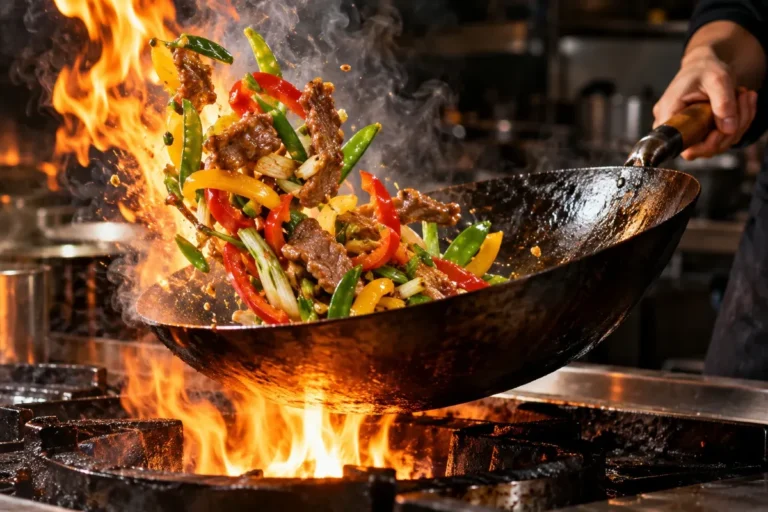
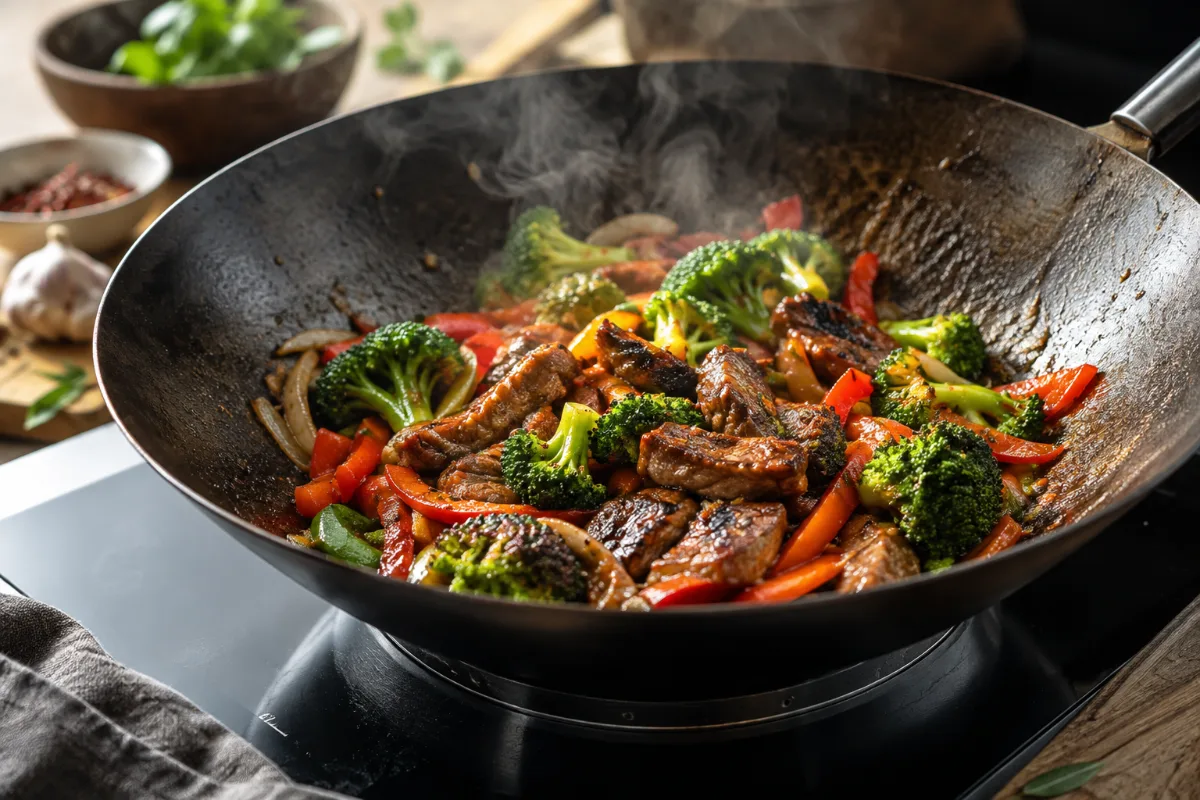
Time for honesty. Full wok hei, that smoky restaurant aroma, comes from very high heat and open flame licking the food and oil. Induction and electric cannot match a restaurant wok burner’s raw output, so you will not get the exact same result at home.
You can get close, though. Preheat the wok until it is truly hot before oil goes in. Cook in small batches so the temperature never crashes. Dry every ingredient hard, because surface water steams instead of searing. And keep food moving so it chars lightly without stewing.
A heavier-gauge wok helps most here, since it holds the heat you build. Manage your batches and your dryness, and an induction stir-fry can taste far better than most home cooks expect.
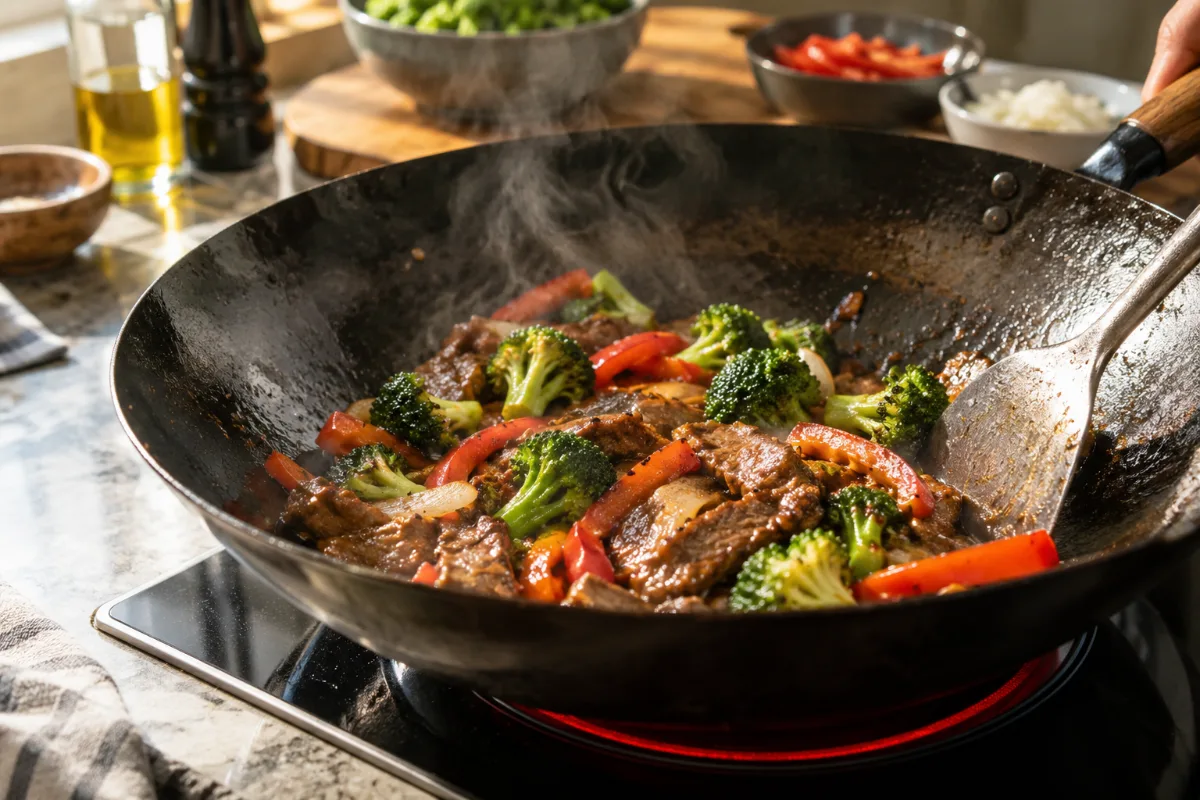
A couple of induction-specific tricks stack the odds in your favor. Crank the hob to its highest setting and give the empty wok a full preheat, longer than you think, before oil goes in. Cook proteins and vegetables in separate small batches, then combine at the end, so the pan never crashes in temperature. Add sauce down the hot side of the wok in the last seconds rather than dumping it in cold. None of this fully replaces a jet-engine restaurant burner, but together they get you a surprisingly smoky, well-seared result on a stove that was never built for it.
For the full method and the four levers that create that flavor, see our how to get wok hei guide and our main carbon steel woks overview.
| Wok | Flat base | Gauge | Best for | Price |
|---|---|---|---|---|
| Yosukata Blue 13.5” | ~6 in (verify) | 15-gauge | Serious stir-fry | $94 (verify) |
| Yosukata Pow Wok 13.5” | ~6 in (verify) | Medium-heavy | Best overall | $63 (verify) |
| SUMEIGUAN 13.5” nitrided | 6.7 in (verify) | Medium | Budget + easy care | $40 (verify) |
| FGJ 13” with lid | Flat (verify) | Light-medium | Cheapest entry | $34 (verify) |