How to Stir-Fry at Home and Get Wok Hei
By the Carbon Steel Pan test team · Last updated September 2026
Wok hei is the smoky flavor created when food sears and lightly chars over very high heat in a hot wok. To get close at home, preheat the wok until it smokes, cook in small batches so the heat never drops, keep every ingredient dry, and keep the food moving. A powerful burner helps, but technique matters more than raw output.
What wok hei actually is
Wok hei translates roughly as “breath of the wok,” and it names that smoky, seared aroma you taste in good takeout that home stir-fries usually miss. It is worth being honest about where it comes from, because the myth is that it hides in a secret sauce.
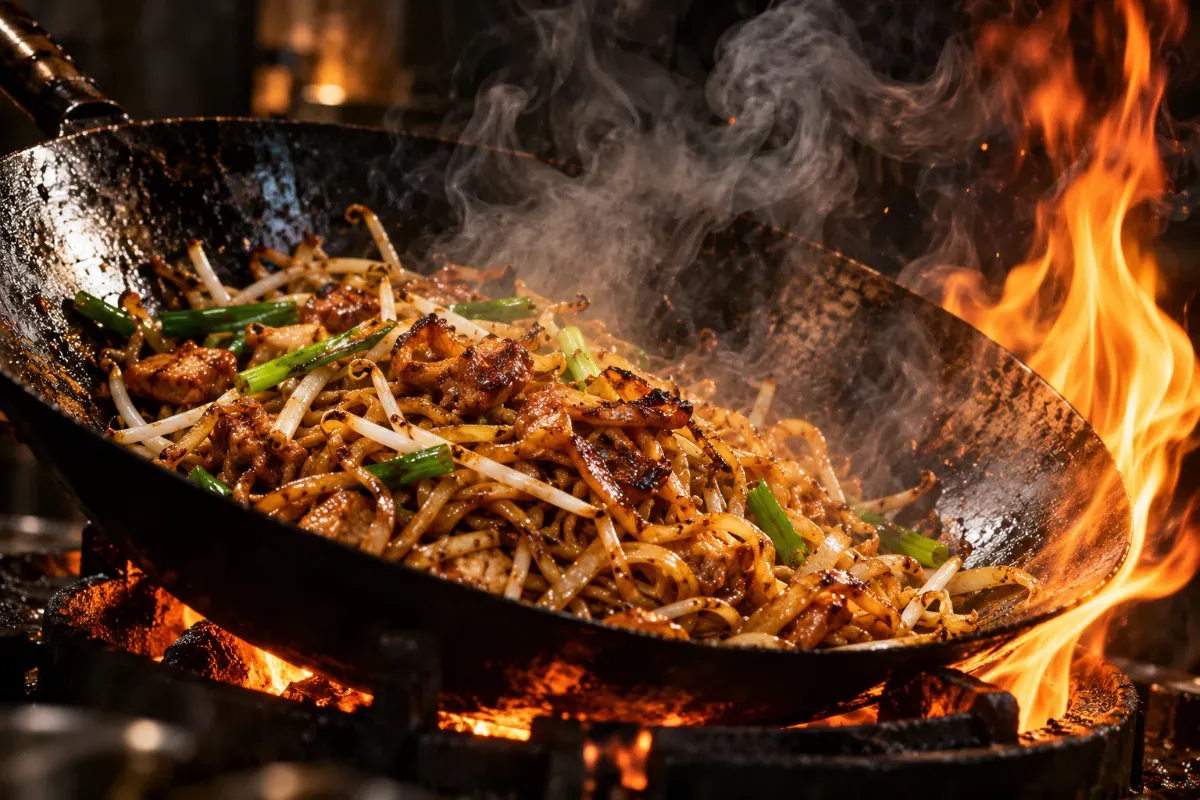
It does not. Wok hei is the flavor of high-heat searing plus a touch of char. When food and a thin film of oil hit metal that is screaming hot, the surface browns fast through the Maillard reaction, and tiny bits of oil and food vapor ignite at the wok’s edge, adding a faint smokiness. That combination of hard sear and light char is the whole effect. There is no ingredient you can add to fake it.
Set your expectations with clear eyes. Restaurant woks sit over burners that roar with heat a home stove cannot match, which is why their wok hei is so pronounced. You can get a real, satisfying version at home, and the rest of this guide shows how, but chasing an exact restaurant copy on a standard stove will only frustrate you. As Serious Eats and wok authority Grace Young have both explained, the goal at home is to stack every advantage you control so the heat does as much work as possible.
There is also a small science point worth knowing, because it changes how you cook. Part of wok hei comes from oil that gets hot enough to break down slightly and vaporize, then reacts at the metal’s surface. That reaction needs the wok to be hotter than the oil’s normal cooking range, which is why a merely warm pan never produces it no matter how long you cook. The flavor is a high-heat event, not a slow-simmer one. Everything in the technique below serves that one idea: get the surface blistering hot and keep it there.
The four levers you control
Almost every home stir-fry problem traces back to one of four things. Master these levers and your results jump.
Screaming-hot wok
Heat is the first lever and the most important. The wok must be truly hot before anything goes in, hot enough to smoke lightly. A lukewarm wok steams food and never builds the sear that creates wok hei. Home cooks lose the flavor most often right here, by starting too cool and adding food too soon.
Small batches
Every time you add cold, wet food, the wok temperature drops. Pile in too much at once and it plummets, and the wok cannot recover. Instead of searing, the food sits in its own released juices and steams. Cooking in small batches keeps the heat high, so each piece sears fast. This one habit fixes more soggy stir-fries than any burner upgrade.
Dry ingredients
Water is the enemy of a sear. Wet vegetables and un-blotted protein dump moisture into the wok, which boils and cools the surface and blocks browning. Dry everything hard before it goes in. Pat proteins with paper towels, and let washed vegetables drain and dry fully. Dry food browns; wet food steams.
Constant motion
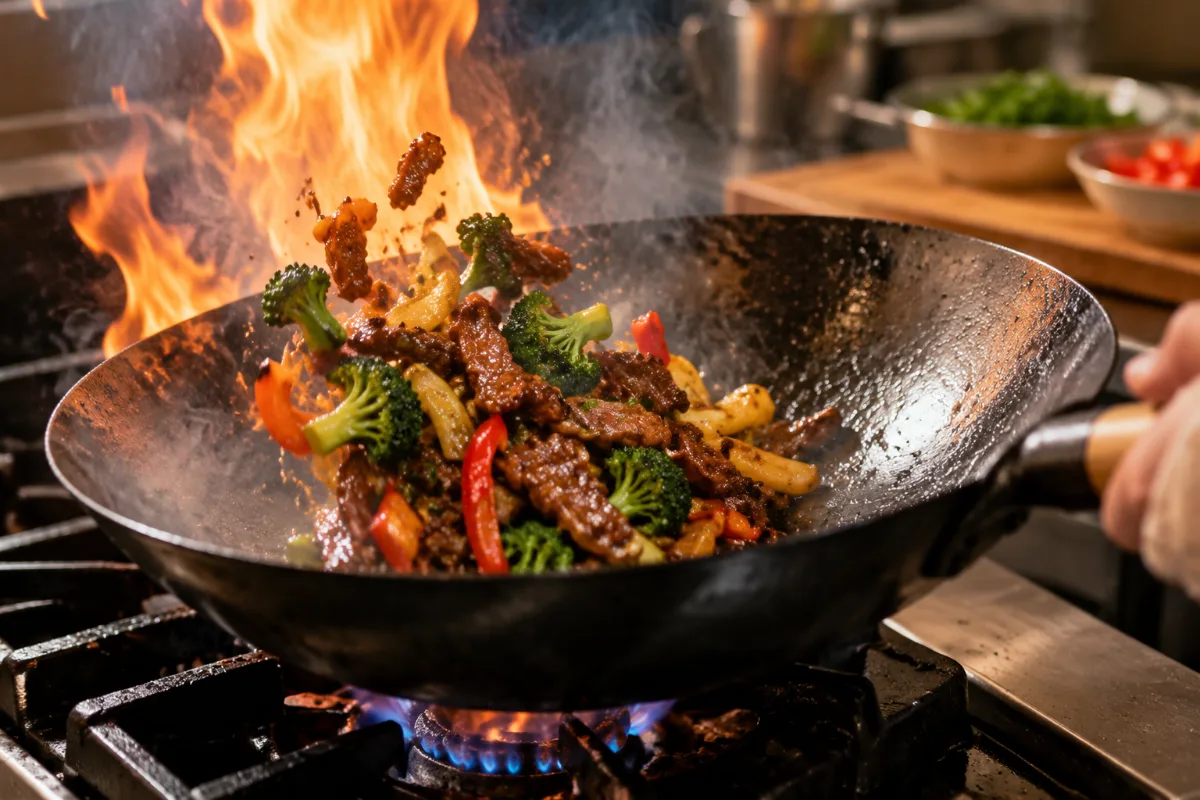
A stir-fry cooks fast and hot, so food left still in one spot burns while the rest stays raw. Keep it moving. Toss and stir so every surface touches the hot metal in turn and nothing scorches. The constant motion is also what flings food up to the wok’s hottest upper edge, where a little char develops. Motion spreads the heat and builds the flavor. If tossing with a flick of the wrist feels awkward at first, a wok spatula and a stirring hand do the same job; the point is that nothing sits still long enough to burn.
Set-up: everything ready before the heat
Mise en place is not optional for stir-frying. It is the difference between success and a burnt mess, because the actual cooking is often over in 90 seconds. There is no time to chop or measure once the wok is hot.
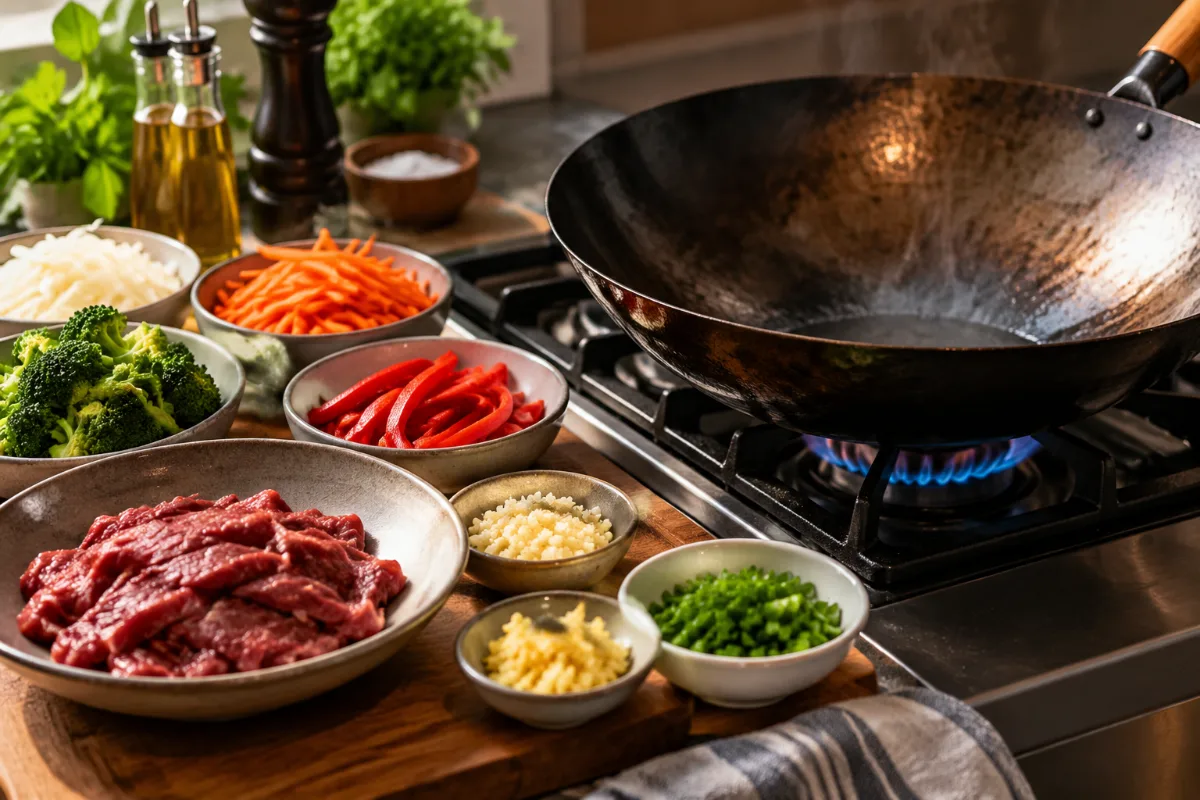
Prep every single thing before you turn on the burner. Cut all proteins and vegetables to the sizes you want. Mix your sauce in a small bowl so it is ready to pour in one motion. Measure your aromatics, the garlic, ginger, and scallions, and set them within arm’s reach. Line up the bowls in the order they go into the wok.
Think through the sequence too. Proteins usually cook first and come out, hard vegetables go before soft ones, aromatics go in fast and briefly, and the sauce comes last. Arranging your bowls in that order means you are never hunting for the next ingredient while the food in the wok overcooks. When the heat is this fast, preparation is what buys you control.
Cut everything to a size that cooks fast and evenly. Thin slices, small florets, and uniform pieces sear in seconds, which is what you want when the whole cook is over so quickly. A thick chunk of carrot will still be raw when the rest is done. Velveting the protein helps too, a classic step where you toss sliced meat with a little cornstarch, egg white, and a splash of oil before cooking. It shields the surface, keeps the meat tender, and helps it brown rather than seize. None of this is fussy once you have done it a few times, and it all happens before the burner is even on.
Quick answer: Our tested guide to how to get wok hei keeps it simple: master the technique, keep the surface seasoned, and match your heat to the food. The full method, the key facts and the mistakes to avoid are all below.
How To Get Wok Hei: What Our Tests Found
Our team put how to get wok hei through repeated real cooking sessions to see what actually works. Below we break down the method, the facts that matter, and the common mistakes so you get reliable results the first time.
The stir-fry, step by step
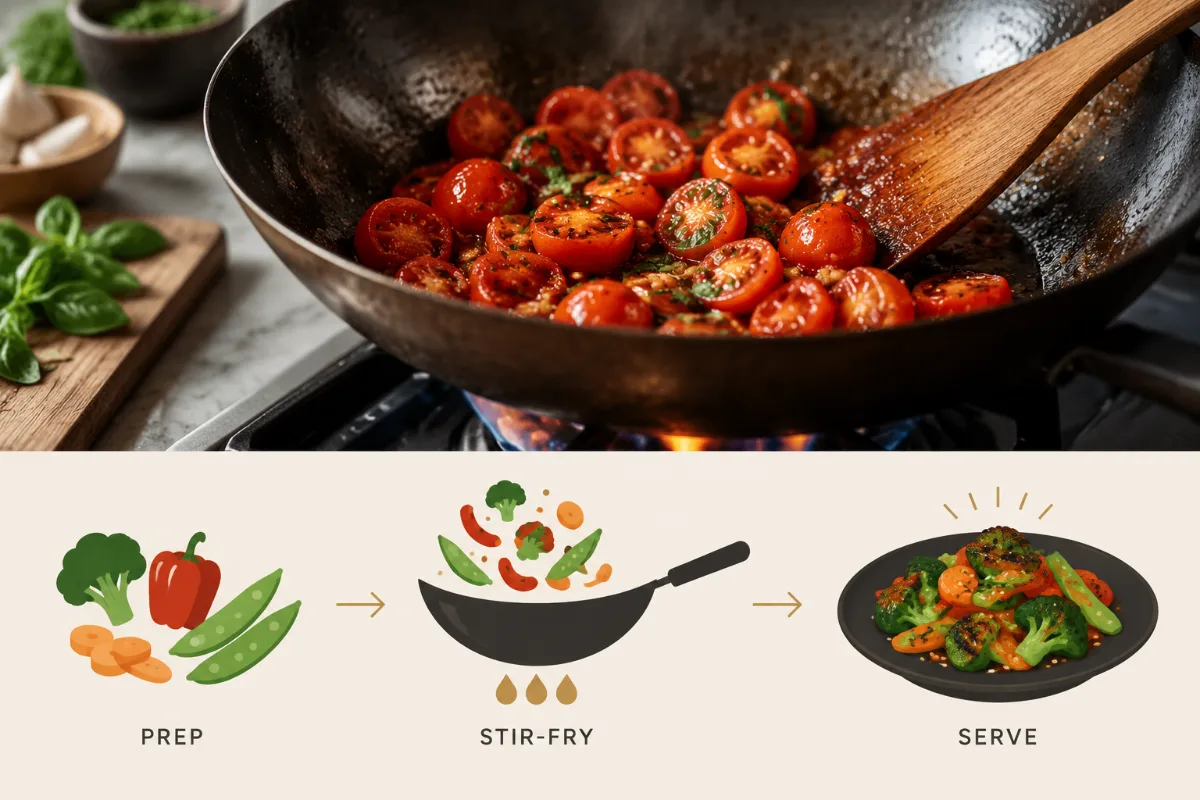
With everything prepped and dry, the cook itself is quick. Follow the order.
Preheat and season the wok
Set the empty wok over your highest heat and let it get hot enough to smoke lightly. Then add a high-smoke-point oil, such as peanut, grapeseed, or refined canola, and swirl it to coat the sides. Adding oil to an already-hot wok, rather than heating them together, helps prevent sticking and gets you to searing temperature fast.
Cook protein first
Add the protein in a single, thin layer and let it sear before you stir. Give it a few seconds of contact so it browns, then toss. Cook it in batches if you have a lot, so you never crowd the wok. Once it is seared and nearly done, scoop it out into a clean bowl and set it aside. Removing it keeps it from overcooking while you handle the vegetables.
Vegetables and aromatics
Add a little more oil if the wok looks dry, then add the vegetables, hardest and densest first, softest last. Keep them moving over high heat so they sear and stay crisp. When the vegetables are nearly done, push them aside and add the aromatics to the center for just 15 to 30 seconds, until fragrant. Adding garlic and ginger late keeps them from burning, which turns them bitter.
Recombine and sauce
Return the protein to the wok and toss everything together. Now pour the sauce around the hot edge of the wok, not into the cold center pile. Hitting the hot metal lets the sauce sizzle and reduce instantly instead of pooling and stewing the food. Toss to coat, let it cling for a few seconds, and turn it out onto a plate right away. Serve it hot.
Getting close to wok hei on a weak burner
Most home stoves cannot match a restaurant wok range, which pushes out many times the heat of a standard burner. That is a real limit, but it is not a dead end. You just lean harder on the levers you control.
Cook smaller batches than you think you need. If your burner is weak, the wok’s ability to recover heat is weak too, so keeping each batch tiny is the biggest single fix. Two servings often cook better as two separate batches than one crowded pile.
Dry your ingredients more aggressively than usual. On a strong burner you can get away with a little surface moisture. On a weak one you cannot, because every drop of water robs heat you do not have to spare. Blot proteins, drain vegetables, and even air-dry washed produce for a while before cooking.
If you have any gas at all, use it. A wok on a gas ring beats an electric coil for stir-frying, because gas responds instantly and the flame licks up the sides. Some cooks with electric or induction stoves use a portable high-output propane wok burner outdoors to get real wok hei. If you are stuck on electric, accept that you will get a good sear rather than heavy smokiness, and let a slightly longer sear on each batch build the browning that flavor comes from. Honest limits, real workarounds.
Two more tactics squeeze extra heat from a weak setup. First, preheat longer than feels necessary. A thin wok on a modest burner still gets very hot if you give it the time, so let it sit empty over high heat for several minutes before the oil goes in. Second, do not rinse the heat away. Have your food at room temperature rather than fridge-cold where food safety allows, since cold ingredients drop the wok temperature the most. Small moves like these add up, and together they close much of the gap between a home stove and a restaurant range.
It also helps to reset the wok between batches. When you pull one batch out and the next goes in, give the empty wok a few seconds back on high heat to recover before adding more oil and food. Rushing the next batch into a wok that has cooled is how the last two servings of a big stir-fry end up steamed while the first came out perfect.
Why carbon steel is the right wok metal
There is a reason the classic wok is carbon steel, and it lines up perfectly with everything above.
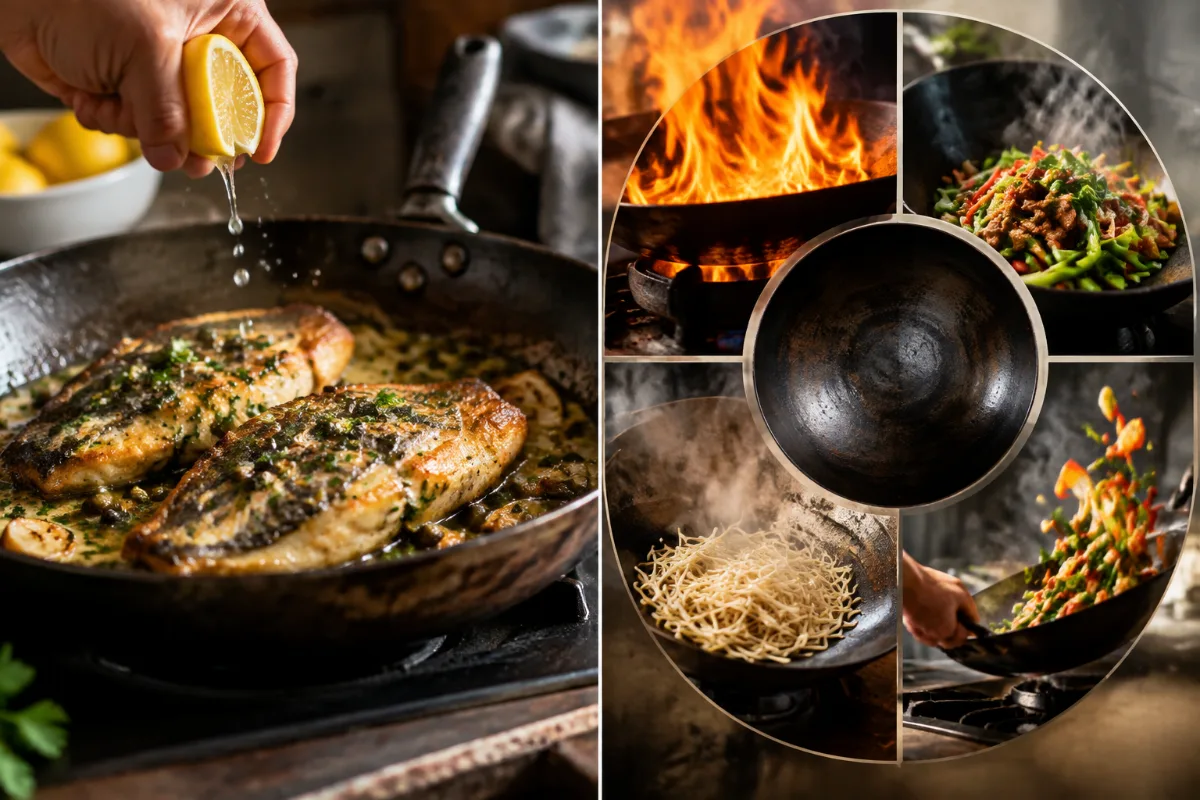
Carbon steel heats fast and takes very high heat, which is exactly what a sear needs. It is thin and light, so you can toss and flip the food with a flick of the wrist, keeping that constant motion going without wearing out your arm. A heavy cast iron wok fights you on this; carbon steel moves with you.
It also seasons over time, building the same slick, flavorful surface that carbon steel skillets do. A well-seasoned wok releases food cleanly and adds its own depth to the cooking. Fast heat, high heat, light weight, and a seasoning surface: no other metal hits all four the way carbon steel does, which is why it has been the wok of choice for generations.
Shape matters alongside metal. A traditional round-bottom wok concentrates heat at the base and gives you a cooler zone up the sides, which is where you park cooked food or coax garlic gently. On most home stoves a flat-bottom carbon steel wok sits more securely over the burner and makes better contact, so it is the practical choice unless you have a wok ring or a dedicated wok burner. Either way, carbon steel is the material doing the real work.
A quick word on nonstick woks, since they are common: skip them for wok hei. Their coatings cannot take the heat this cooking demands, and the slick surface prevents the very browning that creates the flavor. A coated wok is fine for gentle, low-heat frying, but it cannot make wok hei, because the technique and the coating are at odds.
Why home stir-fries fail, and the fix
Every common failure maps to one of the four levers. Diagnose your last soggy stir-fry against this table and the fix is usually obvious.
| Problem | Cause | Fix |
|---|---|---|
| Soggy vegetables | Overcrowded wok | Cook in small batches |
| No char or aroma | Wok not hot enough | Preheat until it smokes |
| Steamed, not seared | Wet ingredients | Dry everything first |
| Sauce dilutes flavor | Added too early | Add sauce at the hot edge, late |
Frequently asked questions
What is wok hei?
Can you get wok hei at home?
Why are my stir-fries soggy?
Do I need a special burner for stir-fry?
Is carbon steel the best wok material?
The takeaway
You do not need a restaurant range to cook a great stir-fry. You need a wok hot enough to smoke, small batches that keep it that way, dry ingredients, and food that never stops moving. Stack those four habits and you get real wok hei on a home stove, or as close as your burner allows.
Ready to cook? Browse our carbon steel woks and see the best carbon steel wok for stir-frying. A new wok cooks best once it is broken in, so start with how to season a wok, and keep it in shape with how to clean a wok.