Flat-Bottom vs Round-Bottom Wok: Which for Your Stove?
By the Carbon Steel Pan test team · Last updated September 2026
Choose a flat-bottom wok for induction, electric, or a standard home gas hob, because it sits stable and makes full contact with the heat. Choose a round-bottom wok only if you have a powerful open gas flame or a dedicated wok burner, where its shape allows classic tossing and even heat up the sides. On most Western stoves, a flat-bottom wok is the practical pick.
Buy the wrong base and you end up with a pan that rocks, heats in a tight ring, or barely gets hot at all. Buy the right one and stir-fry becomes easy. The flat vs round bottom wok question really comes down to one thing: your heat source. This guide sorts out which base your stove needs and why, so you get a wok that actually cooks.
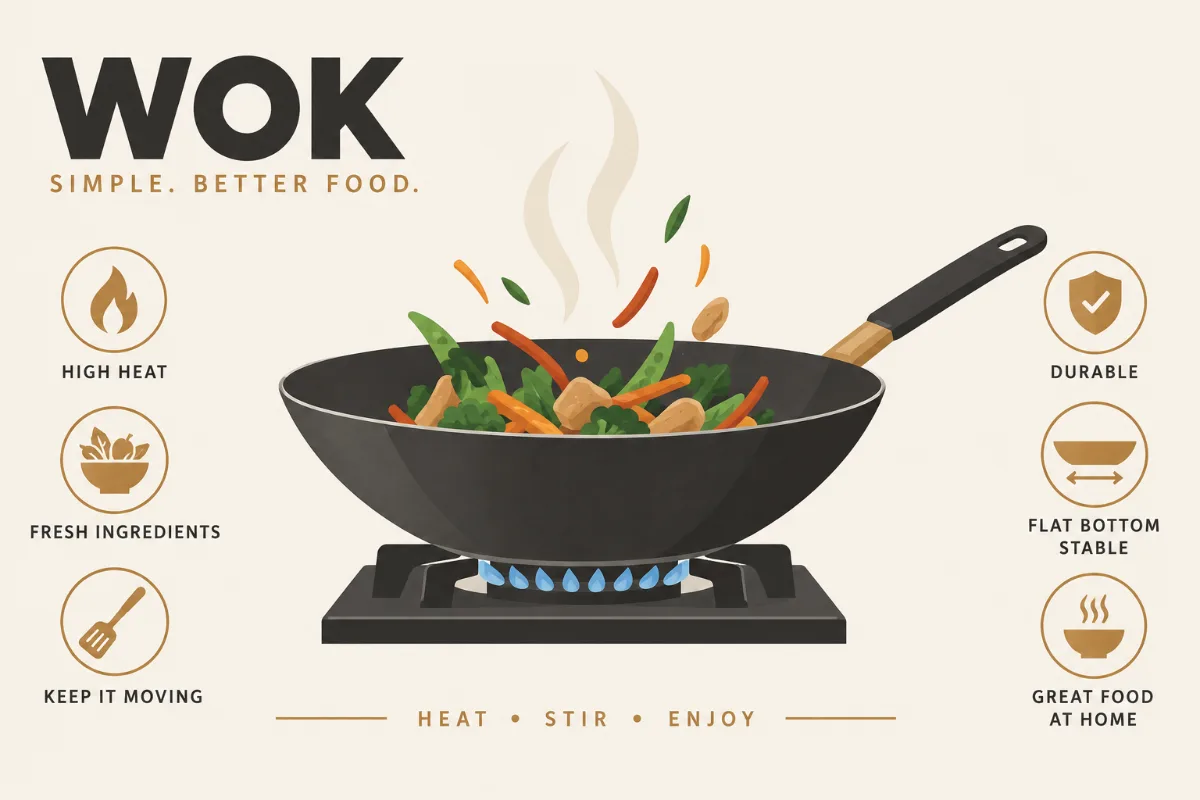
Quick answer: Our tested guide to flat vs round bottom wok keeps it simple: master the technique, keep the surface seasoned, and match your heat to the food. The full method, the key facts and the mistakes to avoid are all below.
Flat Vs Round Bottom Wok: What Our Tests Found
Our team put flat vs round bottom wok through repeated real cooking sessions to see what actually works. Below we break down the method, the facts that matter, and the common mistakes so you get reliable results the first time.
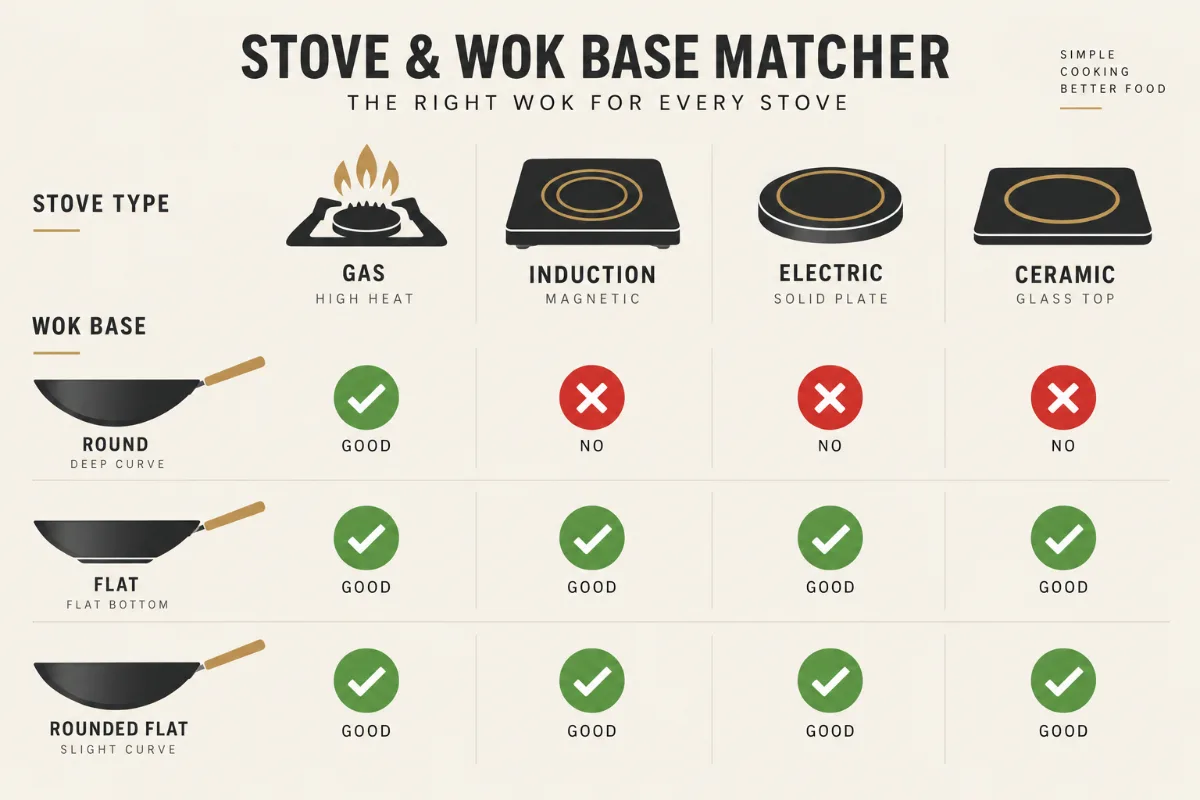
Match the base to your stove
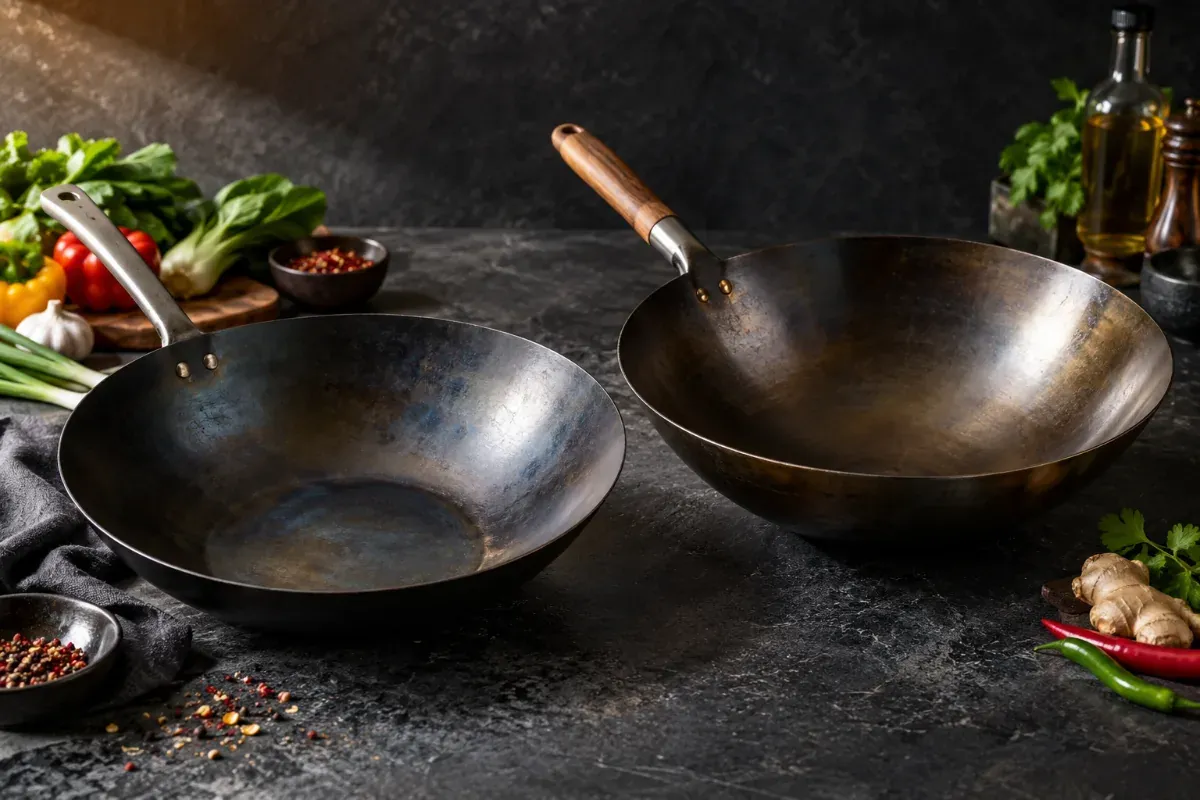
The base is the single most important choice when buying a wok, and it depends entirely on your heat source. A flat-bottom wok has a small flat spot at the bottom that sits directly on a burner or cooktop. A round-bottom wok curves to a point and needs a flame that can wrap around it.
For the three stoves in most homes, gas, induction, and electric, a flat-bottom wok is the answer. It sits steady without a ring, and its flat spot makes solid contact so the pan heats properly. A round-bottom wok only comes into its own over an open flame strong enough to lick up the curved sides, or on a purpose-built wok burner. Without that, it cannot heat evenly and tends to tip.
So the rule is simple. Flat base for a standard home stove. Round base only if you have a serious open flame. Get that right and everything else about wok cooking gets easier.
Flat-bottom woks: stable and versatile
A flat-bottom wok is the workhorse of the Western kitchen. Its flat spot lets it sit on any cooktop the way a frying pan does, so it heats from the bottom up with full contact and no wobble. On induction, that flat area is what the magnetic field grips. On electric coils or a glass top, it is what transfers the heat. On home gas, it gives the pan a stable footing over the flame.
That versatility is why we point most home cooks toward a flat base. It works on the stove you already own, needs no accessories, and stays put while you toss and stir. It is also easier to store, since it sits flat on a shelf.
There is one honest trade-off. The flat spot slightly changes the classic tossing motion, because a true round wok funnels food back to a single point while a flat wok has a small plateau at the center. In practice, this is a minor adjustment that most cooks stop noticing within a week. The stability and even heating you gain on a home stove matter far more than the small change to the toss.
Round-bottom woks: classic but demanding
A round-bottom wok is the traditional shape, and over the right heat it is a joy. Its continuous curve means food slides back to the hot center on its own, the sloped sides stay hot for pushing ingredients up out of the way, and the tossing motion feels natural and fluid. This is the wok that generations of cooks learned on.
The catch is the heat it demands. That curved shape only heats evenly when a strong flame can climb its sides, which means a powerful open gas burner or a dedicated wok ring burner. On a standard home gas hob, the flame is often too small and low to heat the upper walls, so only the very bottom gets hot.
On induction or an electric cooktop, a round-bottom wok simply does not work well. Induction needs flat contact to grip magnetically, and a round base offers almost none. An electric coil or glass top needs surface contact too, and a curved wok touches only at a point. Buy a round-bottom wok for a flat stove and you will fight it. Reserve this shape for open flames.
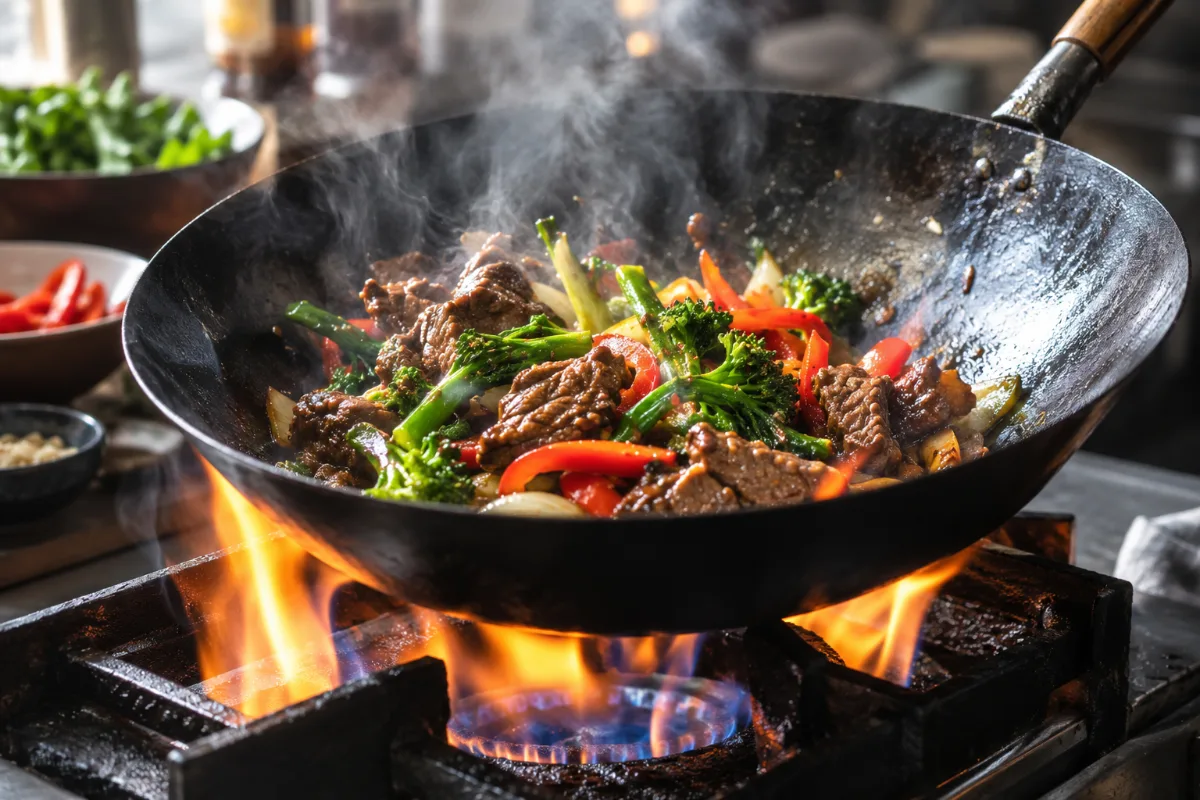
The wok ring question
A wok ring is a metal collar that cradles a round-bottom wok so it can sit on a flat stove. It sounds like the perfect fix, and it does keep the wok upright. The problem is what it costs you in performance.
By holding the wok in place, the ring lifts the pan away from the burner. That gap means the flame or element sits farther from the metal, so the wok heats more slowly and never gets as hot as it would in direct contact. On the high heat that stir-fry lives on, that lost intensity is a real handicap. You end up steaming food that should be searing.
A ring can make a round wok usable on a strong gas flame if that is all you have, but it is a workaround, not a solution. For a home stove, a flat-bottom wok that sits directly on the heat beats a round wok on a ring almost every time. If you find yourself reaching for a ring, that is usually a sign the flat base was the pan to buy.
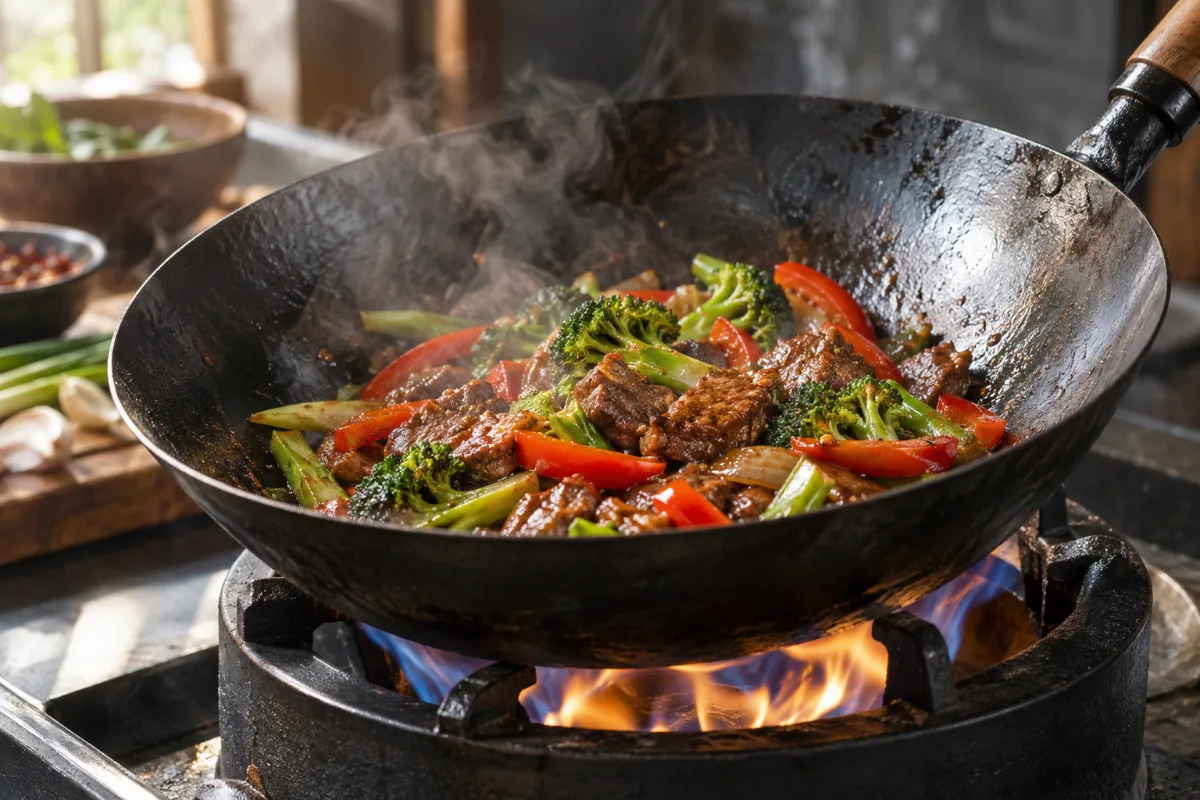
Which to buy by stove type
Your stove decides the pan. Here is the pick for each common setup, with the reason behind it.
Home gas
On a standard home gas hob, buy a flat-bottom wok. The flat spot gives stable footing and good contact with the burner. If you happen to have a high-output gas range, a round-bottom wok can work over that strong flame, but the flat base is the safer, steadier choice for most home ranges.
Induction and electric
On induction, electric coil, or a glass or ceramic top, a flat-bottom wok is the only sensible option. These stoves heat through direct contact, and induction specifically needs a flat magnetic surface to grip. A round base fails on all three. Match the flat spot to your zone or element size for the most even heat.
Outdoor wok burner
If you cook outdoors on a dedicated wok burner, the round-bottom wok finally gets to shine. These burners throw a wide, powerful open flame designed to wrap the curved sides, delivering the fierce, even heat and easy tossing that make round woks legendary. This is the one setup where round beats flat outright.
Below is the quick reference for matching base to stove.
| Stove | Best base | Why |
|---|---|---|
| Home gas | Flat (or round with strong flame) | Stability and contact |
| Induction | Flat | Needs flat magnetic contact |
| Electric coil / glass | Flat | Full surface contact |
| Outdoor wok burner | Round | Open flame suits the shape |
Read that table against your own kitchen and the choice usually makes itself. Most home cooks land on flat, and that is exactly as it should be.
Does the base change how you cook?
Base shape does more than decide where a wok sits. It shapes the cooking motion too, and it helps to know what changes so the switch feels natural.
With a round-bottom wok, food naturally slides back to the hot center, so tossing is a flowing, continuous motion. You push ingredients up the cool sides to hold them, then flip them back into the heat. The curve does half the work for you. This is the feel that traditional wok cooking is built around, and over a strong flame it is fluid and fast.
With a flat-bottom wok, the small flat plateau at the center means food does not funnel back quite so automatically. You compensate with a little more stirring and a slightly firmer toss to keep everything moving. It takes a few cooks to adjust, but it is a minor change, not a handicap. The upside is that the flat spot holds a steadier pool of oil and gives a stable surface for searing a piece of protein before you build the stir-fry around it.
For most home cooks, the flat-bottom motion becomes second nature within a week, and the even heating you gain on a home stove outweighs the small change to the toss. If you learned on a round wok over a wok burner, expect a brief adjustment, then a pan that actually gets hot on the stove you own.
Size and depth matter as much as the base
Once you have settled the base, do not overlook size and depth, because they decide how the wok handles a real meal. A wok that is too small crowds food, which drops the heat and steams the ingredients instead of searing them. A 13 to 14 inch wok suits most home cooks, giving room to toss a family portion without spilling. Depth lets you flip with confidence and holds enough oil for a shallow fry.
The base and the size work together. A wide flat base heats a home burner evenly, and good depth keeps food in the pan while you toss. Get both right and a flat-bottom wok on a home stove cooks a stir-fry that rivals what a round wok manages over a flame. Skimp on either and even the right base will disappoint. When you move from base shape to picking a model, our carbon steel woks guide covers the sizes and gauges worth looking at.
Our recommendation
For the great majority of home kitchens, buy a flat-bottom carbon steel wok. It works on the stove you own, sits steady while you cook, and heats evenly without a ring or any workaround. The small change to the tossing motion is a fair price for a pan that actually gets hot on a home range. Save the round-bottom wok for an outdoor wok burner or a powerful open gas flame, where its shape earns its keep.
A wok specialist, Serious Eats, and most cooktop makers agree on this basic split, and our own testing across gas and induction backs it up. If you want help choosing an actual model, our overview of carbon steel woks covers the field and the features that matter.
Frequently asked questions
Should I buy a flat or round bottom wok?
Can you use a round-bottom wok on an electric stove?
Does a wok ring work?
Is a flat-bottom wok worse for stir-fry?
Which wok base is best for induction?
The bottom line
The base you choose has to match your heat source. A flat-bottom wok is the practical pick for induction, electric, and standard home gas, giving stable footing and full contact so the pan heats the way it should. A round-bottom wok belongs over a strong open flame or a dedicated wok burner, where its curve delivers even heat and effortless tossing. Match the base to your stove first, and the rest of wok cooking falls into place. To go deeper on getting a proper sear at home, our carbon steel woks guide is the next stop.