Does Carbon Steel Work on Induction? Full Compatibility Guide
By the Carbon Steel Pan test team · Last updated September 2026
Yes. Carbon steel works on induction. The metal is ferrous, meaning it is magnetic, and that is the one thing an induction cooktop needs to see. How well it performs comes down to the base: it must be flat and wide enough to cover the cooking zone. A warped or undersized base is the only real reason a carbon steel pan disappoints on induction.
The short answer
Carbon steel and induction are a natural match. Induction needs a magnetic base to work, and carbon steel is iron based, so it responds the instant you switch the hob on. No adapter, no special line of “induction” pans required.
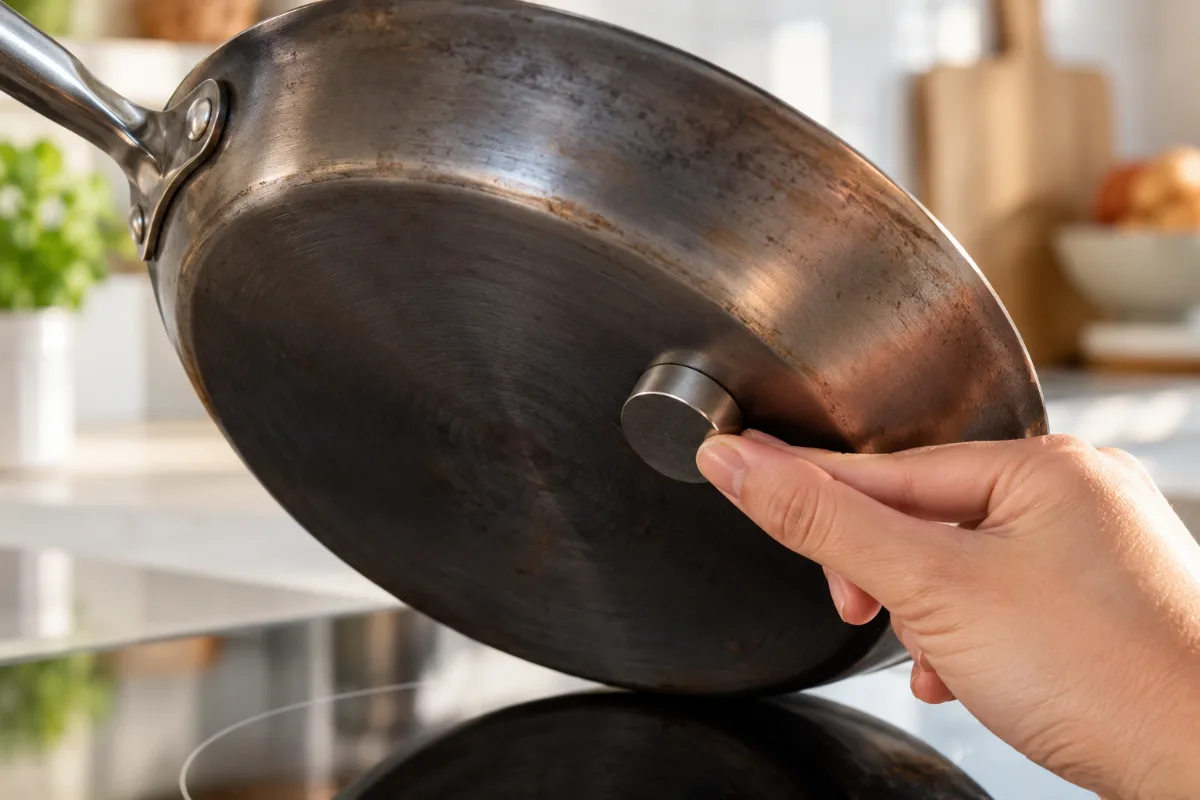
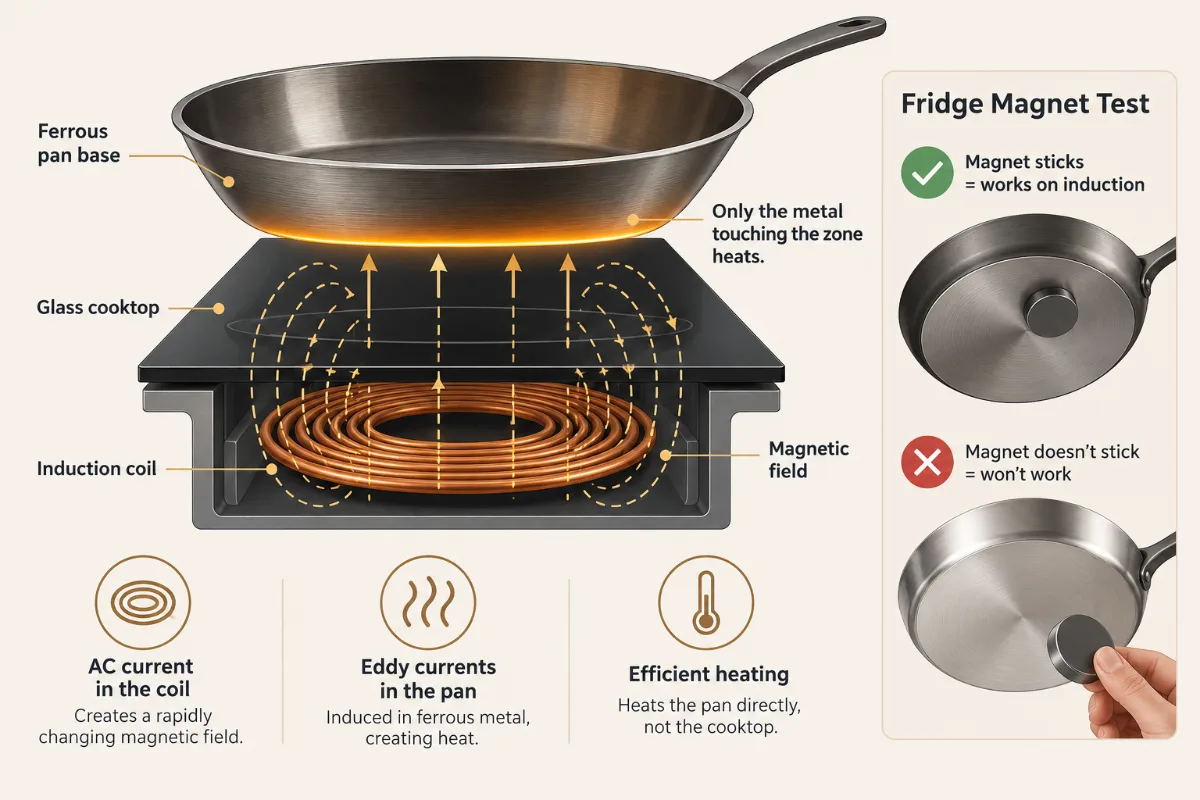
You can prove it in five seconds. Stick a fridge magnet to the bottom of the pan. If it grabs firmly, the cooktop will power it. Every bare carbon steel pan passes that test, because iron is what makes both the magnet and the cooktop work.
The one thing to watch is contact. Induction heats only the part of the base sitting on the zone, so a flat bottom that matches your element does the job. The rest of this guide explains why, and how to get even, quiet, fast heat every time.
How induction actually heats a pan
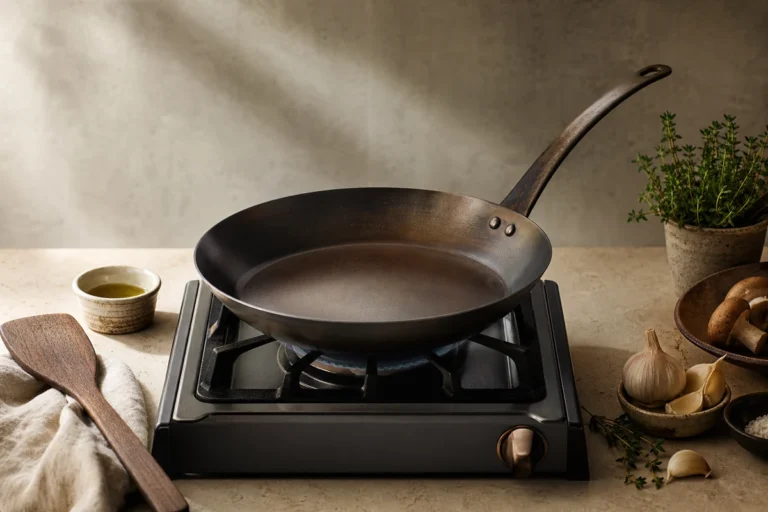
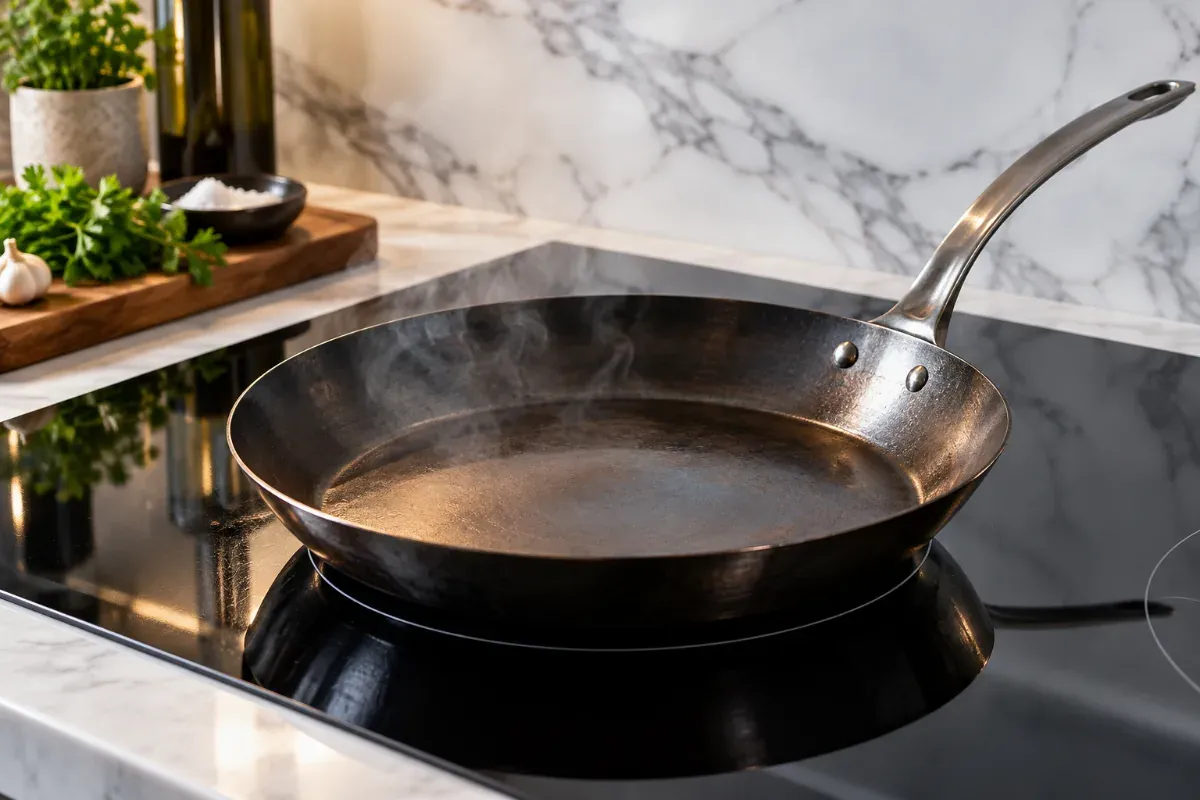
Induction skips the flame and the glowing element. Under the glass sits a coil of wire. When you turn the zone on, that coil creates a fast-changing magnetic field. The field reaches up into the metal base of the pan and stirs up electric currents inside it. Those currents meet resistance in the steel and turn into heat. The pan heats itself; the cooktop stays comparatively cool.
This is why the metal has to be magnetic. A field can only drive currents in a ferrous, or iron-based, material. Aluminum and copper on their own do not respond, which is why those pans need a bonded magnetic disc to work on induction. Carbon steel is iron through and through, so the whole base reacts. That direct heating is what makes induction so quick to come up to temperature.
It also explains why contact matters so much. The field acts on the metal directly above the coil. Any part of the base that lifts away from the glass gets little to no field, so it stays cooler than the rest.
The magnet test anyone can do
Before you buy or before you cook, run the magnet test. Take an ordinary fridge magnet and press it to the underside of the pan. A firm, immediate grip means the pan is ferrous and induction ready. A weak or no grip means the metal is not magnetic enough, which never happens with true carbon steel but can happen with aluminum or some stainless blends. It is the fastest compatibility check there is.
Why base flatness and size decide performance
Here is the detail that trips people up: on induction, only the metal touching the zone heats. That single fact drives almost every performance issue people blame on the pan.
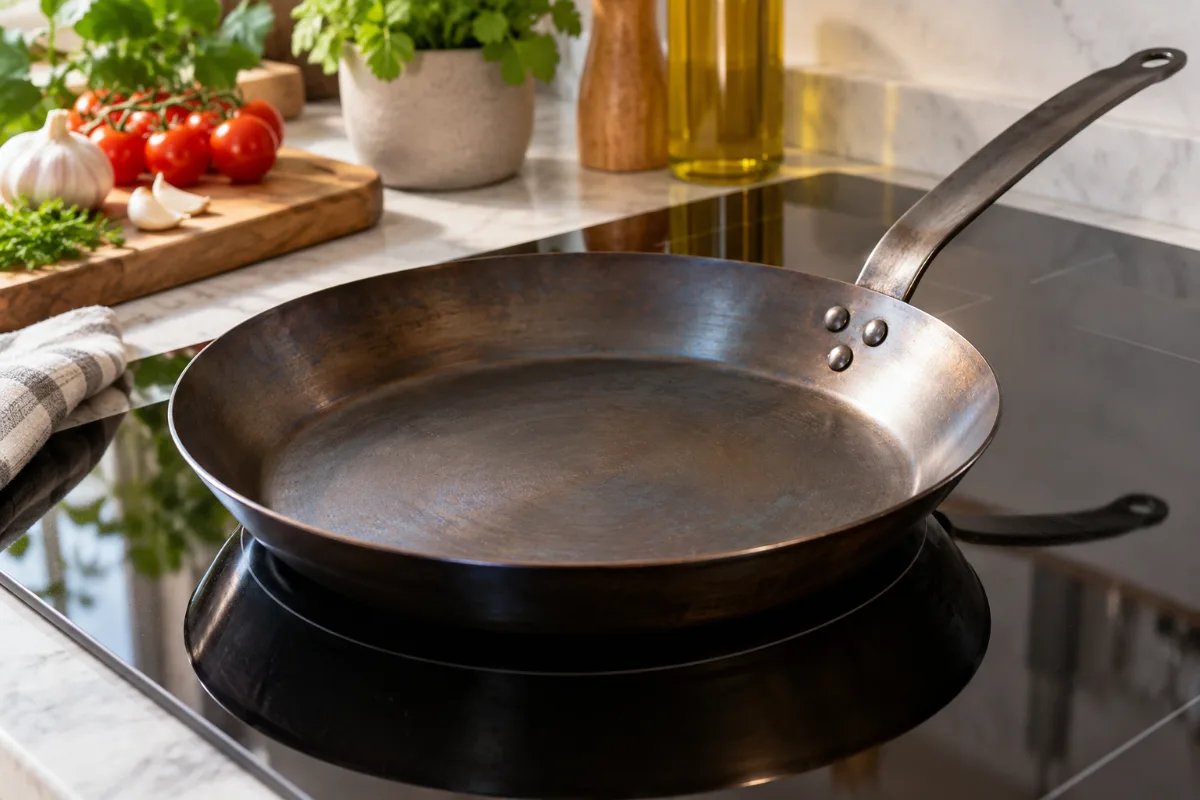
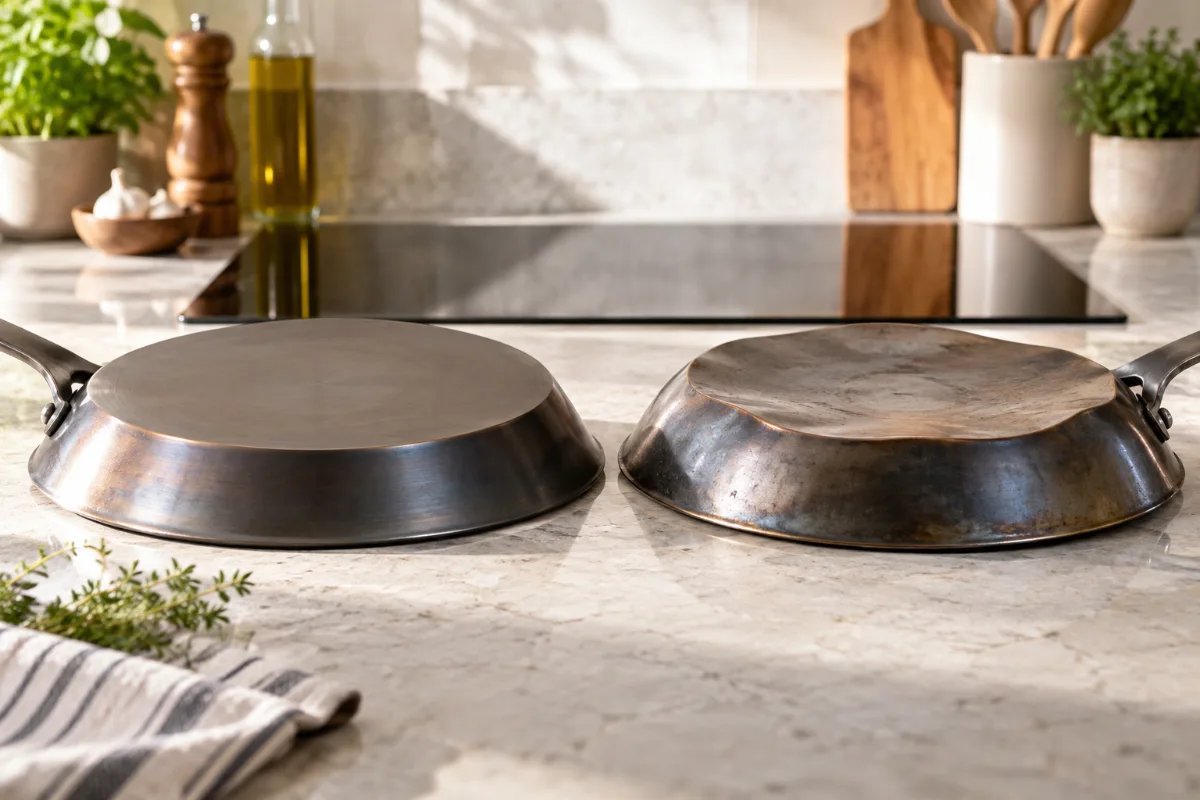
A base that is perfectly flat sits in full contact with the glass, so the whole cooking surface heats evenly. A base with a slight dome or a warp touches the glass only around the edges or only in the center. The cooktop then heats a ring or a spot instead of the whole pan, and you get hot zones, cool zones and uneven browning. A wobbly base can also make the pan hum or rattle as the field pulses.
Size matters just as much. Two numbers describe a pan, and they are not the same. The rim diameter is the width across the top, which is the number brands usually put in the name. The cooking surface diameter is the flat area on the bottom that actually meets the hob. A pan sold as 11 inches might have a flat base closer to 8 inches. For even heat, match that flat base to your element. A base much smaller than the zone leaves the cooktop searching for metal and heating unevenly; a base much larger than the zone leaves the outer rim cooler than the middle.
The practical rule is to pick a pan whose flat base roughly covers your most-used zone, then cook centered on it.
Will induction warp a carbon steel pan?
Induction itself does not warp pans. Warping comes from thermal shock, meaning fast, uneven temperature swings, and thin pans are the most exposed to it.
Two moves cause most warping. The first is blasting an empty thin pan on maximum power, which heats the center fast while the rim lags, so the metal expands unevenly and can bow. The second is dropping cold liquid, like water or stock, onto a screaming-hot thin base, which shrinks the hot metal in an instant. Both create stress the steel resists by flexing, and a very thin base flexes more easily.
Induction gets blamed because it heats so quickly that these mistakes happen faster than on gas. The fix is technique, not a different cooktop. Heat the pan gradually, starting on medium rather than full power, and let it come up over a minute or two. Match the pan to the zone so heat spreads across the base instead of concentrating. Add liquids when the pan is hot but not violently overheated. Heavier gauge pans resist warping better because the thicker metal shrugs off uneven heating. If you want to go deeper on this, see our guide on carbon steel pan warping (planned).
Carbon steel on a glass induction surface: avoiding scratches
The rule on a glass induction top is simple: lift, do not drag. Almost every scratch on an induction surface comes from sliding a pan across the glass, especially with grit or a rough base edge underneath.
Pick the pan up to move it rather than pushing it around. Keep the base clean and free of cooked-on debris, since a hard fleck trapped between metal and glass acts like sandpaper. Wipe the bottom of the pan before it goes on the hob. A smooth, clean carbon steel base sitting flat will not mark the glass under normal use. For more on protecting a glass surface, see our carbon steel on glass-top stoves guide (planned).
Quick answer: Our tested guide to carbon steel work on induction keeps it simple: master the technique, keep the surface seasoned, and match your heat to the food. The full method, the key facts and the mistakes to avoid are all below.
Carbon Steel Work On Induction: What Our Tests Found
Our team put carbon steel work on induction through repeated real cooking sessions to see what actually works. Below we break down the method, the facts that matter, and the common mistakes so you get reliable results the first time.
How to set up and heat carbon steel on induction
Follow these steps to get fast, even, quiet heat from a carbon steel pan on any induction hob.
- Match the zone to the pan. Choose an element close to the diameter of the pan’s flat base so the whole base sits over the coil.
- Center the pan. Place it squarely on the zone. An off-center pan heats unevenly and is more likely to buzz.
- Confirm contact. Make sure the base sits flat with no wobble. Give the pan a gentle press; it should not rock.
- Start on medium. Begin around the middle of the power range rather than maximum. Carbon steel heats fast, and a gradual start protects a thin base.
- Let it come up gradually. Give it a minute or two to reach temperature. On our test hob, a 26 cm pan reached frying heat in about (measure) minutes on medium (verify with an in-house test).
- Adjust down once hot. After the seasoned surface is up to temperature, drop the power to your cooking level. Because the metal responds instantly, small dial changes take effect quickly.
Which carbon steel pans suit induction best
The best carbon steel pans for induction share two traits: a flat, true base and enough gauge to hold heat and resist warping. A heavier pan sits more stably, spreads heat more evenly, and takes fast induction heating in stride.
Look for a model with a machined or pressed flat bottom and a stated cooking surface diameter, not just a rim size. Heavier-gauge pans from established makers tend to fit this profile. De Buyer’s Mineral B and Carbone Plus lines, Mauviel’s carbon steel range, and Merten & Storck pans are all built as flat-based, ferrous cookware that works on induction (verify current model specs on each brand’s page). The heavier the pan within a range, the more forgiving it is on a powerful hob.
Skip very thin, lightweight pans if induction is your only heat source and you cook hot. They warp more easily and can rattle on the zone. A medium to heavy gauge is the safer buy. The table below shows what to check before you spend.
| Factor | Why it matters | What to look for |
|---|---|---|
| Magnetic base | Required for induction to work | A magnet sticks firmly to the base |
| Flat base | Only touching metal heats | Sits flat, no wobble or dome |
| Base diameter | Must cover the zone | Match pan to the element size |
| Gauge / thickness | Resists warping, holds heat | Heavier gauge for high-heat use |
| Handle | High heat transfers up | Riveted steel or stay-cool design |
For a full shortlist, see our best carbon steel pan for induction roundup (planned) and the carbon steel frying pans guide. Handle build matters on a hot hob, so it is worth reading riveted vs welded handles before choosing.
Common induction problems and quick fixes
Most induction complaints have the same short list of causes. Here is how to read each one.
The pan buzzes or hums. The base is not perfectly flat, or the pan is smaller than the zone. Center it, match a closer zone size, and check for wobble. A heavier pan usually goes quiet.
Browning is uneven. The base is domed or warped, so only part of it touches the glass. Confirm the pan sits flat, and preheat a little longer so heat spreads before food goes in.
The cooktop does not detect the pan. Either the base is too small to trigger the zone’s minimum size, or it is not centered. Move to a smaller zone or center the pan so enough metal sits over the coil.
The pan overheats fast and food burns. Induction is quicker than gas. Start lower on the dial and cut power sooner than you would on a flame.
A slight warp appeared. Cool the pan slowly after cooking and avoid cold water on a hot base. Minor warping sometimes settles; the prevention is gradual heating going forward.
Frequently asked questions
Does carbon steel work on an induction cooktop?
How do I know if my carbon steel pan is induction compatible?
Will induction warp my carbon steel pan?
Can carbon steel scratch a glass induction top?
Why is my carbon steel pan buzzing on induction?
The bottom line
Carbon steel is one of the best partners for an induction hob. It is magnetic by nature, so it powers up instantly and responds fast to dial changes. Get a pan with a flat, heavier base, match it to your zone, heat it gradually, and lift rather than drag it on glass. Do that and the pan will sear, fry and hold heat as well as anything you can put on the cooktop.
References
- A cooktop manufacturer’s guidance on induction-compatible cookware (verify source).
- America’s Test Kitchen and Serious Eats on induction cooking behavior.
- De Buyer and Mauviel brand spec pages confirming induction compatibility (verify current models).