Best Carbon Steel Pan for Beginners
As an Amazon Associate I earn from qualifying purchases, at no extra cost to you. Prices checked 22 July 2026.
The best carbon steel pan for beginners is a nitrided 10 inch pan like the Armorbear at $26.99, because nitriding resists rust and forgives the early mistakes that make people give up. Start cheap and small. Roughly a third of people decide the routine is not for them, and $27 is the right amount to spend finding out.
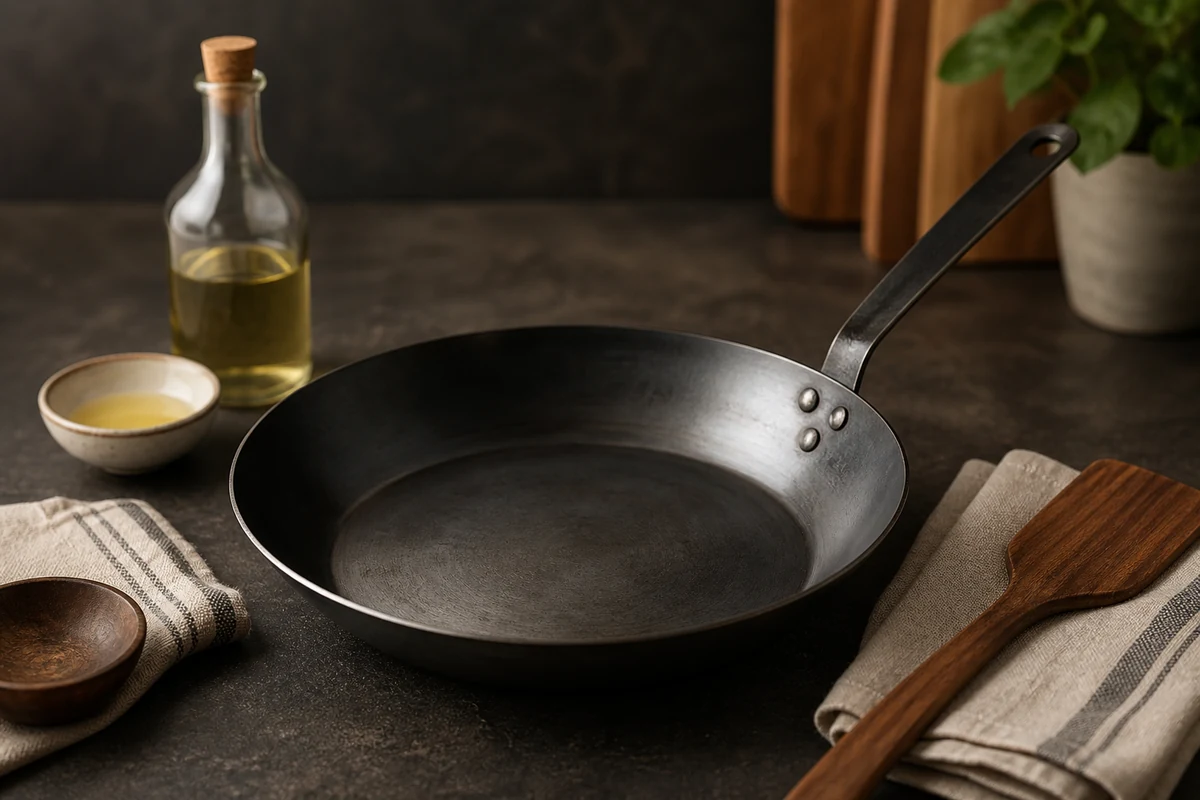
Quick answer: Our tested guide to best carbon steel pan for beginners keeps it simple: master the technique, keep the surface seasoned, and match your heat to the food. The full method, the key facts and the mistakes to avoid are all below.
Best Carbon Steel Pan For Beginners: What Our Tests Found
Our team put best carbon steel pan for beginners through repeated real cooking sessions to see what actually works. Below we break down the method, the facts that matter, and the common mistakes so you get reliable results the first time.
What a beginner actually needs
Not the best pan. The most forgiving one.
Rust resistance. The number one beginner mistake is leaving the pan wet. A nitrided pan tolerates that far better than plain steel.
Low price. You are buying a question, not a lifetime pan. The question is whether you enjoy the routine.
Manageable size. A 10 inch pan is light and easy to handle while you learn. A 12 inch loaded pan fights a nervous cook.
A pre-seasoned start helps, though it is not essential.
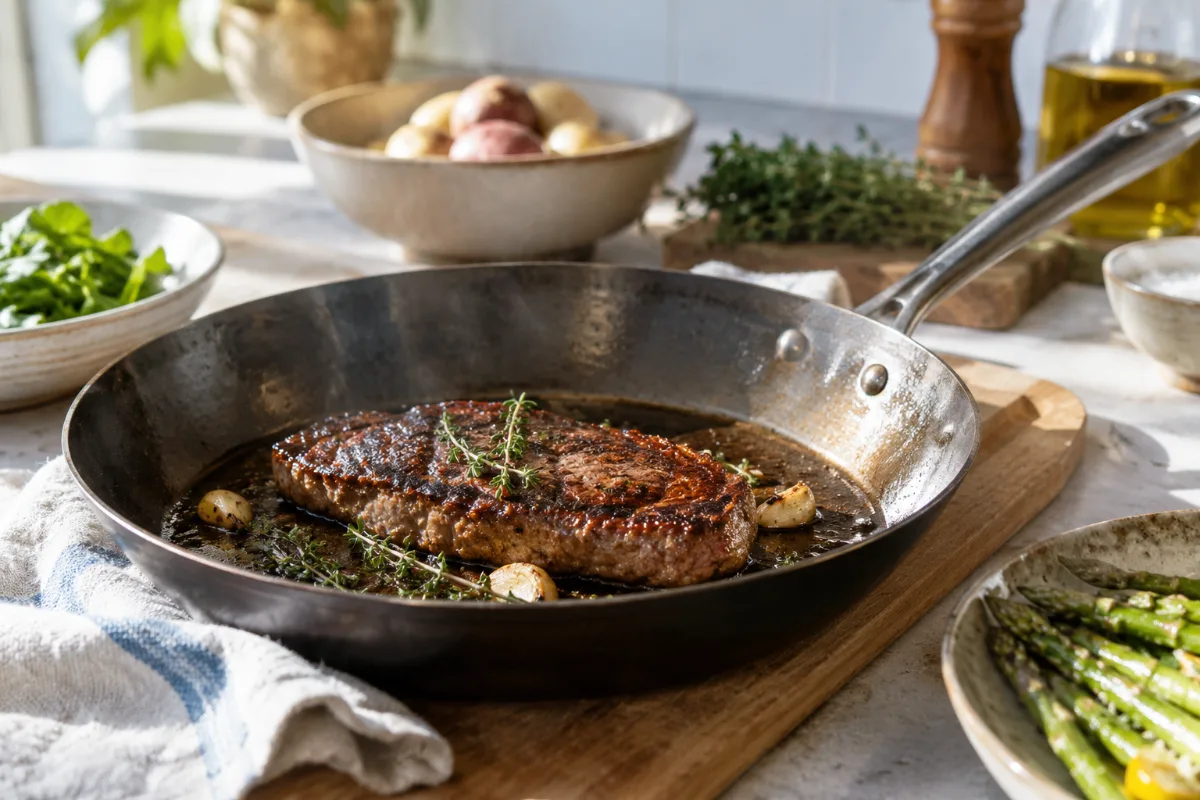
Why nitrided steel suits beginners
Nitriding hardens the surface in a nitrogen atmosphere, which makes the pan considerably more rust-resistant than untreated carbon steel.
That single property removes the most common way beginners kill their first pan. Leave a nitrided pan damp overnight and it usually forgives you. Leave a plain steel pan damp and you wake up to orange.
It does not remove the need to season. You still build the surface the same way. See is carbon steel non-stick.
Our beginner picks
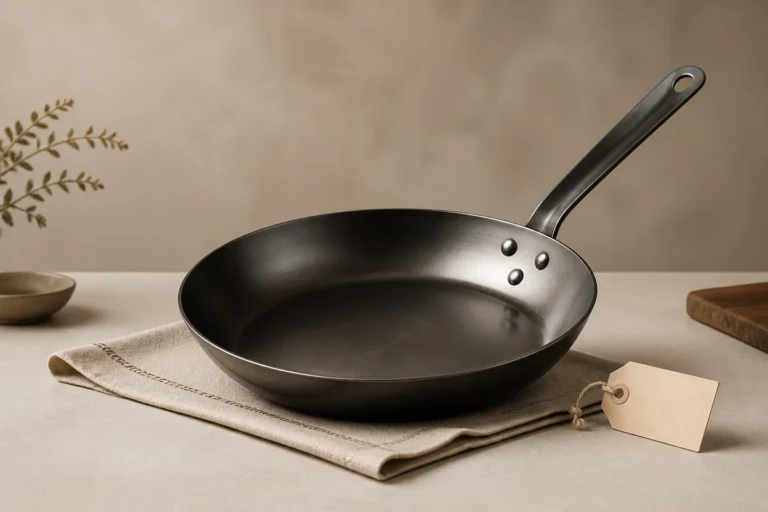
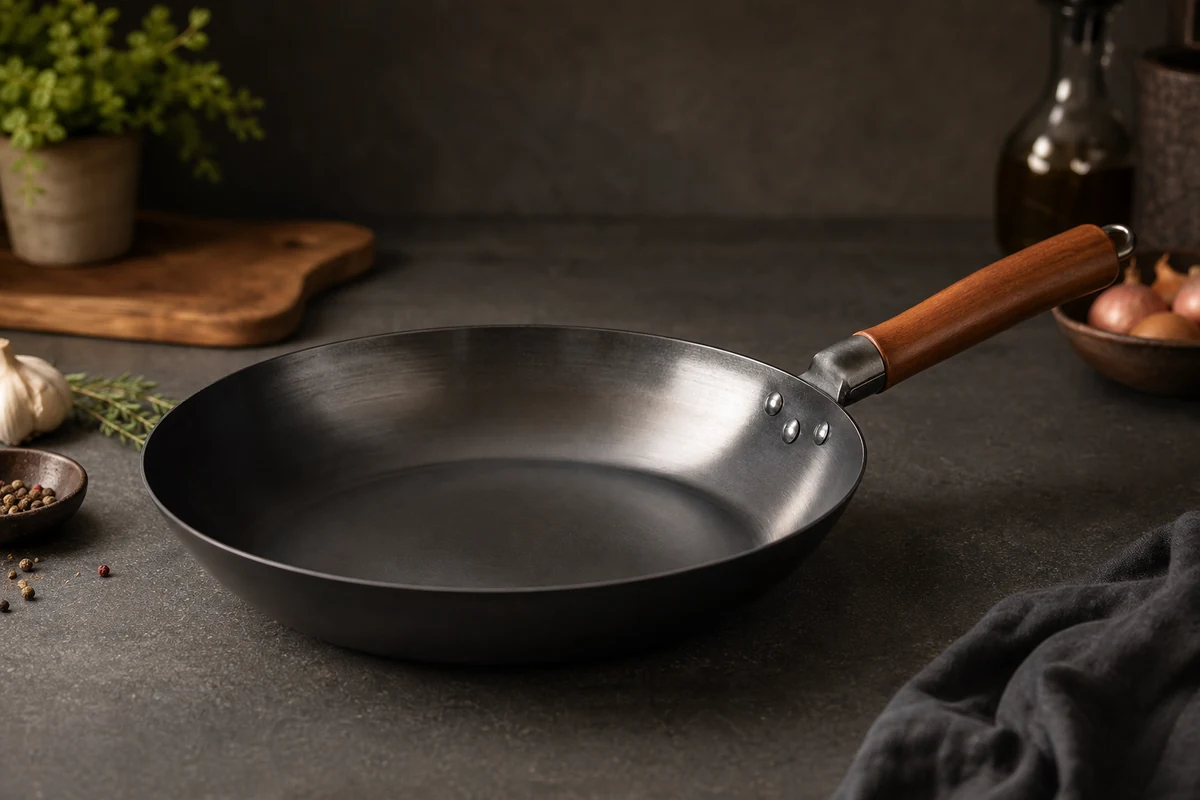
Best overall for beginners: Armorbear 10 inch, $26.99
Nitrided, so it resists the rust that catches most first-timers. Light, small, and cheap enough that a mistake costs nothing. The wooden handle stays cool, though it bars oven use. For a first pan that is an acceptable trade. See it.
Best for stove-to-oven beginners: Yonida 10 inch, $29.99
The removable silicone sleeve lets you use the metal handle safely on the hob, then take it off for the oven. More flexible than the Armorbear if you want to finish dishes under heat. See it.
Best trusted brand for beginners: Lodge 10 inch, $39.90
Not nitrided, so a little less forgiving of moisture, but Lodge is a known quantity with wide availability and a metal handle that goes in the oven. A safe first pan if you want a familiar name. See it.
Why not to start expensive
This costs us commission to say, so take it as sincere.
The premium French and Swedish pans are better made, but they are not easier to learn on. Their smoother surfaces season more slowly, and their higher price makes early mistakes sting.
Worse, if you discover carbon steel is not for you, you have spent $120 to find out rather than $27. Start cheap. Upgrade later if you fall for it, and you will still have a useful second pan. More in are carbon steel pans worth it.
The beginner mistakes to expect
- Giving up in week two. The pan sticks until seasoning builds. This is normal, not failure.
- Cooking eggs too early. Wait ten to fifteen cooks.
- Leaving it wet. Dry on the hob, every time.
- Cooking tomatoes. Acid strips young seasoning fast.
- Using too much oil to season. Thin layers only.
Our beginner guide walks through the first cook.
Your first month, week by week
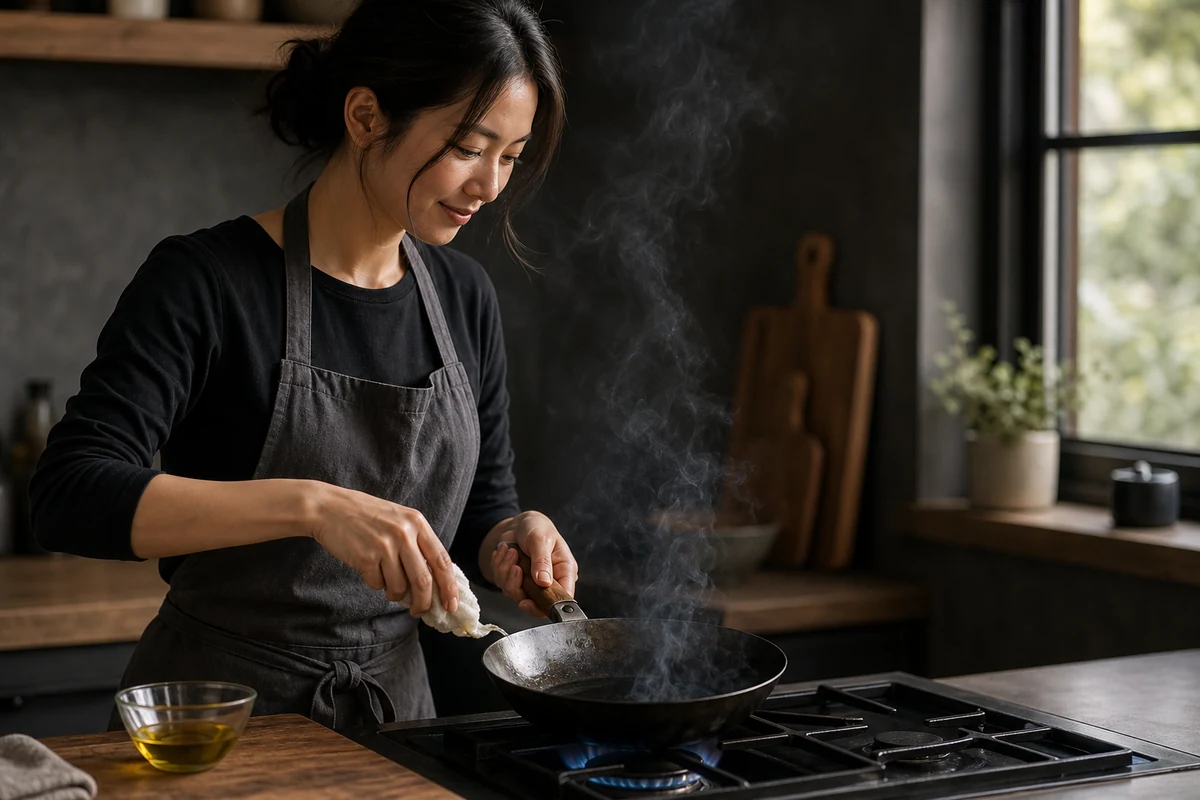
Knowing what is coming prevents the quitting point most beginners hit. This is the honest timeline.
Week one. Strip or wash the pan, run three seasoning rounds, cook bacon twice. Everything except the bacon will stick a little. This is normal and says nothing about your pan or your skill.
Week two. Sausages, chicken thighs skin down, fried potatoes. Fatty cooking is doing the seasoning work for you now. The pan turns blotchy brown, which looks wrong and is right.
Week three. Try a fried egg with a proper preheat and a real knob of butter. It will mostly release. Sear something. Notice the pan has stopped fighting you.
Week four. The surface is darker, release is reliable, and the routine takes two minutes without thinking. This is the pan the marketing promised, and it took twenty cooks rather than one.
The three-cook test before you judge anything
Beginners diagnose too early. A pan that sticks on cook two is not faulty, and a patchy surface on cook five is not failure. Hold every judgement until the same problem appears three cooks in a row with correct preheating. Almost every early complaint disappears inside that window, and the ones that survive have real fixes in the sticky pan guide.
The accessories that actually help a beginner
Skip the branded kits. Four cheap things cover everything.
| Item | Why | Cost |
|---|---|---|
| Neutral oil, any supermarket bottle | Seasoning and cooking | A few dollars |
| Coarse salt | The only scrubber seasoning likes | A dollar |
| Paper towels or a rag you retire | Oil application, drying | Pennies |
| A thin metal or wooden spatula | Gets under food without fear | $5 to $10 |
Notably absent: seasoning wax, chainmail, special soap. All solve problems you do not have.
Beginner questions nobody admits to asking
Did I ruin it already? Almost certainly not. Rust, stickiness and flaking are all recoverable. The only true kill is severe warping from cold water on a hot pan.
Why does mine look nothing like the photos? Product photos show either brand new or years-old pans. Months one to six look patchy and mottled on every pan ever seasoned. Cook on.
Can I just use it like a normal pan? Mostly yes, with three exceptions: no dishwasher, no soaking, no long acidic simmers. Everything else is ordinary cooking.
When do I get to cook eggs? Ten to fifteen cooks in. Trying on day two is the single most common source of beginner despair.
If you outgrow the starter pan
The happy problem. When the routine is habit and the cheap pan feels small or thin, upgrade with your use case rather than by price: the Merten & Storck 12″ for family volume, the de Buyer for a premium daily driver, the Mauviel for heat stability. Your starter stays useful as the second pan, the camping pan, or the pan you lend without worrying.
Frequently asked questions
What is the best carbon steel pan for beginners?
What size carbon steel pan should a beginner buy?
Should a beginner buy pre-seasoned or raw carbon steel?
Is carbon steel too hard for beginners?
How much should a beginner spend on a carbon steel pan?
Prices checked 22 July 2026.