Is Carbon Steel Non-Stick?
As an Amazon Associate I earn from qualifying purchases, at no extra cost to you.
Carbon steel is not non-stick when you buy it. It becomes non-stick through seasoning, a hard layer of polymerised oil you build by cooking. A mature pan releases eggs and fish reliably. A new one does not, and that gap is where most people give up.
Quick answer: Our tested guide to carbon steel non stick keeps it simple: master the technique, keep the surface seasoned, and match your heat to the food. The full method, the key facts and the mistakes to avoid are all below.
Carbon Steel Non Stick: What Our Tests Found
Our team put carbon steel non stick through repeated real cooking sessions to see what actually works. Below we break down the method, the facts that matter, and the common mistakes so you get reliable results the first time.
Two different kinds of non-stick
The word covers two unrelated things and the confusion sells a lot of disappointing pans.
Coated non-stick means a synthetic layer, usually PTFE or ceramic, bonded to the pan at the factory. It works perfectly on day one and degrades from there. Most coated pans last two to five years.
Seasoned non-stick means polymerised oil fused to bare metal. It works poorly on day one and improves for years. There is nothing to wear out because you rebuild it continuously by cooking.
Carbon steel is the second kind. If you buy it expecting the first, you will be unhappy for about a month.

How seasoning creates release
When oil passes its smoke point, the molecules break apart and bond to each other and to the steel. That is polymerisation. The result is a hard, dark, chemically inert film.
Food touches that film rather than bare iron. Protein bonds readily to iron and poorly to polymerised oil, which is the whole mechanism.
The layer thickens with every fatty thing you cook, which is why the pan improves.

How non-stick does it actually get
Honest answer: very good, not equal to a new PTFE pan.
| Food | New carbon steel | Mature carbon steel | New PTFE |
|---|---|---|---|
| Steak, chicken | Good | Excellent | Good |
| Bacon, sausages | Good | Excellent | Excellent |
| Fish skin | Poor | Very good | Excellent |
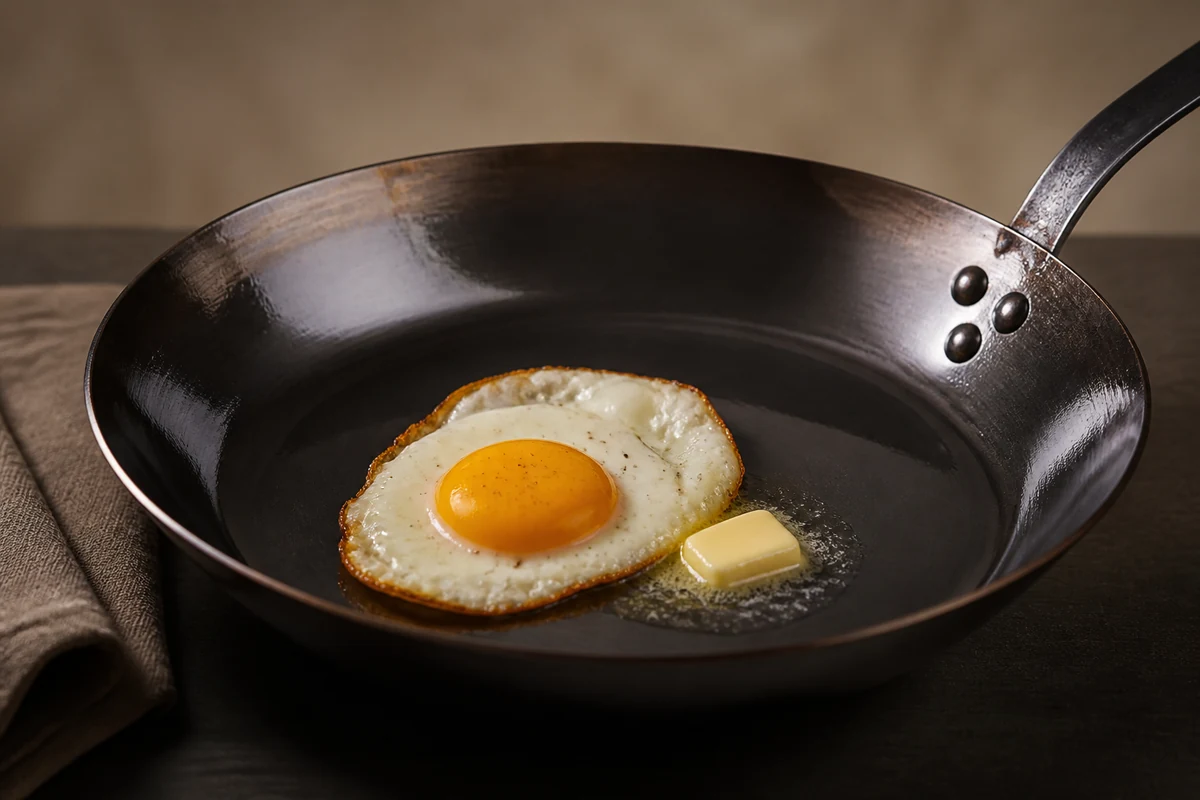
| Fried eggs | Poor | Very good | Excellent |
| Omelette | Poor | Good | Excellent |
| Scrambled eggs, no fat | Poor | Moderate | Excellent |
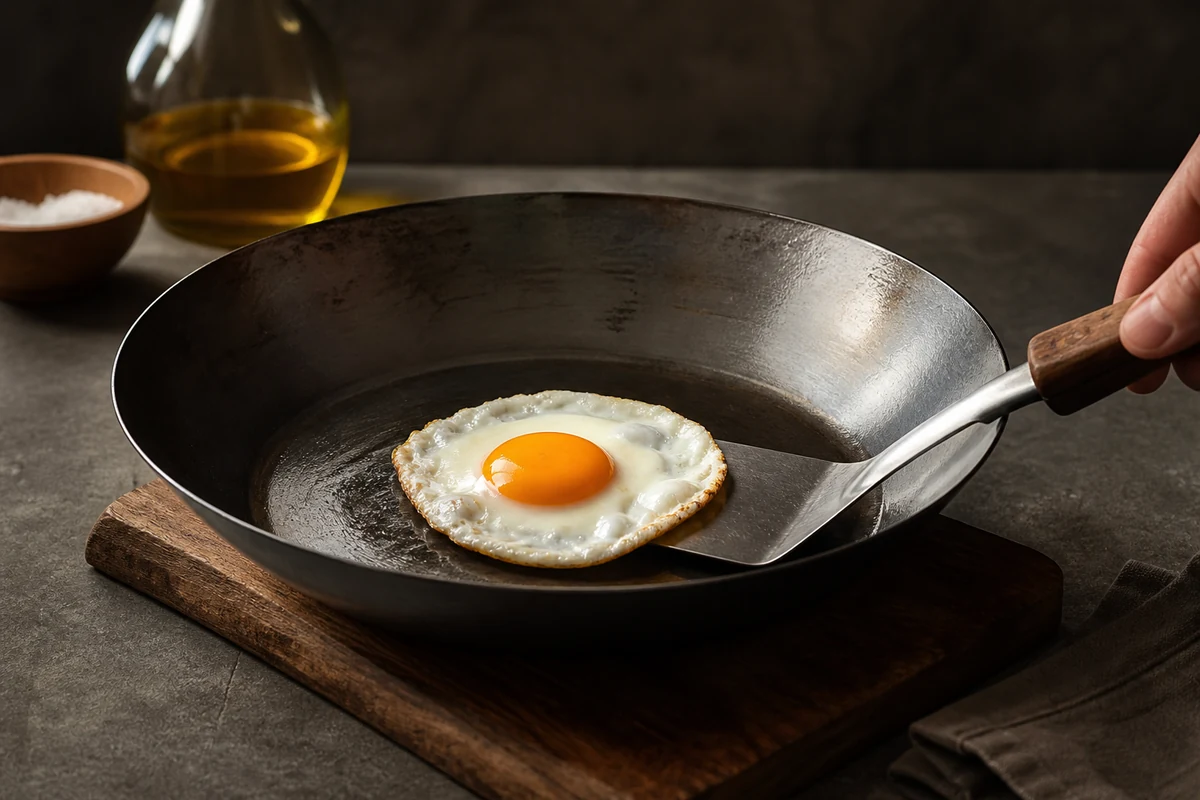
A mature carbon steel pan will fry an egg that slides. It will not cook a dry omelette with no fat at all. If that specific capability matters to you, keep one coated pan for it.
How long until it works
Three or four deliberate seasoning rounds give you a base. Real release comes from cooking.
Rough timeline with regular use: fatty food releases within about ten cooks, most food releases well by thirty, and eggs slide after a few months. Detail in how to care for a carbon steel pan.
Cook fatty things early. Bacon builds seasoning faster than any deliberate round.
What breaks the non-stick
- Acid. Tomatoes, wine, vinegar and lemon dissolve seasoning.
- Sugar. Melted sugar bonds to the layer and tears it off as it sets.
- Abrasive scrubbing. Steel wool and chainmail remove it.
- Soaking and the dishwasher.
- Under-preheating. Not damage, but it makes a good pan behave badly.
Nitrided pans are not pre-non-stick
Worth clearing up, because marketing blurs it. Misen and OXO both sell nitrided carbon steel using non-stick language.
Nitriding hardens the surface in a nitrogen atmosphere and makes the pan considerably more rust-resistant. It does not create a release layer. You still season a nitrided pan exactly the same way.
What you get is a more forgiving pan while you learn, which is genuinely useful for a first purchase.
Pans that start closer to non-stick
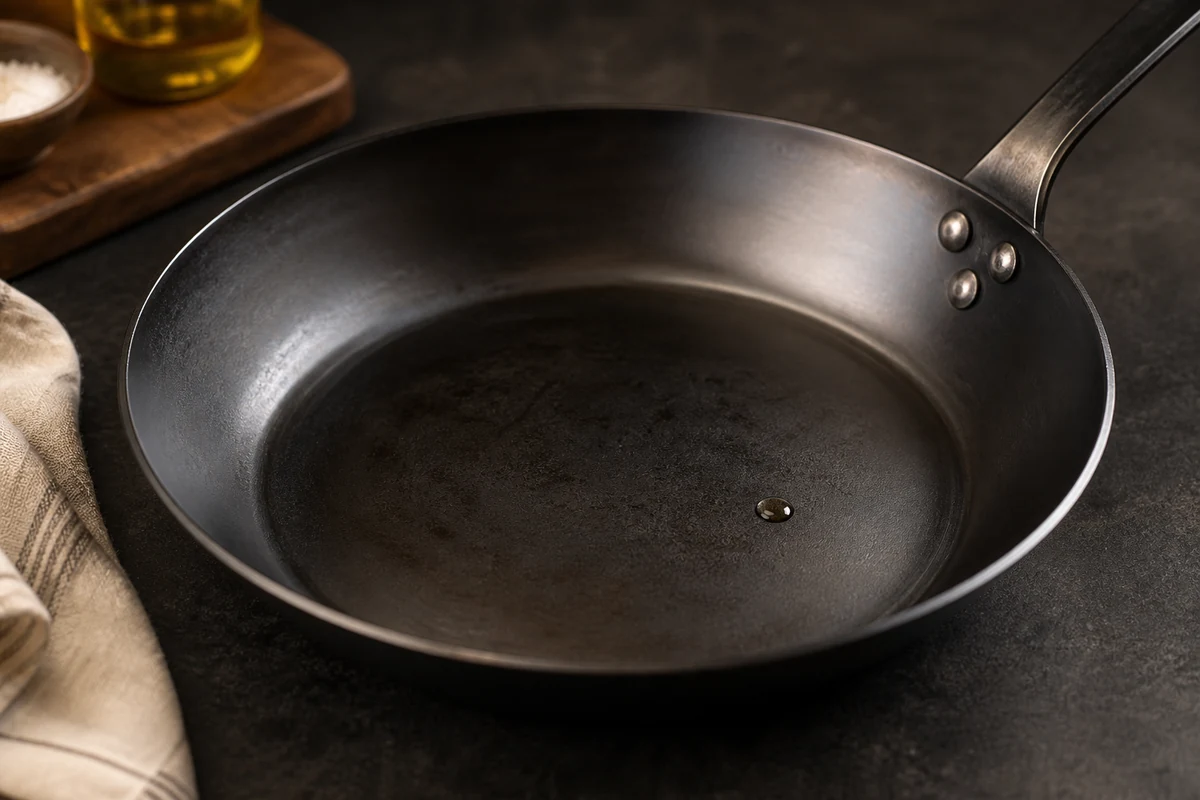
No carbon steel pan arrives non-stick. Some start further along than others. Factory seasoning on the Lodge 10 inch at $39.90 gives you a usable base layer straight out of the box. Nitriding on the Armorbear 10 inch at $26.99 works differently: it hardens the steel itself, so eggs release earlier than they would on raw metal. Either way you are building layers for about a month.