What Is the Healthiest Pan for Frying?
As an Amazon Associate I earn from qualifying purchases, at no extra cost to you.
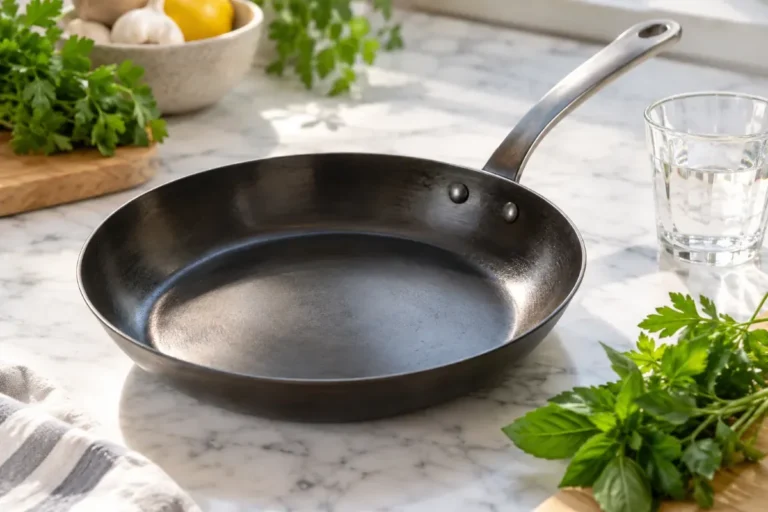
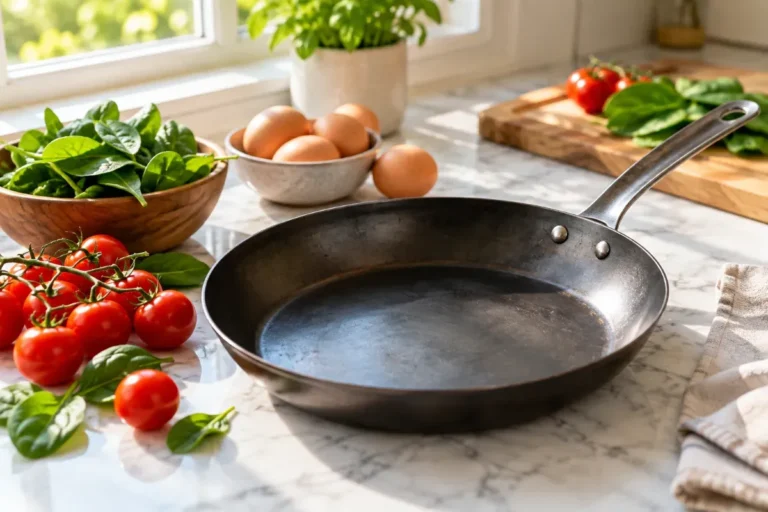
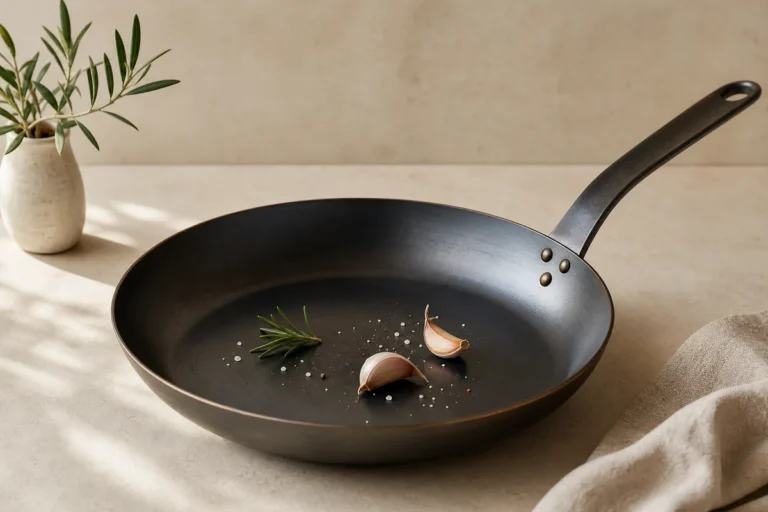
The healthiest pan for frying is uncoated carbon steel, cast iron or stainless steel, because none sheds a synthetic coating and each lets you control how much oil you use. Carbon steel is the best all-round choice: it sears at high heat, needs little oil once seasoned, and has no PTFE or PFAS.
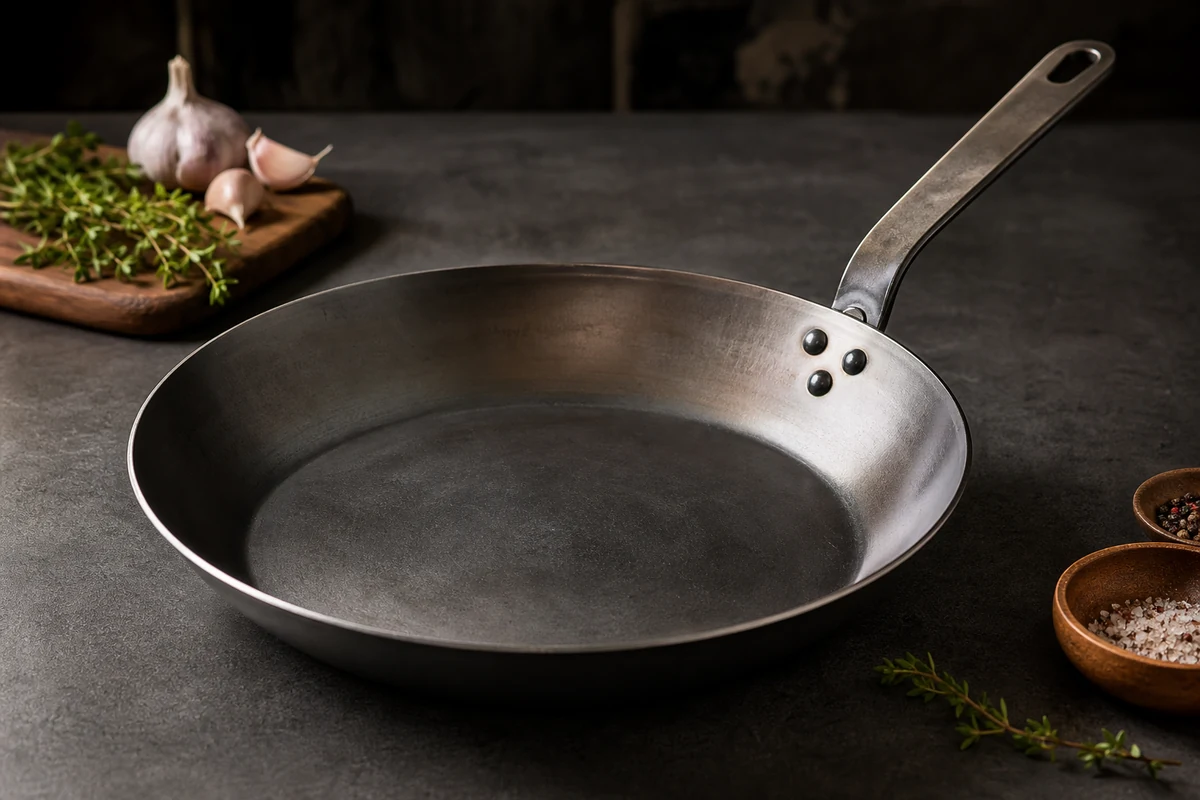
Quick answer: Our tested guide to healthiest pan for frying keeps it simple: master the technique, keep the surface seasoned, and match your heat to the food. The full method, the key facts and the mistakes to avoid are all below.
Healthiest Pan For Frying: What Our Tests Found
Our team put healthiest pan for frying through repeated real cooking sessions to see what actually works. Below we break down the method, the facts that matter, and the common mistakes so you get reliable results the first time.
What healthy frying actually depends on
Two things, and the pan influences both.
What the surface can release into food. Uncoated pans release no coating because they have none. Coated pans can shed PTFE particles once scratched or overheated.
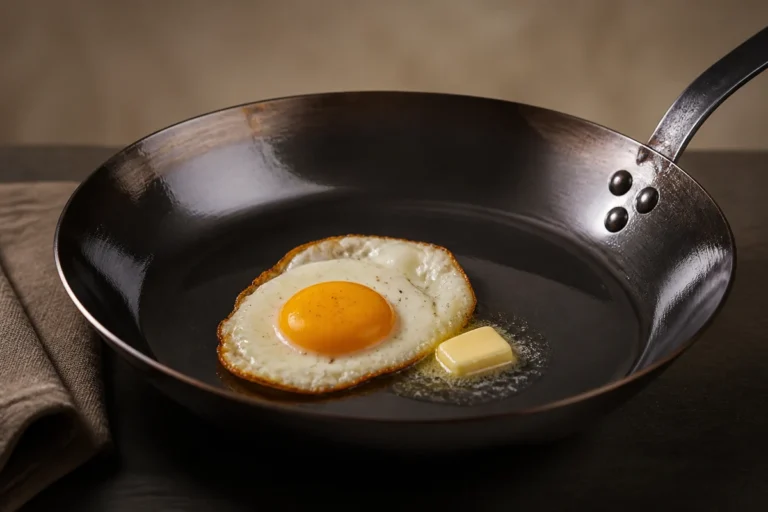
How much oil the food absorbs. A pan that sears cleanly at high heat needs less oil and produces less greasy results. A pan that sticks makes you add more.
Carbon steel does well on both.
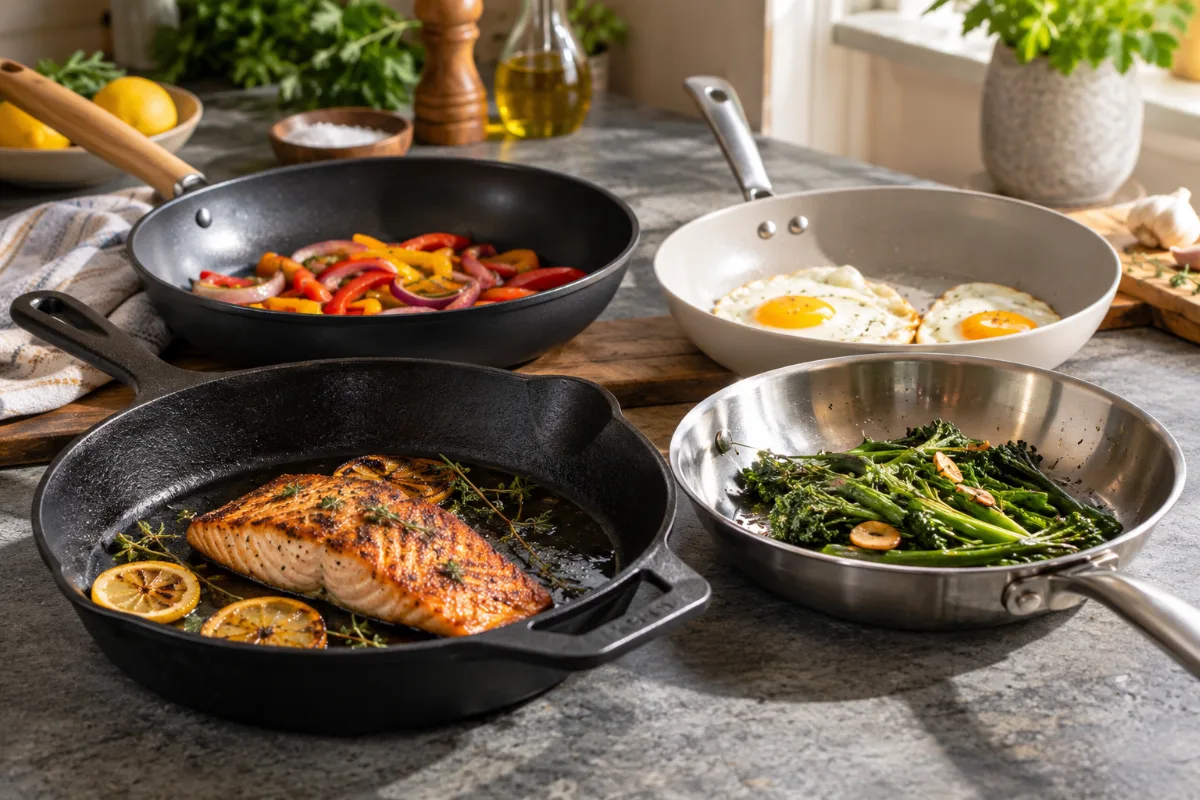
The frying pans ranked for health
| Pan | Coating risk | Oil needed once ready | High-heat frying |
|---|---|---|---|
| Carbon steel | None | Low | Excellent |
| Cast iron | None | Low | Excellent |
| Stainless steel | None | Medium | Very good |
| Ceramic non-stick | Low, degrades | Very low | Poor, avoid high heat |
| PTFE non-stick | Present if damaged | Very low | Poor, degrades above 500°F |
Non-stick pans use the least oil, which is the argument for them. But they are the worst at high-heat frying, which is where searing and browning happen, and they carry the coating question.
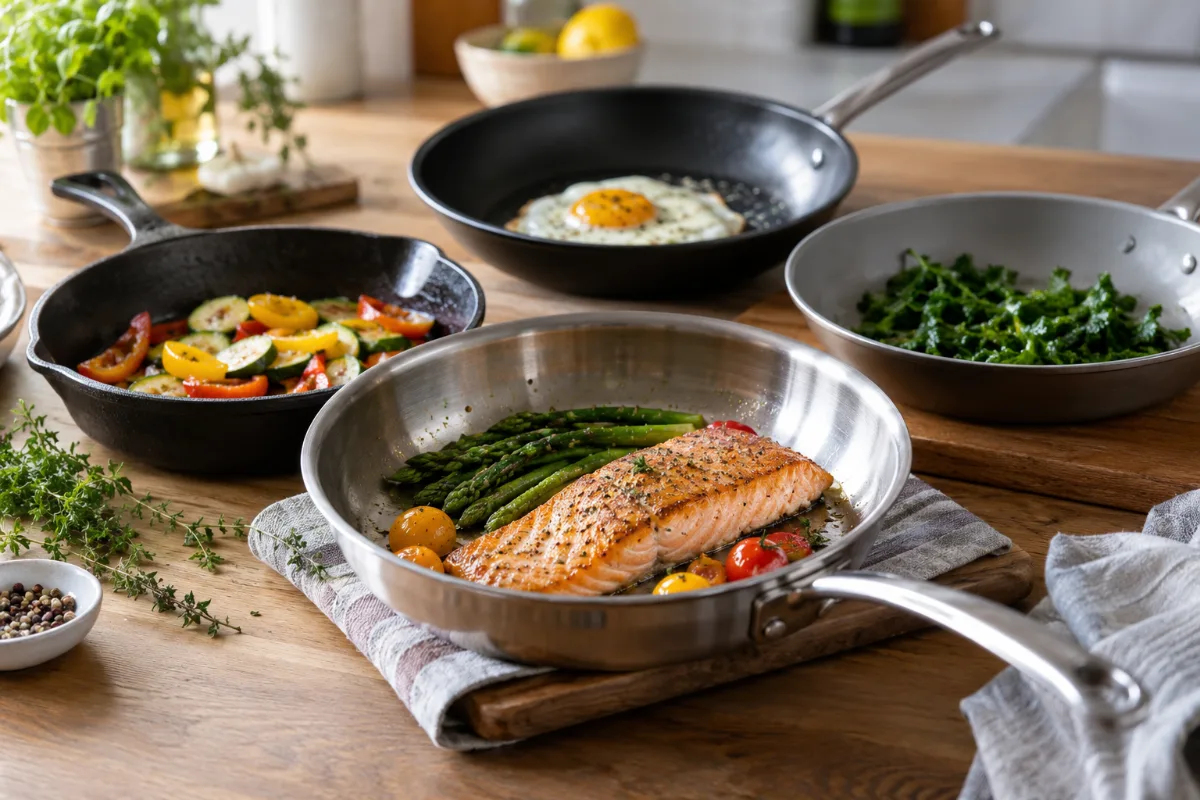
Why carbon steel is the best frying choice
It combines the health advantages of uncoated cookware with the practical ability to fry with little oil once seasoned.
A mature carbon steel pan releases food well, so you are not compensating for sticking with extra fat. It reaches searing temperature fast and recovers quickly when food lands, which means less oil sitting and absorbing while the pan struggles back to heat.
And it handles the high temperatures that proper frying needs without the coating concerns of non-stick. See is carbon steel non-stick for how much oil it actually needs at each stage.
Cast iron, the close second
Everything true of carbon steel applies to cast iron, with more weight and more iron transfer.
For deep frying specifically, cast iron edges ahead, because its heat retention keeps oil temperature stable when cold food goes in. Carbon steel recovers fast but a thick cast iron pan barely drops. Comparison in carbon steel vs cast iron.
Where non-stick still makes sense
Honest point: if your health goal is minimising added fat above all else, a non-stick pan lets you fry an egg in nothing.
The trade is that you cannot fry at high heat safely, the coating degrades, and you replace the pan every few years. For low-fat, low-heat cooking it is defensible. For frying proper, it is the wrong tool.
How to fry healthily in any pan
- Preheat properly. A hot pan needs less oil and produces less greasy food.
- Use an oil suited to the heat. High smoke point oils for searing.
- Do not crowd the pan. Crowded food steams and absorbs oil.
- Drain on a rack, not paper, so steam escapes rather than softening the crust back into the fat.
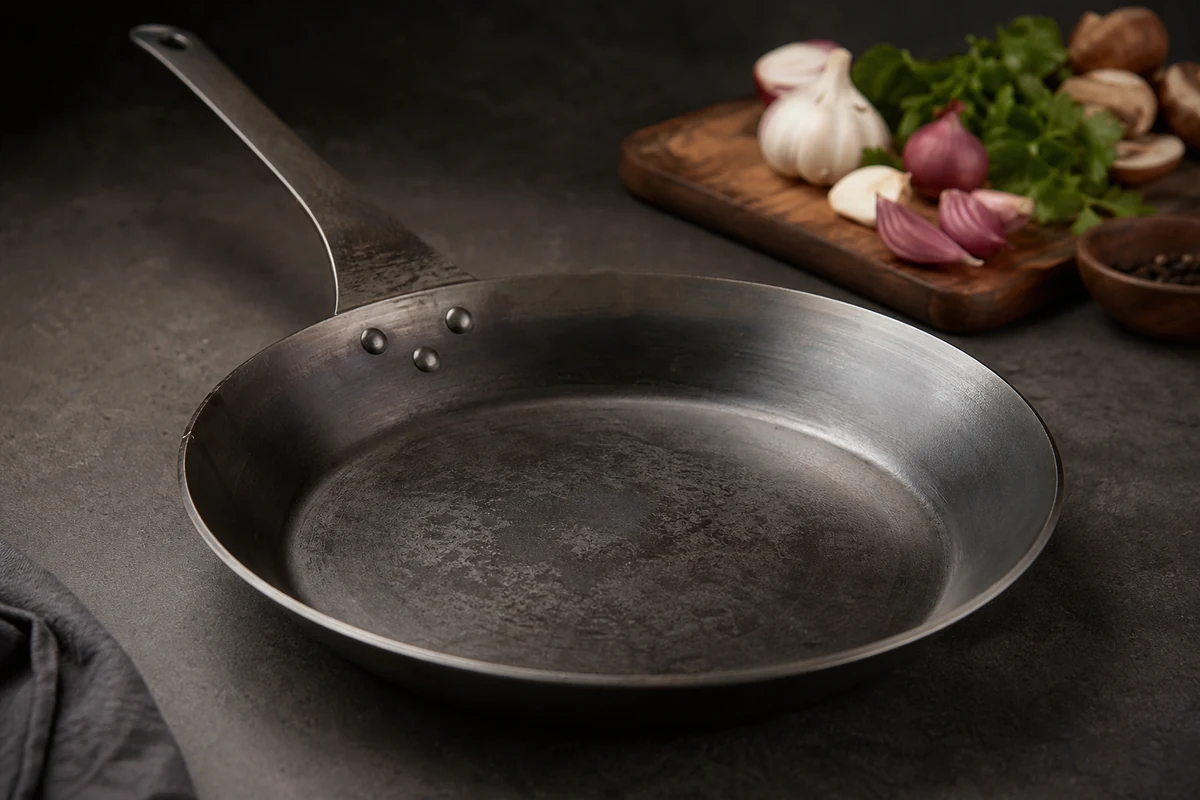
Pans with nothing on them
Every pan we list is uncoated, so there is no PFAS, PTFE or PFOA to break down over a hot burner. The cheapest way in is the Yonida 10 inch at $29.99. If you would rather not manage seasoning at all in the first month, the Armorbear nitrided pan at $26.99 has a hardened surface that resists rust before you have built any layers. One brand in the category carries a safety caveat, covered in our recall explainer.
Frequently asked questions
What is the healthiest pan to fry in?
Is carbon steel healthier than non-stick for frying?
What is the healthiest oil for frying in carbon steel?
Does frying in cast iron or carbon steel add iron to food?
General information, not medical advice. Last checked 22 July 2026.