Non-Toxic Cookware Compared: Carbon Steel vs Ceramic, Cast Iron and Stainless
By the Carbon Steel Pan test team · Last updated September 2026
The safest cookware has no synthetic nonstick coating to break down into your food. That points to four materials: carbon steel, cast iron, stainless steel, and enamel. Carbon steel and cast iron rely on seasoning, stainless is inert, and enamel is glass. Ceramic nonstick is coating-based and wears out. For most kitchens, carbon steel offers the best mix of safety, heat control, and lifespan.
What “non-toxic” really means for cookware
The phrase gets used loosely, so let us pin it down before comparing anything.
A pan earns the non-toxic label when it has no coating that degrades into your food during normal cooking, and no worrying amount of metal leaching out. That is the honest test. It is not about marketing seals or vague “clean” claims on the box. Plenty of pans wear a “non-toxic” sticker while relying on a coating that will wear out; the label alone tells you little. What matters is the material underneath.
The concern most shoppers are reacting to is the old worry over PTFE nonstick coatings, especially when they overheat or scratch. Bare metals sidestep that entirely because there is nothing sprayed on to break down. The Environmental Working Group frames the issue the same way, tying the risk to synthetic nonstick films rather than to iron or steel.
So the comparison ahead judges each material on two things: does it have a coating that can wear into your food, and does it leach metals at a level worth thinking about. Everything else, like weight or price, is a preference, not a safety issue. Keep that split in mind and the choice gets much simpler.
One more distinction clears up a lot of confusion. “Non-toxic” is not the same as “inert.” An inert material, like stainless steel or glass enamel, does not react with food at all. A seasoned material, like carbon steel or cast iron, does interact a little, giving up a trace of iron and building a fat-based surface. Both are safe, but they are safe in different ways. Knowing which kind of safety you are buying helps you pick the pan you will actually enjoy using, rather than the one that sounds best on paper.
The safe materials, ranked by how they behave
All of the materials below are considered safe. They differ in how they behave day to day, and each one has a catch worth knowing.
Carbon steel
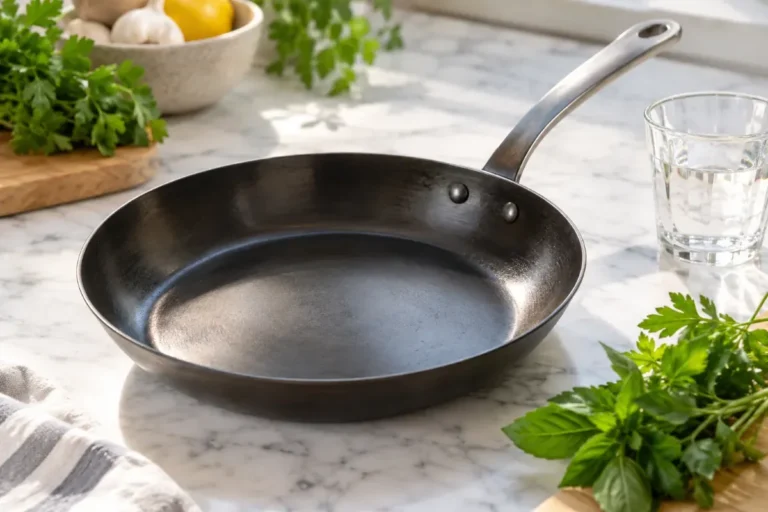
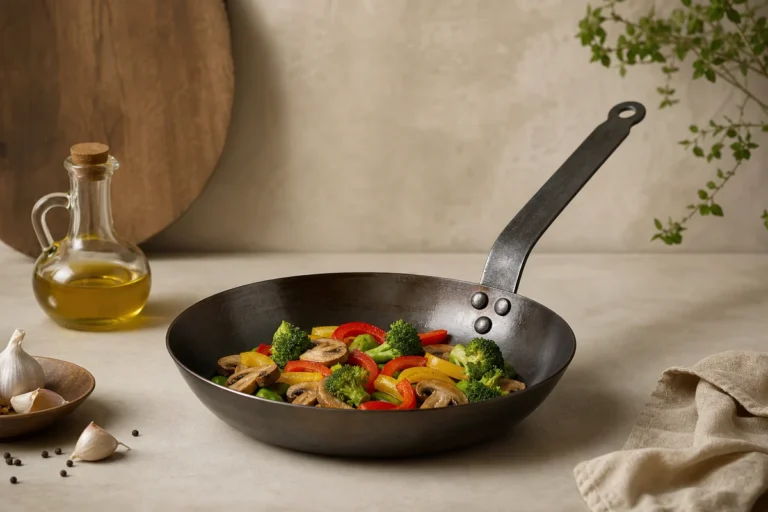
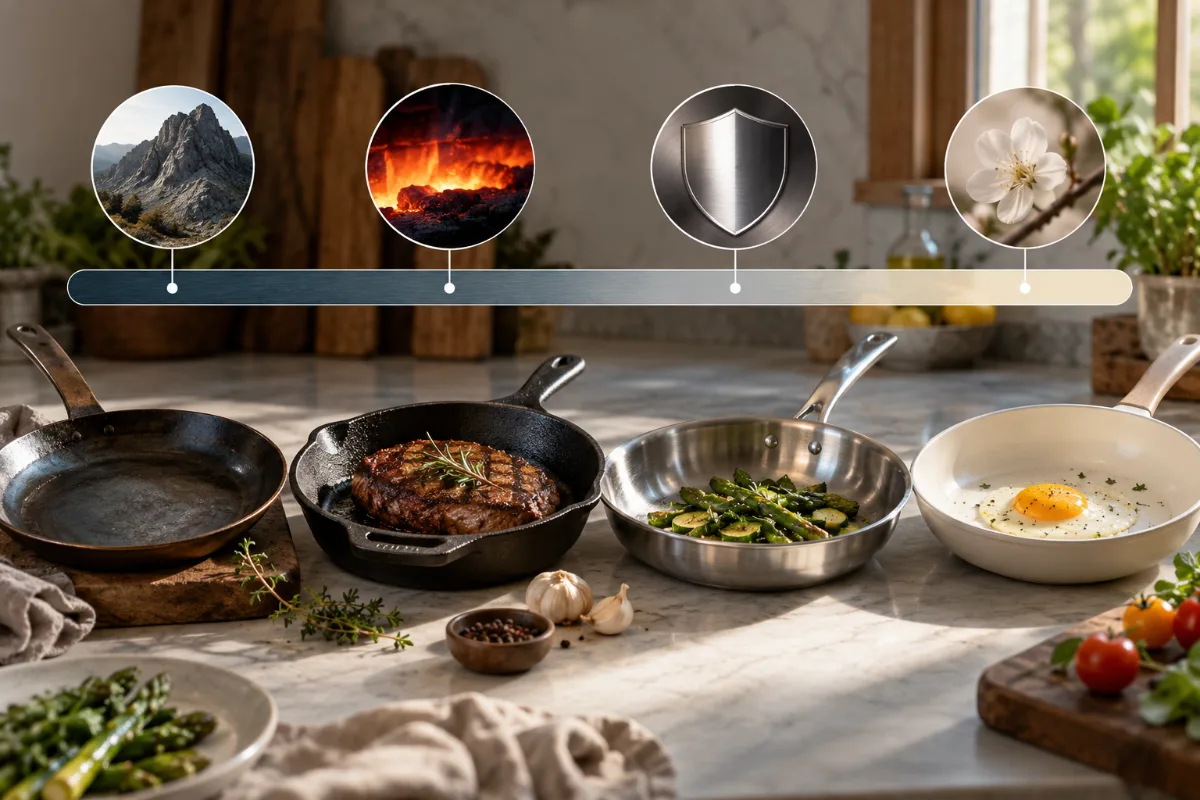
Carbon steel is iron with a little carbon, and nothing else. Its nonstick surface is seasoning, hardened oil you build up through cooking, so there is no coating to fail. It heats fast, tolerates very high heat for searing, and lasts for decades. The catch is upkeep: you season it, keep it dry, and it transfers a trace of iron into food, which is generally a benefit rather than a problem.
Cast iron
Cast iron works on the exact same principle as carbon steel, seasoning over bare iron, so it shares the same coating-free safety. It holds heat beautifully, which makes it great for a steady sear or cornbread. The catch is weight. A cast iron skillet is heavy and slow to change temperature, and it also gives up a trace of iron, which most people welcome.
Stainless steel
Stainless is an inert alloy that does not react with food and needs no seasoning. It is dishwasher-safe and nearly indestructible. It is not naturally nonstick, so eggs and delicate fish take practice. The catch on the safety side is a trace transfer of nickel and chromium, which health bodies consider a non-issue for most people, though those with a strong nickel sensitivity sometimes prefer other options.
Enamel cast iron
Enameled cast iron wraps an iron core in a layer of fused glass. The glass is stable and does not leach, and you never have to season it. It handles acidic foods like tomato sauce without any trouble. The catch is that the enamel can chip if you drop it or use metal tools carelessly, and it costs more.
Ceramic nonstick
Ceramic nonstick is the outlier here. It uses a sol-gel coating that is silica-based rather than fluorine-based, and it is slick and easy at first. The catch is real: that coating wears down within a few years, and once it stops releasing food you replace the pan. It is a coating, so it belongs in a different group from the bare metals above.
It is worth being fair to ceramic, though. Because its coating is not fluorine-based, it usually sidesteps the PFAS question that dogs older Teflon pans, and a fresh ceramic pan releases eggs beautifully. The honest issue is lifespan, not chemistry. You are buying a surface that behaves well for a year or two and then needs replacing, which is a cost and a waste question as much as a safety one. If you go this route, treat it gently, keep the heat moderate, and use soft tools to stretch its life.
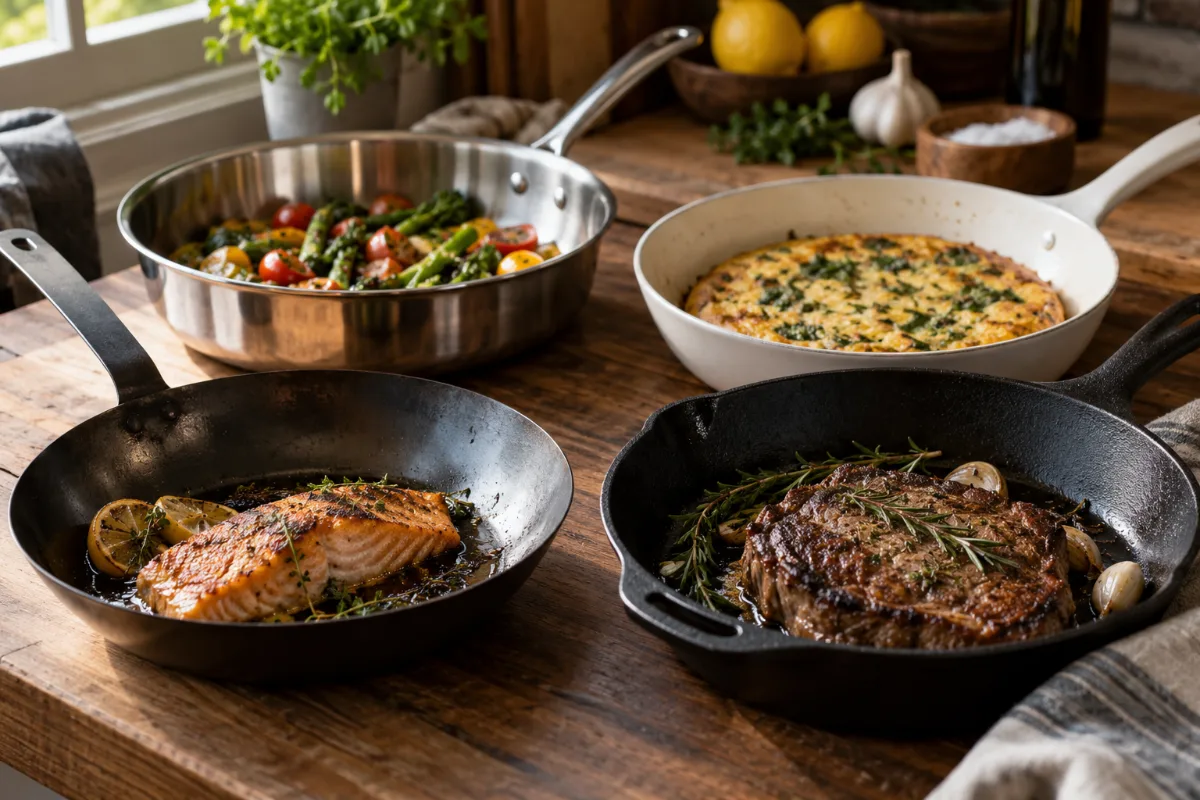
Quick answer: Our tested guide to non toxic cookware compared keeps it simple: master the technique, keep the surface seasoned, and match your heat to the food. The full method, the key facts and the mistakes to avoid are all below.
Non Toxic Cookware Compared: What Our Tests Found
Our team put non toxic cookware compared through repeated real cooking sessions to see what actually works. Below we break down the method, the facts that matter, and the common mistakes so you get reliable results the first time.
The full comparison
Reading the table is simple once you know what you are cooking most. Look at the coating column first, because that is the core safety line. Anything marked “None” has nothing synthetic to break down. Then check leaching, maintenance, and lifespan against your own habits.
Trace iron from carbon steel and cast iron is not a downside for most people. Iron is a nutrient, and cooking in these pans adds a small amount to food, which the America’s Test Kitchen team and others have long noted as a minor plus rather than a risk. The transfer is largest with acidic foods and long simmers, and smallest once a pan is well seasoned, so a mature pan gives up very little.
The trace nickel and chromium from stainless works the same way: small, and larger with acidic cooking. Health bodies treat it as a non-issue for the general population. The one group that pays closer attention is people with a diagnosed nickel allergy, who sometimes lean toward enamel or a well-seasoned carbon steel pan instead. For everyone else, the leaching column is closer to background noise than a deciding factor, which is why coating type usually drives the choice.
| Material | Coating | Leaching risk | Maintenance | Lifespan |
|---|---|---|---|---|
| Carbon steel | None | Trace iron (benefit) | Season, keep dry | Decades |
| Cast iron | None | Trace iron | Season, keep dry | Heirloom |
| Stainless | None | Trace nickel/chromium | Easy, dishwasher | Decades |
| Enamel cast iron | Glass enamel | Very low | Easy, no seasoning | Decades |
| Ceramic nonstick | Sol-gel | Low, coating wears | Gentle, replace often | 1 to 3 years |
Which material fits which cook
There is no single winner for every kitchen. Match the material to how you actually cook, and each one earns its place.
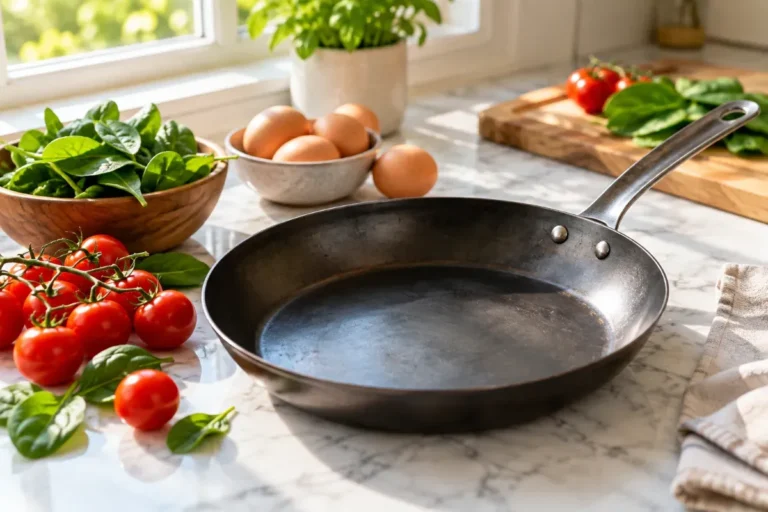
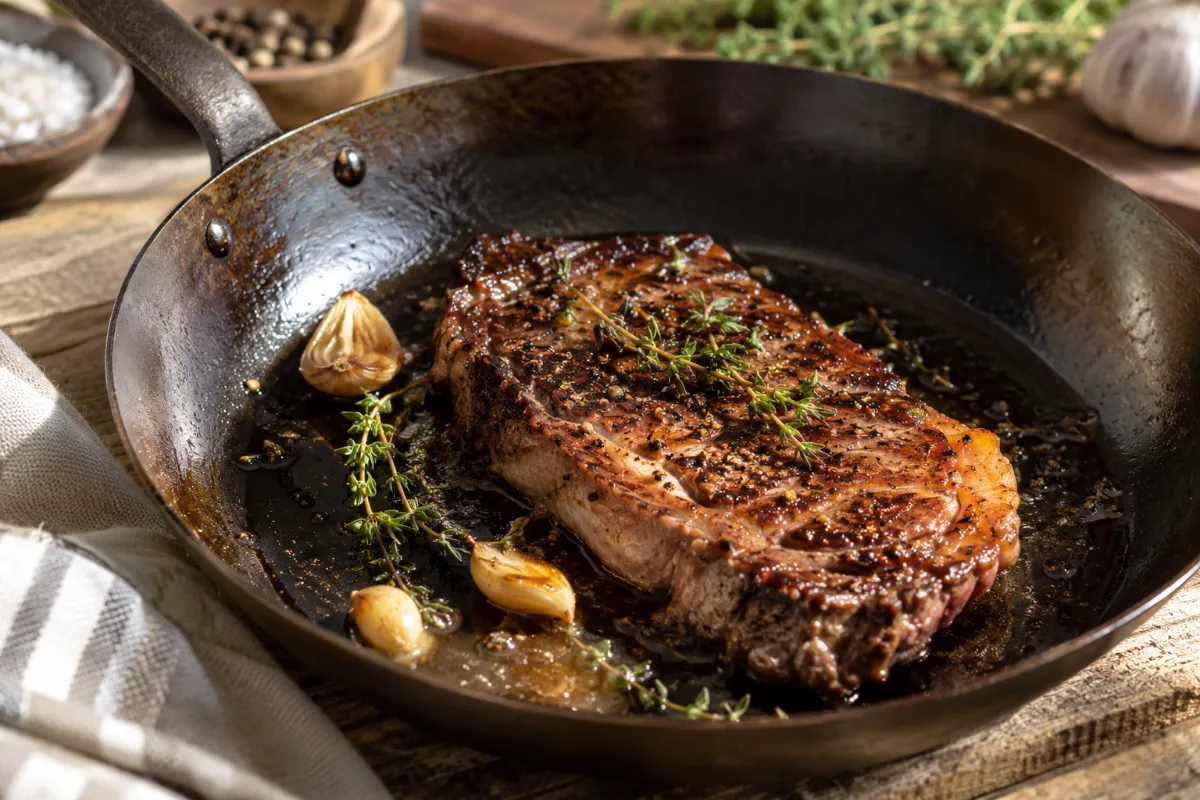
If you sear steak, roast chicken parts, or stir-fry over high heat, carbon steel is the strongest all-round choice. It gets ripping hot fast, recovers quickly after food goes in, and it is light enough to move around the stove. A carbon steel skillet covers most weeknight cooking without a coating in sight. It also moves from stovetop to oven without a second thought, so you can start a chicken thigh on the burner and finish it under heat that would ruin a coated pan.
If you want the least fuss and cook a lot of acidic sauces, stainless steel or enameled cast iron fit better. Stainless shrugs off the dishwasher and metal tools, and enamel handles tomatoes and wine without any seasoning to protect. Neither needs the care routine that seasoned pans do.
If you love slow, steady heat for braises, cornbread, or a long sear where the pan barely cools, cast iron is hard to beat. The weight that makes it tiring to lift is the same mass that holds heat rock-steady under a thick steak. A Dutch oven version handles soups and no-knead bread too, all without a coating.
If low weight and gentle release matter most, and you accept replacing the pan every couple of years, a good ceramic nonstick has a place for delicate eggs. Just go in knowing it is a wear item, not a lifetime pan.
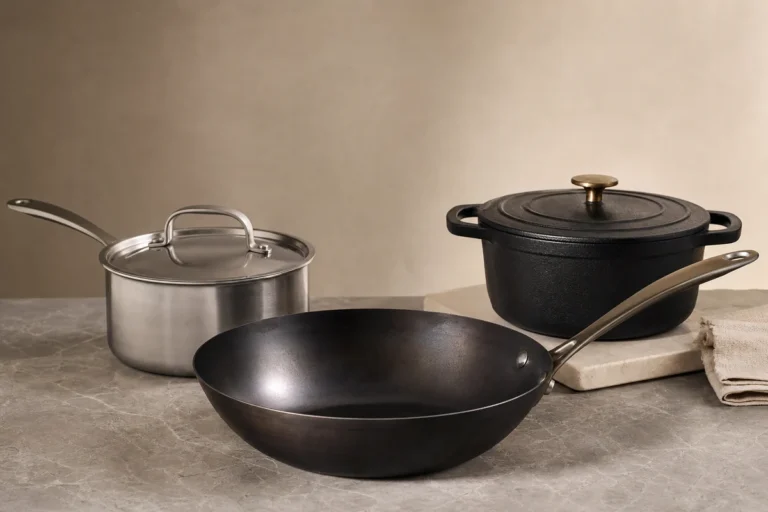
Most well-stocked kitchens end up with two or three of these rather than one. A common, sensible set is a carbon steel skillet for searing and everyday cooking, a stainless pan or saucepan for sauces and acidic dishes, and one nonstick or ceramic pan reserved just for eggs and pancakes. Each material does the job it is best at, and none of them carries a coating you have to babysit across the whole kitchen. You do not have to choose a single “safest” pan and force it to do everything.
What to avoid and why
You do not need fear to shop well. You need a filter. Two things are worth steering clear of.
The first is old, scratched nonstick. A well-kept modern nonstick pan used at moderate heat is not the villain some headlines suggest, but a coating that is visibly flaking or gouged has lost its integrity, and bits can end up in food. When a nonstick surface starts shedding, retire the pan rather than keep scraping it.
The second is vague, unbranded ceramic or “green” cookware with no clear information about what the coating is made of. If a listing cannot tell you the material and how it is made, that silence is your answer. A trustworthy pan, coated or not, comes with a plain spec sheet.
A third thing to be wary of is heat abuse of any coated pan. Even a modern, well-made nonstick surface is not built for the searing temperatures carbon steel shrugs off. Running a coated pan empty on high heat, or using it for a hard sear, pushes it past what the coating tolerates. If you own coated pans, keep them for eggs, pancakes, and gentle cooking, and reach for bare metal when you want real heat.
Notice that the first two problems disappear entirely when you choose a coating-free material. There is no coating to scratch, shed, or hide behind marketing. That is the quiet advantage of carbon steel, cast iron, and stainless: they simply take the question off the table.
Where carbon steel fits best
Among the safe materials, carbon steel earns a recommendation for the widest range of cooks, and it is worth saying why plainly.
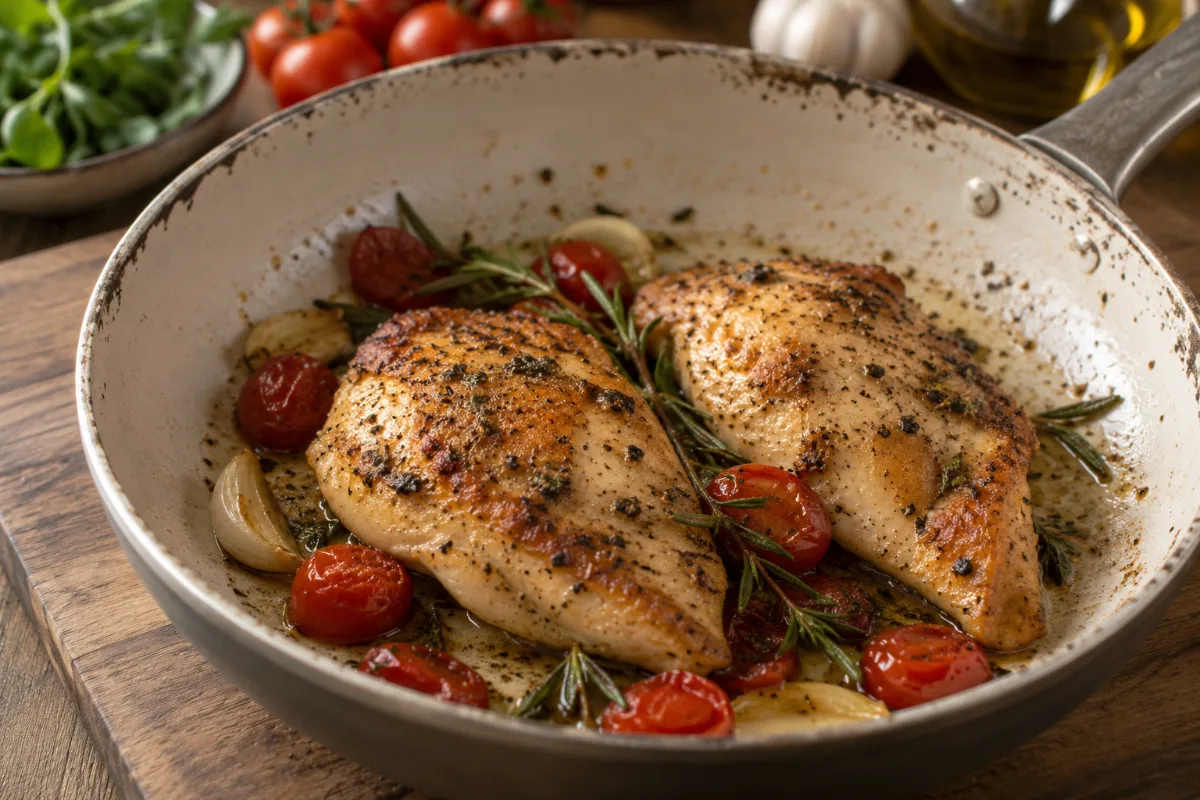
It is coating-free, so it never poses the wear-and-shed question. It is lighter than cast iron and heats faster, so it is easier to live with day to day while sharing the same seasoning-based safety. It handles the high heat that a real sear or stir-fry needs, which most nonstick pans cannot safely reach. And a single good pan lasts for decades, so you buy it once.
The trade you accept is care. You season it, dry it after washing, and give it a light oil now and then. For most people that is a two-minute habit, not a chore, and it is the price of a pan with no coating to ever replace.
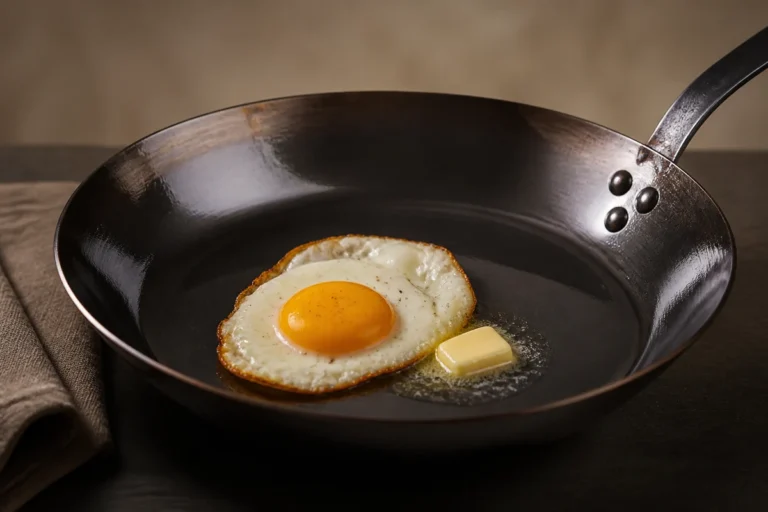
That care also improves the pan rather than just maintaining it. Every meal you cook adds to the seasoning, so a carbon steel pan gets slicker and more nonstick the longer you own it. Compare that to a coated pan, which is at its best on day one and only declines from there. With carbon steel, time is on your side. A pan handed down after twenty years of cooking often performs better than a new one, which is not something you can say about any coating.
If your only hesitation is the maintenance, know that it is far simpler than its reputation. There is no dishwasher and usually no soap-soaking, but there is also no fragile surface to protect from metal tools, high heat, or the broiler. In many ways a bare metal pan is more forgiving day to day than a coated one, just forgiving in different areas.
If you want to go deeper on the safety question across every option, see our guide to the safest cookware and the rundown on the healthiest pan for frying. To weigh carbon steel against its closest cousins directly, compare carbon steel versus cast iron and carbon steel versus stainless steel.
Frequently asked questions
What is the safest non-toxic cookware?
Is carbon steel or ceramic safer?
Does stainless steel leach metal?
Is cast iron safer than carbon steel?
What cookware should I avoid?
Choosing with confidence
Safe cookware is not complicated once you look past the coating question. Pick a bare metal and you never have to wonder what is breaking down into dinner. Carbon steel gives you that safety with fast, high heat and a lifespan measured in decades, which is why it tops our list for most home cooks. Cast iron, stainless, and enamel each win their own lane, and any of them beats a worn-out coated pan.
Ready to commit? Start with our carbon steel buying guide to match a pan to your stove and your cooking.