Why Does Food Stick to Carbon Steel While Cooking? Five Fixes
By the Carbon Steel Pan test team · Last updated September 2026
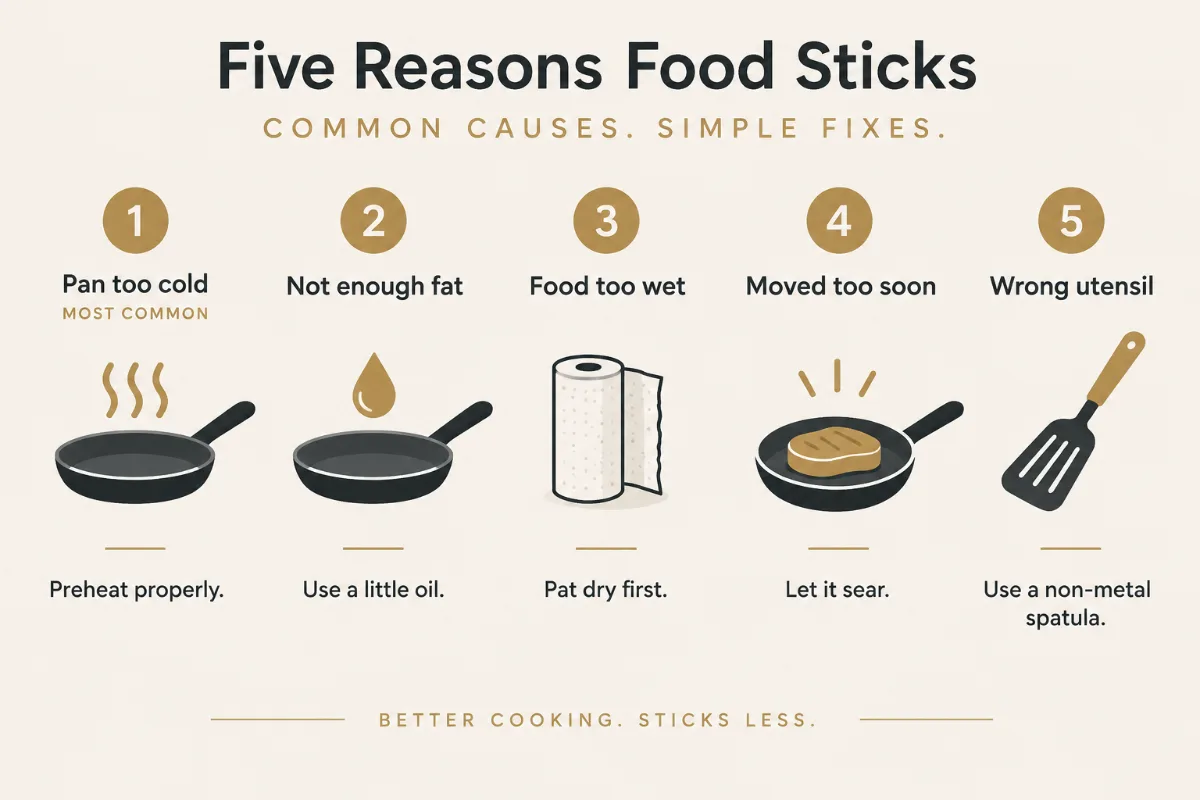
Food sticks in the middle of a cook for five reasons: the pan was not hot enough, there was too little fat, the seasoning is still young, the pan was crowded, or the food was flipped before it let go on its own. Fix the first two and most of the trouble stops. A hot surface, a real film of oil, and a little patience let food release itself.
The short version
Sticking during a cook almost always traces back to one of five causes, and they are worth knowing in order because the first two account for most cases in our kitchen.
- The pan went on the burner cold.
- There was not enough oil or butter.
- The seasoning layer is thin and new.
- Too much food went in at once.
- You tried to move a piece before it was ready to move.
Notice that none of these mean the pan is broken. A bare steel surface grabs raw protein when it is cold and dry. Give it heat and fat and the grip lets go. Work through the list below and you will spot which one is biting you.
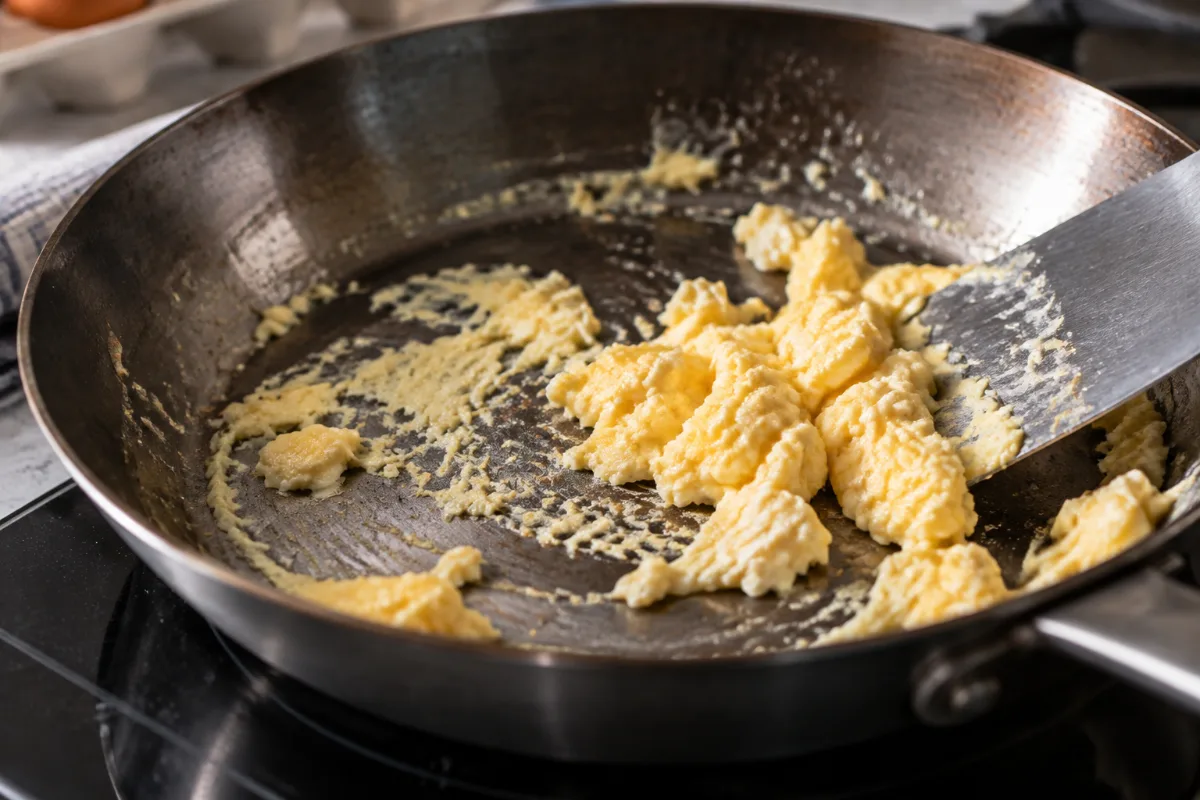
Quick answer: Our tested guide to food sticking to carbon steel keeps it simple: master the technique, keep the surface seasoned, and match your heat to the food. The full method, the key facts and the mistakes to avoid are all below.
Food Sticking To Carbon Steel: What Our Tests Found
Our team put food sticking to carbon steel through repeated real cooking sessions to see what actually works. Below we break down the method, the facts that matter, and the common mistakes so you get reliable results the first time.
Cause 1: the pan was too cold
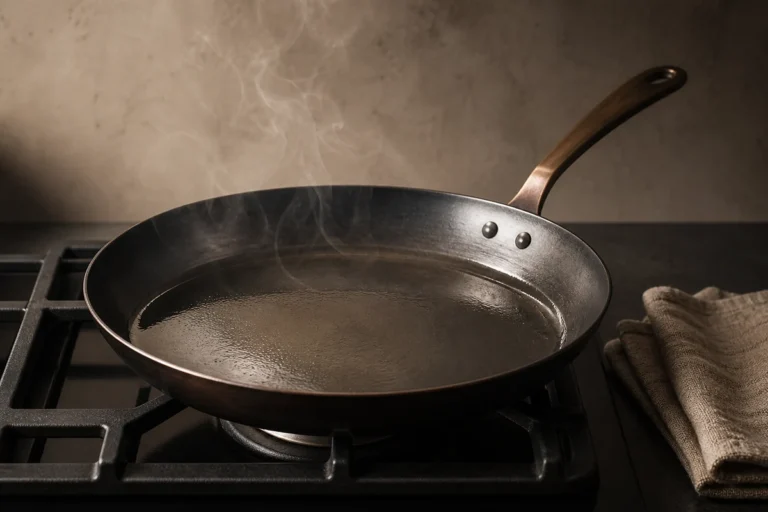
This is the most common reason by a wide margin. People treat steel like a coated pan and start cooking the moment oil goes in. Cold metal has microscopic texture that raw protein sinks into and bonds with. Heat closes that grip by expanding the metal and firing up the fat, so the food sits on a slick cushion instead of the surface.
Preheat over medium heat for two to three minutes before anything goes in. The pan needs time because steel heats fast but the whole disc has to catch up, not just the center.
Use the water test to know when it is ready. Flick a few drops onto the dry surface. If they sizzle and vanish, the pan is still coming up. When the drops gather into a bead that skates across the metal like a marble, the pan has hit the right zone. That rolling bead is the Leidenfrost effect, and cooks have used it for generations to judge a hot pan. Add your oil at that point, let it shimmer, then start.
One caution: do not walk away and let an empty pan sit on high for ten minutes. That overshoots and can scorch the surface. Medium heat and a short wait is all you need.
The thickness of your pan changes how long you wait. A thin, light skillet comes up in about two minutes, while a heavier gauge takes closer to four because there is more metal to warm through. Do not rush the heavy pan; the whole disc has to reach temperature, or the cool spots will grab food even though the center feels ready. Learn your own pan’s timing over a few cooks and the preheat becomes second nature. America’s Test Kitchen has noted the same thing in its carbon steel testing: the pan rewards a full, even preheat and punishes a hurried one.
Cause 2: not enough fat
Steel is not coated, so oil is not optional. It is the release layer. A young pan in particular needs a real film, not a stingy drizzle that beads in one corner.
For a standard skillet, start with about a tablespoon of oil and swirl it so it coats the base and creeps a little up the sides. It should shimmer and move like water when you tilt the pan. If it sits thick and slow, it is not hot enough yet. If you can see dry metal showing through, add a touch more.
Choose a fat with a high smoke point for searing: grapeseed, avocado, canola, or refined peanut oil all hold up. Butter alone burns before the pan is hot enough, so add it late for flavor, not as your main cooking fat. Serious Eats has long made the same point about high-heat oils and browning, and it holds true here.
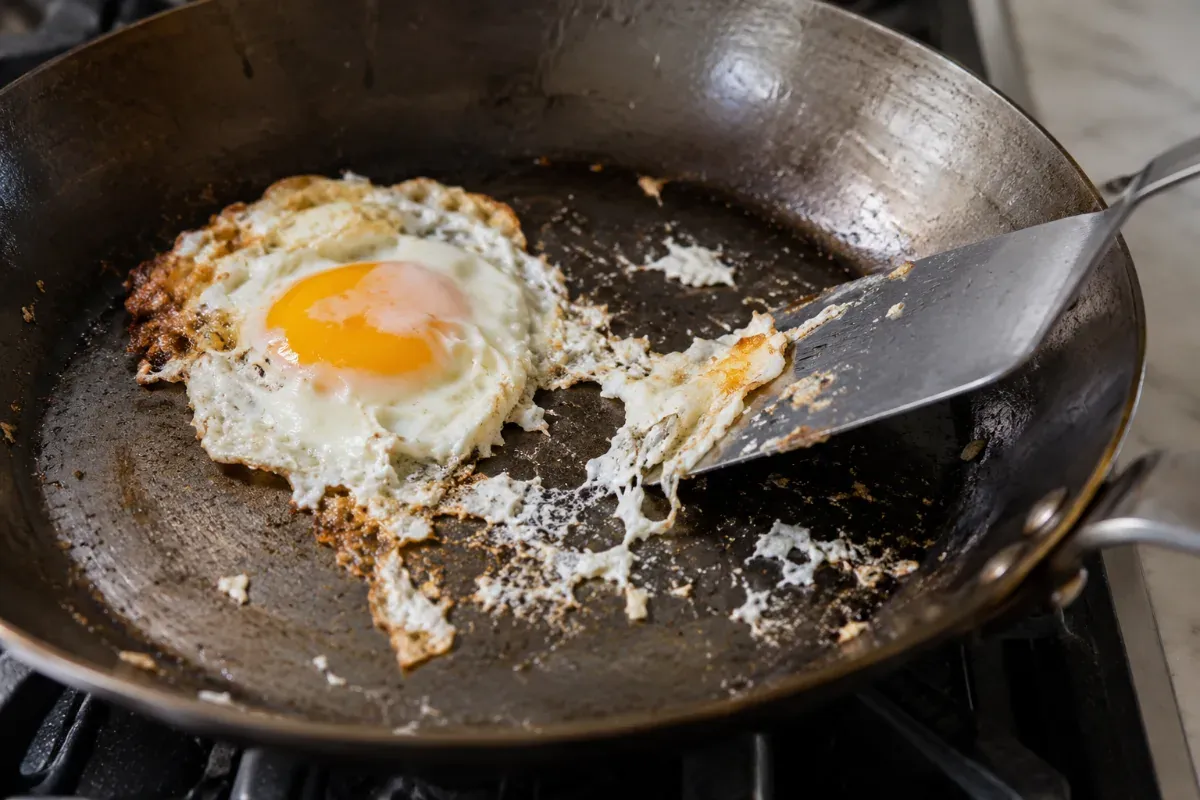
Eggs are the classic test. A pan that fries a steak fine may still stick with eggs because eggs need both good heat and a generous slick of fat or butter. Be more generous than feels right and the eggs slide.
There is a timing trick that helps a lot. Add your oil to the hot pan, swirl it, and give it a few seconds to heat before the food goes in. Cold oil hitting a hot pan needs a moment to reach temperature itself. If you drop food in the instant the oil lands, the oil is still cool and the food sticks anyway. Wait for the shimmer, then cook. For delicate foods like eggs and fish, a mix of oil to raise the smoke point plus a knob of butter for flavor and coverage works better than either alone.
Cause 3: the seasoning is still thin
A new pan is not fully nonstick, and no honest guide should pretend otherwise. Seasoning is a hardened film of oil that builds up over many cooks. Early on it is patchy and thin, so the surface behaves more like bare steel. Sticking in the first few weeks is normal, not a defect.
The film grows every time you cook fatty foods over heat. Bacon, sausages, seared meats, and stir-fries all lay down more seasoning. So does a proper stovetop or oven session. Within a dozen or so cooks most pans turn a corner and food starts releasing on its own.
If a well-preheated, well-oiled pan still fights you after weeks of use, the seasoning may need a boost. Cook oily foods on purpose for a while, or add a fresh layer following how to season a carbon steel pan. Keep the coats thin so they bond rather than flake.
Set your expectations by the pan’s age. A young pan asks for more fat and more heat than a veteran that has cooked hundreds of meals.
Cause 4: the pan was overcrowded
Pile in too much and the temperature crashes. Cold, wet food pulls heat out of the metal faster than the burner can put it back. The surface drops below the searing zone, moisture floods out, and instead of browning the food steams. Steamed food glues itself down.
Watch for the sign: liquid pooling around the food and a dull gray color instead of a brown crust. That is a crowded pan telling you it lost its heat.
Cook in batches. Leave space between pieces so steam escapes and each piece touches hot metal. For a 10-inch skillet, that might mean two batches of chicken thighs rather than one crammed layer. It feels slower, but it is faster than scraping stuck, soggy food off the base and starting over.
There is a smaller version of the same mistake: adding cold, wet food straight from the fridge. A pile of just-washed mushrooms or a block of chilled tofu drops the pan temperature the moment it lands. Pat wet ingredients dry with a towel first, and let very cold food sit out for a few minutes if you can. Dry, closer-to-room-temperature food keeps the pan in its searing zone and gives you the browning you were after.
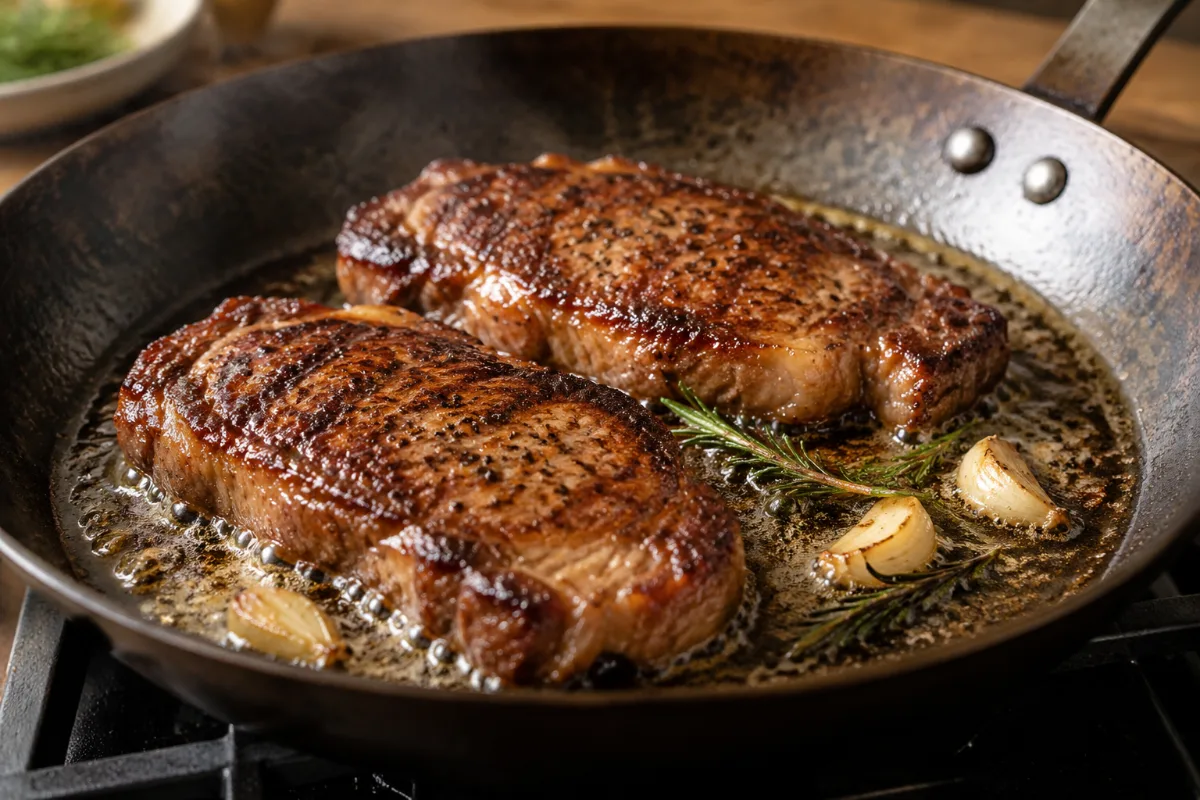
Cause 5: you moved the food too soon
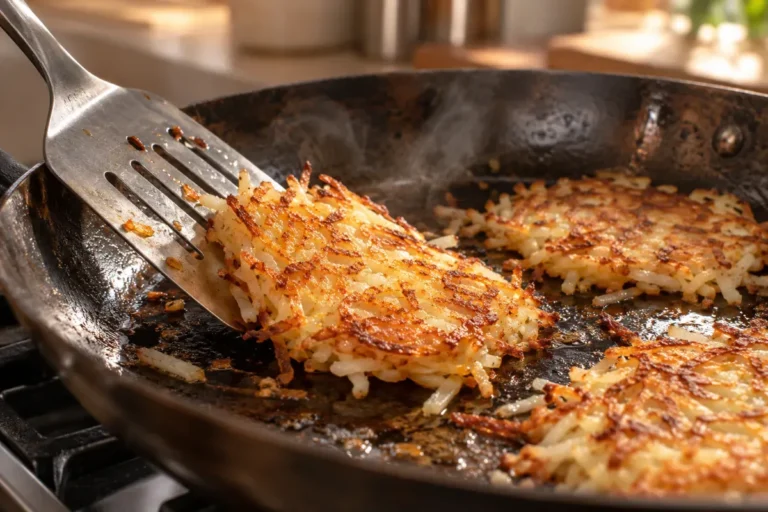
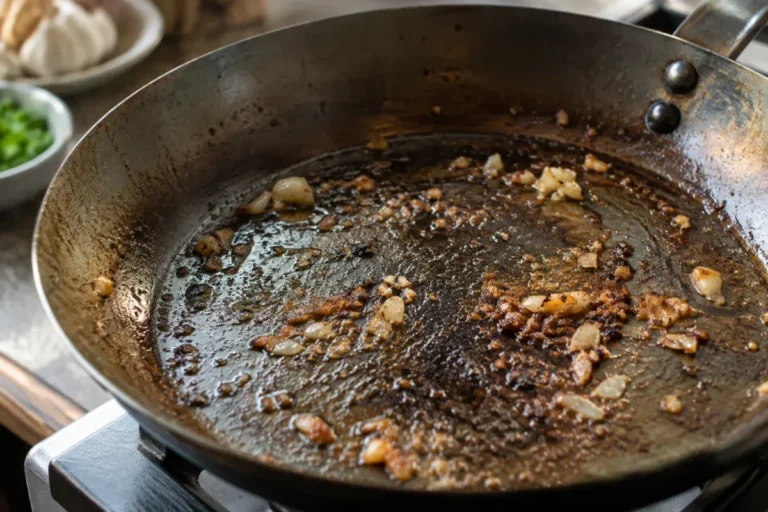
Protein bonds to a hot surface when it first lands, then releases itself once a crust forms. If you poke and shove before that crust sets, you tear the food and leave a stuck patch behind. Impatience, not the pan, is the culprit here.
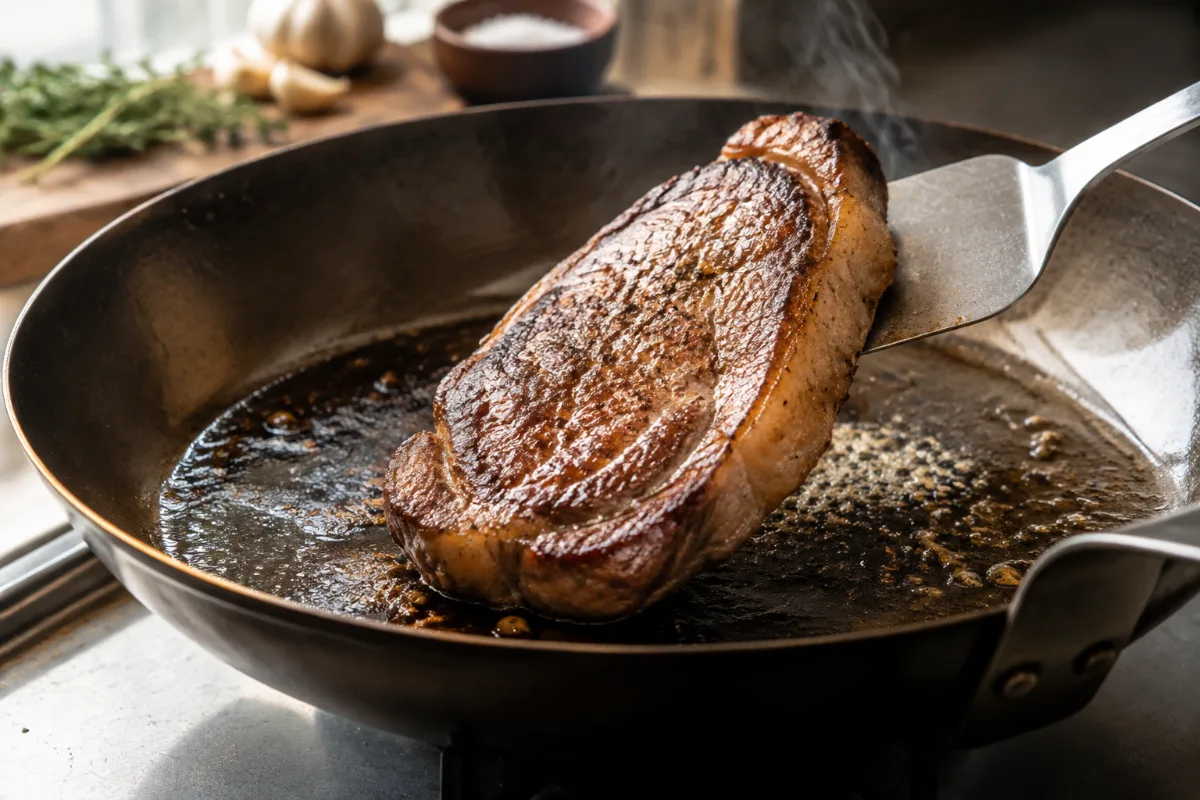
The release cue is simple and reliable. When a steak, a chicken breast, or a fish fillet is ready to turn, it lifts freely. Slide a thin spatula under one edge and give a gentle nudge. If it grips, wait. If it glides, flip it. A seared surface will not hold on.
This is why the best advice for a first sear is to put the food down and leave it alone. Set a timer if you have to. Two to three minutes on the first side is a fair starting point for most cuts, longer for a thick steak. Let the crust do the un-sticking for you.
Fish needs the most trust. It looks stuck when it is not done and releases the instant it is. Rushing a fillet is the fastest way to leave half of it welded to the metal.
Different foods release on different clocks. A thin cutlet or a chicken breast frees up in two to three minutes. A thick steak may want four or more on the first side. Skin-on fish releases only once the skin has crisped, which can take several minutes over steady heat. The rule stays the same across all of them: test the edge, and if it grips, give it more time. The pan is not the problem. The clock is.
One more habit helps here. Resist flipping food more than once. Each unnecessary flip interrupts the crust that does the releasing and gives the food another chance to bond to a slightly cooler spot. Lay it down, let it sear, turn it once, and finish. A calm pan and a calm cook stick far less than a busy one.
A quick pre-cook checklist
Run this five-point check before the food goes in and sticking becomes rare.
- Preheat over medium heat for two to three minutes.
- Test with a water drop; wait for the rolling bead.
- Add a real film of high-smoke-point oil and let it shimmer.
- Give each piece room; cook in batches if needed.
- Leave it alone until it releases on its own.
That is the whole game. Heat, fat, space, patience. If you cook a lot of eggs, the same rules apply with a heavier hand on the butter; see our notes on carbon steel eggs (planned) once the young seasoning has built up.
Here is how the causes rank, with the fix for each.
| Cause | Sign | Fix |
|---|---|---|
| Cold pan | Food grabs instantly | Preheat; use the water test |
| Too little fat | Dry contact points | Add a proper film of fat |
| Thin seasoning | New pan, patchy release | Build more seasoning layers |
| Overcrowding | Food steams and sticks | Cook in smaller batches |
| Moved too soon | Tears when flipped | Wait for the clean release |
Frequently asked questions
Why does food stick to my carbon steel pan?
How do I stop food sticking to carbon steel?
Is my pan not seasoned enough?
Why does food stick even when the pan is hot?
Does carbon steel become nonstick over time?
The takeaway
Sticking mid-cook is a signal, not a sentence. Read it against the five causes and you will almost always find a cold pan or a dry one at the root. Heat the metal, give it fat, respect the food’s own timing, and the surface starts working with you. If your pan also feels tacky when cold and idle, that is a different issue covered in why is my carbon steel pan sticky. And if the seasoning itself seems worn or thin, refresh it with how to reseason a carbon steel pan.