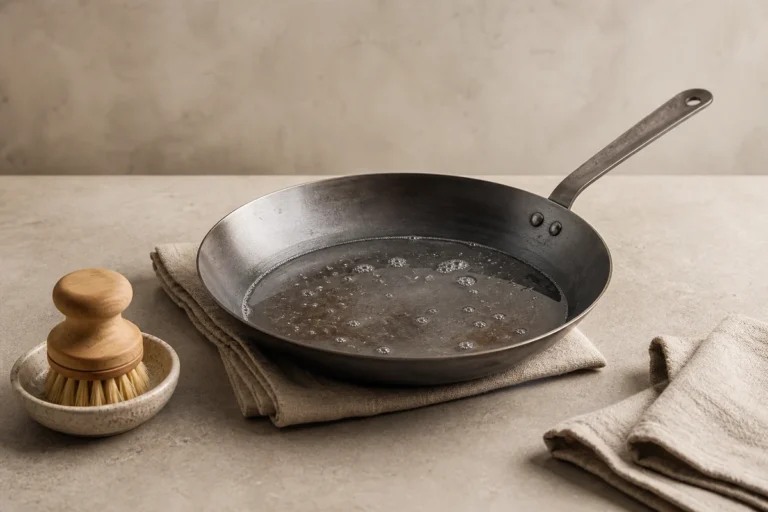
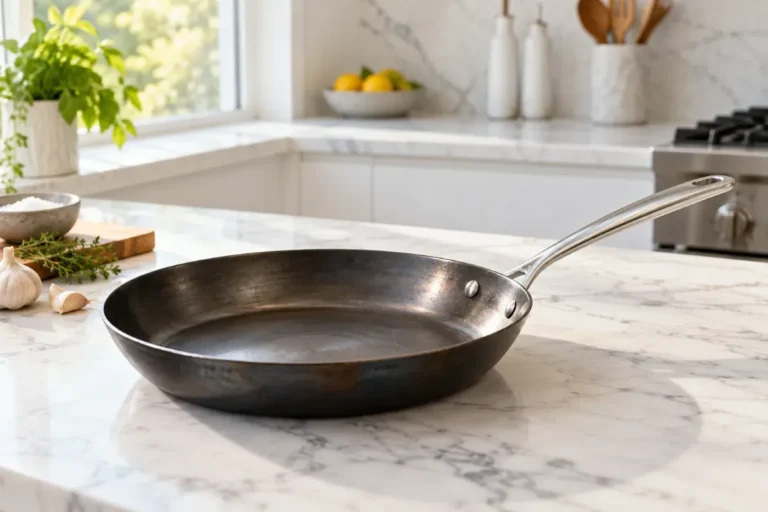
Mauviel M’Steel Review
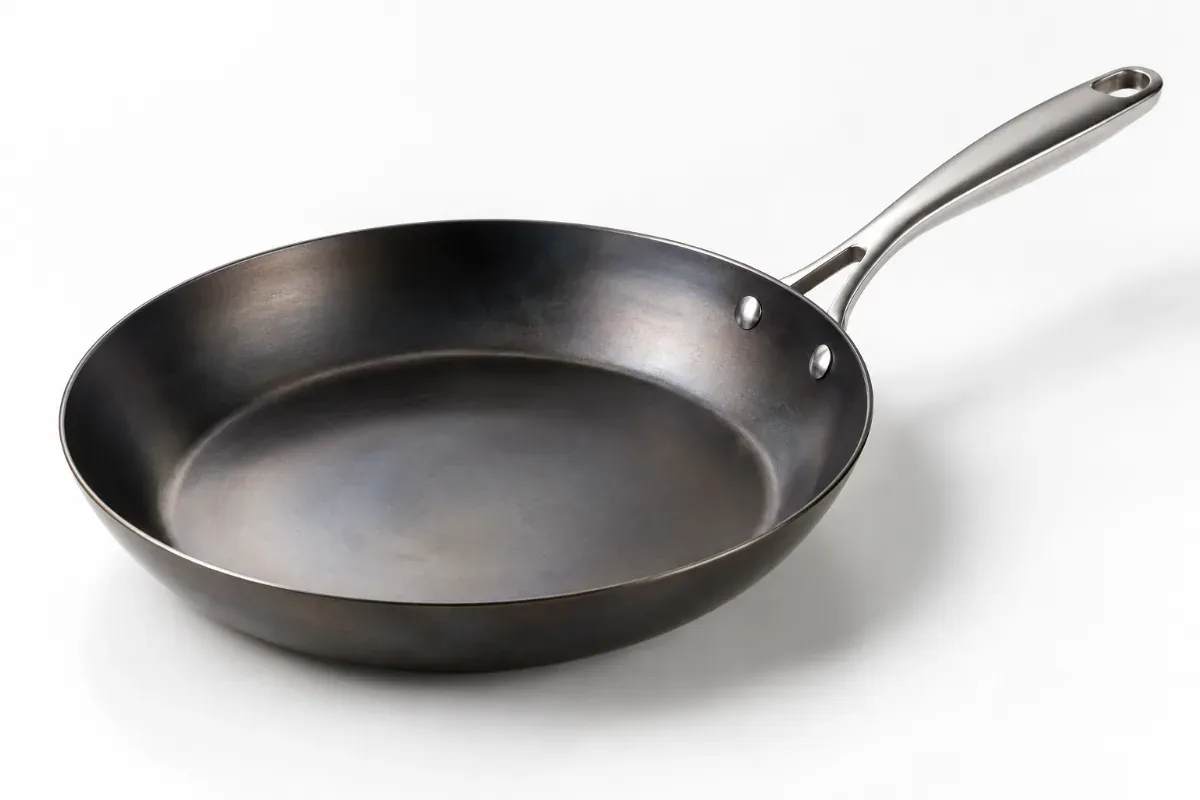
By the Carbon Steel Pan test team · Last updated September 2026
The Mauviel M’Steel is a heavier French carbon steel pan known for steady heat and solid build, and it has earned top-pick status from America’s Test Kitchen (verify current status). Its extra thickness holds temperature well for searing but adds weight. It cooks superbly and lasts for decades, so the value comes down to whether you want heat stability and a premium feel over a lighter, cheaper pan.
We cooked on the M’Steel for weeks, pushing it on searing, eggs, and heat recovery, and compared it with its French rivals. Here is the honest verdict.
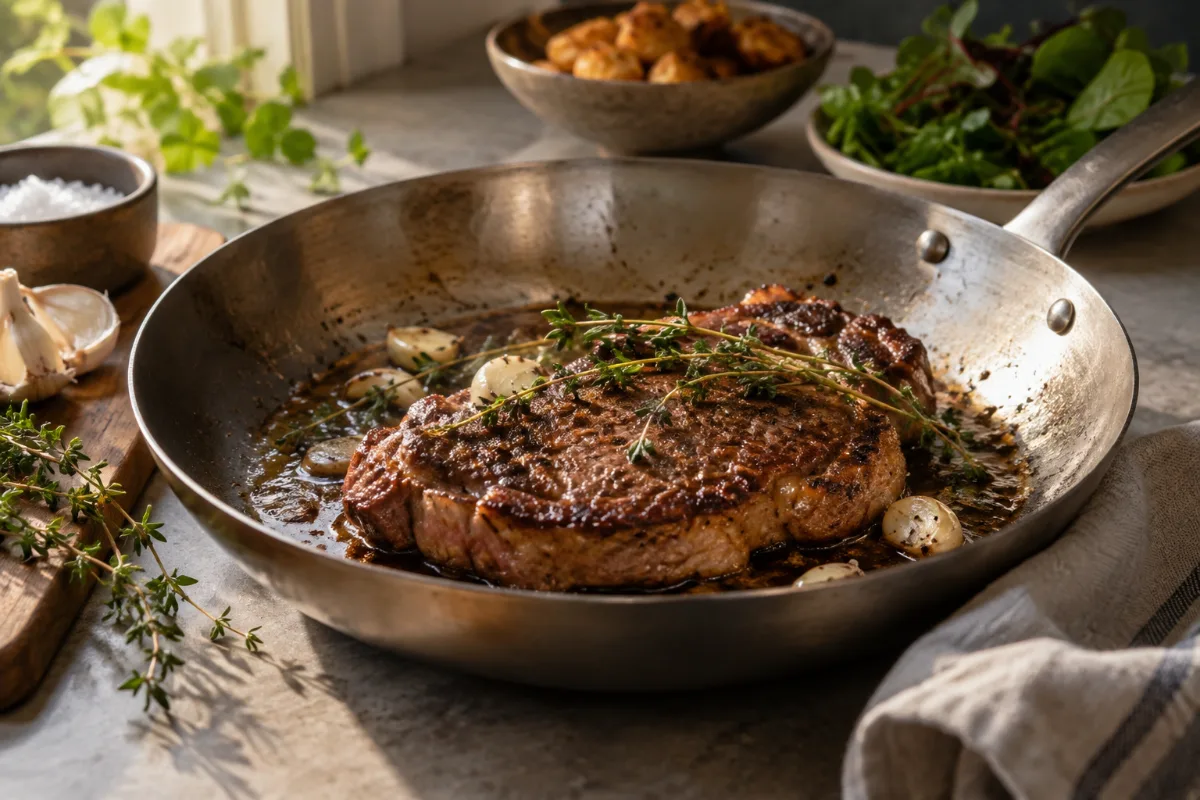
Quick answer: Our tested guide to mauviel msteel review keeps it simple: master the technique, keep the surface seasoned, and match your heat to the food. The full method, the key facts and the mistakes to avoid are all below.
Mauviel Msteel Review: What Our Tests Found
Our team put mauviel msteel review through repeated real cooking sessions to see what actually works. Below we break down the method, the facts that matter, and the common mistakes so you get reliable results the first time.
Verdict and who it suits
The M’Steel is a sear-focused cook’s pan. Buy it if you want a heavy, stable carbon steel skillet that holds its heat when a cold steak or a pile of vegetables hits the surface, and you are happy to handle the extra weight. It is beautifully built, it should outlast you, and its reputation is deserved. America’s Test Kitchen has recommended it, which draws a lot of buyers, though you should confirm their current pick before treating that as a live endorsement.
It is not the pan for everyone. If you want a light skillet for daily eggs and quick tasks, or you cook mostly at low to medium heat, the weight buys you little and a lighter pan will serve you better. The M’Steel rewards a specific kind of cooking: hard, high-heat searing where thermal mass matters.
Build and heat stability
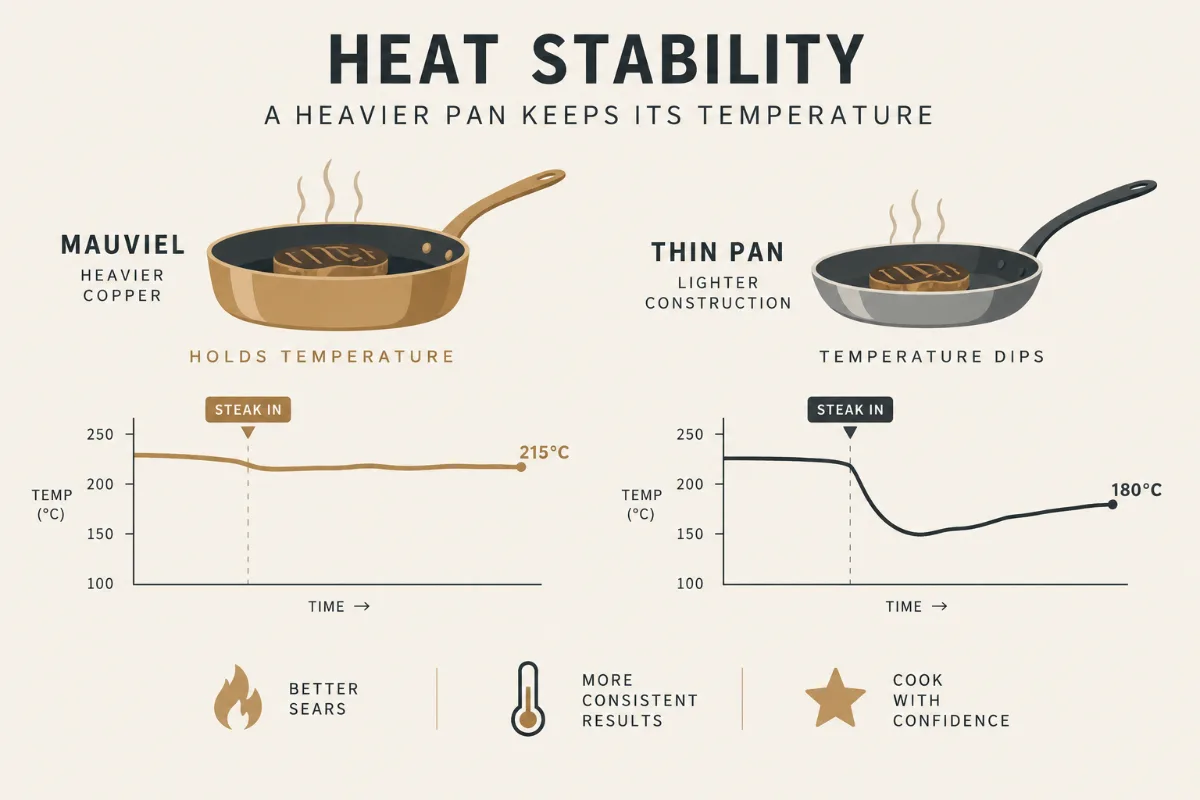
The defining feature of the M’Steel is its thickness. Mauviel builds this pan from heavier-gauge steel than most carbon steel skillets, and that extra metal is the whole point. It stores more heat, so when you drop in cold food the surface temperature falls less and recovers faster. For searing, that steadiness is what separates a deep, even crust from a grey, steamed one.
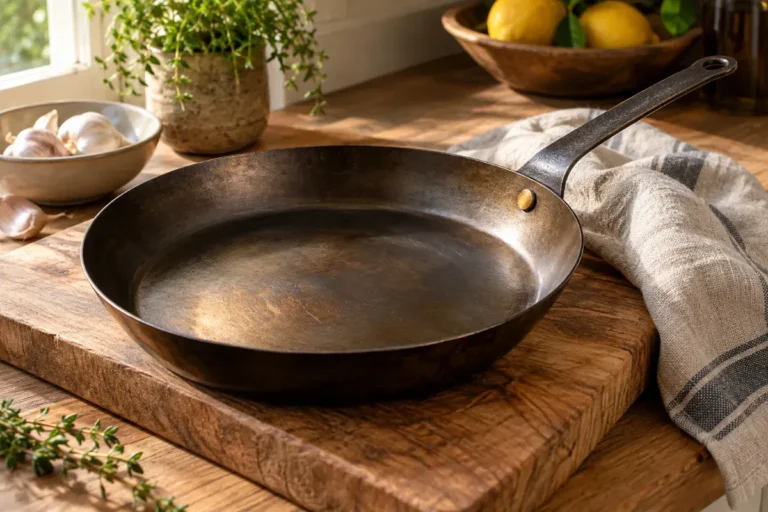
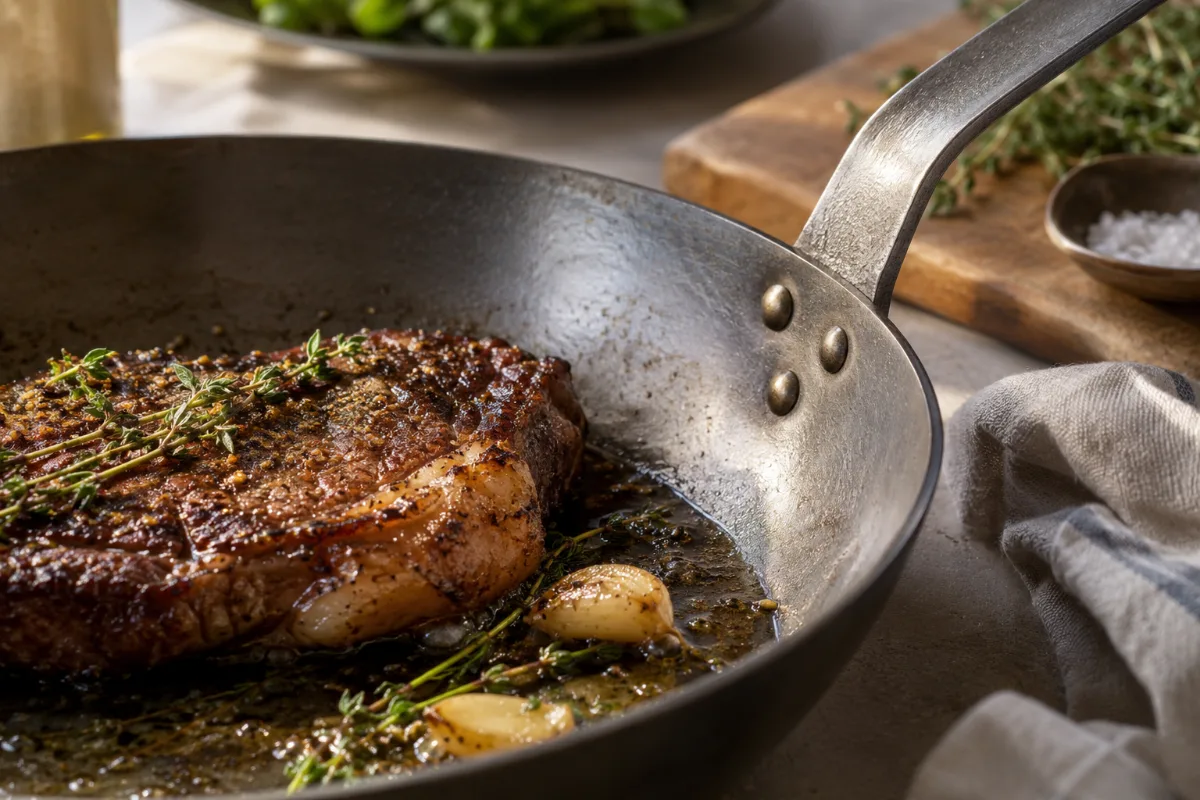
The pan is made in France (verify), part of Mauviel’s long cookware heritage, and it shows in the fit and finish. The body feels dense and rigid, with no flex in the walls. The handle is riveted iron, sturdy and built to last, secured with heavy rivets to the pan body.
Measured figures from our unit:
- Thickness: around 2.5 mm at the base (verify)
- Weight: about 4.2 pounds for the 11-inch (verify)
- Base diameter: about 8.5 inches (verify)
- Handle: riveted iron (verify)
That thickness is a real advantage on gas and induction, where fast, focused heat can make a thin pan hot-spot or warp. The heavier M’Steel shrugs off that stress and spreads heat more steadily. It is one of the more warp-resistant carbon steel pans we have used.
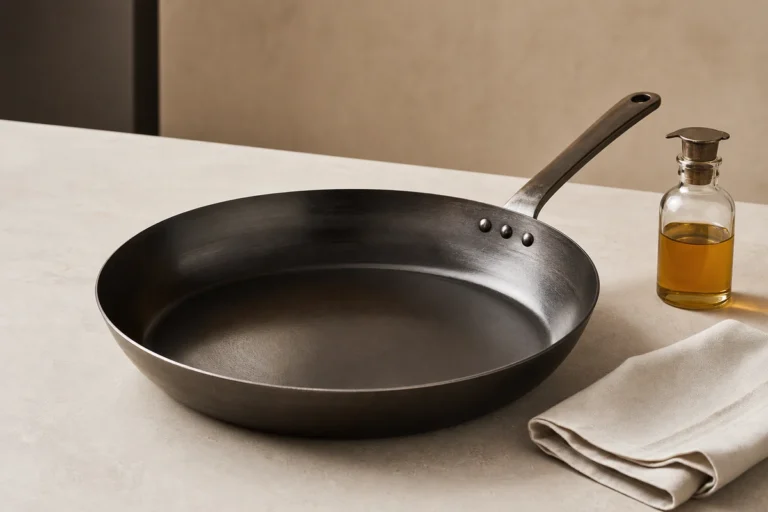
The M’Steel is bare carbon steel with no lacquer or wax coating from the factory, so it needs seasoning before first use, unlike a pre-seasoned pan. Mauviel positions it as a professional and serious-home pan, and the lack of a factory finish fits that: the maker assumes you will season it your way. The cooking surface itself is smooth and cleanly finished, which we found made building an even seasoning layer easier than on a rougher budget pan. There were no gritty patches to fill or level out.
Because it is magnetic bare steel, the M’Steel works on every cooktop, including induction, and the thick, flat base is well suited to induction’s fast, concentrated heat. On induction especially, the extra mass helps the pan resist the sudden temperature swings that can warp a thin skillet.
How it cooks: test results
Across our tests, the M’Steel did what its build promises. It is a searing specialist first and a good all-rounder second.
Heat and sear
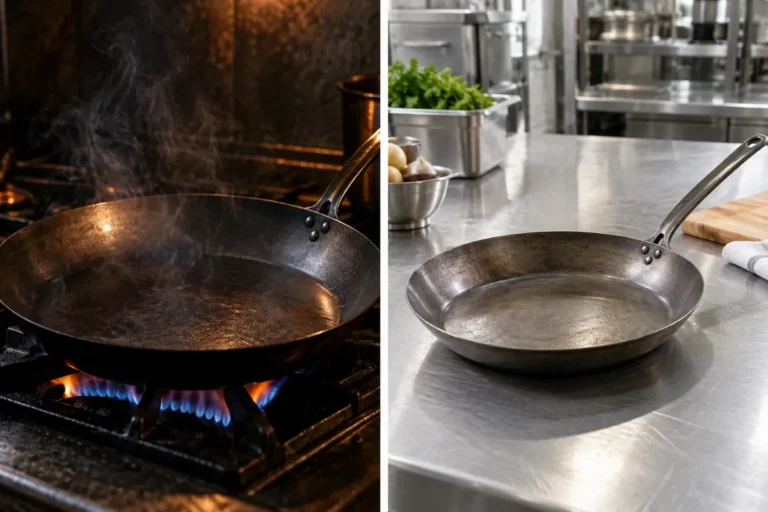
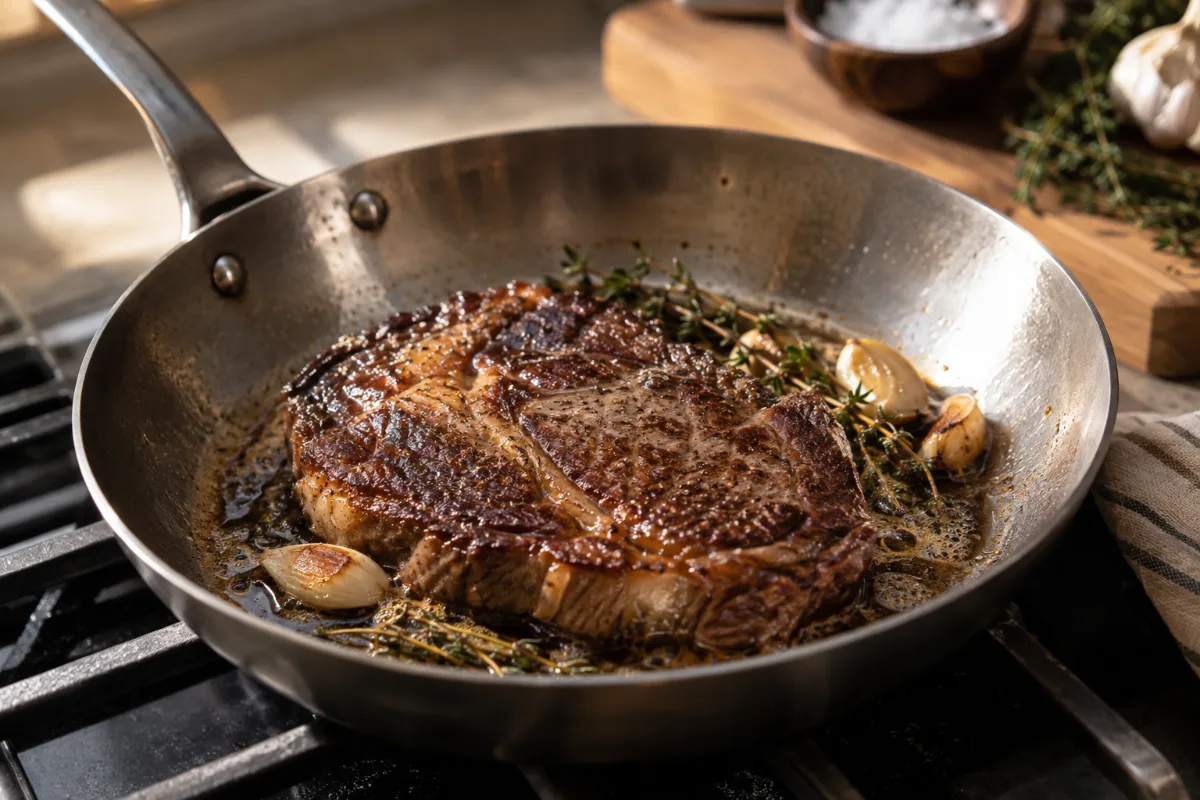
This is the pan’s strongest suit. Preheated on medium-high, it reached searing temperature in about four minutes (verify), a touch slower than a thin pan because there is more metal to heat, but once hot it stayed hot. We seared a thick rib-eye and the surface barely dipped when the cold meat landed, giving an even, mahogany crust edge to edge. On a second and third steak in a row, the pan held its temperature better than any medium-gauge pan in our lineup. If you sear in batches, this heat stability is worth a lot.
The trade-off is responsiveness. Turn the burner down and the M’Steel takes longer to cool than a thin pan, so you plan your heat changes a little earlier. For high-heat cooking that is a fair exchange.
Release and eggs
Once seasoned, the M’Steel releases food as well as any quality carbon steel pan. We ran the usual break-in, cooking fatty foods for a couple of weeks, and by the end a fried egg slid freely with a little butter. The cooking surface is smooth from the factory, smoother than budget pans, which helped the seasoning build evenly.
Eggs and delicate tasks work fine here, but the weight makes the pan less nimble for the quick flip-and-go cooking that lighter skillets handle with ease. You can cook eggs in it. You just may not want to reach for a four-pound pan every morning.
One place the thermal mass clearly earns its keep is a pan sauce after searing. The M’Steel stays hot enough after you pull the meat to build fond and reduce a sauce without stalling, where a thinner pan cools fast once the heat source can no longer keep up with the added liquid. If you like to sear and then deglaze in the same pan, the steady heat is a real convenience. Keep the acid brief, as with any carbon steel, so the seasoning stays intact.
Weight and handle reality
Two things deserve honesty, and both come from the same source: the pan is heavy.
At around four pounds for the 11-inch (verify), the M’Steel is noticeably heavier than mid-weight carbon steel pans and far heavier than a nonstick skillet. Lifting it one-handed to toss vegetables or to plate a dish takes real wrist strength. If you have hand or wrist issues, try before you buy, or consider a lighter pan. The weight is inseparable from the heat stability, so you cannot have one without the other.
The iron handle is the second point. It is solid and secure, but iron conducts heat, so the handle gets hot on high burners and hot in the oven every time. There is no cool-touch trickery. Keep a mitt or handle cover within reach and treat the handle as hot by default. It is a small thing, but it catches people who expect a cooler grip.
Neither point is a flaw exactly. They are the cost of a heavy, all-metal French pan built to last decades. Go in knowing them.
The oven is where both points meet. The M’Steel is oven-safe and excellent for a stovetop-to-oven sear-and-roast, finishing a thick steak or a chicken in the heat. But the whole pan, handle included, comes out scorching, so keep a folded towel or a mitt on the handle as a reminder. More than one cook has grabbed a bare iron handle straight from a 450-degree oven. A silicone sleeve is not much help here, since it can melt at oven temperatures, so a mitt is the safer habit for oven work.
Mauviel versus de Buyer versus Matfer
Among premium French carbon steel, three names come up most, and they split along clear lines.
The M’Steel’s edge is thickness and heat stability. It is one of the heavier options, so it holds temperature best for serial searing. Its riveted iron handle is classic and durable.
de Buyer’s Mineral B line is generally lighter and often a little cheaper, with a wider range of handle shapes and a beeswax factory finish. If you want a more manageable everyday pan with strong French quality, de Buyer is the flexible choice. See our de Buyer versus Matfer comparison for the fuller picture.
Matfer Bourgeat sits between them, a professional-kitchen staple with a smooth surface and a one-piece steel handle, lighter than the Mauviel but still solid. It is the restaurant workhorse.
The short version: choose Mauviel for maximum heat stability and a premium feel, de Buyer for lighter weight and handle choice, Matfer for a pro-grade all-rounder. All three are excellent, and none will disappoint a serious cook.
Price sits close across the three, so budget rarely decides it. The real question is weight and how you cook. A cook who sears in batches and values a rock-steady surface leans Mauviel. A cook who wants one pan for everything, eggs included, and moves it around the stove a lot leans de Buyer or Matfer for the lower weight. There is no wrong answer here, only a better match for your hands and your cooking. If you can, lift each in a store before deciding, because the weight difference is something you feel every day, not just on paper.
It is also worth saying that all three will outlive most of your other cookware. Bare carbon steel has no coating to wear out, so with basic care these pans last for decades and can be re-seasoned back to new if neglected. Buying at this tier is a long-term decision, which is part of why the choice deserves a little thought.
Mauviel M’Steel at a glance
| Spec | Mauviel M’Steel | Note |
|---|---|---|
| Origin | France | premium line |
| Thickness | Heavier, ~2.5 mm base | heat stability (verify) |
| Weight | ~4.2 lb, 11-inch | heavy (verify) |
| Handle | Iron, riveted | gets hot |
| Accolade | ATK top pick | verify current |
| Price | High | premium |
Who should buy it
The M’Steel is for the cook who sears often and wants the pan to hold its heat through the job. If you cook steak, chops, smashed burgers, or big batches of browned vegetables, the thermal mass pays off every time. It is also for the buyer who wants a premium French pan that will last a lifetime and does not mind the weight or the price.
It is a strong choice for a dedicated searing pan, one you reach for when browning matters most. Our guide to the best pan for steak puts it in that context.
Look elsewhere if you want a light daily-driver, cook mostly at gentle heat, or have wrist concerns. In those cases a mid-weight pan gives you most of the benefit with far less heft. But if heat stability and build quality are what you are after, the M’Steel delivers, and you can find it on the Mauviel M’Steel product page.
How we tested
We cooked on the M’Steel daily for several weeks: searing steak in single portions and in batches, frying eggs after break-in, browning vegetables, and tracking heat recovery with an infrared thermometer as cold food hit the surface. We measured heat-up time, weight, and thickness on our own unit, and compared heat stability directly against lighter carbon steel pans in the same tests. Thickness, weight, and origin figures should be confirmed against current Mauviel specifications, which is why several are marked for verification. The America’s Test Kitchen recommendation should also be checked against their latest review before citing. Our full method is on our How We Test page.
Frequently asked questions
Is the Mauviel M’Steel worth it?
Why did America’s Test Kitchen pick the Mauviel?
Is the Mauviel M’Steel heavy?
Mauviel or de Buyer?
Does the Mauviel handle get hot?
The bottom line
The Mauviel M’Steel is a specialist that happens to do everything well. Its heavier steel gives it heat stability that lighter pans cannot match, which makes it a superb searing pan and a lifetime buy. The price of that strength is weight and a handle that runs hot.
If you sear often and want a premium French pan built to last, it is well worth the money. If you want a light, nimble everyday skillet, spend less and buy lighter. Match the pan to how you cook, and the M’Steel rewards the right owner for decades.