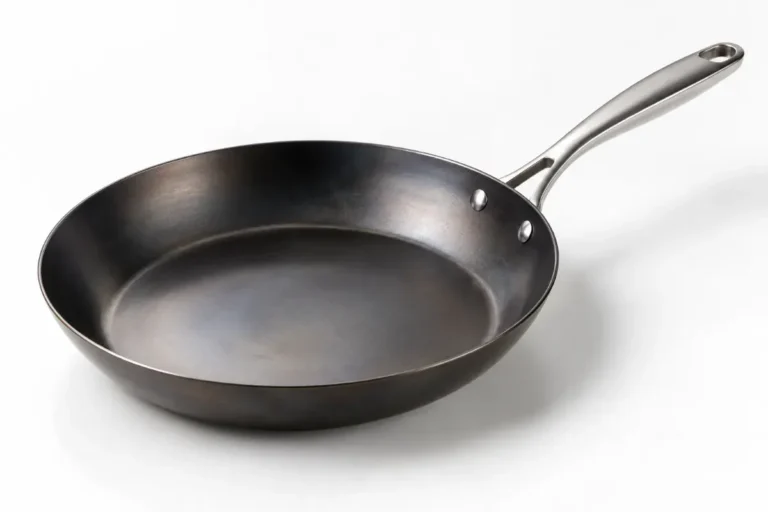
Lodge Carbon Steel Skillet Review
By the Carbon Steel Pan test team · Last updated September 2026
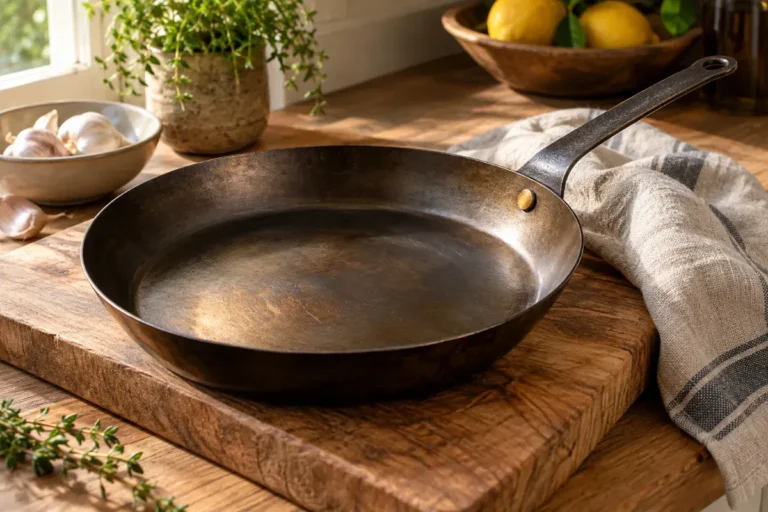
The Lodge carbon steel skillet is a strong value pick. It is American-made, ships pre-seasoned, and costs well below the French pans it competes with. It cooks well once you build the seasoning, though the surface is a little rougher and the handle less refined than premium rivals. For a first carbon steel pan or a budget-minded cook, it delivers most of the performance for a fraction of the price.
For this Lodge carbon steel review, we cooked on the pan for several weeks alongside pricier rivals to see where the low price shows and where it does not. Here is what we found.
Quick answer: Our tested guide to lodge carbon steel review keeps it simple: master the technique, keep the surface seasoned, and match your heat to the food. The full method, the key facts and the mistakes to avoid are all below.
Lodge Carbon Steel Review: What Our Tests Found
Our team put lodge carbon steel review through repeated real cooking sessions to see what actually works. Below we break down the method, the facts that matter, and the common mistakes so you get reliable results the first time.
Verdict: the value pick
If you want a capable carbon steel pan without spending a lot, the Lodge is the one to buy. It sears, browns, and releases food as well as pans costing twice as much, once it has a few weeks of cooking on it. The trade-offs are cosmetic and tactile rather than functional: a slightly gritty factory surface and a plain steel handle. Neither stops the pan from cooking well.
Skip it only if a smooth-from-the-start surface or a more comfortable handle matters enough to you to pay double. For most home cooks, and especially for anyone buying their first carbon steel pan, the Lodge is the sensible starting point. It is the pan we point beginners toward when budget is the deciding factor.
Specs and build
Lodge makes its carbon steel skillets in the United States, at the same South Pittsburg, Tennessee operation known for its cast iron (verify). That domestic manufacture is unusual at this price, since most budget carbon steel is imported.
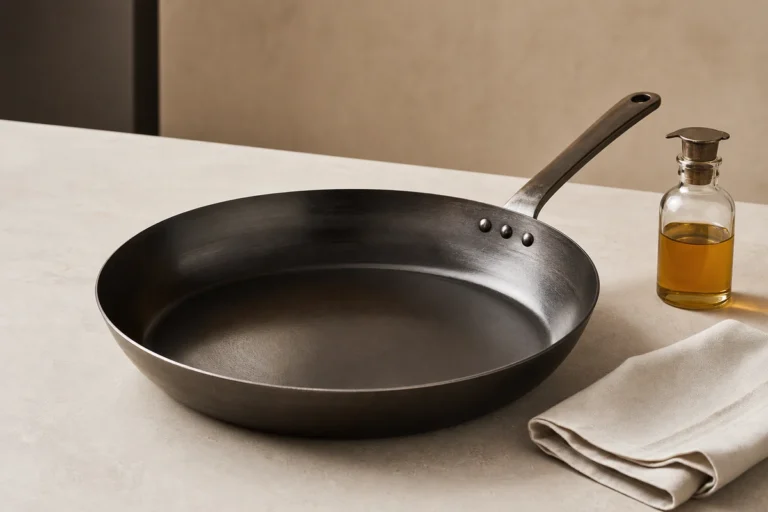
The pans ship pre-seasoned with Lodge’s vegetable-oil finish, the same coating used on their cast iron. That means the pan is usable out of the box, though the factory layer is thin and you still build the real nonstick surface through cooking.
We tested the 12-inch model. Measured figures from our unit:
- Weight: about 3.6 pounds (verify)
- Steel gauge: roughly 12-gauge, a medium thickness (verify)
- Cooking surface diameter: about 9.5 inches (verify)
- Sizes offered: 8-inch, 10-inch, and 12-inch (verify)
The build is honest and sturdy. The steel body feels solid, the walls flare at a useful angle for tossing food, and a helper handle on the larger sizes makes the pan easier to lift. The main handle is plain welded or riveted steel (verify), functional but without the shaping or heat-managing tricks of premium pans.
A note on the pre-seasoning. Lodge’s factory coating is a real advantage for a nervous first-time buyer, because the pan will not flash-rust the moment it gets damp, and you can cook on it right away. It is not a finished nonstick surface, though. Think of it as a head start on a job you still have to do. The pan needs the same weeks of cooking as any bare carbon steel to reach true release. Some owners strip the factory seasoning and start fresh; we found it easier to simply cook on top of it and let the surface build from there.
Compared with a de Buyer or Matfer, the Lodge lacks the machined or hammered French finish and the beeswax protective coat. What it offers instead is a plain, no-frills pan that hides nothing about what it is.
How it cooks: test results
This is where the Lodge earns its keep. Across our cooking tests, its performance sat close to pans costing far more.
Sear and heat
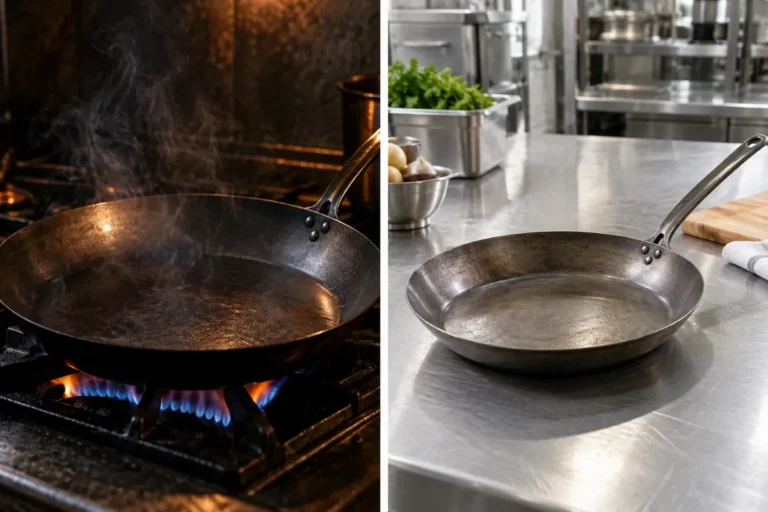
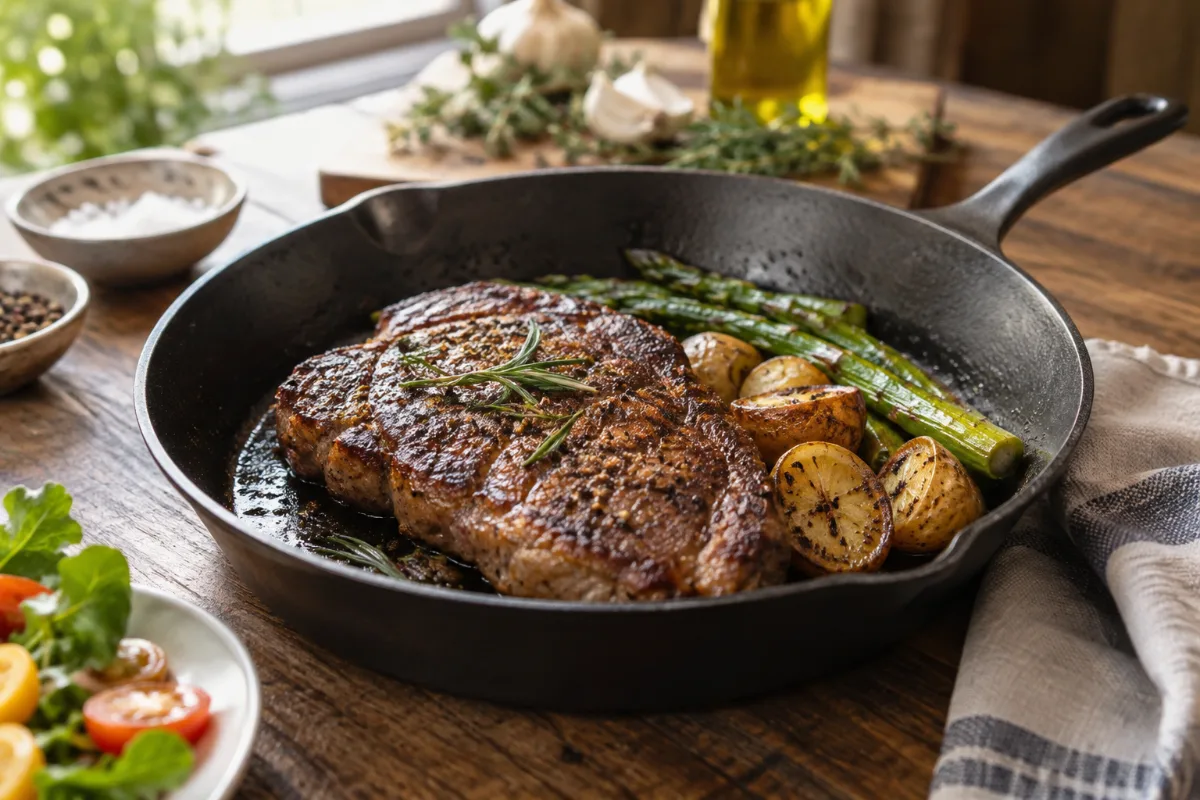
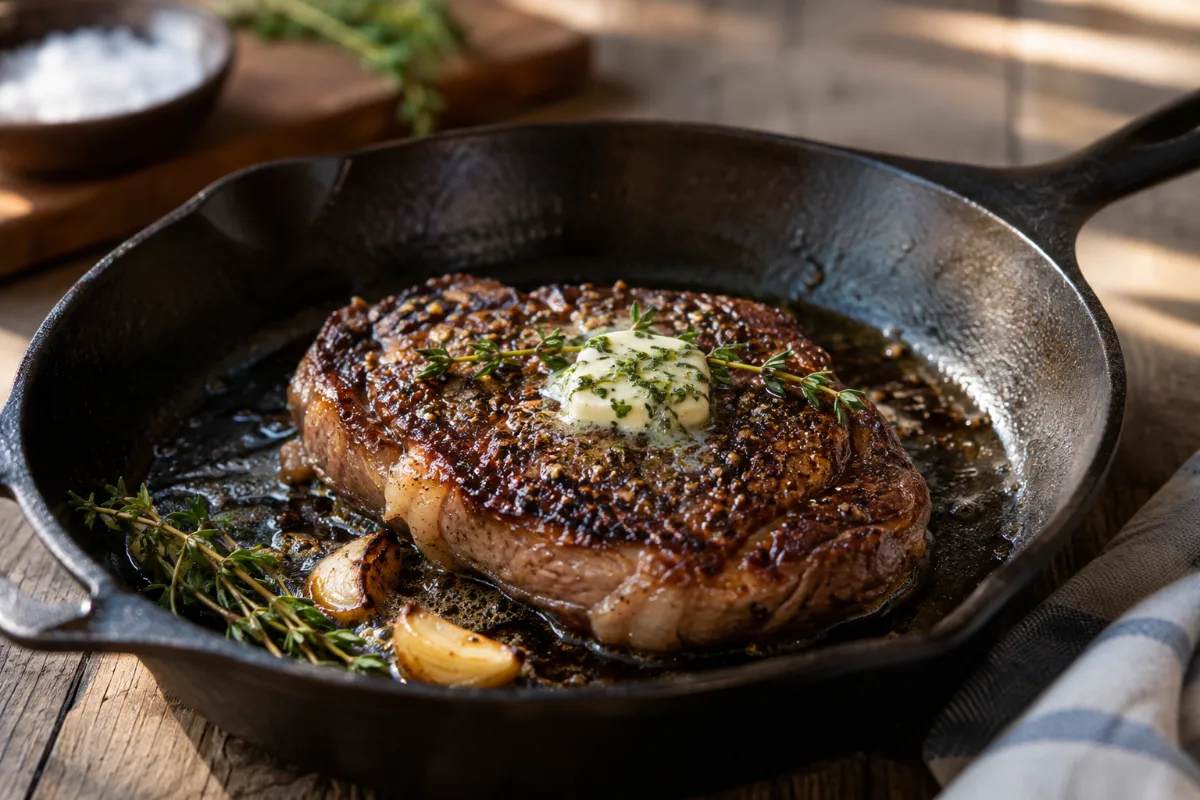
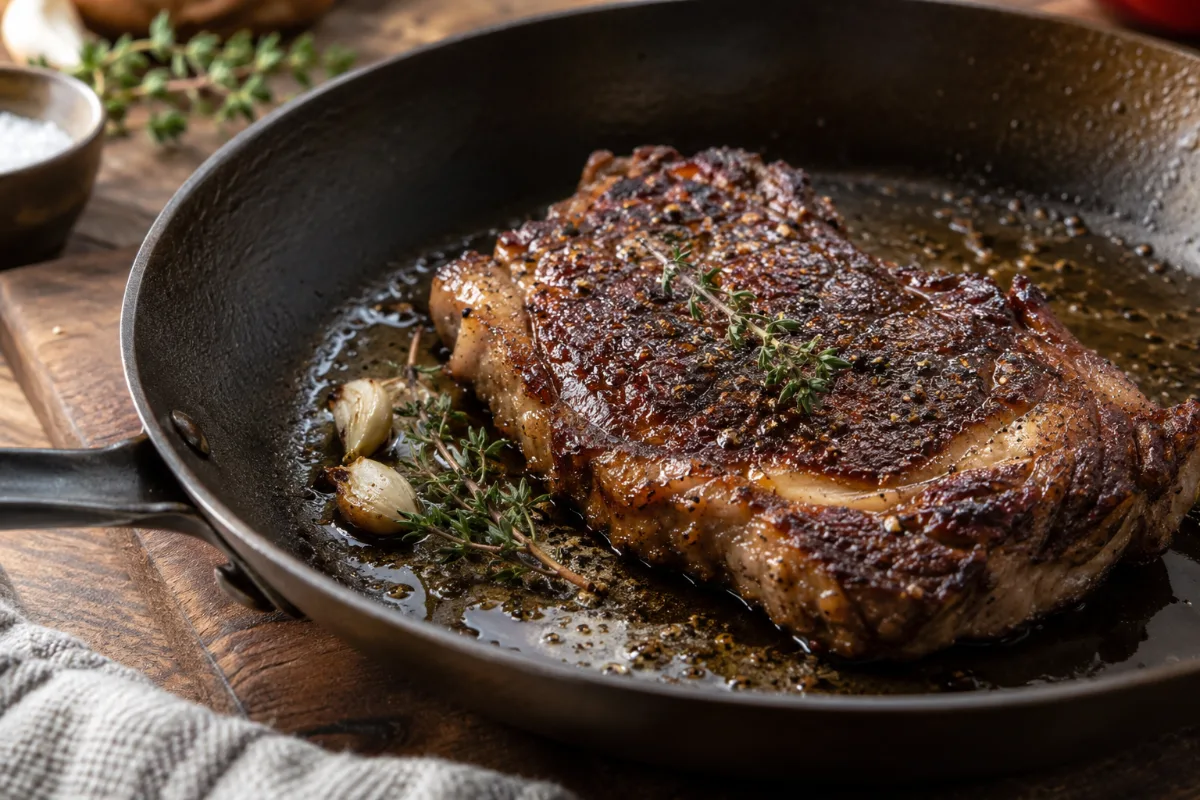
The medium gauge heats up quickly and holds temperature well enough for a good sear. On a gas burner set to medium-high, our pan reached searing heat in about three minutes (verify) and put a deep, even crust on a rib-eye. Heat spread across the cooking surface was fairly even, with the usual slightly cooler ring at the very edge that all pans of this thickness show.
Against a heavier premium pan, the Lodge recovered a touch slower after a cold steak hit it, a normal effect of medium-gauge steel. In practice it made no difference to the finished sear.
Release and eggs
Out of the box, food stuck. That is true of nearly every carbon steel pan, and the Lodge is no exception. We cooked bacon, sausages, and potatoes for the first two weeks to build seasoning. By week three, a fried egg slid across the surface with a bit of butter, and an omelette released cleanly. The pan followed the normal carbon steel curve: work at first, easy later. Nothing about the Lodge slowed that process down.
Once seasoned, release matched what we got from pans several times the price. The nonstick quality of carbon steel comes from seasoning, and seasoning does not care what the pan cost.
We also ran an even-browning test, cooking a full pan of pancakes to see how uniformly the surface browned them. The Lodge showed a slightly hotter center and a cooler outer ring, typical of a medium-gauge pan on a single burner. Rotating the pan or nudging the pancakes toward the edge evened things out. A heavier premium pan browned marginally more evenly in the same test, but the gap was small and easy to work around. For everyday cooking it is a non-issue.
Stir-frying suited the Lodge well. Its light weight, low for a carbon steel pan, made it easy to keep food moving, and the quick heat response let us drop and recover temperature fast. This is a pan you can toss vegetables in without a workout, which is not always true of the heavier French options.
Surface and handle versus premium pans
Here is where the price shows, and we want to be honest about it.
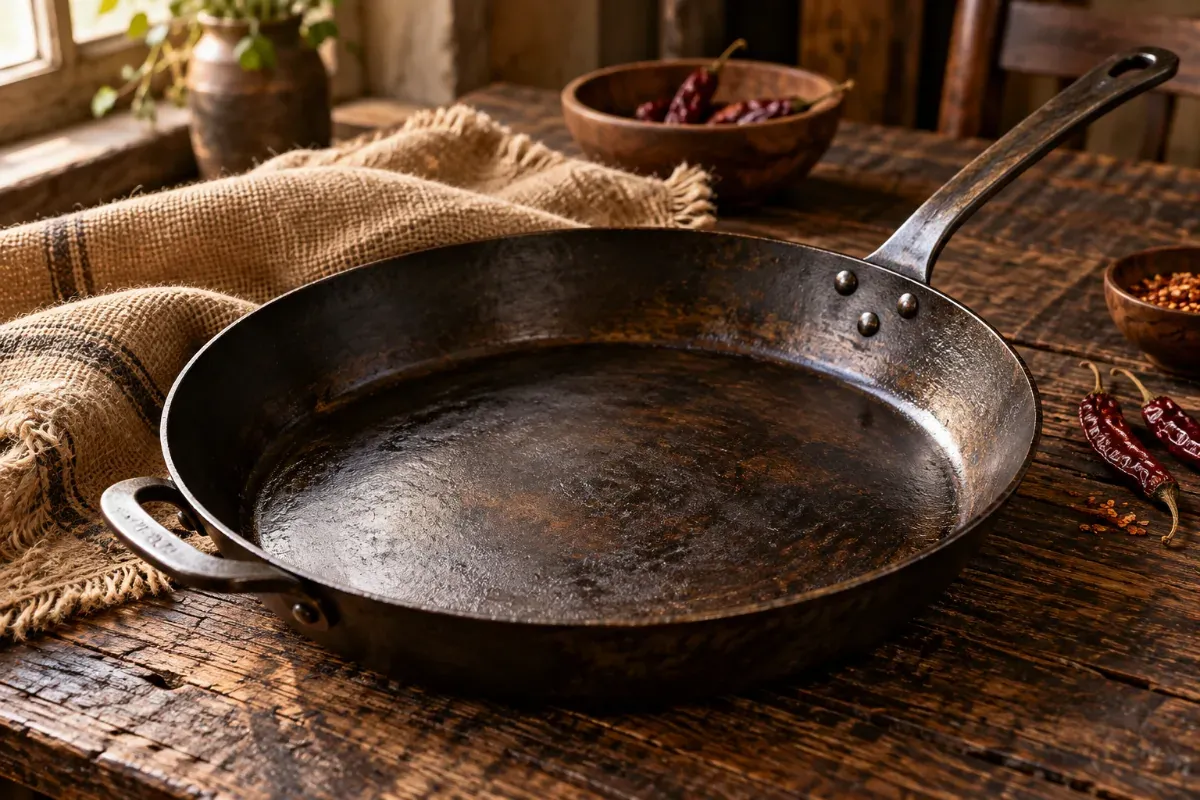
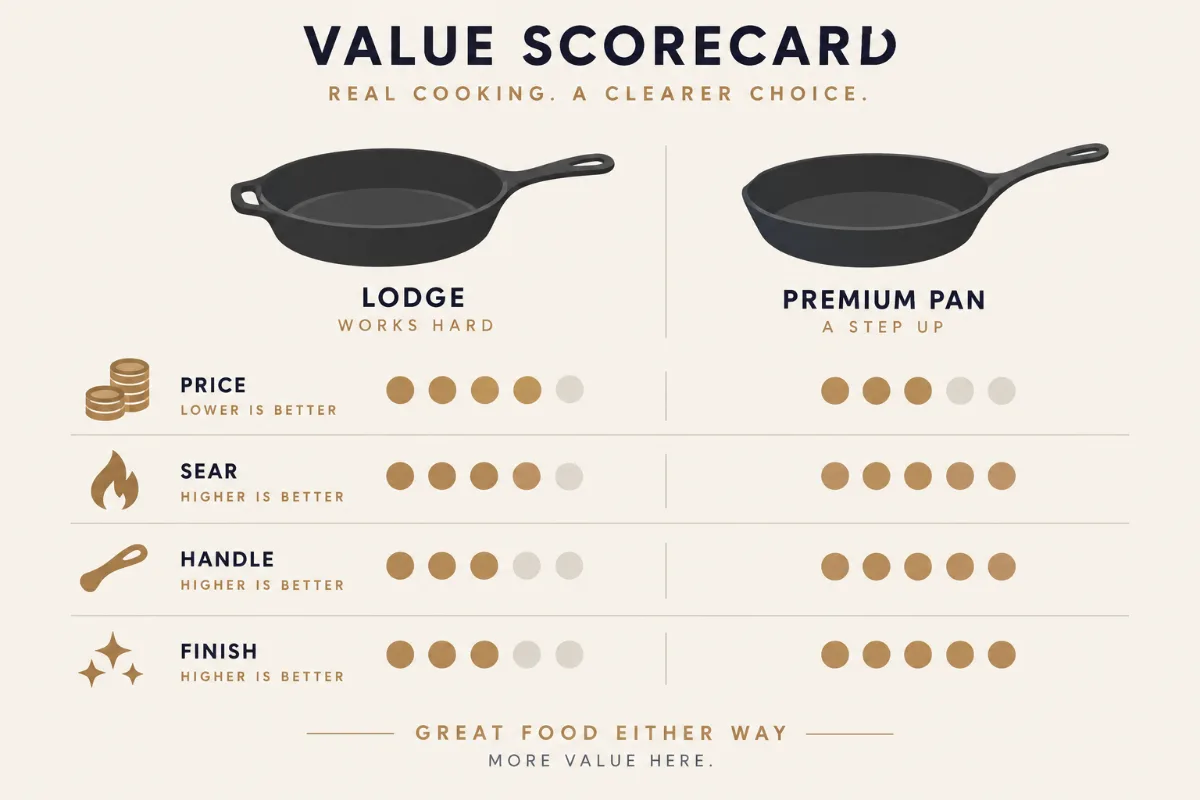
The Lodge cooking surface has a slightly rough, sandy texture from the factory, coarser than the machined or hammered finish on French pans like de Buyer. You feel it when you run a finger across it. In the first weeks this rougher surface holds onto food a little more, which is one reason the break-in matters. The good news: it smooths noticeably as seasoning fills the texture, and after a month of cooking the difference in release is hard to detect.
The handle is the other compromise. It is plain steel with no ergonomic shaping, and it gets hot on the stove and in the oven, so a mitt or handle cover is a must. Premium pans often add a longer, contoured, or slower-heating handle. The Lodge handle works, but it is basic.
These are the corners Lodge cut to hit the price. Notice that neither one is about how the pan cooks. The extra money on a premium pan buys finish and comfort, not better browning.
If the rough surface bothers you, there is an optional fix some owners like: a light sanding of the cooking surface before the first seasoning, with fine sandpaper, to knock down the coarsest texture. We do not think it is necessary, since normal use smooths the pan anyway, but it is a known route for anyone who wants a slicker start. Season well afterward, because sanding exposes bare metal that will rust if left uncoated.
The handle question is worth weighing against how you cook. If you often move the pan from stove to oven, or cook long enough for the handle to soak up heat, the basic steel handle will be hot more often, and a silicone handle cover is a cheap upgrade. If most of your cooking is quick stovetop work, you may rarely notice it. Match the compromise to your habits rather than treating it as a dealbreaker.
Lodge versus Made In and de Buyer
Stacked against the popular step-up options, the picture is clear.
Compared with Made In, the Lodge gives up a smoother factory surface and a more comfortable, cooler-running handle. Made In arrives readier to release food and feels nicer in the hand. It also costs meaningfully more.
Compared with de Buyer’s Mineral B line, the Lodge gives up the machined French surface, the beeswax finish, and the shaped French handle. de Buyer pans are heirloom-grade and priced to match.
What you gain with the Lodge is US manufacture and a price that can be half or less of those pans. If your budget is tight, or you are not yet sure you will love carbon steel, the Lodge lets you find out cheaply. If you already know you want the best surface and handle and will keep the pan for decades, the premium pans justify their cost. Our budget carbon steel guide covers the full value tier.
Lodge carbon steel at a glance
| Spec | Lodge | Note |
|---|---|---|
| Origin | USA | made by Lodge |
| Seasoning | Pre-seasoned | ready sooner |
| Surface | Slightly rough | smooths with use |
| Handle | Basic steel | gets hot |
| Weight | About 3.6 lb, 12-inch | medium gauge (verify) |
| Price | Low | strong value |
Who should buy it
The Lodge suits three kinds of buyer.
The first is the budget cook who wants real carbon steel without a big outlay. You get the searing, browning, and nonstick payoff for less than any premium pan.
The second is the first-time carbon steel owner. If you are not sure the maintenance and seasoning suit your cooking, the Lodge is a low-risk way to learn. You can always upgrade later, and this pan will still earn a spot for high-heat jobs.
The third is the cook who wants a second, knockabout pan for camping, high-heat searing, or the tasks they would rather not do in a pricier pan. At this price you will not baby it.
The one buyer who should look elsewhere is the cook who wants a polished, refined pan from the first cook and is happy to pay for it. For everyone else, the Lodge is a lot of pan for the money. You can find it on the Lodge product page, and it holds up well against the field in our roundup of carbon steel frying pans.
How we tested
We cooked on the Lodge daily for several weeks: searing steak and chicken, frying eggs, crisping potatoes, and stir-frying vegetables. We measured heat-up time on a gas burner, judged browning evenness with a batch-pancake test, tracked how quickly the seasoning developed, and compared release against premium pans at the same stage of break-in. Weights and dimensions were measured on our own unit and should be confirmed against current Lodge specifications, which is why several figures above are marked for verification. Our full method is on our How We Test page.
Frequently asked questions
Is Lodge carbon steel good?
Is Lodge carbon steel worth it over premium brands?
Does Lodge carbon steel come pre-seasoned?
Lodge or Made In carbon steel?
Is the Lodge surface too rough?
The bottom line
The Lodge carbon steel skillet proves that good cooking performance does not require a high price. It sears, browns, and releases food as well as pans costing far more, once you put in the normal break-in weeks. What you give up is finish and handle comfort, not cooking quality.
For a first pan, a budget buy, or a hard-use workhorse, it is an easy recommendation. Spend the extra on a French pan only if a smooth surface and a nicer handle are worth it to you. The Lodge covers the cooking, and it covers it cheaply.