Made In Carbon Steel Review: Hands-On and Tested
By the Carbon Steel Pan test team · Last updated September 2026
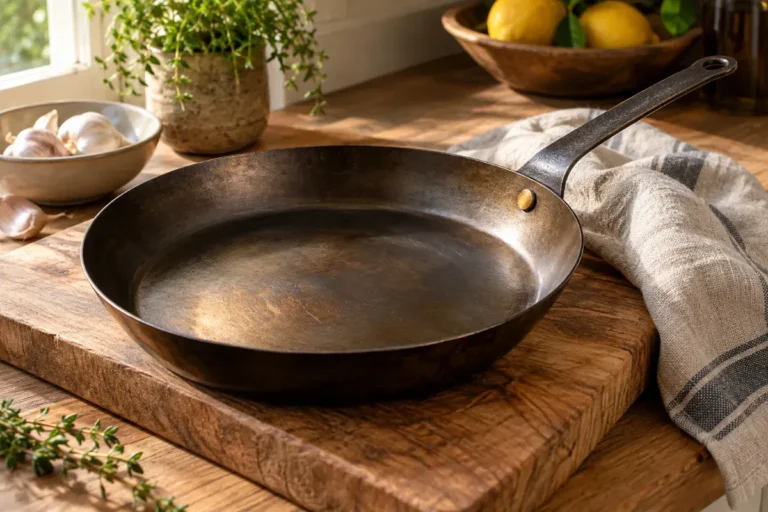
Made In carbon steel is a well-built pan with a comfortable handle and fast, even heat. In our testing it cooks on par with pricier French pans and suits buyers who want a modern design and easy availability. It costs more than a Lodge and needs the same seasoning care as any bare steel pan, so the value comes down to how much handle comfort and finish matter to you.
The verdict first
We tested the 10-inch and 12-inch Made In skillets over several weeks of everyday cooking, from morning eggs to weekend steaks. The short answer: this is a very good pan that earns its place, with one honest caveat about price.
Buy it if you want a carbon steel skillet that feels considered and modern, has a handle that stays cooler and more comfortable than most, and ships fast from a US company with easy returns. It performs at the level of French pans that cost about the same or more. It is not the cheapest way into carbon steel, and it demands the same seasoning routine as any other bare pan, so it will not suit someone who wants the rock-bottom price of a Lodge or a truly maintenance-free surface. For most home cooks stepping up from nonstick, it is an easy pan to recommend.
Quick answer: Our tested guide to made in carbon steel review keeps it simple: master the technique, keep the surface seasoned, and match your heat to the food. The full method, the key facts and the mistakes to avoid are all below.
Made In Carbon Steel Review: What Our Tests Found
Our team put made in carbon steel review through repeated real cooking sessions to see what actually works. Below we break down the method, the facts that matter, and the common mistakes so you get reliable results the first time.
Specs that actually matter
Brand pages list rim diameter, which always sounds bigger than the real cooking space. What matters is the flat cooking surface, the weight in your hand, and the thickness that drives heat behavior. Here are the numbers we measured on our test units. Confirm current figures against the product page before you rely on them.
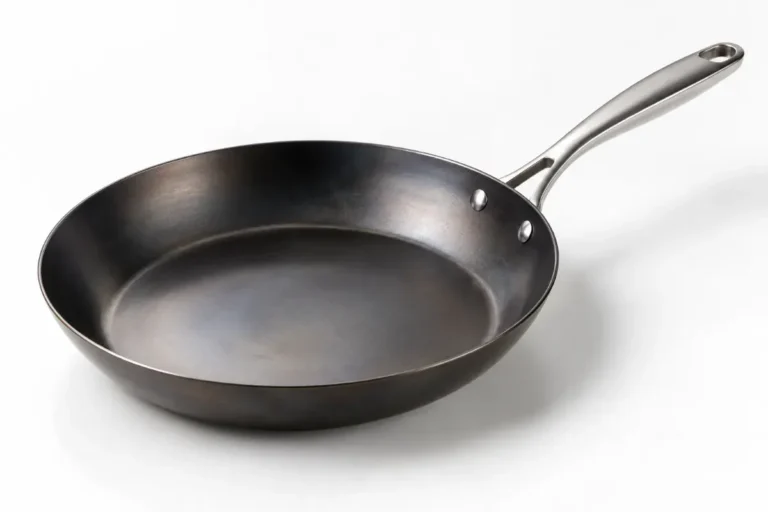
The 10-inch skillet gave us a flat cooking surface of about 7.5 inches (verify), with the rest of the diameter taken up by the sloped walls. It weighed roughly 1.6 kg / 3.5 lb (verify). The base measured close to 2.5 mm thick (verify), which sits in the sweet spot between fast heating and warp resistance.
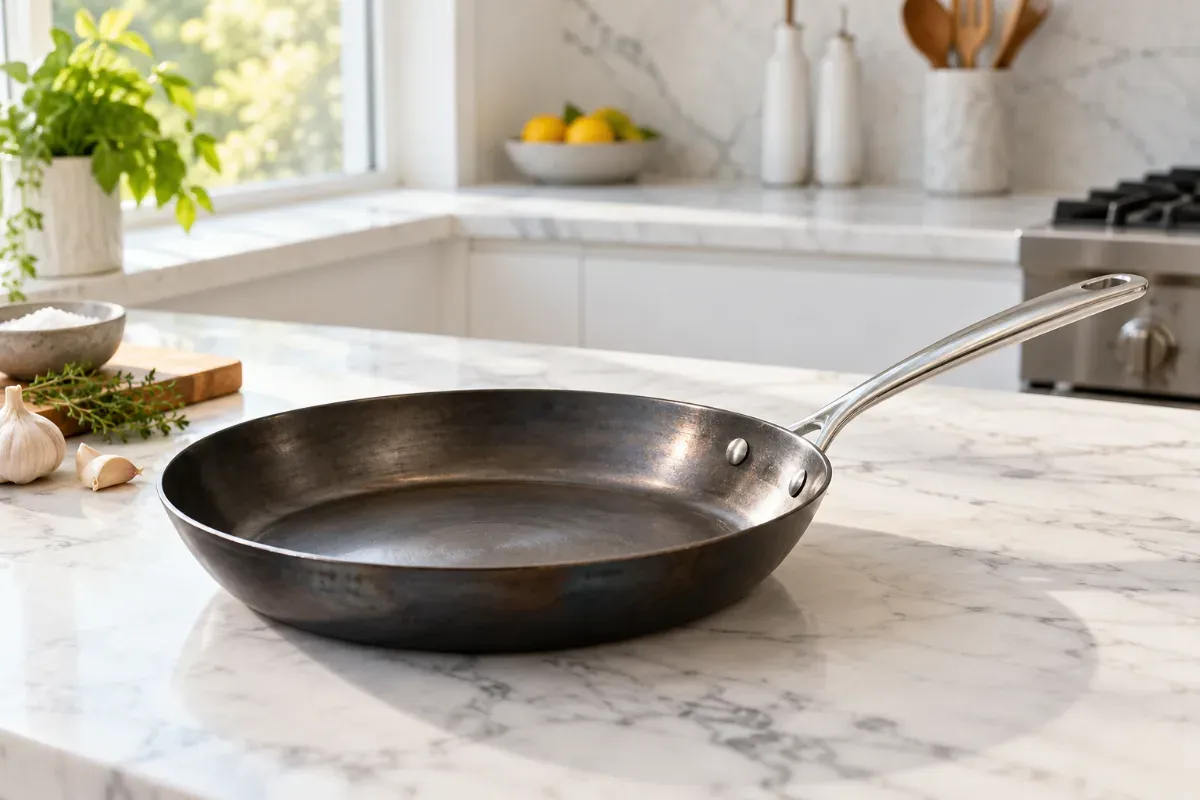
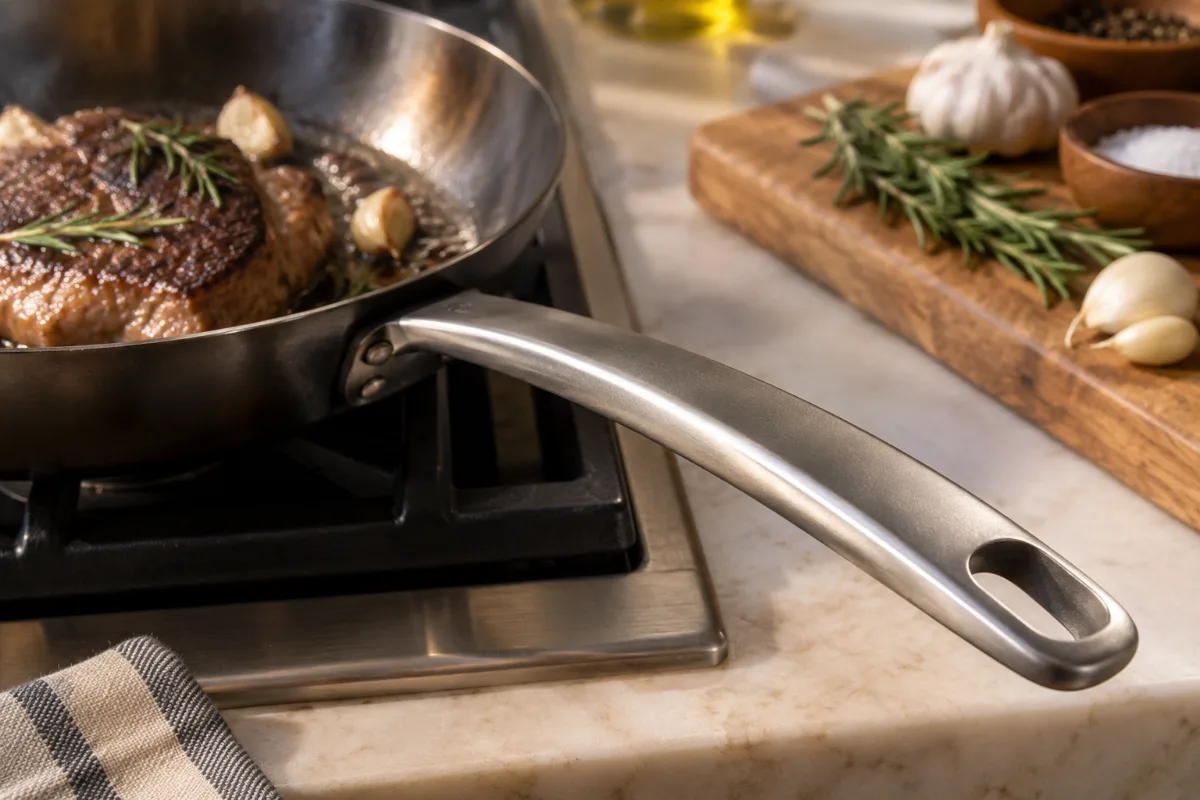
The handle is stainless steel, shaped and set at an angle Made In markets as staying cooler during stovetop cooking. In practice it did run cooler than a plain steel French handle at medium heat, though it still gets hot under a broiler or a long high-heat session, so keep a towel nearby. The pan is induction compatible thanks to a flat magnetic base, and it comes in 8, 10, and 12-inch sizes.
Sourcing is a point worth checking. Made In states its carbon steel is produced in Sweden (verify current sourcing). We call that out because country of origin can change, and it is the kind of claim a careful buyer should confirm at purchase.
A note on how we arrived at these figures, since measured specs are only as good as the method behind them. We weigh each pan on a digital kitchen scale, measure the flat cooking floor with calipers from the point where the wall begins to curve, and check base thickness at the rim where the metal is exposed. We cook on both gas and induction and season every pan the same way before testing so no pan gets an unfair head start. The numbers above come from that process, and we flag anything we could not confirm against the brand’s current listing with a “(verify)” tag rather than guessing. You can read the full approach on our How We Test page.
The 12-inch skillet, for the record, is a noticeably bigger commitment in the hand. It weighed around 2.0 kg / 4.4 lb (verify) and asked for a two-hand lift when full. That is not a knock; it is the nature of a large steel pan. But if you cook for one or two, the 10-inch is the more comfortable daily driver, and the 8-inch is the egg-and-snack pan.
How it cooks: our test results
Specs set expectations. Cooking sets the verdict. We ran the pan through the same battery we use on every skillet, with a de Buyer Mineral B alongside as a reference point.
Heat-up and searing
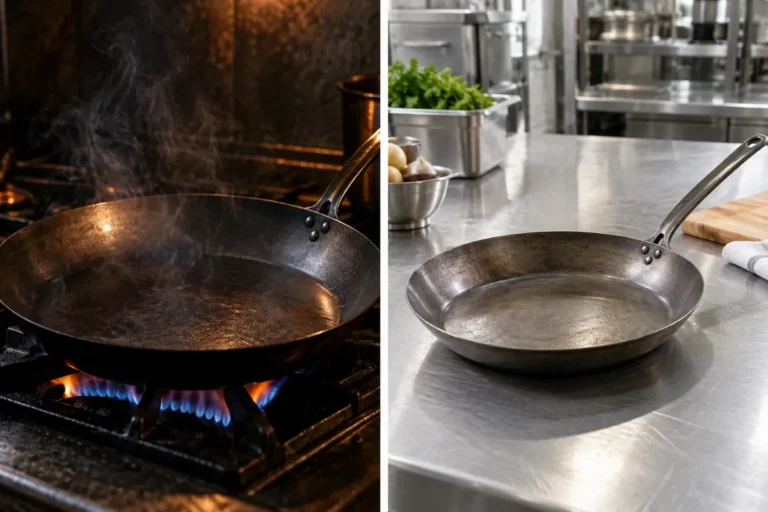
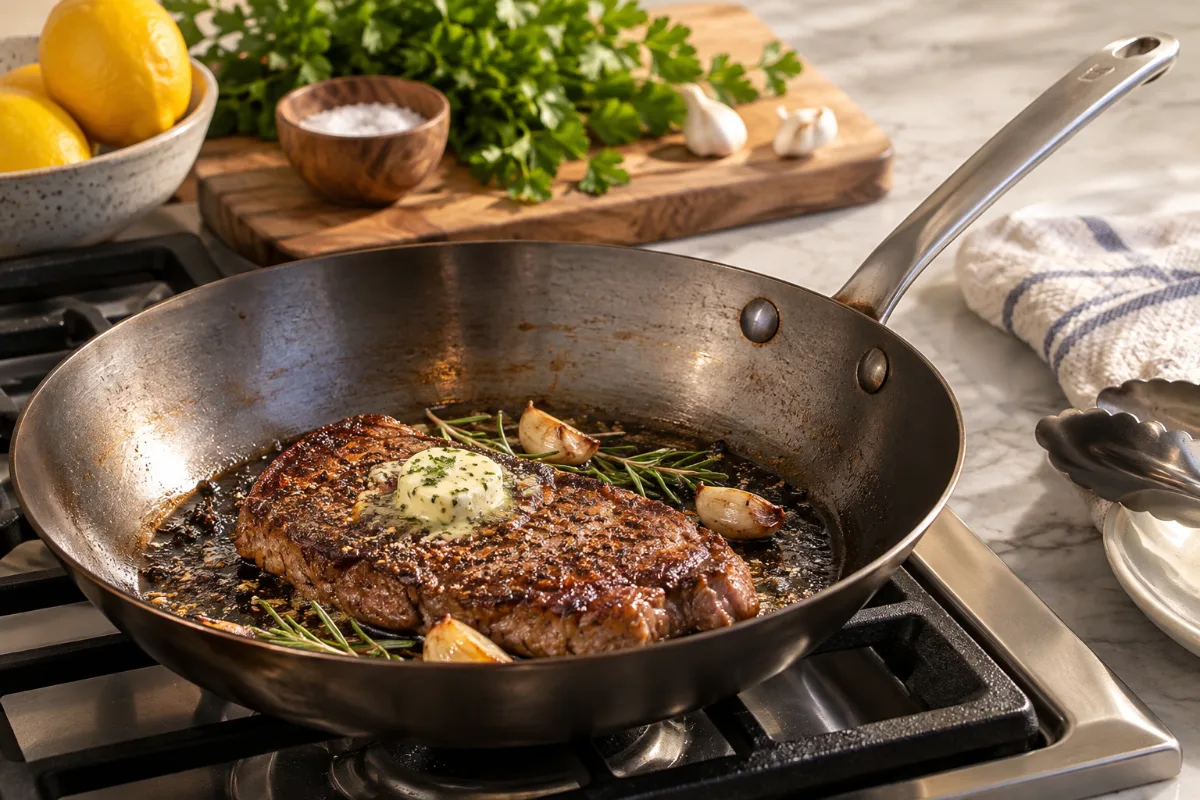
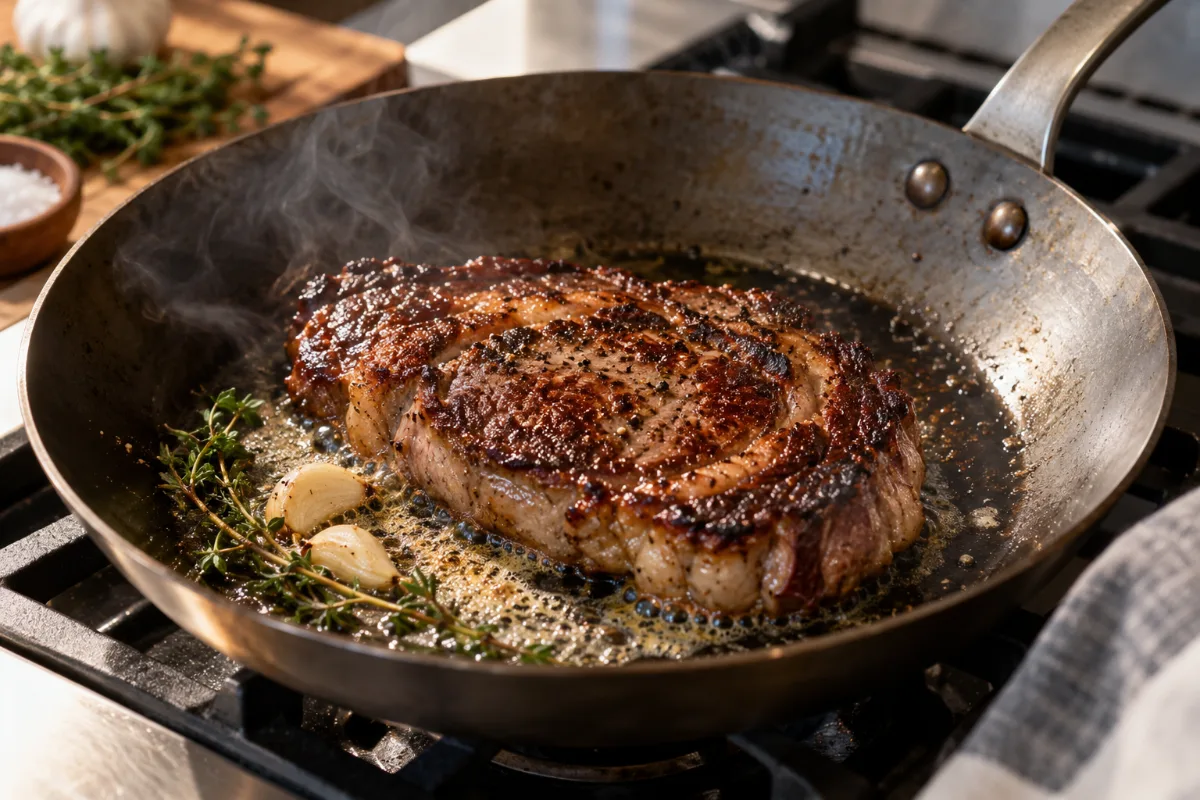
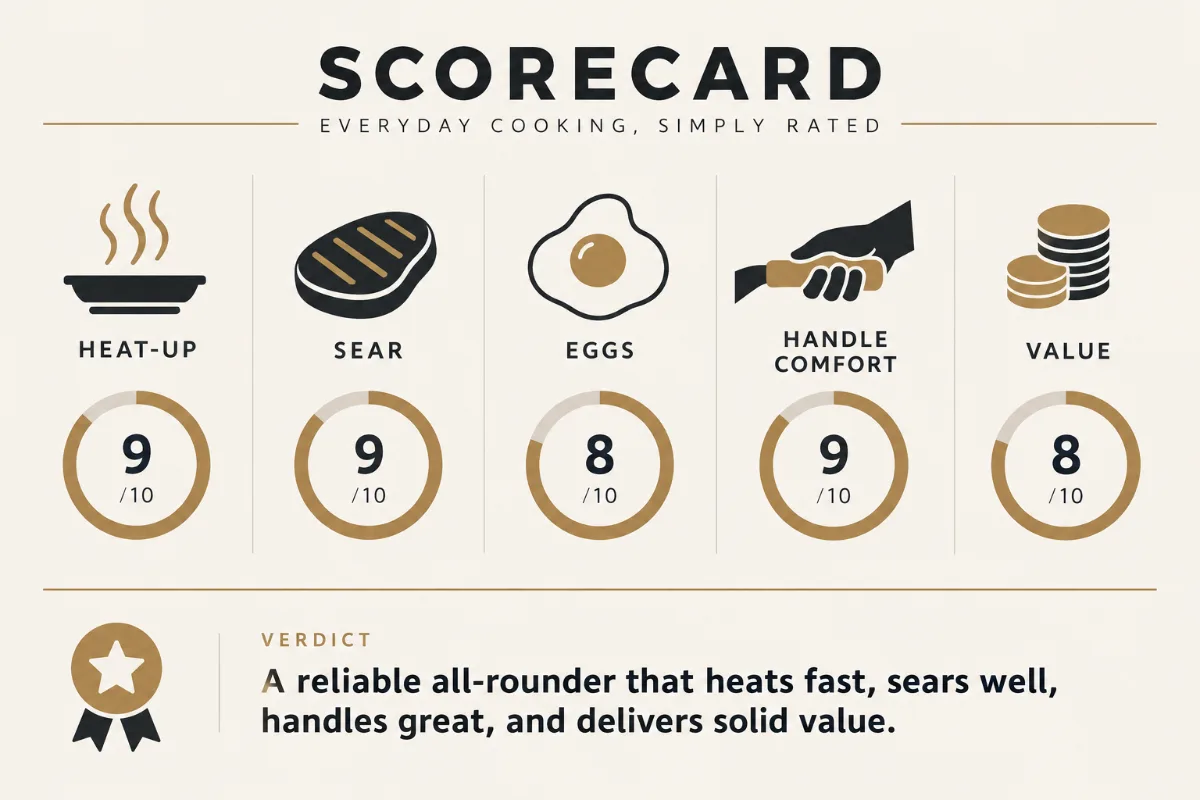
The pan reached searing temperature fast. On a medium-high gas burner it hit a hard sear zone in about 3 minutes (verify), a touch quicker than the heavier French pan next to it, which tracks with the thinner, lighter build. A ribeye laid down and left alone built a deep, even crust across the whole contact area with no cold ring in the center. Heat recovery after the cold steak went in was good; the pan clawed back its temperature quickly rather than stalling. This is exactly what you want carbon steel for.
Eggs and release
Eggs are the fairness test for any bare pan, and they punish thin seasoning. On the factory surface, fresh out of the box, the first eggs stuck as expected. After we built two proper seasoning sessions plus a week of real cooking, fried eggs released with a gentle shake and an omelette folded and slid out cleanly. The pan is not a coated nonstick and never will be, but once the seasoning matured it handled eggs as well as any carbon steel we have used. Set your expectations to the seasoning, not the brand.
Even browning
We cooked a pan of sliced onions and a batch of diced potatoes to check for hot spots. Browning was even across the base with only a slightly faster edge near the burner ring, which is normal and easy to manage by moving the food. Pancakes came out with a uniform color rather than a dark bullseye. The flat, well-machined base clearly helps here, and it is one area where the build quality shows.
Seasoning and daily care
The pan arrives lightly prepared but not truly nonstick. Made In does not sell it as pre-seasoned in the way some pans claim, and that is honest. Plan to season it before first use and to keep building layers through cooking.
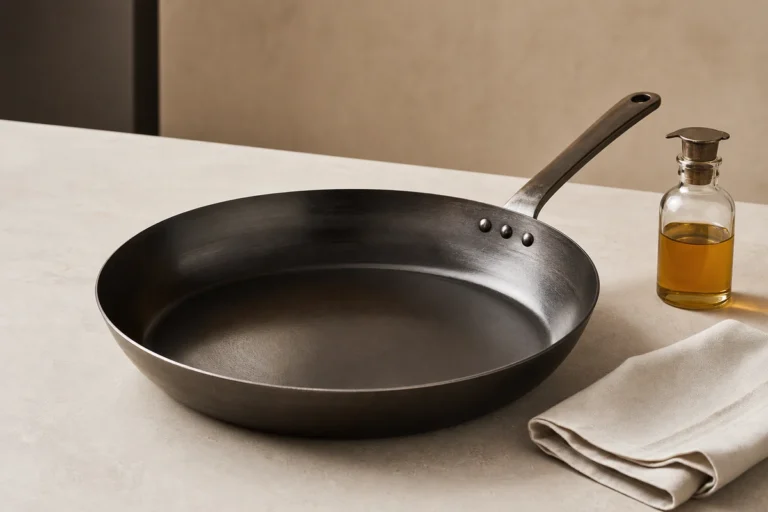
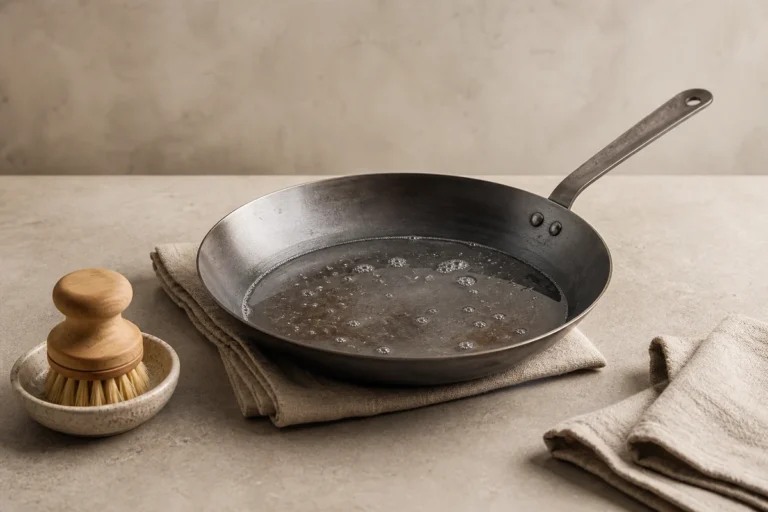
We seasoned ours in the oven with two thin coats of a neutral high-smoke-point oil, then let daily cooking do the rest. It took seasoning readily and evened out within a couple of weeks. Daily care is the standard carbon steel routine: cook, wipe or rinse clean while warm, dry fully over heat, and add a whisper of oil before it goes away. Skip the dishwasher and long soaks, and dry it promptly to keep rust off.
The learning curve here is the carbon steel learning curve, not a quirk of this pan. If you have never owned bare steel, budget a couple of weeks of getting to know it. Our guide to how to season a carbon steel pan covers the exact method we used.
One practical care note specific to this pan: the stainless handle is easy to grip when moving the hot pan to the sink, but do not shock it under cold water straight off a hard sear. Let it cool a few minutes first, as you would with any carbon steel, to protect both the seasoning and the flat base. We had no warping across weeks of high-heat cooking, which speaks well of the roughly 2.5 mm base, but the standard heat discipline still applies. Treat it like the serious tool it is and it stays flat and true.
We also lived with the pan long enough to see how the finish holds up. After a month the cooking surface had darkened to an even, working patina and showed no scratches from our metal spatula beyond the normal marks any steel pan collects. The exterior kept its look with a wipe-down. This is a pan built to be used daily for years, not babied, and it wore in rather than wore out.
Made In vs de Buyer and Lodge
Most buyers cross-shopping this pan are weighing it against a French classic or a budget workhorse. Here is where it lands.
Against de Buyer, the two cook at a similar high level. The Made In edges ahead on handle comfort; its angled stainless handle felt better in the hand and ran cooler than de Buyer’s riveted steel handle in our side-by-side. De Buyer counters with a lower typical price, a wider range of shapes, and a certain traditional appeal. If handle feel and fast US shipping matter most, Made In wins. If you want the classic French pan for less, de Buyer does. See our de Buyer vs Matfer Bourgeat comparison for where the French options sit against each other.
Against Lodge carbon steel, the gap is price and finish. Lodge costs less and cooks perfectly well, but its surface and handle feel more utilitarian. Made In is the more refined object. Whether that finish is worth the premium is the real question, and it depends on your budget and how much you care about the details you touch every day.
To put the value question in plain terms: a seasoned Lodge and a seasoned Made In will both sear a steak beautifully and release an egg. If you handed a cook a plate of food from each, they could not tell which pan made it. What the extra money buys is the handle in your hand, the fit and finish, the ownership experience, and the support behind it. For some cooks that is easily worth it. For others, especially anyone building a first kitchen on a budget, it is not. We respect both answers, and we would rather you know exactly what you are paying for than be sold on a performance gap that does not exist.
What we liked and did not
Credibility means naming the drawbacks, so here is the balanced ledger from our time with the pan.
What we liked: the handle is the most comfortable we have used on a carbon steel skillet, and it does stay cooler at normal heat. The base is flat and machined well, giving even browning and a stable sit on induction. Heat-up is fast, searing is excellent, and once seasoned it releases eggs cleanly. Availability, packaging, and returns are painless.
What we did not: it costs meaningfully more than a Lodge for cooking performance that a seasoned Lodge can match. The handle still gets hot under a broiler despite the stay-cooler design, so it is not a set-and-forget claim. And like all bare steel, it needs seasoning and rust care, which will frustrate anyone expecting coated-pan convenience. None of these are flaws in the pan so much as facts of the category, but the price premium is a real consideration.
Here is the pan at a glance.
| Spec | Made In | Note |
|---|---|---|
| Cooking surface | 7.5 in (verify) | vs rim diameter |
| Weight | 1,600 g (verify) | lighter than cast iron |
| Handle | Stay-cooler steel | comfort in testing |
| Origin | Sweden (verify) | made for Made In |
| Induction | Yes | flat base |
Who should buy it
This pan fits the cook who wants to leave nonstick behind for something that lasts decades, and who will happily pay a bit more for a design that feels good in daily use. It suits people who value a comfortable handle, want easy availability and support, and cook on gas or induction where a flat, even base pays off.
It is not the pick for the strict budget buyer, who is better served by Lodge, nor for someone who refuses to season and maintain bare steel at all. If either of those is you, read our roundup of pre-seasoned carbon steel pans or reconsider the material. For everyone else, the Made In is a confident, well-made pan we would buy again. You can find the sizes and current pricing on the Made In 10-inch product page.
Frequently asked questions
Is Made In carbon steel worth it?
Where is Made In carbon steel made?
Made In or de Buyer carbon steel?
Does Made In carbon steel work on induction?
Does Made In carbon steel come pre-seasoned?
The takeaway
Made In carbon steel is a pan we tested hard and came away trusting. It heats fast, sears deeply, browns evenly, and releases eggs well once the seasoning matures, all wrapped in the most comfortable handle in the category. The one thing to weigh is price against a Lodge that cooks nearly as well for less. If a refined, well-supported pan appeals and the premium sits fine with you, it is an easy yes. Compare it with the wider field in our carbon steel frying pans guide.