Mauviel vs Matfer Bourgeat: Which French Pan?
By the Carbon Steel Pan test team · Last updated September 2026
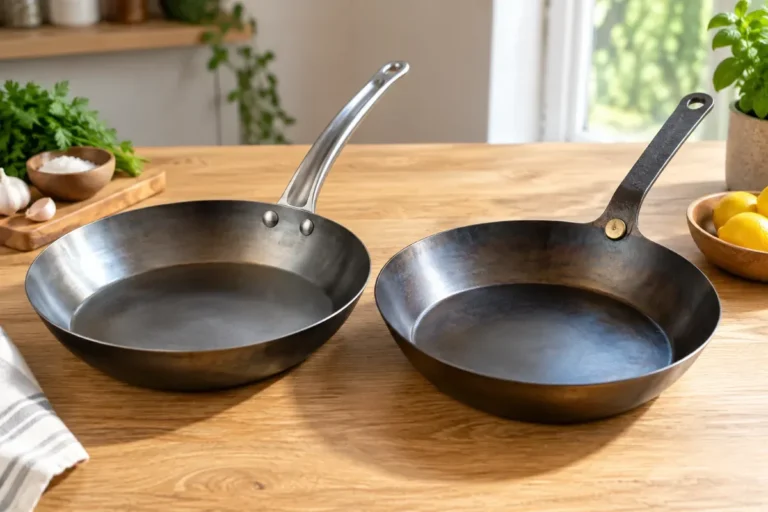
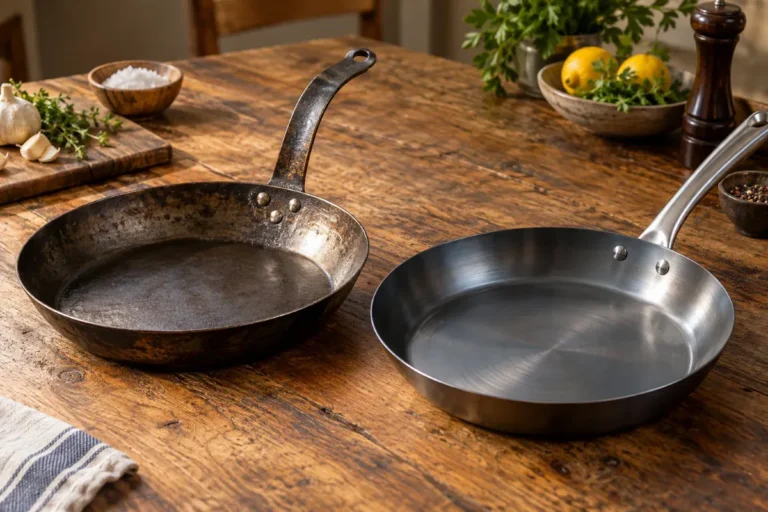
Mauviel and Matfer are both top French carbon steel pans, built on different ideas. The Mauviel M’Steel is heavier, with steady heat for searing. The Matfer Bourgeat is lighter, with a smooth, rivet-free welded handle. Both sear beautifully and last for decades. Choose Mauviel for heat stability, and Matfer for a lighter pan with a cleaner interior.
The Mauviel vs Matfer debate comes up whenever serious cooks talk French carbon steel, and for good reason. We cooked on both, weighed them, and watched how each held heat under a hard sear. The difference is real, but it is a difference of philosophy, not quality. Here is how to pick.
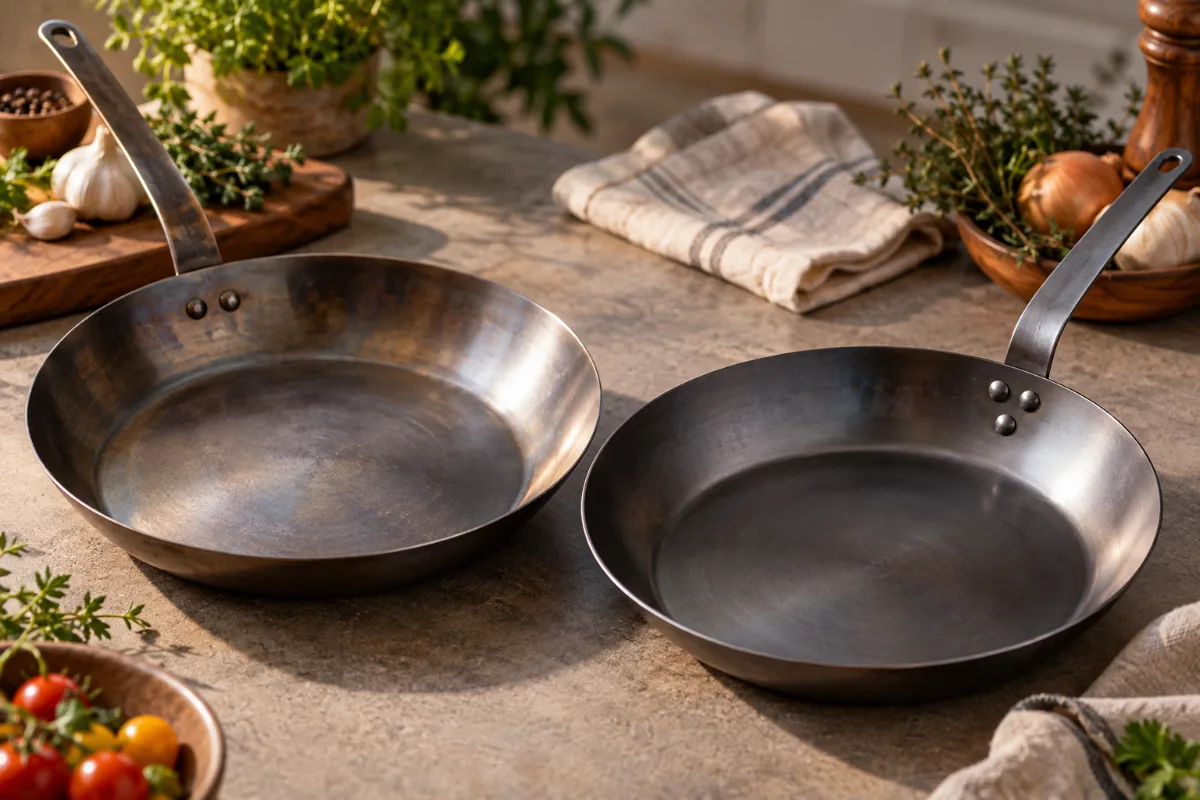
Quick answer: Our tested guide to mauviel vs matfer keeps it simple: master the technique, keep the surface seasoned, and match your heat to the food. The full method, the key facts and the mistakes to avoid are all below.
Mauviel Vs Matfer: What Our Tests Found
Our team put mauviel vs matfer through repeated real cooking sessions to see what actually works. Below we break down the method, the facts that matter, and the common mistakes so you get reliable results the first time.
The quick pick
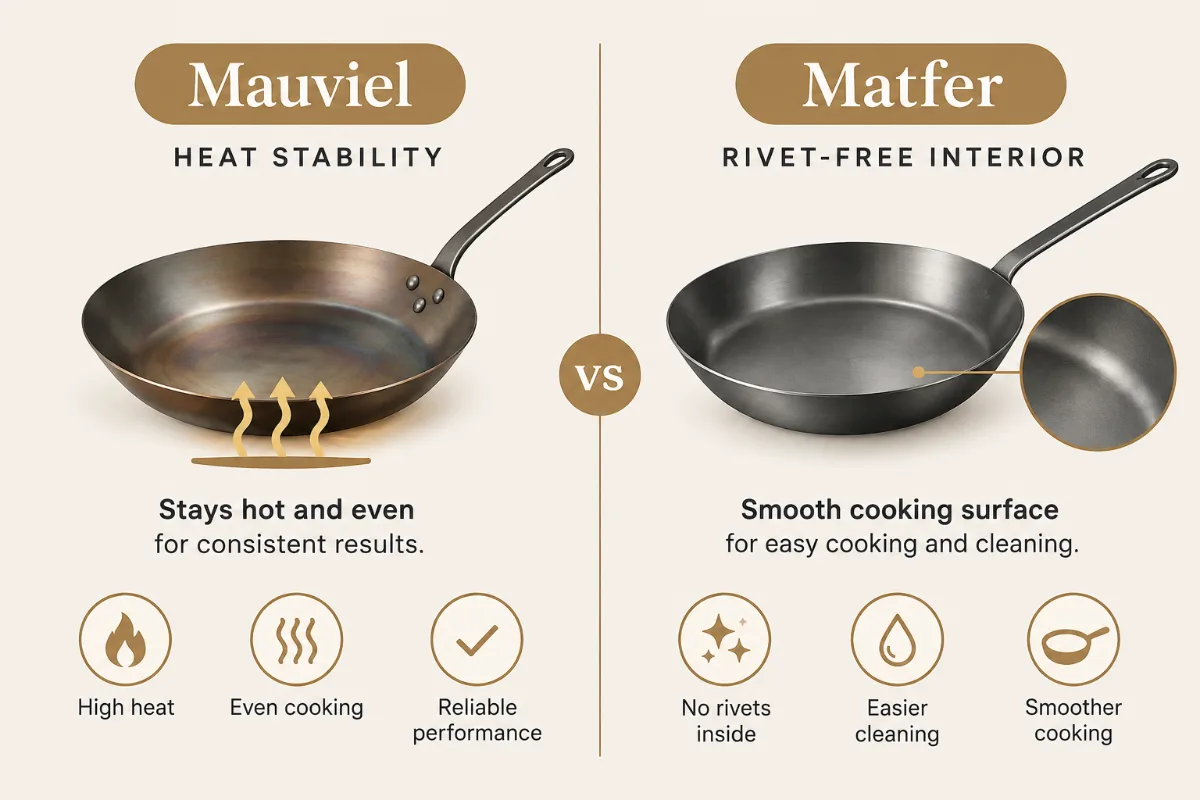
Buy the Mauviel M’Steel if you sear a lot and want a pan that stays hot when cold food hits it. Its extra weight is the whole point: more metal means steadier temperature, which gives a better crust on steak and a more even brown on anything you cook hard. It is the pan for the cook who values heat over heft.
Buy the Matfer Bourgeat if you want a lighter pan with a smooth, unbroken interior. Its handle is welded on rather than riveted, so there are no rivet heads inside the cooking surface to trap food or work loose over time. Many professional kitchens favor this design for exactly that reason. It heats fast and handles easily.
Both are excellent. The tiebreaker is whether you weight heat stability or a light, clean pan.
Build philosophy: heavy vs rivet-free
The clearest difference between these pans is how they are built, and each choice shapes how the pan cooks and feels.
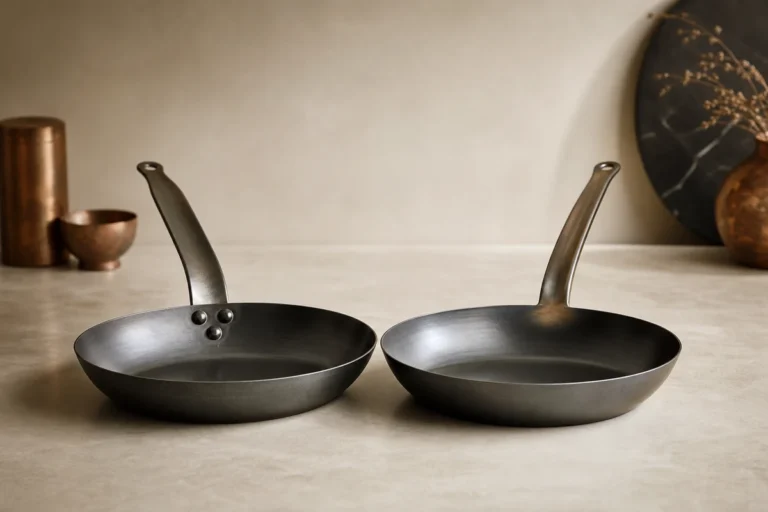
Mauviel leans into mass. The M’Steel uses thicker steel and a riveted iron handle, and the result is a pan with real heft. That thickness is a feature, not a flaw. More metal stores more heat, so when you lower a cold steak onto the surface, the temperature barely dips and the sear keeps going. The riveted handle is solid and traditional, though the rivet heads do sit inside the pan.
Matfer takes the opposite path. Its handle is welded directly to the body, leaving the cooking surface completely smooth with nothing to catch food or loosen after years of use. The pan is lighter, which makes it nimble to lift, tilt, and toss. A smooth interior is also easier to clean and wipe out, since there are no rivet heads to work around. This rivet-free build is why the Matfer is a fixture in restaurant kitchens.
Neither approach is better in the abstract. Mass buys heat stability; a welded handle buys a clean, light pan. The right one depends on what you cook and how you like a pan to feel.
Weight and handling
Pick up both pans and the weight gap is obvious. The Mauviel is the heavier of the two, and over a long cook that weight tells. For searing, where the pan mostly sits still on the burner, the heft is an asset and you rarely notice it. For a dish that needs constant tossing or frequent lifting, the extra pounds add up and can tire your wrist.
The Matfer feels light and lively by comparison. It is easy to swing, tilt to pool butter, or lift off the heat in a hurry. That agility suits fast cooking and cooks who move the pan a lot. The lighter body also heats up quicker, which is handy when you want to get going fast.
Think about your own cooking here. A steak-and-sear cook will love the Mauviel’s steadiness. A cook who tosses vegetables, flips omelettes, and keeps the pan moving will prefer the Matfer’s lighter hand. Both handles heat up on the stove, so keep a mitt or folded towel within reach for either.
Cooking and heat
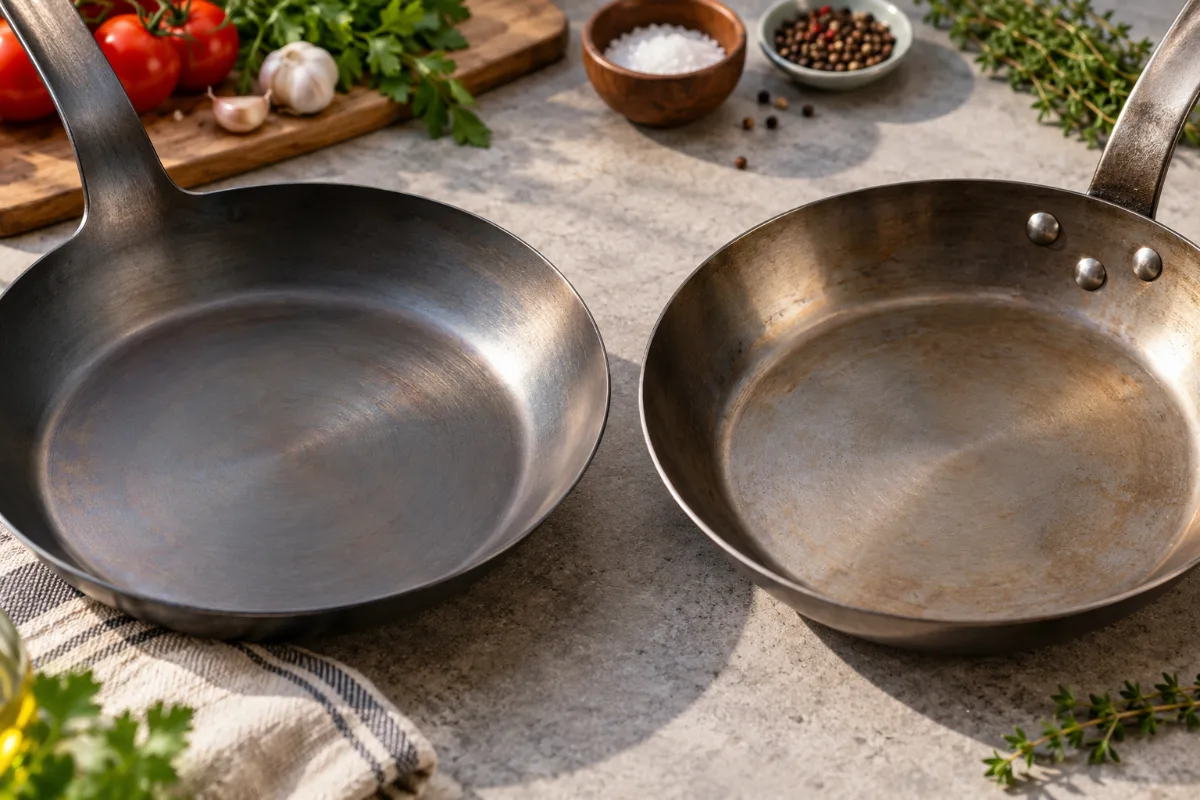
On the plate, both pans deliver the deep browning and clean release that make French carbon steel worth owning. The nuance is in how they get there.
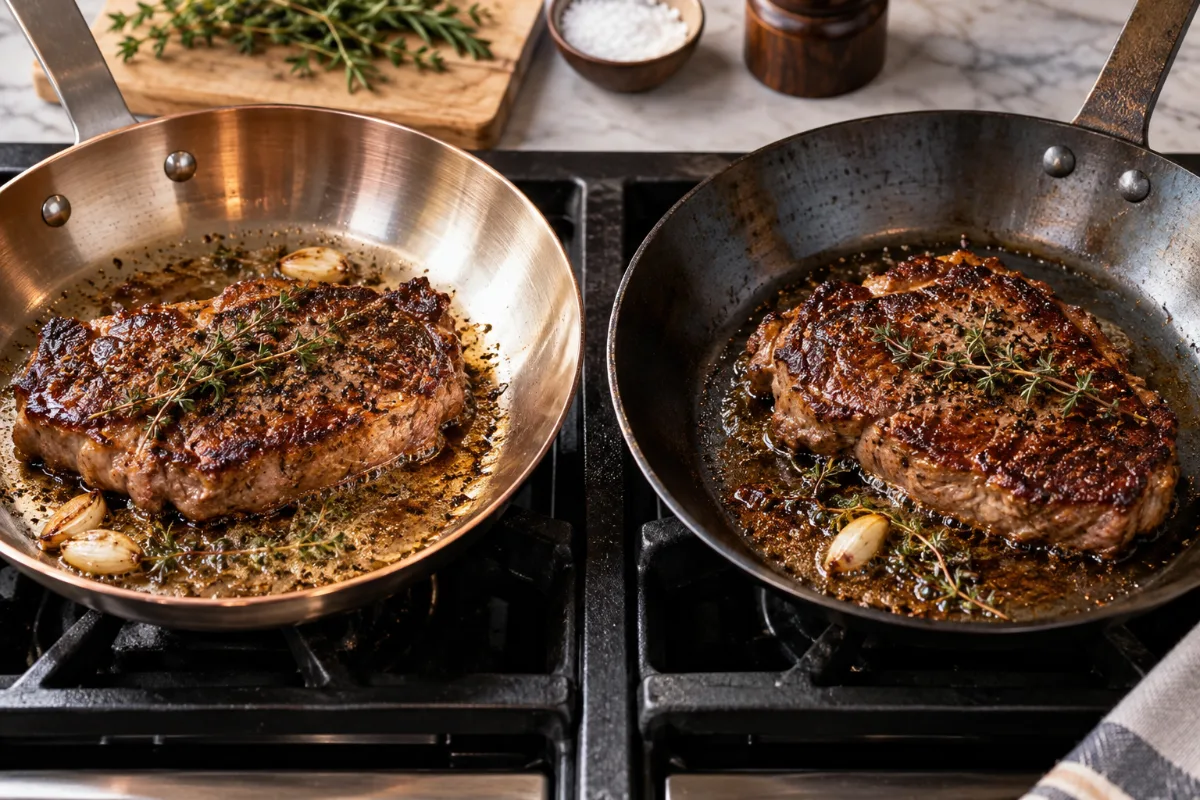
The Mauviel holds heat like a heavier pan should. In our sear tests, it kept its temperature steady as batches of food went in, so the crust formed without stalling. That stability is a real edge for steak, chops, and anything where you want relentless, even heat. It also means the pan is more forgiving if your burner runs uneven, since the mass smooths out hot spots.
The Matfer heats fast and evenly, and it responds quickly when you change the flame. Because it is lighter, it also cools faster once you pull it off the heat, which gives you more control for delicate work. For eggs, fish, and dishes where you want to dial the heat up and down, that responsiveness is welcome.
The gap is smaller than the price and reputation might suggest. Both sear superbly. The Mauviel wins on steadiness under a heavy load; the Matfer wins on quick response and light handling. For a sense of which suits a hard sear best, our guide to the best pan for steak puts both in context.
The Matfer recall note
One point of caution belongs in any honest comparison. A 2024 recall in France involved a handle issue on certain Matfer pans (verify). Before you buy, check the current model and confirm there is no open notice on the exact pan you are considering. Manufacturers correct these issues, and a current pan should be clear, but it is worth a two-minute check.
We flag this not to scare you off a fine pan but because trust matters more than a sale. The Matfer’s welded handle is a strength in daily use, and the brand’s professional reputation is well earned. Still, do your due diligence on the specific model and date. Our own Matfer Bourgeat recall explained piece lays out what happened and how to check, so you can buy with clear eyes.
The verdict
After weeks with both, the Mauviel vs Matfer decision comes down to two traits. If you want heat stability above all, the Mauviel M’Steel is your pan. Its weight steadies the temperature for searing and makes it forgiving on an uneven burner. It is the choice for a cook who sears often and does not mind a heavier tool.
If you want a lighter pan with a smooth, rivet-free interior, the Matfer Bourgeat wins. It is agile, quick to heat, easy to clean, and built the way many professionals prefer. Just confirm the current model is clear of any recall notice before you order.
Here are the differences that decide it.
| Factor | Mauviel M’Steel | Matfer Bourgeat |
|---|---|---|
| Weight | Heavier (~4.9 lb, 11 in) (verify) | Lighter (~4.2 lb, 11 in) (verify) |
| Handle | Iron, riveted | Welded, rivet-free |
| Interior | Riveted | Smooth |
| Strength | Heat stability | Even, fast heat |
| Origin | France | France |
| Note | Standard build | Check 2024 recall (verify) |
Both brands publish full specs on their own sites. America’s Test Kitchen has praised the Mauviel for its heat stability and build in past testing (verify current status). Read those alongside our own How We Test methodology to see how we reached these calls.
Oven use and high-heat cooking
Both pans go from stovetop to oven, which is part of why serious cooks reach for French carbon steel. Sear a steak on the burner, then slide the whole pan into a hot oven to finish, and you use one vessel for the whole job. Neither pan has a plastic part to worry about, so both handle oven heat well.
The handles behave differently, though. The Mauviel’s riveted iron handle heats up in the oven and stays hot for a while after, so a mitt is not optional. The Matfer’s welded steel handle also gets hot, as all bare metal handles do, but its lack of rivets means there is no seam inside the pan to trap the fond you want for a sauce. For a cook who roasts and pan-finishes often, that clean interior is a small daily pleasure.
At the very high heat both pans invite, expect blue and rainbow heat tints to appear on the steel. These are normal and harmless on either pan, a sign of hot cooking rather than damage. Leave them be. The seasoning underneath is what protects the metal and releases the food, and it deepens with every hard sear.
Range and sizes
Both brands sell a spread of sizes, so think about what you cook before settling on one. Common skillet sizes run from around 8 inches for eggs up to 12 inches for family sears (verify). The Mauviel’s weight climbs faster as the pans grow, so a 12-inch M’Steel is a heavy pan best suited to a strong cook and a stove that can heat it evenly. The Matfer stays lighter across its range, which makes its larger sizes easier to lift and toss.
That weight-versus-size relationship can flip the decision for a big pan. If you want an everyday 10-inch, the Mauviel’s heft is manageable and its heat stability shines. If you want a large 12-inch pan you will lift full and often, the lighter Matfer may be the more practical daily tool despite the Mauviel’s searing edge. Match the size to your strength and stove as carefully as you match the brand.
Which French pan for which cook
A last way to decide: picture your typical week at the stove. If it is steaks, chops, and hard sears, buy the Mauviel and enjoy heat that does not quit. If it is a mix of fast sautés, eggs, fish, and tossed dishes where you want a light, responsive pan and a spotless interior, buy the Matfer. Both will outlast most of your kitchen and reward good care with years of clean release.
Value over time favors both pans equally. Neither has a coating to wear out, so a well-cared-for pan from either brand will serve for decades and often improves with age as the seasoning deepens. The higher purchase price of premium French carbon steel spreads across a very long life, which is part of why professionals buy these pans and keep them for a career. Season either one properly, dry it over heat, and store it with a light oil film, and it will still be cooking long after cheaper pans have been replaced. For a closer look at how each stacks up against another French favorite, see our de Buyer vs Matfer Bourgeat comparison.
Frequently asked questions
Mauviel or Matfer Bourgeat?
Which is heavier, Mauviel or Matfer?
Why does Matfer have no rivets?
Is the Matfer recall a concern?
Which sears better?
The bottom line
Mauviel and Matfer represent two honest takes on the same great material. The Mauviel M’Steel trades weight for heat stability, making it the searer’s pan. The Matfer Bourgeat trades mass for a light body and a clean, welded, rivet-free build that pros love. Pick by how you cook and how a pan should feel in your hand, confirm the Matfer model is recall-clear, and either will serve you for a lifetime. To keep comparing, our carbon steel frying pans overview and the individual Mauviel and Matfer reviews cover the rest of the field.