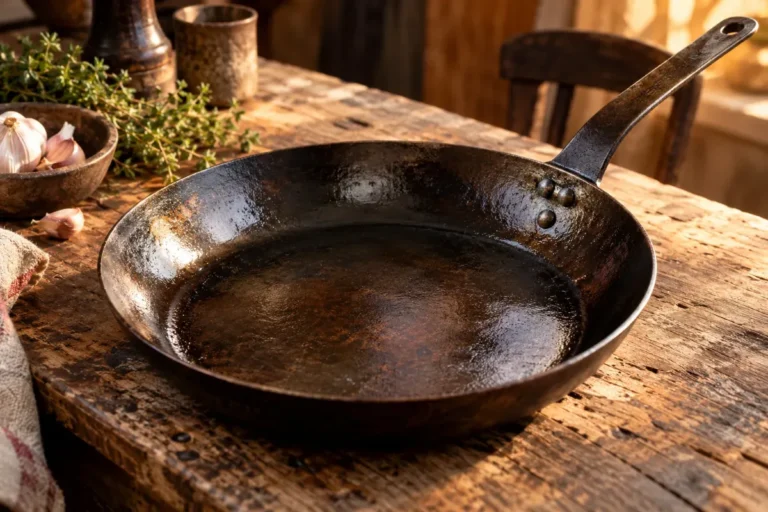
Carbon Steel on Glass-Top and Ceramic Cooktops: Do’s, Don’ts and Avoiding Scratches
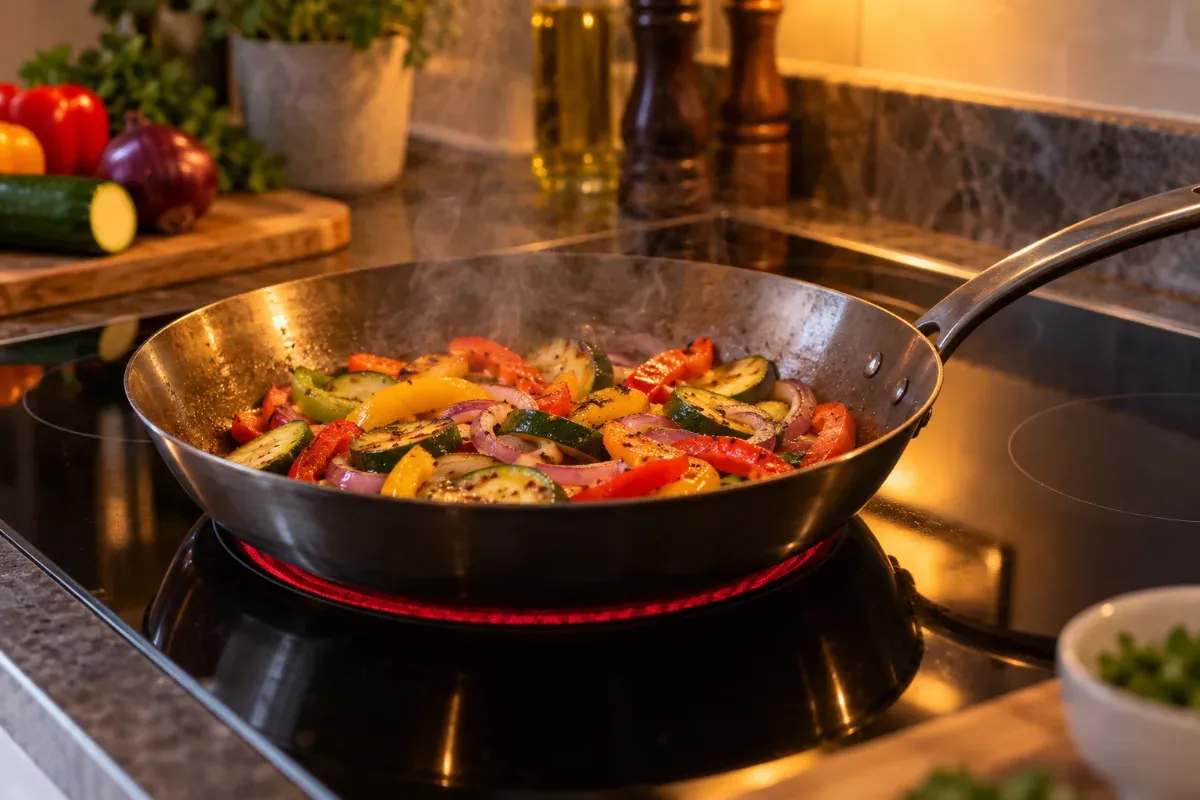
By the Carbon Steel Pan test team · Last updated September 2026
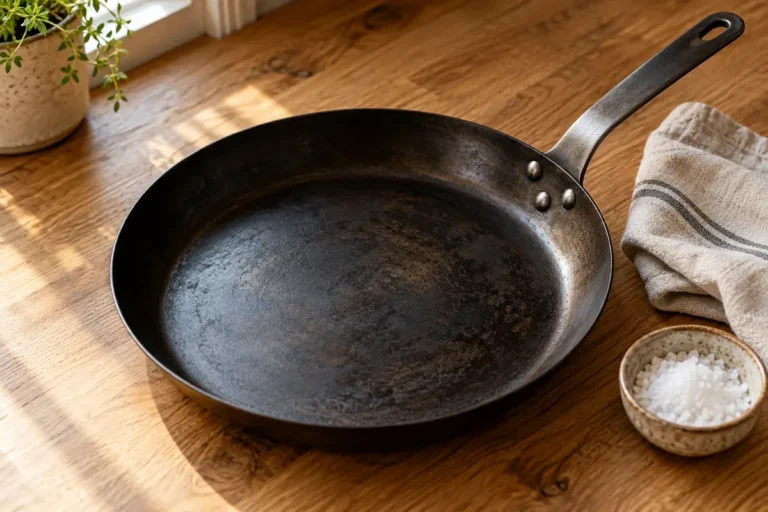
Carbon steel works well on glass-top and ceramic cooktops. Two rules keep it safe. Lift the pan to move it instead of dragging, so the base never scratches the glass, and heat it gradually, so a hot pan and a cool surface do not stress each other. Keep the base clean and flat, and your carbon steel pan is a fine match for these stoves.
Can you use carbon steel on a glass top?
Yes. A carbon steel pan is a good fit for a glass-top or ceramic cooktop, as long as you follow two simple rules.
First, lift the pan whenever you move it. Never slide or drag it across the surface. Second, bring the heat up gradually rather than blasting a cold pan on high. That is the whole safety routine, and both habits take zero extra time once they become second nature.
Glass-top owners worry about two things: scratching the smooth surface and cracking it with a heavy, hot pan. Both fears are reasonable, and both are easy to put to rest. The sections below explain exactly why scratches happen, how to manage heat, and why carbon steel is actually one of the friendlier pans for a glass hob.
It helps to know which stove you have, because the advice covers two related types. A radiant glass top uses a heating element beneath the glass that glows and warms the surface, which then heats the pan. A ceramic cooktop is much the same idea with a slightly different surface material. Both cook through direct contact with a smooth pane, so both care about a flat, clean base and gentle handling. Induction is a different animal, since it heats the pan directly through a magnetic field rather than warming the glass first, and it gets its own guidance below.
Will it scratch the glass?
Only if you drag it. This is the single most important thing to understand, so it is worth slowing down on.
The metal base of a clean carbon steel pan will not carve into a glass cooktop on its own. What scratches glass is grit trapped between the pan and the surface. A stray grain of salt, a crumb of burnt food, or a bit of sandy residue on the underside acts like sandpaper the moment you slide the pan. The pan is not the culprit. The grit dragged under it is.
That gives you a clear defense. Do two things and scratches stop being a risk.
Wipe the base of the pan before it goes on the stove. A quick pass with a dry cloth clears any grit or crumbs clinging to the underside. Then, when you need to reposition the pan mid-cook, lift it and set it back down rather than sliding it. Lifting removes the grinding motion entirely, so there is nothing to drag any stray particle across the glass.
Keep the cooktop itself clean too. A surface free of dried spills and sugar specks has nothing to press into the glass in the first place. Between a clean base, a clean top, and lifting instead of dragging, a carbon steel pan lives on glass for years without a mark.
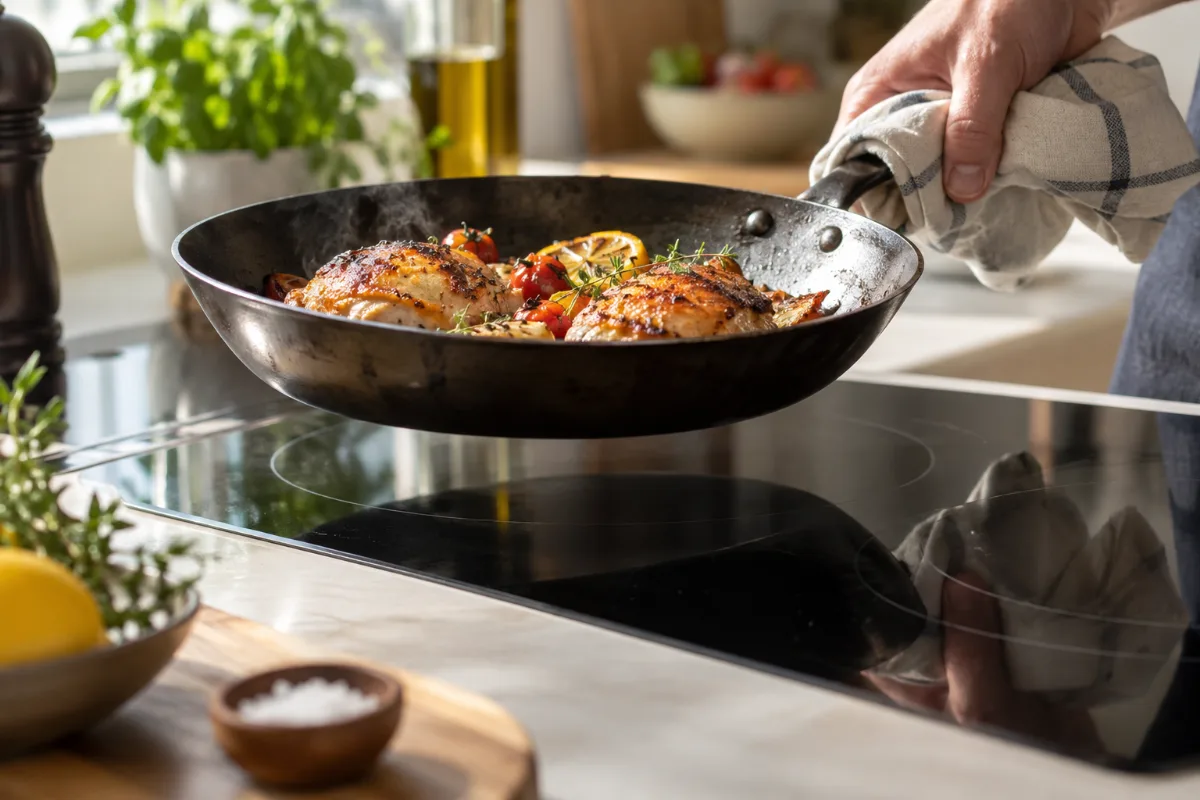
Quick answer: Our tested guide to carbon steel glass top stove keeps it simple: master the technique, keep the surface seasoned, and match your heat to the food. The full method, the key facts and the mistakes to avoid are all below.
Carbon Steel Glass Top Stove: What Our Tests Found
Our team put carbon steel glass top stove through repeated real cooking sessions to see what actually works. Below we break down the method, the facts that matter, and the common mistakes so you get reliable results the first time.
Heat rules for glass and ceramic surfaces
Managing heat matters more on glass than on gas, and the reason is how these cooktops actually work.
A radiant glass top heats through an element under the glass, so the surface warms and cools more slowly than a gas flame you can turn on and off in an instant. That lag changes how you should treat the pan.
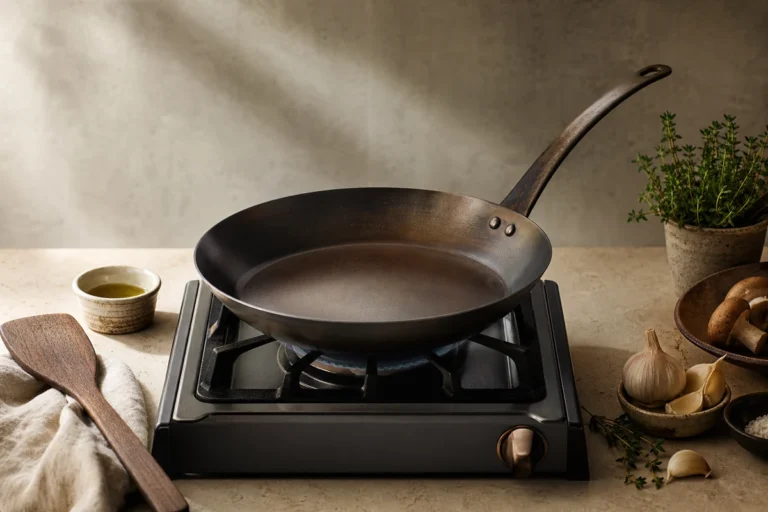
Preheat gently. Start on low to medium and give the pan a minute or two to come up, rather than setting it on high from cold. Carbon steel heats quickly, so it does not need a hard blast to get hot. A gradual ramp lets the pan and the glass warm together instead of one racing ahead of the other.
Avoid violent swings between hot and cold. Do not take a screaming-hot pan and drop it onto a cold spot, and do not pour cold water into a very hot pan while it sits on the glass. Sudden temperature differences stress both the pan, which can warp, and the glass, which does not enjoy thermal shock either.
When you are done, turn the burner off a little early and let the residual heat finish the job, the way America’s Test Kitchen recommends for electric and radiant cooking. This habit saves energy and keeps the whole session gentle on the surface. Gradual up, gradual down, and both the pan and the cooktop stay happy.
Weight: is a carbon steel pan too heavy for glass?
No, and here carbon steel has a real edge. It is noticeably lighter than cast iron of the same size, because it is made from thinner metal. That lighter weight is a genuine advantage on a glass surface, where the fear of cracking usually traces back to heavy pans.
You still handle it with a little care, which is true of any pan on glass. Set it down gently rather than dropping it. Lower it onto the surface instead of letting it clatter. A controlled placement puts no shock into the glass, and the modest weight of carbon steel makes that easy to do one-handed.
Cracking a glass cooktop takes real impact, like dropping a full, heavy pot from a height. Normal cooking with a carbon steel pan does not come close to that. Treat the glass like glass, place the pan down softly, and the weight of carbon steel is a non-issue.
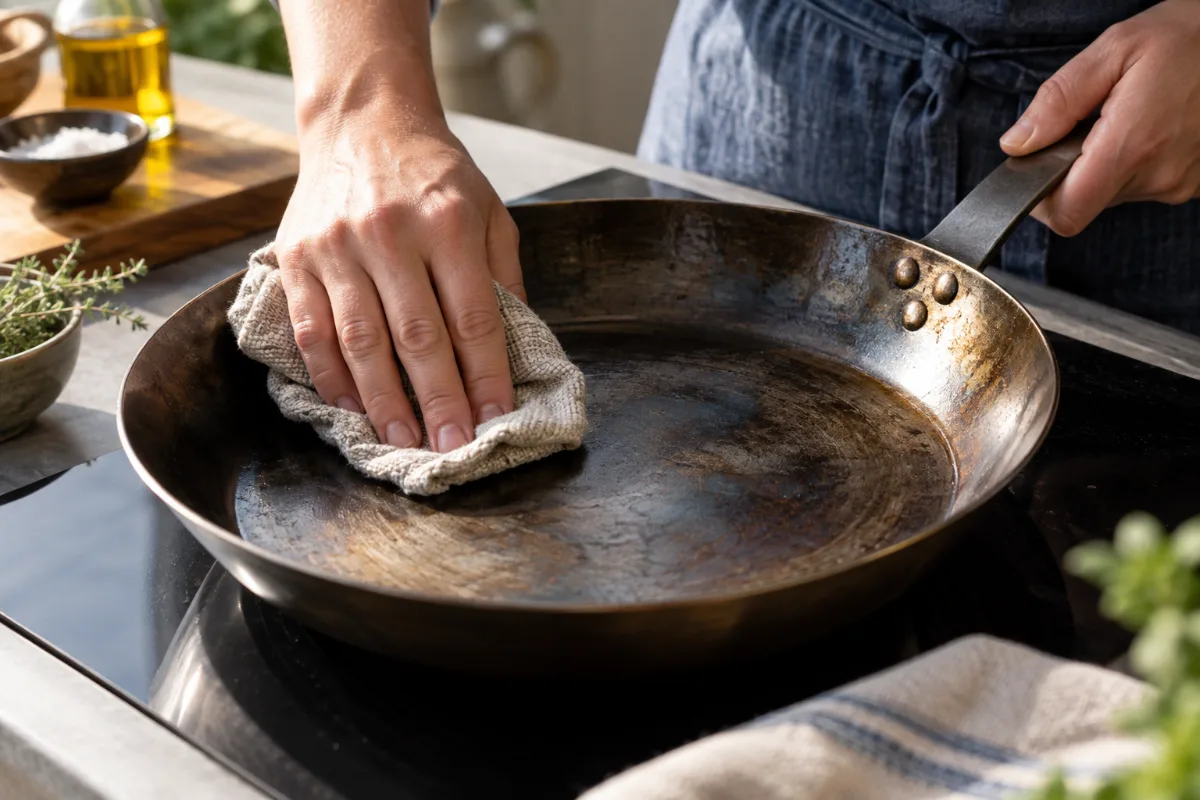
Keeping the base flat and clean
On a glass top, a flat and smooth base is the whole game. Unlike gas, where flames wrap around the sides, a radiant cooktop transfers heat only through direct contact. A base that sits perfectly flat gets full contact and heats evenly. A base that is warped or bumpy touches the glass in patches, which means hot spots, wasted energy, and food that cooks unevenly.
Check your pan for flatness now and then. Set it on a known-flat surface, like a countertop or a large sheet pan, and press down on opposite edges. If it rocks or spins, the base has warped and it will not sit right on the glass. A flat base also matters because it gives the stove’s sensors a stable, even load to read.
If you are still shopping, this is the one spec to prioritize for a glass top. A pan with a thicker, well-machined base stays flat longer and resists the warping that comes from thermal shock. Thinner, lighter pans heat fast, which is a virtue, but they are also quicker to warp if you abuse the heat. On a radiant surface where flatness is everything, leaning slightly toward a sturdier base pays off. Reputable brands note base flatness on their care pages precisely because it decides how well the pan performs on electric and glass surfaces.
Keep that base clean and smooth as well. Scrub off any baked-on carbon or crusty residue from the underside, since a rough, crusted base both scratches and heats poorly. Most brands note the same point on their care pages: a smooth, flat bottom is what makes a pan behave on radiant glass. Look after the base and the pan rewards you with even cooking and a scratch-free surface underneath.
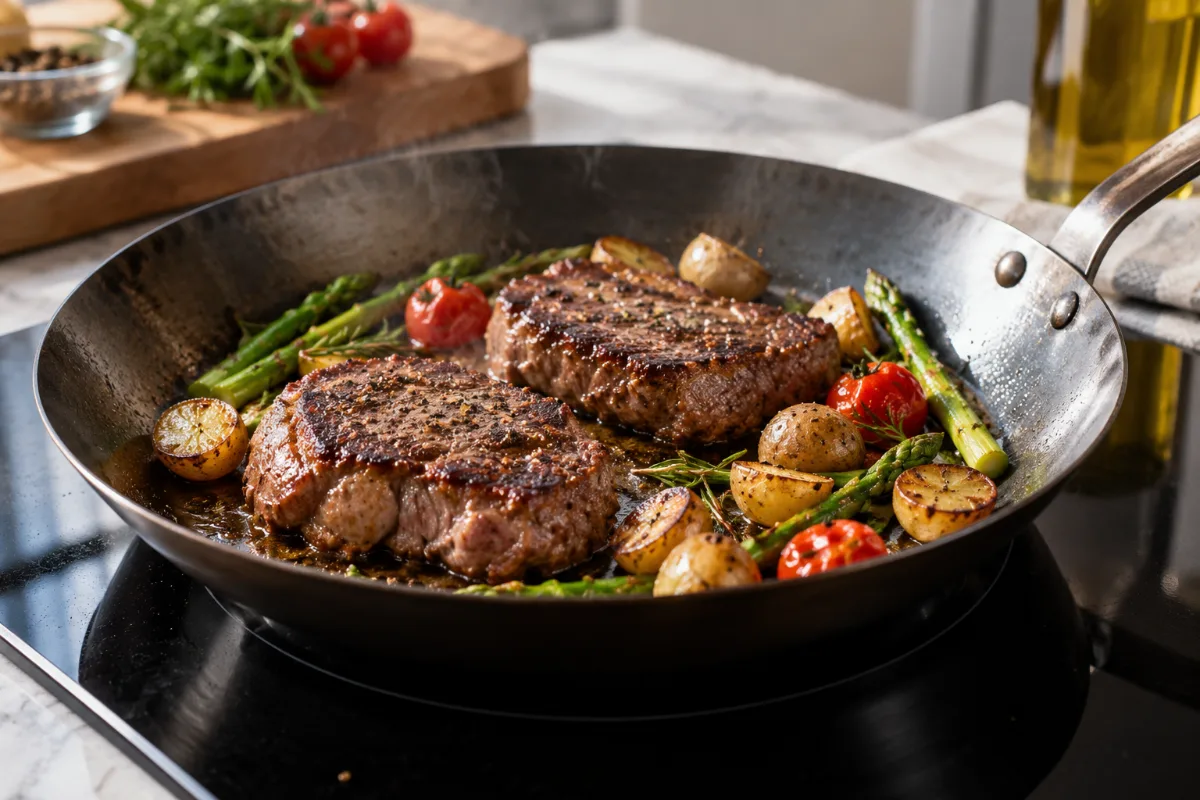
Do’s and don’ts for glass and ceramic tops
Here is the whole routine in one place. Follow the left column, avoid the right, and carbon steel and your glass top get along for the long haul.
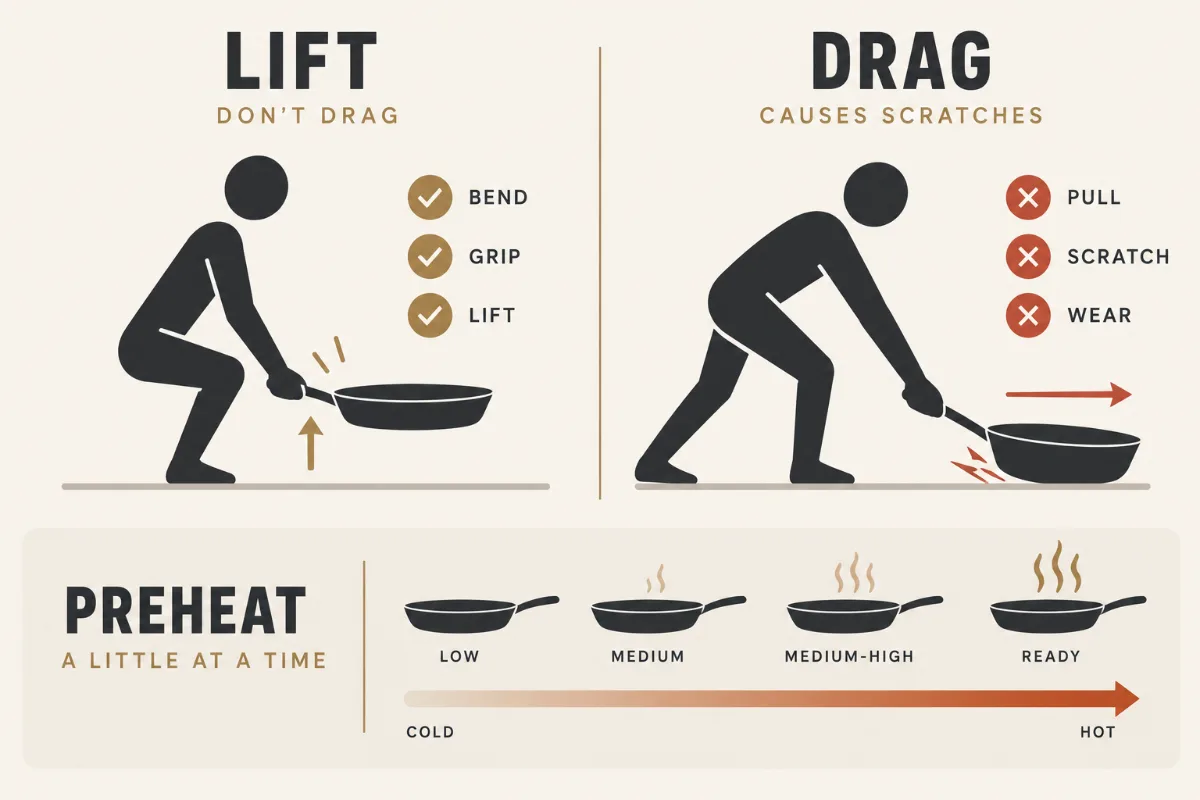
| Do | Don’t |
|---|---|
| Lift the pan to move it | Slide or drag it across the glass |
| Wipe grit off the base first | Cook with a dirty or gritty base |
| Heat gradually from low | Slam from high heat to cold |
| Match pan size to the burner | Use a warped or wobbly base |
| Set the pan down gently | Drop a heavy full pan on the glass |
Step by step: cooking on a glass top
Put it all together and a cooking session looks like this.
Match the pan to the burner. Choose a pan whose base is close to the size of the heating zone. A base much smaller than the ring wastes heat and can create a hot center, while a good match spreads heat evenly.
Wipe the base and set it down gently. Give the underside a quick pass with a cloth to clear any grit, then lower the pan onto the surface rather than dropping it.
Preheat on low to medium. Let the pan come up to temperature over a minute or two. Carbon steel gets hot fast, so you rarely need high heat to start.
Lift to reposition, never slide. If you need to move the pan during cooking, pick it up and place it back down. Keep every motion off the glass a lift, not a drag.
Cool before cleaning. Turn the burner off a little early, let the pan come down from its peak heat, and never shock it with cold water on the glass. Wipe the cooktop once it is safe to touch.
Follow that sequence a few times and it becomes automatic. The whole routine adds maybe ten seconds to a cooking session: a wipe of the base going on, a lift instead of a slide during the cook, and a gentle cool-down at the end. None of it slows you down once it is habit, and it is what keeps both the pan and the glass in good shape for years.
One extra note on cleaning the cooktop itself. Because grit is the real scratch risk, keep the glass free of baked-on spills and hardened sugar. If something crusts onto the surface, lift it off with a cooktop scraper held at a low angle rather than grinding at it with a rough pad. A clean, smooth glass surface and a clean, flat pan base are the two halves of a scratch-free stove.
Frequently asked questions
Can you use carbon steel on a glass-top stove?
Will carbon steel scratch a glass cooktop?
Is carbon steel too heavy for a glass top?
How do I heat carbon steel on an electric glass top?
What is the best carbon steel pan for a glass top?
The bottom line
A glass or ceramic cooktop is no obstacle to owning a carbon steel pan. The rules come down to two habits: lift instead of drag, and heat gently instead of shocking the pan. Add a clean, flat base and you get even cooking with no scratches and no cracked glass.
If your kitchen runs on induction, our carbon steel on induction guide covers what changes there. To pick a pan with the flat base a glass top needs, see the best carbon steel for a glass top, and if you ever notice a rock or wobble, our piece on carbon steel pan warping explains the cause and the fix. For everyday choices, browse our carbon steel frying pans.