Cooking Fish in Carbon Steel Without Sticking
By the Carbon Steel Pan test team · Last updated September 2026
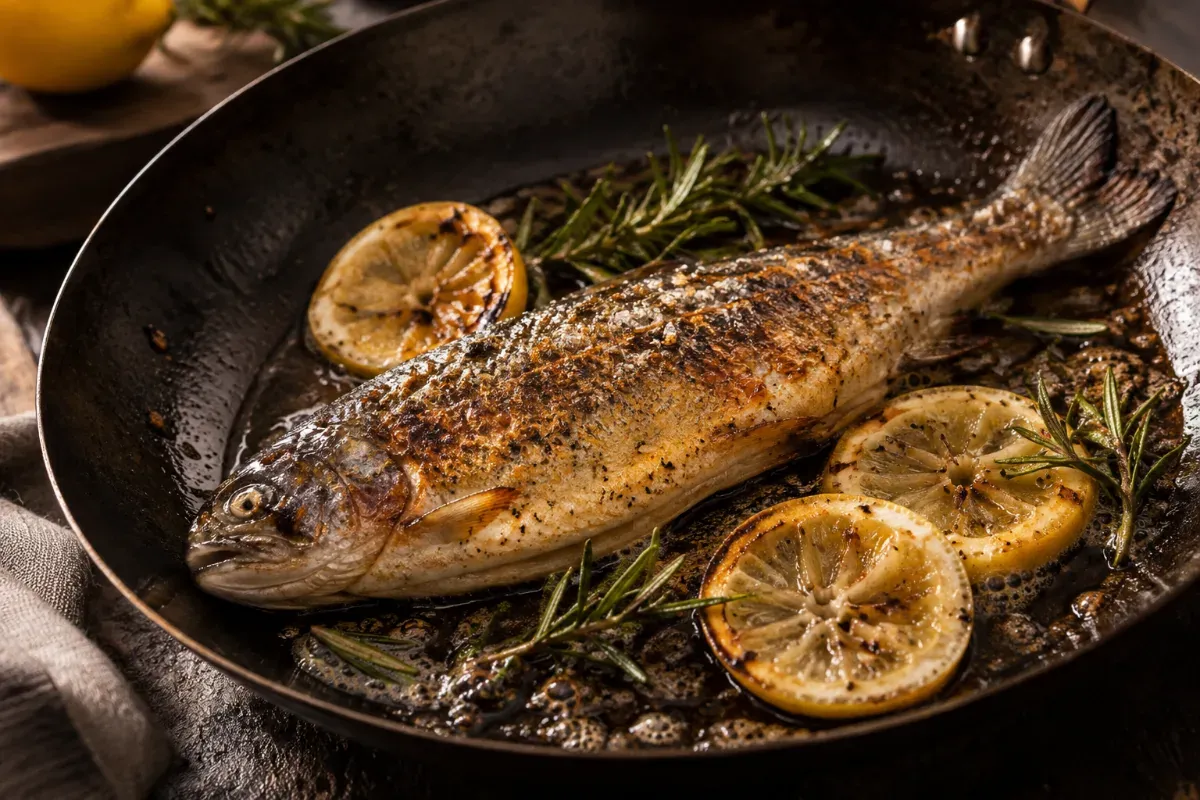
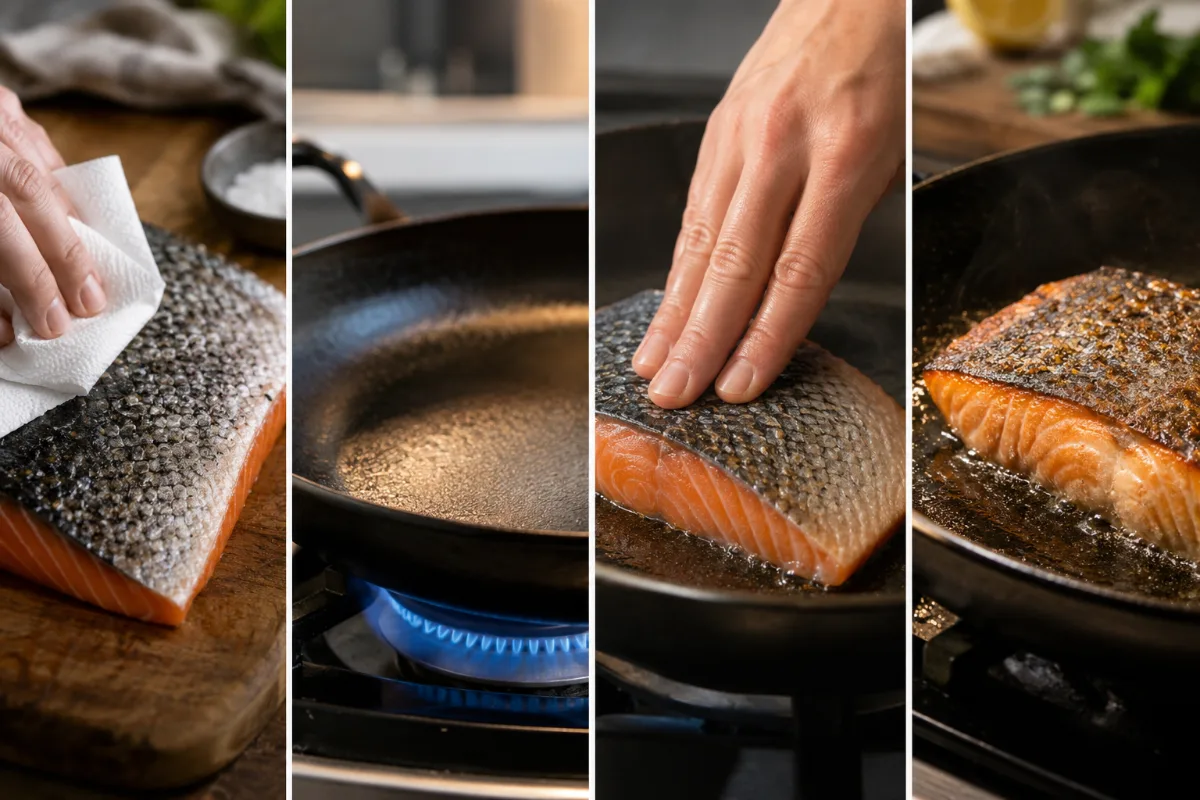
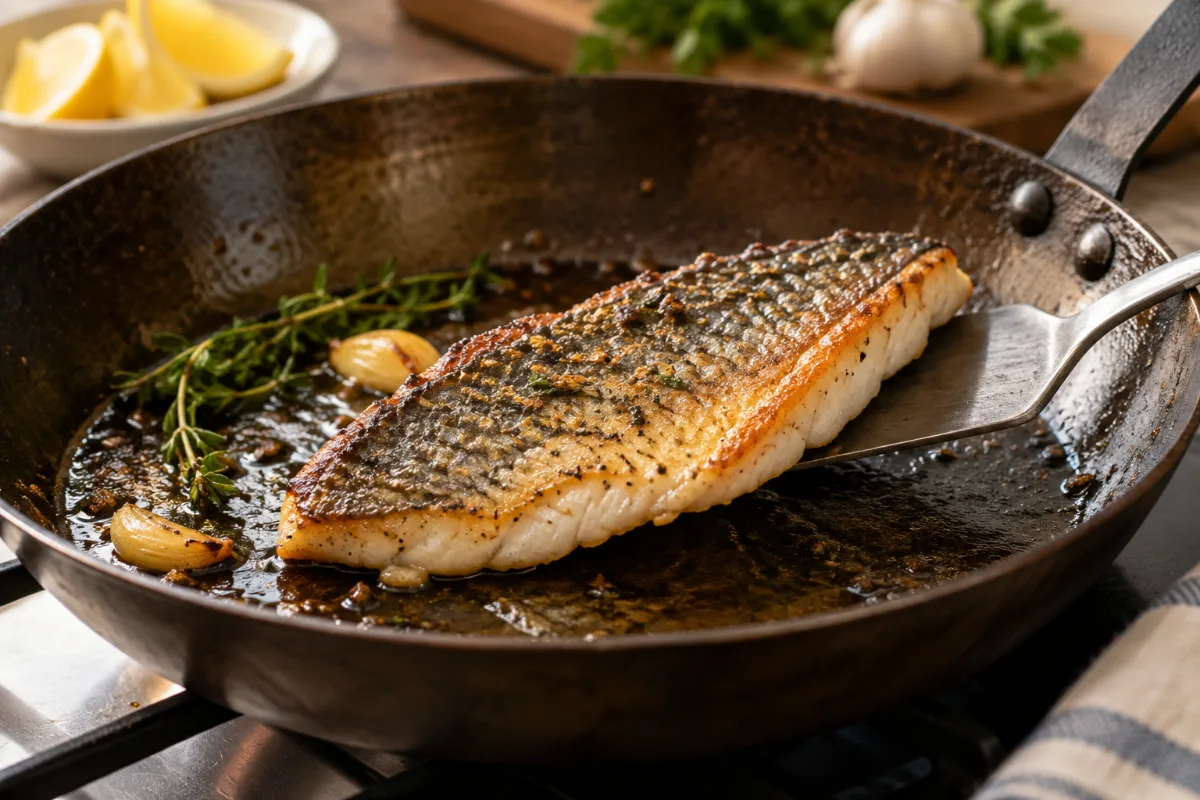
Fish releases from carbon steel when the pan is hot, the skin is dry, and you leave it alone. Pat the fish dry, preheat the pan until the oil shimmers, lay the fillet skin-side down, and press it flat for a few seconds. Then do not touch it. When the skin is crisp it lets go on its own, usually after three to four minutes.
Torn, stuck skin is the number one reason people give up on cooking fish in a bare metal pan. It feels like the pan is the problem. It almost never is. Sticking comes from three habits, and once you fix them, carbon steel becomes one of the best surfaces there is for shatter-crisp skin. The heat it holds and the way it browns beat nonstick every time.
Why fish sticks (and how to stop it)
Fish sticks for three reasons, and all three are within your control.
The first is wet skin. Moisture on the surface hits the hot pan and turns to steam. Instead of browning, the skin poaches and grips the metal. The second is a pan that is not hot enough. A cool surface lets the proteins bond to the metal before a crust can form. The third, and the most common, is impatience. People try to move the fish while the skin is still soft and stuck, and it tears.
The fixes mirror the causes exactly. Dry the skin thoroughly. Preheat the pan properly. Then leave the fish still until it releases itself. Get those three right and the sticking stops. The rest of this guide is just detail on how to do each one well.
Prep: dry skin is everything
Crisp skin starts before the pan is even hot. Surface moisture is the enemy, so your job is to get the skin as dry as possible.
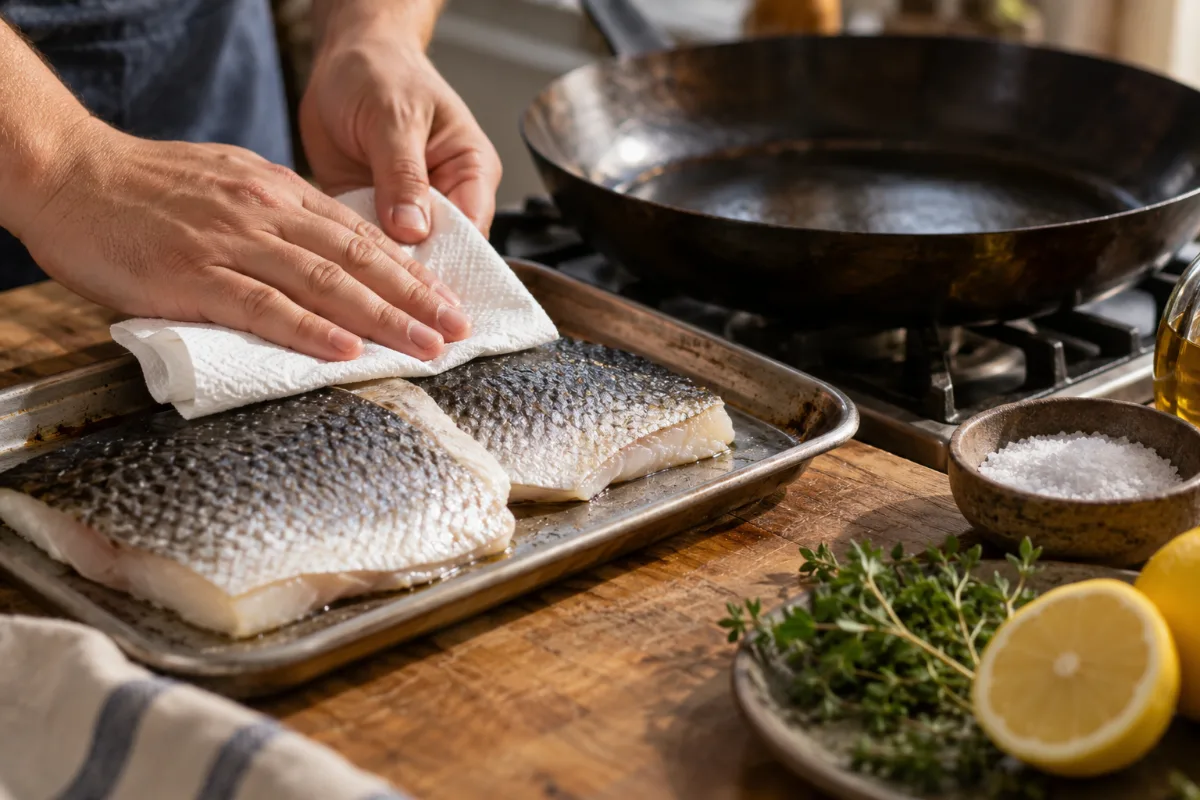
Pat both sides of the fillet with paper towels, pressing gently to lift moisture out of the skin. For an even better result, salt the skin lightly and let the fish sit uncovered on a rack for ten to fifteen minutes, or longer in the fridge. Salt pulls moisture to the surface, and the open air lets it evaporate, leaving the skin dry and primed to crisp. Serious Eats has long recommended this air-drying step for the crispest fish skin, and it makes a clear difference in the pan.
Let the fish lose its deep chill before it cooks. A fillet straight from a cold fridge drops the pan temperature the moment it lands and cooks unevenly. Ten minutes on the counter is enough. Just before cooking, blot the skin one more time. A dry surface is the single biggest factor between skin that shatters and skin that welds itself to the pan.
Score the skin on thicker fillets if you want to go further. A few shallow slashes through the skin, not into the flesh, help it lie flat and render faster, and they give the fat a path to escape. This matters most on fish with thick, fatty skin like salmon or mackerel. Leave the flesh side alone; you only want to cut the skin. Skip scoring on thin, delicate fillets, which do not need it and can fall apart. Season the skin with salt right before it hits the pan, not long before, so the salt does not draw fresh moisture back to the surface at the last moment.
The method, step by step
With dry fish and a good pan, the cook itself is short and calm. Here is the exact sequence.
Preheat and oil
Set the empty pan over medium-high heat for firm fish like salmon, or medium for delicate white fish. Let it heat for two to three minutes. Add a thin layer of a high-smoke-point oil such as grapeseed or avocado, and watch it. When the oil shimmers and moves easily across the surface, the pan is ready. If it smokes hard, pull it off the heat for a moment; it is too hot.
Lay skin-side down and press
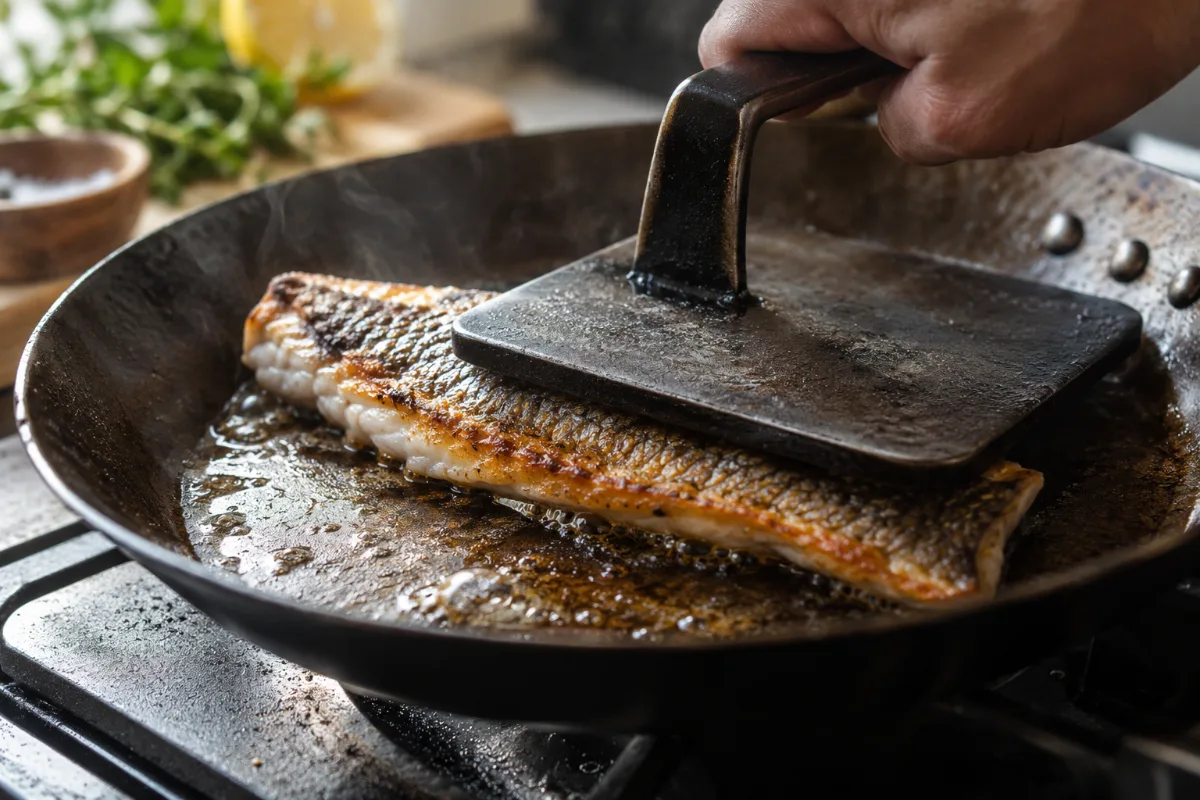
Lay the fillet into the pan skin-side down, setting the near edge in first and lowering it away from you so any splatter goes forward, not at you. The skin will want to curl as it contracts. Press the fillet flat with a spatula for five to ten seconds, covering the whole surface so the skin makes even contact. This one move is what gives you edge-to-edge crisp instead of a curled fillet browned only in the middle.
Wait for the release
Now do nothing. This is the hard part and the most important. The skin is stuck right now, and it will stay stuck until it has crisped. Fighting it tears it. Leave the fish still for three to four minutes on medium-high. You will see the flesh turn opaque up the sides as it cooks from the bottom.
Flip once to finish
Test the release by nudging the fillet with your spatula. If it slides freely, the skin is crisp and ready. If it grips, give it another thirty seconds and check again. Once it releases, flip it once and finish the flesh side for a short time, often just a minute or two for a thin fillet. Cook fish mostly on the skin side, then flip a single time. Less handling keeps delicate fish whole.
Reading the release
The release cue is the whole game, so it is worth its own moment. Carbon steel tells you when the fish is ready. You do not guess; you feel for it.
Stuck skin means the crust has not formed yet. A crisp crust does not bond to the metal, so a properly browned fillet lifts cleanly with almost no resistance. When you nudge the edge and it glides, that is the signal. When it holds fast, the answer is always the same: wait a little longer. Turning up the heat to force it does not help and risks burning. Patience does. Once you have felt a clean release a few times, you stop worrying and start trusting the pan to tell you.
There is a visual cue that pairs with the feel. Watch the side of the fillet. As the fish cooks from the bottom up, the flesh turns from translucent to opaque, and you can see that line of doneness climbing the side. By the time it reaches about two-thirds of the way up, the skin is almost always crisp and the fish is nearly ready to flip. Between the sliding-spatula test and the color climbing the side, you get two independent signals that agree. Trust them over the clock, since fillet thickness and pan heat change the timing every time.
Delicate fish vs firm fish
Not all fish behave the same, so adjust heat and handling to the fillet in front of you.
Firm fish like salmon, trout, and thick white fillets take medium-high heat well and hold together for the flip. Salmon in particular renders fat from its skin, which helps it crisp and release. Cook it hard on the skin side and flip once.
Delicate flaky fish like cod, sole, or flounder need a gentler touch. Drop the heat to medium so the outside does not overcook before the inside is done, and handle the fillet as little as possible. Use a thin, wide fish spatula and support the whole fillet as you turn it. Thin, quick-cooking fish like tuna get the opposite treatment: a hot pan and a fast sear of seconds per side, leaving the center rare. The dry-skin and preheat rules stay the same across all of them; only the heat and the handling shift.
Skinless fillets follow the same still-and-hot approach, with one added care. Without skin to protect it, the flesh contacts the metal directly, so a hot, well-seasoned pan and enough oil matter even more. Give the fillet the same undisturbed wait; the flesh forms a golden crust that releases just like skin does once it is browned. Basting adds another layer of control for firm fish and steaks. Once the first side is seared, tilt the pan, add a knob of butter, and spoon the foaming butter over the top. It cooks the fish gently from above and adds flavor without a second hard flip.
Cleaning after fish
Cleanup is quick, and a couple of small steps keep the pan sweet for the next cook.
While the pan is still warm, add a splash of water and let it bubble to loosen any stuck bits, then wipe it out. Skip harsh soap and long soaks, which can dull young seasoning; hot water and a soft scrubber handle it, and a wooden or plastic scraper lifts anything stubborn without scratching the surface. Dry the pan fully over low heat, then wipe on a thin coat of oil to protect the surface. If a fishy smell lingers, a quick scrub with coarse salt or a wipe with a little vinegar clears it, and heating the dry pan afterward burns off the rest. The salt scrub is gentle on seasoning and doubles as a mild abrasive for any spots the water missed, so it earns its place in your routine after oily fish in particular. For the full routine, see how to clean a carbon steel pan. A hot, well-kept pan releases fish more reliably every time you cook.
Quick answer: Our tested guide to carbon steel pan fish keeps it simple: master the technique, keep the surface seasoned, and match your heat to the food. The full method, the key facts and the mistakes to avoid are all below.
Carbon Steel Pan Fish: What Our Tests Found
Our team put carbon steel pan fish through repeated real cooking sessions to see what actually works. Below we break down the method, the facts that matter, and the common mistakes so you get reliable results the first time.
Fish method by type
| Fish | Heat | Skin | Cue |
|---|---|---|---|
| Salmon | Medium-high | Crisp skin-side first | Releases when crisp |
| White fish (cod) | Medium | Handle gently | Flip once, carefully |
| Trout | Medium-high | Skin-side down | Press to stop curling |
| Tuna | High | Quick sear | Seconds per side |
The pattern across the table is simple: firmer, fattier fish take more heat and more time on the skin, while delicate fish want less of both. But every row follows the same core method. Dry the skin, get the pan hot, press flat, and wait for the release before you move anything.
Frequently asked questions
How do you stop fish sticking to carbon steel?
Can you get crispy fish skin in carbon steel?
Why does my fish skin tear?
What heat is best for fish in carbon steel?
Do I flip fish more than once?
The takeaway
Crisp fish skin in carbon steel is not luck. It is a short list of habits: dry the skin, heat the pan properly, press the fillet flat, and let the pan tell you when to flip. The skin stays stuck until it is ready and then releases clean, so patience does most of the work. Master the release cue on one salmon fillet and you will cook fish with confidence for years. When you are ready to branch out, the same still-and-hot approach carries over to nearly everything else the pan cooks best.