Lodge vs Made In Carbon Steel: Which to Buy
By the Carbon Steel Pan test team · Last updated September 2026
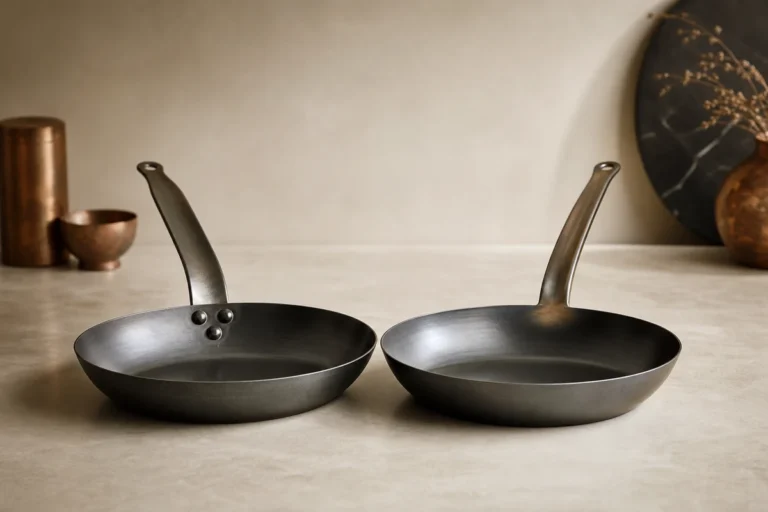
Lodge and Made In sit at the budget and premium ends of carbon steel. Lodge is American-made, pre-seasoned, and cheap, with a rougher surface and a basic handle. Made In has a smoother surface, a more comfortable handle, and a higher price. Both cook well once seasoned. Buy Lodge for value and a first pan, and Made In if finish and handle comfort earn the extra spend.
The Lodge vs Made In question is the classic budget-versus-premium call in carbon steel. We cooked on both for weeks, ran the same tests, and paid attention to the things a spec sheet hides: how the handle feels after ten minutes, how fast each surface turns slick, and whether the price gap shows up on the plate. Here is what we found.
Quick answer: Our tested guide to lodge vs made in keeps it simple: master the technique, keep the surface seasoned, and match your heat to the food. The full method, the key facts and the mistakes to avoid are all below.
Lodge Vs Made In: What Our Tests Found
Our team put lodge vs made in through repeated real cooking sessions to see what actually works. Below we break down the method, the facts that matter, and the common mistakes so you get reliable results the first time.
The quick pick
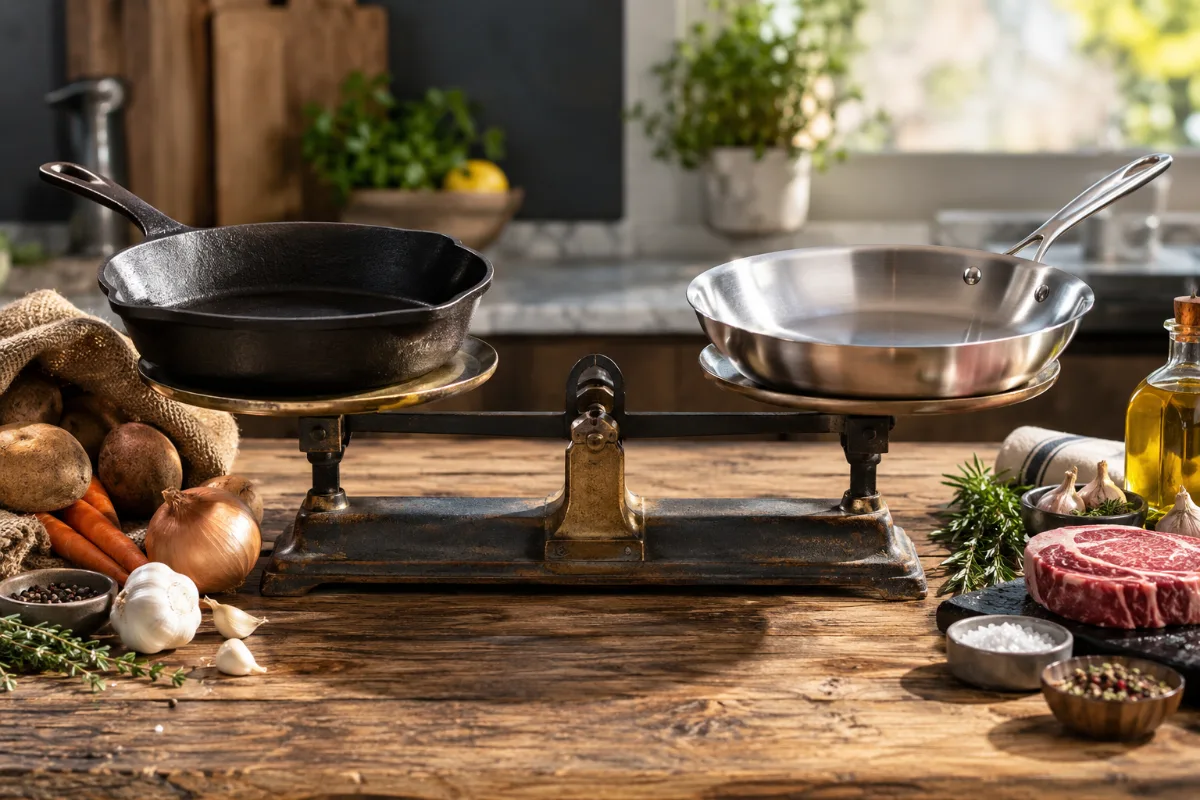
For most first-time buyers, Lodge is the smart choice. It costs a fraction of the price, ships pre-seasoned so you can cook right away, and it is built in the USA to last for decades. The surface starts a little rough, but cooking smooths it out. If your goal is to learn carbon steel without a big outlay, Lodge gets you there.
For the cook who wants a refined tool and plans to keep it front and center on the stove, Made In is worth the jump. Its surface is smoother out of the box, the handle is shaped for comfort, and the whole pan feels considered. You pay more, and you get a pan that is nicer to use every day.
Neither is a mistake. This is a value-versus-finish decision, not a good-versus-bad one.
Price and value
Price is the widest gap between these two. Lodge sits at the low end of the category, often well under half the cost of Made In. That price difference is the whole reason Lodge exists: it puts real carbon steel in reach of anyone.
So what does the extra money buy with the premium pan? Not better cooking, once both are seasoned. It buys a smoother starting surface, a handle designed for the hand rather than stamped from flat stock, and a cleaner overall finish. Those are comfort and polish upgrades, not performance ones.
That framing matters. If you are buying your first carbon steel pan and are not sure you will love the material, Lodge lets you find out cheaply. If you already know you want a pan you will reach for daily and enjoy holding, the premium spend makes more sense. Value is high on the Lodge and fair on the Made In, but only you can price comfort.
Surface and cooking
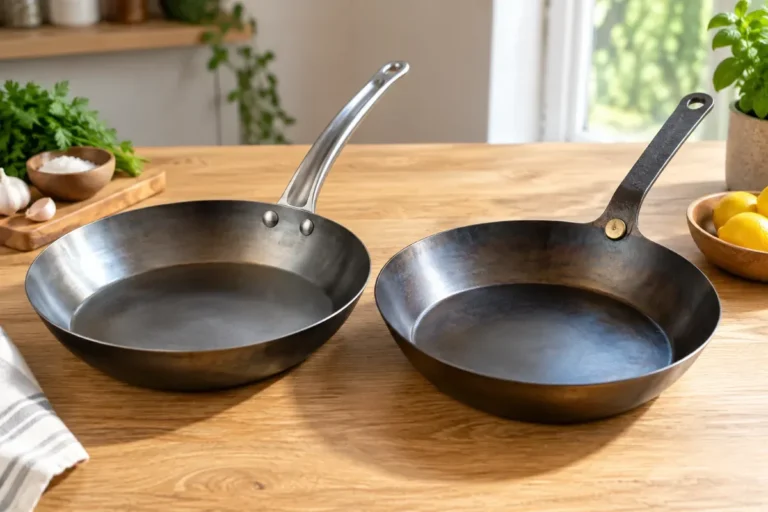
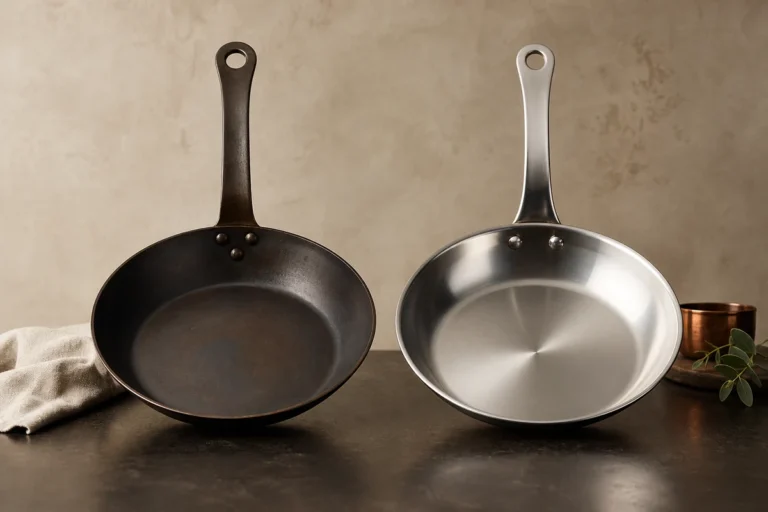
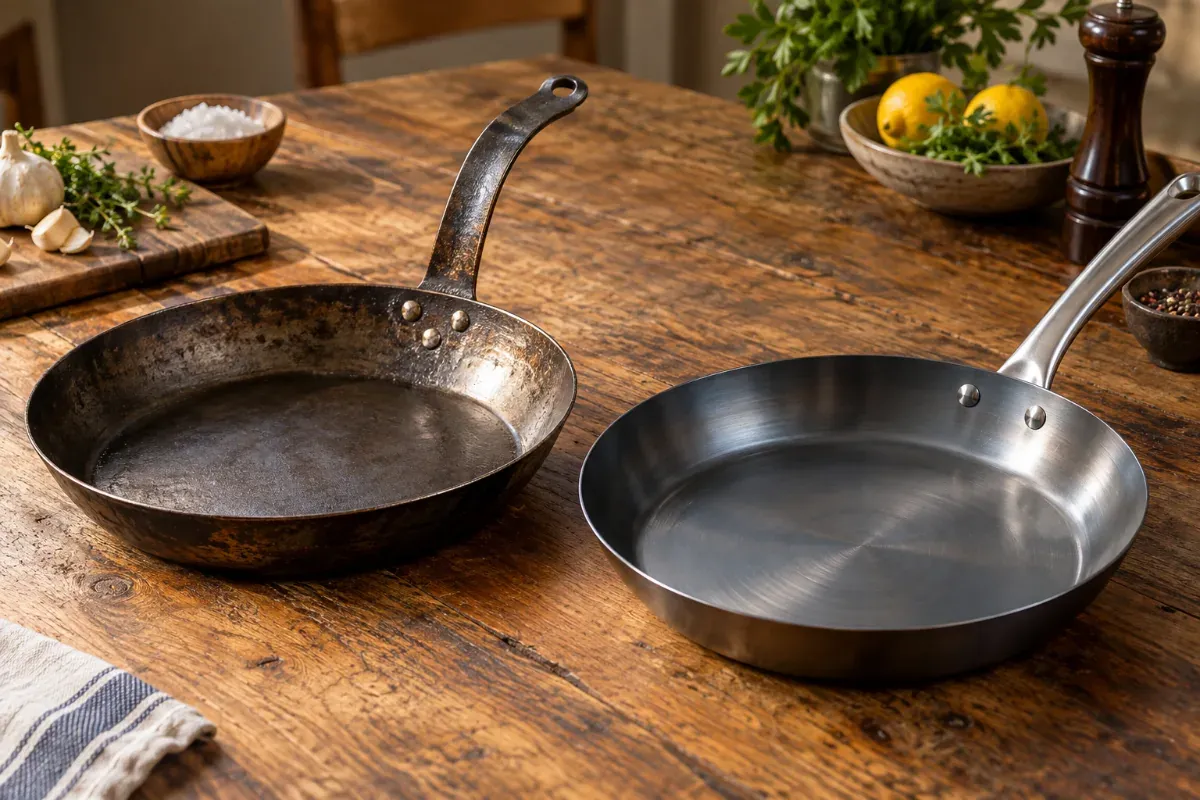
Straight out of the box, the two surfaces feel different. Lodge is noticeably rougher to the touch, a texture left from its casting and finishing. Made In arrives smoother, closer to the polished feel of a French pan. Run a finger across each and you will feel it.
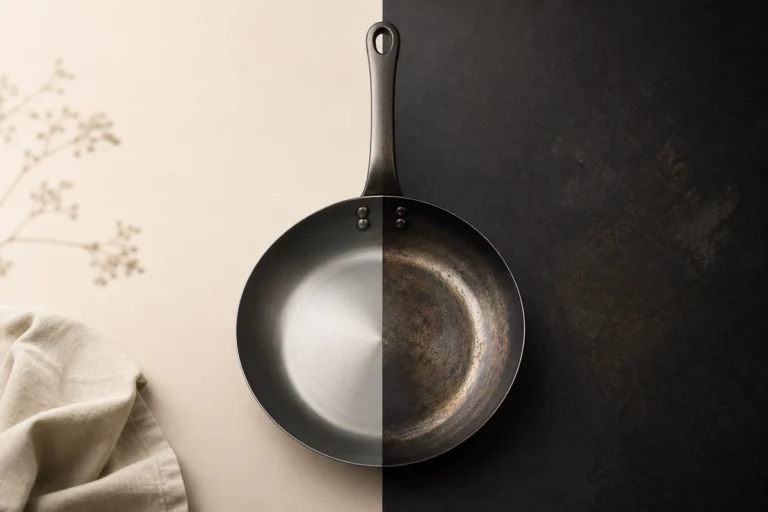
Does that texture change how they cook? Early on, yes a little. A rougher surface takes a bit longer to build an even, slick seasoning layer, so a brand-new Lodge may grab eggs where a Made In releases them sooner. Give it time, though. After a few weeks of regular cooking, the Lodge surface fills in and smooths, and the release gap closes. Both pans sear, brown, and crisp food the same way, because both are the same basic material heated the same way.
The lesson from our kitchen: the surface difference is real when the pans are new and shrinks as seasoning builds. If you are patient through the break-in, Lodge catches up. Our guide to how to season a carbon steel pan walks through the process that gets either pan there faster.
Handle and comfort
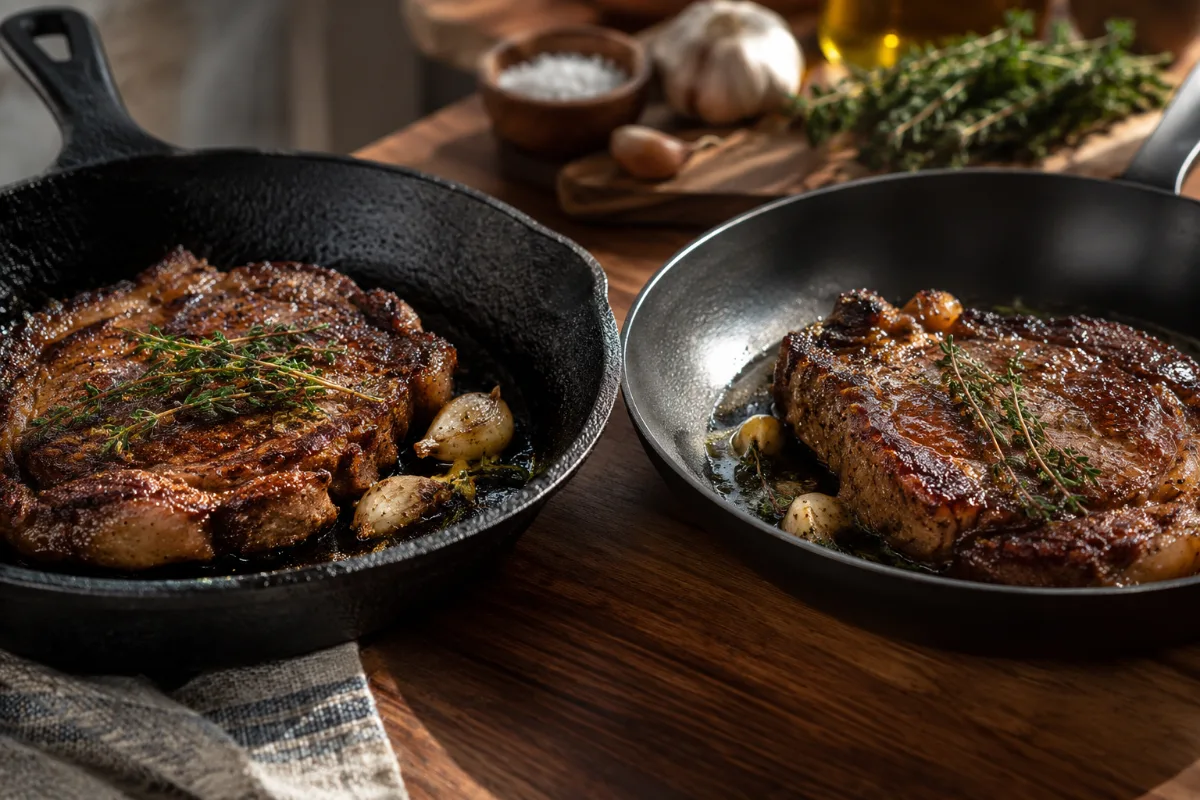
Handles are where the price shows most in the hand. Lodge fits a basic steel handle: functional, sturdy, and plain. It gets hot on the stove like all bare metal handles, and its shape is simple rather than sculpted. It does the job without charm.
Made In shapes its handle for grip and balance. It sits more naturally in the palm, and the pan feels better balanced when you lift a load of food. Like the Lodge, it heats up and needs a mitt or a folded towel, but the ergonomics are a step up.
For short cooks, the handle difference barely matters. For a cook who holds the pan through a long sear or a tossed stir-fry, the shaped handle is a real comfort. This is one of the clearest places the premium pan justifies itself, so weigh how much you handle a pan while you cook.
Build and origin
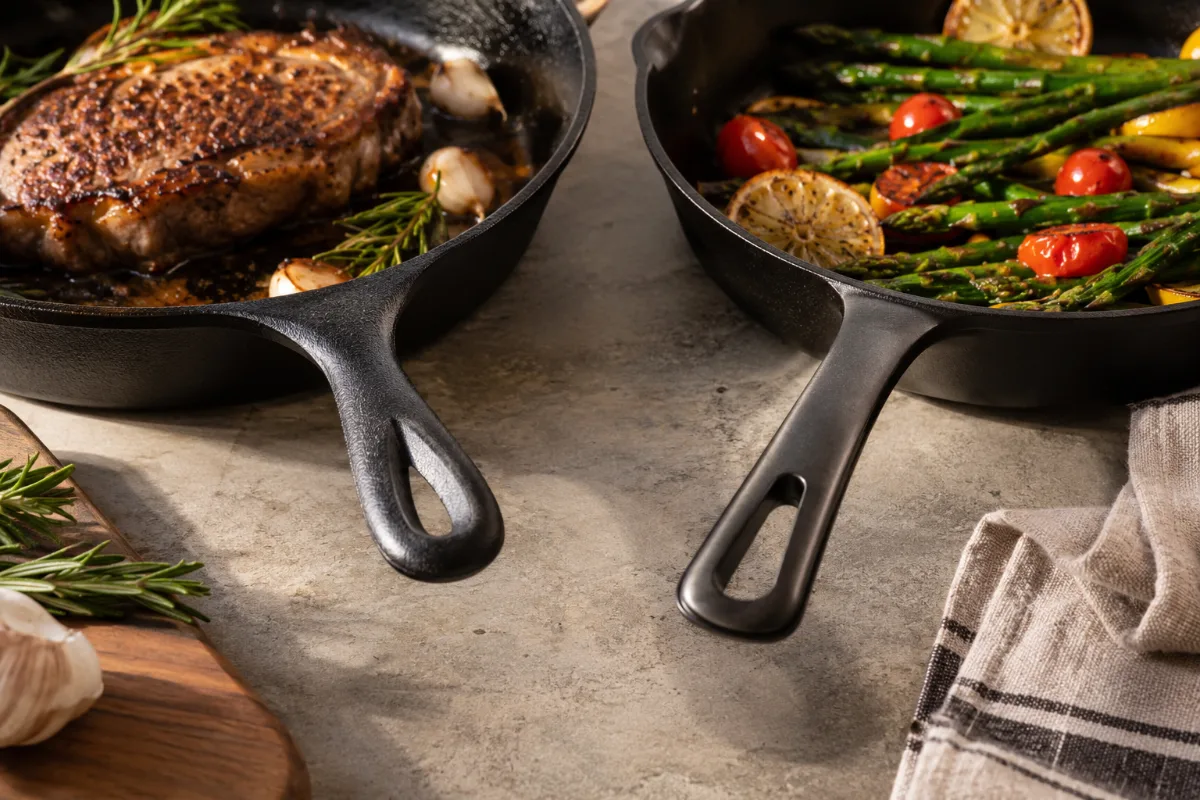
Lodge builds its carbon steel in the USA, the same country as its famous cast iron, and backs it with a long track record. Made In finishes its carbon steel in Sweden (verify), drawing on a European steelmaking tradition. Both are quality pans made to last.
Longevity is a wash. Carbon steel has no nonstick coating to scratch off or wear out. A well-cared-for pan from either brand will outlive most of your other cookware, passing the decades mark with normal use. Rust is the only real enemy, and that comes down to how you dry and store the pan, not which brand you bought.
So origin here is about tradition and preference more than durability. Some buyers like supporting US manufacture and choose Lodge for that alone. Others value the European finish of the Made In. Both choices are defensible, and neither buys you a longer-lasting pan.
The verdict
Put the Lodge vs Made In choice side by side and the decision is clean. Lodge is the budget champion: cheap, American-made, pre-seasoned, and fully capable once you break it in. It is the pan to buy for a first attempt at carbon steel, a second pan for the cabin, or any cook who wants results without spending much.
Made In is the premium pick for the cook who wants a smoother surface from day one and a handle that feels good in the hand. You pay several times the Lodge price for finish and comfort, not for better cooking. If those upgrades matter to you, the money is well spent.
Here is how the two compare on the points that decide it.
| Factor | Lodge | Made In |
|---|---|---|
| Price | Low (~$40) (verify) | Higher (~$100+) (verify) |
| Surface | Rougher | Smoother |
| Handle | Basic steel | Designed, comfortable |
| Origin | USA | Sweden (verify) |
| Seasoning | Pre-seasoned | Light prep |
| Longevity | Decades | Decades |
| Value | Excellent | Premium |
Read that table with your own habits in mind. If the “value” row speaks loudest, Lodge is your pan. If “surface” and “handle” pull harder, Made In earns the upgrade.
Both brands publish full specs on their own sites, and independent reviews of each are easy to find if you want a second read. Our own testing approach is laid out in our How We Test methodology so you can see how these judgments were formed.
Sizes and range
Both brands sell more than one pan, so match the size to your cooking before you fixate on the brand. Lodge and Made In each offer common sizes in the 8, 10, and 12 inch range (verify), which covers eggs and single portions at the small end and family sears at the large end. An 8-inch pan is the egg-and-omelette specialist. A 10-inch pan is the flexible everyday choice for one or two people. A 12-inch pan gives room to sear a couple of steaks or brown a full batch of vegetables without crowding.
The brands differ a little in how their handles and weights scale up. Lodge keeps its simple steel handle across sizes, so the large pans stay plain but sturdy. Made In carries its shaped handle through the range, which helps most on the bigger, heavier pans where balance matters. If you plan to buy the 12-inch size and will lift it full and often, the Made In handle is worth more to you than it would be on a small pan.
Pick the size first, then decide the brand for that size. A well-chosen 10-inch Lodge beats a too-large 12-inch premium pan you find awkward to handle. Our what size carbon steel pan thinking applies here: the right size you use daily is better than an impressive pan that sits in the cupboard.
Test kitchen notes: where the gap showed and where it did not
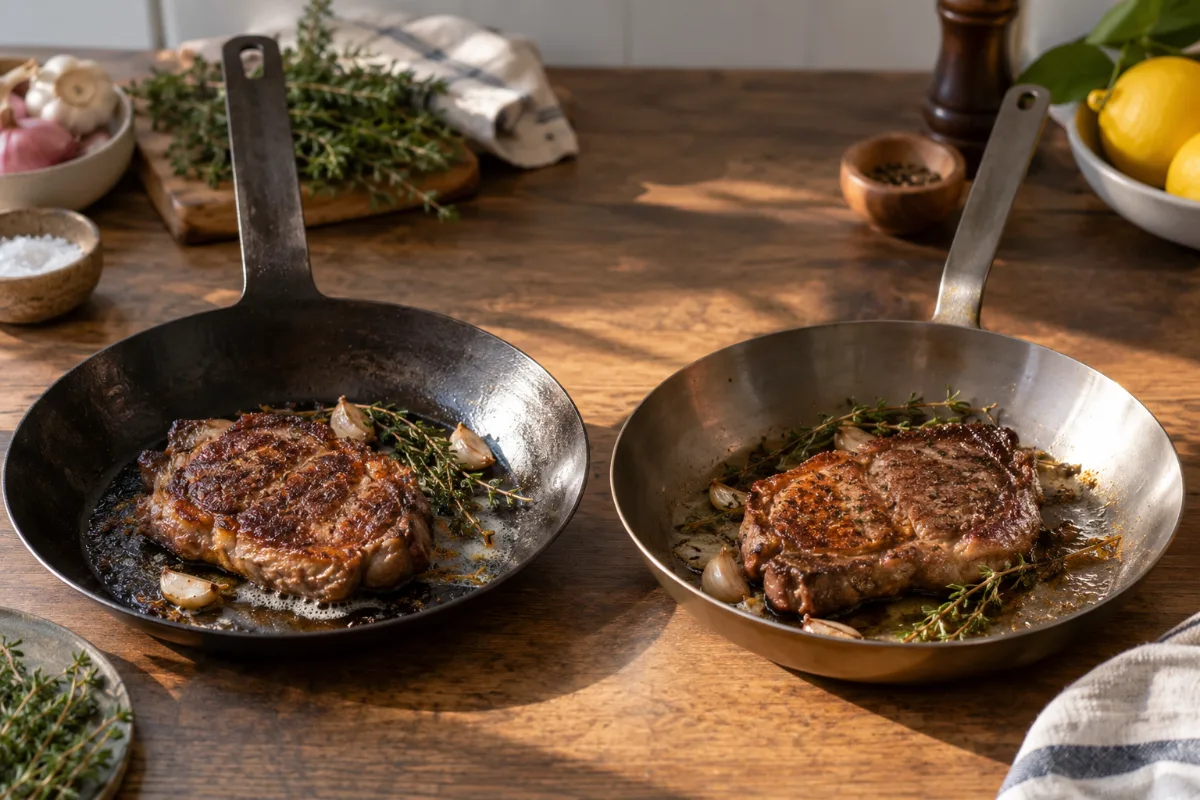
To pin down the real difference, we ran both pans through the same cooks and watched for daylight between them. Searing steak, the results were near identical once seasoned. Both built a deep crust and released the meat cleanly at the right moment. The premium pan’s smoother surface gave no edge here, because a good sear is about heat and patience, not surface texture.
Eggs told a different early story. In the first week, the smoother Made In released a fried egg more reliably than the rougher new Lodge, which needed a touch more fat and a longer preheat to match it. By week three, after the Lodge surface had filled in with seasoning, that gap had closed and both pans slid eggs out cleanly. The premium pan was easier sooner; the budget pan caught up with use.
The handle difference showed most during a long, tossed stir-fry. Ten minutes of lifting and shaking made the shaped Made In handle noticeably more comfortable than the plain Lodge bar. For quick cooks it did not matter. For extended sessions it did. That single observation is the clearest case for the premium spend, and it comes down to comfort rather than cooking.
A note on buying either one
Whichever pan you choose, the first month is what makes it. A cheap pan cooked and cared for well beats an expensive one that is left wet or scorched. Season it, cook fatty foods early to build the surface, dry it over heat, and wipe on a thin oil coat before it goes away. Do that, and a Lodge will impress you as much as a Made In. Skip it, and neither pan will shine. If you want a broader look at the field before deciding, our roundup of the best budget carbon steel pan covers where Lodge stands against its rivals.
Frequently asked questions
Lodge or Made In carbon steel?
Is Made In worth the extra over Lodge?
Does Lodge cook as well as Made In?
Which lasts longer, Lodge or Made In?
Is the Lodge surface a problem?
The bottom line
The Lodge and Made In split cleanly into value and finish. Lodge gives you capable, long-lasting carbon steel for a low price and a short wait, ideal for a first pan or a budget kitchen. Made In gives you a smoother, more comfortable pan for a premium, ideal for the cook who wants a refined daily tool. Match the pan to your budget and how much finish you care about, and you will be happy with either. To weigh them against more of the field, start with our overview of carbon steel frying pans, then check the individual Lodge and Made In reviews for the full picture.