What Is Blue Carbon Steel? Blue vs Black vs Nitrided
By the Carbon Steel Pan test team · Last updated September 2026
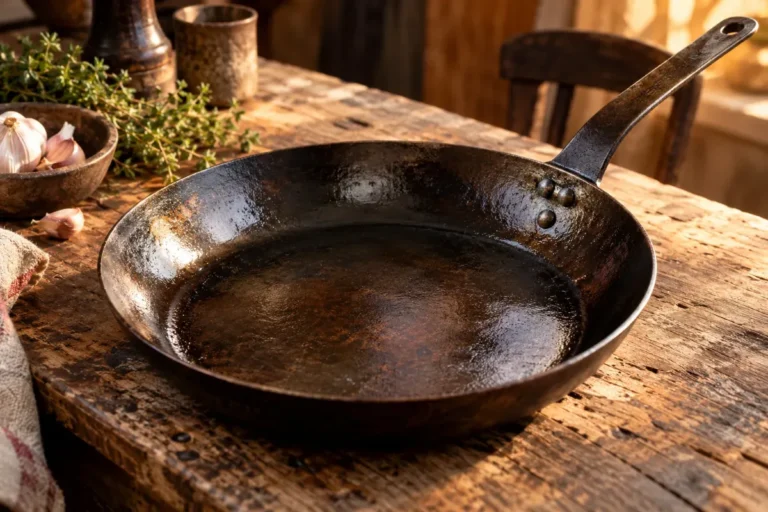
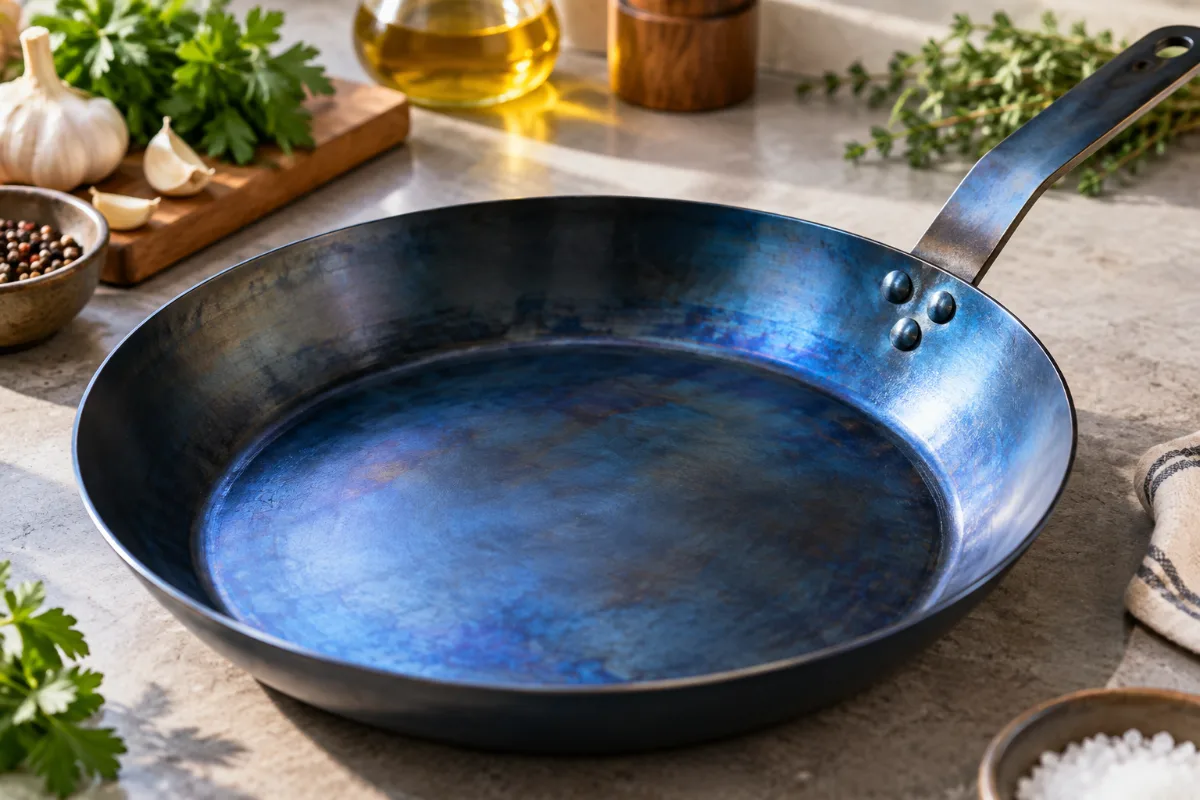
Blue carbon steel is ordinary carbon steel that has been heat-treated so its surface forms a thin blue-grey layer of iron oxide. That bluing gives it a head start on rust resistance and seasoning. Black steel is the raw dark finish, and nitrided steel is surface-hardened with nitrogen for extra rust resistance. All three are the same base metal underneath.
The short answer: same metal, different finish
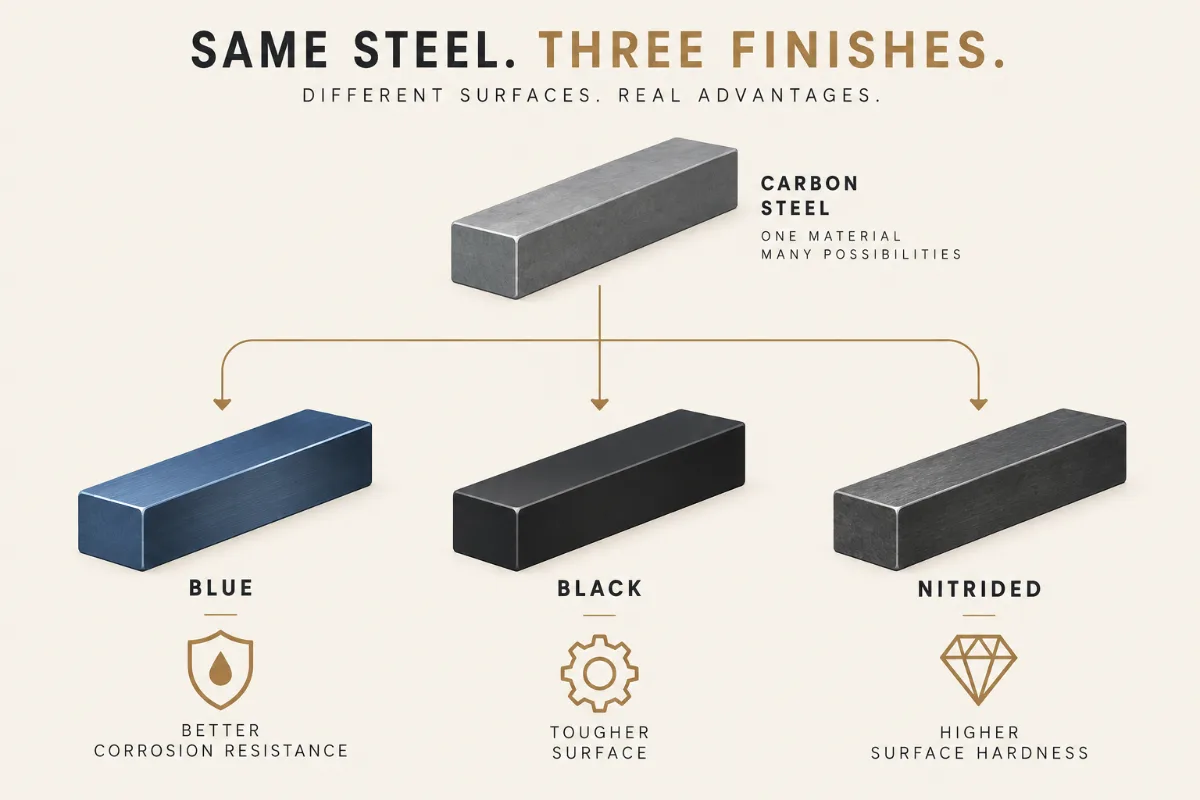
Blue, black, and nitrided carbon steel are not three different metals. They are the same steel with three different factory finishes. The words on the box describe how the surface was treated before it reached you, not what the pan is made of.
Here is each one in a line.
- Blue (or blued) steel has been heated to form a protective oxide layer, which gives it a blue-grey tint.
- Black (or raw) steel has its natural dark hot-rolled finish, usually shipped with a thin coating to stop rust in the box.
- Nitrided steel has nitrogen forced into its surface to harden it and resist rust.
Underneath all three sits the same iron-and-carbon alloy, roughly 99% iron and 1% carbon (verify). That is why they cook alike, season alike, and last for decades alike. The finish only changes how the pan behaves in its first few weeks. Knowing that saves you from paying for a difference that mostly disappears once you start cooking.
What “blue” carbon steel means
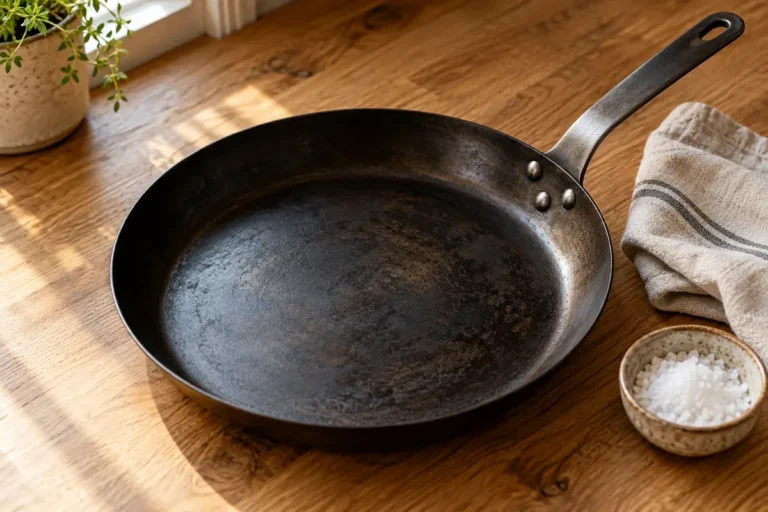
Blue carbon steel gets its name from bluing, a controlled heat treatment that grows a thin, even layer of iron oxide on the surface. That layer is what shifts the color toward blue-grey and gives the pan its practical advantage.
The oxide does two useful things. It slows rust while the pan sits in a warehouse or your cupboard, and it gives fresh oil something to grip, so the first seasoning layers bond faster. Several French pan makers and most quality wok brands sell blued steel for exactly these reasons.
How bluing is done
The steel is heated in a controlled way until oxygen reacts with the iron surface to form the oxide film (verify process detail). The result is a thin, hard, blue-tinted layer bonded to the metal, not a coating sprayed on top. Because it is grown from the steel itself, it does not chip or peel the way a paint would.
This is the same family of oxidation you see when a car mechanic talks about heat colors on steel, controlled here to land on a protective, even blue.
The color is a clue to the temperature the steel reached. Steel passes through straw, then purple, then blue as it heats, and the blue band sits at a useful point for cookware. It is worth knowing that this blue layer is thin. Aggressive scrubbing with coarse steel wool can wear through it in spots, which is one reason makers still recommend seasoning a blued pan rather than relying on the bluing alone.
What it does for you
In practice, a blued pan needs less babysitting out of the box and reaches a working nonstick surface a little sooner. You still season it, and you still dry it after washing. The bluing simply shortens the awkward early phase where a raw pan wants to spot with rust. For a beginner nervous about that first month, that head start is the main reason to choose blued.
Quick answer: Our tested guide to blue carbon steel keeps it simple: master the technique, keep the surface seasoned, and match your heat to the food. The full method, the key facts and the mistakes to avoid are all below.
Blue Carbon Steel: What Our Tests Found
Our team put blue carbon steel through repeated real cooking sessions to see what actually works. Below we break down the method, the facts that matter, and the common mistakes so you get reliable results the first time.
Black steel and raw carbon steel
Black steel is the plainest version, the metal in its natural dark state from hot rolling, with no bluing and no hardening treatment. It is the classic French pan finish and the one professional kitchens have used for generations.
Because raw steel rusts in open air, most black steel pans ship with a thin factory coating to protect them in transit. de Buyer, for example, uses a food-safe beeswax coating that you scrub off before your first seasoning (verify). Skip that step and the wax interferes with the oil layer.
Do not read “black” as a permanent color. A raw pan starts grey-black and turns true black through use, as seasoning builds. Give a black steel pan a few weeks of cooking and it looks much like a seasoned blued one. The lower starting rust resistance is the only real trade, and good habits cover that gap easily.
Nitrided carbon steel, explained
Nitrided carbon steel is the most rust-resistant of the three because of a surface treatment called nitriding. Nitrogen is diffused into the outer layer of the steel at high temperature, which hardens the surface and makes it far less prone to corrosion.
This is why nitrided pans are marketed as low-maintenance, and sometimes as “pre-seasoned” or “auto-seasoning.” The hardened, rust-resistant surface means the pan tolerates a stray wet moment better than raw steel, and it arrives with a dark grey finish that looks ready to use.
There is an honest trade-off. Nitriding can leave a very smooth, hard surface, and a super-smooth surface gives fresh oil less texture to bite into. Some cooks find nitrided pans take seasoning a little more slowly at first for that reason. Once the layer builds, they cook like any other carbon steel pan. So nitrided is not automatically better, it is a different balance: more rust protection, sometimes a slower start on seasoning.
Nitriding is not unique to cookware. The same process hardens engine parts, gears, and firearm components, which tells you how tough the treated surface is. On a pan, that hardness resists the small scratches and wear that daily cooking causes, so a nitrided surface tends to stay smooth over years. The nitrogen layer runs deeper than the thin oxide film on a blued pan, which is why nitrided cookware keeps its rust resistance even after heavy scrubbing that would wear through bluing.
One more practical point. Because nitrided pans arrive dark and rust-resistant, some sellers imply they never need seasoning. That is overstated. You will still get better release and a slicker surface by building seasoning through cooking. Think of the nitriding as insurance against rust, not as a finished nonstick layer.
Blue vs black vs nitrided: which should you buy?
Pick the finish that matches how you cook and how much rust worries you, not the one with the fanciest name. All three end up in the same place. The finish decides the first month, not the next decade.
If you are new and afraid of rust, lean nitrided. The hardened surface forgives the small mistakes beginners make, like leaving the pan wet a minute too long. You give up a little early seasoning speed, which most new cooks will not notice.
If you want the classic experience, blued or black steel is the traditional choice, and blued gives a gentle head start. This is the path most French-style cooking guides assume.
If you are buying a wok, blued steel is common and well suited to high-heat stir-frying, and it seasons fast. Many wok cooks prefer it for that reason.
The table below lays the three side by side.
| Finish | What it is | Rust resistance out of box | Seasoning | Typical use |
|---|---|---|---|---|
| Blue / blued | Heat-treated oxide layer | Higher | Seasons quickly | Pans and woks |
| Black / raw | Plain finish, factory coating | Lower (needs seasoning) | Standard | Classic French pans |
| Nitrided | Nitrogen-hardened surface | Highest | Slower on very smooth surface | Beginner-friendly pans |
Do any of these change how you cook or season?
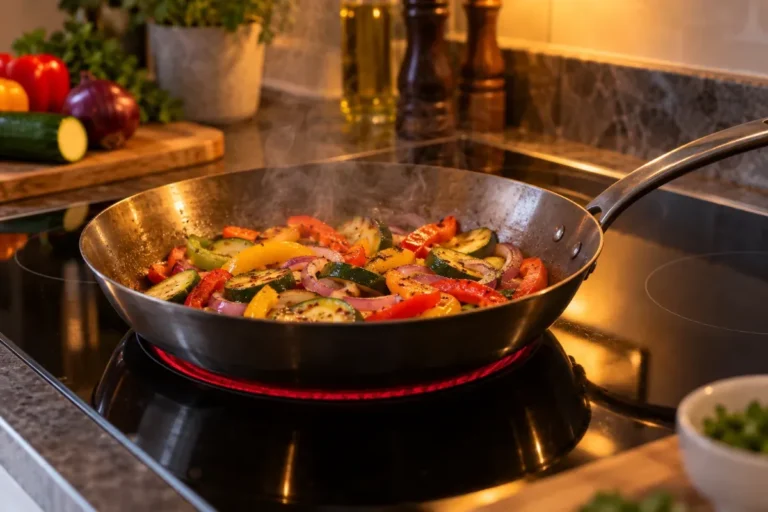
For everyday cooking, no. You preheat, add fat, and cook the same way on all three. Heat response, searing power, and nonstick behavior come from the steel and the seasoning, both of which the three finishes share. Any cook who can fry an egg on one can fry it on the others.
Seasoning follows the same routine too, with small tweaks. A raw black pan needs its factory coating removed first and benefits from an extra early layer or two. A blued pan often takes the first layers a touch faster. A very smooth nitrided pan may want a slightly longer or hotter first seasoning to get oil to grab. None of these change the method, only the pace.
So do not expect a different skill set from a different finish. If you already know how to season and maintain carbon steel, that knowledge carries straight across.
There is one small habit worth flagging. On a raw black pan, the very first cook is the highest-risk moment for rust, because the metal is most exposed then. Blued and nitrided pans give you a wider margin for that first session. If you tend to forget the dry-and-oil step right after washing, that margin is a real, if minor, reason to spend a little more up front.
How the finish looks after months of use
Here is the reassuring part. All three finishes darken toward black as seasoning builds, so the color you start with matters far less than the marketing suggests.
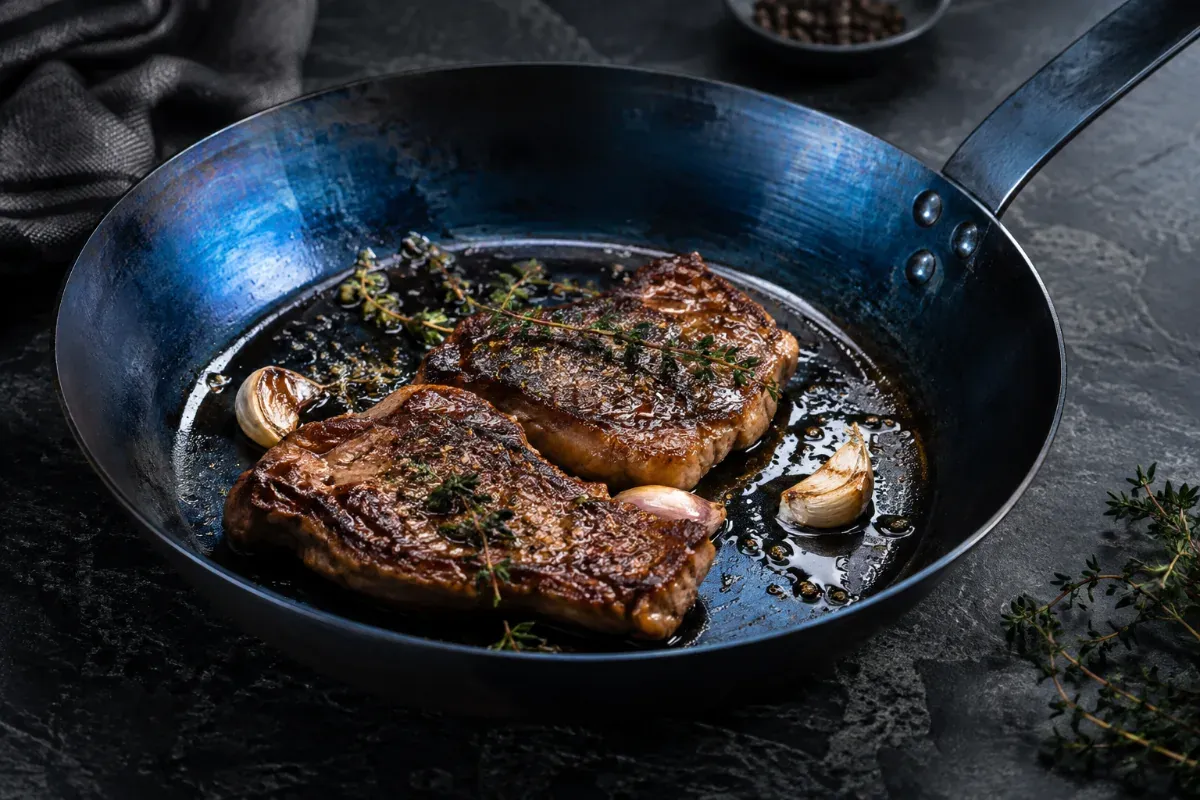
Cook on any carbon steel pan for a month or two and the surface turns a deep, even black, glossy where oil has polymerized. At that point a blued pan, a black pan, and a nitrided pan look remarkably similar. The starting tint fades into the shared patina that all carbon steel earns with use.
Buy for the property you actually care about in the first weeks, rust resistance or seasoning speed, and trust that the long-term result converges. The pan you cook on for years is defined by how you treat it, not by the label it shipped with. A cook who dries the pan over heat and wipes it with oil after every wash will end up with a black, slick, reliable surface no matter which of the three finishes they started from.
Frequently asked questions
Is blue carbon steel better than black?
What is the difference between blue and nitrided carbon steel?
Does blue carbon steel still need seasoning?
What is black steel?
Is nitrided carbon steel non-stick?
The bottom line
Blue, black, and nitrided are three factory finishes on one metal. Blued buys you faster seasoning and a bit more rust protection, black is the raw classic that needs its coating removed first, and nitrided trades a slower start for the best rust resistance. Choose for your first month, because after that they all become the same well-seasoned black pan.
To go deeper, compare the options in types of carbon steel pans, read the wider carbon steel cookware overview, or start with a best pre-seasoned carbon steel pan if you want the least fuss. For process detail, de Buyer’s education pages on its Mineral B, Carbone Plus, and Blue lines, and a general metallurgy reference on bluing and nitriding, are good primary sources.