Types of Carbon Steel Pans Explained
As an Amazon Associate I earn from qualifying purchases, at no extra cost to you.
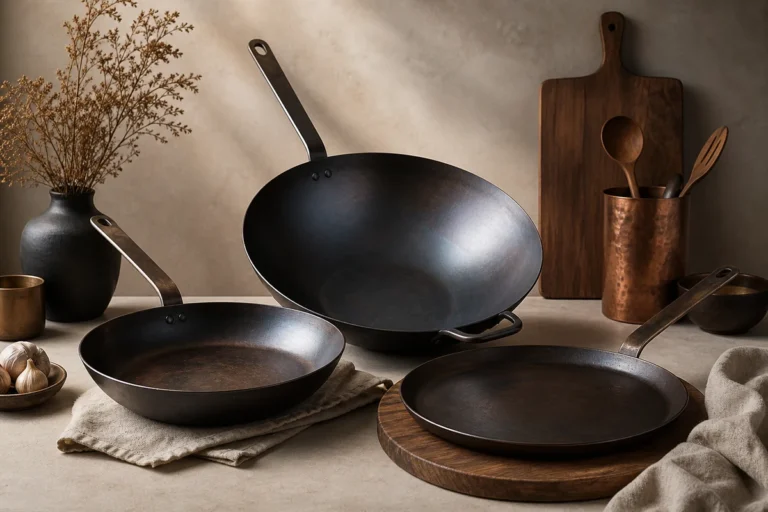
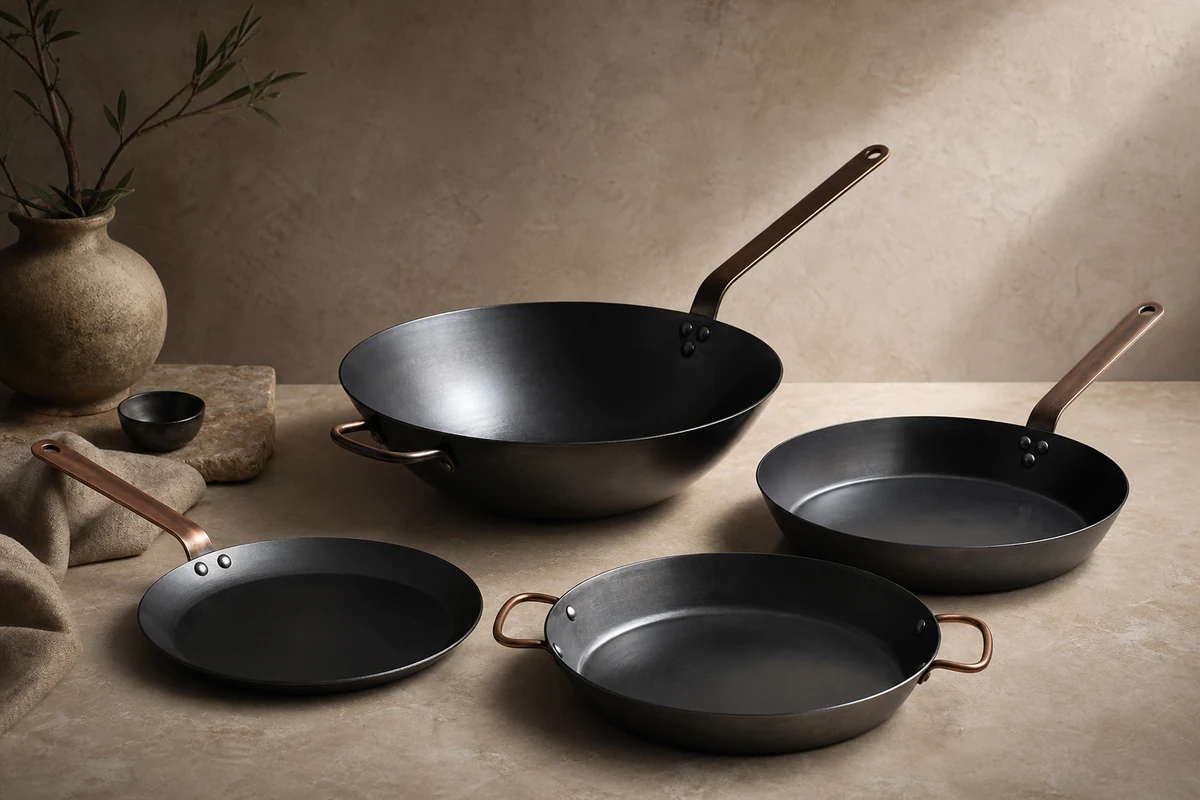
The main types of carbon steel pan are the frying pan, the wok, the griddle, the crepe pan and the paella pan. All use the same steel and the same seasoning. The shape decides the job. Buy a frying pan first, because everything else is a specialist.
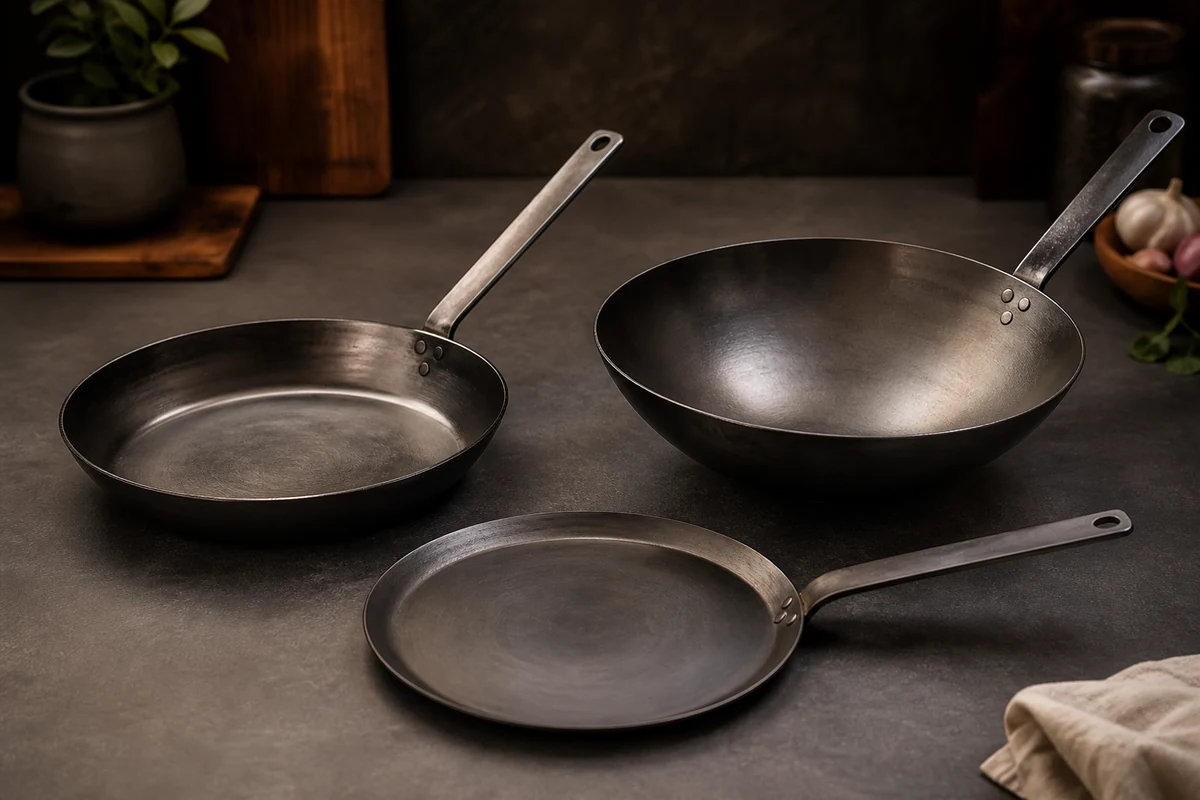
Quick answer: Our tested guide to types of carbon steel pans keeps it simple: master the technique, keep the surface seasoned, and match your heat to the food. The full method, the key facts and the mistakes to avoid are all below.
Types Of Carbon Steel Pans: What Our Tests Found
Our team put types of carbon steel pans through repeated real cooking sessions to see what actually works. Below we break down the method, the facts that matter, and the common mistakes so you get reliable results the first time.
Frying pan or skillet
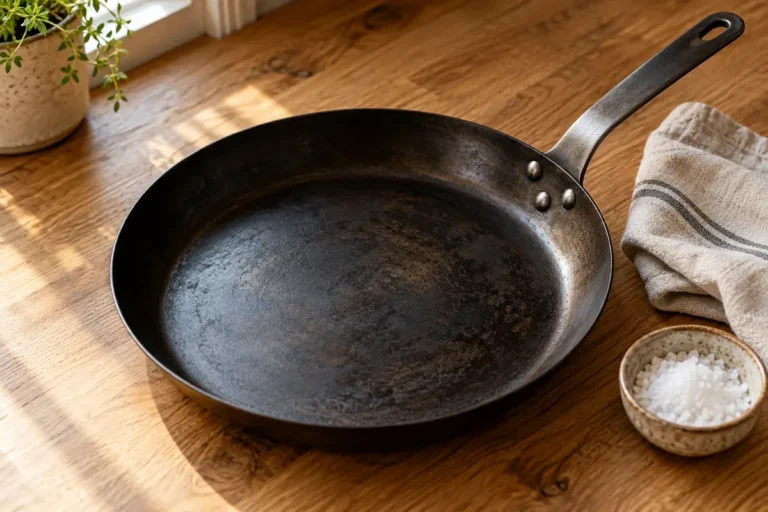
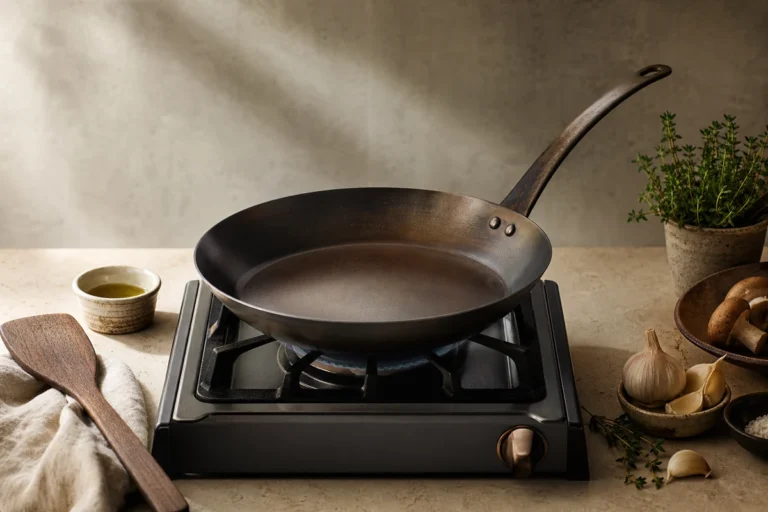
Wide flat base, low sloping walls. This is the default and it should be your first purchase.
The shape maximises contact between food and hot metal, which is what browning needs. The sloping walls let you slide a spatula under things and toss without spilling.
Sizes run 8 to 15 inches. A 10 inch suits two people, a 12 inch suits a family. Remember the flat base runs about three inches smaller than the rim.
See the ten pans we compare, from $26.99 to $212.
Wok
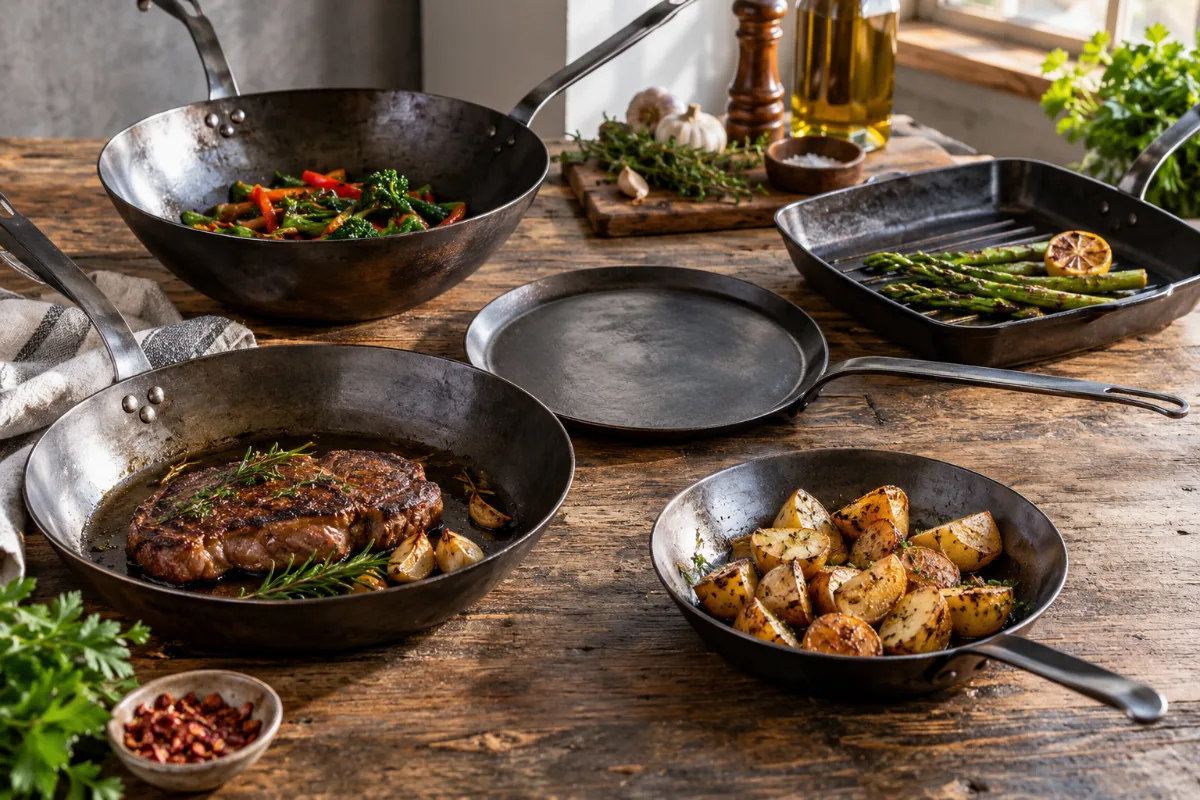
Deep bowl, steep sides, small flat base. Built for constant motion at very high heat.
The depth is the point. You need room to toss without redecorating your hob, and you need the temperature gradient up the sides that lets you park cooked food away from the hot zone while the next batch sears.
Choose a flat bottom unless you own a dedicated wok burner. A round bottom needs a ring and is unusable on induction.
Our wok comparison covers four, from $33.99 to $94.49.
Griddle or plancha
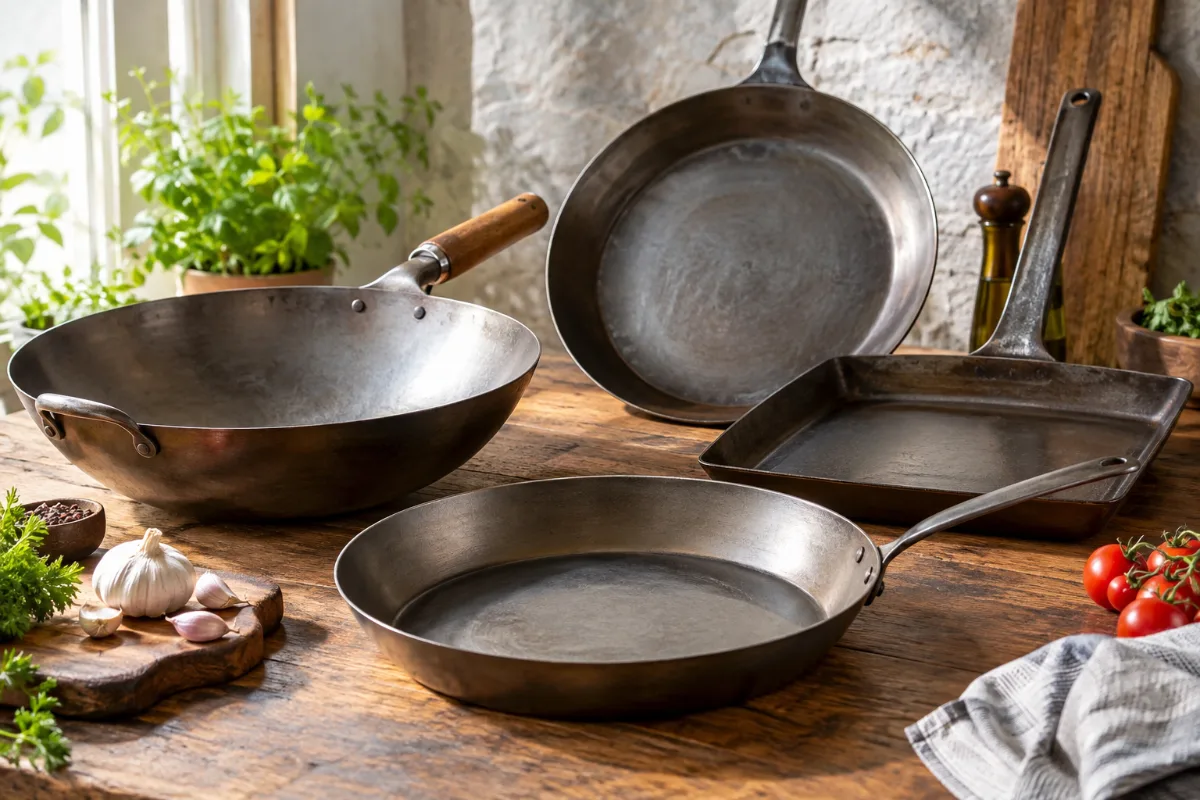
Flat, no walls, sometimes rectangular and sized to cover two burners.
Good for pancakes, flatbread, smash burgers and breakfast for six at once. Bad for anything with liquid, because nothing contains it.
Buy one only if you regularly cook flat food in volume.
Crepe pan
Very low walls, often a quarter inch, over a wide flat surface.
Those low walls exist so you can get a spatula under thin batter and flip it. On a normal frying pan the walls get in the way.
Genuinely single purpose. Skip it unless crepes, dosa or blini are a regular event.
Paella pan
Wide, shallow, two loop handles, no long handle.
The width maximises the area where rice touches metal, which is what produces socarrat, the crisp layer at the bottom. Depth would defeat it.
Very niche. Not a first pan.
Which shape suits you
| You cook | Buy | Why |
|---|---|---|
| Steak, eggs, general | Frying pan | Does most jobs well |
| Stir-fry, Asian food | Wok | Depth and heat gradient |
| Breakfast for a crowd | Griddle | Surface area, no walls |
| Crepes, thin pancakes | Crepe pan | Low walls for flipping |
| Rice dishes | Paella pan | Wide shallow base |
Surface treatments are not shapes
Black steel, blue steel and nitrided steel describe finishes, not types of pan. You can find all three in any shape.
Black steel is plain carbon steel with a light factory finish.
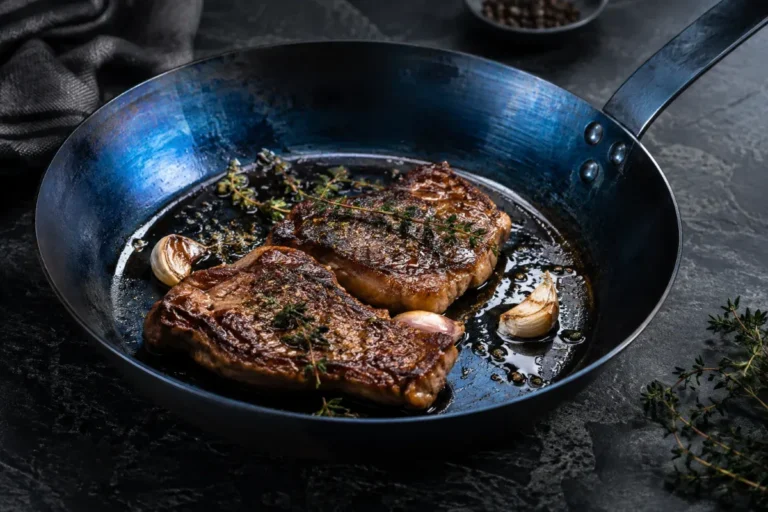
Blue steel is heat-treated to leave a blue-grey oxide layer that resists rust and helps seasoning bond faster.
Nitrided steel is hardened in a nitrogen atmosphere. Meaningfully more rust-resistant, which helps if you are new.
None removes the need to season.
One of each type, and what it costs
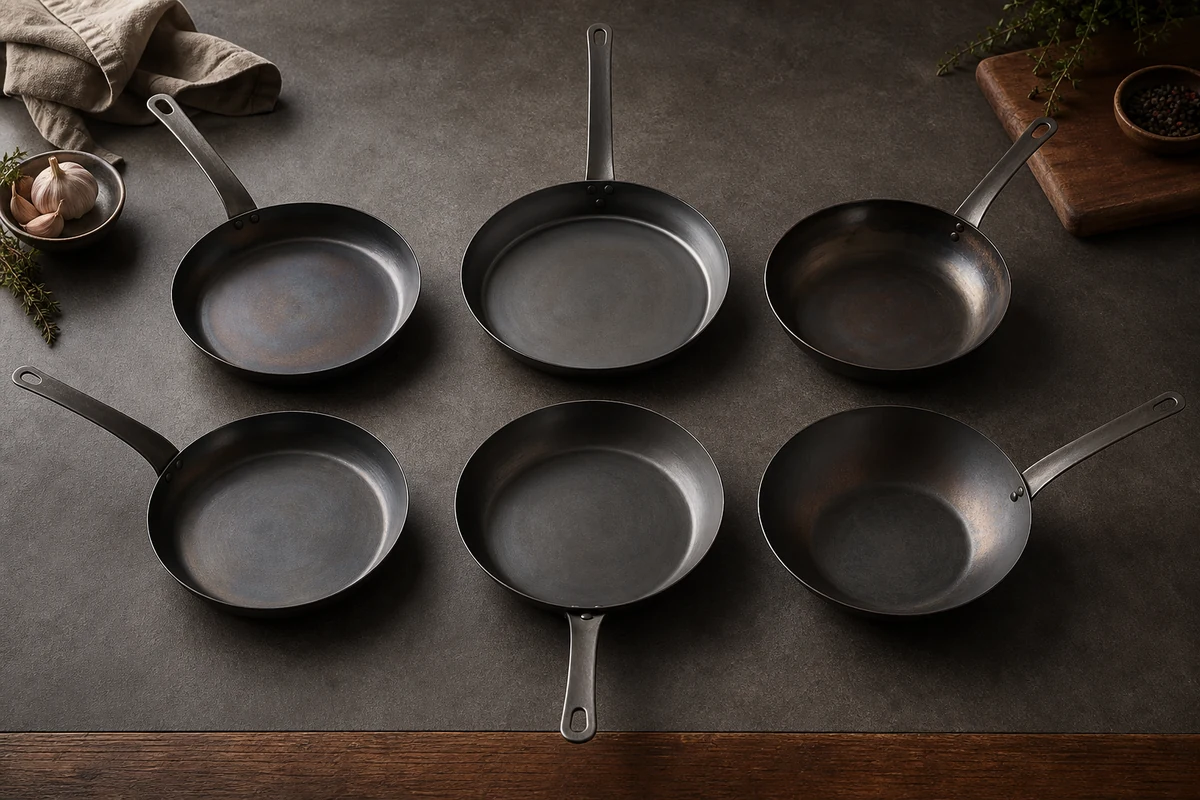
Four types, four prices. Pre-seasoned pressed steel starts at $29.99 with the Yonida 10 inch. Nitrided is $26.99 for the Armorbear 10 inch. Blued French steel is $99.95 for the de Buyer MINERAL B Pro. And a hand-hammered wok is $62.99 for the YOSUKATA 13.5 inch pow wok. The full comparison sorts all fourteen by cooking surface and weight.