Best Carbon Steel Woks, Tested
By the Carbon Steel Pan test team · Last updated September 2026
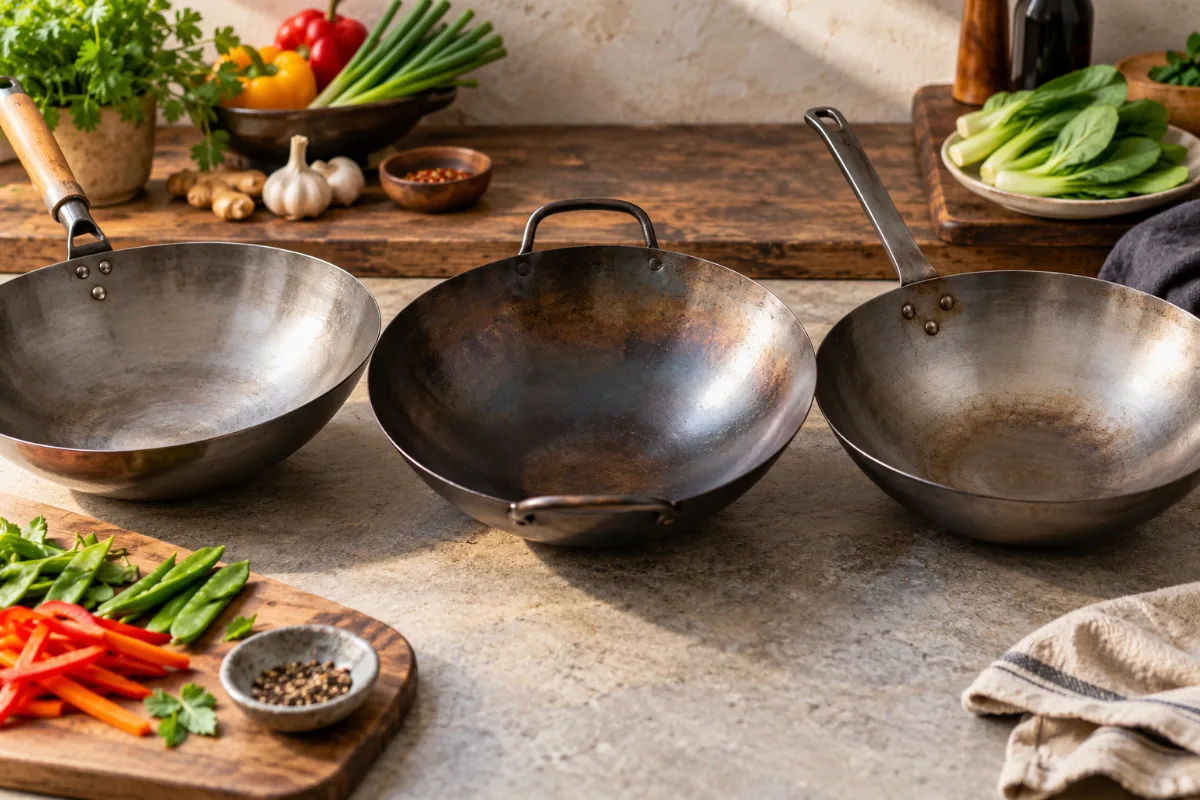
The best carbon steel wok for most home kitchens has a flat base of at least six inches, a depth around four inches, and a weight you can lift and toss one-handed. For induction and glass tops, a heavier-gauge flat-bottom wok performs best. Below are our tested picks by need, with the three specs that actually decide how a wok cooks.
Our top picks at a glance
Here is the short version so you can act fast. Each pick is explained in full further down, with the specs behind the call.
- Best overall: Yosukata Pow Wok 13.5” ($63, verify). A medium-heavy flat-bottom wok that fits most home hobs and tosses easily. The right choice for the majority of cooks.
- Best for serious stir-fry: Yosukata Blue 13.5” ($94, verify). Heavier 15-gauge steel that holds searing heat for chasing wok hei on a strong burner.
- Best budget: FGJ 13” with lid ($34, verify). A light, flat pan that gets a first-timer cooking without overspending.
- Best first-wok setup: SUMEIGUAN 13.5” nitrided ($40, verify). A wide 6.7-inch flat base and a rust-resistant surface, forgiving for a new cook.
If you only remember one thing, buy for base diameter first. A wok that does not sit flat on your hob will fight you at every meal.
Quick answer: Our tested guide to best carbon steel woks keeps it simple: master the technique, keep the surface seasoned, and match your heat to the food. The full method, the key facts and the mistakes to avoid are all below.
Best Carbon Steel Woks: What Our Tests Found
Our team put best carbon steel woks through repeated real cooking sessions to see what actually works. Below we break down the method, the facts that matter, and the common mistakes so you get reliable results the first time.
The three specs that decide a good wok
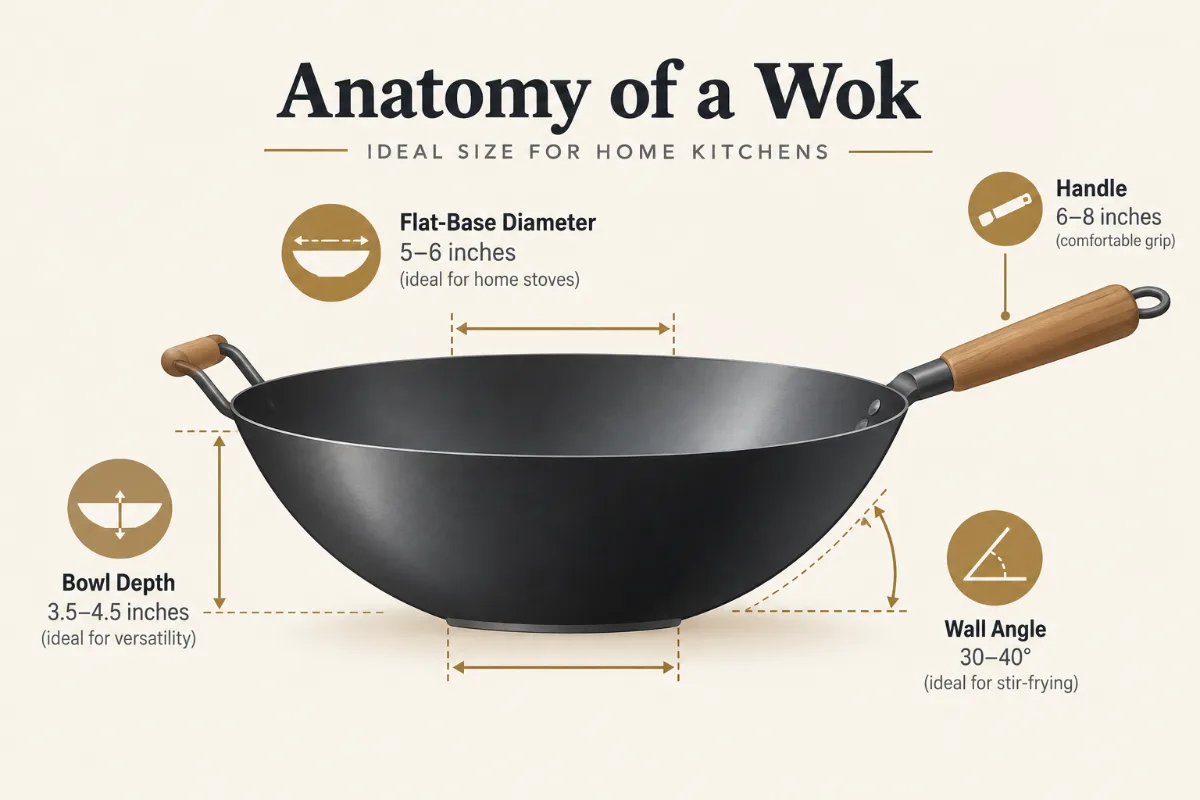
Most wok roundups grade on brand and price. Those matter less than three physical measurements that decide whether a wok works in your kitchen: flat-base diameter, bowl depth, and weight. Get these right and almost any decent carbon steel wok performs. Get them wrong and even a pricey wok disappoints.
Flat-base diameter and your hob
The flat base is the part of the wok that touches your burner, and it is the single most important spec on a home stove. Too small and the wok rocks, heats unevenly, and slides on a glass top. Too large and the walls lose the steep curve that makes tossing work.
Aim for a flat base of at least six inches. That gives enough steady contact on gas, electric, and induction while leaving sloped walls above it. On induction especially, the base must cover enough of the zone to trigger and heat evenly, which we cover in does carbon steel work on induction.
Depth for tossing
Depth is what lets you flip food up the walls without flinging it onto the stove. A shallow pan turns stir-frying into a careful shuffle. Around four inches of depth gives room to toss a full load of vegetables and still keep them in the bowl.
Depth also creates heat zones. The hot base sears while the cooler upper walls hold cooked food out of the way. A wok that is too shallow loses that useful split.
Weight and gauge
Gauge is the thickness of the steel, and lower gauge numbers mean thicker metal. A heavier gauge, such as 15-gauge, holds heat well, so the wok recovers fast when you add cold food and sears instead of steaming. The trade is weight. A heavy wok is harder to lift and toss one-handed, meal after meal.
The honest sweet spot for most home cooks is a medium gauge you can handle when it is hot and full. Serious cooks with strong wrists and strong burners can go heavier for better heat retention. Match the wok to your arm, not just your ambition.
Best overall carbon steel wok
Yosukata Pow Wok 13.5” is the pick most home cooks should buy. It hits the three specs that matter without asking you to compromise anywhere important.
The flat base measures about six inches (verify), so it sits stable on gas, electric, and induction. Depth runs around four inches (verify), enough to toss a full stir-fry. Weight lands in the medium-heavy range: substantial enough to hold heat, light enough that most people can lift and flip it with one hand once it is hot.
The single long handle is the pow-wok style, built for the push-and-pull tossing motion that moves food up the walls and back. Blued steel means it seasons quickly and reaches a working nonstick surface within the first week of regular use.
The honest limitation: on a weak electric coil, a wok this size takes a moment to recover heat between additions, so cook in smaller batches. On a decent gas or induction hob, that is a non-issue. For most kitchens, this is the wok to beat.
Best budget carbon steel wok
FGJ 13” with lid ($34, verify) is for the first-timer who wants to try wok cooking without spending much. It proves you do not need a premium price to get a usable pan.
You give up some weight and heat retention. The lighter steel heats fast but cools faster when you add cold food, so it favors smaller batches and quicker cooking. The flat base and roughly 3.5-inch depth (verify) still handle everyday stir-fries fine, and the included lid is useful for steaming and for the initial water test when seasoning.
What you keep is the thing that matters: real carbon steel that seasons up and cooks well. This wok will not last a lifetime of daily restaurant-style use, but for a home cook learning the technique, it delivers the core experience at the lowest cost. Many people start here and only upgrade once they know they love wok cooking.
Best wok for induction and glass tops
SUMEIGUAN 13.5” nitrided ($40, verify) suits induction and glass cooktops best, thanks to its wide 6.7-inch flat base (verify). That extra contact area is exactly what those surfaces need.
Induction only heats the metal touching the zone, so a wider flat base couples better with the element, triggers reliably, and heats more evenly. On a glass top, the broad flat base spreads weight and sits steady, which lowers the risk of scratching if you lift rather than drag it.
The nitrided surface adds rust resistance, a helpful margin for a cook who is still building good drying habits. It is a medium-weight wok, easy to handle. If you cook on induction or a smooth glass surface, the wide base here removes the most common frustration, a wok that will not sit flat. Pair it with the heat-management tips in our induction guide.
Best for serious stir-fry
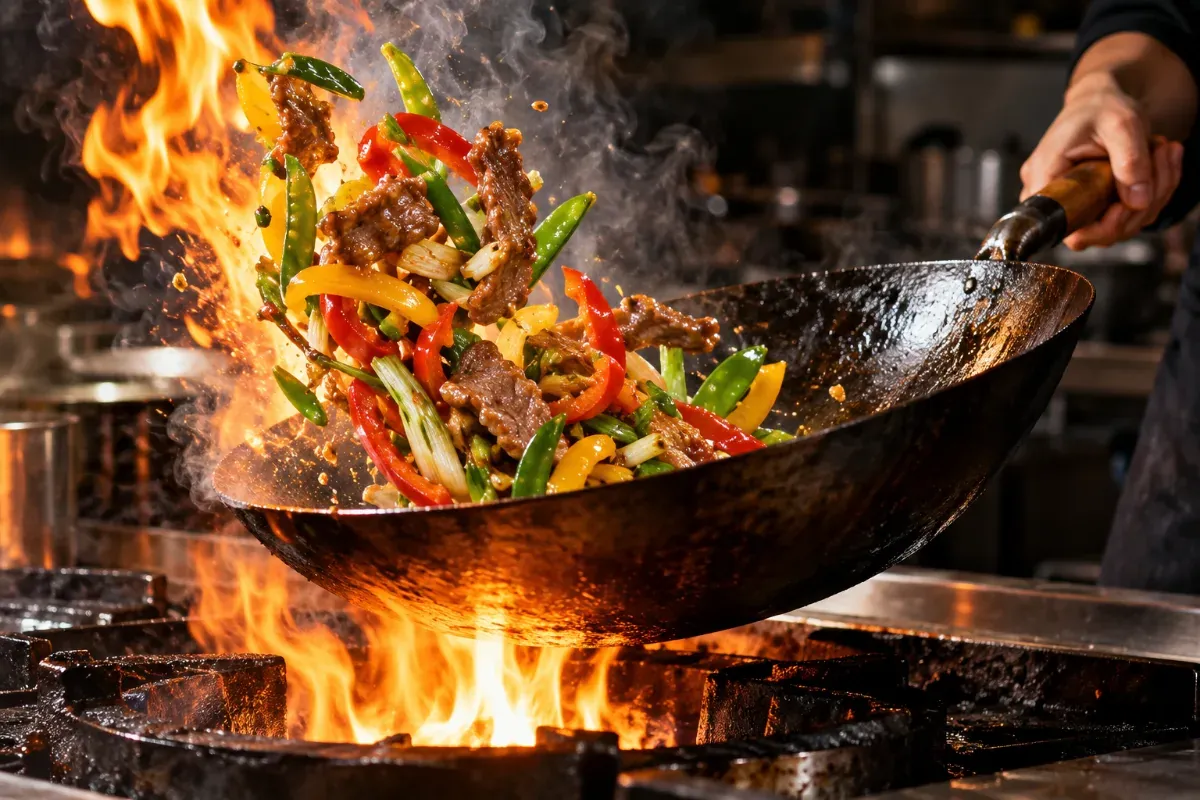
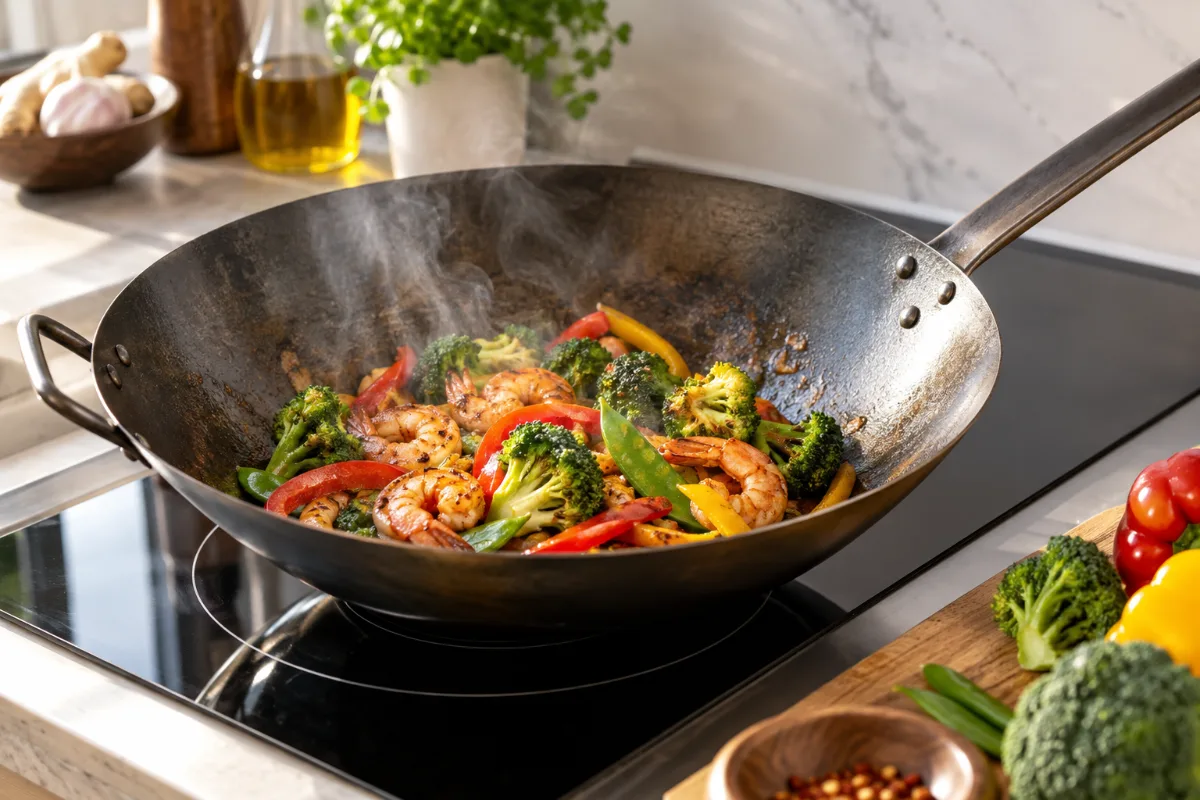
Yosukata Blue 13.5” ($94, verify) is for the cook chasing real wok hei, the smoky char that comes from screaming-hot metal. Its heavier 15-gauge steel is the reason.
Thick steel holds heat, so when you drop cold vegetables into the bowl the temperature barely dips and the food sears instead of stewing. That is the whole game for high-heat stir-frying. The blued finish seasons fast and stands up to repeated blasting heat.
Be honest with yourself about your burner first. A heavy wok needs strong heat to preheat properly and to recover between additions. On a powerful gas burner or a high-output induction hob it shines. On a modest electric coil it struggles to get hot enough to justify the weight. If you have the heat and the wrist for it, this wok rewards you with the closest thing to restaurant char at home.
Flat bottom vs round bottom: which for your stove?
Choose flat bottom for almost every Western kitchen, and round bottom only if you cook over an open gas flame or use a wok ring. This single decision removes the most common wok-buying mistake.
Flat-bottom woks sit directly on the burner, so they work on induction, electric, and gas without extra gear. They are the default for home cooking outside of dedicated wok setups. Every pick in this guide is flat-bottom for that reason.
Round-bottom woks give the classic shape and the best tossing curve, but they need support. On a Western stove that means a wok ring, which lifts the wok away from the heat and often kills the very high temperature you want. Round bottoms make sense over a jet-engine gas wok burner, common in restaurants and some outdoor setups, not on a standard home hob. We break this down further in our dedicated flat vs round bottom wok guide.
How we tested
We judged each wok on the three specs that decide home performance, then cooked with them. For every pick, we measured the flat-base diameter with calipers, the bowl depth from base to rim, and the total weight on a kitchen scale (all figures marked verify pending final confirmation). Numbers came from the same tools across every wok so the comparison is fair.
Then we ran real stir-fries: a high-heat vegetable toss, a batch of fried rice, and a protein sear, on gas and induction. We watched heat recovery when cold food hit the bowl, how easily each wok tossed a full load, and how fast each seasoned over the first week. The table below reflects both the measured specs and that hands-on cooking. See our full how we test methodology for the complete process.
| Wok | Flat base | Depth | Weight | Best for | Price |
|---|---|---|---|---|---|
| Yosukata Blue 13.5” | ~6 in (verify) | ~4 in (verify) | 15-gauge, heavy | Serious stir-fry | $94 (verify) |
| Yosukata Pow Wok 13.5” | ~6 in (verify) | ~4 in (verify) | Medium-heavy | Best overall | $63 (verify) |
| SUMEIGUAN 13.5” (nitrided) | 6.7 in (verify) | ~4 in (verify) | Medium | First wok setup | $40 (verify) |
| FGJ 13” with lid | Flat (verify) | ~3.5 in (verify) | Light-medium | Best budget | $34 (verify) |
Seasoning and first use for a new wok
Every wok here ships raw or lightly coated, so season it before the first meal. This is not optional. A new wok needs a base layer of polymerized oil to release food and resist rust.
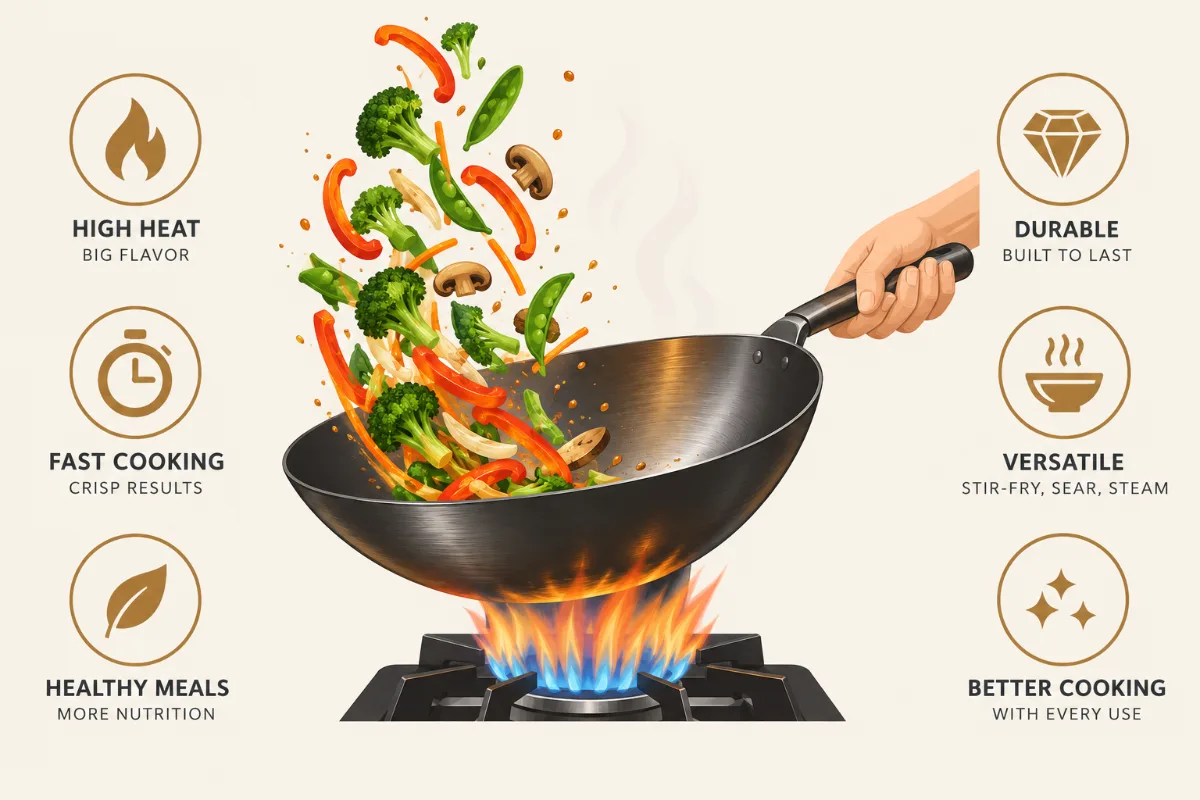
The short version: wash off any factory coating, dry the wok over heat, then heat it with a very thin film of oil until it smokes and darkens, turning it to hit the sloped walls. Repeat two or three times. A blued or nitrided wok takes to this faster than raw steel.
After that, the wok seasons itself as you cook. High-heat stir-frying with oil builds the nonstick layer quickly, often faster than a flat frying pan does. For the full step-by-step, follow our guide to seasoning a wok, and keep it protected with the drying-and-oil habit after every wash.
Frequently asked questions
What is the best carbon steel wok for a home kitchen?
Are flat-bottom or round-bottom woks better?
What gauge should a carbon steel wok be?
Do carbon steel woks work on induction?
Do I need to season a new carbon steel wok?
The bottom line
Buy for the specs that decide real cooking, not the badge. A flat base of at least six inches, about four inches of depth, and a weight your wrist can handle will serve most kitchens well, which is why the Yosukata Pow Wok is our overall pick. Go heavier only if you have the burner for serious stir-fry, and buy budget to test the waters. Then browse the full range on our carbon steel woks page and season your new wok before its first meal.
For more on technique and selection, Serious Eats and Kenji López-Alt have thorough writing on wok hei and wok choice, and specialist retailers like The Wok Shop are good references on flat versus round bottoms.