Best Carbon Steel Pan for a Glass-Top Stove
By the Carbon Steel Pan test team · Last updated September 2026
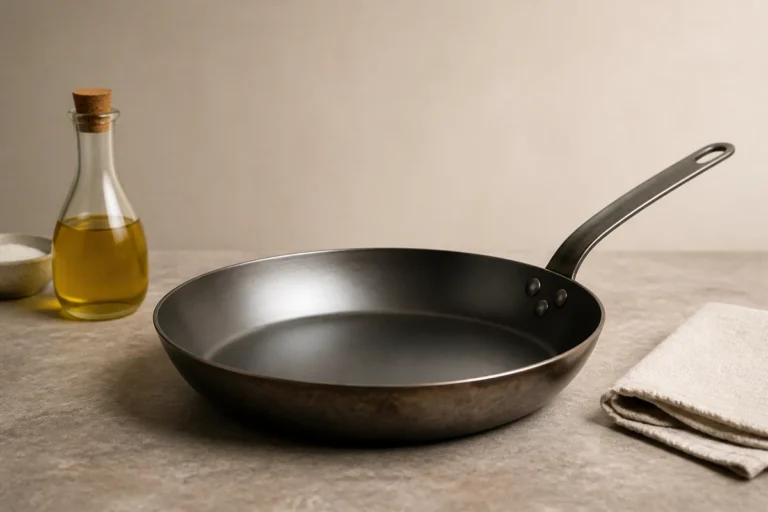
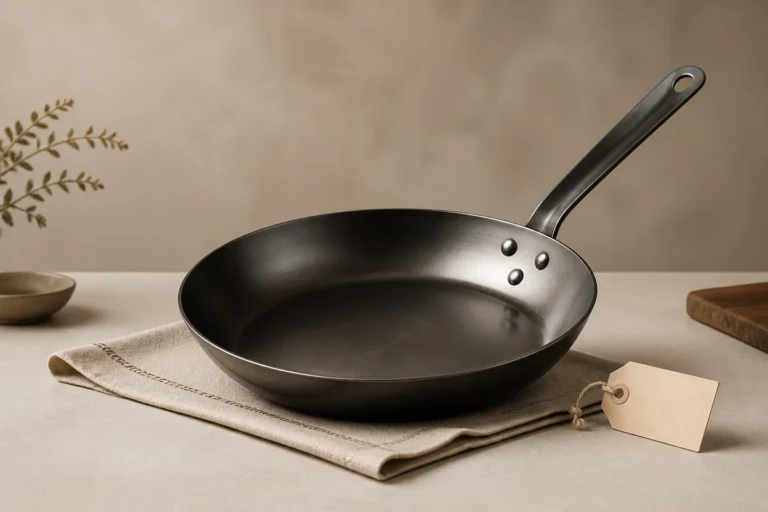
The best carbon steel pan for a glass-top stove has a flat, smooth base for full contact and even heat, plus a manageable weight so you can lift it rather than drag it. Any bare carbon steel works on glass and ceramic tops, but a flat, mid-weight pan heats best and lowers scratch risk. Below are the tested picks.
Glass and ceramic cooktops are common in modern kitchens, and they come with real worries: scratches, cracks, and uneven heating. The good news is that carbon steel suits these surfaces well. It is lighter than cast iron, and a flat base makes the most of a smooth cooktop’s contact heating. We tested four skillets on a ceramic hob to find the ones that heat evenly and treat the glass gently.
Top picks for glass tops
The short list, for anyone ready to buy:
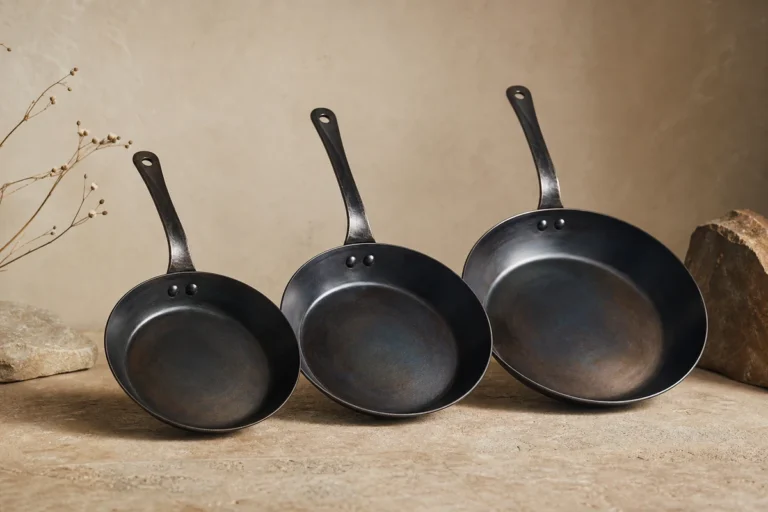
- Best overall: Merten and Storck 12 inch. A flat base and even heat at a fair price, ideal for most glass tops.
- Best budget: Lodge 10 inch. A flat, dependable base for less money.
- Best lightweight: Made In 10 inch. Flat, smooth, and easy to lift clear of the glass.
- Classic option: de Buyer Mineral B 11 inch. A flat French pan with even heat and a refined build.
All four sit flat and heat well. The differences come down to weight and base finish, both of which affect how safely and evenly they perform on glass.
Quick answer: Our tested guide to best carbon steel glass top keeps it simple: master the technique, keep the surface seasoned, and match your heat to the food. The full method, the key facts and the mistakes to avoid are all below.
Best Carbon Steel Glass Top: What Our Tests Found
Our team put best carbon steel glass top through repeated real cooking sessions to see what actually works. Below we break down the method, the facts that matter, and the common mistakes so you get reliable results the first time.
What matters on a glass top
A glass cooktop heats by warming the pan through direct contact, so the base is everything. Two features decide performance: how flat and smooth that base is, and how heavy the pan is to move.
Flat, smooth base
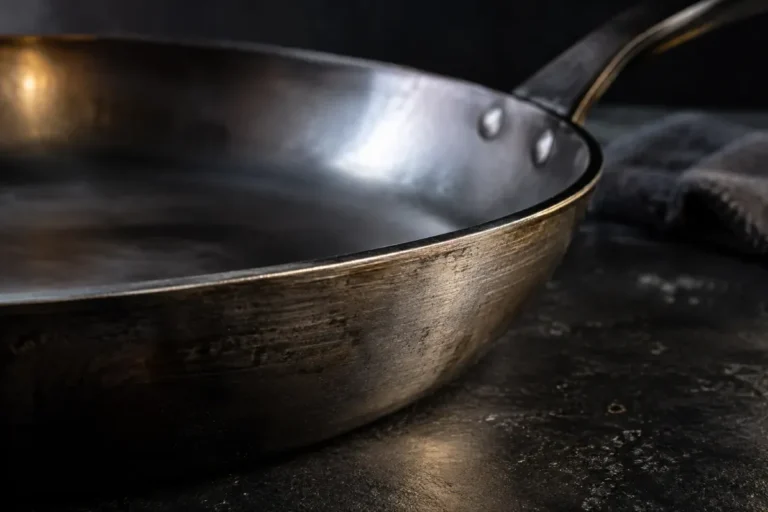
A glass top transfers heat only where the pan actually touches it. A base that bows or bumps leaves gaps, and those gaps become cool spots that cook food unevenly. A flat, smooth base sits in full contact, so heat spreads across the whole cooking surface the way it should. This matters more on glass than on gas, where a flame wraps up the sides.
A smooth base also protects the glass. A rough or pitted underside can grind against the surface and leave marks. Check that the base is flat before buying, and keep it clean, because trapped grit does more scratching than the metal ever will. Cooktop makers such as GE and Whirlpool advise flat-bottomed cookware for exactly this reason (verify). Carbon steel that starts flat and stays flat is a strong match.
Flatness can change over the pan’s life, which is worth understanding before you buy. Carbon steel can warp if you shock it, such as running cold water over a screaming-hot pan or cranking a thin pan to high heat too fast. A warped base rocks on glass and leaves a gap that ruins even heating. A medium or heavier gauge resists this, and gentle heating habits protect the base you paid for. If a pan does bow slightly over time, it matters more on a glass top than on gas, so treat flatness as something to preserve, not just something to buy once.
Manageable weight
Weight is a safety issue on glass. Drop a heavy pan onto a ceramic surface and you risk a crack. Drag it across and you risk a scratch. Carbon steel has a real edge here, because it is meaningfully lighter than cast iron of the same size. A mid-weight carbon steel pan is easy to lift and set down with control, which is the single best habit for protecting the glass.
Very large or heavy-gauge pans are harder to manage when full. For a glass top, a 10 to 12 inch pan in a medium gauge hits the sweet spot: enough mass to hold heat and resist warping, light enough to lift cleanly every time.
The weight advantage is real when you compare materials. A 12 inch cast iron skillet can weigh close to 8 pounds, while a carbon steel pan of the same size runs around half that (verify). On a surface where a dropped pan can crack the glass, halving the weight meaningfully lowers the risk. It also means you can lift the pan one-handed to reposition it, which is the habit that keeps the glass free of drag marks. For anyone who chose a carbon steel pan partly to spare their cooktop, that lighter build is a large part of the appeal.
Best overall for glass tops
The Merten and Storck 12 inch carbon steel skillet is our pick for most glass-top kitchens. Its base sits dead flat, giving full contact and even browning across the surface, which is exactly what a ceramic hob needs. At a medium weight of around 3.5 pounds (verify), it is easy to lift and reposition without scraping.
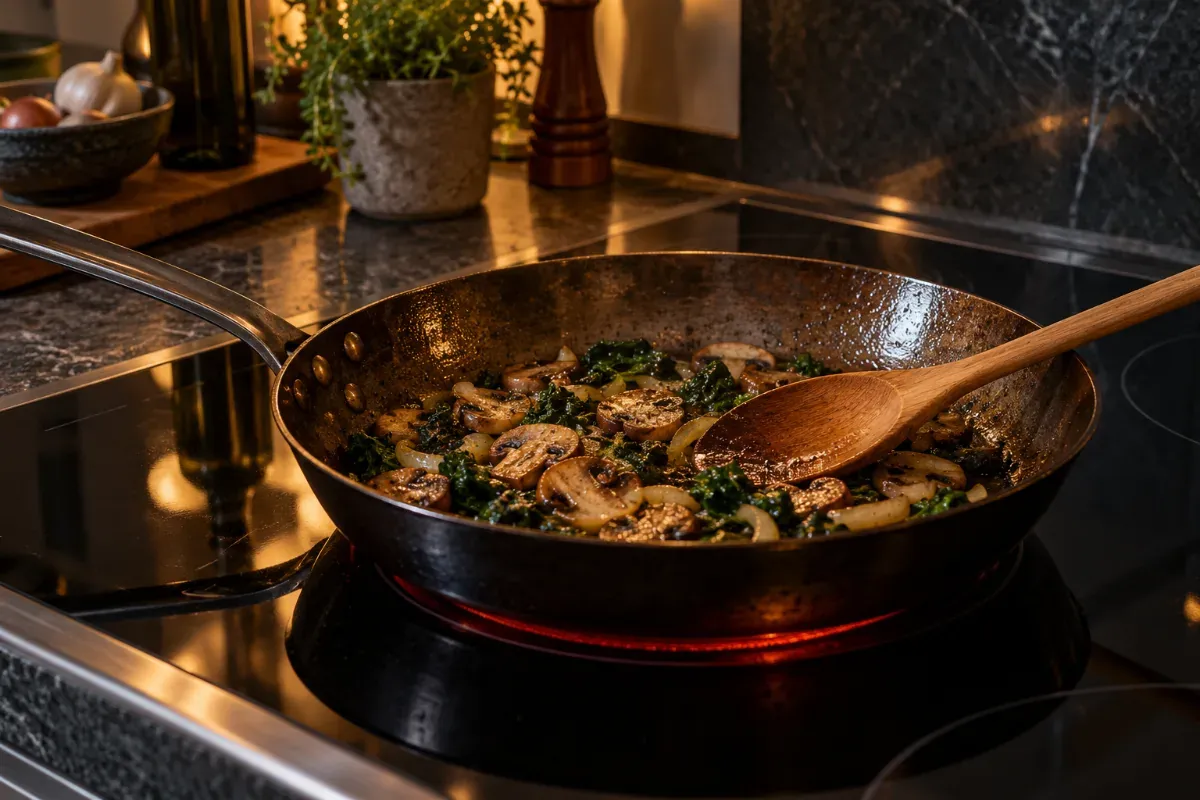
In testing, the pan heated evenly with no cold ring at the edges, and it browned a batch of vegetables uniformly on a ceramic burner. The base stayed smooth with no rough spots to threaten the glass. It is affordable, well-built, and sized to cover a standard large burner. For a cook who wants even heat and peace of mind about the surface, this is the one to buy. It balances performance and safety better than anything else we tested here.
The 12 inch base is a good match for the large burner on most glass cooktops, which matters because a pan much smaller than the heating element wastes energy and heats unevenly. Sizing the pan to the burner is one of the simplest ways to get even results on glass, and this pan lands in the range that fits the majority of home cooktops. If your main burner runs smaller, the same line comes in a 10 inch that follows the same flat, even-heating design.
Best budget glass-top pan
The Lodge 10 inch carbon steel skillet gives you a flat, reliable base for around $40 (verify). American-made and pre-seasoned, it heats evenly on glass once you build a little seasoning. The 10 inch size suits smaller burners and everyday cooking, and its medium weight lifts easily.
The finish is slightly rougher than premium pans, but the base is flat where it counts, and a flat base is what a glass top rewards. Keep the underside clean and free of burnt residue and it will not mark the surface. The bare steel handle gets hot, so use a cloth. For a budget-minded cook with a glass cooktop, this pan covers the essentials without fuss.
Best lightweight option
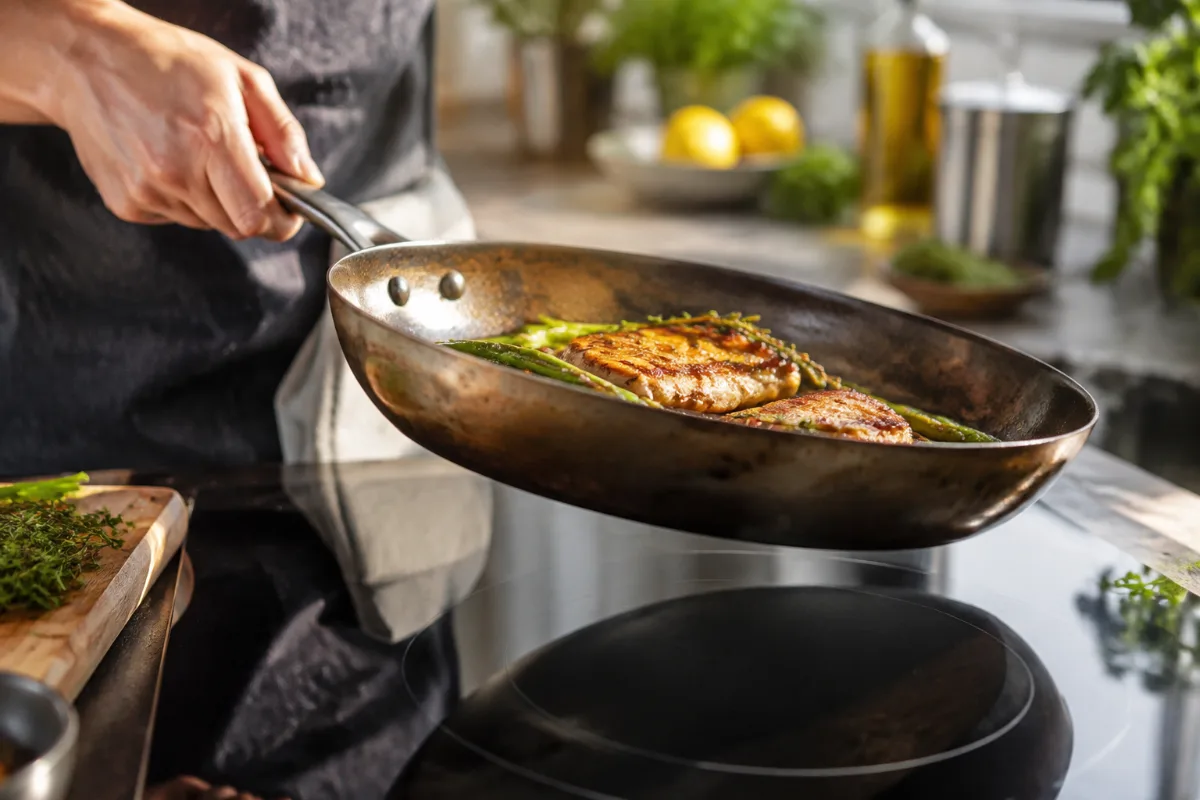
If easy lifting is your priority, the Made In 10 inch is the lightest pick here and the smoothest-based. A lighter pan is simpler to raise clear of the glass every time you move it, which is the surest way to avoid scratches and chips. The smooth, flat base also makes excellent contact for even heat.
This pan suits anyone who found cast iron too heavy for their cooktop or who has cracked a glass surface before and wants to reduce the risk. The refined surface seasons well and releases food cleanly, and the stainless handle stays cool. It costs more than the budget option, but for a cook who values control and a gentle touch on the glass, the lighter build is worth it. For older cooks or anyone with wrist strain, the ease of lifting a lighter pan every time can matter more than any spec on paper.
Protecting your glass top
The pan is only half the story. A few habits keep any cooktop looking new for years.
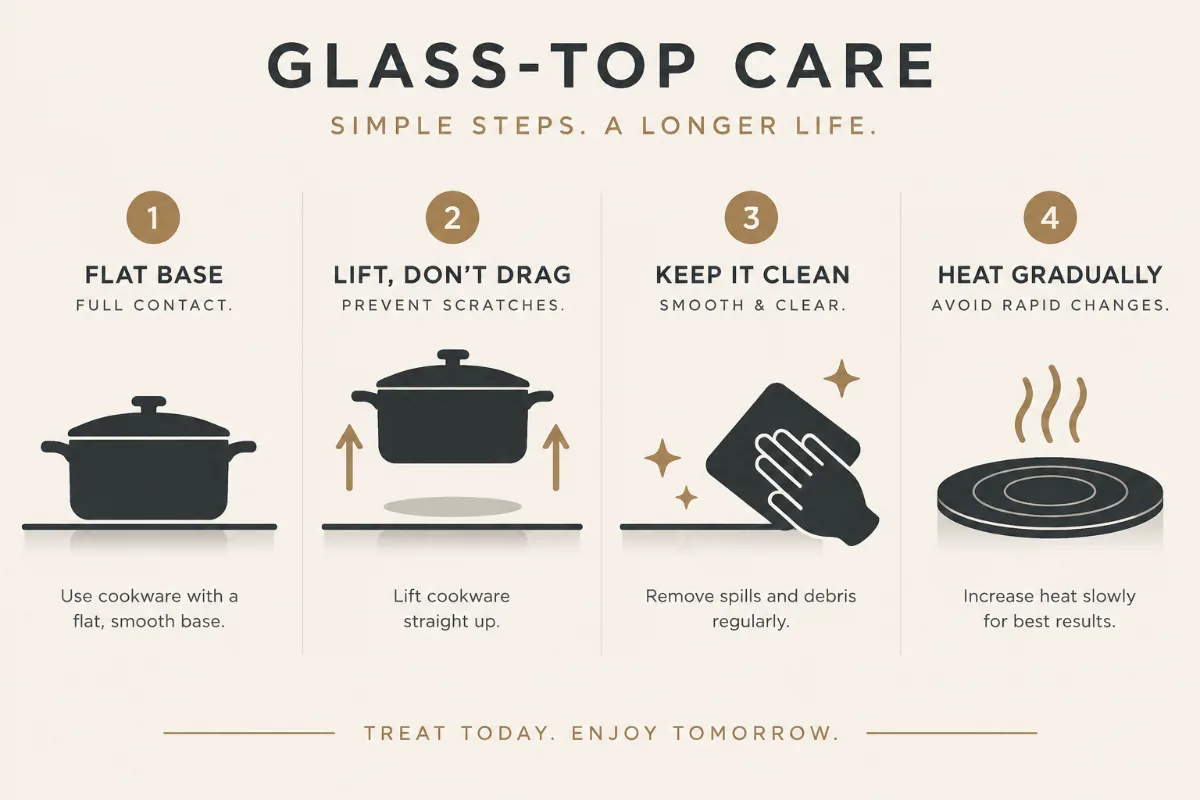
Lift, do not drag. Sliding a pan across glass is the most common cause of scratches, so raise it whenever you move it. Keep the base clean, because burnt-on food and grit are abrasive and will mark the surface under the pan’s weight. Heat gradually rather than blasting a cold pan to high, which is easier on both the glass and the pan. Set the pan down gently instead of dropping it. And match the pan to the burner size so heat does not spill past the base.
For the full routine, see our guide to using carbon steel on a glass top. Follow it and the material and the surface get along fine.
One quirk of glass and ceramic tops is worth knowing. These surfaces respond more slowly than gas, so when you turn the heat down, the burner and the pan stay hot for a while. Carbon steel already holds heat well, so the two together can overshoot if you are not paying attention. The fix is simple: reach for the control a little earlier than you would on gas, and slide the pan to a cool spot if you need to stop cooking fast. Once you learn the lag, the pair cooks beautifully.
Glass-top comparison
Here is how the tested picks compare on the features that matter for glass and ceramic cooktops.
| Pan | Base | Weight | Best for | Price |
|---|---|---|---|---|
| Merten and Storck | Flat | Medium | Best overall | $60 (verify) |
| Lodge 10 in | Flat | Medium | Budget | $40 (verify) |
| Made In 10 in | Flat, smooth | Lighter | Lightweight | $100+ (verify) |
| de Buyer Mineral B | Flat | Medium | Classic | $85 (verify) |
Our picks by need
To sum up: choose the Merten and Storck 12 inch for the best all-round mix of even heat, flat base, and value. Choose the Lodge 10 inch to spend the least while still getting a flat, dependable base. Choose the Made In 10 inch if a lighter pan you can lift with ease is your top concern.
Any bare carbon steel works on glass and ceramic, so the choice is about base flatness and weight, not compatibility. Match the pan to your burner, keep the base clean, and lift rather than drag. For sizing help across your kitchen, see our size guide, and browse options in the frying pan overview.
Frequently asked questions
Q: What is the best carbon steel pan for a glass-top stove?
Q: Will carbon steel damage a glass cooktop?
Q: Does carbon steel heat evenly on glass?
Q: Is carbon steel too heavy for a glass top?
Q: What size pan for a glass top?
The takeaway
A glass cooktop and carbon steel work well together when you pick a flat-based, mid-weight pan and handle it with care. The flat base drives even heat, the lighter build lowers the risk to the glass, and lifting instead of dragging does the rest. Choose the right pan and you get restaurant-quality searing on a surface that stays smooth and unmarked.