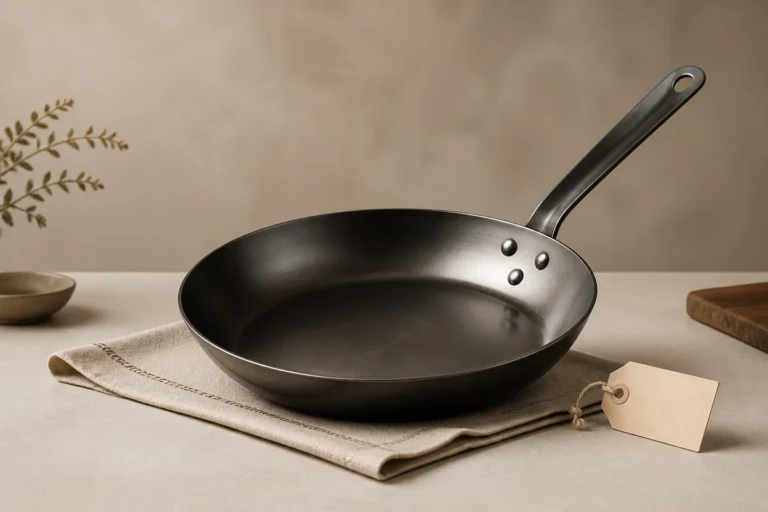
What Size Carbon Steel Pan Should You Buy?
By the Carbon Steel Pan test team · Last updated September 2026
For most kitchens, a carbon steel pan around 11 inches is the sweet spot. It cooks two to four portions without being too heavy to lift or toss. Keep one thing in mind: the number on the label is the rim, not the flat cooking surface, which sits noticeably smaller. Pick 10 inches for one or two people, 11 as an all-rounder, and 12 for families or batch cooking.
That single fact about rim versus cooking surface changes how most people shop, so it is worth understanding before you commit money. A “12-inch” pan can leave you with a flat base closer to nine inches, and that is the space you actually cook on. Get the surface number right and the size choice becomes easy.
Start with the number that matters
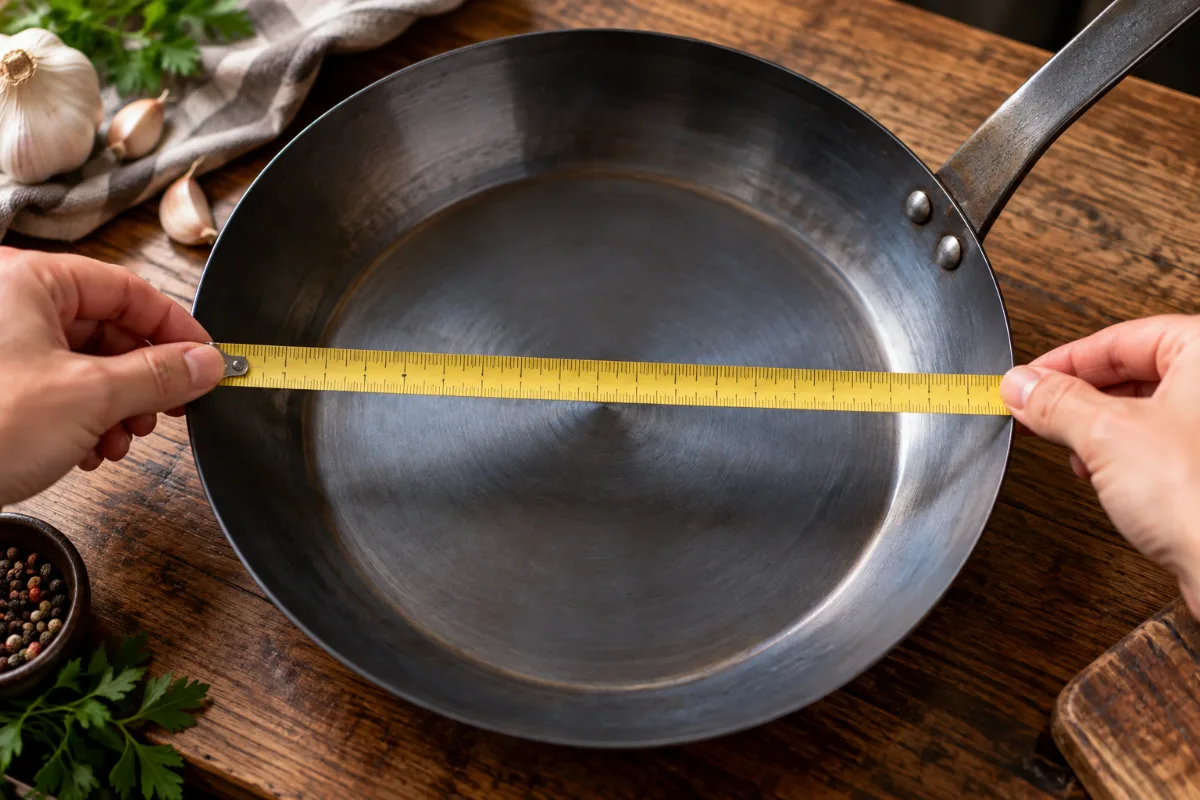
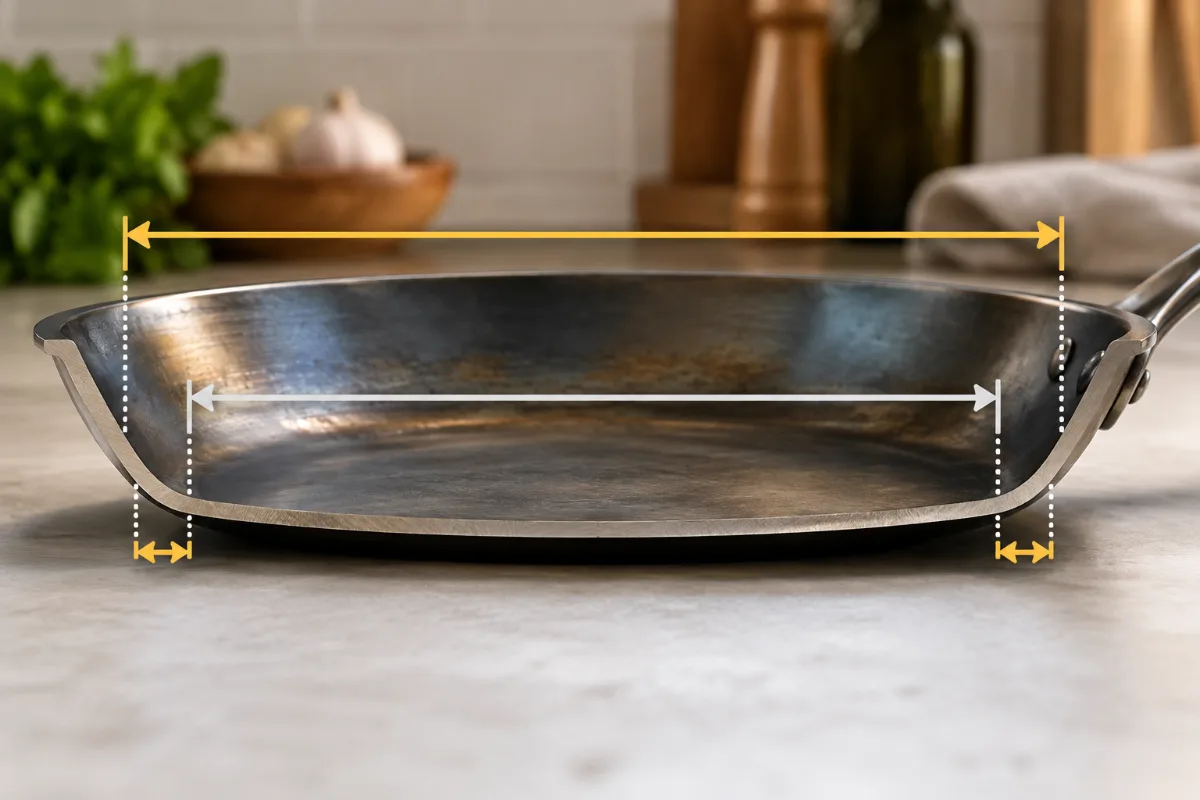
When a pan is labelled 12 inches, that measurement is taken across the top rim, from edge to edge. Carbon steel pans have sloped, flared walls, so the flat bottom where food sits is always smaller than the rim. The difference is not trivial. On a typical frying pan shape, you lose two to three inches between the rim and the base.
This is the number that decides whether four chicken thighs fit in one layer or steam in a crowded pile. So before you compare sizes, look for the cooking-surface diameter, not just the headline size. Good brands publish both. If a listing only gives the rim measurement, ask or measure the base yourself before deciding.
Why do makers flare the walls at all? The slope has a purpose. It gives you room to toss and turn food without it flying out, and it makes sliding an omelette or a fried egg onto a plate easy. A pan with straight, high walls holds more food but is harder to flip in and clumsy to pour from. The flared shape is a deliberate trade: you give up some flat area in return for a pan that is nicer to cook in. Knowing that, you stop resenting the gap and simply plan for it.
Once you think in cooking-surface terms, the rest of the choice falls into place around your household and your stove.
Rim size versus cooking surface, explained
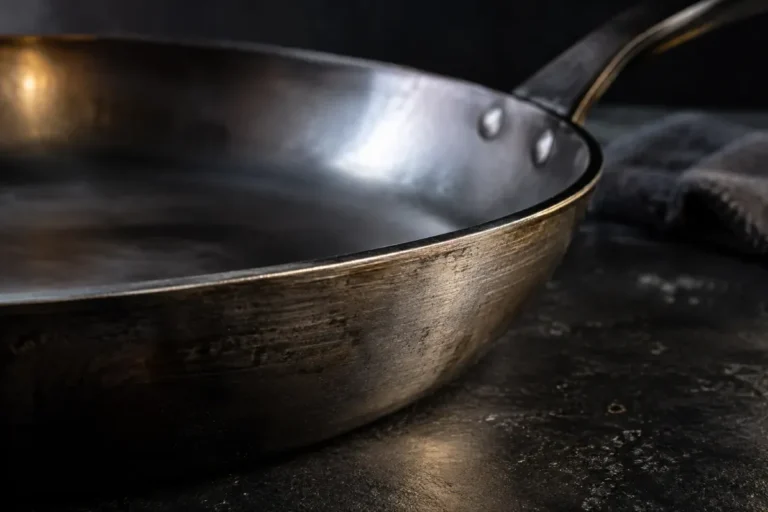
Picture a pan from the side. The base is flat, then the walls curve up and out. That flare makes the pan easy to toss and slide food out of, but it means the usable flat zone is a disc in the middle, not the full width you see from above.
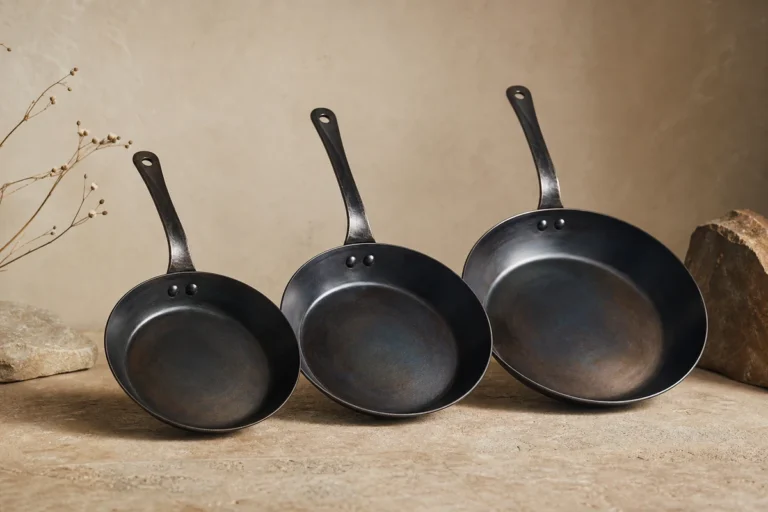
Here is what that looks like in practice. An 8-inch pan gives you roughly a 6-inch flat surface. A 10-inch pan lands near 7.5 inches of base. An 11-inch pan sits around 8.3 inches, and a 12-inch pan gives close to 9 inches (verify against the exact model you buy). Those base figures are what determine how much food browns properly at once.
The lesson is simple: size up your thinking by about two inches. If you want the searing room of a 9-inch flat surface, you are shopping for a 12-inch pan. This gap is covered in more detail in our piece on cooking surface versus pan size.
The gap also grows with the pan. A small 8-inch pan loses roughly two inches to the walls, but a large 12-inch pan can lose close to three, because the taller walls flare over a longer distance. So the bigger the pan, the more the label overstates the working space. This is another reason to trust the base measurement over the headline number when you are choosing between two sizes that seem close on paper.
Match size to your household
Now match that surface to how many people you feed.
Cooking for one or two most nights? A 10-inch pan is plenty. It browns two portions of protein, handles a solo stir-fry, and stays light in the hand. It is also easier to store and quicker to preheat.
Feeding a small family of three or four? An 11-inch pan is the natural all-rounder. It holds four eggs, a full pan of vegetables, or two large chops with room to move them. This is the size most people reach for first, and the one that covers the widest range of everyday cooking.
Think about your most-cooked dishes rather than the biggest meal you make once a year. If weeknight dinner is usually a protein and a vegetable for the household, size for that. The occasional large gathering can be handled by cooking in two batches, and batching often gives better browning than cramming everything into one oversized pan anyway. Buying a huge pan for a rare crowd usually means lifting a heavy pan every single day for a job it is too big to do well.
Cooking for four or more, or batch-prepping for the week? Step up to 12 inches. The extra flat space lets you brown a full batch of meat in one go instead of two, which saves time and gives better color because the pan stays hot. The trade-off is weight, which brings us to your stove and your arms.
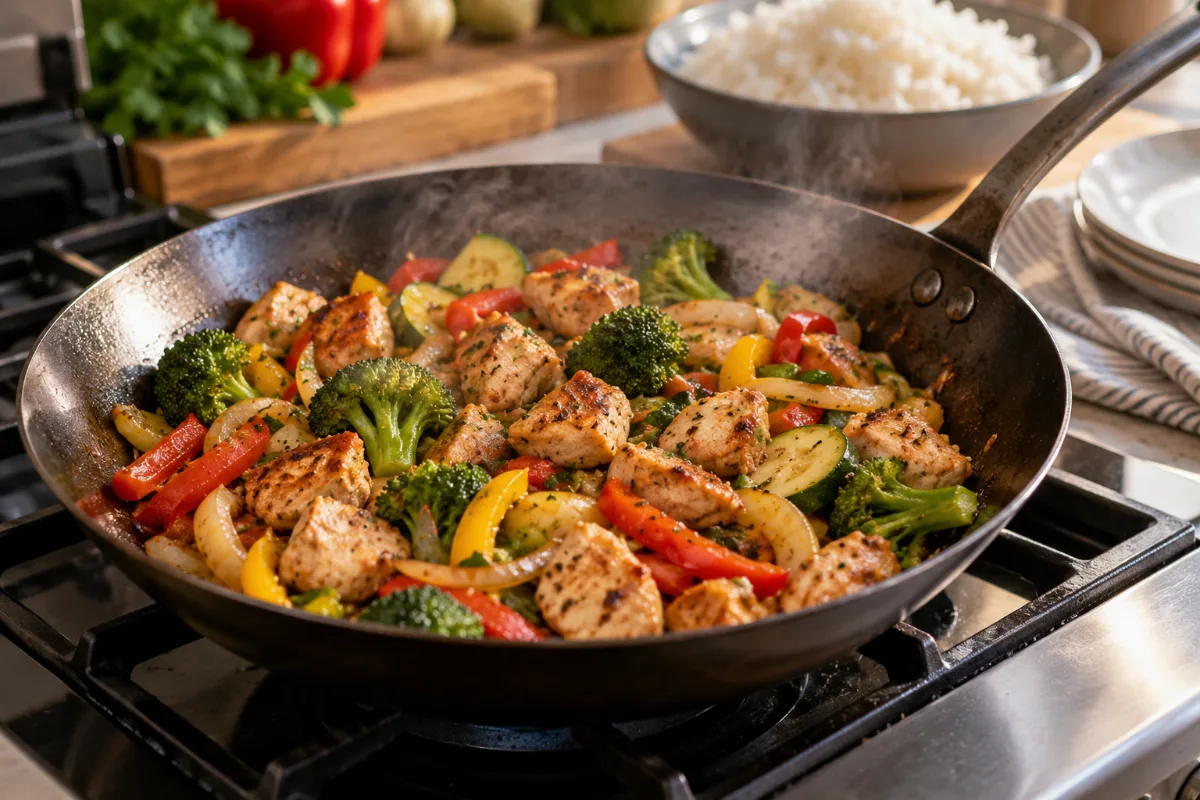
To make this concrete, think in terms of what one layer holds. A 10-inch base browns about two chicken breasts or two burger patties without crowding. An 11-inch base takes three, or a generous pile of vegetables that still has room to sear rather than steam. A 12-inch base fits four portions or a full pound and a half of ground meat spread thin enough to brown. The moment food overlaps or piles up, it releases water and steams, so the right size is really about keeping everything in a single layer for the dishes you cook most.
Match size to your stove and strength
A pan only works well if it fits your burner and your hands.
On the stove side, the flat base should roughly match the burner or induction zone. A 12-inch pan on a small back burner heats unevenly, with a hot center and cool edges. If your largest burner is modest, a 10 or 11-inch pan may actually cook more evenly than a big one. Since carbon steel does not spread heat far on its own, a burner that reaches most of the base is what gives you even cooking, so matching the two is more important than buying the biggest pan you can.
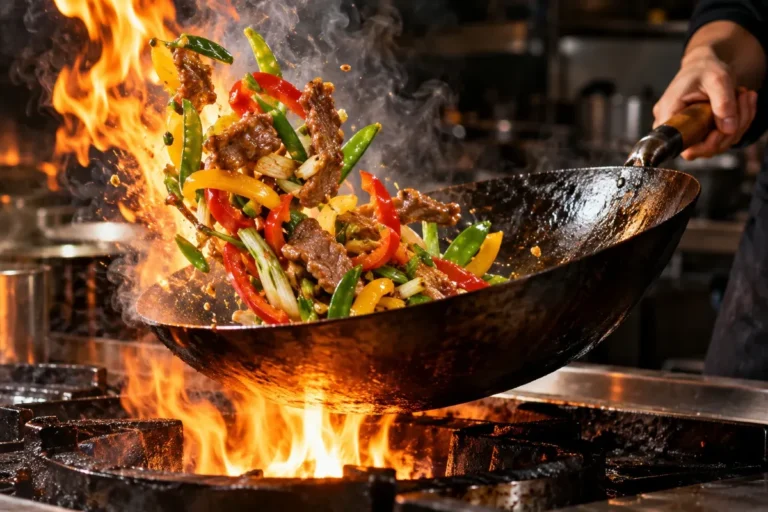
On the handling side, be realistic. Carbon steel is dense, and a full 12-inch pan loaded with food is heavy at the end of a long handle. If you toss vegetables, flip with a wrist motion, or have any wrist or shoulder strain, the lighter 10 or 11-inch pan is friendlier to use every day. There is no prize for owning a pan that sits in the cupboard because it is a chore to lift.
The weight sits at the end of a lever, which makes it feel heavier than the number on the scale suggests. A pan that feels fine when you lift it flat can strain your wrist when you tilt it to pour or hold it up to plate. If you can, pick the pan up in the shop and mime tilting it before you buy. And remember that thickness adds weight on top of size, so a thick 12-inch pan is a serious lift while a thinner one of the same width is more forgiving. Our carbon steel gauge and thickness guide explains how that choice interacts with size.
One pan or two?
Many cooks solve the size question by owning two pans rather than forcing one to do everything.
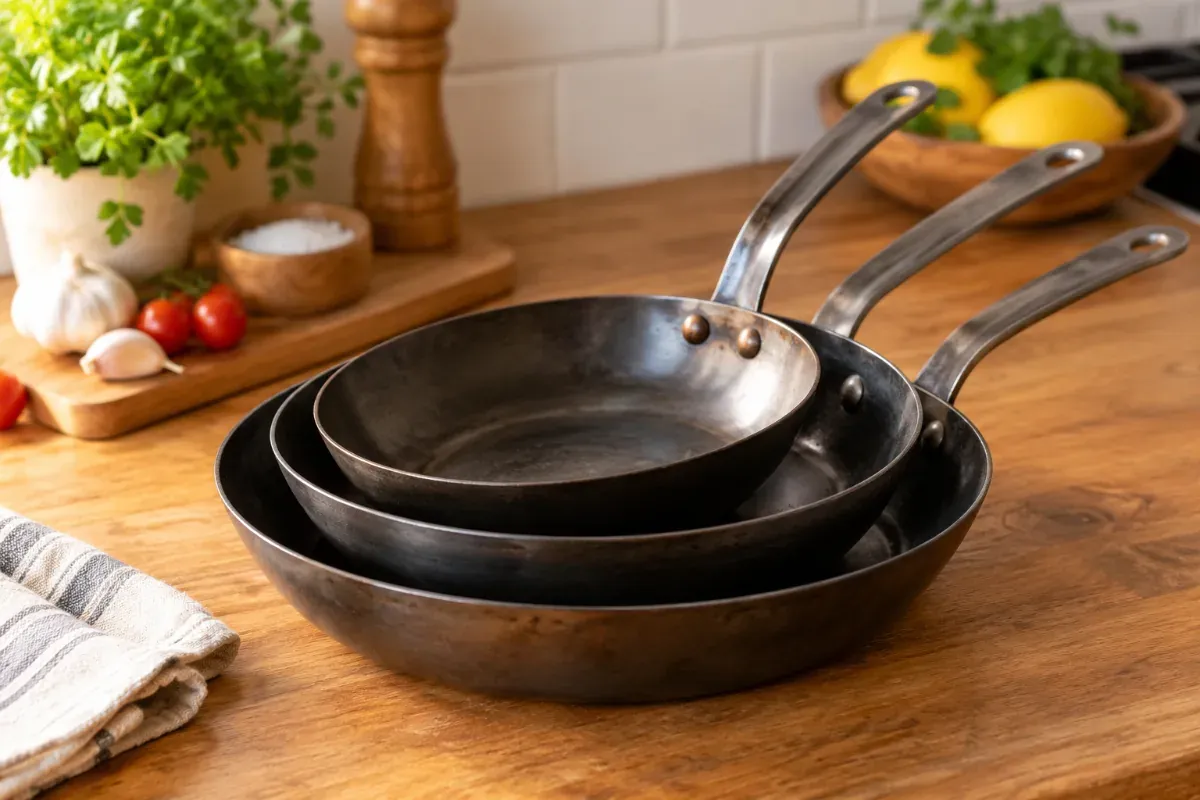
The common pairing is an 11-inch all-rounder for the bulk of your cooking plus a small 8 or 9-inch pan kept for eggs and omelettes. The small pan concentrates heat in a tight space, which makes eggs easier to control and gives them a clean edge. It also means you are not heating a big pan for a two-egg breakfast.
If you can only buy one to start, make it the 11-inch. It is the most versatile single pan for a mixed kitchen. Add the small egg pan later once you know how you cook. This two-pan setup covers almost everything without the strain of a single oversized pan.
The logic behind two pans is that no single size is ideal for both a two-egg breakfast and a family sear. A big pan wastes heat and energy on a small job and makes a lone egg slide around a wide space. A small pan cannot brown four chops. Splitting the work across two sizes means each dish gets a pan that fits it, and each pan preheats quickly because you are not oversizing for the task. Cooks who resist this often end up buying a third pan anyway, so starting with a sensible pair saves money in the long run.
Here is the size guide at a glance.
| Rim size | Approx cooking surface | Portions | Best for |
|---|---|---|---|
| 8 in | ~6 in (verify) | 1 | Eggs, one person |
| 10 in | ~7.5 in (verify) | 1–2 | Singles, couples |
| 11 in | ~8.3 in (verify) | 2–3 | All-rounder |
| 12 in | ~9 in (verify) | 3–4 | Families, batch cooking |
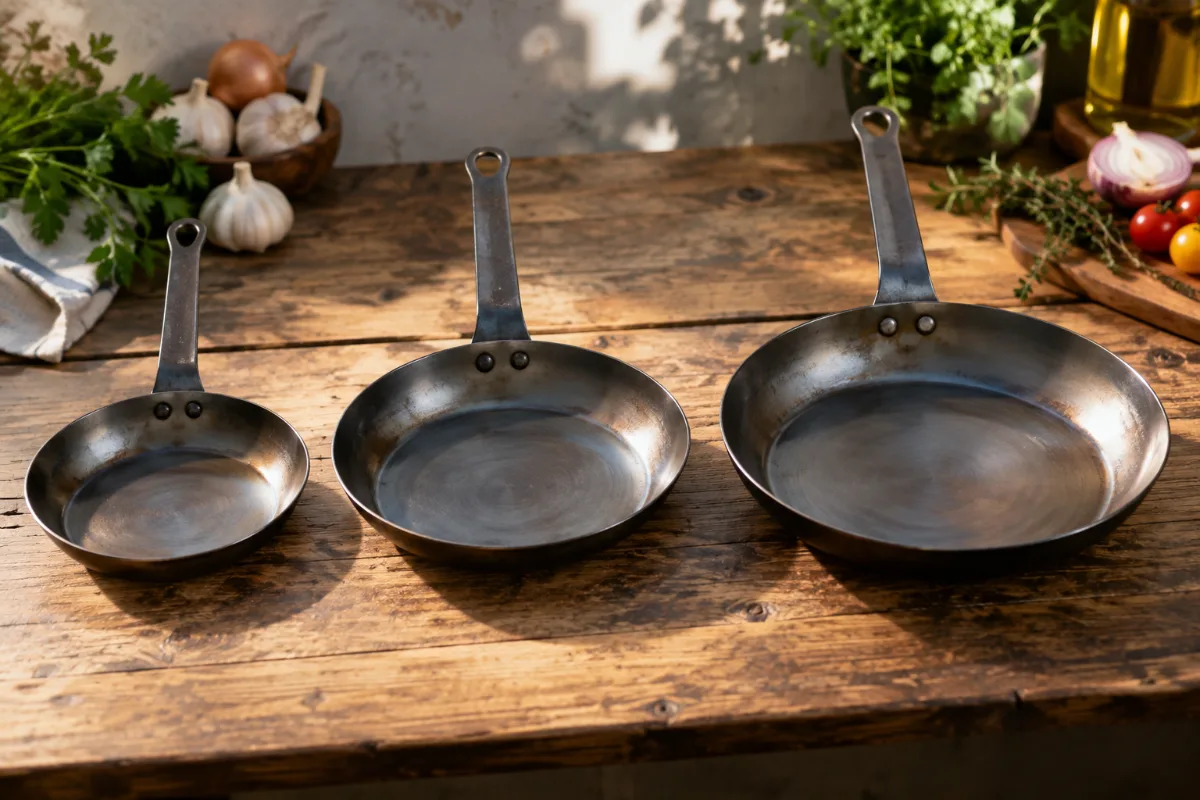
Quick answer: Our tested guide to what size carbon steel pan keeps it simple: master the technique, keep the surface seasoned, and match your heat to the food. The full method, the key facts and the mistakes to avoid are all below.
What Size Carbon Steel Pan: What Our Tests Found
Our team put what size carbon steel pan through repeated real cooking sessions to see what actually works. Below we break down the method, the facts that matter, and the common mistakes so you get reliable results the first time.
Our size recommendation
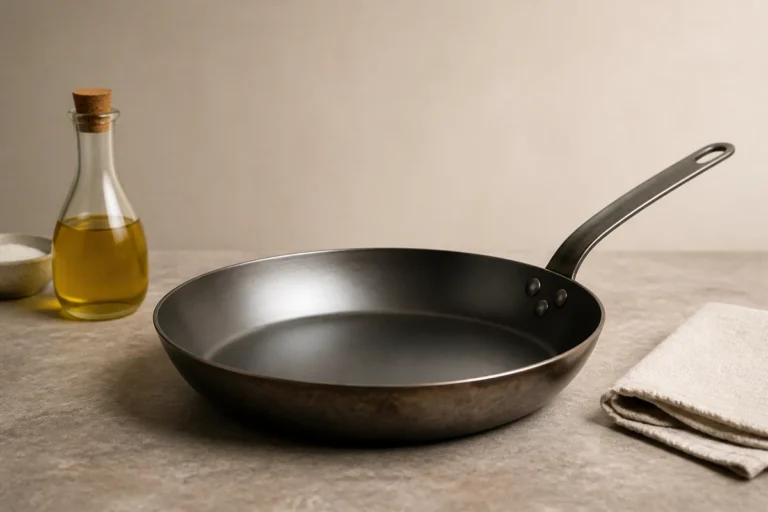
If you want one clear answer, buy the 11-inch pan. It gives a flat cooking surface around 8.3 inches (verify), feeds two to four people, fits most large burners, and stays light enough to handle without complaint. It is the size we reach for most in testing and the one that suits the widest range of cooks.
Choose the 10-inch instead if you cook mainly for yourself or a partner and value a lighter pan. Go up to 12 inches only if you regularly cook for a crowd or batch-prep and you have a burner and the arm strength to match. And if eggs are a daily habit, add a small pan alongside your main one.
One last tip before you buy: check the cooking-surface figure for the specific model, not the category. Two pans both labelled 11 inches can differ by half an inch of usable base depending on how steeply the walls flare. That half inch is the difference between three chops fitting or not. The rim number gets you in the right range, but the base number confirms the pan will do the job you have in mind.
For help matching a size to a specific style of cooking, see our carbon steel frying pans guide, and if this is your first pan, the best carbon steel pan for beginners narrows the field further.