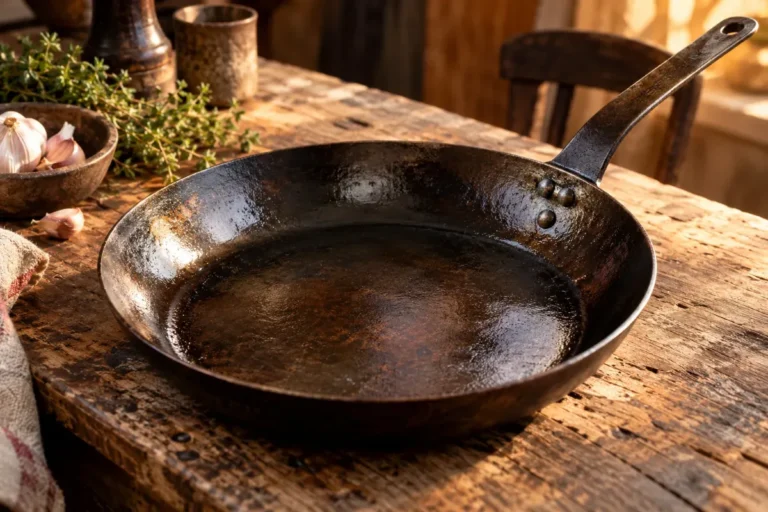
Riveted vs Welded Handles on Carbon Steel Pans
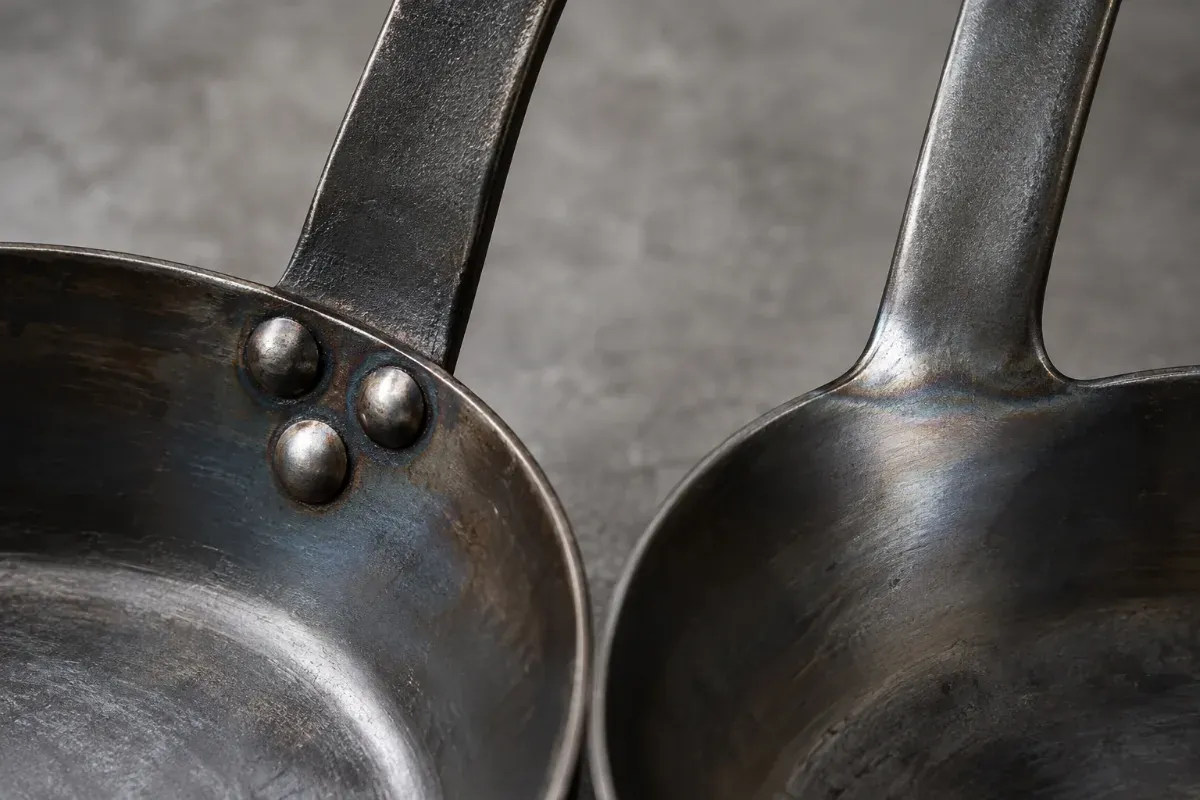
Riveted handles are bolted through the pan wall, leaving metal studs inside the cooking surface. Welded handles are fused to the outside, leaving the interior completely smooth. Welded is better to cook in and clean, costs more, and is harder to repair. Almost nobody explains this before you buy, and it is one of the few construction differences you will notice daily.
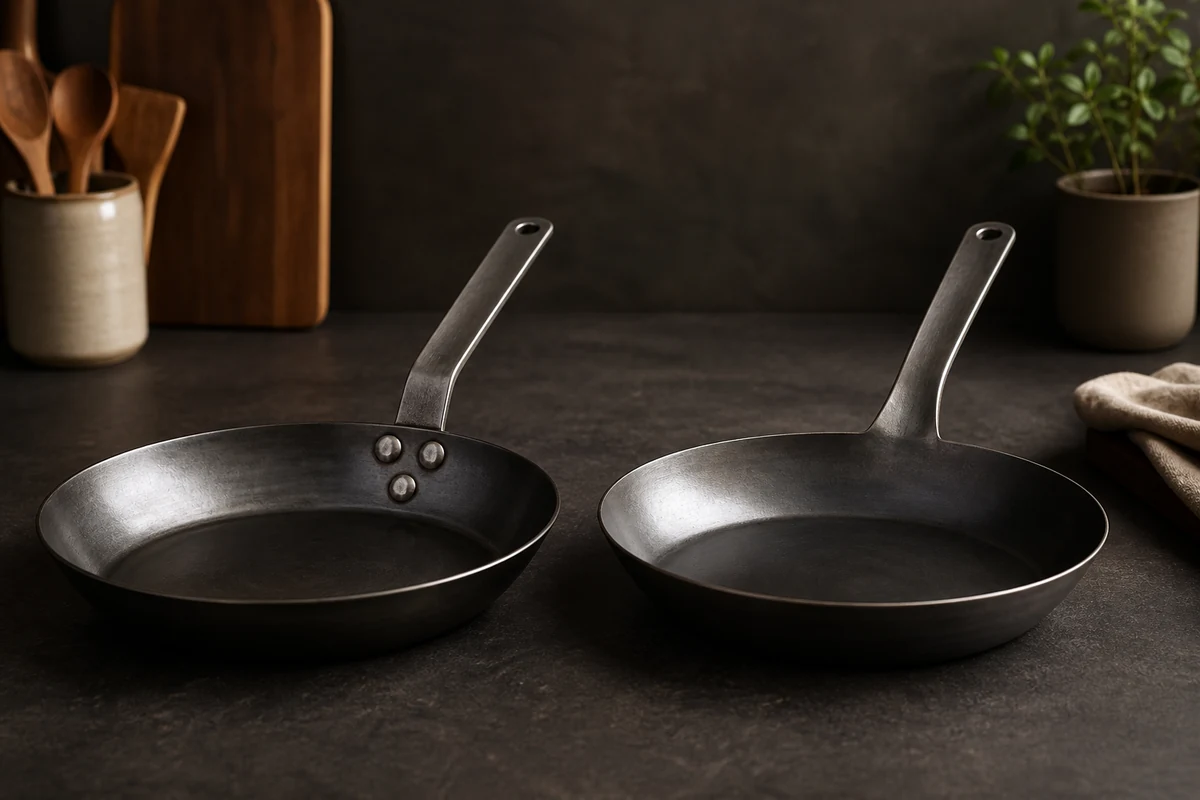
Quick answer: Our tested guide to riveted vs welded handles carbon steel keeps it simple: master the technique, keep the surface seasoned, and match your heat to the food. The full method, the key facts and the mistakes to avoid are all below.
Riveted Vs Welded Handles Carbon Steel: What Our Tests Found
Our team put riveted vs welded handles carbon steel through repeated real cooking sessions to see what actually works. Below we break down the method, the facts that matter, and the common mistakes so you get reliable results the first time.
What rivets actually do to a pan
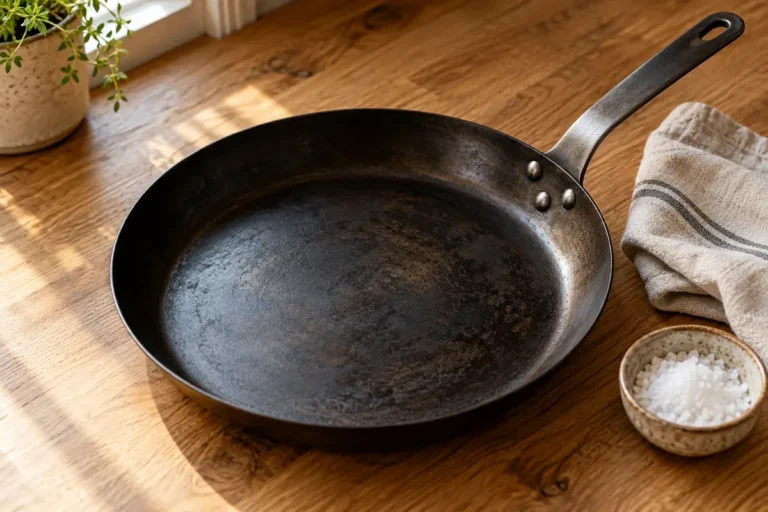
Two or three metal studs sit proud of the cooking surface, usually where the handle meets the wall. In practice that means:
- Oil and food collect around them. A spatula cannot get flush against a rivet head, so residue builds up in a ring that needs deliberate scrubbing.
- They interrupt a flat sweep. Sliding an omelette out or scraping fond off the base means working around three bumps.
- They can loosen. Years of thermal cycling work rivets slightly loose. It is not common and it is repairable, but it is the usual way a riveted pan eventually fails.
Rivets are not a defect. They are a cheaper, thoroughly proven joint, and a triple-riveted handle is genuinely strong. They are simply a compromise nobody mentions in the marketing.
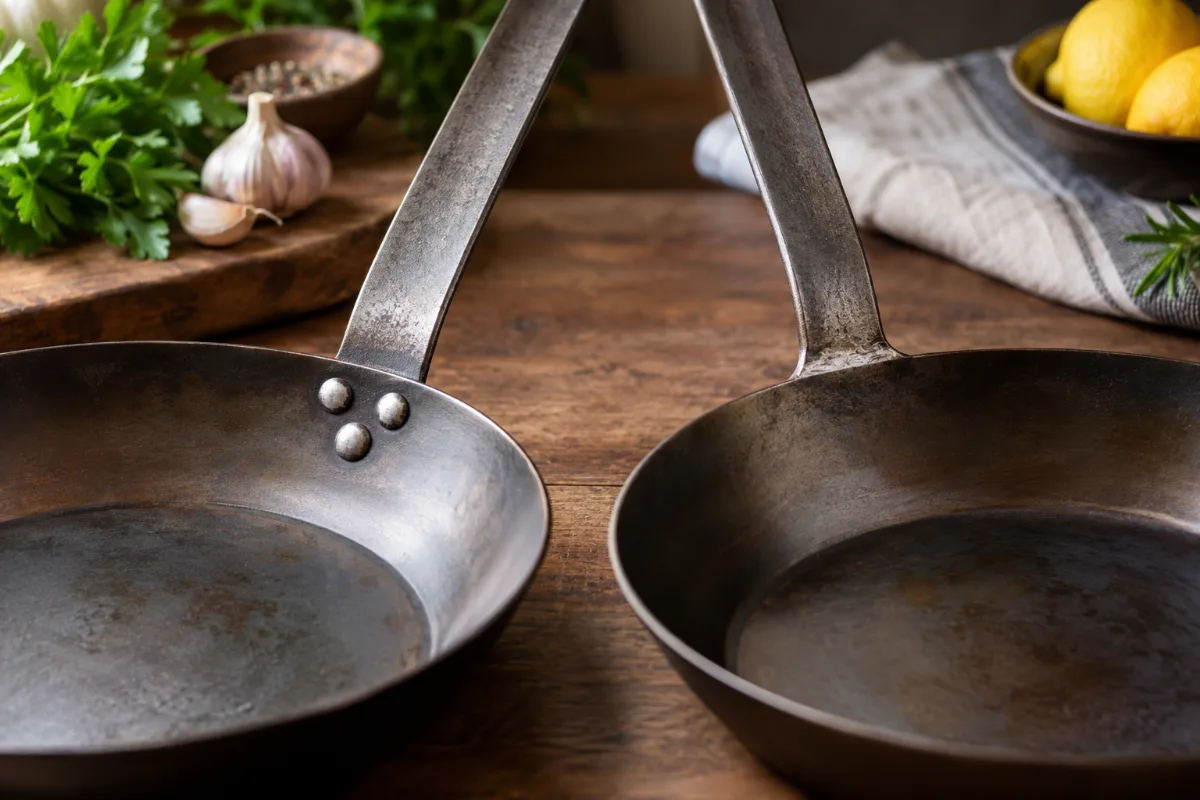
What welding gives you
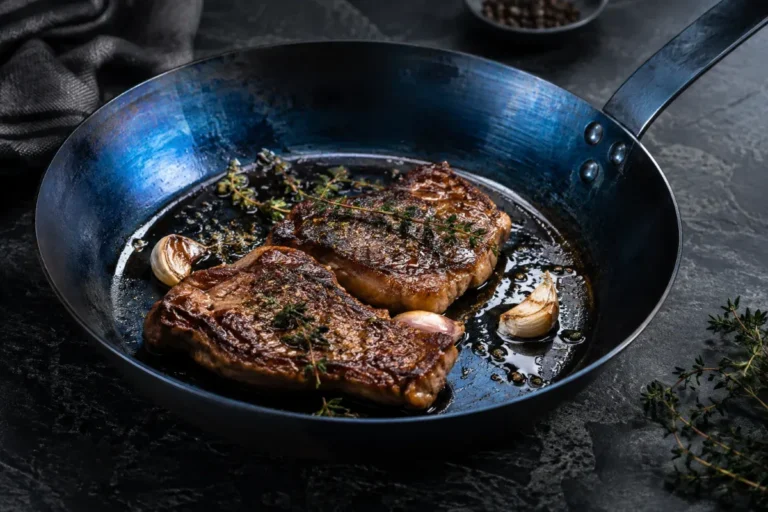
The handle is fused to the pan exterior. There is nothing inside the cooking surface at all — an uninterrupted curve from base to rim. Matfer Bourgeat is the best-known example, and it is the reason the pan is a fixture in professional kitchens where speed of cleaning matters.
- Wipes clean in one pass. No rings, no traps.
- Nothing to loosen. A welded joint has no fastener to work free.
- Slightly better seasoning coverage. Seasoning builds evenly with no shadowed areas around hardware.
The trade-offs: welded pans cost more, tend to be heavier, and if the weld ever does fail it is a workshop repair rather than a new rivet.
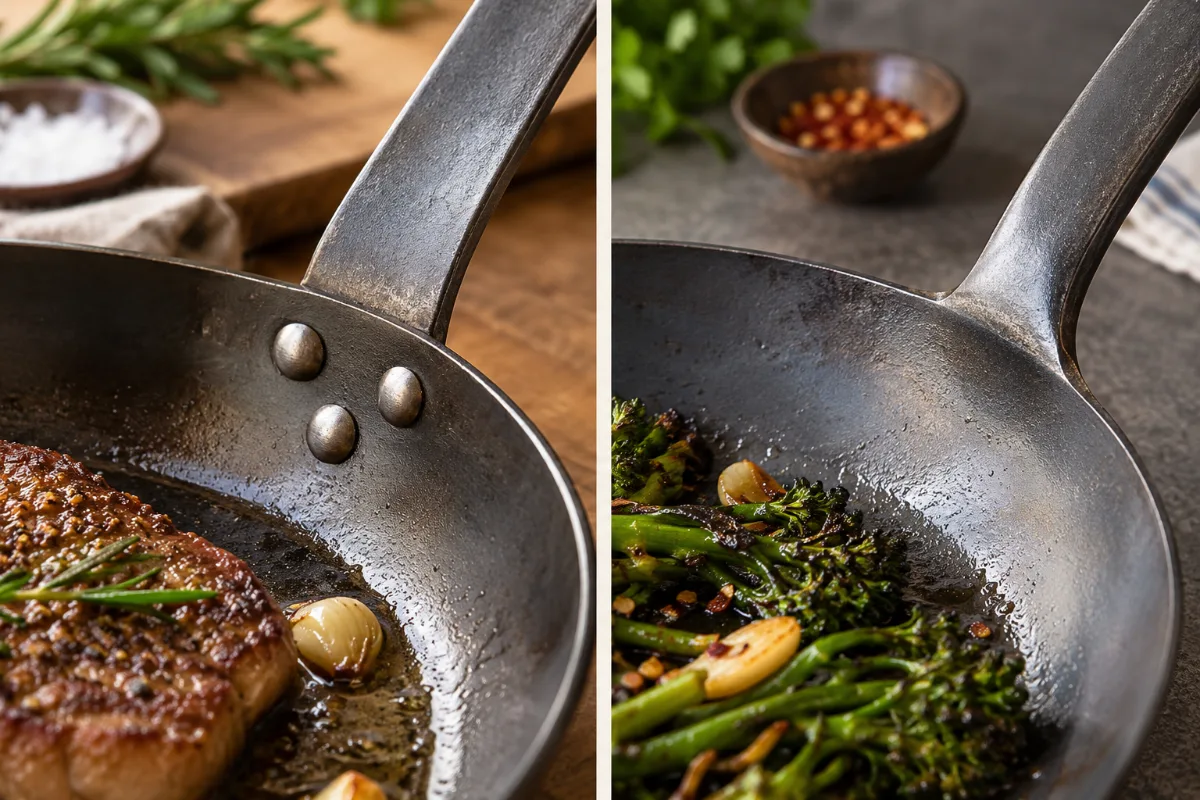
Two rivets or three?
If you are buying riveted — which most people will, since it covers the majority of the market — three rivets distribute load better than two and are meaningfully less likely to work loose. Merten & Storck triple-rivet their pans at around $60, which is unusual at that price.
How to choose
| You care most about | Choose |
|---|---|
| Easiest cleaning | Welded |
| Lowest price | Riveted |
| Lightest weight | Riveted |
| Longest service life | Welded |
| Best value compromise | Triple-riveted |
See the frying pan comparison for the handle construction of every pan we cover.
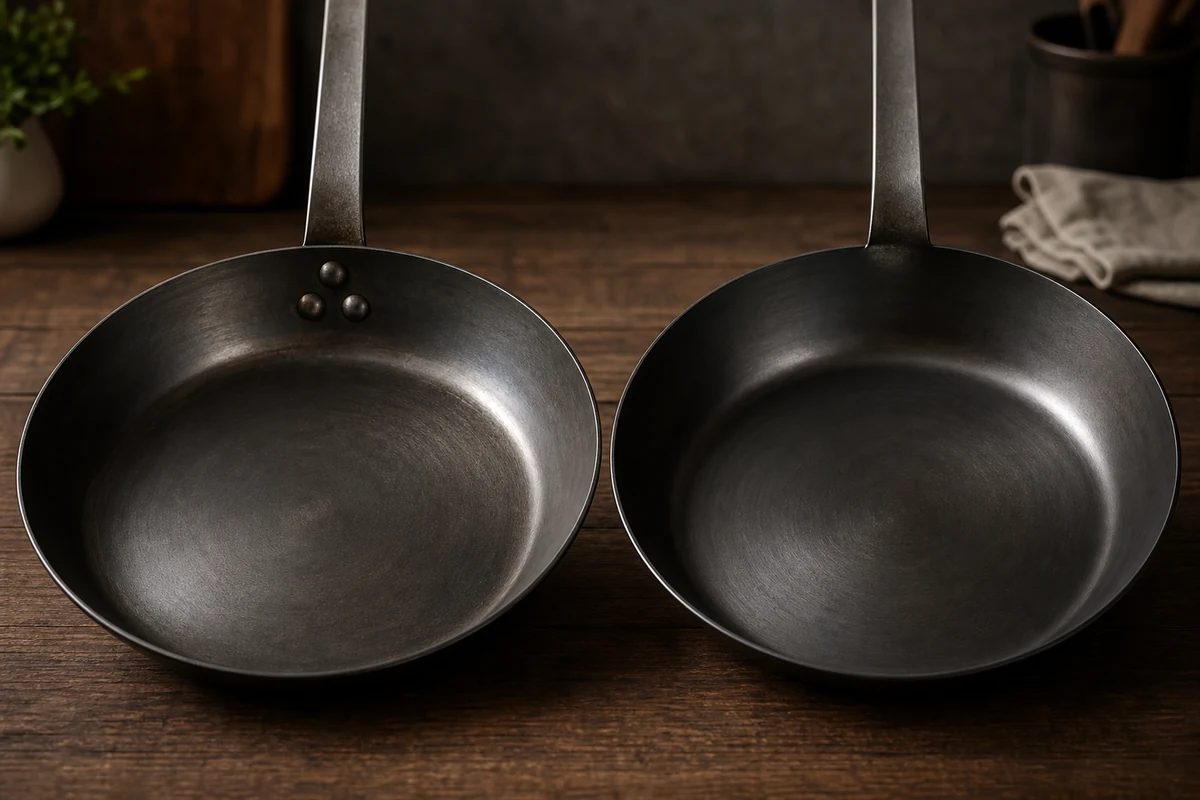
How each joint is actually made
The manufacturing difference explains the price difference.
Riveting punches holes through the pan wall, passes metal studs through, and hammers both ends flat. It takes seconds, needs no skilled labour, and produces a joint that holds under enormous force. The heads on the inside are the unavoidable by-product.
Welding fuses the handle to the outside of the pan with heat, then grinds and finishes the joint so it looks intentional. It takes longer, requires more skill, and leaves the interior untouched. That extra labour is most of why the Matfer pans cost more than similarly sized competitors.
What rivets do in daily use
Three small things, none fatal, all noticeable once you know to look.
Oil and fond collect in the ring around each head, which is why a riveted pan needs a deliberate wipe around the rivets rather than a single sweep. A spatula cannot sit flush across that section of the base, so scraping fond is slightly less clean. And over years of heat cycling, rivets can loosen, which is the most common way a riveted pan eventually fails.
None of that ruins cooking. It is the difference between a pan that cleans in one pass and one that cleans in two.
Two rivets against three
If you are buying riveted, and most people will, the count matters more than the marketing does.
Two rivets carry the load on a single line, which means leverage from a heavy loaded pan concentrates on two points. Three rivets in a triangle distribute that force and resist twisting. The Merten & Storck uses three at $59.99, which is unusual at that price and one reason it is our value pick.
The handle materials, separately
Joint type and handle material are different decisions that often get conflated.
| Handle | Joint | Oven safe | Stays cool |
|---|---|---|---|
| Wood | Riveted or socket | No | Yes |
| Steel, riveted | Riveted | Yes | No |
| Cast stainless | Riveted | Yes | Partly |
| Iron | Riveted | Yes | No |
| Welded steel | Welded | Yes | No |
| Metal with sleeve | Riveted | Sleeve off | Sleeve on |
A welded pan is always all-metal, so it always goes in the oven and always gets hot. That is a package deal, not two separate features.
Which to buy, plainly
Buy welded if you cook daily, clean fast, and intend to keep the pan for decades. The smooth interior is a small pleasure that compounds over thousands of washes.
Buy triple-riveted if you want most of that durability for roughly half the money. Buy two-riveted if the price is right and you accept it is the least robust of the three.
One caveat on the welded pans we list: both are Matfer Bourgeat, which carries an open safety question covered in our recall explainer. If that rules them out for you, the best riveted alternative is the de Buyer MINERAL B Pro with its cast stainless handle.
The awkward answer on welded pans
If this article has sold you on rivet-free, the range narrows fast. The only welded pans we list are both Matfer Bourgeat, $107 for the 11 inch and $212 for the 15.5 inch, and both are covered by a recall we document in full rather than skip past. We earn commission on those two pages, which is precisely why we say it here. Riveted is where the safe money sits: the Merten & Storck 12 inch is triple-riveted at $59.99, and the de Buyer MINERAL B Pro at $99.95 pairs rivets with a cast stainless handle that stays cool.