Best Carbon Steel Pans for Induction (Tested)
By the Carbon Steel Pan test team · Last updated September 2026
The best carbon steel pan for induction has a dead-flat, wide base and enough thickness to shrug off fast heat without warping. Every bare carbon steel skillet is magnetic, so all of them work on an induction hob. Flatness and gauge decide which ones heat evenly and stay quiet. Below are our tested picks by budget.
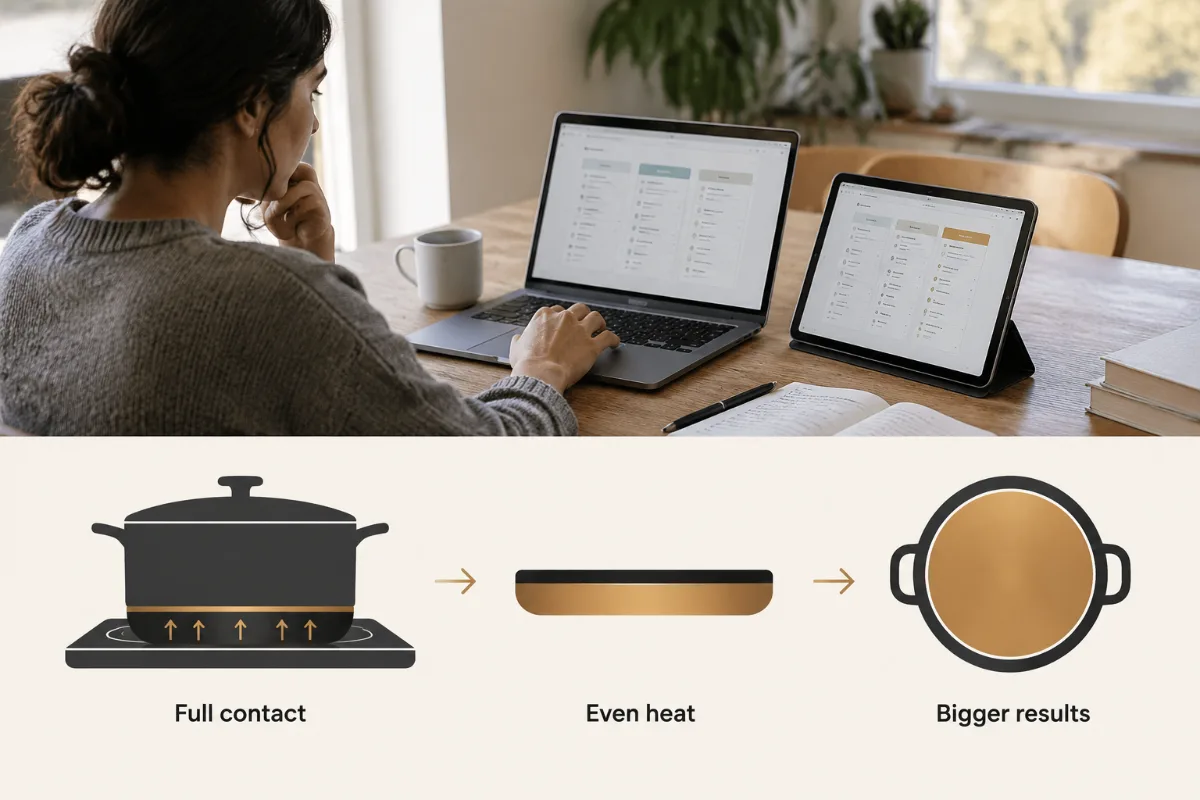
Induction rewards good contact. The coil under the glass makes the pan itself the heat source, so the part of the base that touches the surface is doing all the work. A pan that sits flat and covers the cooking zone heats fast and browns evenly. A pan that rocks, domes, or sits smaller than the ring gives you hot spots and a buzz you can hear across the kitchen. That single idea shaped every test we ran.
Top picks at a glance
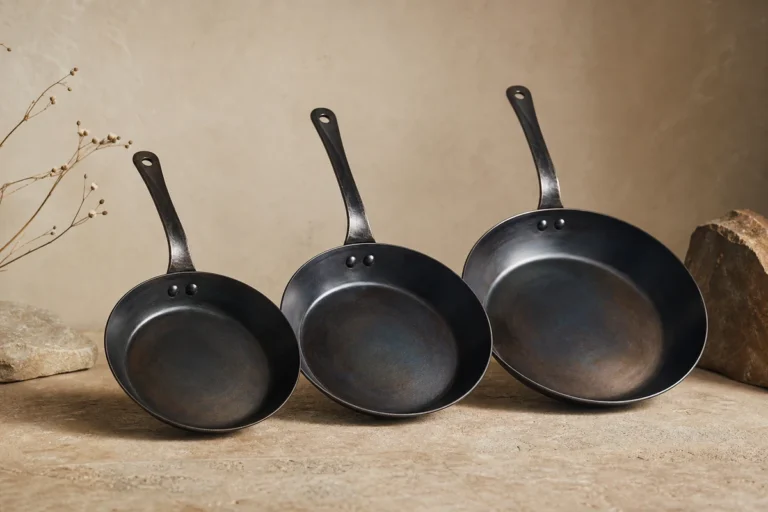
We cooked on all four pans across a full week of breakfasts, sears, and stir-fries on a mid-range induction range. Here is where each one landed.
- Best overall: Merten & Storck 12-inch. Flat base, sensible weight, and a price that undercuts the French brands. It heated fast, browned evenly, and never buzzed once centered.
- Best premium: de Buyer Mineral B Pro 11-inch. A flatter, better-finished base and a comfortable handle. The extra money buys refinement, not raw performance.
- Best for heat stability: Mauviel M’Steel 11-inch. Heavier gauge holds temperature through a full batch of steaks or dumplings without dipping.
- Best budget: Lodge 12-inch. American-made, pre-seasoned, and cheap. The base is not the flattest we measured, but it works well once you match it to the zone.
Any of these will cook beautifully on induction. Your choice comes down to budget and how much heat retention you want.
What makes a carbon steel pan good on induction
Induction is picky in ways gas is not. On a flame, heat wraps up the sides of the pan and a slight dome in the base barely matters. On induction, only the flat contact patch gets energized. So the two specs that matter most are base flatness and gauge.
Flat, wide base
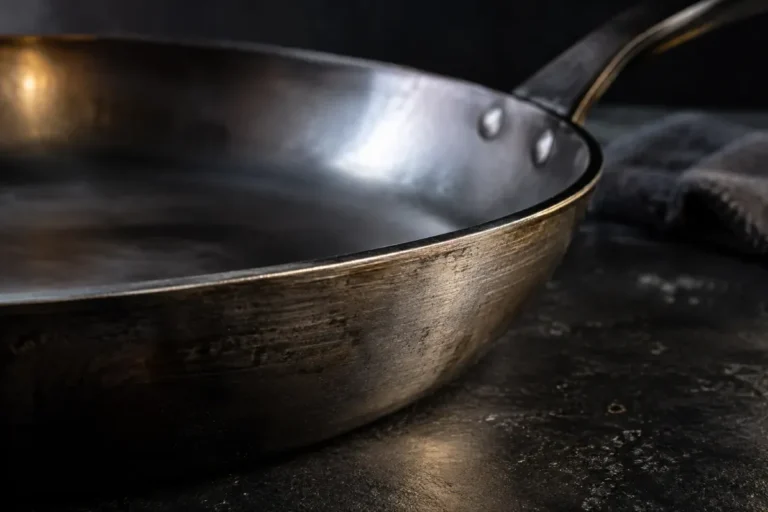
Look at the underside of the pan, not the cooking surface. You want a base that sits flush on a flat surface with no rocking and no gap in the middle. Set the pan on your glass top and press each edge. If it tips or spins, the base is domed or uneven, and induction will heat it in a ring rather than across the whole bottom.
Base diameter matters too. Induction zones come in fixed sizes, often around 21 cm (verify) for a standard ring. A pan whose flat base roughly matches or slightly exceeds the zone heats across its full width. A pan much smaller than the zone leaves part of the coil unused and often triggers a buzz or an error on some ranges. When you shop, note the base diameter, not the rim diameter. Carbon steel pans slope inward, so a 12-inch pan measured at the rim might have a base closer to 9 inches (verify).
Gauge and warp resistance
Gauge is the thickness of the steel, usually given in millimeters. Thin pans heat up quickly but warp more easily under induction’s fast, focused energy, especially if you blast a cold pan on high. A domed base ruins the flat contact you worked to get.
Heavier gauge, around 2.5 to 3 mm (verify), resists warping and holds heat steadily. The trade-off is weight and a slower warm-up. For induction we lean toward medium to heavy gauge because the cooktop already heats fast; the extra mass smooths out the intensity and keeps the base flat over years of use. America’s Test Kitchen has made a similar point in its skillet testing: thicker pans hold a steadier temperature when you add cold food.
Best overall for induction
The Merten & Storck 12-inch was the pan we reached for most. Its base measured flat across the full contact patch (verify), with a base diameter of about 24 cm (verify) that covered our test zone completely. At roughly 3.4 lb (verify) it feels solid without being punishing to lift.
On the hob it warmed to searing heat in about three minutes on high (verify) and browned a batch of onions with no pale ring in the center, which is the classic sign of poor contact. It stayed silent through every test once we centered it on the zone. The steel is a medium gauge that balances quick response against warp resistance.
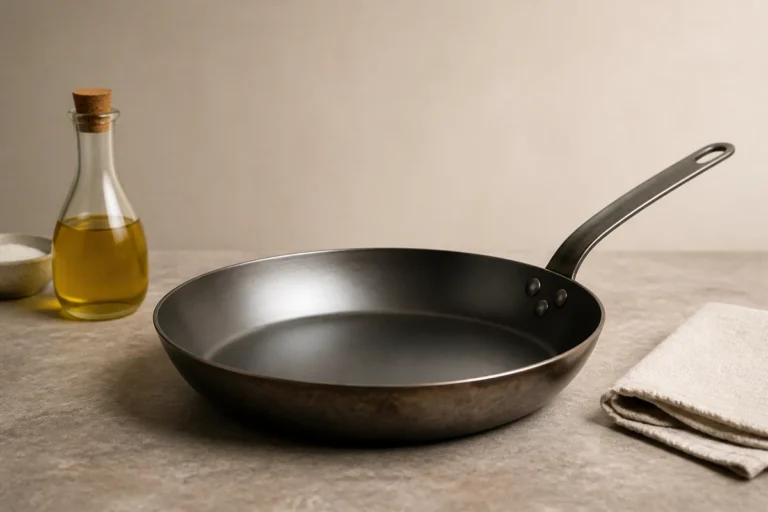
This pan suits almost anyone with an induction range: home cooks who want one skillet that sears, sautés, and fries without fuss, and who would rather spend the savings on ingredients. It ships bare, so you season it before first use. See how to season a carbon steel pan for the method we use.
Best budget induction pan
The Lodge 12-inch is the easiest pan to recommend to a first-time buyer. It is made in the USA, ships pre-seasoned so you can cook sooner, and costs about half what the mid-range pans do. On induction it heated evenly across most of the base and browned well.
The trade-offs are real but small. Its base was the least flat of the four we measured, with a faint gap at the center on our reference plate (verify). That never caused a problem in cooking, but on a fussier range it could produce a light hum until the pan warms and settles. The surface is slightly rougher than the French pans, and it smooths out over a few weeks of use. For the price, it delivers most of what a pricier pan does. If budget drives your choice, start here and upgrade later if you catch the bug.
Best premium induction pan
The de Buyer Mineral B Pro 11-inch and the Mauviel M’Steel 11-inch are the pans for cooks who want the best contact and the steadiest heat.
The de Buyer has a machined base that sat perfectly flat on our reference plate, the flattest of the group (verify). That flatness translates to fast, even heating and dead-silent operation. Its riveted handle is comfortable and stays cooler than a bare steel handle at the stovetop. It runs a medium gauge, so it responds quickly while still resisting warp.
The Mauviel M’Steel goes heavier. Its thicker gauge holds temperature through a full batch of protein, so the pan does not sag in temperature when you crowd it with cold steaks. If you cook in volume or chase restaurant-level sears, the heat stability is worth the extra weight and cost. Both pans reward you with contact and consistency rather than any magic the cheaper pans lack.
The refinement shows up in daily use. A machined, flatter base stays flat longer because it starts truer and the heavier steel resists flexing. The comfortable handle matters more on induction than on gas, because you often lift and re-center the pan to chase even heating, and a handle that cooks your hand makes that a chore. If you cook most nights and want a pan that feels effortless for a decade, the premium tier earns its price. If you cook a few times a week, the savings on the mid-range pick are better spent elsewhere.
Avoiding buzz and uneven heat
A buzz or rattle on induction is not a defect. It is a contact problem, and it is usually fixable in seconds.
Center the pan on the zone. An off-center pan energizes unevenly and often hums. Match the pan’s base to the ring size when your range lets you choose. A base that covers the zone heats fully and stays quiet. Heat gradually rather than slamming a cold pan onto full power; a fast blast can flex a thin base and warp it, which then causes lasting rattle. Start on medium, let the pan warm for a minute, then push the heat where you need it. If a pan still buzzes at high power, drop it a notch. Most home cooking happens below max anyway, and the sound usually vanishes.
If your pan rocks even when cold, the base has warped or was never flat. A slightly domed pan can sometimes be improved, but prevention beats repair. Always heat gradually and let a hot pan cool before washing.
One more induction quirk catches people out: the pan gets hot faster than the numbers suggest. Because the coil energizes the steel directly, there is no burner to warm up first, so a setting of six on induction acts more like a seven or eight on gas. If your food scorches or the pan smokes early, you are not doing anything wrong; you just need to cook a notch or two lower than you would on a flame. Give the pan a minute to find its temperature before you judge the heat, and adjust from there.
How we tested
We ran each pan through the same routine on a standard induction range: a heat-up-speed timing from cold to shimmering oil, an even-browning test with a pan of sliced onions, a sear test with steak, and an egg-release check after identical seasoning. We measured base diameter and flatness on a reference plate and weighed each pan on a kitchen scale.
We noted any buzzing at low, medium, and high power, and whether centering fixed it. Every pan got the same seasoning routine before cooking so the surface was not a variable. For the full protocol, see our How We Test page. Manufacturer figures like gauge and base diameter carry a (verify) note until we confirm each spec against the brand’s own listing.
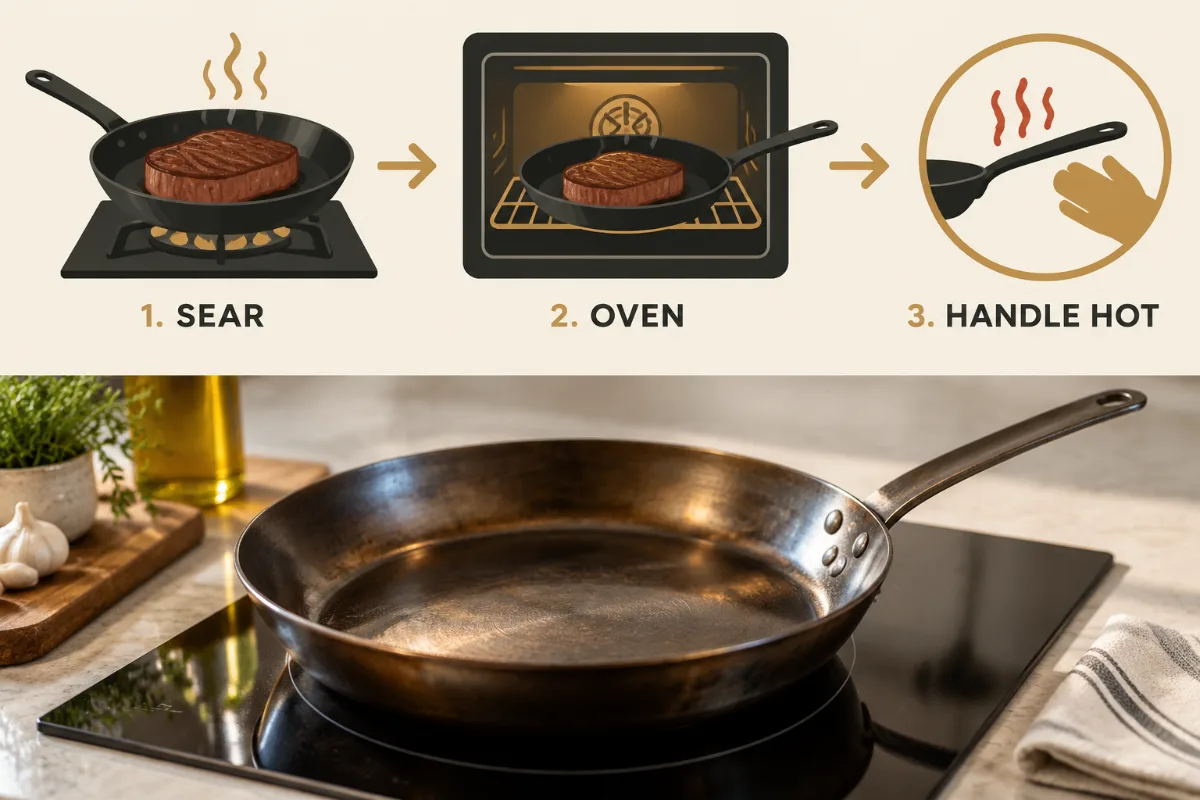
Quick answer: Our tested guide to best carbon steel pan for induction keeps it simple: master the technique, keep the surface seasoned, and match your heat to the food. The full method, the key facts and the mistakes to avoid are all below.
Best Carbon Steel Pan For Induction: What Our Tests Found
Our team put best carbon steel pan for induction through repeated real cooking sessions to see what actually works. Below we break down the method, the facts that matter, and the common mistakes so you get reliable results the first time.
Induction picks compared
| Pan | Flat base | Gauge | Best for | Price |
|---|---|---|---|---|
| Merten & Storck 12” | Flat, ~24 cm base (verify) | Medium | Best overall | $60 |
| de Buyer Mineral B Pro 11” | Flattest tested (verify) | Medium | Premium | $100 |
| Mauviel M’Steel 11” | Flat (verify) | Heavier | Heat stability | $120 |
| Lodge 12” | Slight center gap (verify) | Medium | Budget | $45 |
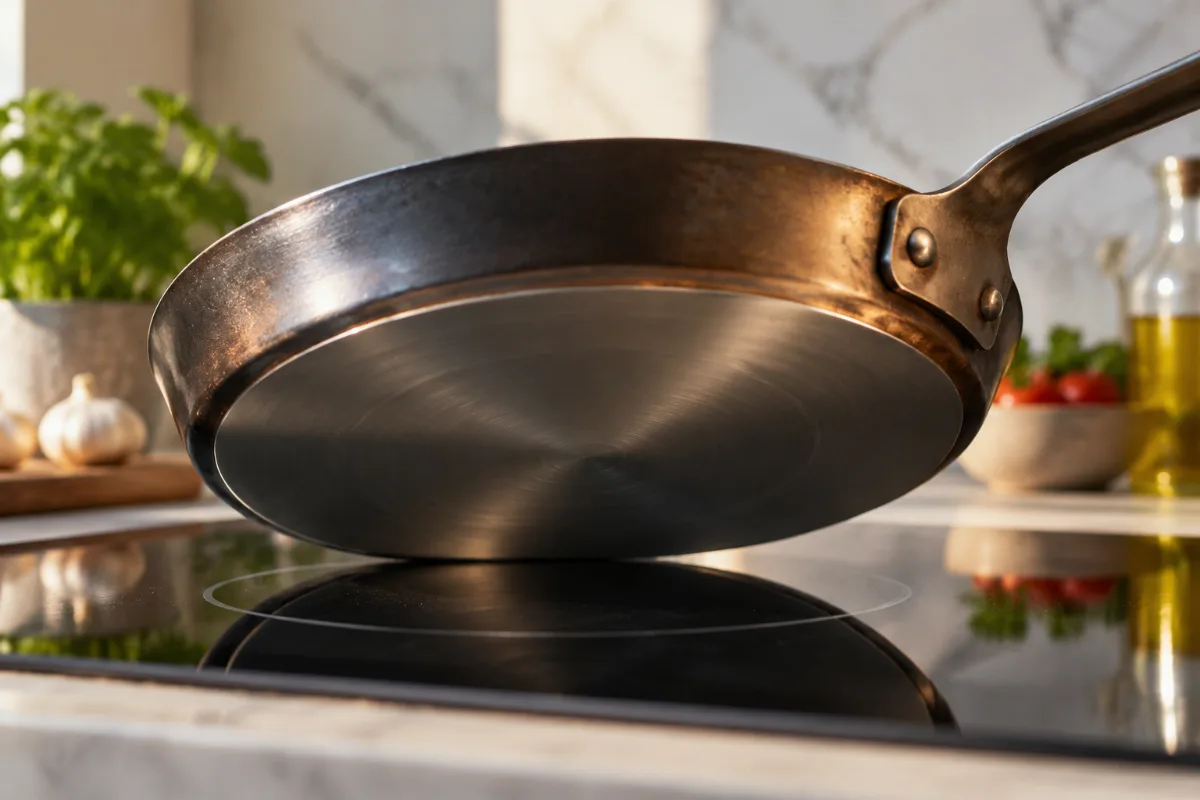
Contact is the whole story on induction. A flat base that covers the zone will beat a heavier or pricier pan that sits unevenly. When two pans measured equally flat, gauge became the tiebreaker: more steel for steadier heat, less steel for faster response.
Frequently asked questions
What is the best carbon steel pan for induction?
Do all carbon steel pans work on induction?
Why does my carbon steel pan buzz on induction?
Is a heavier pan better for induction?
Will induction ruin a carbon steel pan?
The bottom line
Induction and carbon steel are a natural match. The metal is magnetic by nature, so your only real job is to pick a pan that sits flat and matches your zone, then heat it with a little patience. The Merten & Storck earns the top spot on value and even heating, the de Buyer and Mauviel reward cooks who want the flattest base and steadiest heat, and the Lodge proves you do not need to spend much to cook well.
Whichever you choose, treat the base with care: heat it gradually and let it cool before washing to keep it flat for years. If you are still deciding on size and shape, our guide to carbon steel frying pans walks through the options.