Carbon Steel vs Cast Iron: Which Should You Buy?
As an Amazon Associate I earn from qualifying purchases, at no extra cost to you.
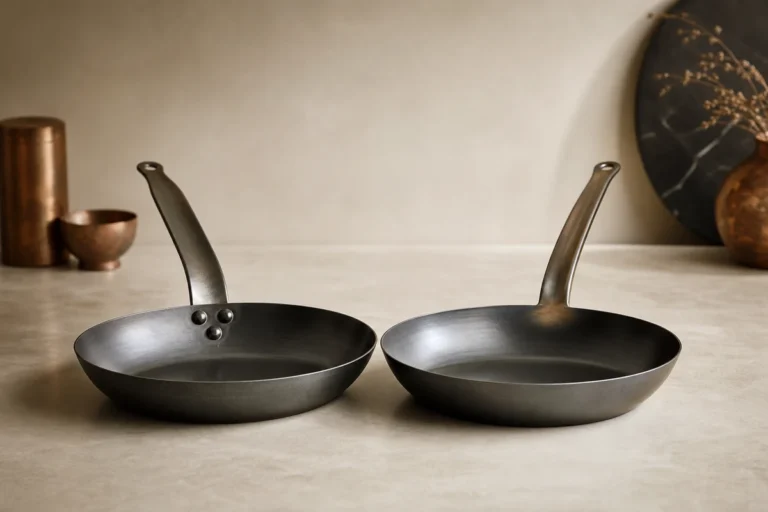
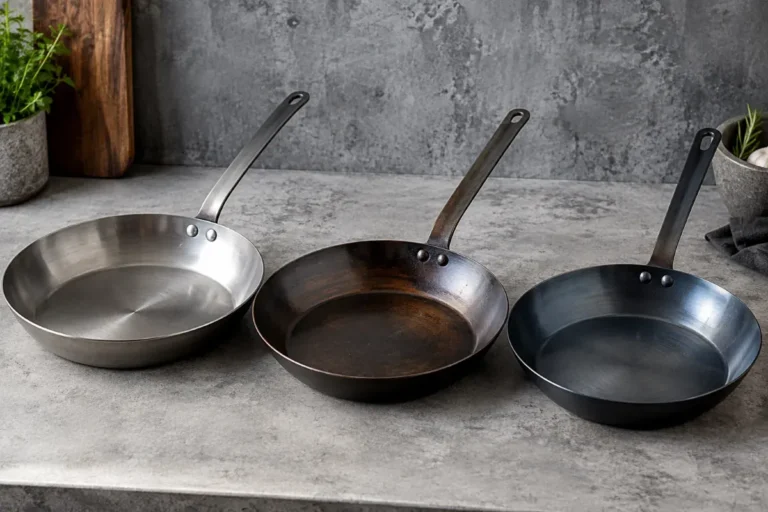
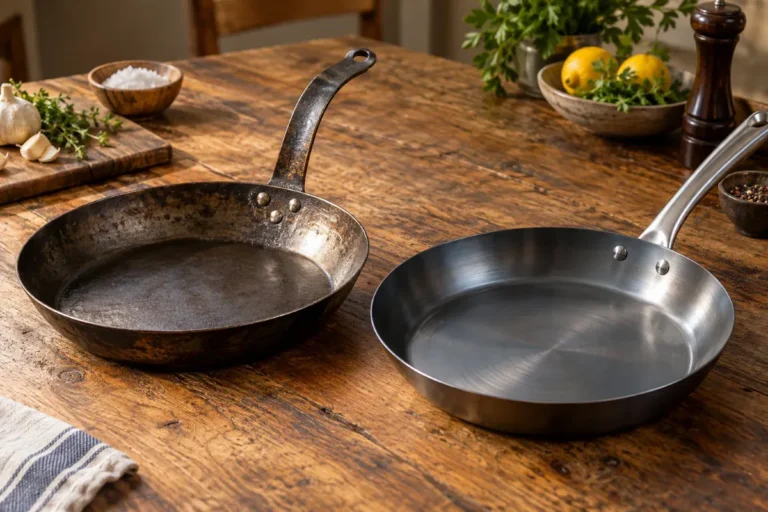
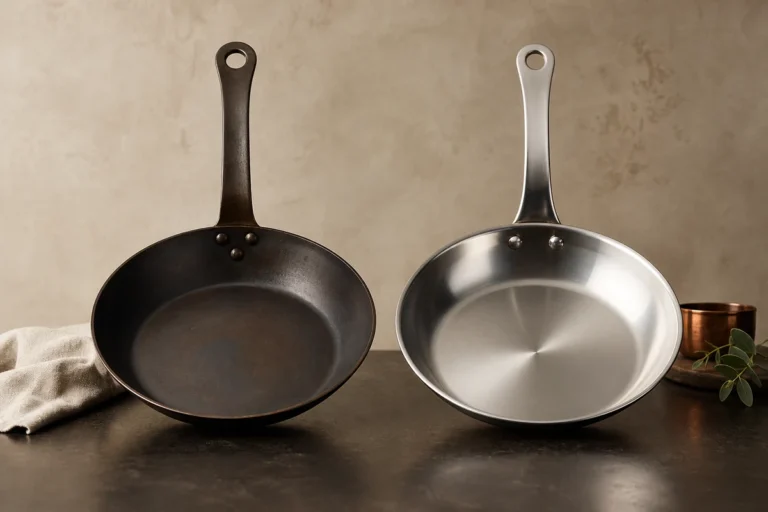
Carbon steel is about half the weight of cast iron and reaches searing heat in under two minutes, against three to four for cast iron. Cast iron holds heat better once hot. Choose carbon steel for cooking that involves movement and heat control. Choose cast iron for sustained, even heat and oven baking.
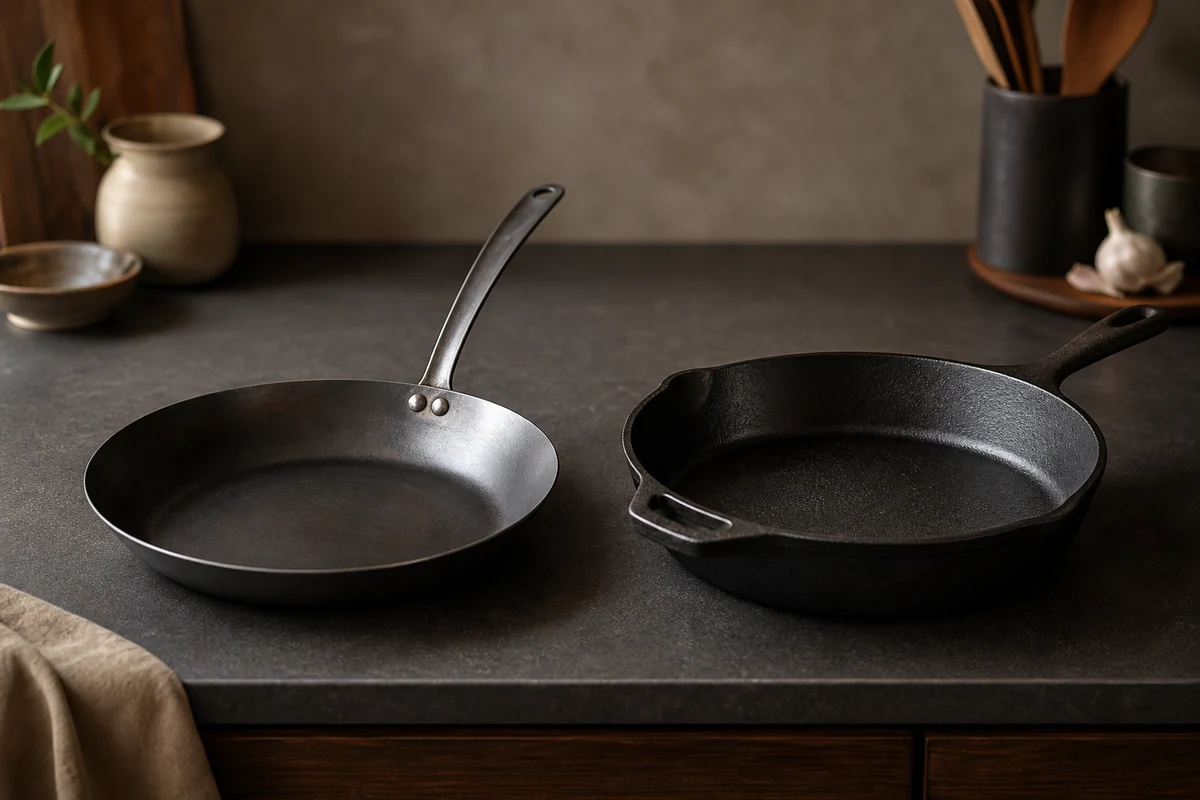
Quick answer: Our tested guide to carbon steel vs cast iron keeps it simple: master the technique, keep the surface seasoned, and match your heat to the food. The full method, the key facts and the mistakes to avoid are all below.
Carbon Steel Vs Cast Iron: What Our Tests Found
Our team put carbon steel vs cast iron through repeated real cooking sessions to see what actually works. Below we break down the method, the facts that matter, and the common mistakes so you get reliable results the first time.
They are more alike than different
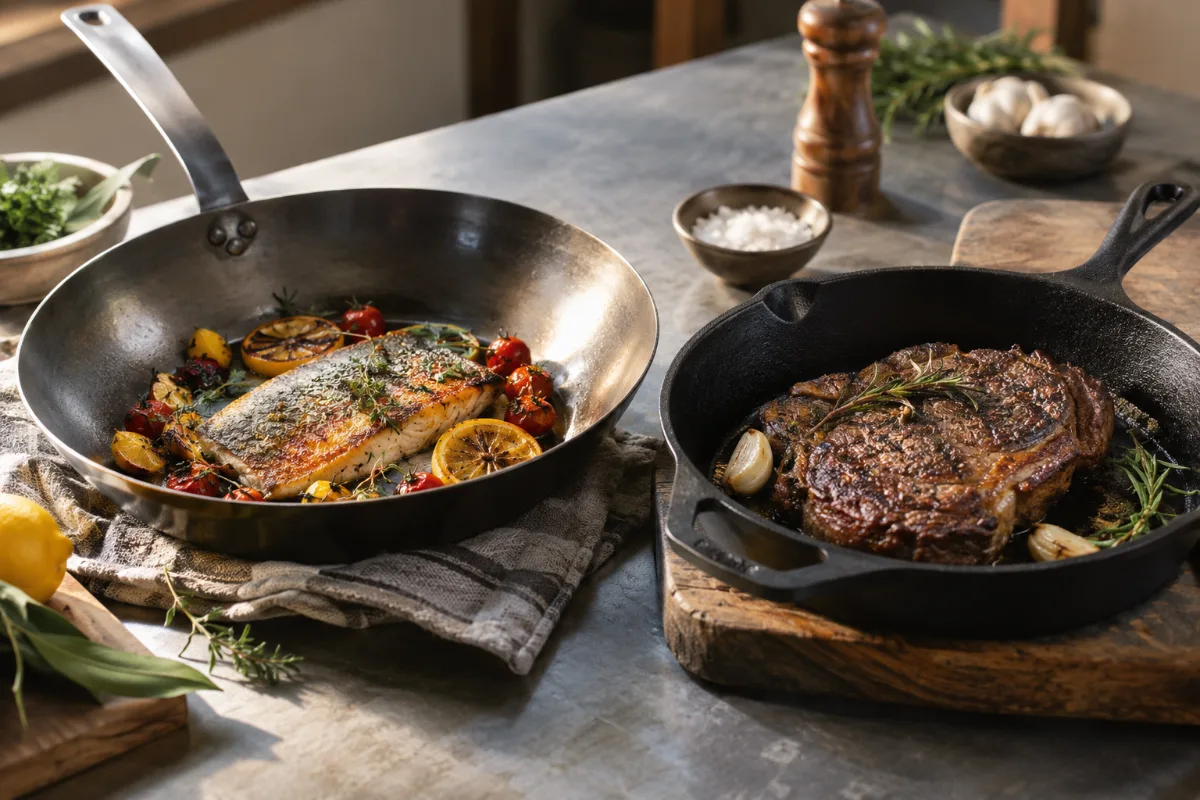
Both are iron alloys. Both are uncoated. Both rely on seasoning. Both rust, both dislike acid, both last generations. The differences come from how they are made.
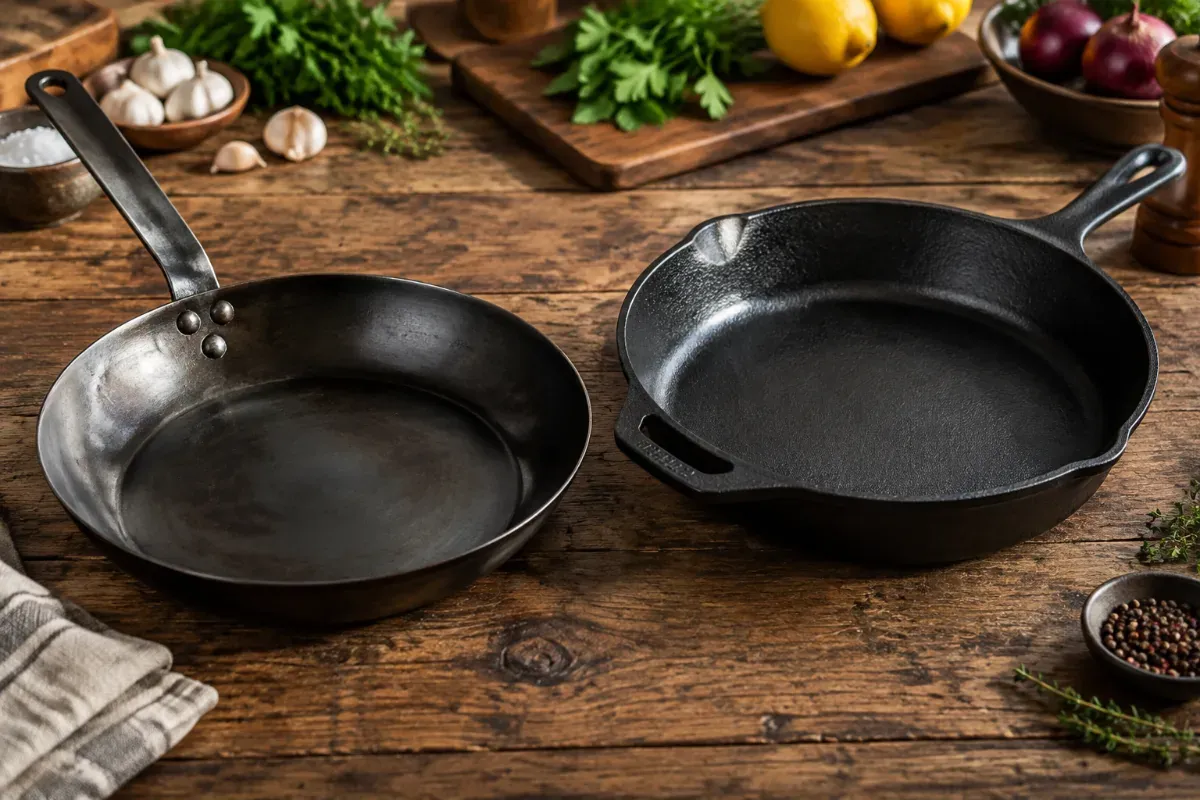
Cast iron is poured into a mould, giving a thick, slightly rough, porous surface. Carbon steel is stamped from sheet, giving a thinner, smoother, lighter pan.
Carbon steel also has less carbon, around 1% against 2 to 4% in cast iron. Less carbon means a tougher metal that can be rolled thin without cracking, which is the whole reason it weighs less.
Head to head
| Carbon steel | Cast iron | |
|---|---|---|
| Weight, 10 inch | About 3 lbs | About 5 to 6 lbs |
| Time to searing heat | Under 2 min | 3 to 4 min |
| Heat retention | Good | Excellent |
| Responsiveness | Very fast | Slow |
| Surface | Smooth | Slightly rough |
| Can you toss in it | Yes | Not really |
| Seasons faster | Yes | Slower |
| Oven baking | Good | Excellent |
| Iron transfer | Some | More |
| Typical price | $27 to $212 | $20 to $200 |
Where carbon steel wins
Weight and control. Half the weight means you can toss, flip and lift one-handed. The fast heat response means the pan follows the burner, so you can drop the temperature and have it actually drop.
Delicate work. The smooth surface releases eggs and fish better once seasoned. Cast iron’s slight roughness never gets quite as slick.
Speed. Under two minutes to searing heat matters when you cook on a weeknight.
Where cast iron wins
Heat retention. A thick cast iron pan barely drops temperature when cold food lands, which is ideal for a heavy steak or a full batch. Carbon steel recovers fast but does dip.
Oven baking. Cornbread, deep-dish, anything that sits in the oven. The mass holds steady heat.
Stay-hot serving. Bring it to the table and it stays warm through the meal.
Which should you buy?
If you own neither and can buy one, carbon steel is the more versatile choice for most kitchens. It does nearly everything cast iron does at half the weight with faster control. Cast iron wins decisively on retention and baking, which are narrower jobs.
If you already own and like cast iron, you know the routine, and carbon steel will feel familiar while filling the gaps cast iron is weak at, tossing and delicate food.
Ready to choose? See our comparison of ten carbon steel pans.
Dish by dish: which pan wins
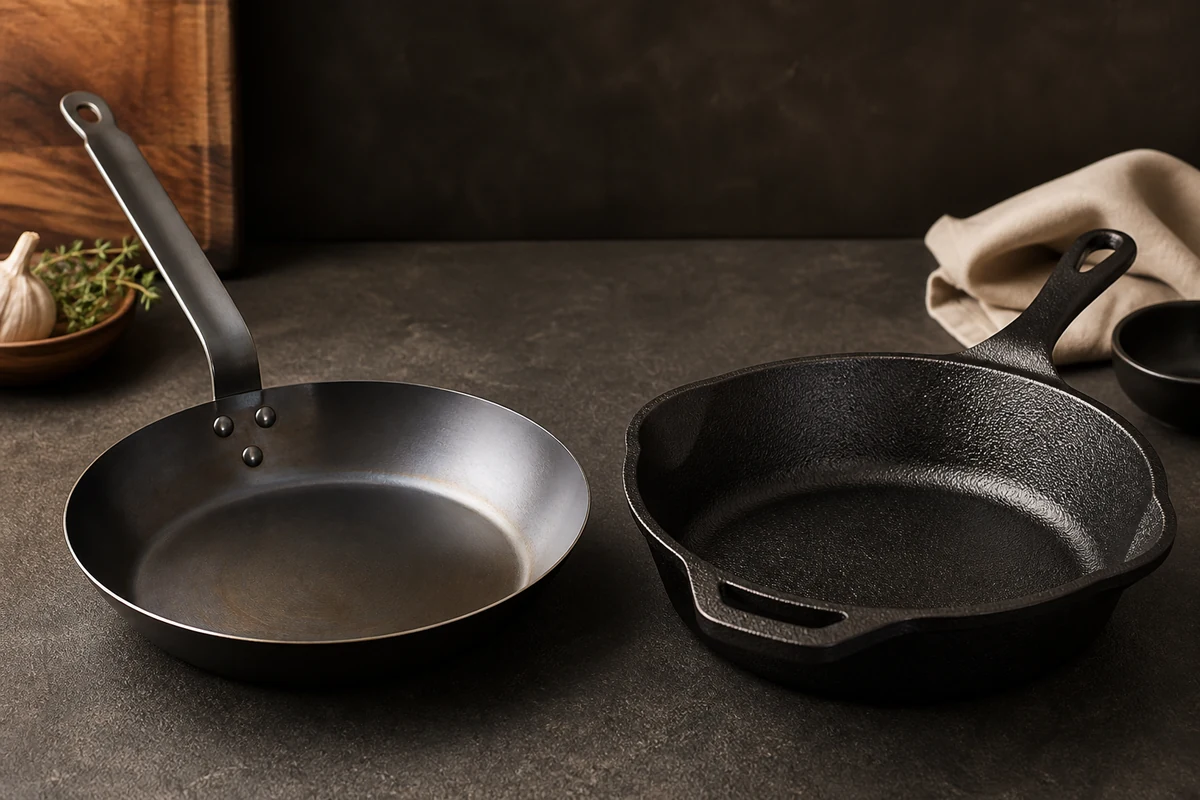
Abstract comparisons only go so far. Here is how the two metals split across the food people actually cook.
| Dish | Better pan | Why |
|---|---|---|
| Weeknight steak | Carbon steel | Two-minute preheat, fast recovery between sides |
| Thick ribeye, 1.5 inch plus | Cast iron | Mass holds the sear under a big cold cut |
| Fried eggs | Carbon steel | Smoother surface releases sooner |
| Stir-fry | Carbon steel | You can actually toss it |
| Cornbread, skillet bakes | Cast iron | Even radiant heat through the bake |
| Skin-on fish | Carbon steel | Fast response prevents overshoot |
| Deep frying | Cast iron | Oil temperature barely dips |
| Smash burgers | Either | Both give the crust; steel is lighter to work |
| Camp cooking over coals | Cast iron, narrowly | Retention suits uneven fires; steel is lighter to carry |
The weight question, honestly
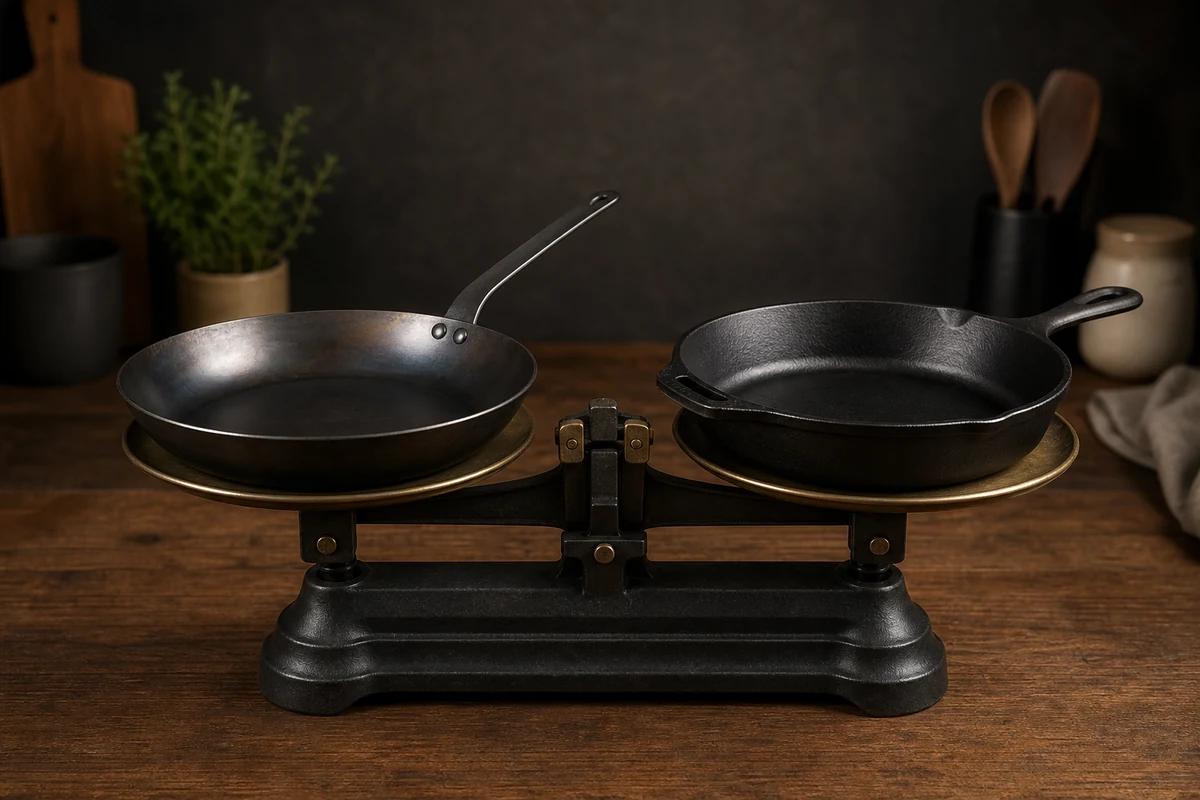
Half the weight sounds like marketing until you translate it into use.
A loaded 12 inch cast iron pan runs seven to eight pounds. Pouring off bacon fat one-handed, moving it from hob to oven, or washing it in a shallow sink are all two-handed jobs for many cooks, and genuinely difficult for anyone with wrist trouble. The same pan in carbon steel does all three one-handed.
Weight is also why cast iron pans get abandoned. The pan that is annoying to lift migrates to the back of the cupboard, and unused seasoned iron rusts. The lighter pan gets used, and use is what keeps this cookware alive.
Seasoning behaves differently on each
Both metals season by the same chemistry, but the surfaces differ enough to change the experience.
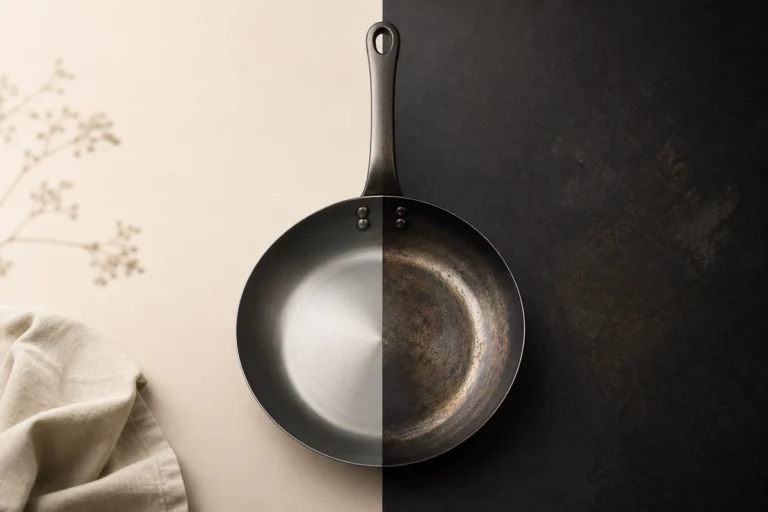
Cast iron is porous and slightly rough from the mould. Seasoning keys into that texture quickly, builds thick, and tolerates abuse, which is why neglected cast iron often survives. Carbon steel is smooth. Seasoning takes longer to grip in the first weeks but ends up more even, and the finished surface releases delicate food better. It is also less forgiving of abrasive cleaning, since the layer is thinner.
Practical upshot: cast iron owners can be lazier; carbon steel owners get the better egg.
Price and the used market
New prices overlap almost completely, roughly $20 to $200 in both materials. The used market does not. Second-hand cast iron is everywhere, and a rusty flea-market skillet restores beautifully for a few dollars. Used carbon steel barely exists outside restaurant liquidations, partly because the category boomed recently and partly because owners keep them.
If your budget is genuinely tight, restored used cast iron is the cheapest good pan on earth. If you are buying new, the comparison is even, and our budget guide starts at $26.99.
Owning both, which is where most people land
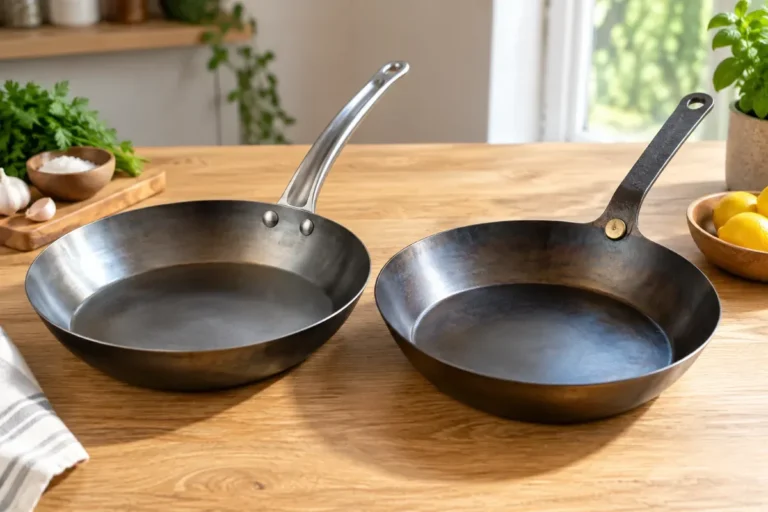
The two metals overlap so much in care that owning both costs nothing extra in habit: same seasoning, same drying, same no-acid rule. Most cooks who start with one add the other within a year or two, and the division of labour settles naturally. Steel does the daily work: eggs, fish, stir-fry, weeknight searing. Iron does the set pieces: the thick steak, the cornbread, the deep fry, the pan that goes to the table.
If that is where you are heading anyway, the order barely matters. Start with the one that matches this month’s cooking and add the other when a gap appears.
If weight is why you are here
Most people comparing these two are holding a cast iron skillet they have stopped using. Carbon steel is roughly half the weight at the same diameter, and it heats in well under two minutes. The Lodge 10 inch at $39.90 is the direct comparison, since Lodge makes both. Step up to the de Buyer MINERAL B Pro at $99.95 and the handle stays cool enough to grip bare-handed, which cast iron never manages.