Best Pan for Steak: Carbon Steel and the Alternatives
As an Amazon Associate I earn from qualifying purchases, at no extra cost to you. Prices checked 22 July 2026.
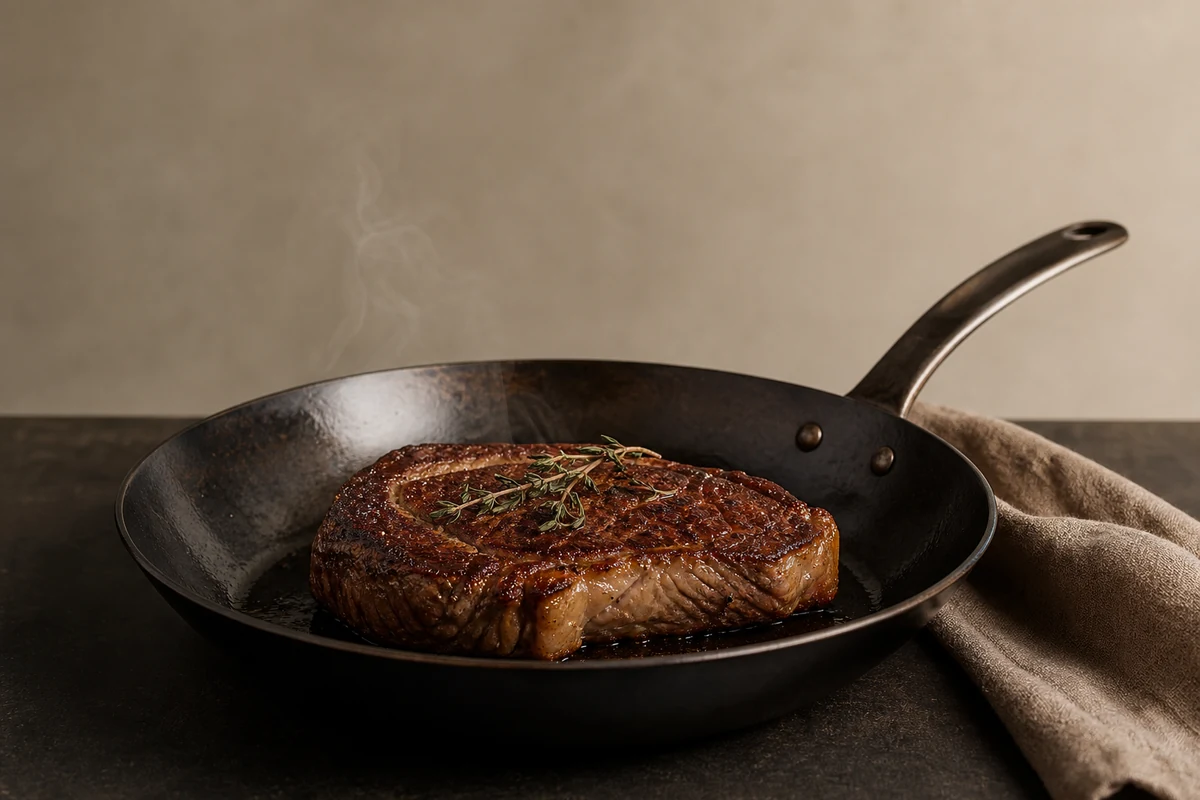
The best pan for steak is carbon steel or cast iron, because both reach and hold the high heat a crust needs. For most home cooks a carbon steel pan is the better pick: it hits searing temperature in under two minutes and recovers fast between sides. The Merten & Storck 12 inch at $59.99 is our value choice.
What a steak pan actually needs
Three things, and only one type of pan delivers all three.
High heat. A crust is the Maillard reaction, which needs a surface well above the boiling point of water. Non-stick cannot safely go there. Carbon steel, cast iron and stainless can.
Heat recovery. A cold steak drops the pan temperature the moment it lands. A pan that recovers fast keeps searing. A pan that stalls steams the meat grey.
Oven transfer. Thick steaks finish in the oven. The pan has to go from hob to oven, which rules out anything with a plastic or wooden handle.
The materials ranked for steak
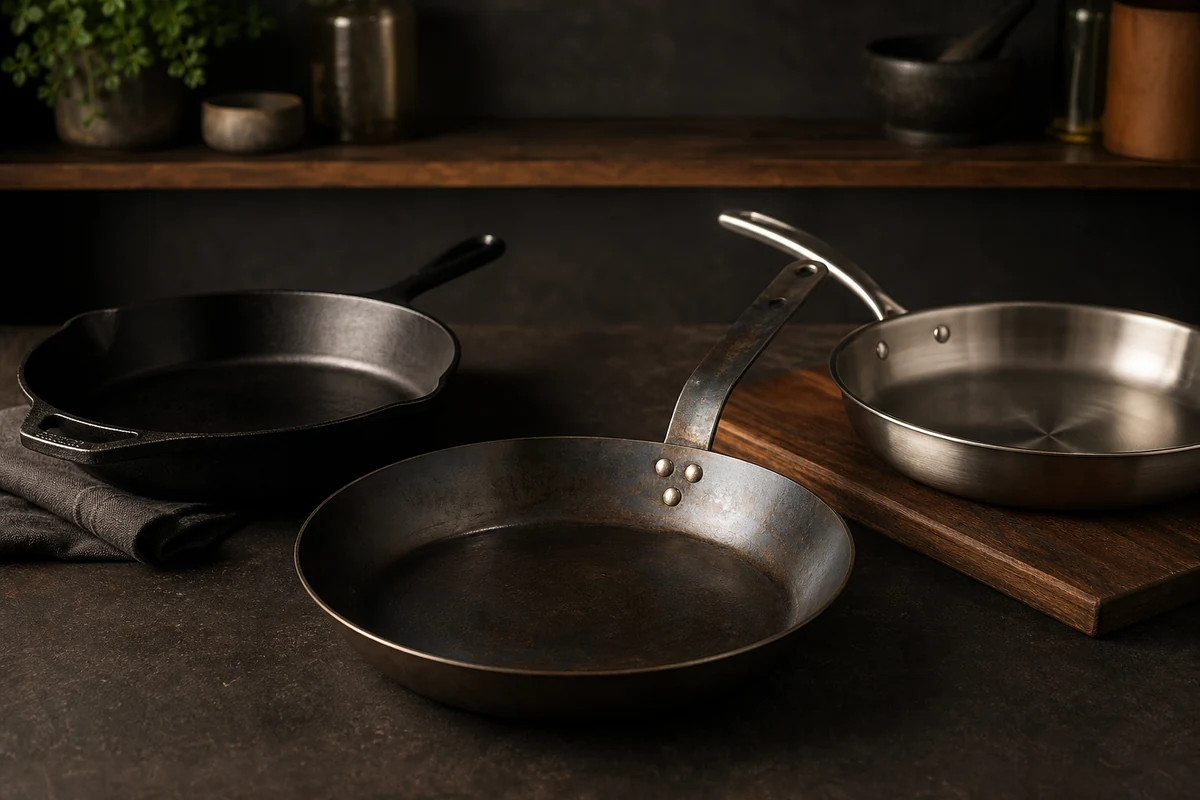
| Pan | Reaches high heat | Heat recovery | Oven safe | Verdict for steak |
|---|---|---|---|---|
| Carbon steel | Fast | Fast | Yes, metal handle | Best all-round |
| Cast iron | Slow | Excellent | Yes | Best for thick steaks |
| Stainless steel | Fast | Moderate | Yes | Good, sticks more |
| Non-stick | No | Poor | Usually no | Avoid for steak |
Why carbon steel is the best steak pan for most people
It combines high heat with fast recovery, and it comes to temperature quickly enough for a weeknight.
Drop a steak into a properly preheated carbon steel pan and it keeps searing rather than stalling. Flip it and the pan is still hot. The seasoned surface also releases the crust cleanly once it forms, so you are not tearing the sear off the meat.
At 12 inches you can sear two steaks without crowding, which matters because crowding is the fastest way to steam instead of sear.
When cast iron wins
For a single thick steak, a ribeye over an inch and a half, cast iron edges ahead. Its mass barely drops temperature under the meat, holding a relentless sear.
The trade is weight and slower preheat. For everyday steaks, carbon steel is more practical. Full comparison in carbon steel vs cast iron.
Our picks
Best value: Merten & Storck 12 inch, $59.99
Triple-riveted, PFAS-free, large enough for two steaks, and about half the price of the European pans. The metal handle goes straight into the oven to finish a thick cut. See it.
Best for heat stability: Mauviel M’Steel 11 inch, $120
The thickest steel here, so it holds temperature under cold meat better than any other carbon steel pan on our list. America’s Test Kitchen made Mauviel its top carbon steel pick. See it.
Best budget: Lodge 12 inch, $44.99
Cheapest way into a proper steak pan. 12-gauge steel, riveted steel handle, oven safe. No frills and no weak points. See it.
Full range in our comparison of ten pans.
How to sear steak in carbon steel
- Dry the steak thoroughly. Surface moisture steams before it sears.
- Preheat the pan two to three minutes until water beads and skates.
- Add a thin layer of high smoke point oil.
- Lay the steak down and leave it. It sticks, then releases as the crust forms.
- Flip once a deep crust has developed, usually two to three minutes.
- For thick cuts, finish in the oven.
- Rest the steak before cutting.
Do not add butter at the start. It burns before the pan reaches searing heat. Add it near the end to baste.
The science of the crust, briefly
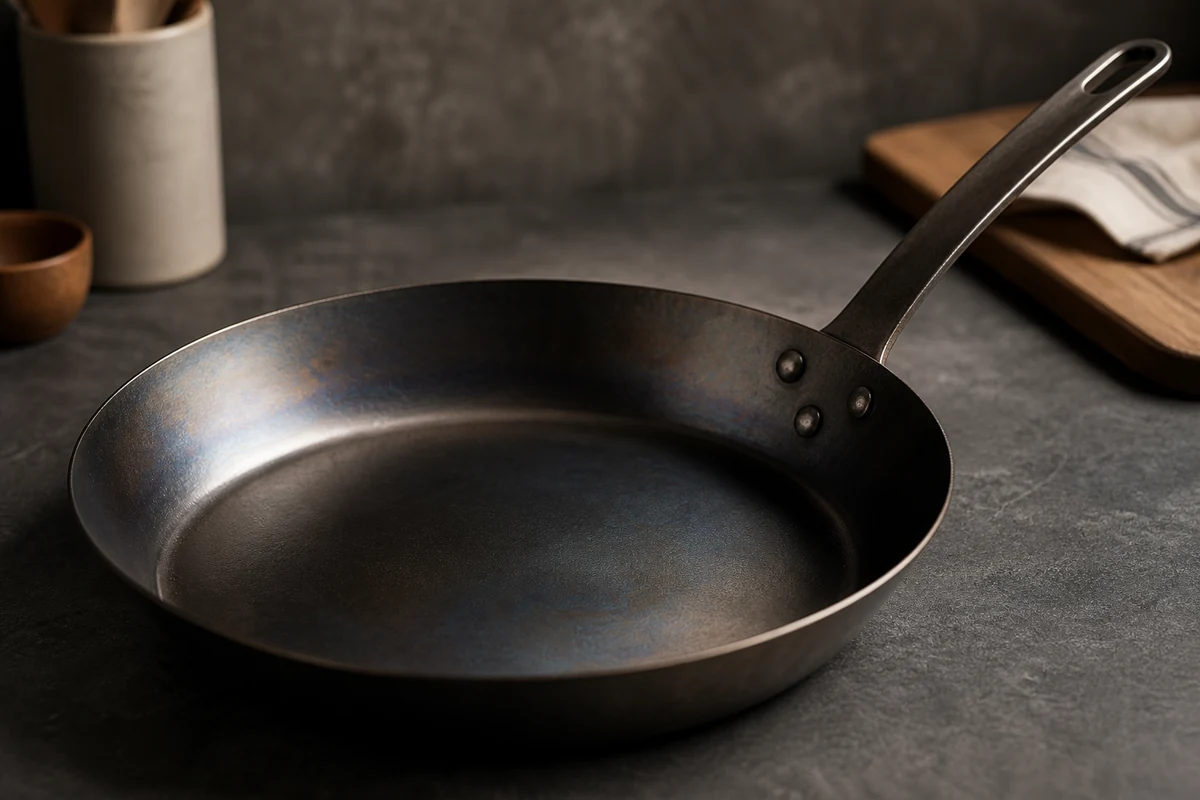
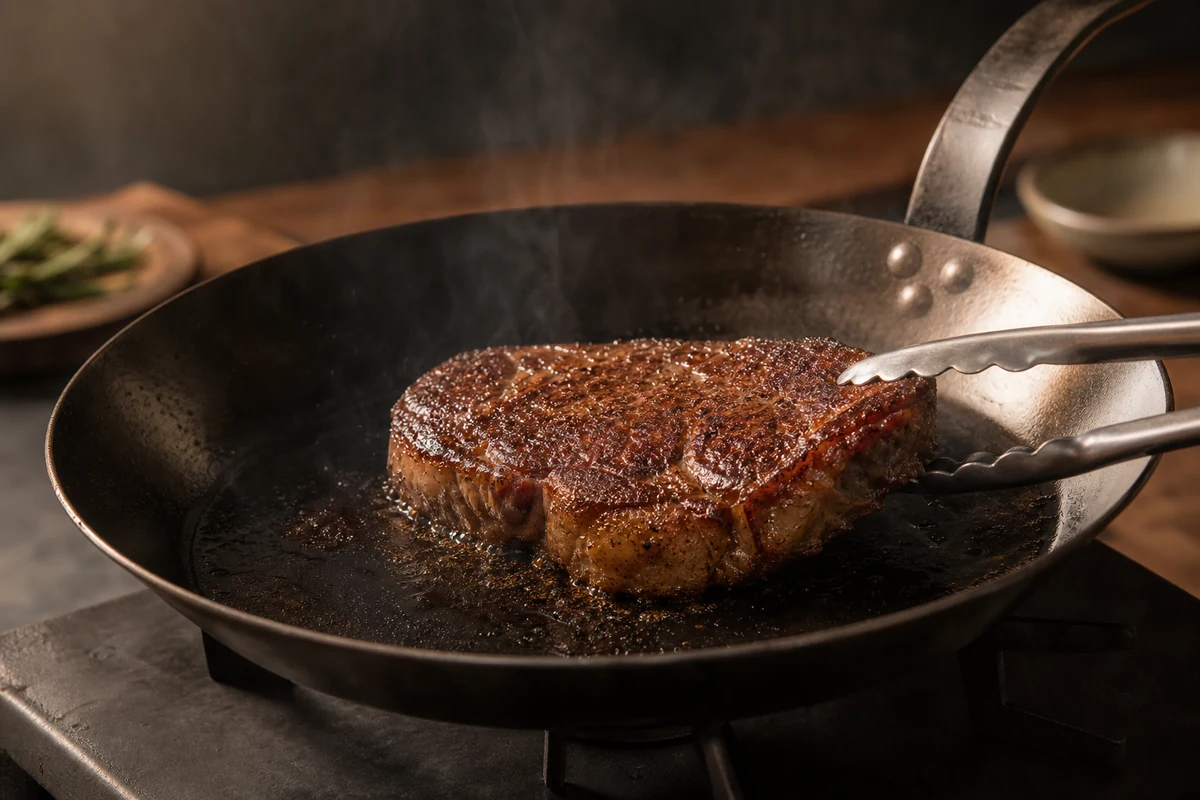
A steak crust is the Maillard reaction: amino acids and sugars recombining into hundreds of new flavour compounds. It starts slowly around 280°F and runs hard above 350°F, but only on a dry surface, because as long as surface moisture remains, the energy goes into boiling water at 212°F instead of browning meat.
This is why the pan matters. A thin or slow pan drops below browning temperature the moment a cold steak lands, water pools, and the meat steams grey. A pan with either fast recovery, carbon steel, or heavy mass, cast iron, keeps the surface above the threshold and the crust builds.
It is also why the dry-the-steak step is not optional, and why crowding two steaks into a 10 inch pan defeats a $200 pan as thoroughly as a $30 one.
Matching the pan to the cut
| Cut | Thickness | Best approach | Pan pick |
|---|---|---|---|
| Sirloin, weeknight | Under 1″ | Hard sear both sides, no oven | Merten & Storck 12″ |
| Ribeye | 1 to 1.5″ | Sear, then butter baste | Mauviel M’Steel 11″ |
| Thick ribeye, porterhouse | 1.5″ plus | Sear, finish in oven | Mauviel or Lodge 12″ |
| Reverse sear | Any thick cut | Low oven first, blazing pan last | Any metal-handled pan here |
| Two steaks at once | Any | Space between them, always | 12″ pans only |
The reverse sear, since the pan was built for it
For cuts over an inch and a half, the reverse sear is the most reliable method in home cooking, and carbon steel is its ideal finishing tool.
- Season the steak, then warm it in a low oven, around 250°F, until the centre reads about 15°F below your target.
- Rest it while the pan preheats to just smoking.
- Sear roughly a minute per side, plus the edges. The surface is already dry from the oven, so the crust comes fast.
- No resting debate: the slow phase already equalised the interior. Slice and serve.
The method separates the two jobs a pan usually juggles, cooking the middle and building the crust, and gives each its ideal conditions. The fast preheat and recovery of carbon steel handle step three better than anything else in the kitchen.
Butter basting without burning it
Butter burns around 300°F, far below searing heat, which is why steaks are seared in oil and finished with butter. The sequence: sear both sides in a high smoke point oil, drop the heat to medium, then add a knob of butter with garlic and thyme. Tilt the pan so the butter pools, and spoon it over the steak for thirty to sixty seconds. The milk solids toast rather than scorch, and the crust picks up the flavour without the bitterness of burnt butter.
In carbon steel, the drop from searing heat to basting heat takes seconds rather than the minutes cast iron needs, which is precisely the control this dish wants.
Steak mistakes a good pan cannot fix
A wet steak. Pat it dry, aggressively. Moisture is the crust’s enemy regardless of pan.
A cold pan. If the steak does not hiss violently on contact, it went in early.
Moving it. The steak releases when the crust forms. Lifting early tears the sear off.
Crowding. Two steaks touching is one steamed steak in two pieces.
Skipping the rest on hot-and-fast cooks. Five minutes keeps the juice in the meat instead of on the board. Reverse-seared steaks are the exception.
Frequently asked questions
What is the best pan for cooking steak?
Is carbon steel or cast iron better for steak?
Can you sear steak in a non-stick pan?
What size pan is best for steak?
Should you use butter or oil to sear steak?
Prices checked 22 July 2026.