How to Cook Eggs in Carbon Steel Without Sticking (Tested)
By the Carbon Steel Pan test team · Last updated September 2026
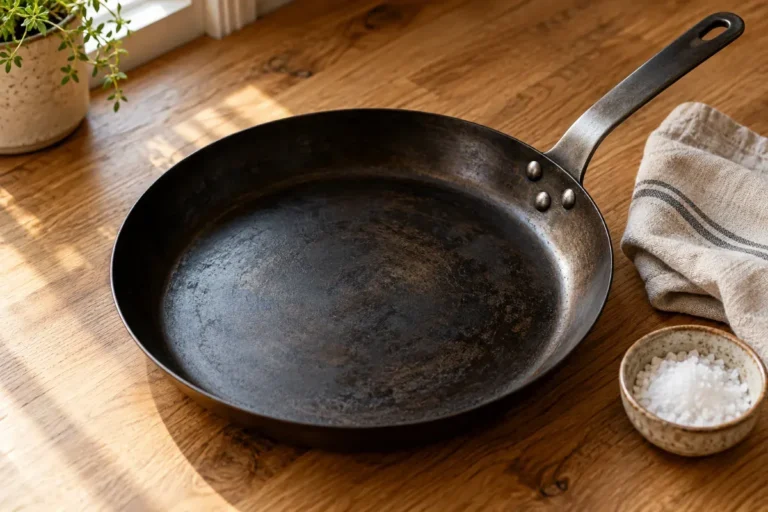
Eggs stick to a carbon steel pan for two reasons: the pan is too cold, or the seasoning is still thin. Preheat for two to three minutes over medium heat until a drop of water beads up and skates across the surface. Add a spoon of butter or oil, let it shimmer, then add the eggs. Done this way, they release cleanly even on a young pan.
Why eggs stick (and it is almost never the pan)
Eggs weld to the metal for two real reasons, and neither means your pan is faulty. The first is heat. A pan that is not hot enough lets egg proteins settle into the tiny pores of the surface and grab on. The second is seasoning. A new or thin seasoning layer leaves more bare metal exposed for those proteins to bond to.
The science is simple. Raw egg is mostly protein and water. When protein touches hot bare metal, it forms chemical bonds with the surface and locks in place. A hot pan with a film of oil over a seasoned surface stops that from happening. The proteins set against the oil and the hardened seasoning instead of the steel, so they lift away instead of tearing.
The good news for anyone frustrated this morning: a new pan improves fast. The first few weeks take real attention, but the surface gets more forgiving with every cook. Most people who “gave up” on carbon steel eggs simply cooked cold. Fix the heat and the fat, and the pan does the rest.
The tested method, start to finish
This is the core routine we use for reliable, no-stick eggs. Follow the steps in order. Each one has a cue you can see or hear, so you are not guessing.
Step 1: preheat 2 to 3 minutes on medium
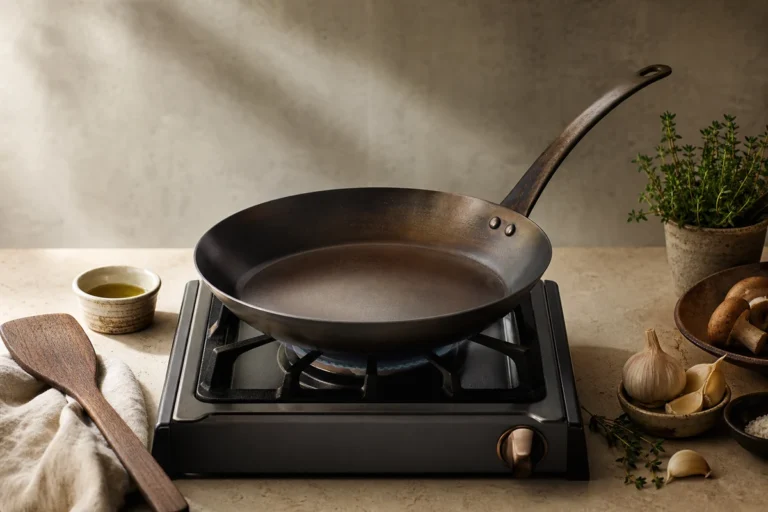
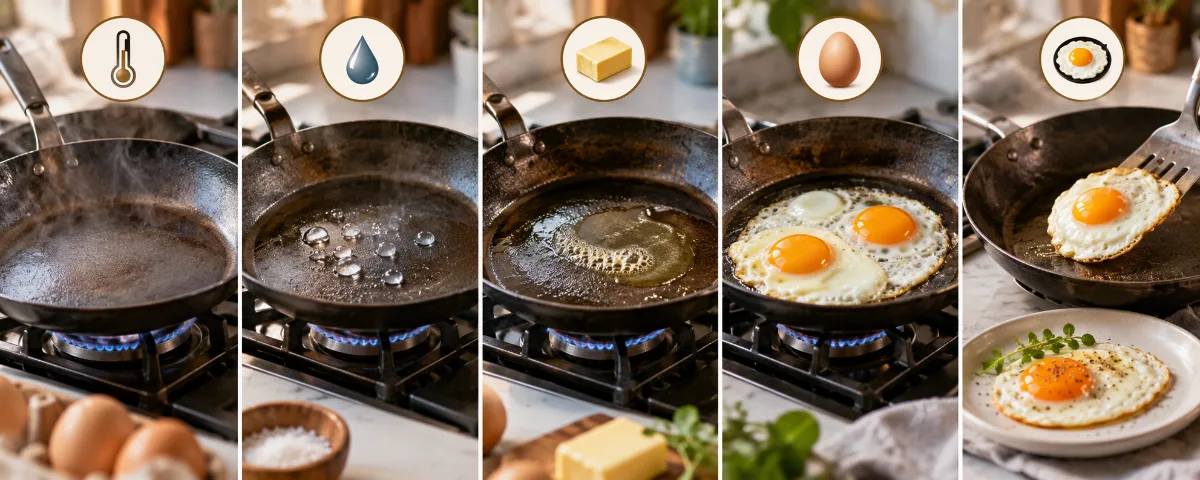
Set the empty pan on medium heat and leave it alone for two to three minutes. Carbon steel is thin, so it heats fast, but the whole surface needs to reach an even temperature, not just the spot over the burner. On our test setup, a 26 cm pan on a medium gas flame hit egg temperature in about (measure) minutes (verify with an infrared thermometer). Resist the urge to rush this. A cold pan is the single most common reason eggs stick.
Step 2: run the water test
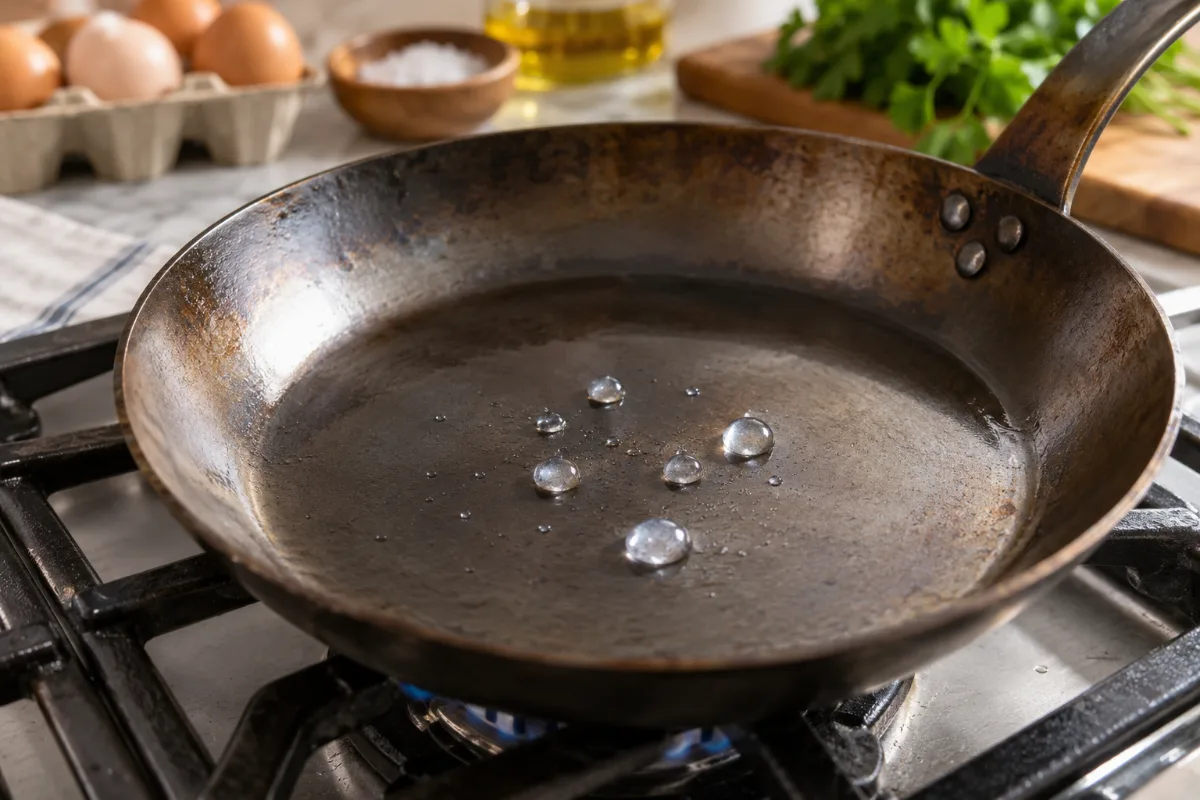
Flick a few drops of water into the pan. If the water spreads out and hisses, the pan is not ready; wait another 20 to 30 seconds. When the water gathers into a bead and skates across the surface like a tiny ball, the temperature is right. This is your green light, covered in more detail below.
Step 3: add fat and wait for the shimmer
Add your fat now, not before. Roughly one to two teaspoons for a couple of eggs, enough to coat the base in a thin film. Swirl it around. Oil will thin out and shimmer within a few seconds; butter will foam, then the foam will start to settle. That shimmer or settled foam tells you the fat is hot and ready. Cold fat on a hot pan means the eggs go in before the surface is primed.
Step 4: add eggs and leave them alone
Crack the eggs straight in and then do not touch them. The urge to nudge or flip early is what tears the whites. Give the proteins 20 to 40 seconds to set against the fat and seasoning. The edges will firm up and lift slightly on their own. Moving eggs before they are ready drags them across the surface and breaks the release.
Step 5: read the release
Gently slide a thin spatula under one edge. If it glides underneath with no resistance, the egg is ready to move, flip or plate. If it grabs, wait another few seconds and try again. A properly heated, oiled, seasoned pan lets the spatula pass right under. That clean slide is the proof the method worked.
Quick answer: Our tested guide to carbon steel pan eggs keeps it simple: master the technique, keep the surface seasoned, and match your heat to the food. The full method, the key facts and the mistakes to avoid are all below.
Carbon Steel Pan Eggs: What Our Tests Found
Our team put carbon steel pan eggs through repeated real cooking sessions to see what actually works. Below we break down the method, the facts that matter, and the common mistakes so you get reliable results the first time.
The water test, explained
The water test is the one trick that fixes most sticking, so it is worth understanding. It reads the pan’s temperature without a thermometer by using how water behaves on hot metal.
At the right heat, a water droplet does not spread and boil off. Instead it pulls into a compact bead and glides around the surface, sometimes for several seconds. This is the Leidenfrost effect: the bottom of the droplet flashes to vapor and lifts the rest of the drop off the metal, so it floats and slides. That behavior signals the surface is hot enough to keep eggs from bonding.
If the water just spreads into a thin film and sizzles away, the pan is still too cool. Wait and test again. If the droplet vanishes in a violent hiss almost instantly, the pan is running hot; pull it off the heat for a moment before adding delicate eggs. The sweet spot for eggs is the beading, skating stage. Learn to read it and you will rarely have eggs stick again. (Verify the exact temperature band with an infrared thermometer in testing.)
Butter or oil? What to use and how much
Both butter and oil work, and each has a trade-off. Oil handles higher heat without burning, so it is the safer choice for a beginner still dialing in temperature. Neutral oils like grapeseed, canola or refined avocado have high smoke points and no strong flavor. Butter tastes better with eggs but contains milk solids that brown and then burn fast, which can leave dark specks and a bitter edge if the pan runs hot.
Use enough to matter. For two eggs, about one to two teaspoons of fat is right, enough to see a thin, even film across the base. “A little” is where people go wrong; too little fat leaves dry patches where eggs grab.
Many cooks split the difference. Add a teaspoon of neutral oil first to coat the pan and raise the burn point, then drop in a small knob of butter for flavor just before the eggs. The oil protects the butter from scorching while you still get the taste. Keep the heat at medium so the milk solids brown gently instead of burning.
Fried, scrambled and omelette: small changes that matter
The base method holds for any egg, but each style wants a small tweak in heat and fat. Here is how we cook each one.
Fried eggs
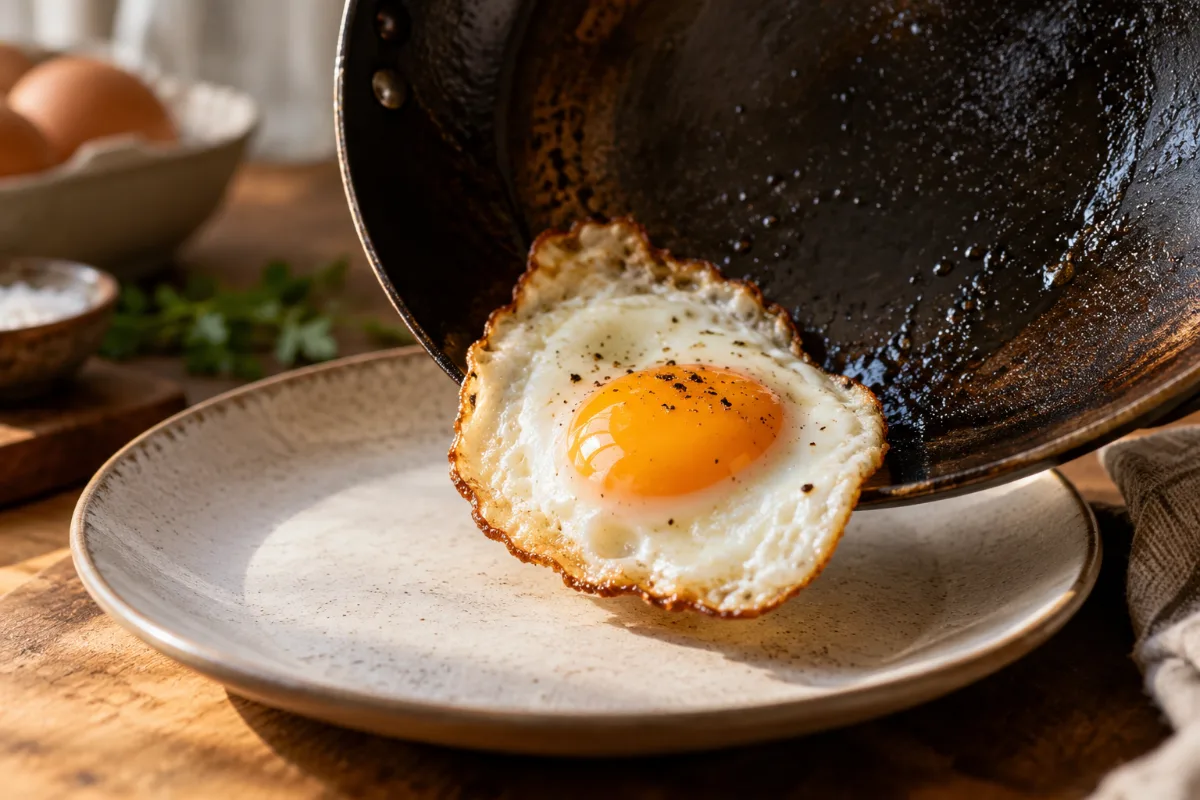
For fried eggs, keep the pan at medium and preheat until the water beads. Butter or oil both work. Crack the eggs in, leave them alone, and let the whites set before you decide on over-easy or sunny side up. For sunny side up, drop the heat to medium-low and cover the pan for 30 seconds to set the top without flipping. For over-easy, wait for the clean spatula slide, then flip once.
Soft scramble
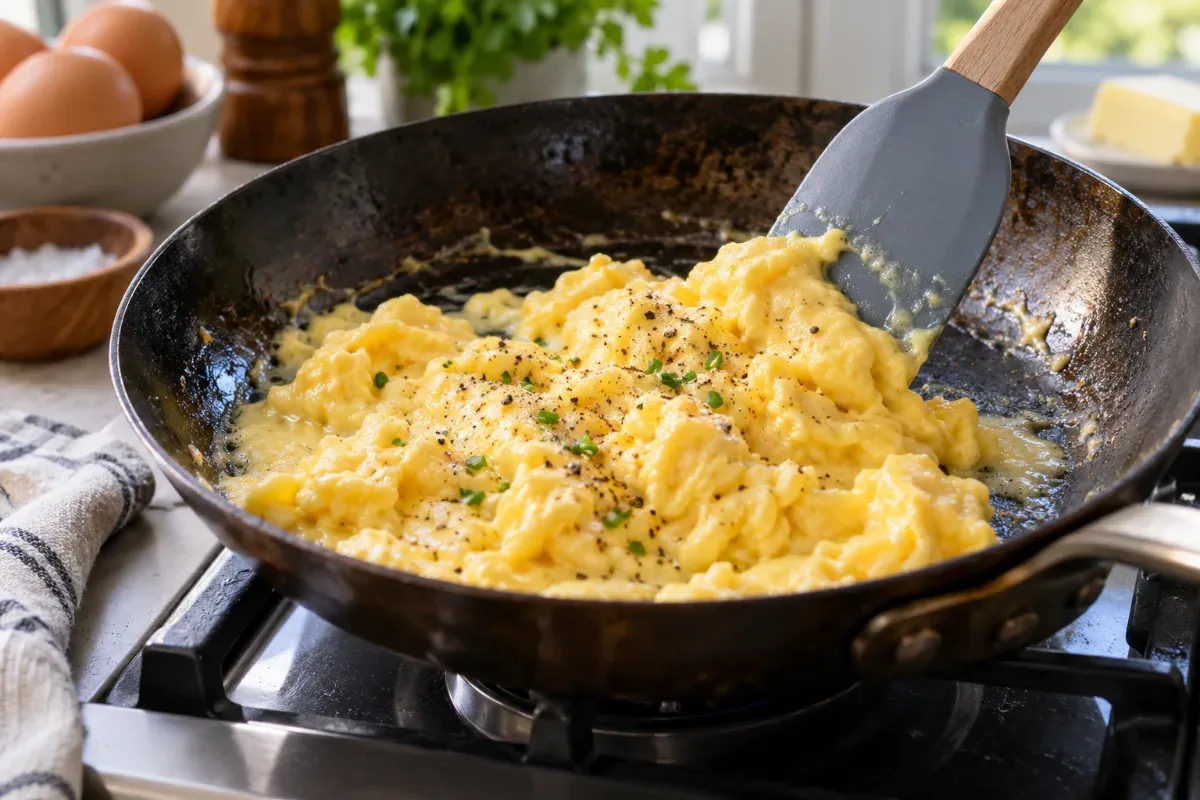
Soft scramble wants lower heat and more movement. Set the pan to low or low-medium, add butter, and pour in beaten eggs. Stir constantly with a spatula, pushing the curds around so nothing sits still long enough to bond. Pull the pan off the heat while the eggs still look slightly wet. Carbon steel holds heat and will finish them off the burner, so cooking them fully in the pan means overcooked eggs on the plate.
Omelette
An omelette needs a fully preheated pan and speed. Preheat until the water test passes, add butter and let it foam, then pour in the eggs. Work fast: swirl, push the set edges toward the center and tilt the pan so raw egg runs to the gaps. Because the pan is hot and well greased, the omelette releases in one piece when you fold and roll it out. A cool pan or a slow hand is what makes omelettes tear.
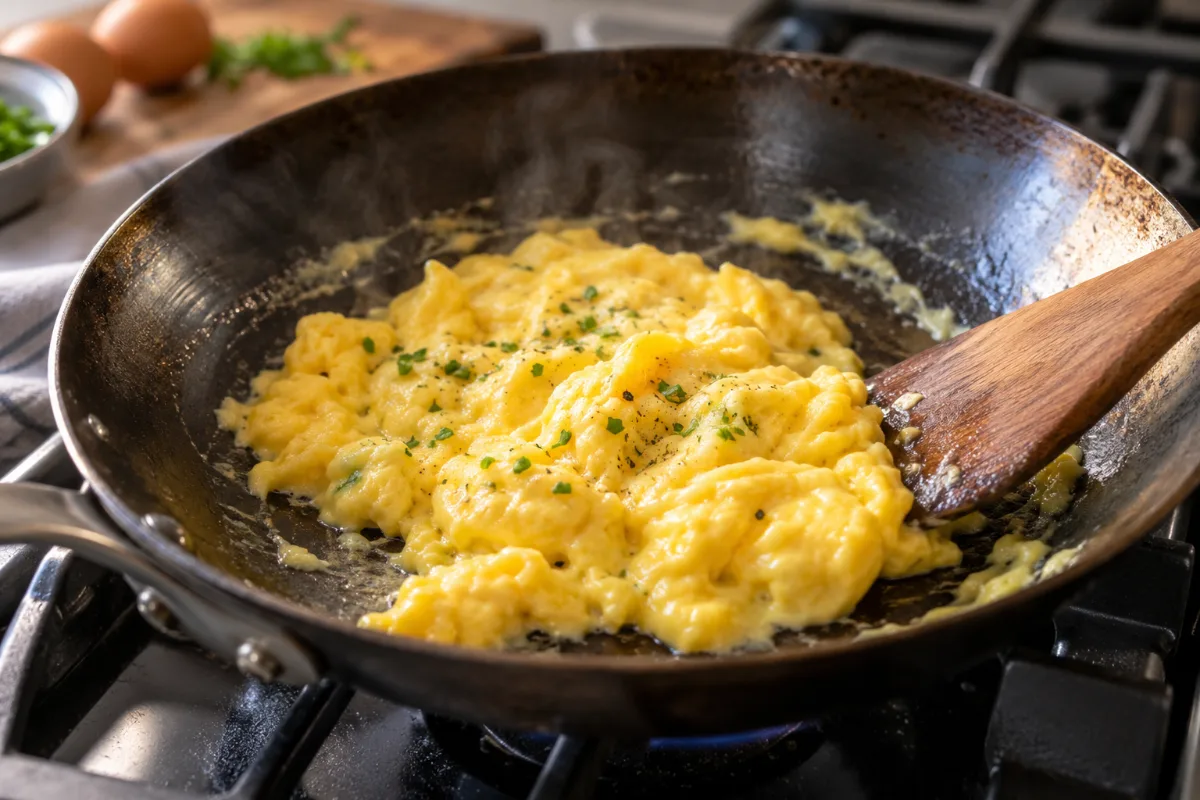
The quick reference below sums up the settings for each style.
| Egg style | Heat | Fat | Key cue |
|---|---|---|---|
| Fried, over easy | Medium | Butter or oil | Water beads before eggs go in |
| Sunny side up | Medium-low | Oil then butter | Cover briefly to set the top |
| Soft scramble | Low-medium | Butter | Move constantly, pull off early |
| Omelette | Medium | Butter | Pan fully preheated, work fast |
If your eggs still stick: a quick diagnosis
If eggs keep sticking after all that, work down this short ladder. Each rung ties back to one of the two real causes: heat or seasoning.
Sticking everywhere, pan felt cool? Heat problem. Preheat longer and confirm the water beads before the eggs go in. This fixes the majority of cases.
Sticking everywhere, pan was hot? Seasoning problem. The layer is too thin to release. Cook a few sessions of fattier foods, or add a couple of thin seasoning coats to build the surface. See why is my carbon steel pan sticky if the surface feels tacky rather than dry.
Sticking in one spot only? Uneven seasoning. That patch has less protection than the rest. Rebuild the seasoning, paying attention to the bare area, using our how to reseason a carbon steel pan steps.
Whites tore when you moved them? You moved too early. Let the eggs set and wait for the clean spatula slide before touching them.
Match the symptom to the cause and the fix is usually quick. For the full setup routine, start with how to season a carbon steel pan.
How eggs get easier as the pan ages
Set your expectations by the calendar, because this is the honest part. In month one, eggs take real care: careful preheating, enough fat, and patience. The seasoning is still building, so bare spots are common and you will get the occasional stick.
By month two or three of regular cooking, the surface has darkened and hardened into a smooth layer, and eggs start sliding with far less effort. The pan you fought with in week one becomes the one you reach for without thinking. Every cook adds a little more seasoning, so the surface keeps improving on its own.
The takeaway is to keep cooking. The pan that gives you trouble today is training itself to be nonstick. Stick with the method here, and the improvement curve does the rest.
Frequently asked questions
Why do my eggs stick to a carbon steel pan?
What temperature should the pan be for eggs?
Should I use butter or oil for eggs in carbon steel?
Can you cook eggs in a brand-new carbon steel pan?
How do I stop scrambled eggs sticking in carbon steel?
The bottom line
Cooking eggs in carbon steel is a technique, not a gamble. Preheat until the water beads, add enough fat and let it shimmer, then add the eggs and leave them until they release on their own. Adjust heat and fat a little for fried, scrambled or omelette, and give a new pan a few weeks to settle in. Master the water test and you have solved the problem that sends most people back to nonstick. For everyday handling, see how to use a carbon steel pan.
References
- Serious Eats and Kenji López-Alt on egg cookery and pan temperature.
- America’s Test Kitchen on carbon steel and nonstick performance.
- De Buyer’s own eggs-in-carbon-steel guide (as a comparison point).