Carbon Steel vs Ceramic Cookware: Which to Buy
By the Carbon Steel Pan test team · Last updated September 2026
Carbon steel and ceramic cookware both avoid PFAS, but they behave very differently. Ceramic nonstick is easy to use out of the box, yet its coating wears out in a few years. Carbon steel needs seasoning, but it takes high heat, sears better, and lasts for decades. Pick ceramic for low-effort, low-heat cooking, and carbon steel for versatility and a long life.
The short comparison
Think of it as convenience now versus performance forever. A ceramic pan asks nothing of you on day one. Pour in some oil, cook, wipe it clean. But that slick surface is a thin coating, and coatings fade. Within a year or two most ceramic pans lose their easy release, and the pan that felt effortless starts sticking.
Carbon steel flips that deal. It asks for seasoning and a little care up front. In return it gives you searing heat, oven safety, and a surface that gets better the more you cook. One good carbon steel pan can outlast a dozen ceramic ones.
The confusion between the two is understandable. Both get marketed as healthy, coating-free-sounding alternatives to old Teflon pans, and both look sleek in the store. But they are built on opposite ideas. Ceramic buys you ease by adding a coating. Carbon steel buys you longevity by having none. Almost every difference below flows from that one split.
The table further down lays the two side by side. First, the reasons behind each row.
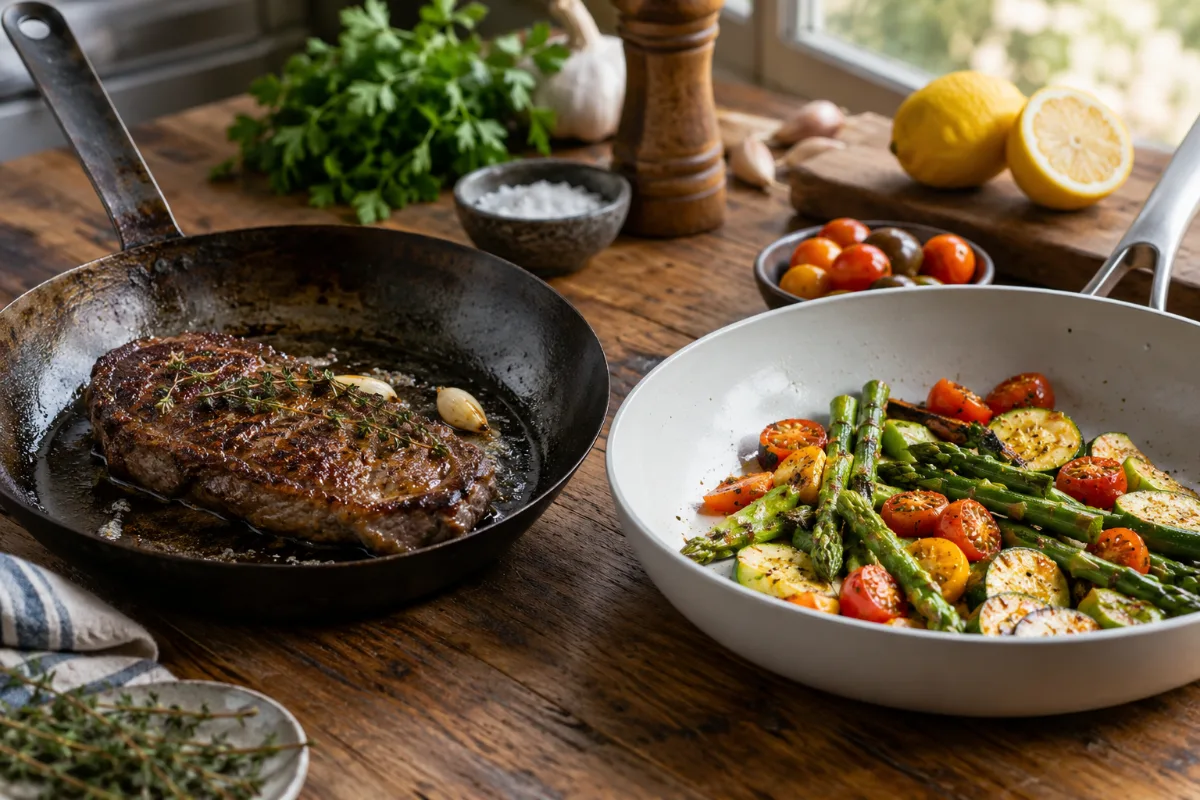
Quick answer: Our tested guide to carbon steel vs ceramic keeps it simple: master the technique, keep the surface seasoned, and match your heat to the food. The full method, the key facts and the mistakes to avoid are all below.
Carbon Steel Vs Ceramic: What Our Tests Found
Our team put carbon steel vs ceramic through repeated real cooking sessions to see what actually works. Below we break down the method, the facts that matter, and the common mistakes so you get reliable results the first time.
Safety: both avoid PFAS, but not equally
Neither pan uses PTFE or the older PFOA chemistry linked to classic nonstick. That is the good news for anyone worried about “forever chemicals.” Both can fairly be called PFAS-free in normal use, though you should still confirm any single ceramic brand’s own claims.
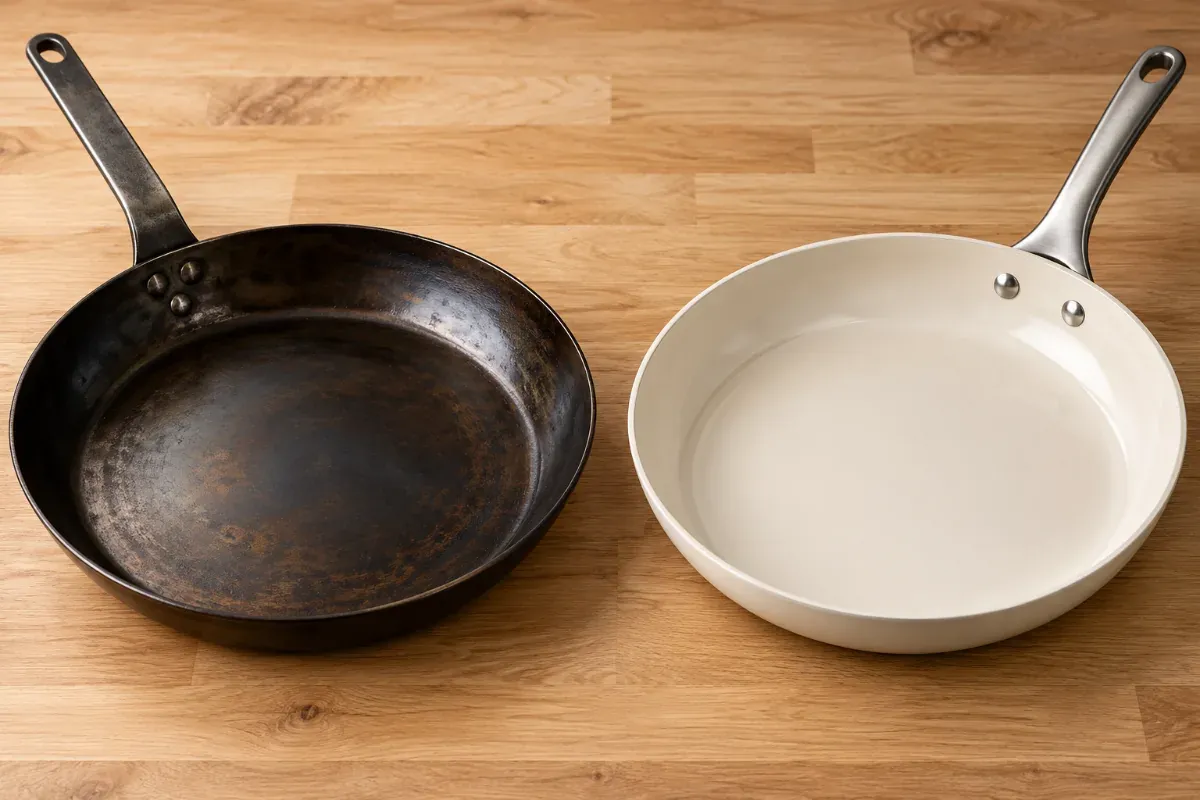
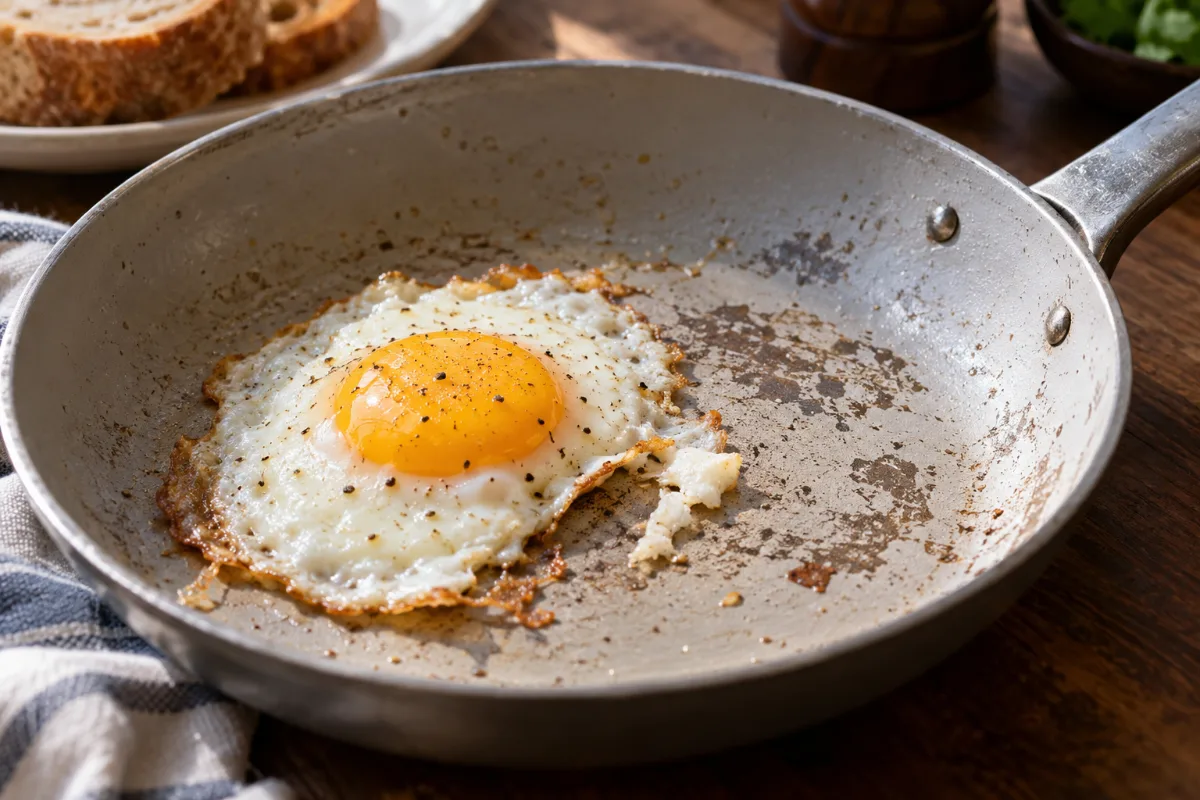
Here is the difference. Ceramic nonstick is a sol-gel coating, a thin layer sprayed and cured onto the metal. It is inert while intact. But it is still a coating, and coatings wear, chip, and break down with heat and abrasion. Once it degrades, its release is gone and small amounts can flake.
Carbon steel has no coating at all. The dark, slick surface is seasoning, which is just oil polymerized onto bare iron by heat. There is nothing sprayed on and nothing to wear through into your food. The Environmental Working Group’s cookware guidance and America’s Test Kitchen both treat coating-free metals as the low-worry choice.
There is a second wrinkle worth knowing. “Ceramic” on a pan almost never means solid pottery. It means a spray-on glaze made from silica, the sol-gel layer. Real ceramic in that sense is thin. Marketing leans on the clean, natural image of the word, but the physical reality is still a coating with a limited life. Reading the fine print on any ceramic pan helps here, and groups like the Environmental Working Group publish plain guidance on what the labels actually mean.
So both start safe. Only carbon steel stays out of the coating question entirely, for as long as you own it.
Cooking performance and heat
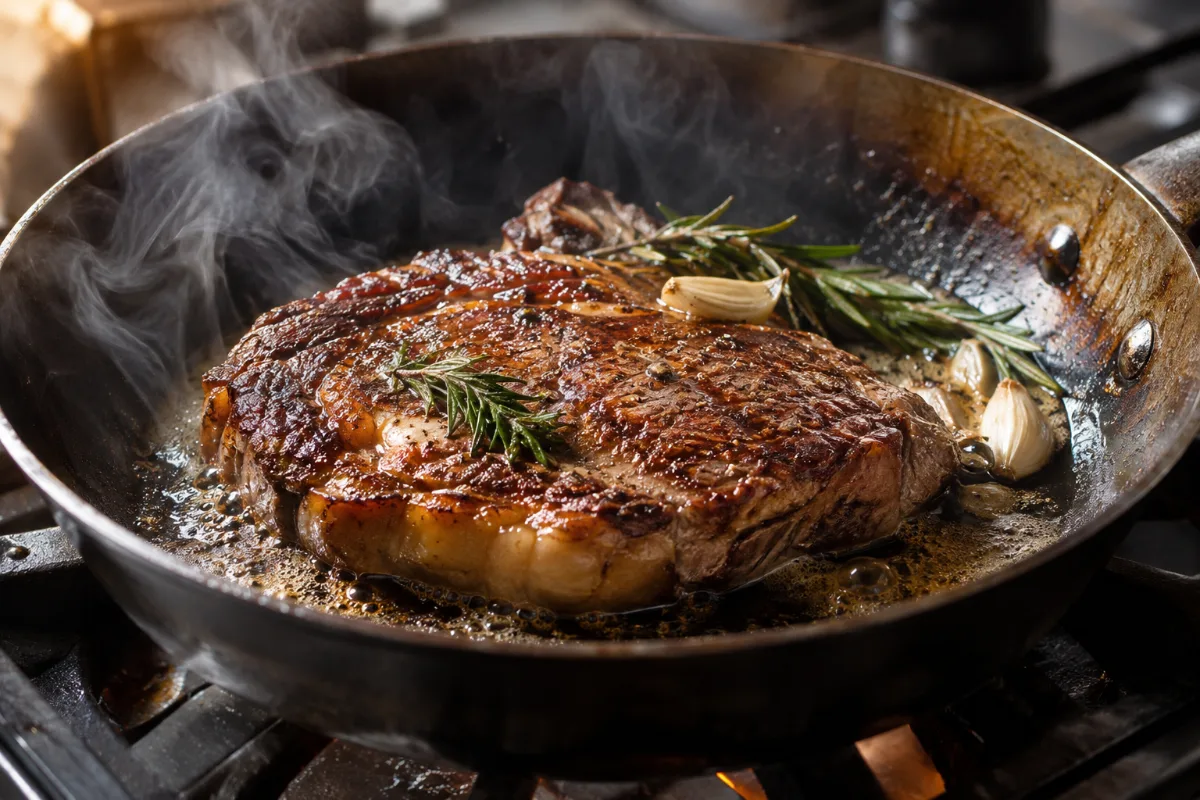
This is where the gap opens wide. Carbon steel is built for high heat. It comes up to searing temperature fast and holds it, which gives you a deep brown crust on steak, chicken skin, and vegetables. You can run it hard, and you can move it straight into a hot oven.
Ceramic is a gentle-heat tool. Most makers tell you to stay at low to medium, because high heat shortens the coating’s life. That rules out a proper sear. Push a ceramic pan hot enough for a good crust and you trade away the very nonstick surface you bought it for.
Response also differs. Carbon steel reacts to the burner almost instantly, so you control the cook by moving the knob. Ceramic pans, often thicker aluminum bodies, respond more slowly and are happier at a steady medium.
The stick-and-release story flips over time, and that surprises people. On day one, ceramic releases better than a freshly seasoned carbon steel pan. Fried eggs slide right off a new ceramic pan. But six months in, the ceramic coating is fading while the carbon steel seasoning is maturing. By a year, a well-used carbon steel pan often releases eggs as cleanly as ceramic did when new, and it keeps that ability. The lines cross, and carbon steel ends up ahead.
There is a flavor angle too. Because carbon steel takes high heat, it builds fond, the browned bits stuck to the pan after searing. Deglaze those with a splash of liquid and you have an instant pan sauce. Ceramic’s non-stick, low-heat nature means little fond forms, so you lose that free layer of flavor. Cooks who care about sauces and browning notice the gap quickly.
Versatility follows from that heat range. Carbon steel roasts chicken, sears fish, stir-fries vegetables, bakes cornbread, and finishes dishes under the broiler. It moves from stovetop to oven without a second thought. Ceramic pans usually cap out at a moderate oven temperature and are happiest doing gentle stovetop work, so one pan covers fewer jobs.
For eggs and pancakes on low heat, ceramic is lovely early on. For searing, stir-frying, and anything that wants real heat, carbon steel is the clear pick.
Durability and lifespan
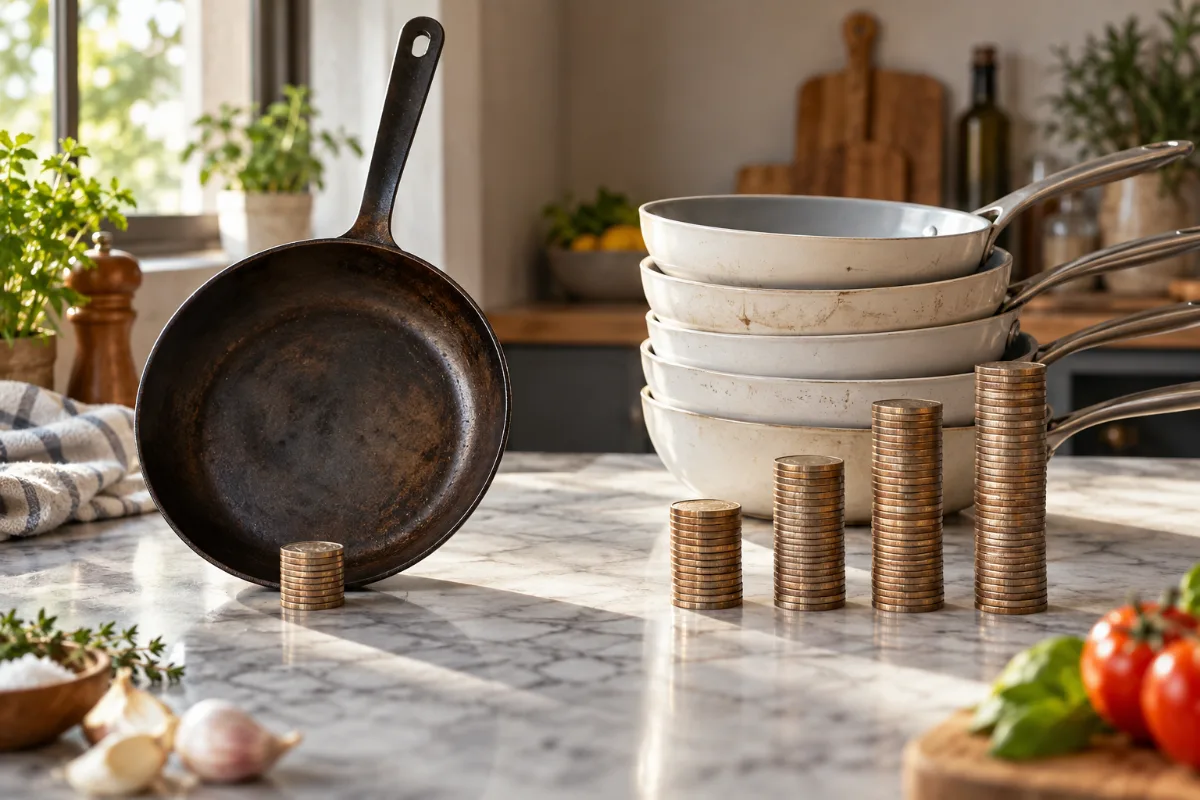
Lifespan is the story that should decide most buyers. Ceramic nonstick typically holds its release for one to three years, less if you cook hot or use metal tools. After that the coating is spent, and the pan goes in the bin. That is a recurring cost.
Carbon steel measures its life in decades. The seasoning is renewable. If it wears or you scorch it, you re-season and carry on. There is no coating with an expiry date. Cooks routinely pass down carbon steel and cast iron for a generation or more, and old French bistro pans still in service prove the point.
America’s Test Kitchen and other independent testers have long noted that coating-based pans are best treated as replaceable, while bare-metal pans are lifetime tools. That framing is the honest one. You are not comparing two pans so much as two ownership models: rent versus own.
Run the math and the choice sharpens. Say a decent ceramic pan costs a moderate amount and lasts two years. Replace it fifteen times over thirty years and the total dwarfs a single carbon steel pan bought once. Cost per year of real use lands firmly with carbon steel.
Habits shorten a ceramic pan’s life further. Metal utensils scratch the coating. High heat cooks it. Stacking pans without protection chips it. Dishwasher cycles wear it. Most people do at least one of these, so real-world life often lands at the short end of that one-to-three-year range. Carbon steel shrugs off metal tools, high heat, and stacking, because there is no fragile layer to protect.
Ceramic can still make sense if you value out-of-box ease over long-term value. Just go in knowing it is a consumable, more like a good knife’s edge than a lifetime tool.
Ease of use and maintenance
Give ceramic its due. On day one it wins. No seasoning, no ritual. It releases food from the first cook, and it cleans up with a soft sponge. For a nervous beginner, that is a real comfort.
Carbon steel has a learning curve. You season it before first use, you preheat properly, you use enough fat while the seasoning is young, and you dry it after every wash so it does not rust. None of this is hard, but it is a habit you build over the first few weeks.
The payoff is that carbon steel gets easier over time while ceramic gets worse. As seasoning matures, the surface turns slick and forgiving. Meanwhile the ceramic coating is slowly losing its grip. The two lines cross within the first year for most cooks.
Maintenance-wise, carbon steel wants hot water, a soft scrub, a thorough dry, and a wipe of oil. The one real rule is dry it so it does not rust. Ceramic wants gentle handling, low heat, and no metal utensils to protect the coating. Neither is high effort day to day. The difference is that carbon steel care preserves something that keeps improving, while ceramic care only slows an unavoidable decline.
There is also a repair story here. Scorch or neglect a carbon steel pan and you strip it back and re-season. It returns to full working order. A worn ceramic coating cannot be renewed. Once the release goes, the pan is done. If you want the full routine, our how to season a carbon steel pan guide walks through it.
Which should you buy?
Match the pan to how you actually cook. Choose ceramic if you cook mostly eggs and low-heat dishes, you want zero setup, and you are fine replacing the pan every couple of years. It is a fine gentle-use, everyday pan for a light cook.
Choose carbon steel if you sear, stir-fry, roast, or want one pan that does most jobs and lasts. It handles high heat, moves to the oven, and rewards a small amount of care with decades of service. For most kitchens, that versatility is worth the short learning curve.
A quick way to decide: picture the meal you cook most. If it is scrambled eggs on low heat and a wipe-clean finish, ceramic will please you for its first year or two. If it is a seared chop, a stir-fry, roasted vegetables, or anything that browns, carbon steel will serve you far better and far longer. Most people who cook a range of food land on carbon steel once they weigh lifespan and heat.
One honest caveat for carbon steel: acidic foods. Long-simmered tomato sauce or a lemony pan sauce can strip young seasoning and pick up a metallic edge. Keep acidic cooking short until the seasoning is well established, or reach for stainless or enamel for those dishes. Ceramic handles a quick acidic sauce without complaint, which is a fair point in its favor.
Budget matters in the decision too, but not the way it first looks. A ceramic pan can cost less at the register, yet you buy it again and again. A carbon steel pan costs a bit more once and then stops costing you. Over five or ten years, carbon steel is the cheaper habit as well as the better performer.
Many cooks end up owning both: a small ceramic or seasoned pan for delicate low-heat eggs, and a carbon steel workhorse for everything with heat. That pairing covers gentle cooking and high-heat cooking without asking one pan to do a job it is bad at. If you have to pick one, and you are willing to learn a simple routine, carbon steel gives more cooking for less money over time. See our carbon steel versus nonstick pans comparison and what is the safest cookware guide for more.
| Factor | Carbon steel | Ceramic nonstick |
|---|---|---|
| Coating | None (seasoning) | Sol-gel, wears out |
| High heat | Excellent | Poor, degrades coating |
| Searing | Excellent | Weak |
| Out-of-box ease | Needs seasoning | Ready to use |
| Lifespan | Decades | 1 to 3 years |
| PFAS | None | Usually none |