Carbon Steel vs Nonstick Pans: Which Is Better?
As an Amazon Associate I earn from qualifying purchases, at no extra cost to you.
Non-stick pans work perfectly on day one and wear out in two to five years. Carbon steel works poorly at first and improves for decades. Non-stick uses less oil and suits low-heat egg cookery. Carbon steel sears far better, has no coating to degrade, and costs less over time.
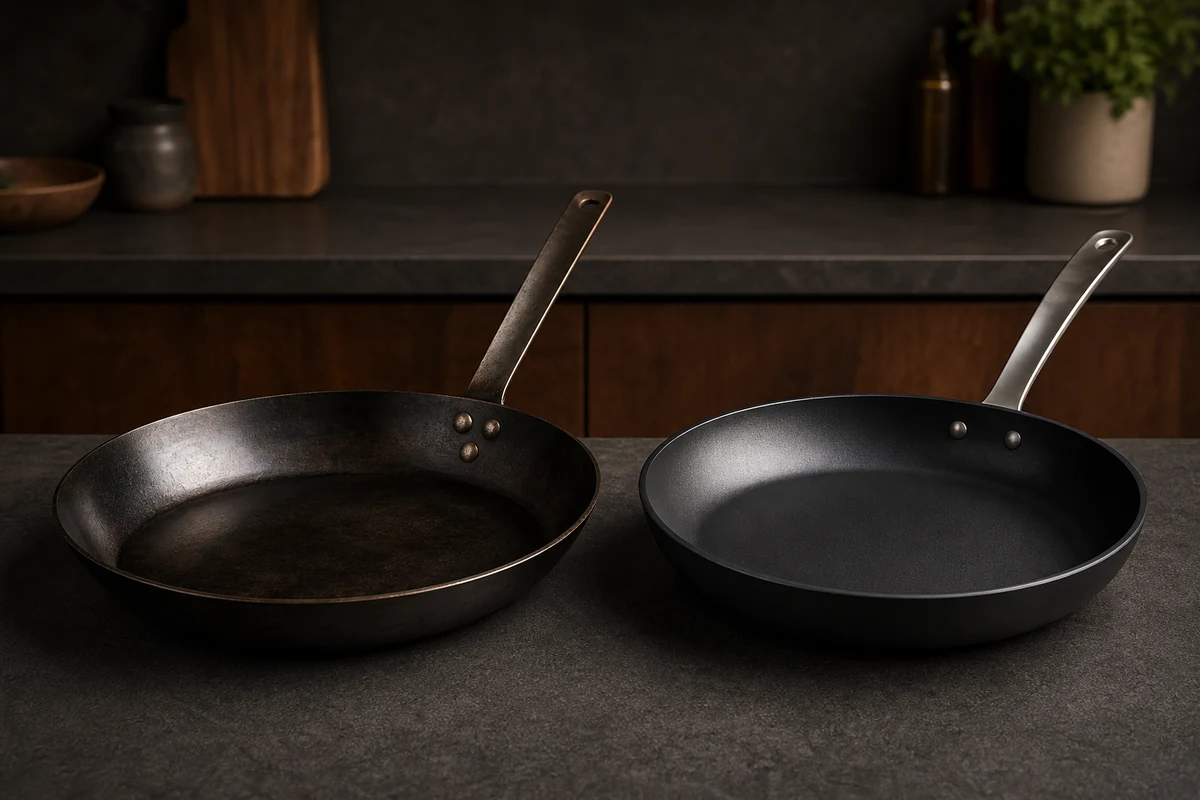
Quick answer: Our tested guide to carbon steel vs nonstick pans keeps it simple: master the technique, keep the surface seasoned, and match your heat to the food. The full method, the key facts and the mistakes to avoid are all below.
Carbon Steel Vs Nonstick Pans: What Our Tests Found
Our team put carbon steel vs nonstick pans through repeated real cooking sessions to see what actually works. Below we break down the method, the facts that matter, and the common mistakes so you get reliable results the first time.
The core difference
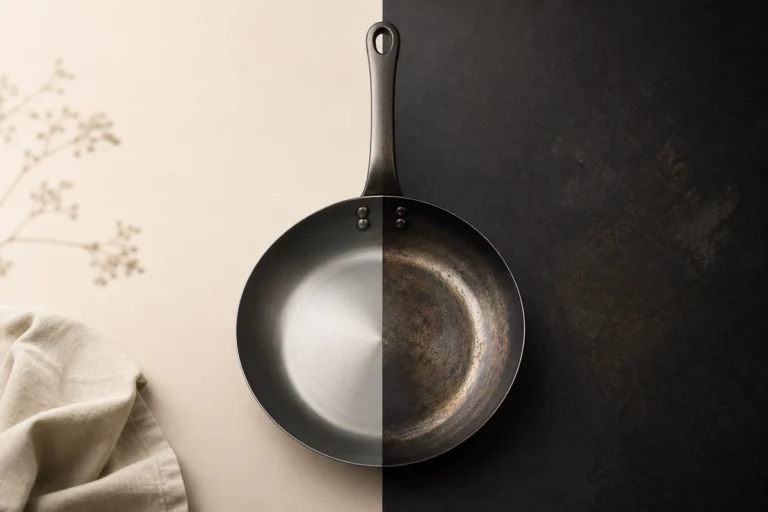
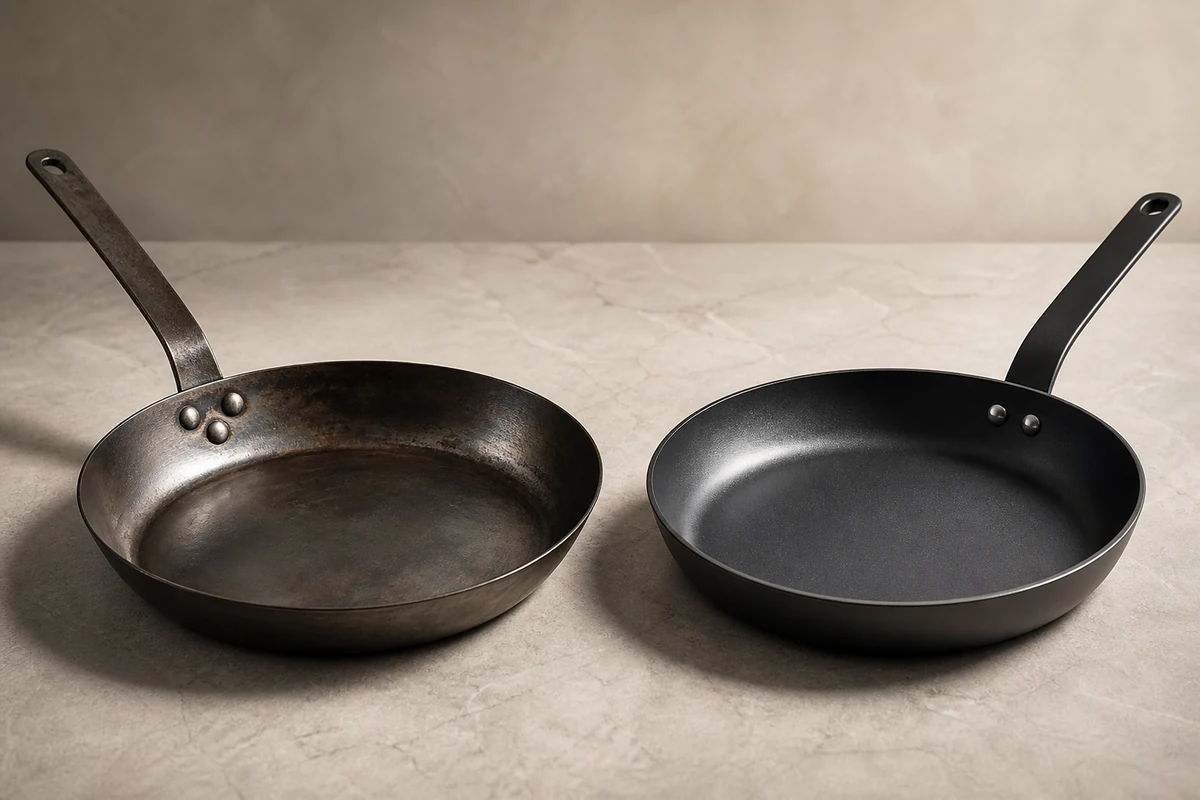
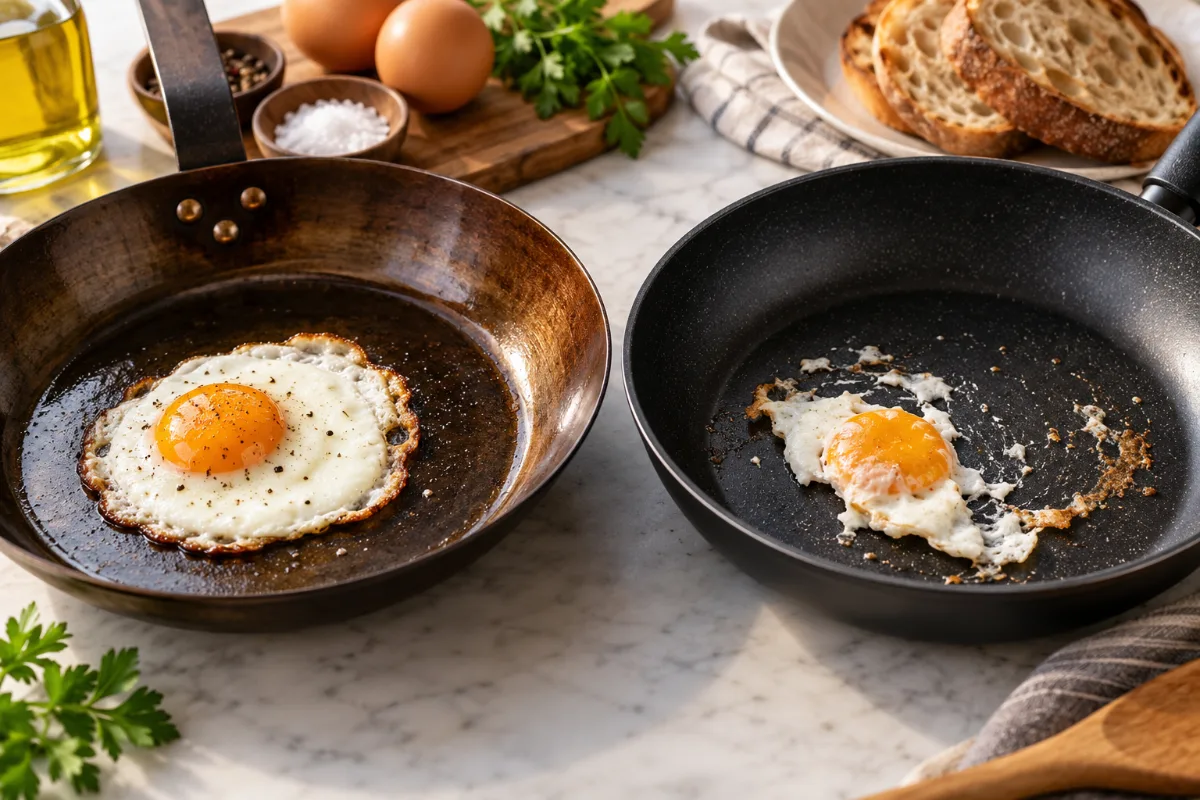
A non-stick pan is at its best the moment you unbox it. Every use after that degrades the coating slightly.
A carbon steel pan is at its worst the moment you unbox it. Every use after that improves the seasoning slightly.
Those opposite trajectories explain almost every practical difference between them.
Head to head
| Carbon steel | Non-stick (PTFE) | |
|---|---|---|
| Works on day one | No | Yes |
| Performance over time | Improves | Declines |
| Lifespan | Decades | 2 to 5 years |
| High-heat searing | Excellent | Poor, degrades above 500°F |
| Oil needed | Low, once seasoned | Very low |
| Metal utensils | Fine | No, scratches coating |
| Coating to wear out | None | Yes |
| Dishwasher | No | Often not |
| Maintenance | Real | Minimal |
| Cost over 20 years | 1 pan | Roughly 7 pans |
What non-stick does better
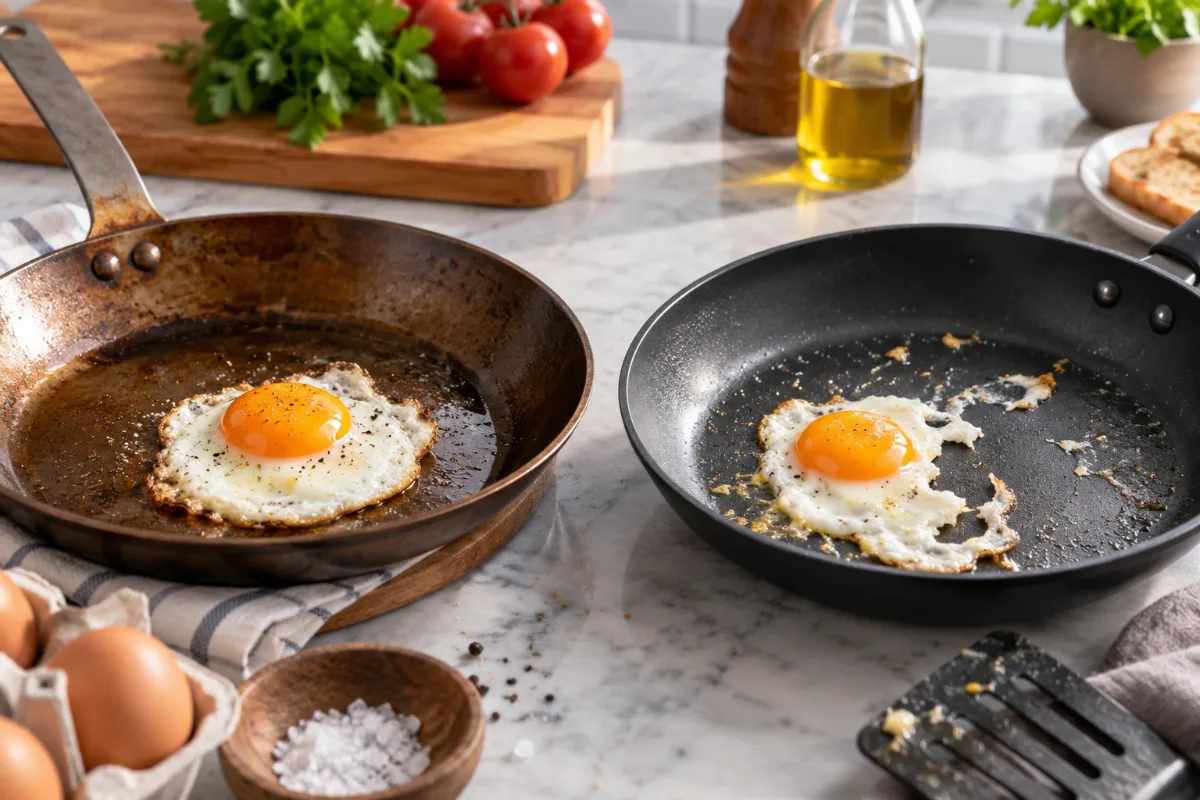
Eggs with little or no fat. A new non-stick pan cooks a dry omelette that a carbon steel pan cannot match even when mature.
Day-one convenience. No seasoning, no learning curve, nothing sticks.
Low-fat cooking. If minimising added oil is the priority, non-stick wins.
Delicate food, gently. Fish and pancakes release easily on a fresh coating.
What carbon steel does better
Searing. Non-stick cannot safely reach the temperatures a crust needs. Carbon steel is built for exactly this.
Longevity. No coating means no failure point. See are carbon steel pans worth it for the cost breakdown.
High heat generally. Oven, grill, fire, all fine.
Metal utensils. Scrape, flip and scratch freely.
No coating question. Nothing to shed into food. More in are carbon steel pans safe.
The health angle
Modern PTFE made without PFOA is considered safe at normal cooking temperatures. The real risks are overheating an empty coated pan above roughly 500°F and cooking on a scratched, flaking coating.
Carbon steel sidesteps both by having no coating. It transfers a little dietary iron instead, which most people benefit from.
If avoiding synthetic coatings is your goal, carbon steel achieves it while still giving you non-stick behaviour once seasoned.
Which should you buy?
Not actually either-or for most people.
Keep one non-stick pan for eggs and low-fat cooking, accept that you replace it every few years, and never overheat it empty. Use carbon steel for everything involving heat, searing, frying, stir-fry.
If you truly want one pan, carbon steel is the better long-term choice for anyone who sears, provided you accept the month-long learning curve. Our comparison of ten pans starts at $26.99.
Switching from nonstick: what to buy
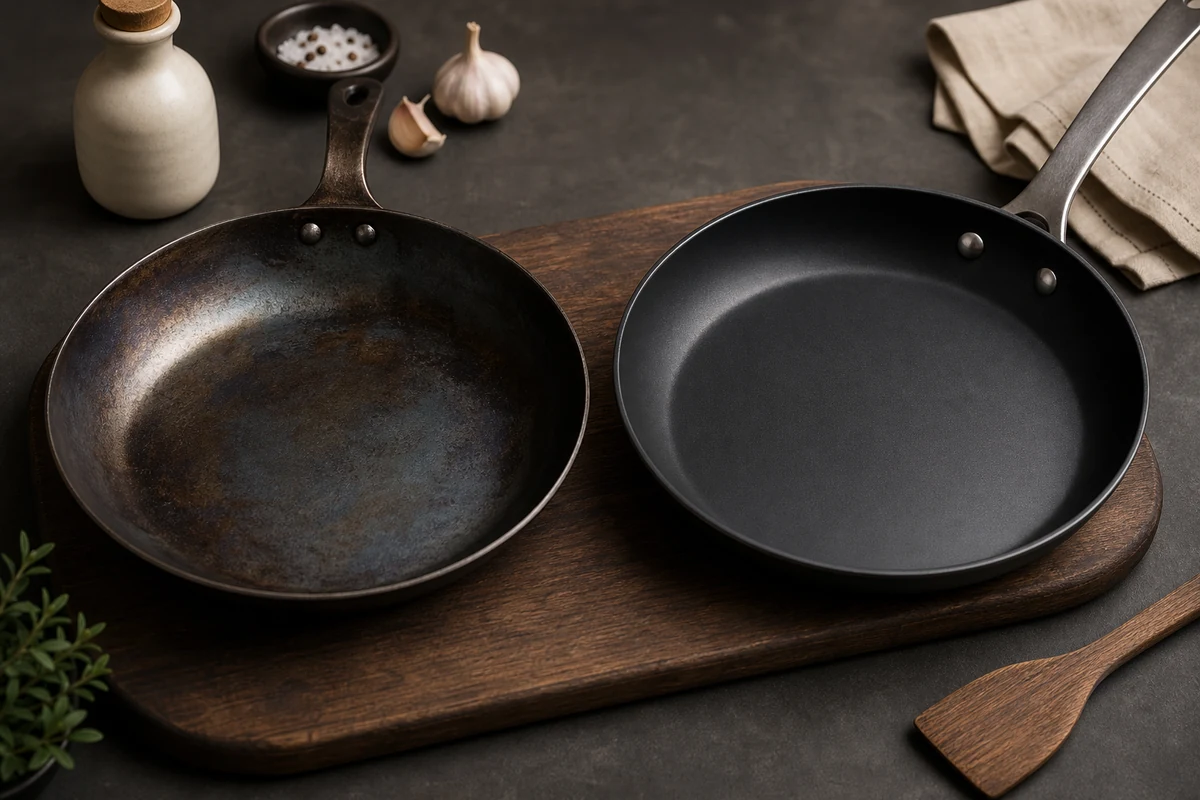
Nonstick coatings wear out. That is the whole reason most people end up reading a page like this. If you are replacing a 10 inch nonstick, the closest match in feel is the Armorbear 10 inch nitrided pan at $26.99, because a nitrided surface releases food better than raw steel on day one. Want one pan that outlasts three nonstick ones? The Merten & Storck 12 inch is $59.99, triple-riveted and oven safe. All ten are compared in our frying pan guide.