Carbon Steel Gauge and Thickness Guide: 2mm to 3mm Explained
By the Carbon Steel Pan test team · Last updated September 2026
Carbon steel pans usually run from about 2mm to 3mm thick. Thicker steel holds heat better for searing and resists warping, but it weighs more and heats slower. Thinner steel is lighter, responds faster, and is easier to toss, though it warps more readily under fierce heat. For most home cooks, around 2.5mm strikes the best balance between heat retention and handling.
Thickness is the spec that shapes how a pan feels and behaves more than any brand name does. Once you understand the trade-off, you can read any product listing and know what you are getting before it arrives. This guide translates the numbers, explains what each thickness does well, and matches a gauge to the way you actually cook.
The thickness trade-off in one line
Every choice in carbon steel comes back to a single tension: mass versus speed.
More thickness means more metal, which means more stored heat and more resistance to bending. A heavy pan sits at a steady temperature and shrugs off the cold shock of a steak hitting the surface. But that same mass takes longer to warm up and tires your wrist.
Less thickness means the pan heats in a flash and flips like an extension of your hand, which is why woks are thin. The cost is that thin steel gives up heat quickly when food goes in, and it is more likely to warp if you blast it on a small burner.
Neither is better in the abstract. The right thickness depends on what you cook and how you cook it, which the rest of this guide sorts out.
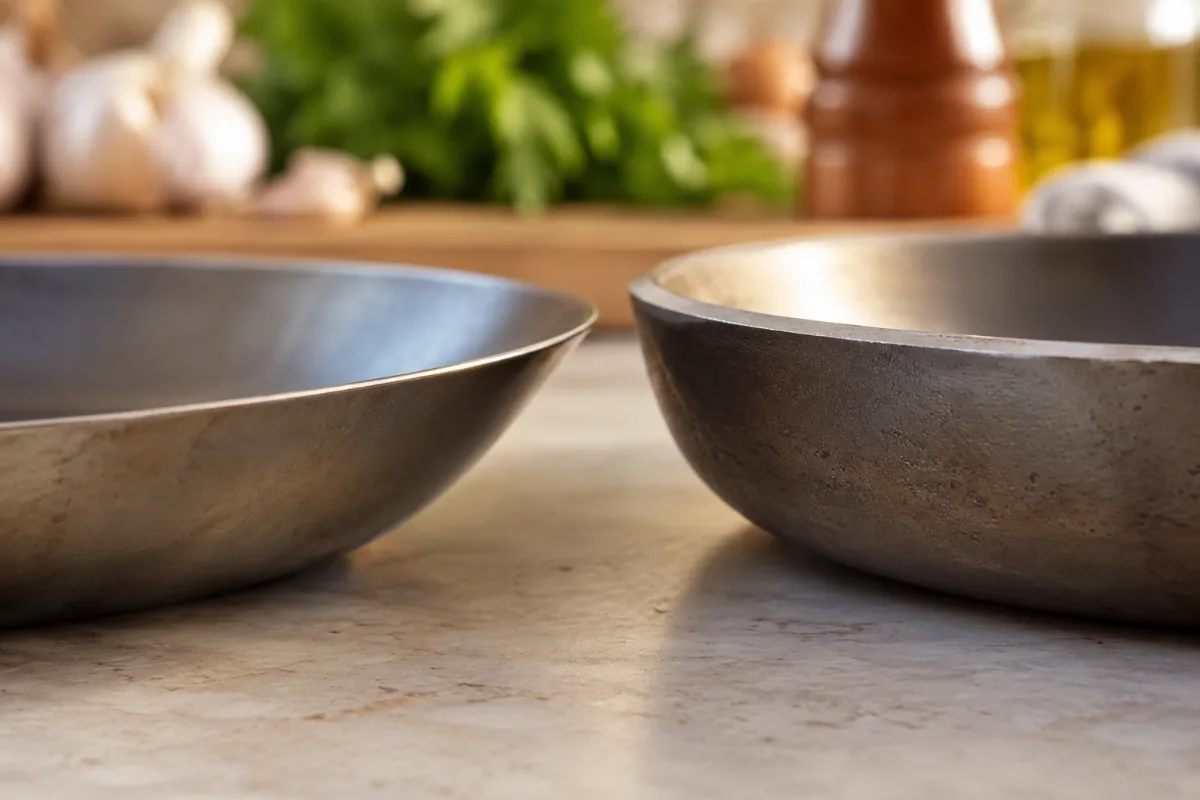
Keep in mind that the differences between 2mm and 3mm are real but not dramatic in daily cooking. Any carbon steel pan in this range heats fast compared to cast iron and sears well once hot. Thickness fine-tunes the experience rather than defining whether the pan works at all. So while the choice is worth making with intent, do not agonize over half a millimetre. Pick the end of the range that matches your cooking and you will be well served.
What gauge and millimetres mean
Two systems describe the same thing, and seeing both on different listings causes real confusion.
Millimetres are direct: a 2.5mm pan has walls and a base 2.5mm thick. Bigger number, thicker pan. Most modern brands, especially French and American makers, label in millimetres because it is clear.
Gauge is an older sheet-metal scale, and it runs backwards. A lower gauge number means thicker steel, and a higher number means thinner. So a pan described as heavier gauge is thicker, even though the number is smaller. If a listing gives only a gauge, the plain fix is to ask for or find the millimetre figure, which almost every reputable brand publishes on its spec page.
As a rough guide, common carbon steel pans fall around 12 to 14 gauge, which lands roughly in the 2mm to 3mm range (verify against the exact model, since gauge charts vary by metal). The takeaway is not to memorize a conversion but to remember the direction: when a marketing page brags about a “heavy gauge” pan, it means thick and heavy, not thin. Match the claim to the millimetre number and you will never be caught out by the wording.
When you compare pans, convert everything to millimetres so you are comparing like with like. From there the behavior is predictable.
Do not confuse thickness with quality, either. A thin pan is not a cheap pan and a thick pan is not automatically a better one. Both thicknesses are made well by good brands and poorly by bad ones. Thickness tells you how the pan will behave, not how well it is built. Judge build quality by the steel, the handle attachment, and the flatness of the base separately, and treat thickness purely as a performance choice.
Thick steel: heat retention and searing
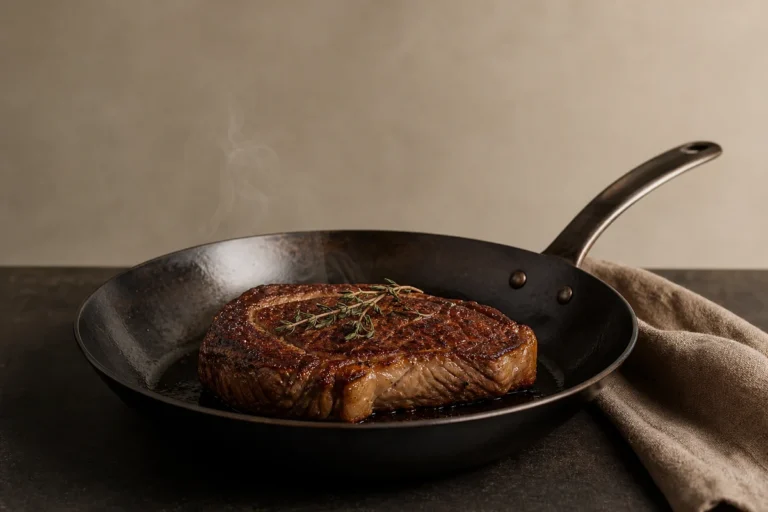
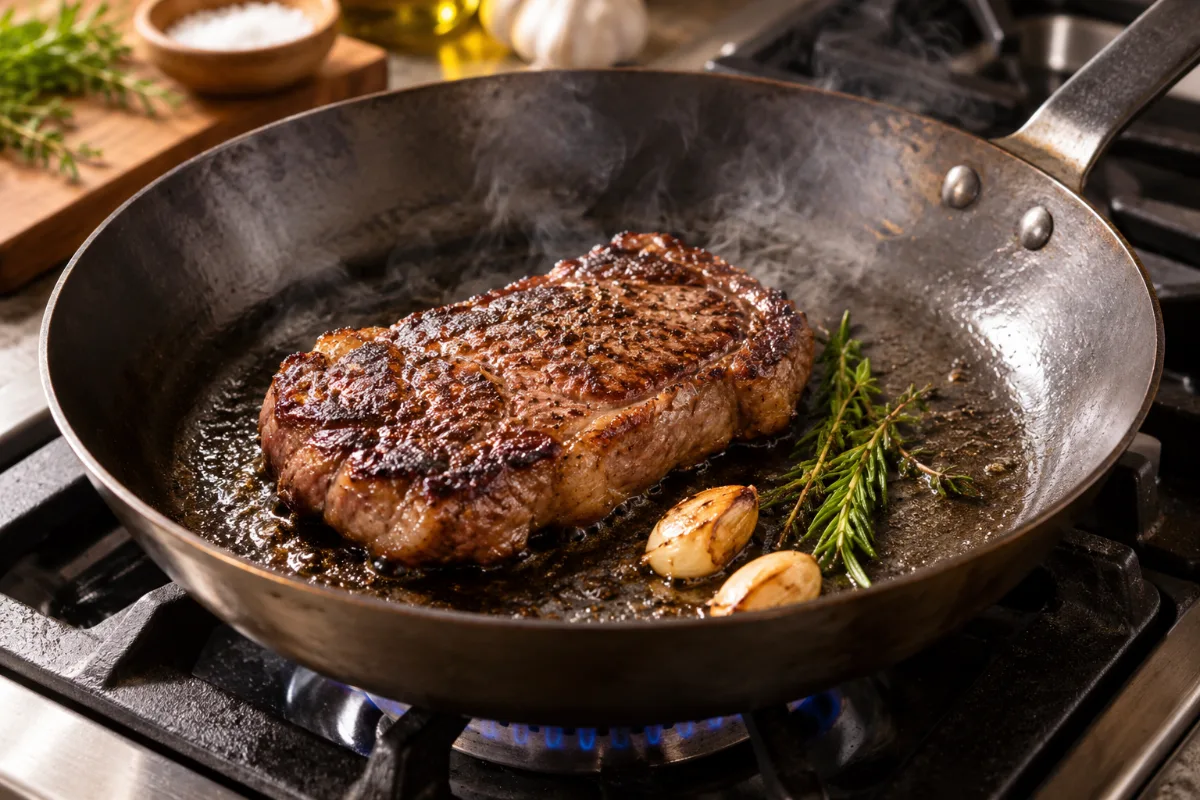
Professional cooks who sear a lot tend to reach for the heavier pans, and the reason is thermal mass. A 3mm pan stores a large reserve of heat. When a cold steak or a batch of vegetables hits it, the surface temperature barely dips, so the food keeps browning instead of stewing. That steady heat is what builds a deep, even crust.
Thick steel also resists warping. The extra metal holds its shape against uneven burners and high heat, so the base stays flat over years of hard use. If you cook on a powerful gas ring or push your pan to its limits, a heavier gauge is the safer long-term buy.
The trade-offs are real. A 3mm pan is heavy, especially in larger sizes, and it takes longer to reach cooking temperature. You also lose responsiveness: when you turn the heat down, a thick pan stays hot for a while. For searing, that inertia is a feature. For delicate work, it can get in the way.
There is a myth worth clearing up here. People sometimes assume a thick pan spreads heat evenly across the base, the way an aluminum-cored pan does. Carbon steel is not a great heat conductor, so even a 3mm pan tends to be hottest right over the burner. What the extra thickness buys you is not even heat but stored heat, the reserve that keeps the surface from crashing when cold food lands. If you want a uniformly hot base, you preheat and let the whole pan settle rather than relying on thickness to do it for you.
Thin steel: speed and tossing
At the other end, a pan around 2mm heats almost the moment it hits the flame and cools quickly when you pull it off. That responsiveness gives fine control over gentle tasks and makes the pan feel alive under your hand.
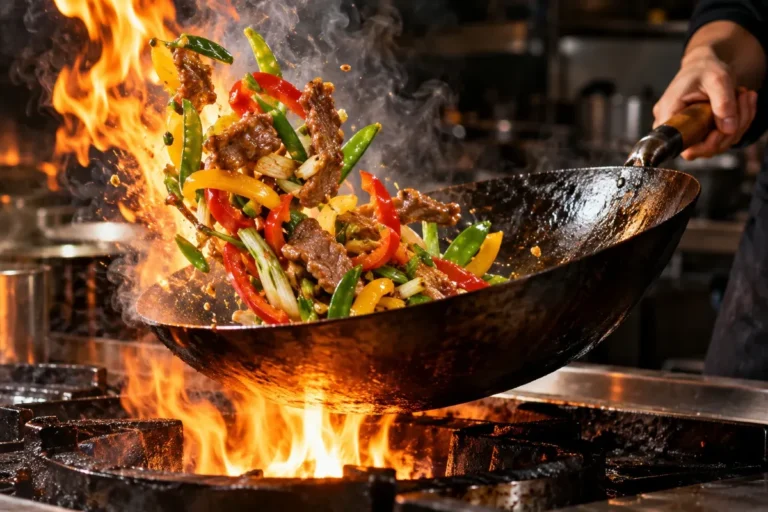
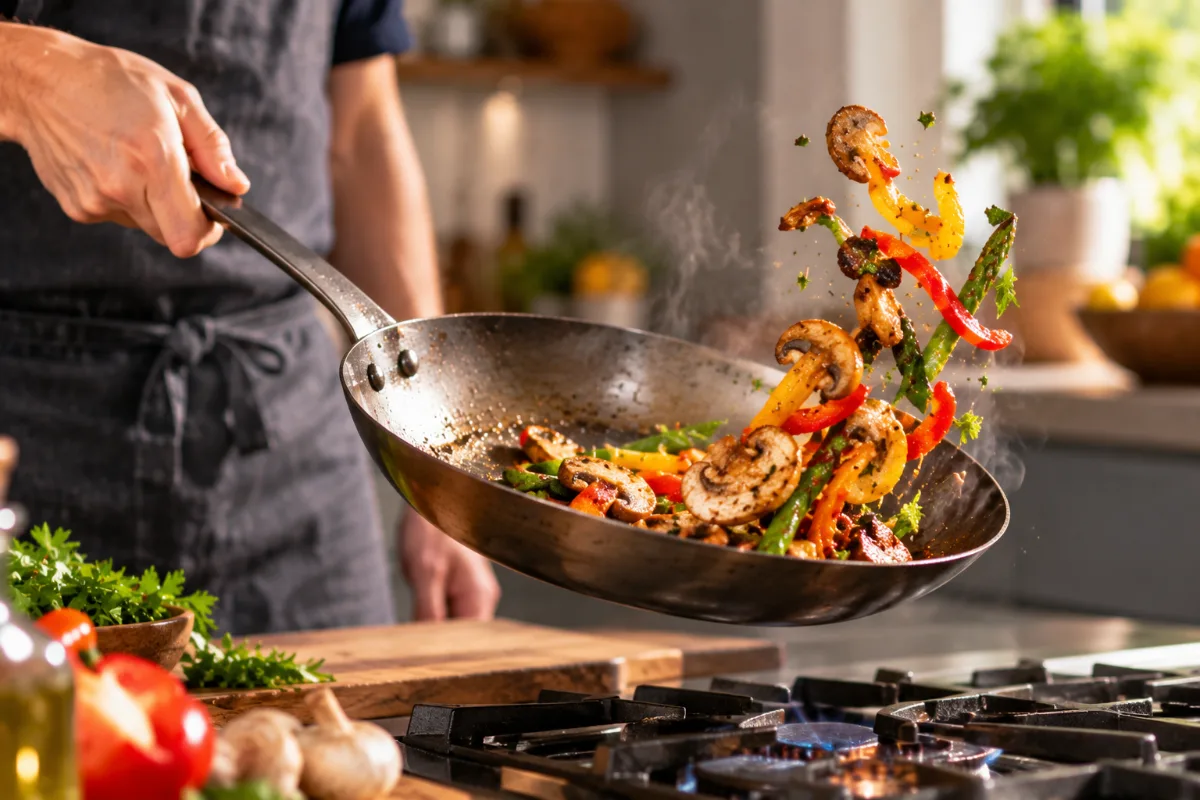
The bigger advantage is weight. Thin carbon steel is light enough to toss and flip repeatedly, which is exactly what stir-frying and pan-tossing need. This is why traditional woks are made from thin steel: a cook has to lift and swirl the pan constantly through a fast cook, and a heavy pan would be exhausting.
The catch is warping. Thin metal expands unevenly when heated fast or on a burner smaller than the base, and it can deform. It also gives up heat faster when a big load of food goes in, so searing a full pan is harder to pull off. Thin steel rewards a cook who heats gradually and works in batches. Our guide on carbon steel pan warping covers how to avoid that risk whatever thickness you choose.
Thin steel also asks a little more attention on the stove. Because it heats and cools so fast, the temperature can swing quickly if you are not watching, and a thin empty pan left on high can overheat in a hurry. None of this is hard to manage once you know the pan, and many skilled cooks prefer thin steel precisely because it answers so quickly. But a distracted beginner searing on a small burner is the classic warping story, and thin steel is where it happens most.
Which thickness for which cook
Match the gauge to the job and you will be happy with the pan for decades.
For searing
If your main goal is a restaurant crust on steak, chops, or a hard-seared piece of fish, lean toward the thicker end, around 2.75mm to 3mm. The heat reserve keeps the surface hot when cold food lands, and the mass resists the warping that high heat can cause. You accept the weight in exchange for browning power.
For everyday
For mixed daily cooking, eggs one morning and a sear the next, around 2.5mm is the balanced pick. It holds enough heat to brown well, heats in a reasonable time, and does not punish your wrist. This is why 2.5mm shows up so often as the default thickness on all-round pans.
For woks and tossing
For a wok or any pan you toss constantly, choose thinner steel near 2mm. The light weight lets you swirl and flip through a fast cook, and the quick heat response suits the on-off nature of stir-frying. A slightly heavier wok holds searing heat a touch better, but most home cooks favor the lighter feel.
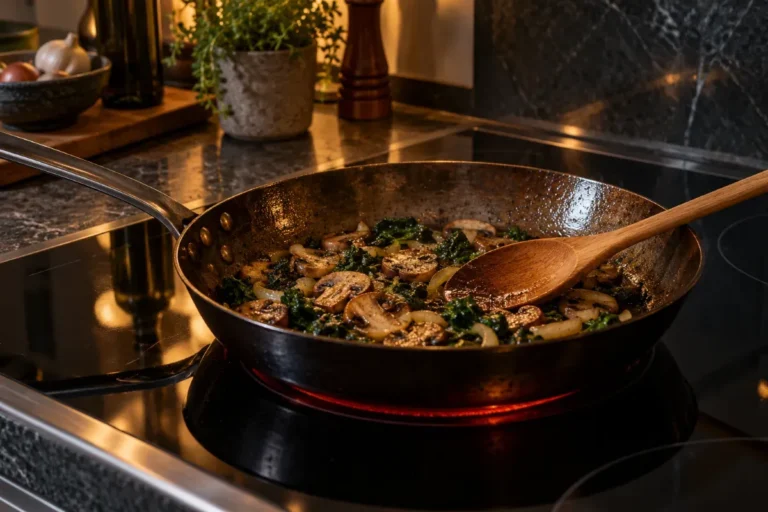
Induction users deserve a note of their own. Induction heats only the zone in direct contact with the base, so a flat, stable base matters more than raw thickness. A middling thickness around 2.5mm tends to work well because it resists the warping that induction’s fast, concentrated heat can trigger while staying responsive. Very thin pans can warp and then lose contact with the induction zone, which causes uneven heating and buzzing. If you cook on induction, favor a balanced gauge and a base that sits dead flat.
Here is the trade-off laid out.
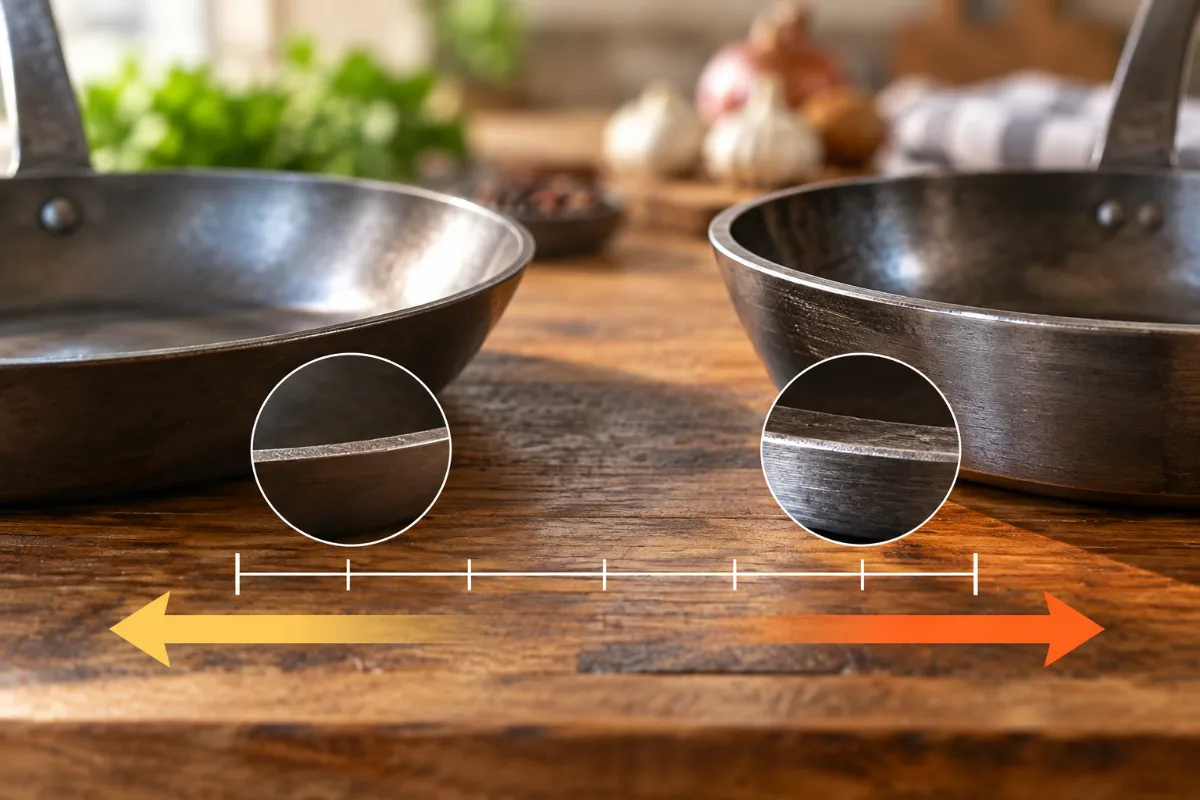
| Thickness | Heat retention | Response | Warp resistance | Best for |
|---|---|---|---|---|
| ~2mm | Lower | Fast | Lower | Woks, tossing, light use |
| ~2.5mm | Balanced | Good | Good | Everyday all-round |
| ~3mm | High | Slower | High | Searing, high heat |
Quick answer: Our tested guide to carbon steel pan thickness keeps it simple: master the technique, keep the surface seasoned, and match your heat to the food. The full method, the key facts and the mistakes to avoid are all below.
Carbon Steel Pan Thickness: What Our Tests Found
Our team put carbon steel pan thickness through repeated real cooking sessions to see what actually works. Below we break down the method, the facts that matter, and the common mistakes so you get reliable results the first time.
Our thickness recommendation
For a single do-everything pan, buy around 2.5mm. It gives most of the searing power of a heavy pan without the full weight penalty, heats at a sensible pace, and resists warping under normal home use. It is the thickness we recommend to anyone who wants one pan to handle the widest range of cooking.
Make an exception in two cases. If you sear constantly and cook on strong heat, size up to 3mm for the extra stability and heat reserve. If you mostly stir-fry or want the lightest possible pan, drop to 2mm and heat it with a little more care. Whatever you pick, confirm the millimetre figure on the brand spec page rather than trusting a vague gauge label.
Also weigh thickness against the size you are buying. A thick pan in a small 8-inch size is easy to handle, so you can happily go heavier there. The same thickness in a 12-inch pan becomes a real weight, so many cooks pair a heavier small pan for searing with a thinner large pan they can still toss. Thinking about thickness and size together, rather than in isolation, is how you end up with pans you actually enjoy using rather than ones that stay in the cupboard.
For help pairing thickness with the right dimensions, see our carbon steel frying pans guide, and if handle comfort matters to you, our comparison of riveted versus welded handles is a useful next read.