Can You Cook Acidic Foods in Carbon Steel? Tomato, Wine and Lemon
By the Carbon Steel Pan test team · Last updated September 2026
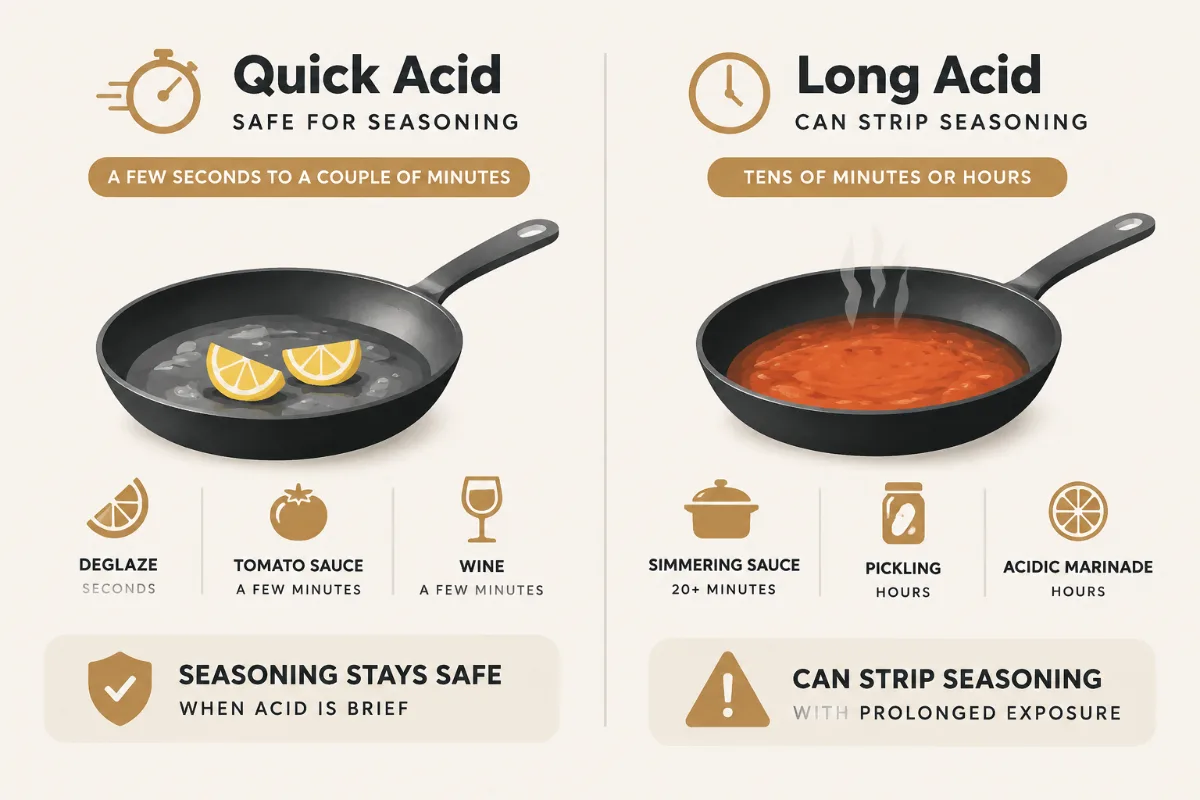
You can cook acidic foods in carbon steel, as long as you keep the contact brief. A quick wine deglaze, a squeeze of lemon, or a fast tomato sauté will not harm a well-seasoned pan. The trouble comes from long simmers of acidic dishes, which slowly strip the seasoning and can add a metallic taste. Keep acid quick.
Most people hear one blanket rule when they buy their first pan: no acid, ever. That rule is close enough to keep a beginner safe, but it is not the full truth, and following it too strictly means missing out on some of the best things a hot pan can do. The real answer is about time, not the food itself. A tomato is not the enemy. A tomato left to bubble for forty minutes is.
The real rule on acid
Here is the rule in one line: brief acid is fine, long acid is not.
Anything that touches the pan for seconds or a couple of minutes will not meaningfully hurt a seasoned surface. A wine deglaze, a finishing splash of lemon, a quick toss of cherry tomatoes: all fine. Anything that sits and simmers, dissolving into a sauce over many minutes, slowly works away at the seasoning layer and can pull a faint metallic edge into the food.
The strength of your seasoning matters too. A pan you have cooked on for months has a thick, tough patina that resists brief acid easily. A pan you seasoned last week is more vulnerable. When in doubt, keep the acid quick and save the long simmer for another pot. That single habit lets you use the pan for nearly everything without worry.
How do you judge “brief” in practice? A useful line is roughly the length of a pan sauce. If the acid goes in, does its job, and comes out within a few minutes, you are safe. If it settles in to reduce and thicken over ten, twenty, or thirty minutes, you have crossed into long-contact territory. Temperature plays a part as well. A rolling simmer moves the reaction along faster than a gentle warm, so a brief but very hot deglaze is still fine because it is over so quickly. Keep both time and heat in mind and you rarely go wrong.
Why acid affects seasoning
Seasoning is not paint. It is a thin layer of oil that has been heated until it bonds to the metal and hardens, a process called polymerization. That layer is what gives carbon steel its slick, food-releasing surface, and it is also what protects the bare steel underneath from rust and from reacting with food.
Acids are mildly corrosive. Given time, they dissolve that hardened oil layer the same way they would slowly eat at any fat. When the seasoning thins in a spot, two things happen. The surface loses some of its nonstick quality there, and the acid can reach the bare metal below and react with it. That reaction is what puts a metallic or slightly off taste into a long-simmered acidic sauce, and it can leave the pan looking dull or blotchy in patches.
None of this is dangerous. A little dissolved iron in your food is harmless and, in tiny amounts, even part of why cooking in bare metal appeals to some people. The point is quality and upkeep, not safety. Serious Eats has written about how iron leaches into acidic food from bare pans, and the takeaway is the same: brief contact is trivial, long contact adds up.
What is safe: quick acid
Once you understand the time rule, a whole category of technique opens back up. These are the acidic moves that belong in a carbon steel pan.
Deglazing
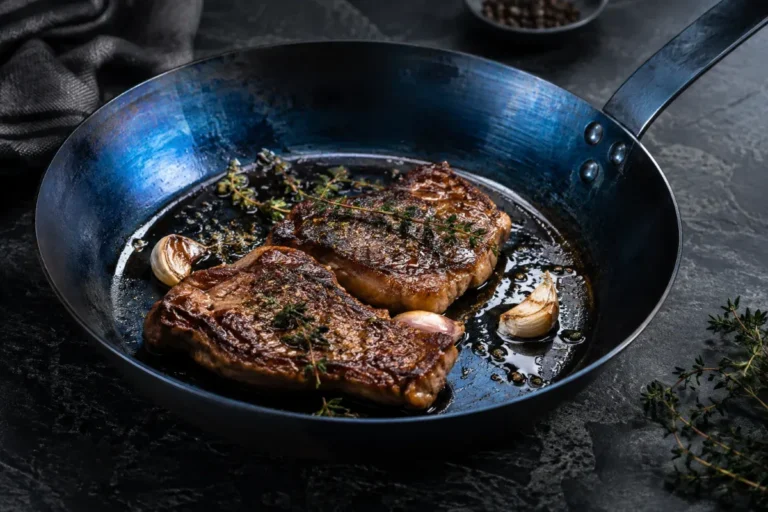
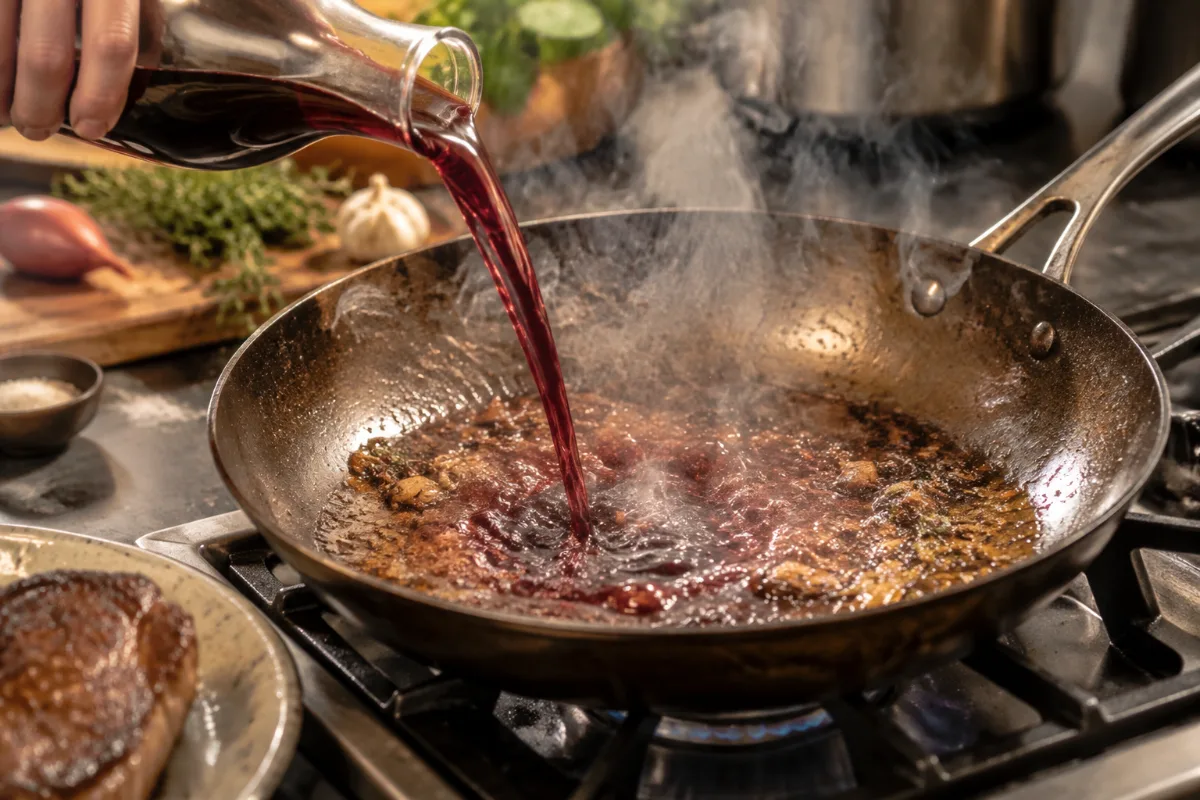
Deglazing is the best reason to ignore the no-acid myth. After you sear meat, the pan bottom is covered in browned bits full of flavor. Pour in a splash of wine, stock, or a little vinegar, and scrape those bits loose as the liquid bubbles. The whole process takes under two minutes, then you pour the sauce out. That is far too brief to harm a seasoned pan, and it makes a better pan sauce than any nonstick could. If anything, the seared-on fat and the short contact protect the surface.
Wine, sherry, a spoon of balsamic: all work. Get the pan hot, add the liquid, scrape, reduce for a minute, and serve. The pan is fine.
Finishing acids
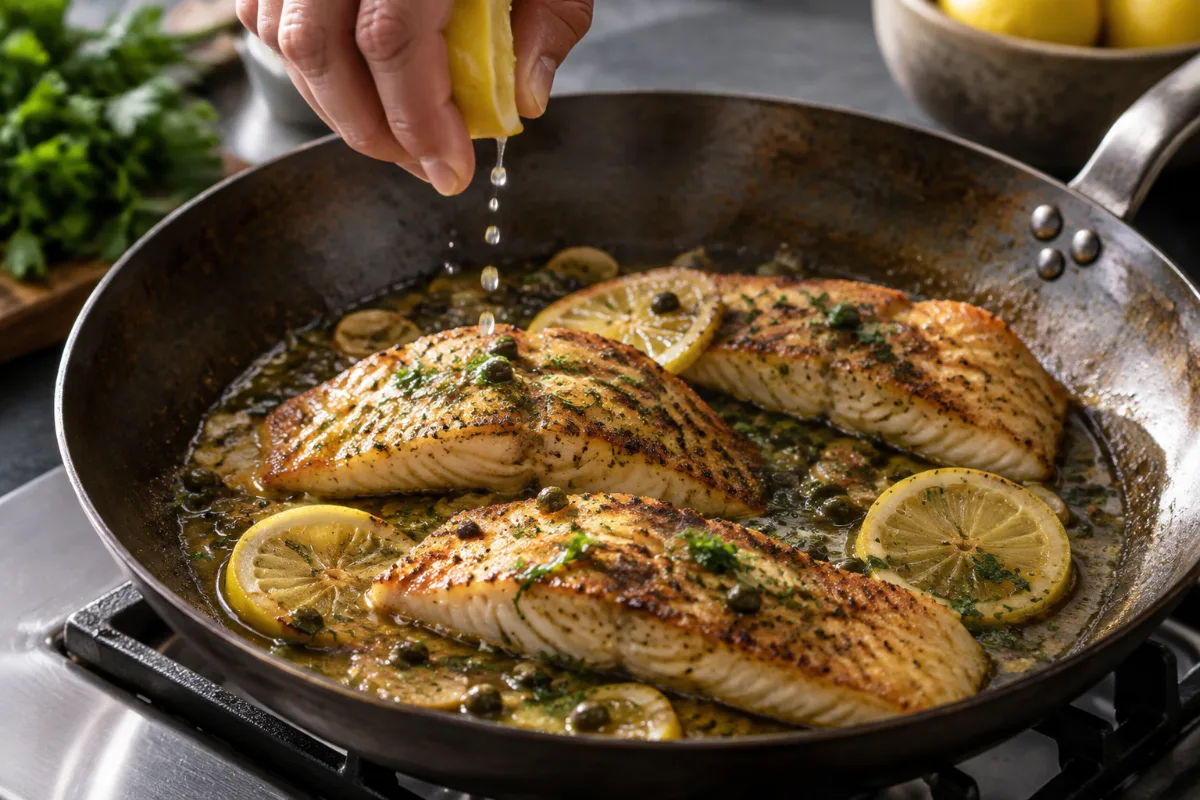
A squeeze of lemon over fish, a splash of vinegar into a pan of greens, a spoon of tomato paste stirred in at the end: these are finishing acids. They hit a hot surface for a very short time and then leave with the food. There is no simmer, no reduction, no long soak. Add them near the end of cooking rather than the start, and the pan never notices.
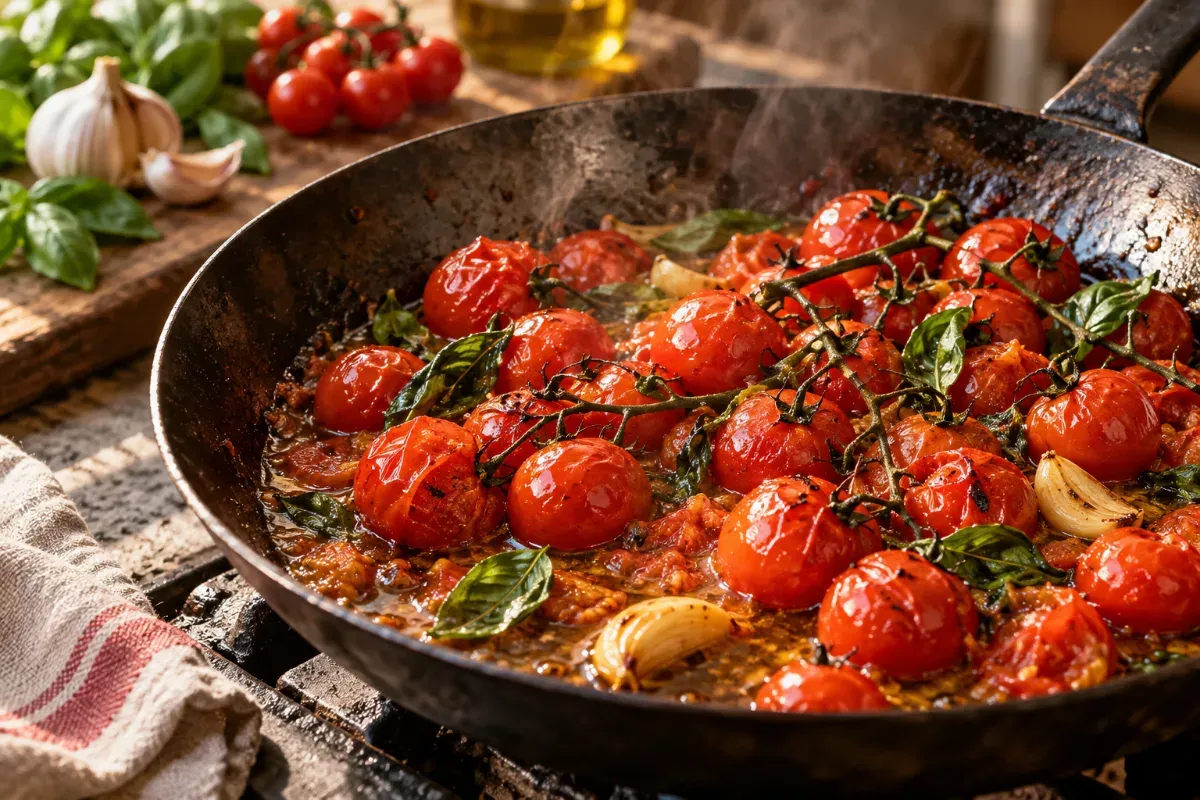
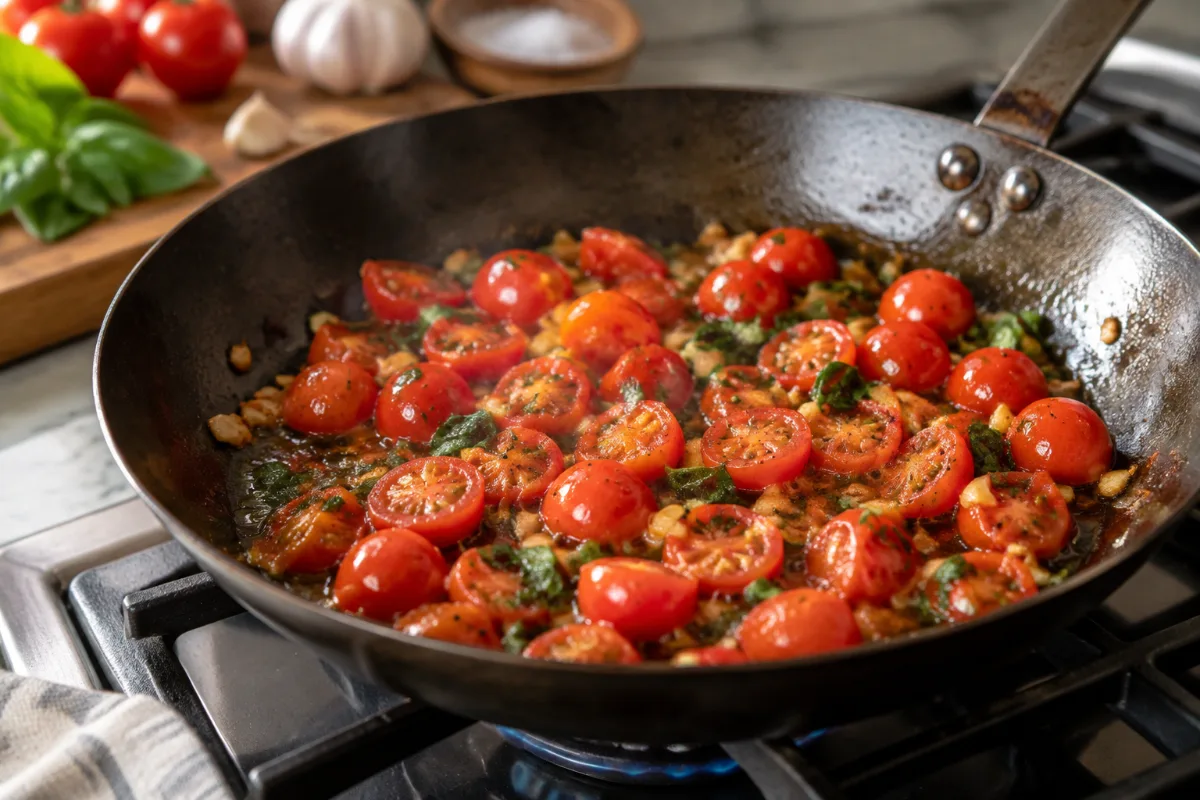
A quick tomato sauté sits in the same safe zone. Halved cherry tomatoes tossed in a hot pan for three or four minutes until they blister and collapse will not strip your seasoning. It is the same tomato that would cause trouble only if you let it break down into a sauce and simmer for half an hour.
The same logic covers a squeeze of citrus over shrimp, a splash of vinegar to lift a pan of sautéed greens, or a spoon of capers and lemon to finish chicken piccata in the pan. In each case the acid arrives late, works for under a minute, and leaves with the food. Add these at the end of cooking as a bright finish rather than a base you build on, and the pan handles them without complaint. Timing, not avoidance, is the whole trick.
What to avoid: long acidic simmers
The dishes to keep out of carbon steel are the ones where acid is the medium, not the accent, and the cook time is long.
A proper tomato sauce simmered for thirty to sixty minutes is the classic example. The acid has time to work through the seasoning and into the metal, so you get a duller pan and often a faint tinny taste in the sauce. A long red-wine braise does the same. So does a lemon reduction cooked down over many minutes. These are not pan failures; they are just the wrong tool. The acid wins on a long enough clock.
For those dishes, reach for stainless steel or an enameled pot. Neither reacts with acid, so a marinara can bubble away for an hour with no downside. Carbon steel keeps its place for the searing, sautéing, and quick-acid work it does better than anything. Matching the pan to the task is the whole skill. Our carbon steel vs stainless steel comparison lays out which pan wins for which job.
There is a smart middle path many cooks use. Do the flavor-building steps in the carbon steel pan, then move to another pot for the long simmer. Brown your meat, soften your aromatics, and deglaze with wine right in the carbon steel, where it browns best. Once you add the tomatoes and settle in for a long cook, transfer everything to a stainless or enameled pot to finish. You get the deep browning carbon steel gives and the acid resistance stainless offers, and your seasoning never takes the hit. It is one extra pot to wash, but it is how you keep both pans doing what they do best.
How a strong seasoning layer helps
The better your seasoning, the more acid your pan can take in stride. A thick, well-built patina is a tougher barrier between the acid and the bare steel, so brief acid contact barely registers and even a slightly longer sauté causes no harm.
This is one more reason to build seasoning steadily in the pan’s early life. Cook fatty foods often, wipe on thin oil coats, and let each session add a layer. A pan with months of cooking behind it handles a quick tomato dish or a deglaze without a second thought, while a brand-new pan is more easily dulled. If you are still building your surface, our guide on how to season a carbon steel pan covers the fastest way to get there. Until the pan is well seasoned, lean toward the quick end of every acid rule.
If acid dulls your seasoning
Say you pushed it, left a tomato dish too long, and now a patch of the pan looks dull, gray, or bare. This is a five-minute fix, not a disaster.
Clean the pan, dry it fully, then wipe a very thin coat of oil over the affected area and heat the pan until the oil just stops smoking. That spot re-seasons and blends back in. Often you do not even need a formal re-season: a few cooks with fatty foods rebuild the surface on their own. The metal itself is unharmed; only the thin oil layer took a hit, and that layer is designed to be renewed.
For a full walk-through when a larger area needs work, see how to reseason a carbon steel pan. And for the short list of things truly worth avoiding, our guide to what not to cook in a carbon steel pan puts long acidic simmers in context with the rest.
Quick answer: Our tested guide to cook tomatoes in carbon steel keeps it simple: master the technique, keep the surface seasoned, and match your heat to the food. The full method, the key facts and the mistakes to avoid are all below.
Cook Tomatoes In Carbon Steel: What Our Tests Found
Our team put cook tomatoes in carbon steel through repeated real cooking sessions to see what actually works. Below we break down the method, the facts that matter, and the common mistakes so you get reliable results the first time.
Acidic foods in carbon steel at a glance
| Use | Verdict | Why |
|---|---|---|
| Wine deglaze | Fine | Brief contact, then removed |
| Lemon to finish | Fine | Quick, small amount |
| Quick tomato sauté | Usually fine | Short cooking time |
| Long tomato sauce | Avoid | Strips seasoning over time |
| Wine braise (long) | Avoid | Extended acid contact |
Read that table as a clock, not a ban list. The “avoid” rows are all long-contact dishes. Shorten the time and most of them move back into the safe column. A ten-minute pan sauce with a little tomato and wine is fine; the same ingredients simmered for an hour are not.
Frequently asked questions
Can you cook tomatoes in a carbon steel pan?
Can you deglaze carbon steel with wine?
Does lemon damage a carbon steel pan?
Why can’t you cook acidic food in carbon steel?
What if acid strips my seasoning?
The takeaway
Acid and carbon steel get along fine when you respect the clock. Deglaze, finish with lemon, blister a few tomatoes, and cook with confidence. Save the long marinara and the slow wine braise for a stainless or enameled pot that does not care about acid at all. Do that, and your pan keeps its seasoning, your quick-acid dishes taste clean, and you get the full range of what carbon steel does best without any of the worry that first rule tried to scare you into.