What to Cook First in a New Carbon Steel Pan
By the Carbon Steel Pan test team · Last updated September 2026
Cook fatty, forgiving foods first in a new carbon steel pan: bacon, sausages, potatoes, or anything that renders oil and builds seasoning. These add layers to the surface while being hard to ruin. Save eggs, delicate fish, and acidic dishes for later, once the pan has a few sessions of seasoning behind it and releases food more easily.
The first cook sets the tone for the whole life of the pan. Get it right and the surface starts building the slick, dark seasoning that makes carbon steel a joy to use. Get it wrong, usually by attempting eggs on day one, and you end up scraping stuck food off a pale pan and wondering if you wasted your money. You did not. You just started with the wrong dish. Here is the plan that sets you up to win.
Season it, then cook something forgiving
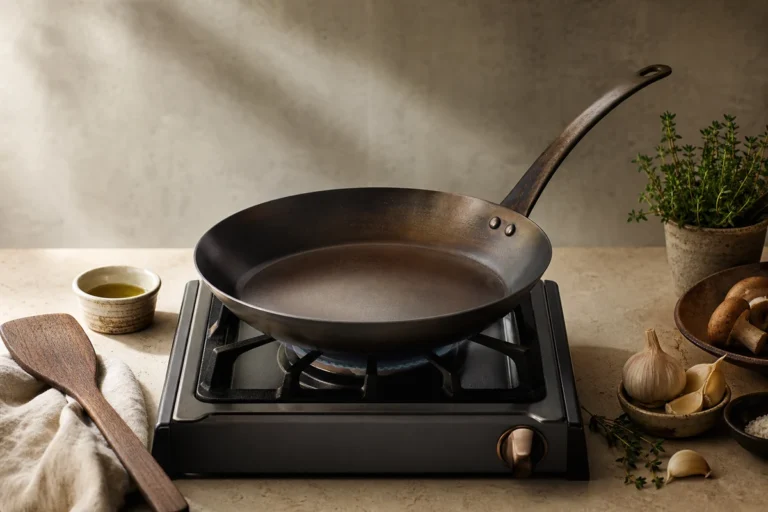
Before any food goes in, the pan needs its first seasoning. Most new pans ship with a protective coating or a light factory seasoning that you either wash off or build on, depending on the brand. Follow the maker’s instructions, then lay down a base layer yourself. Our full walk-through on how to season a carbon steel pan covers the oil, the heat, and the number of coats.
With a base layer down, the goal of your early cooks is simple: add more seasoning while cooking things that are hard to mess up. Seasoning builds through use, one thin layer of polymerized oil at a time, and fatty foods do most of that work for you. So your first cook is not really about the meal. It is about feeding the pan. Pick something forgiving, cook it, and let the surface start to develop. The good eating comes soon enough.
Best first foods (and why)
The best first foods share one trait: they release fat as they cook. That rendered fat bonds to the hot metal and builds seasoning, and because these foods are sturdy, a little sticking early on does no harm.
Bacon and sausages
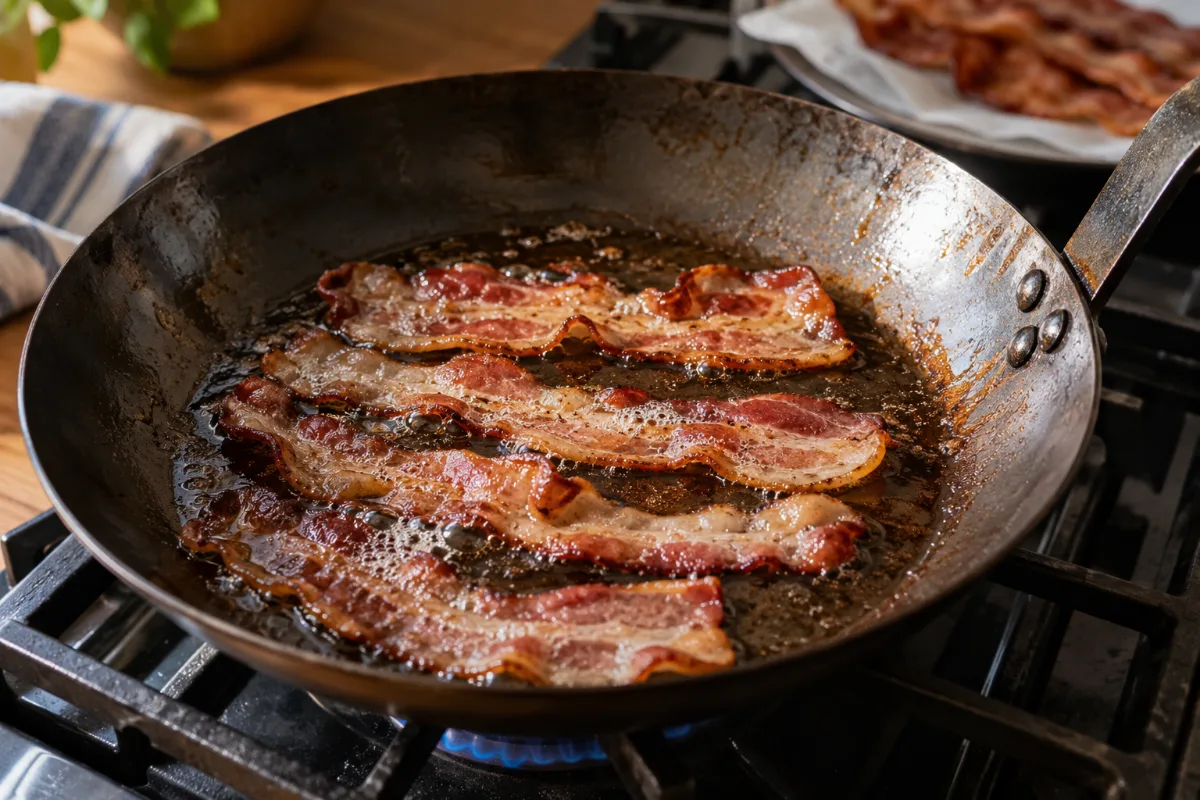
Bacon is the ideal first cook, and it is hard to beat. It renders a steady stream of fat that coats and seasons the whole surface, it is nearly impossible to ruin, and you get breakfast out of it. Lay the strips in a cold or barely warm pan, bring the heat up to medium, and let them render slowly. Sausages do the same job. The fat they give off builds a layer while the food cooks, and if a bit sticks, it lifts once the crust forms. A few bacon sessions alone visibly darken a new pan.
Potatoes and root veg
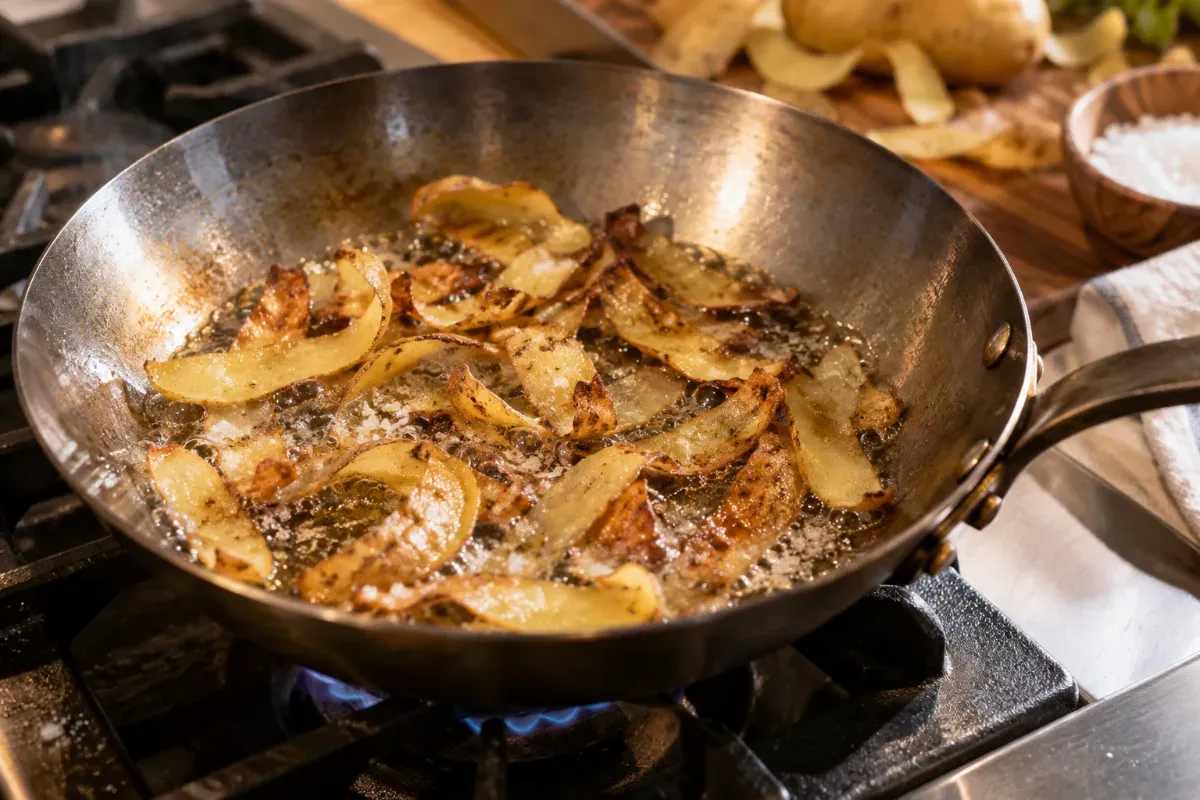
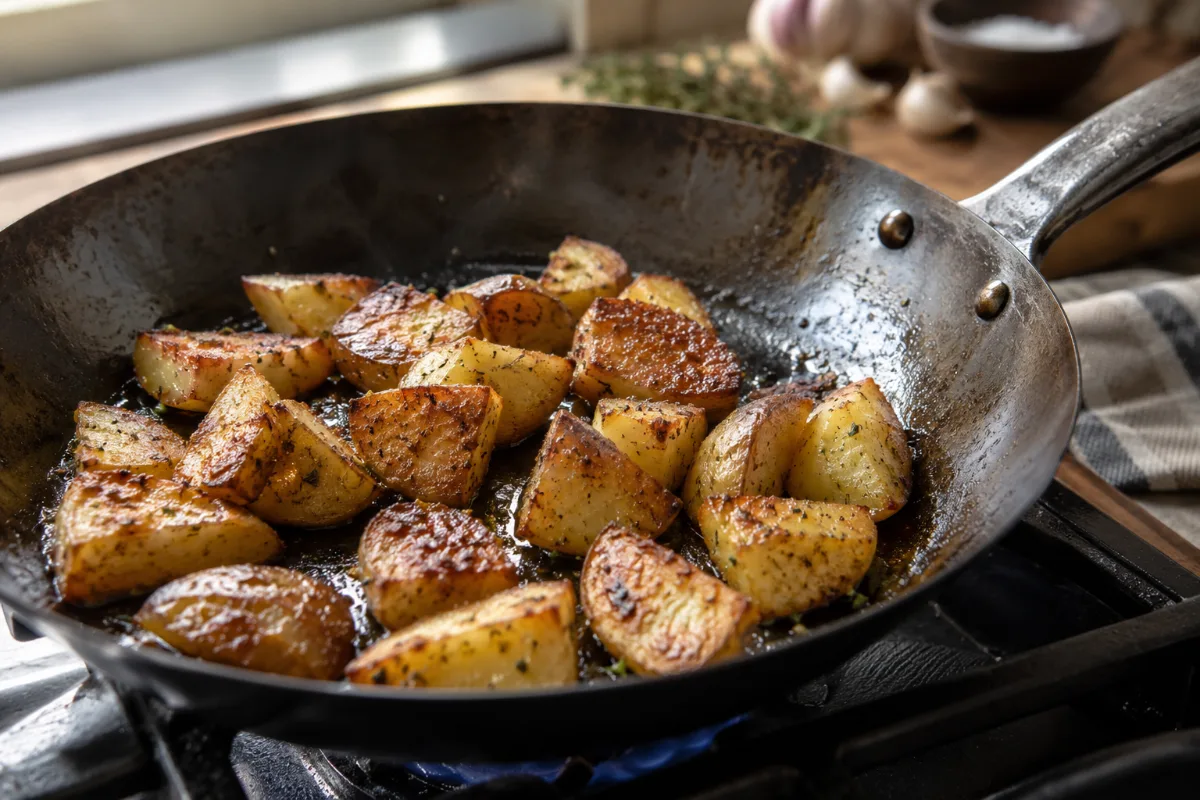
Potatoes are the next great early food. Cut them into cubes or wedges, add a good glug of oil, and fry them over medium heat until crisp. The generous oil and the long contact time build seasoning across the surface, and potatoes are forgiving of a pan that is not yet slick. Hash browns, home fries, and roasted root veg all work the same way. The starch and oil together lay down a solid base, and you get a crisp side dish while the pan improves.
Oil-rich stir-fries
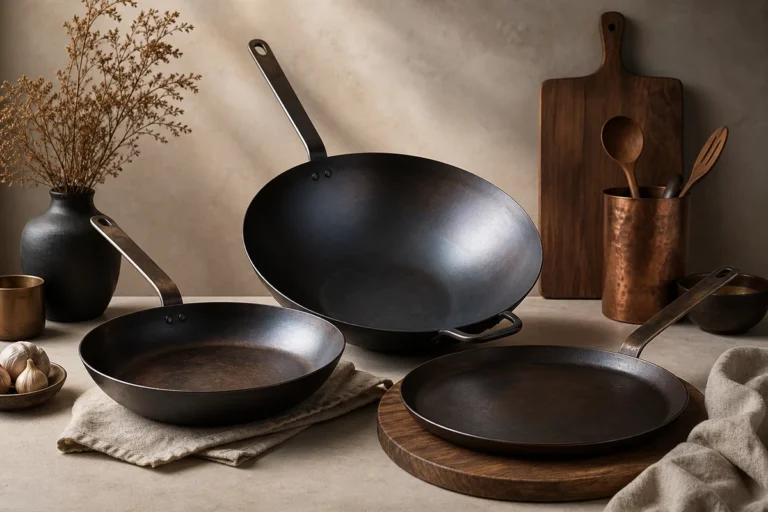
A stir-fry with plenty of oil is another strong early cook, especially if your pan is a wok or a deeper skillet. High heat and a film of oil moving constantly across the surface season it fast and evenly. Toss vegetables, add a little more oil than you normally would, and keep everything moving. The heat helps the oil polymerize onto the metal, and the food rarely sticks because it never sits still. It is a fast, tasty way to build a layer in a single meal.
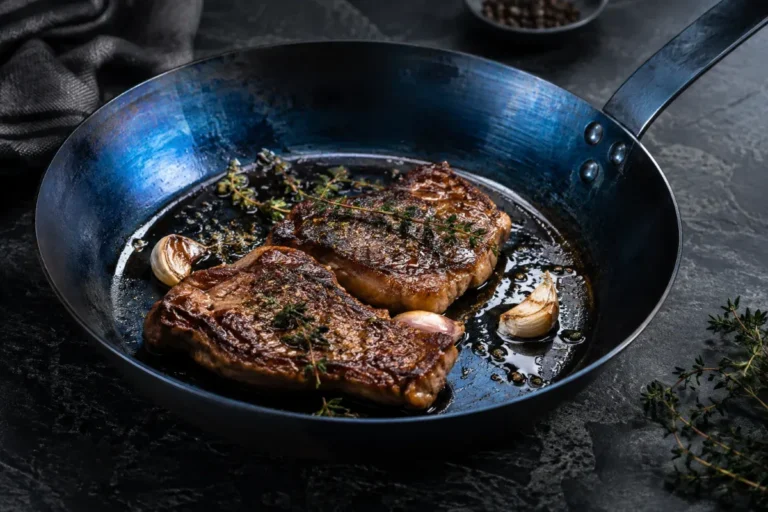
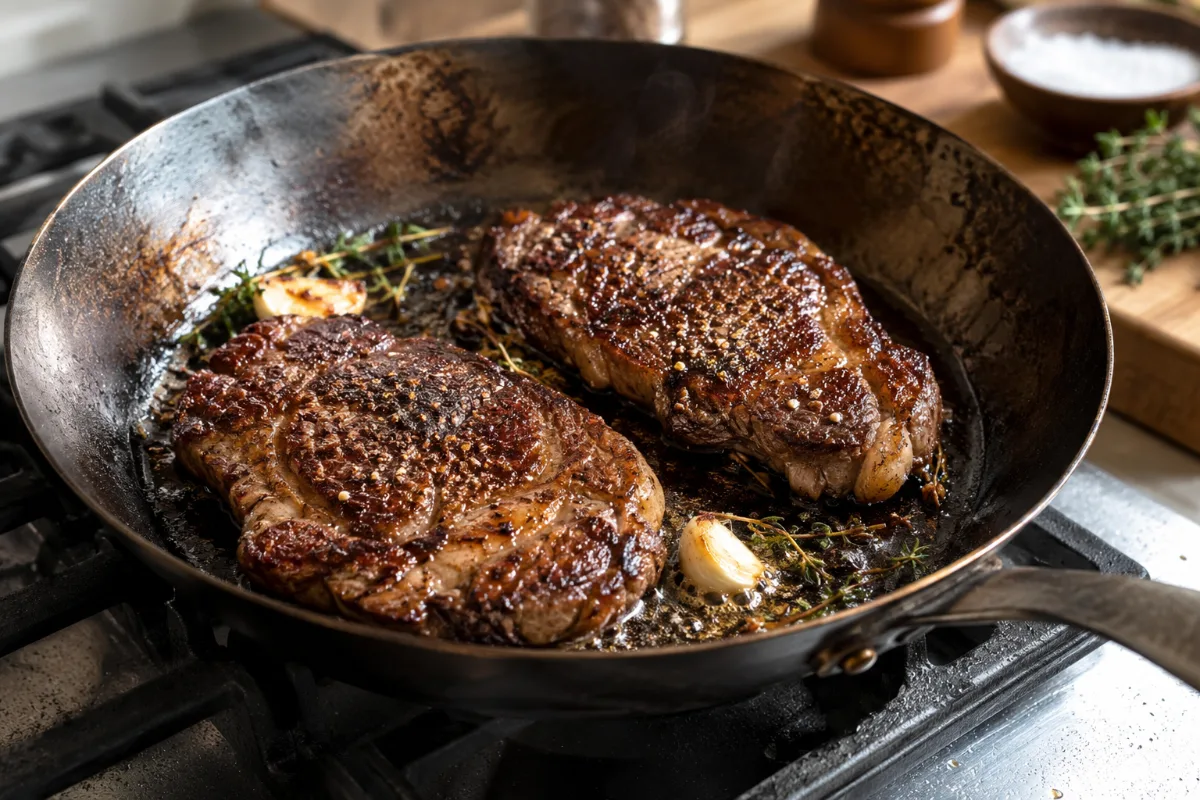
Steak and burgers deserve a mention too. A well-marbled steak seared hard on both sides pours fat and juices onto the surface, and the high heat of a proper sear locks in seasoning while it browns the meat. Burgers do the same, and the fond left behind wipes out easily. These high-heat, high-fat cooks are some of the fastest ways to darken a pan, and they play to exactly what carbon steel does best. Just avoid crowding the pan; give each piece room so it sears rather than steams, and the surface benefits along with the food.
What to avoid in the first weeks
Some foods punish a young pan, and trying them too early is the fastest route to frustration. Hold off on these until the seasoning has built up.
Eggs are the big one. A fried egg on a fresh pan almost always sticks and tears, because the surface is not slick yet and eggs need a well-developed seasoning to release. It is not a failure of the pan; it is simply too soon. Delicate white fish has the same problem, gripping and flaking apart on a young surface. Acidic dishes are worse, because tomato, wine, and lemon actively strip the thin, fresh seasoning you are trying to build. Cook a long tomato sauce in week one and you can undo your progress.
None of these are ruined forever. They are just later foods. Trying them now teaches the wrong lesson, that carbon steel is hard, when the truth is the pan just is not ready. Give it time. Our guide on what not to cook in a carbon steel pan covers the acidic dishes in more detail.
How the pan changes over the first month
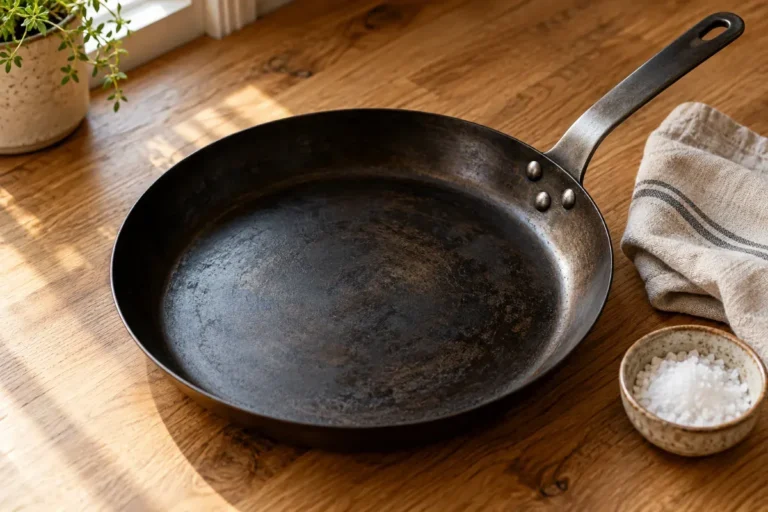
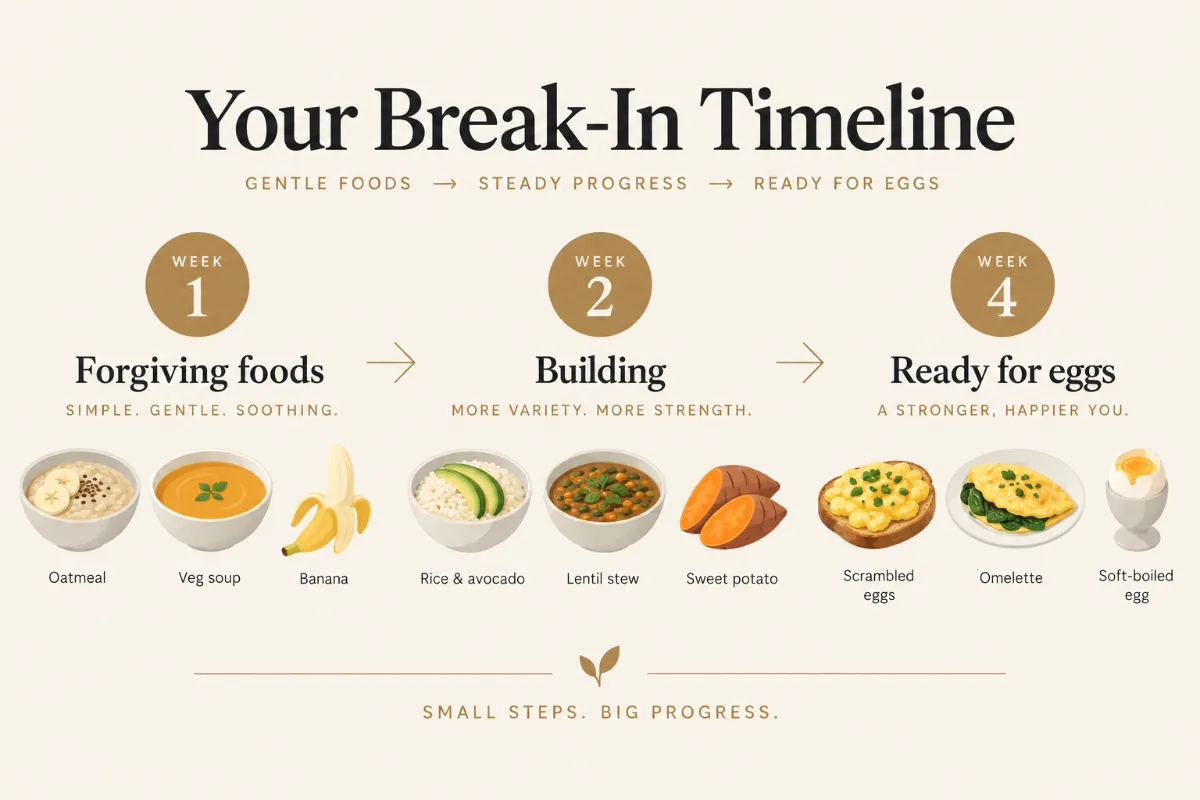
Seasoning is a curve, and knowing its shape keeps you patient. In week one the pan is pale and a little sticky, and cooking takes a bit of attention. By the end of a month of regular use, the same pan is darkening toward black, food releases with ease, and it starts to feel like the nonstick surface people rave about.
Each cook adds a microscopically thin layer. You will not see one meal change much, but stack twenty meals and the difference is dramatic. The color deepens from raw steel gray to brown to near-black, and the surface goes from grabby to slick. This is why the early food choices matter so much: the fatty, forgiving cooks push you up that curve fast, while eggs and acid on day one stall it. Trust the process. The pan you have in week one is not the pan you will have in week five. Serious Eats and other testing kitchens describe the same arc: seasoning built through normal cooking outperforms a rushed one.
A few small habits speed the curve along. Cook often; a pan used five times a week seasons far faster than one used once. Use a little more oil than a recipe calls for in these early weeks, since the surplus fat feeds the surface. After each cook, rinse with hot water, dry the pan fully over the burner, and wipe on a thin film of oil while it is still warm. That warm oil wipe bakes on the next time you heat the pan, adding one more layer for free. Skip harsh scrubbing that strips young seasoning back down. Gentle, frequent, oil-rich cooking is the whole formula.
A simple two-week break-in plan
If you want a concrete plan, here is a loose two-week routine of forgiving cooks that build the pan quickly. Adjust it to what you actually eat; the point is fat and frequency. There is nothing magic about the exact order, so swap days around to suit your week. What matters is that most cooks in these two weeks are fatty and forgiving, and that you keep the sessions coming rather than letting the pan sit unused between them.
- Days 1 to 3: Bacon or sausages for breakfast. Wipe the pan, do not scrub hard, and let the rendered fat settle in.
- Days 4 to 6: Fried or roasted potatoes with plenty of oil. Crisp them well.
- Days 7 to 9: Seared chicken thighs, skin-side down. The fat renders and browns, building the surface further.
- Days 10 to 12: Oil-rich stir-fried vegetables over high heat, keeping everything moving.
- Days 13 to 14: Pancakes in butter, a gentle test of how slick the surface has become.
After every cook, rinse with hot water, dry over heat, and wipe on a thin oil coat. Two weeks of this and the pan is transformed, ready for more delicate work.
When it is ready for eggs
The pan tells you when it is ready. The clearest sign is that fatty foods release cleanly with no fight: a seared chicken thigh lifts on its own, potatoes slide around freely, nothing grabs. The surface looks darker, closer to brown-black than raw gray, and feels smooth and slightly slick to a dry finger.
When you see those signs, test it with eggs. Heat the pan on medium, add a little butter or oil, let it get properly hot, and slide in an egg. If it releases and slides, the pan is seasoned enough for delicate cooking. If it still grips, give it another week of fatty cooks and try again. There is no fixed date; some pans are egg-ready in two weeks, others take a month, depending on how often you cook. Our guide to how to use a carbon steel pan covers the heat control that makes eggs work once the surface is there.
Quick answer: Our tested guide to what to cook first carbon steel keeps it simple: master the technique, keep the surface seasoned, and match your heat to the food. The full method, the key facts and the mistakes to avoid are all below.
What To Cook First Carbon Steel: What Our Tests Found
Our team put what to cook first carbon steel through repeated real cooking sessions to see what actually works. Below we break down the method, the facts that matter, and the common mistakes so you get reliable results the first time.
First cooks vs foods to wait on
| Cook early | Wait a few weeks |
|---|---|
| Bacon, sausages | Fried eggs |
| Potatoes, hash | Delicate white fish |
| Oil-rich stir-fries | Long tomato sauces |
| Seared chicken thighs | Wine braises |
| Pancakes in butter | Omelettes |
Every food in the left column feeds the pan while being hard to ruin. Every food on the right needs a slick, developed surface to succeed, or would strip the fresh seasoning you are building. Work down the left column for a few weeks, then start moving items over from the right.
Frequently asked questions
What should I cook first in a new carbon steel pan?
Can I cook eggs in a brand-new carbon steel pan?
How do I break in a carbon steel pan?
What should I avoid at first?
How long until my pan is nonstick?
The takeaway
The secret to a great start is patience and fat. Season the pan, then cook bacon, potatoes, and other rich, forgiving foods for the first weeks. Each meal lays down seasoning while giving you something good to eat, and the surface darkens and slicks up fast. Hold off on eggs, delicate fish, and acid until the pan releases fatty foods on its own. Do that, and within a month you will have the smooth, near-nonstick surface that keeps carbon steel cooks loyal for life. If you are shopping for a first pan to start on, our best carbon steel pan for beginners guide points you to forgiving options.