What Is the Safest Cookware?
As an Amazon Associate I earn from qualifying purchases, at no extra cost to you.
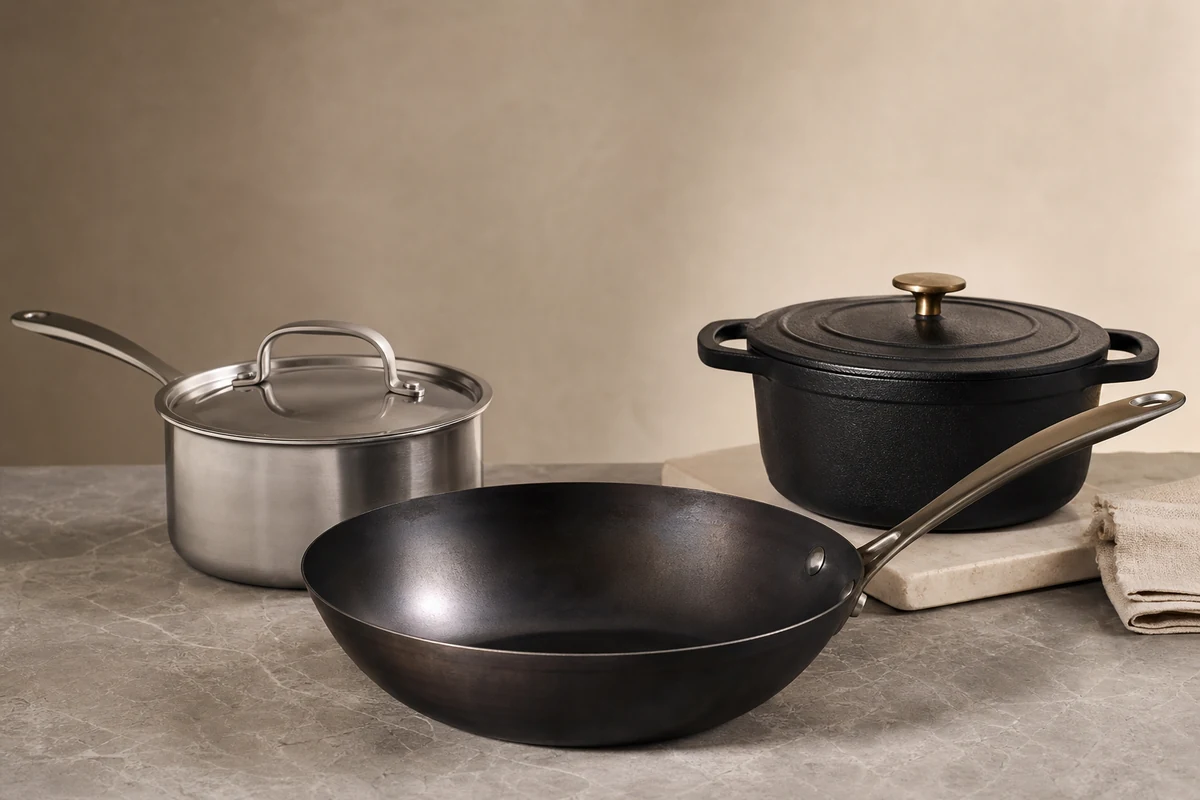
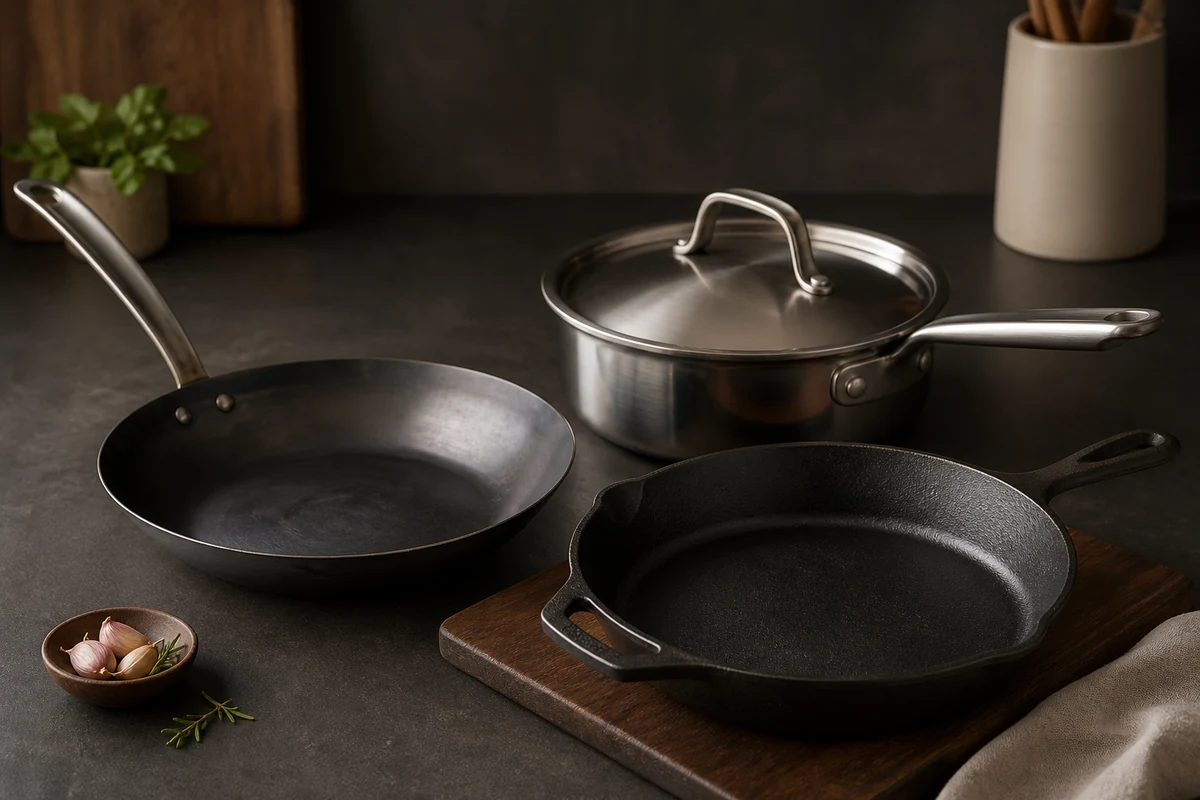
The safest cookware is uncoated material with no synthetic non-stick layer: carbon steel, cast iron, stainless steel and glass. None can shed PTFE or PFAS into food, because none has a coating to break down. Each carries a minor, well-understood trade-off rather than a coating that degrades over time.
What safe actually means here
Cookware safety has two separate questions and people mix them up.
Does the surface degrade into food? This is the PFAS and PTFE question, and it is the one driving most current concern.
Does the material transfer anything? Iron from carbon steel, nickel from stainless, lead from poor-quality ceramics. Some transfer is neutral, some is not.
Uncoated cookware answers the first question by having no coating at all.
The uncoated options
| Material | Coating | Transfers | Main consideration |
|---|---|---|---|
| Carbon steel | None | Small iron | Iron; one lot-specific recall |
| Cast iron | None | More iron | Iron, higher than carbon steel |
| Stainless steel | None | Trace nickel, chromium | Nickel, for the nickel-sensitive |
| Glass | None | Nothing | Thermal shock, not for searing |
| Enamelled cast iron | Glass enamel | Nothing, if quality | Enamel can chip |
These are the materials that cannot shed a synthetic coating, because they have none.
The coated options, and where they stand
PTFE non-stick. Modern PTFE made without PFOA is considered safe at normal cooking temperatures. It begins degrading above roughly 500°F, and the coating scratches and wears within a few years. The concern is manufacturing and disposal as much as cooking.
Ceramic non-stick. Marketed as the clean alternative. The coating is generally inert but degrades faster than PTFE, often losing its non-stick property within a year or two, which means frequent replacement.
Neither is dangerous in normal use. Both are consumables that break down, which is the structural difference from uncoated cookware.
Where carbon steel sits
Among the safest, with one honest caveat.
It has no coating, contains no PFAS, PTFE or PFOA, and the main thing it transfers is dietary iron, which most people benefit from. Full detail in are carbon steel pans safe.
The caveat is the 2024 Matfer Bourgeat recall in France, where specific lots leached arsenic and chromium above EU limits. That was brand and lot specific, not a property of carbon steel. Our recall explainer covers it.
What to genuinely avoid
- Damaged PTFE. A scratched or flaking coated pan should be replaced. Cooking on peeling coating is the real avoidable risk.
- Cheap unbranded ceramics. Some imported glazes have failed lead and cadmium testing. Buy known brands.
- Overheated empty non-stick. PTFE above roughly 500°F can release fumes. Never preheat a coated pan empty on high.
- Antique or decorative enamelware for actual cooking. Older glazes predate lead limits.
The practical answer
For most kitchens, a stainless pan for acidic and everyday cooking plus a carbon steel or cast iron pan for searing covers almost everything with no coating in sight.
Keep one coated pan for eggs if you want the convenience, replace it when it wears, and do not preheat it empty.
That combination is about as safe as home cooking gets without overthinking it.
The safest picks here, and the one exception
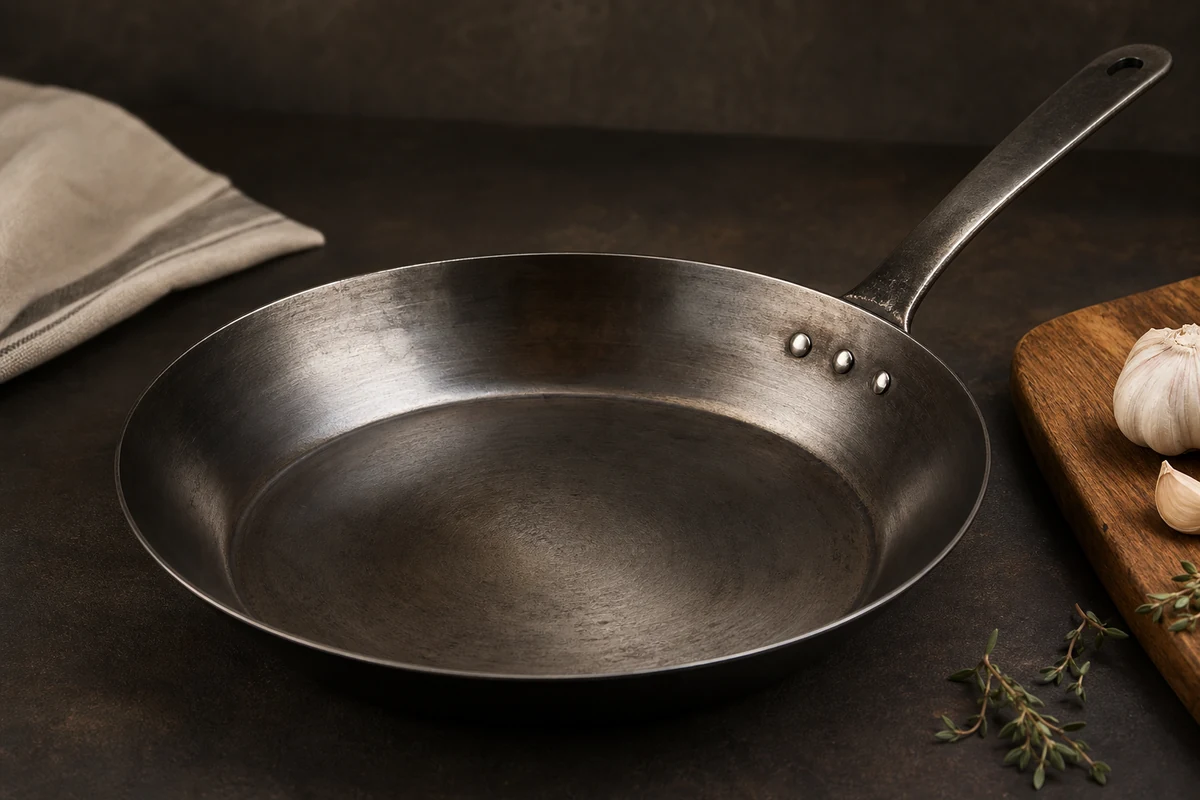
Uncoated carbon steel has no coating to flake. Two of the fourteen pans we list are an exception and we say so on their own product pages: both Matfer Bourgeat sizes are covered by a recall we document in full. If safety is your deciding factor, the Mauviel M’Steel 11 inch at $120 came through America’s Test Kitchen lab checks as their top pick, and the de Buyer MINERAL B Pro at $99.95 has no outstanding finding against it.
Frequently asked questions
What is the safest type of cookware?
Is carbon steel the safest cookware?
Is non-stick cookware safe?
What cookware should you avoid?
General information, not medical advice. Last checked 22 July 2026.