Is Carbon Steel Oven-Safe? How Hot Can It Go?
By the Carbon Steel Pan test team · Last updated September 2026
Carbon steel is oven-safe to very high temperatures, often rated around 1200F for the pan body, which easily clears any oven or broiler setting. The real limit is almost never the metal. It is the handle. All-metal handles get as hot as the pan, while wood or epoxy accents set a lower ceiling. Whatever the handle, always grab it with a mitt, because it comes out oven-hot.
That last point catches people off guard more than anything else, so keep it front of mind. The pan can take the heat. The question is what the handle can take, and whether your hand remembers the handle is now dangerous. Here is the full detail before you slide a pan into a 500F oven.
The short answer, with the one catch
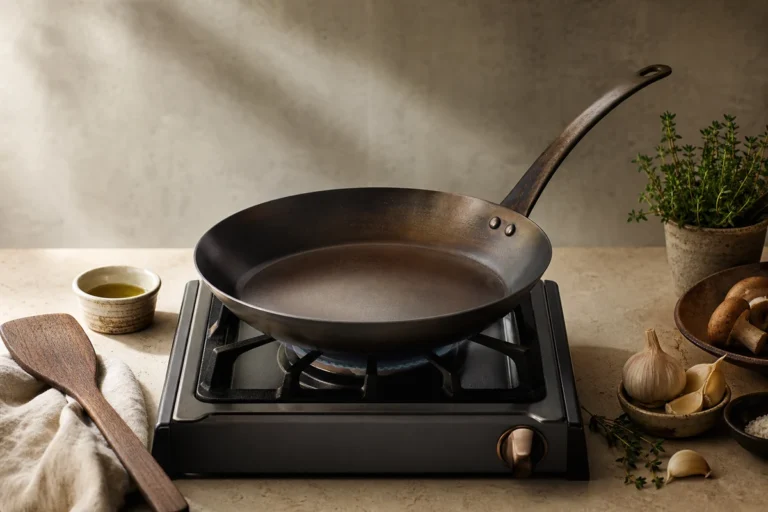
You can move a carbon steel pan straight from the stovetop into a hot oven, roast in it, bake in it, and finish a steak under the broiler. The steel itself will not care. There is no coating to melt or degrade the way there is with nonstick, which is one of the biggest reasons cooks love these pans for high-heat work.
The catch is the handle, and it is worth stating plainly. A bare steel or iron handle heats up to the same temperature as the pan. There is no cool grip. After ten minutes in the oven, that handle can burn you instantly. So the pan is oven-safe, and the cook needs to be handle-safe. Those are two different things.
This is different from a nonstick pan, where the coating usually sets the oven limit well below what the metal could take. With carbon steel there is no coating in the equation at all. That is a real advantage. It means the pan will never off-gas or break down at oven heat the way a worn nonstick surface can. The only variables are the handle and, at extremes, the seasoning, both of which you can manage.
How hot the pan itself can go
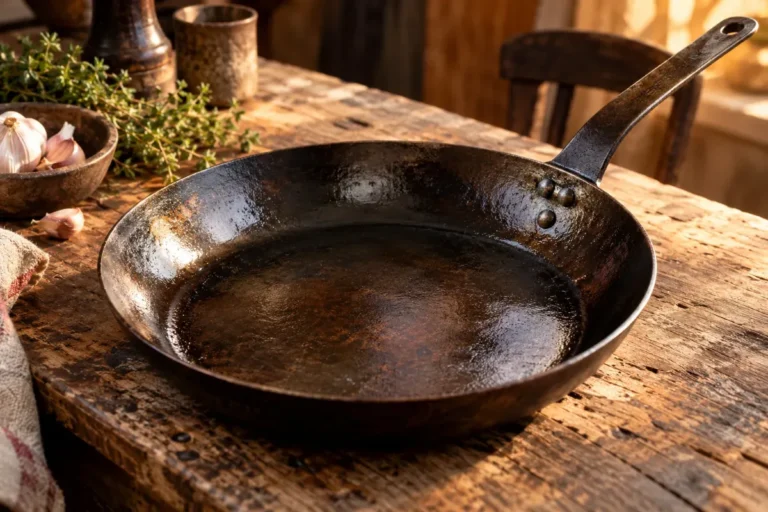
The body of a carbon steel pan is a single sheet of steel, and steel tolerates far more heat than any home oven produces. Manufacturers commonly list a limit near 1200F (verify against your pan’s spec page). Most ovens top out around 500F to 550F, and even a broiler element sits well below the point where the steel would be affected. So in practical terms, the pan has enormous headroom.
This is the same property that makes carbon steel excellent for searing. It shrugs off high, direct heat that would ruin a nonstick coating. America’s Test Kitchen and other test kitchens have long favored bare metal pans for exactly this kind of aggressive, high-temperature cooking.
The one thing extreme heat can touch is the seasoning, not the pan. A very hard broiler session can lighten or alter the seasoning in spots. That is cosmetic and temporary. The layer rebuilds the next few times you cook, so it is not a reason to avoid the oven.
Thin gauge is also why carbon steel takes oven heat so well without cracking. Cast iron is thick and can, in rare cases, crack under a sudden severe temperature swing. A carbon steel pan is a thinner, more flexible sheet, so it absorbs those swings without complaint. Going from a hot burner into a hot oven is exactly the kind of transition it was built for.
The handle is the real limit
Since the metal has so much headroom, the handle is what decides how you can use the pan. Check yours before the first high-heat oven cook, because handle designs vary a lot across brands.
All-metal handles
Most classic carbon steel pans, including French-style skillets from de Buyer and Mauviel, use a bare steel or iron handle welded or riveted to the pan. These are fully oven-safe to the pan’s rating, which is the best case for stovetop-to-oven cooking. The trade-off is that the handle reaches the same temperature as the pan. Treat it as hot from the moment it goes in until well after it comes out.
A stainless steel riveted handle behaves the same way. It is oven-safe to very high heat, and it gets very hot. The metal type matters less than the simple fact that any all-metal handle offers no thermal break.
Handles with wood or epoxy
Some pans add a wood grip or an epoxy-coated section for a cooler touch on the stovetop. That comfort comes with a lower oven ceiling. Wood can scorch or crack, and epoxy can soften or discolor, well below the temperature the steel can take. If your handle has either feature, check the maker’s stated oven limit and respect it. When in doubt, keep a wood-handled pan out of the oven, or remove the handle if the design allows.
The difference between handle types is worth knowing before you buy, and it ties into how the handle is attached. Our guide on riveted vs welded handles for carbon steel covers the durability side of that choice.
Stovetop-to-oven cooking
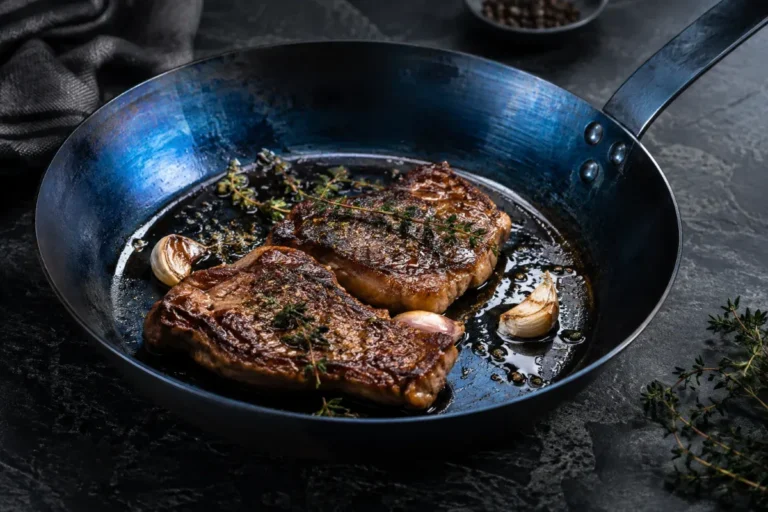
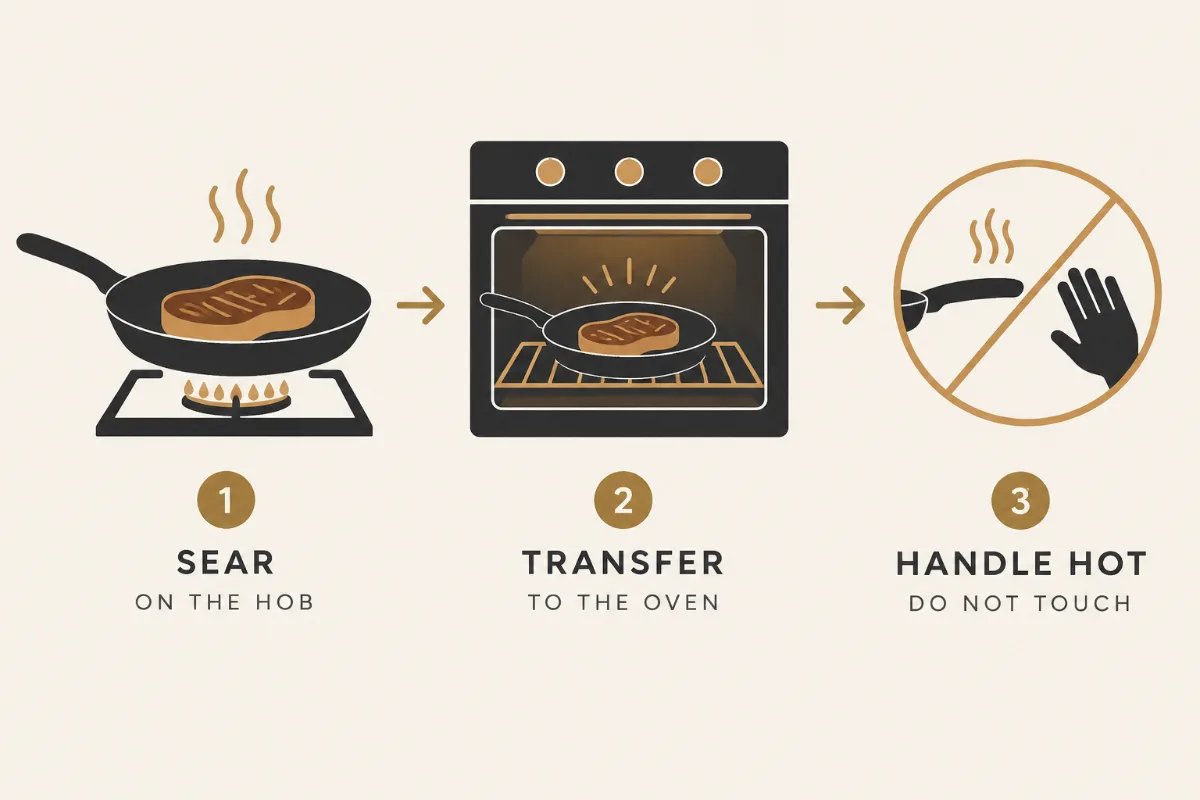
The oven is where carbon steel shows off. The classic move is a reverse-flow or a sear-and-finish. Get a hard crust on a steak or a chicken breast on the stovetop, then slide the whole pan into a hot oven to cook the inside through without burning the outside. Because the pan holds and spreads heat well, it makes the transition smooth.
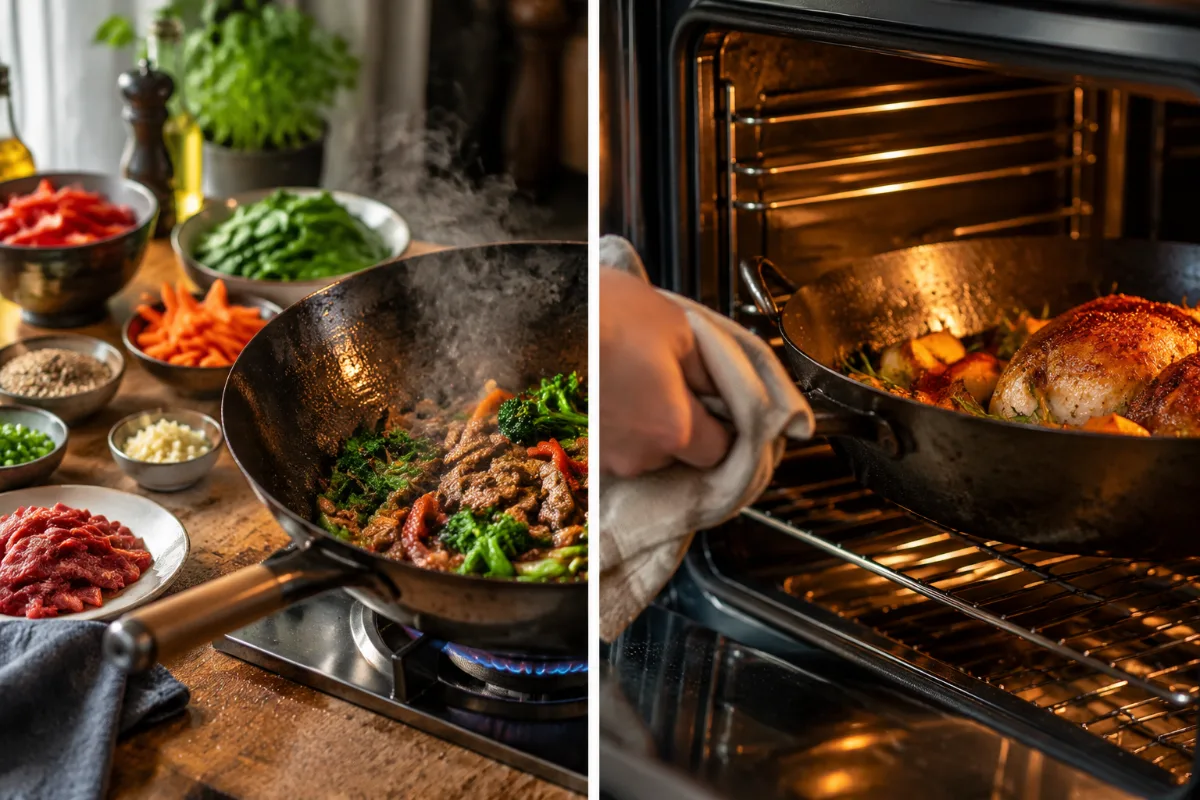
Quick answer: Our tested guide to carbon steel oven safe keeps it simple: master the technique, keep the surface seasoned, and match your heat to the food. The full method, the key facts and the mistakes to avoid are all below.
Carbon Steel Oven Safe: What Our Tests Found
Our team put carbon steel oven safe through repeated real cooking sessions to see what actually works. Below we break down the method, the facts that matter, and the common mistakes so you get reliable results the first time.
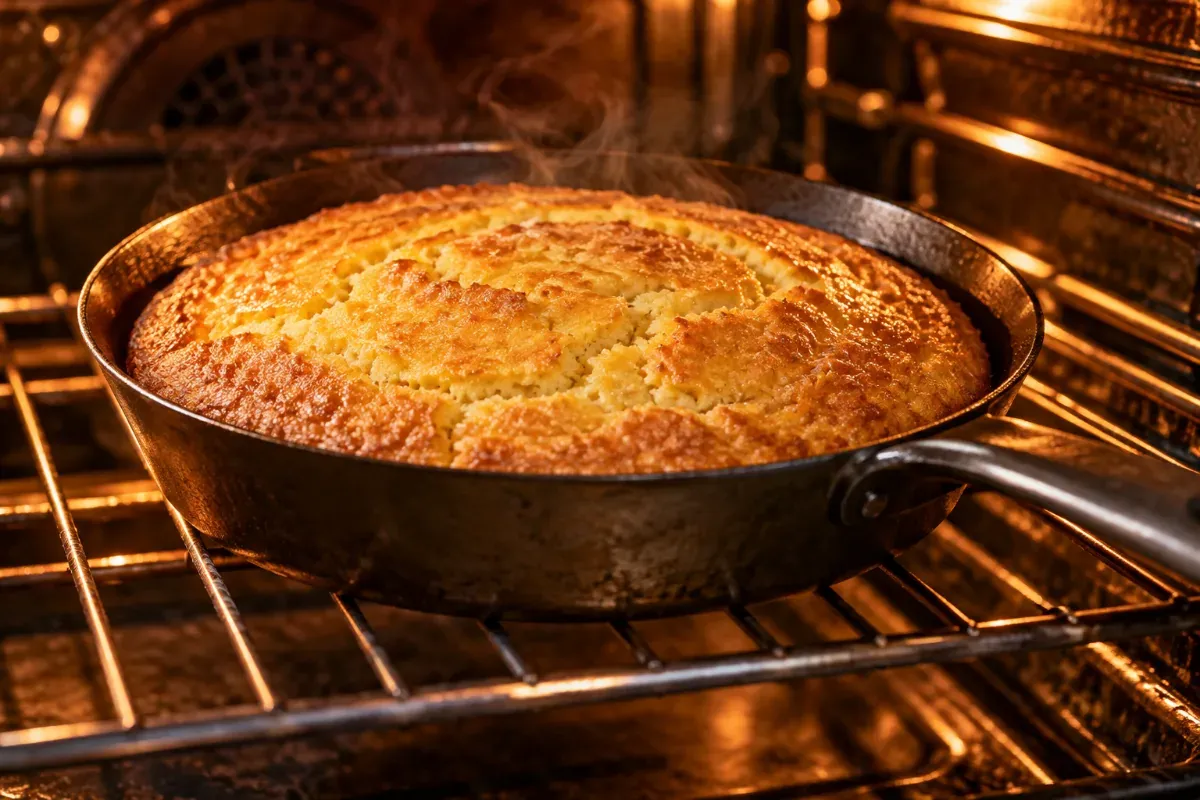
Roasting works the same way. Brown vegetables or a piece of meat on the burner, then roast in the oven in the same pan, which saves a dish and keeps all the fond in one place. You can also bake in carbon steel. It handles cornbread, skillet cakes, roasted potatoes, and a Dutch baby without complaint.
None of the common oven jobs come close to the pan’s limit. A roast runs at 350F to 425F. A pizza or a hard roast might hit 500F. A broiler tops out lower than people assume. All of it sits far below the steel’s tolerance, so you never have to think about the pan itself failing. You only manage the handle and, at the very top of the range, keep an eye on the seasoning. That narrow focus is what makes carbon steel so easy to trust in the oven.
A few practical notes make the transition smoother. Preheat the oven fully before the pan goes in, so the food finishes on schedule rather than sitting in slow-rising heat. Use dry mitts, since a pan hot enough for the oven will flash any moisture in a towel to steam and burn you through it. And leave room in the oven for the handle to clear the racks, because that handle sticks out and stays scorching.
For a full walkthrough of the sear-and-finish method on a steak, see our best pan for steak guide.
Broiler use
The broiler is fine for the metal. It is a fast, top-down blast of heat, good for finishing a gratin, blistering peppers, or crisping the top of a dish. The steel takes it easily.
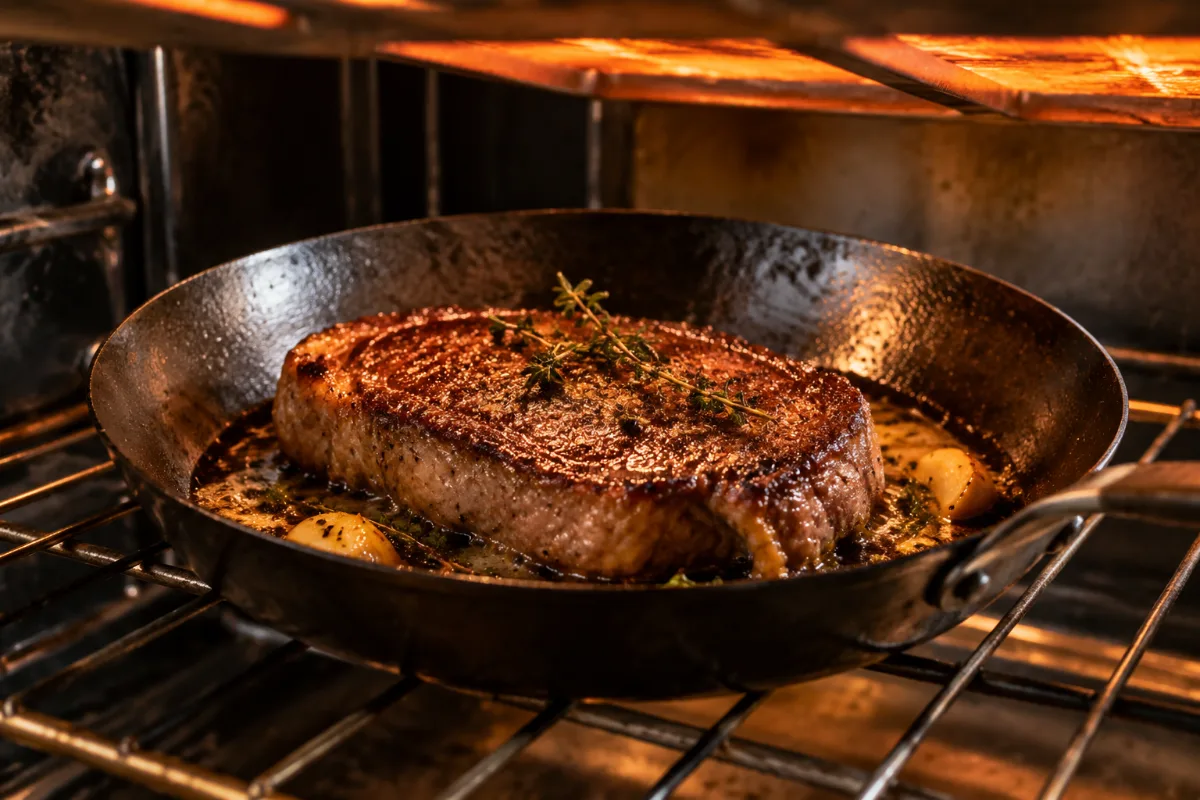
Two things need your attention under the broiler. First, the handle again. Broiler heat is intense and close, so a metal handle heats fast. Second, the seasoning. Sustained broiler heat is the most likely thing to lighten your seasoning, though as noted, it rebuilds with normal cooking. Keep broiler sessions purposeful rather than leaving the pan under the element for long stretches.
Safety and seasoning at high heat
The habits that keep oven cooking safe are simple, and they mostly come down to respecting the handle.
Always use a thick oven mitt or a folded dry towel on the handle, every time, without exception. A dry silicone handle sleeve helps, but many burns happen when a cook grabs a hot handle out of habit seconds after pulling the pan from the oven. Build a rule for yourself: if the pan has been in the oven, the handle is hot until proven otherwise.
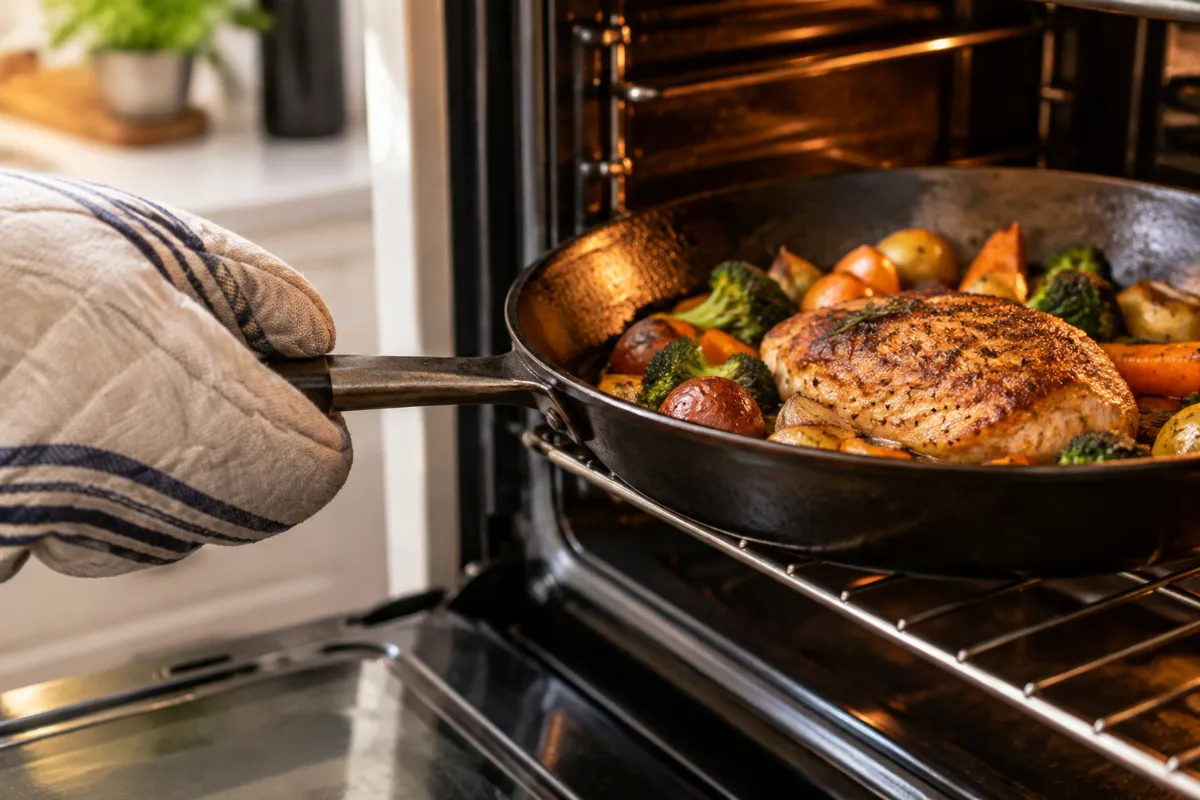
A useful trick is to drape a mitt or towel over the handle the moment the pan lands back on the stovetop, as a visual flag that says do not touch. It is a small habit that prevents a real burn. A metal handle can stay hot enough to burn for fifteen or twenty minutes after it leaves the oven, long after the pan looks harmless, so the flag earns its place.
As for the seasoning, extreme oven and broiler heat can affect it, but this is minor. Cook a couple of fatty dishes afterward and the surface deepens right back. For the wider routine, see how to care for a carbon steel pan.
In fact, oven heat often helps the seasoning rather than hurting it. Baking a fatty dish, or roasting with a film of oil in the pan, cures a fresh layer across the whole surface the way a formal oven seasoning would. Many owners find their pans darken and slick up faster once they start using the oven regularly. So the oven is not just safe for carbon steel. Used with a little care for the handle, it is one of the better ways to build a great surface over time.
Oven limits by handle type
The whole question comes down to what is on the handle. This table sums it up.
| Handle type | Oven limit | Note |
|---|---|---|
| All steel or iron | As hot as the pan | Use a mitt every time |
| Stainless riveted | Very high | Gets very hot |
| With epoxy accents | Check the maker | Lower ceiling |
| With wood | Low or none | Remove or avoid the oven |
Find your handle in the left column and you have your answer. When a handle mixes materials, the least heat-tolerant part sets the limit.
Frequently asked questions
Is carbon steel oven-safe?
How hot can a carbon steel pan go?
Can carbon steel go under the broiler?
Does the handle limit oven use?
Can I move a carbon steel pan from stovetop to oven?
The takeaway
Carbon steel is one of the most oven-friendly pans you can own. The steel takes far more heat than your oven or broiler can produce, with no coating to worry about. The only limit that matters in most kitchens is the handle, so know what yours is made of and treat it as hot every time the pan leaves the oven.
Sear on the stove, finish in the oven, and let carbon steel do what it does best. To get the most from that high-heat range, pair it with the technique in our best pan for steak guide, and browse full options in our carbon steel frying pans roundup. Keep a mitt on the handle, and the whole oven range is yours to use.