Carbon Steel for Camping, Grilling and Open Fire
By the Carbon Steel Pan test team · Last updated September 2026
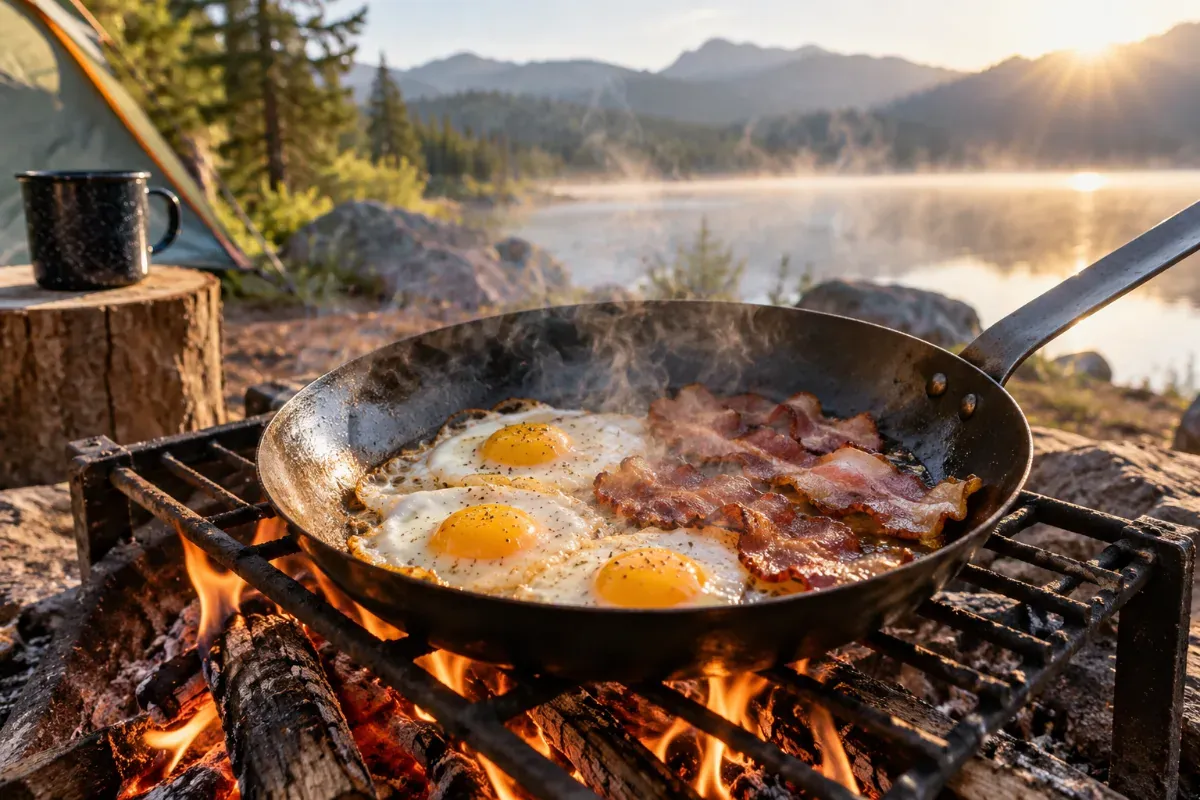
Carbon steel is excellent for camping and open-fire cooking. It takes the high, direct heat of a fire, has no coating to melt or flake, and packs lighter than cast iron. Season it well before a trip, keep it dry in the field, and give it a quick oil wipe after cooking. A carbon steel pan handles a campfire, a grill, or a backpacking stove with ease.
Cooking outdoors is hard on cookware. Fire runs hot and uneven, gear gets tossed in a pack, and damp air waits to rust anything bare. Nonstick coatings hate all of it, and cast iron survives but weighs you down. Carbon steel sits in the sweet spot: nearly as tough as cast iron, far lighter to carry, and built for exactly the kind of fierce heat a fire throws at it.
Why carbon steel suits open fire
The single biggest reason to bring carbon steel to a fire is what it does not have: a coating. Nonstick pans carry a synthetic surface that breaks down and releases fumes above a certain temperature, and open flame blows past that limit fast. Once that coating scorches, it flakes and the pan is done. Carbon steel is just steel and a baked-on oil seasoning, so there is nothing to melt, flake, or ruin.
That means you can set it right in the coals, hang it over a flame, or blast it on a roaring grill without a second thought. The metal takes the heat, and the seasoning only gets tougher with fire’s help. Carbon steel is the same material professional kitchens use for high-heat searing, so a campfire is well within its comfort zone. It is also plain tough. Drop it, bang it against a rock, scrape it with a metal spatula, and it shrugs it off. For cooking gear that lives outdoors, that durability matters as much as the heat tolerance.
There is a bonus most outdoor cooks come to love: a fire actually improves the pan. The intense heat drives seasoning to bond harder and more evenly than a home stove can, so a pan used over campfires often develops a deeper, tougher patina than a kitchen-only pan of the same age. A little rough handling in the field does no lasting harm, and any scratch or bare spot re-seasons itself the next time you cook fatty food over the flame. The pan gets better the more you abuse it outdoors, which is the opposite of almost every other piece of camp gear you own.
Lighter than cast iron for packing
Cast iron and carbon steel both love fire, but only one of them is kind to your back. Carbon steel is meaningfully lighter for the same size pan because it is formed from thinner sheet metal rather than thick cast material. A carbon steel skillet can weigh a third to a half less than a comparable cast iron pan (verify).
On a car-camping trip that gap barely registers. On a backpacking route where every ounce rides on your shoulders, it changes what you are willing to carry. A cast iron pan often gets left at home because it is too heavy to justify. A carbon steel pan of the same width earns its place in the pack. You give up a little heat retention compared to thick cast iron, since less metal holds less warmth, but over a live fire that is rarely a problem. The flame keeps feeding heat, so the pan stays hot regardless. For most outdoor cooks, the weight saving is the better trade.
Cooking over a campfire vs a grill
Open fire and a grill grate are two different tools, and each needs its own touch. The pan handles both; you just manage the heat differently.
Over the flame
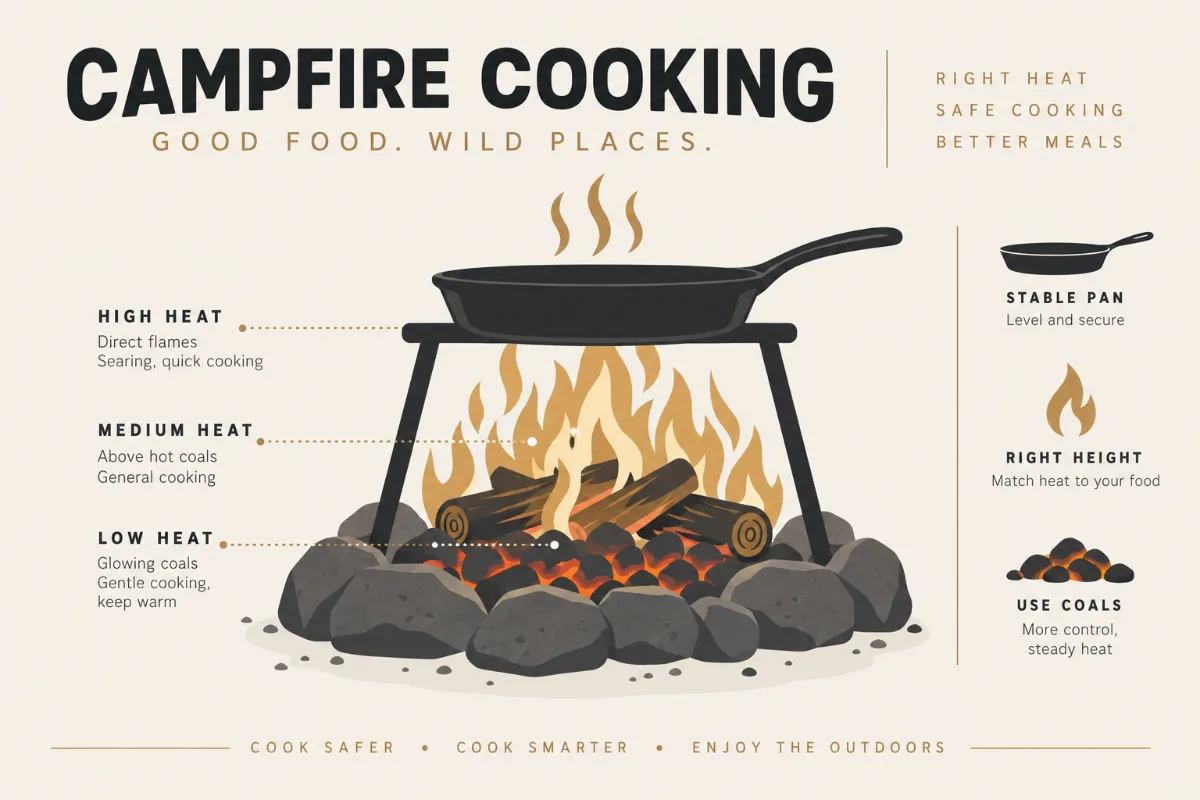
A fire is not a burner. Its heat is fierce, uneven, and always shifting with the wood. Do not set a pan straight into leaping flames for normal cooking; the heat there is too high and too dirty with soot. Cook over a bed of glowing coals instead, or off to the side of the flame where the heat is steadier. Raking a flat bed of embers gives you the closest thing to an even surface a fire offers.
Rotate the pan often. One side always runs hotter than the other over a fire, so turning it every minute or two evens out the cooking and stops one edge from scorching. A grate, a tripod, or a couple of flat stones to rest the pan on makes this far easier than holding it by the handle. Keep a glove or a folded cloth handy, because handles get blazing hot over fire.
On a grill grate
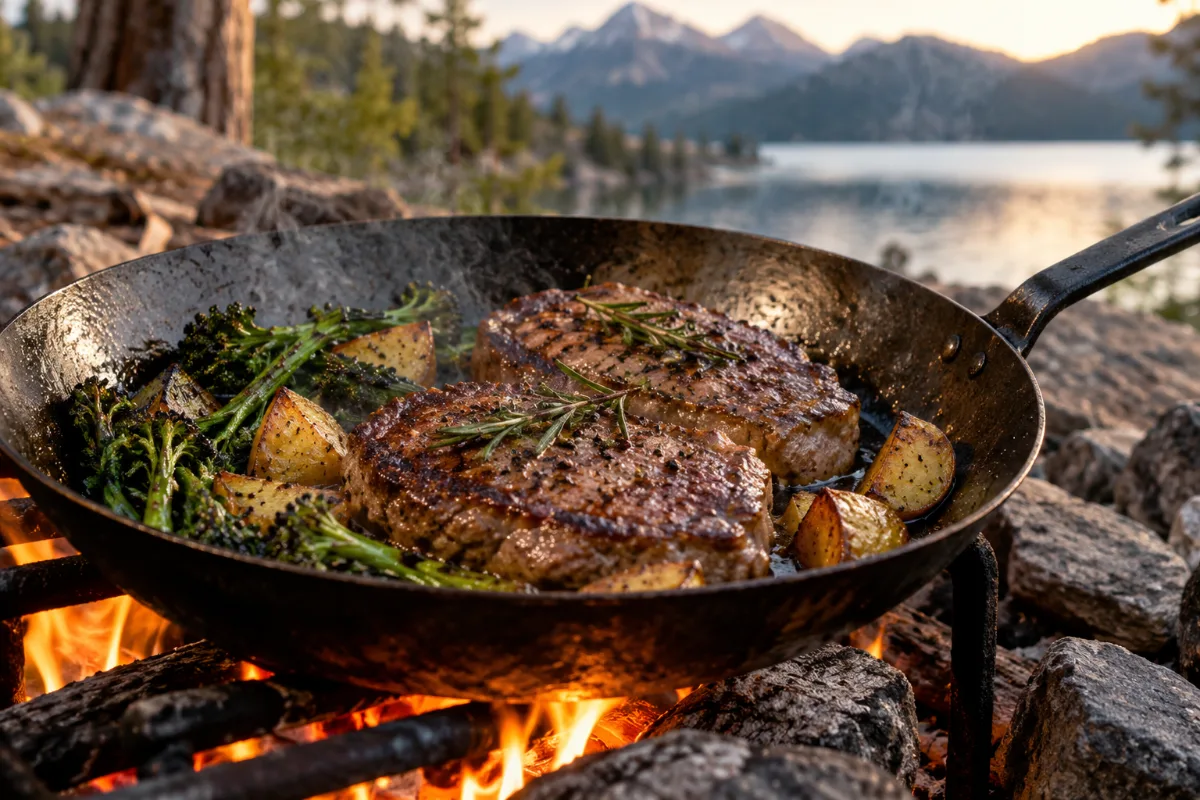
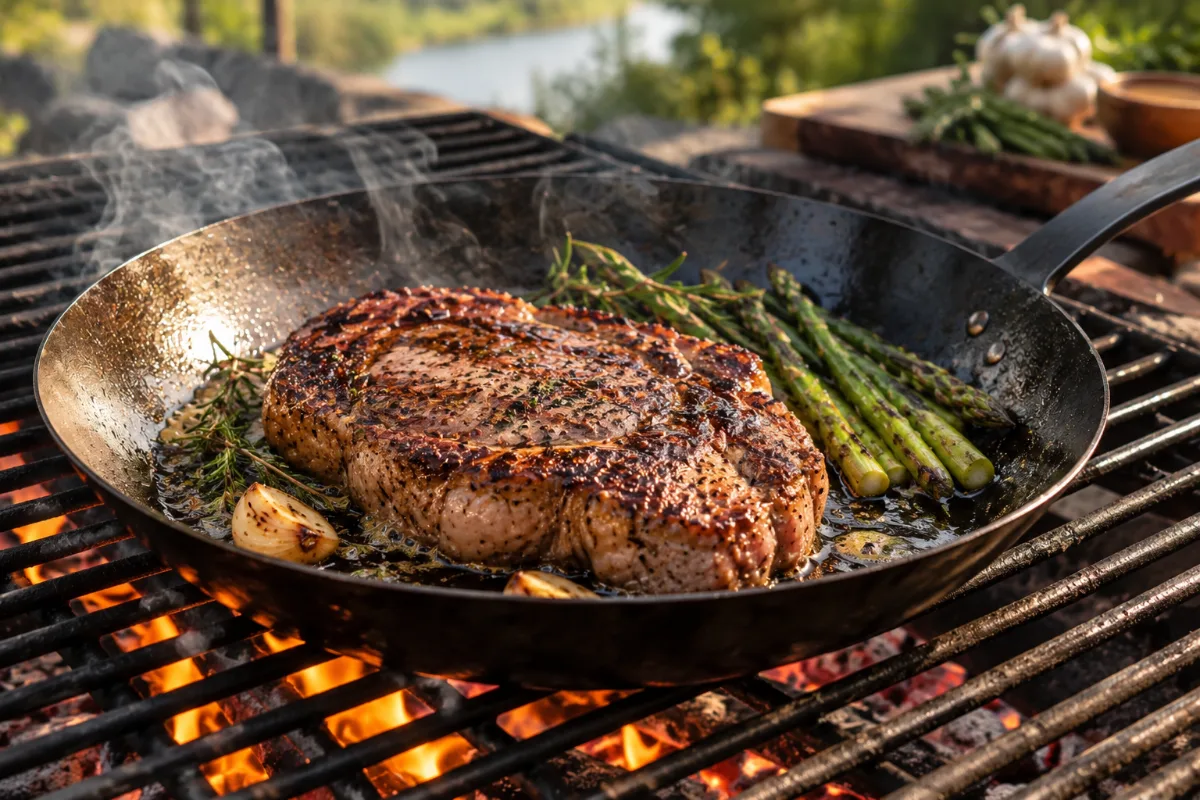
A grill is easier. Set the pan on the grate over the coals or burners and treat it much like a stovetop, just with less precise control. This is the setup for searing steaks, frying eggs, or crisping potatoes with a proper browning surface that a bare grate cannot give you. You get the char and smoke of the grill plus a flat pan to work on. Manage hot spots by sliding the pan toward or away from the heat, and give it a minute to preheat before food goes in, the same as you would at home.
On a charcoal grill you can build a two-zone fire, banking the coals to one side. Set the pan over the hot side to sear, then slide it to the cooler side to finish gently or hold food warm. That control turns a grill into a truly flexible outdoor stove. On a gas grill the burners give you the same range with even less effort. Either way, the pan lets you cook things that would fall through a bare grate, from diced vegetables to eggs to a pan sauce, which is exactly why a skillet earns a spot next to the grill.
Field care: keeping it rust-free
Outdoors, moisture is the real threat, not heat. Dew, humidity, and lake water all rust bare steel fast, and a damp pan left overnight can show orange by morning. The fix is the same as at home but more urgent: dry it and oil it, every time.
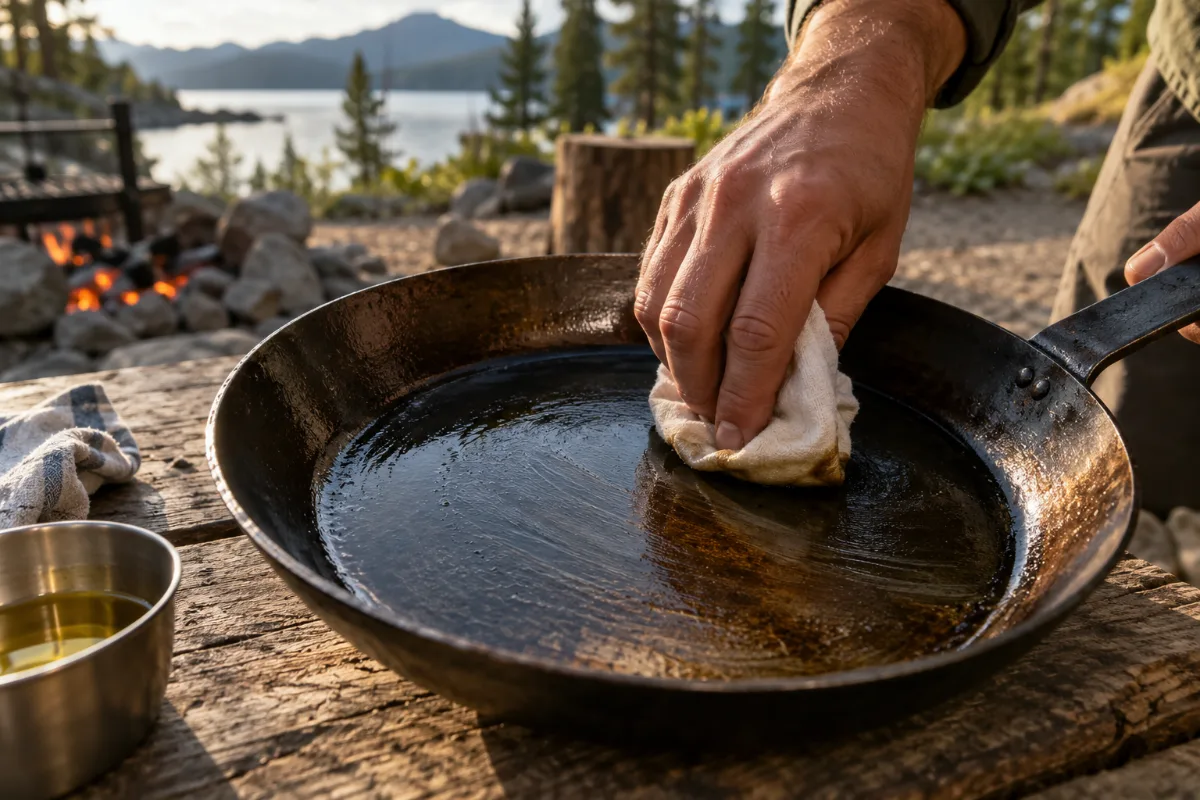
After you clean the pan, set it back over the fire or stove for a minute to flash off every trace of water. Dry-over-heat beats towel-drying because it reaches the moisture a towel misses. Once the pan is bone dry and still warm, wipe a thin coat of cooking oil across the cooking surface with a cloth or paper towel. That oil film is a barrier against the damp air. Never leave the pan to soak or air-dry in a humid campsite; that is how trips end with a rusty pan. A well-seasoned pan with a fresh oil wipe rides out a weekend of dew without a spot. For the full home routine that carries over to the field, see how to care for a carbon steel pan.
Handling soot and cleaning outdoors
Cook over a wood fire and the outside of your pan turns black with soot. This alarms first-timers, but it is purely cosmetic. Soot on the exterior does not affect how the pan cooks or the food inside it. You can scrub it off if you like a clean pan, or leave it as a badge of use; many outdoor cooks let it build and never look back.
The cooking surface is what matters, and it cleans simply. While the pan is still warm, add a little water to loosen stuck food, scrape with a spatula or a scrubber, and wipe it out. Skip the soap if you can; hot water and a scrub handle most jobs, and less soap means less risk to your seasoning. Then dry over heat and re-oil as above. Do not haul a heavy cleaning kit into the backcountry for the exterior. Clean the inside, protect it from rust, and let the soot be soot.
Choosing a camp carbon steel pan
The best camp pan balances size, weight, and a handle you can manage over fire. For most trips a single skillet around 10 to 12 inches covers frying, searing, and one-pan meals for a small group. Bigger cooks more at once but weighs and packs more; smaller suits solo backpacking and fits a compact stove.
Look at the handle. A single long steel handle heats up but is simple and tough, and a folded cloth or glove tames it. Some pans offer a helper handle or a shorter design that packs better. Weight is the deciding factor for anyone carrying the pan far, so compare listed weights before you buy. A medium-gauge pan gives a good balance of durability and pack weight for the field. Our guide to the types of carbon steel pans breaks down the shapes, and the carbon steel frying pans overview helps you match a size to your cooking.
Think about how the pan travels, too. A removable or folding handle packs flatter and protects the rest of your kit, while a fixed handle is simpler and stronger. Slip the pan into a cloth bag or wrap it in a towel so its seasoned surface does not get scratched by other gear, and so any exterior soot does not blacken everything around it. A shallow skillet nests better in a pack than a deep sauté pan, and a lid, even a simple universal one, turns the pan into a mini oven for melting cheese or steaming. Small choices like these decide whether the pan is a pleasure to bring or a hassle you leave behind.
Quick answer: Our tested guide to carbon steel pan camping keeps it simple: master the technique, keep the surface seasoned, and match your heat to the food. The full method, the key facts and the mistakes to avoid are all below.
Carbon Steel Pan Camping: What Our Tests Found
Our team put carbon steel pan camping through repeated real cooking sessions to see what actually works. Below we break down the method, the facts that matter, and the common mistakes so you get reliable results the first time.
Carbon steel vs alternatives for outdoor cooking
| Factor | Carbon steel | Cast iron | Nonstick |
|---|---|---|---|
| Open flame | Excellent | Excellent | Poor (coating) |
| Weight | Lighter | Heavy | Light |
| Durability | High | Very high | Low outdoors |
| Coating risk | None | None | Melts/flakes |
The table sums up the case in four rows. Nonstick is light but cannot survive real fire. Cast iron is unbreakable but heavy. Carbon steel gives you the fire-proof toughness of cast iron at a weight closer to nonstick, which is exactly what an outdoor cook wants from a single pan.
Frequently asked questions
Is carbon steel good for camping?
Can carbon steel go over an open fire?
Is carbon steel better than cast iron for backpacking?
How do I stop a camp pan rusting?
How do I clean a sooty carbon steel pan?
The takeaway
For anyone who cooks away from a kitchen, carbon steel is the pan to pack. It takes everything a fire throws at it, weighs far less than cast iron on the trail, and asks only that you keep it dry and oiled between meals. Season it before you leave, cook over coals rather than open flame, dry it over heat after each use, and let the soot build on the outside. Do that and one skillet will feed you over countless fires for years.