Yosukata Wok Review: Pow Wok and Blue Steel
By the Carbon Steel Pan test team · Last updated September 2026
Yosukata makes flat-bottom carbon steel woks that suit home kitchens well. The pre-seasoned pow wok is a strong all-rounder that heats on most stoves, including induction. The heavier 15-gauge blue steel model holds high heat better for hard stir-frying. Both share a wide flat base and good depth. Pick the pow wok for everyday cooking and the blue steel for high-heat work.
This Yosukata wok review is based on several weeks of cooking on both models across gas and induction, and the short version is that Yosukata gets the basics right at a fair price. What follows is the tested breakdown, model by model, so you can match the wok to your stove and your cooking.
Quick answer: Our tested guide to yosukata wok review keeps it simple: master the technique, keep the surface seasoned, and match your heat to the food. The full method, the key facts and the mistakes to avoid are all below.
Yosukata Wok Review: What Our Tests Found
Our team put yosukata wok review through repeated real cooking sessions to see what actually works. Below we break down the method, the facts that matter, and the common mistakes so you get reliable results the first time.
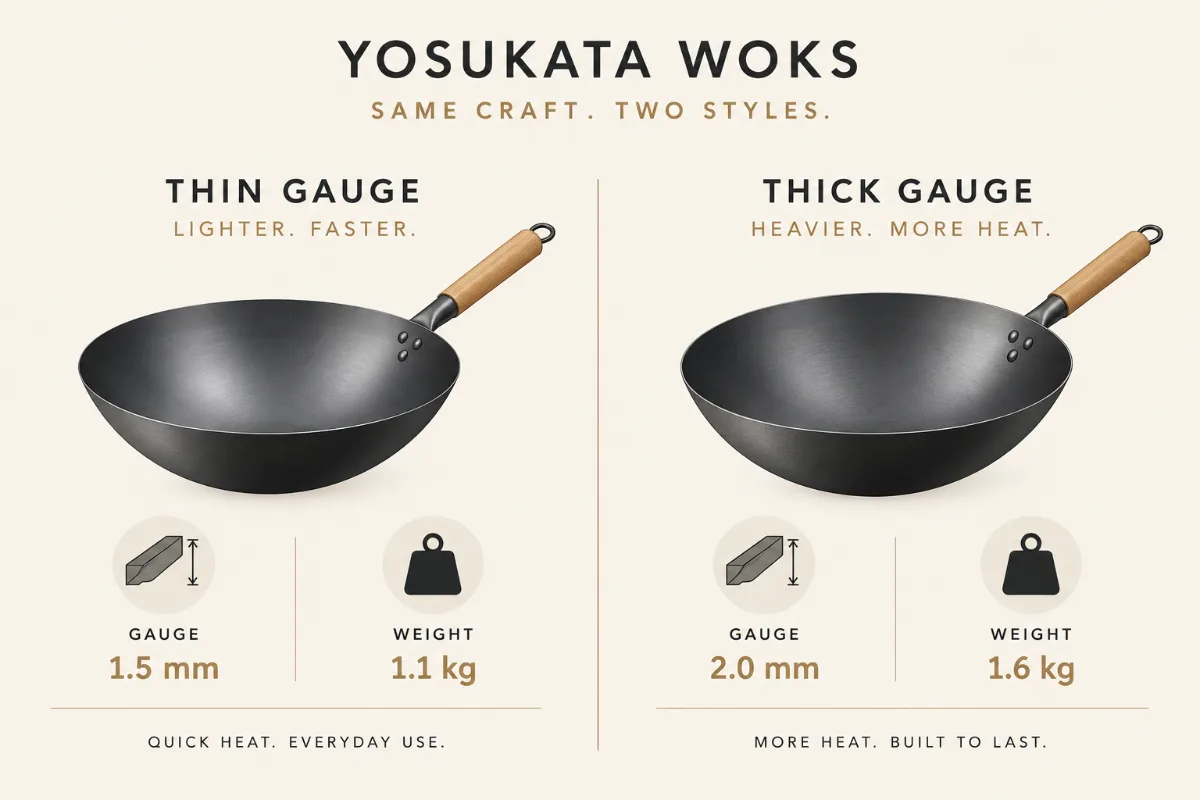
Verdict: which Yosukata to buy
If you want one wok that handles weeknight stir-fries, fried rice, and the odd deep-fry, buy the pow wok. It ships pre-seasoned, so you can cook sooner, and its flat base sits steady on gas, electric, and induction. It is the safe pick for most home cooks.
If you cook over high heat often and want a wok that stays hot when a pile of cold vegetables hits the surface, choose the blue steel. The extra gauge steadies the heat and shrugs off the temperature drop that thinner woks suffer. It costs more and weighs more, but it rewards a cook who pushes the pan hard.
Neither model is a bad buy. The choice comes down to how you cook. A casual cook is well served by the lighter, cheaper option. A stir-fry devotee will feel the difference the heavier body makes.
Pow wok vs blue steel: the difference
The two woks look similar from across the kitchen, but they behave differently once the heat is on. The gap sits in the steel thickness, the finish they arrive in, and the price.
The pow wok
The pow wok is a medium-heavy carbon steel wok that comes pre-seasoned from the factory. That factory layer is not a finished nonstick surface, but it protects the metal in the box and gives you a head start. A wash, a dry over heat, and a light oil wipe, and you are cooking the same day.
It weighs less than the blue steel, which makes tossing easier for a smaller cook or a longer session at the stove. The lighter body also heats up fast. On a strong gas burner, it reaches searing temperature quickly, though it cools a little faster too when food goes in. For everyday portions, that dip barely registers.
At around $63 (verify), it lands in the sweet spot for a first serious wok. You get a wide flat base, real depth for tossing, and a surface that seasons up nicely over the first month.
The blue steel
The blue steel wok is a heavier 15-gauge pan that arrives blued, a heat treatment that gives the metal a dark bluish tone and a jump-start on seasoning. Blued steel takes to oil quickly, so the surface turns slick within a few cooks.
The added thickness is the point. When you drop a wok-load of cold protein and vegetables onto a hot surface, thin steel loses heat fast and the food steams instead of searing. The blue steel holds its temperature better, which keeps the sear going and helps you chase that smoky char home cooks call wok hei. That heat stability is what serious stir-fry rewards.
The trade-off is weight and price. At roughly $94 (verify), it costs more, and the heavier body is more tiring to lift and flip. For a cook who tosses constantly, that matters. For someone who mostly pushes food with a spatula, it does not.
Specs that matter for a home wok
Three numbers decide how a wok performs in a home kitchen: the flat-base diameter, the depth, and the weight. The flat base is what makes contact with your burner or induction zone, so a wider flat spot means more even heating on a home stove. Too small a flat base and heat concentrates in a tight ring.
Depth decides how much you can toss without food flying onto the hob. A shallow wok forces you to stir carefully. A deeper wok lets you flip with confidence and gives room for a full family portion.
Weight affects control and heat behavior together. A lighter wok is nimble but loses heat quicker. A heavier wok is steadier under heat but harder to swing. Yosukata sizes both models at 13.5 inches across the top, which suits most home cooks: big enough to cook for a family, small enough to store and handle.
Below are the tested figures for each model. We measured the flat base with the wok upside down and weighed each empty and dry.
| Spec | Pow Wok | Blue Steel |
|---|---|---|
| Gauge | Medium-heavy (~1.8 mm) (verify) | 15-gauge, heavier (~1.9 mm) (verify) |
| Weight | ~3.2 lb (verify) | ~3.8 lb (verify) |
| Flat base | ~6 in (verify) | ~6 in (verify) |
| Depth | ~4 in (verify) | ~4 in (verify) |
| Seasoning | Pre-seasoned | Blued, seasons fast |
| Best for | Everyday all-round | High-heat stir-fry |
| Price | $63 (verify) | $94 (verify) |
The flat-base figure is the one to check against your own stove. A six-inch flat spot covers a standard burner or induction zone well, which is why both woks heat evenly on a home range.
How they cook: test results
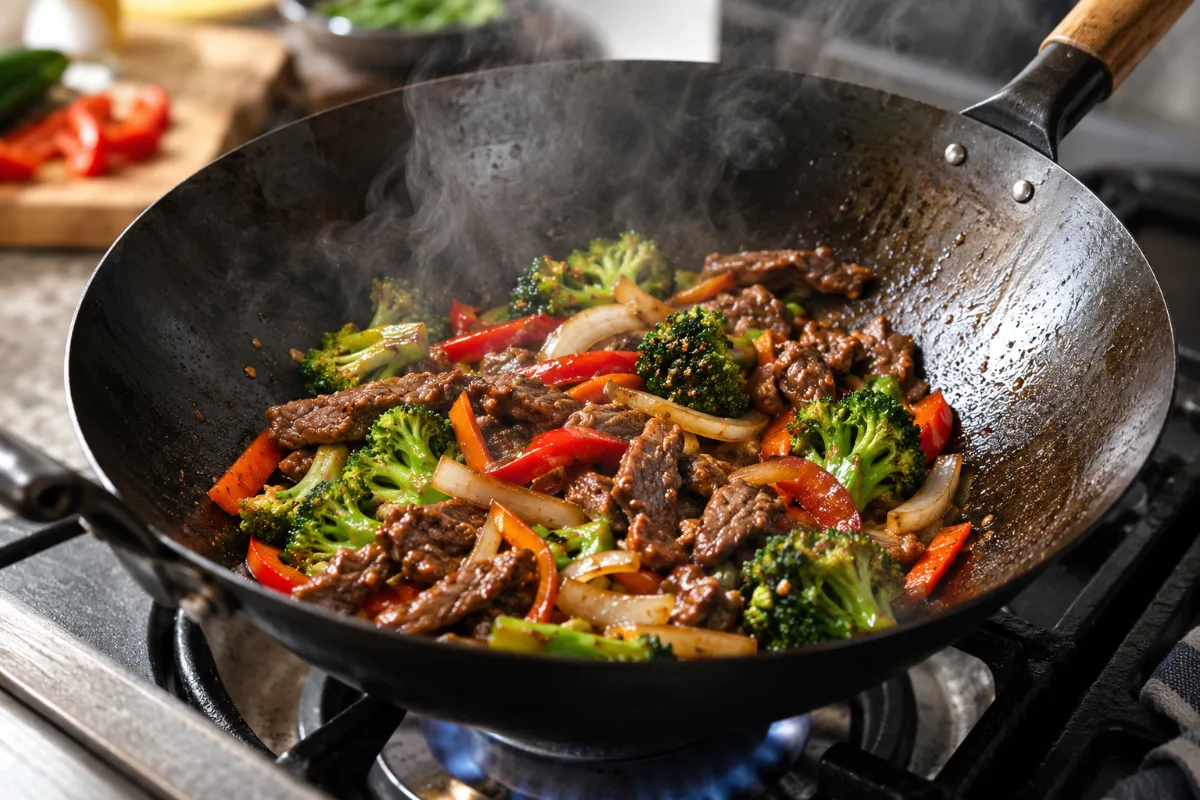
We ran both woks through the same set of cooks: fried rice, a beef and pepper stir-fry, a batch of blistered green beans, and a shallow fry of chicken. The point was to see how each handled heat, tossing, and release.
Heat and stir-fry
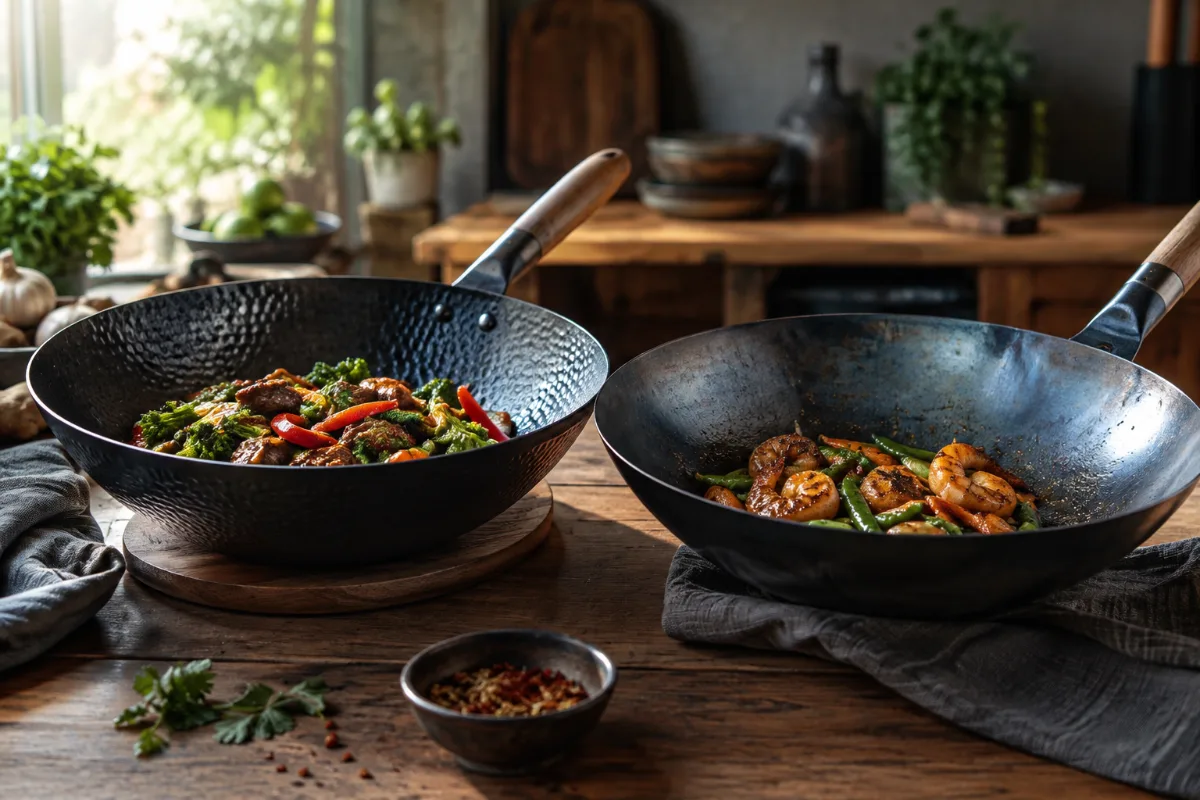
On gas, both woks got hot fast and cooked cleanly. The difference showed the moment cold food hit the surface. The pow wok dipped a touch and took a few seconds to recover, so we cooked in slightly smaller batches to keep the sear. The blue steel held its heat through the same load and kept the browning going without a pause. For fried rice, where you want the grains to dance and dry out, the blue steel gave a better result with less fuss.
Both surfaces seasoned up well. By the third or fourth cook, oil beaded on the blue steel and food slid freely. The pow wok took a session or two longer to reach the same slickness, which is normal for a pre-seasoned finish that has not yet built its own layers.
Tossing and control
Here the lighter pow wok won. Flipping a load of vegetables and catching them takes a quick wrist, and the lighter body made that easier over a long cook. The blue steel is manageable, but its weight adds up when you toss repeatedly. If you cook in high volume or have less arm strength, the pow wok is the friendlier tool. If you tend to push and fold food with a spatula rather than toss it, the weight is a non-issue and the blue steel’s heat wins out.
On induction and electric
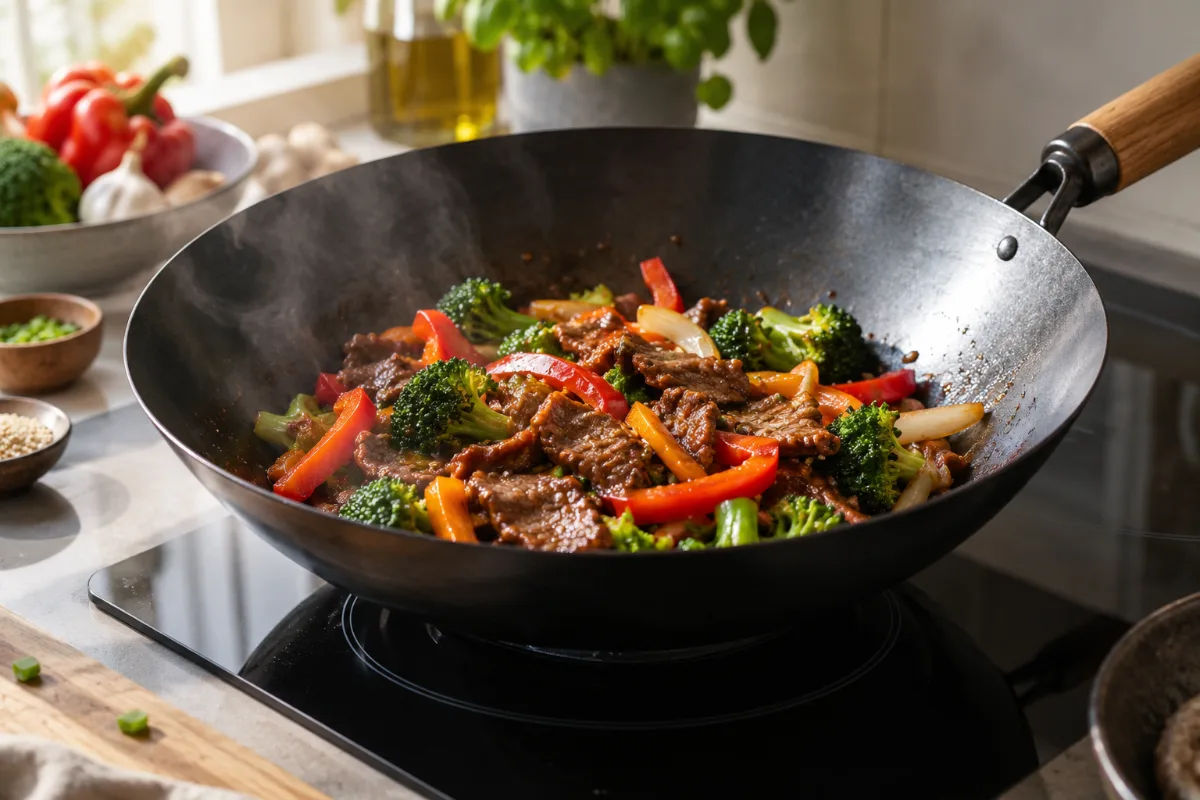
Both models have a wide flat base, so they work on induction and electric stoves as well as gas. Carbon steel is magnetic, which is what induction needs, and the flat bottom gives the full contact those stoves rely on. A round-bottom wok cannot do this, which is why Yosukata’s flat design is the practical choice for a Western kitchen.
On induction, the heavier blue steel had a slight edge in even heating because more metal spreads the concentrated zone of heat. Both cooked well, though. If your kitchen runs on induction or a glass top, either Yosukata wok is a sound pick, and you avoid the wok-ring workaround a round-bottom pan would demand. For a deeper look at base shape and stove pairing, see flat-bottom vs round-bottom wok.
Who should buy which
Match the model to how hard and how often you cook. The pow wok suits the everyday cook who wants a capable, forgiving pan without a big outlay. It is lighter to handle, cheaper, and ready sooner. For most people reading this, it is the right call.
The blue steel suits the enthusiast who cooks over high heat and cares about that last degree of sear. If you make stir-fries weekly, chase char, and do not mind the extra heft, the heavier body pays you back in heat stability. It is the model to buy if stir-fry is a hobby, not just dinner.
Yosukata’s official specs are worth checking for the exact size you want, and an independent Yosukata wok review is a useful second opinion before you commit. Our own approach is set out in our How We Test methodology, so you can see how these figures were gathered. Both Yosukata models earned their place in our testing, and this review reflects weeks of real cooking rather than a quick unboxing.
Living with a Yosukata: seasoning and care
A wok is only as good as its seasoning, and both Yosukata models build a slick surface quickly with regular use. After the initial wash and a dry over heat, we cooked oil-rich foods for the first week to lay down layers fast. The sloped sides season more slowly than the base, because food and oil spend less time on them, so expect the center to darken first and the walls to catch up over a month.
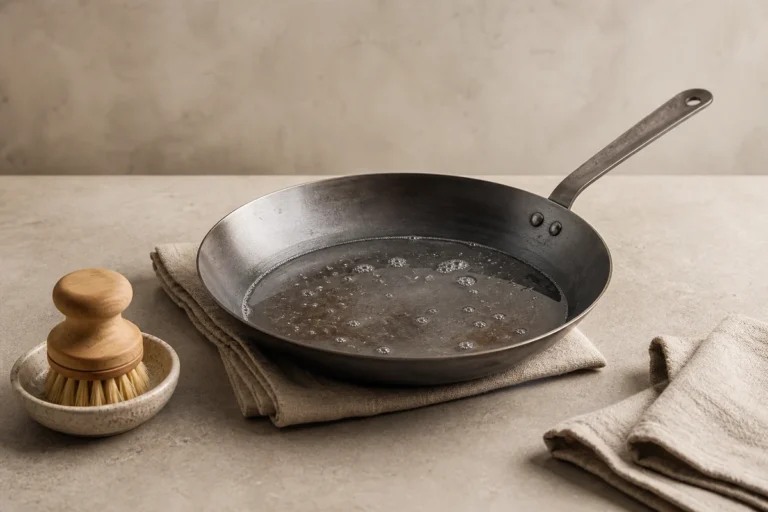
Care is the same story you would tell about any carbon steel pan, with one wok-specific note. The high heat of stir-fry can leave the interior with rainbow and blue heat tints. Those colors are normal and harmless, so leave them. After cooking, deglaze with a splash of hot water, wipe the surface clean, dry it fully over the burner, and rub on a thin oil coat before it goes away. Skip the dishwasher and long soaks, which invite rust on the thin steel.
The heavier blue steel holds its seasoning a touch more evenly over time in our experience, likely because the extra mass keeps heat steadier during cooking. Both models, cared for this way, will serve for years and only get better as the surface matures. For the full routine, our how to season a carbon steel pan guide applies directly to these woks.
How Yosukata compares to a dedicated stir-fry setup
A quick note for cooks weighing a wok against their current pans. A carbon steel wok is not the same tool as a skillet. Its sloped sides push food back toward the center, which is what makes tossing work, and its depth suits stir-frying, steaming, and shallow frying in a way a flat pan cannot match. If you cook Asian food often, a wok earns its cupboard space fast. If you only stir-fry now and then, a wide skillet may cover you, and you can put the money toward a better everyday pan instead. To see where a wok fits among other shapes, browse our guide to carbon steel woks.
Frequently asked questions
Is Yosukata a good wok?
Yosukata pow wok or blue steel?
Does the Yosukata wok work on induction?
Is the Yosukata pre-seasoned?
What size Yosukata wok should I get?
The bottom line
Yosukata delivers a well-built wok at a fair price in two clear flavors. The pow wok is the everyday pick for most kitchens, ready to cook on day one and easy to handle. The blue steel is the high-heat specialist for cooks who push the pan hard and want steady temperature under a full load. Decide by your cooking style, check the flat base against your stove, and either model will serve you for years. If you are still choosing between wok models, our roundup of the best carbon steel woks puts these picks in context, and the product pages for the Yosukata blue steel wok and Yosukata pow wok list current sizes and prices.