Carbon Steel vs Stainless Steel: Which to Buy?
As an Amazon Associate I earn from qualifying purchases, at no extra cost to you.
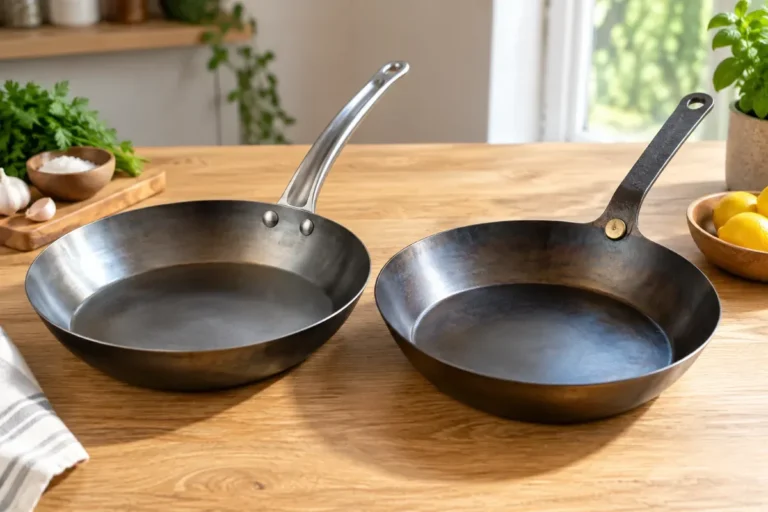
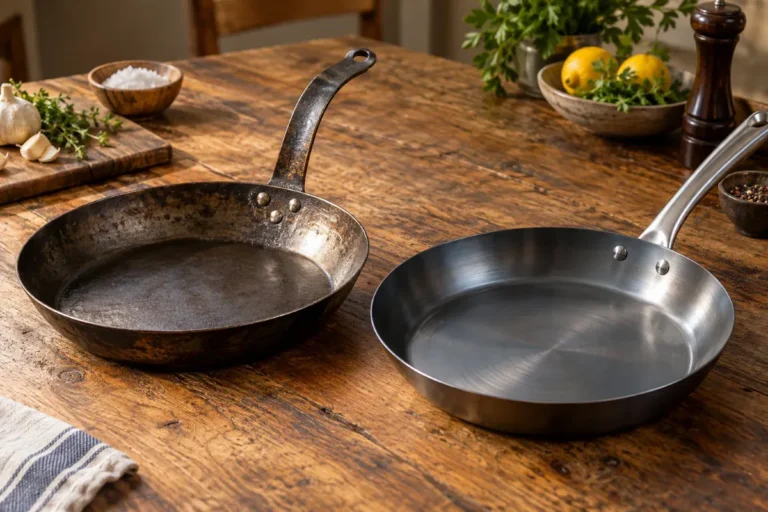
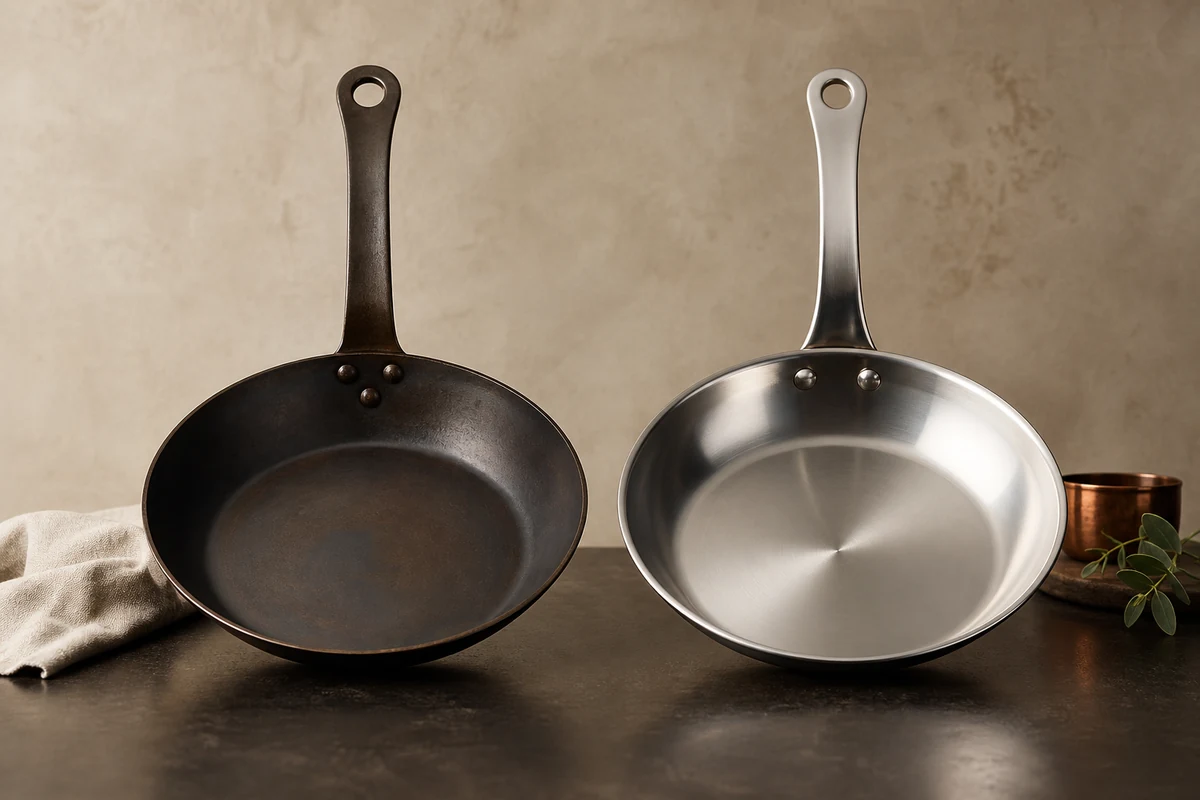
Carbon steel becomes non-stick through seasoning and sears exceptionally, but rusts and cannot handle acid. Stainless steel needs no seasoning, handles anything including acid, and is dishwasher safe, but never becomes non-stick. Most serious kitchens own both, because they solve opposite problems.
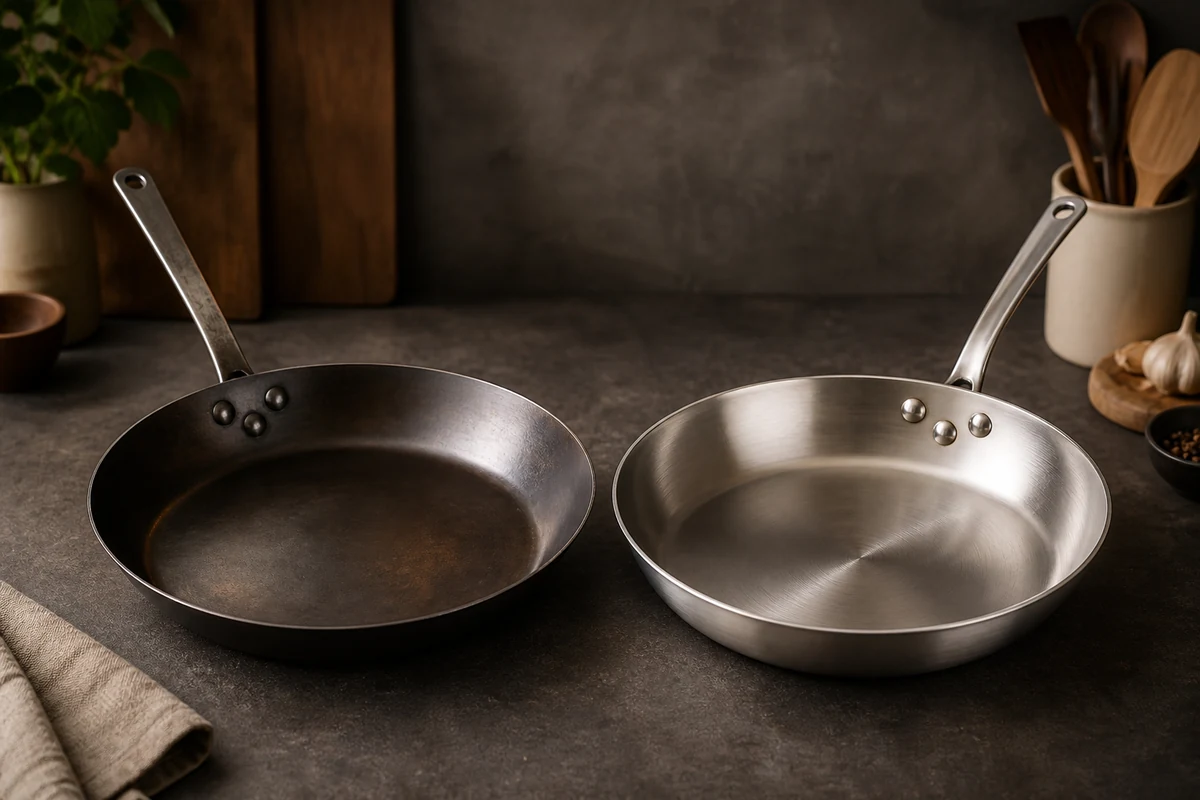
Quick answer: Our tested guide to carbon steel vs stainless steel keeps it simple: master the technique, keep the surface seasoned, and match your heat to the food. The full method, the key facts and the mistakes to avoid are all below.
Carbon Steel Vs Stainless Steel: What Our Tests Found
Our team put carbon steel vs stainless steel through repeated real cooking sessions to see what actually works. Below we break down the method, the facts that matter, and the common mistakes so you get reliable results the first time.
They are opposites, not rivals
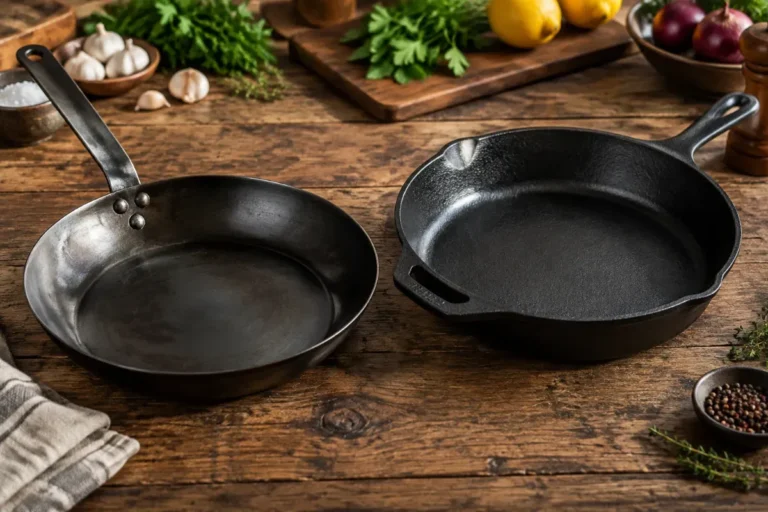
This comparison is different from carbon steel versus cast iron, where the two are near-cousins. Carbon steel and stainless are built from different logic.
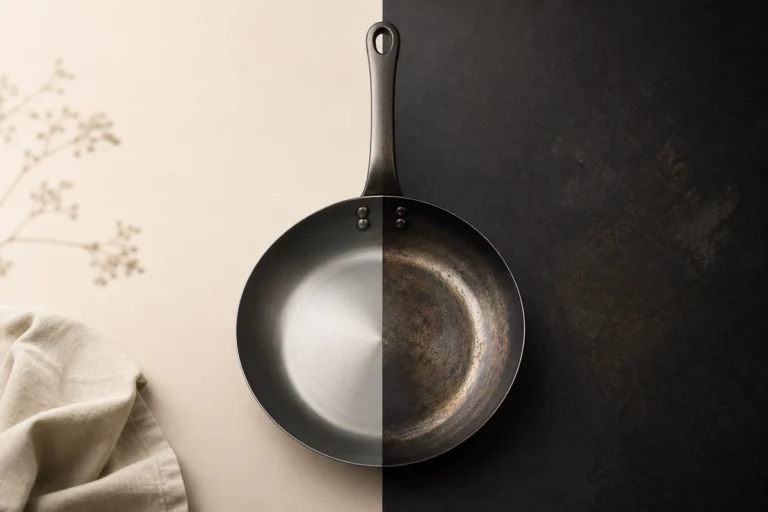
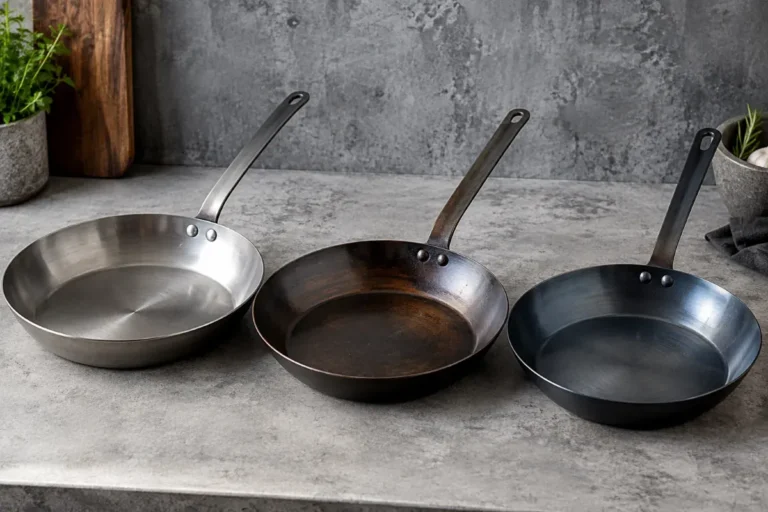
Carbon steel is bare, reactive iron that you protect with seasoning. Stainless has chromium added specifically to stop it reacting, which is why it never rusts and never seasons.
The strength of one is the weakness of the other, almost point for point.
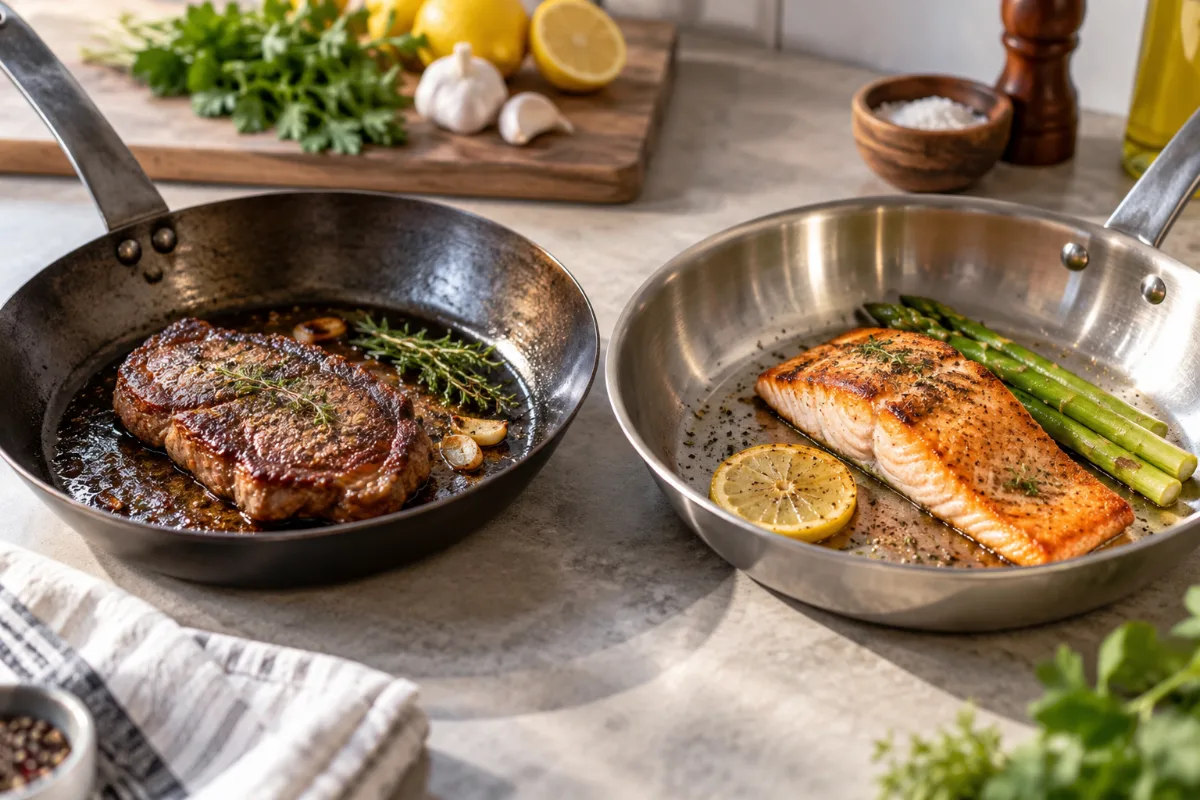
Head to head
| Carbon steel | Stainless steel | |
|---|---|---|
| Seasoning needed | Yes | No |
| Becomes non-stick | Yes, once seasoned | No |
| Handles acid | No | Yes |
| Rusts | Yes | No |
| Dishwasher safe | No | Yes |
| Searing | Excellent | Very good |
| Weight | Light | Medium |
| Maintenance | Real | Almost none |
| Deglazing for sauces | Poor, acid strips it | Excellent |
| Lifespan | Decades | Decades |
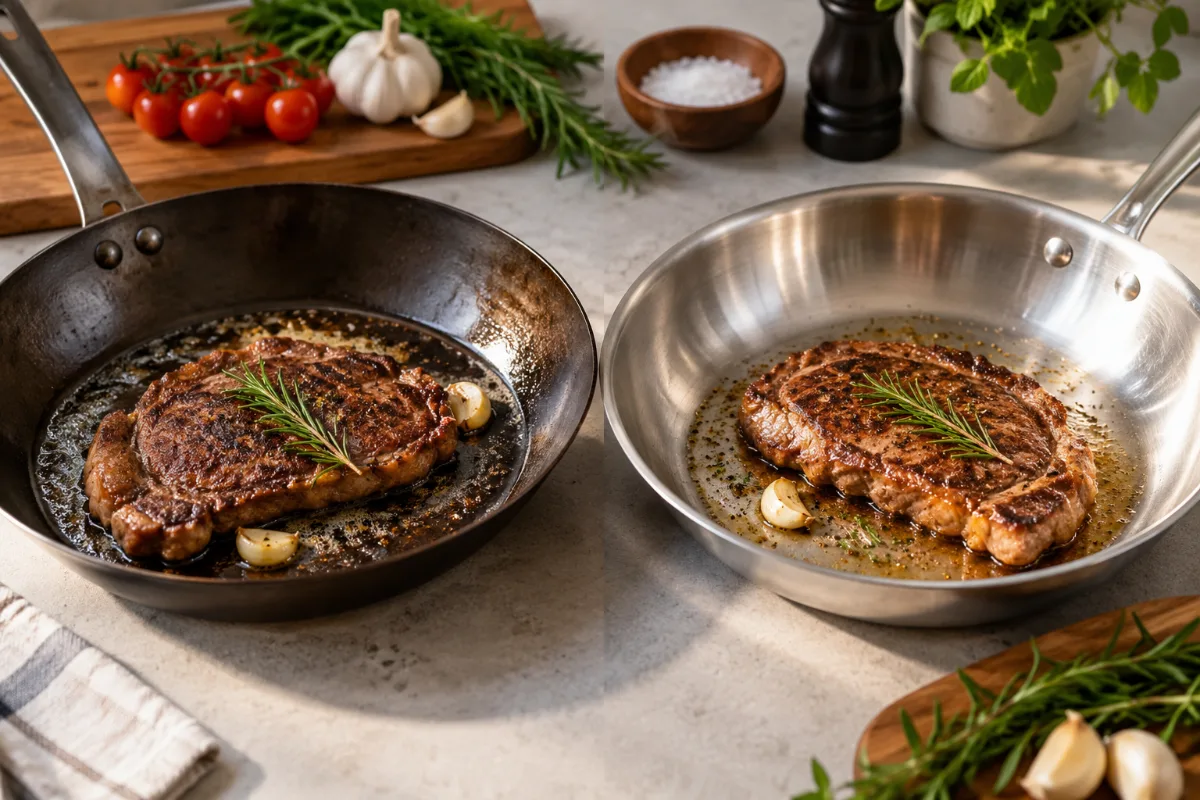
Choose carbon steel for
- Searing and high-heat work. It gets hotter and releases better once seasoned.
- Eggs, once mature. Stainless never releases eggs cleanly without a lot of fat.
- Stir-fry. Light weight and fast response.
- Avoiding coatings while still wanting non-stick behaviour.
Choose stainless for
- Acidic cooking. Tomato sauce, wine reductions, lemon. Carbon steel cannot do this at all.
- Pan sauces. Deglazing builds flavour on stainless without stripping anything.
- Zero maintenance. Dishwasher, soak, ignore. Nothing to protect.
- Boiling and simmering. Long contact with liquid, which carbon steel dislikes.
The honest recommendation
If you can only own one and you cook a wide range including sauces and acidic dishes, buy stainless. It does more things adequately and asks nothing of you.
If you can only own one and you mostly sear, fry and cook eggs, buy carbon steel and keep acid out of it.
If you can own two, that is the answer most experienced cooks reach: stainless for everyday and acidic work, carbon steel for searing and eggs. They cover each other’s weaknesses completely.
Our carbon steel comparison covers ten pans if you go that way.
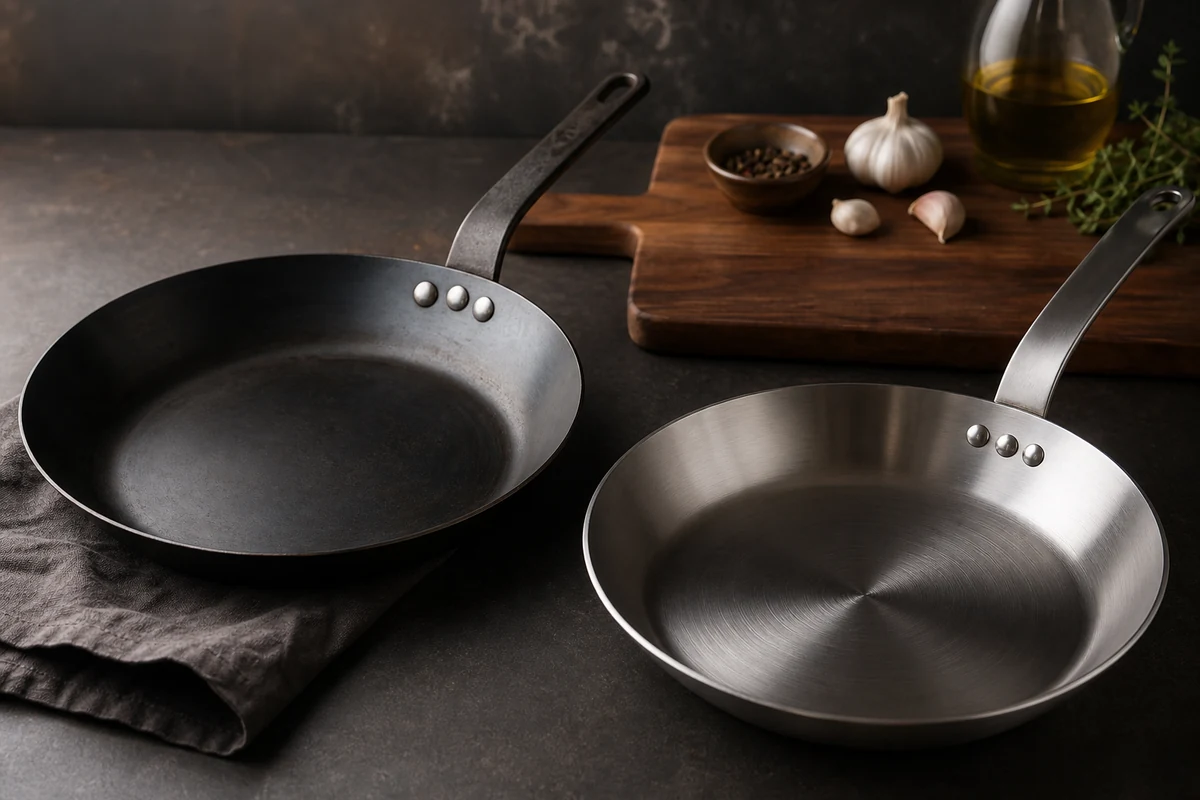
If you buy one carbon steel pan
Stainless still wins for pan sauces built on wine or tomato. Carbon steel wins for searing, and it costs less. People who own both tend to reach for a 12 inch carbon steel skillet on weeknights, and the Lodge 12 inch is $44.99 with factory seasoning already on it. Spend $99.95 on the de Buyer MINERAL B Pro and what you buy is a cast stainless handle that stays cooler, not better cooking.