Carbon Steel Seasoning Flaking or Peeling: Causes and Fixes
By the Carbon Steel Pan test team · Last updated September 2026
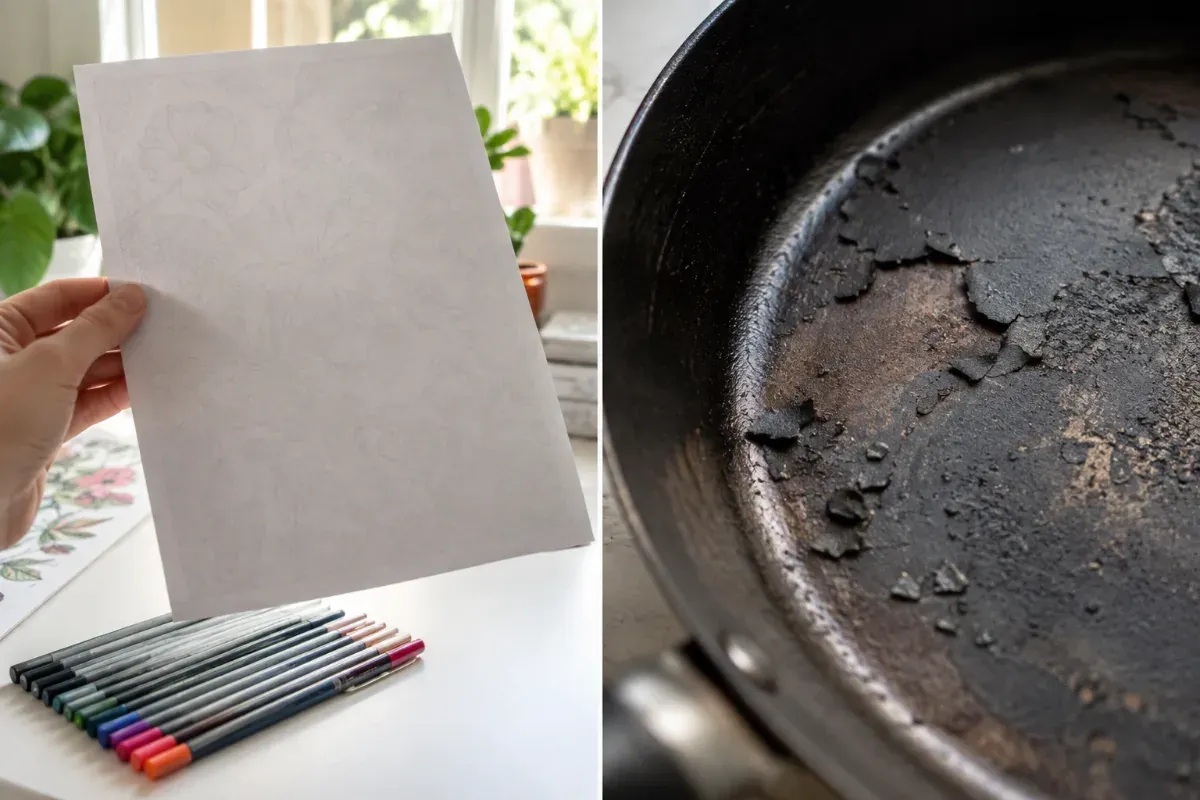
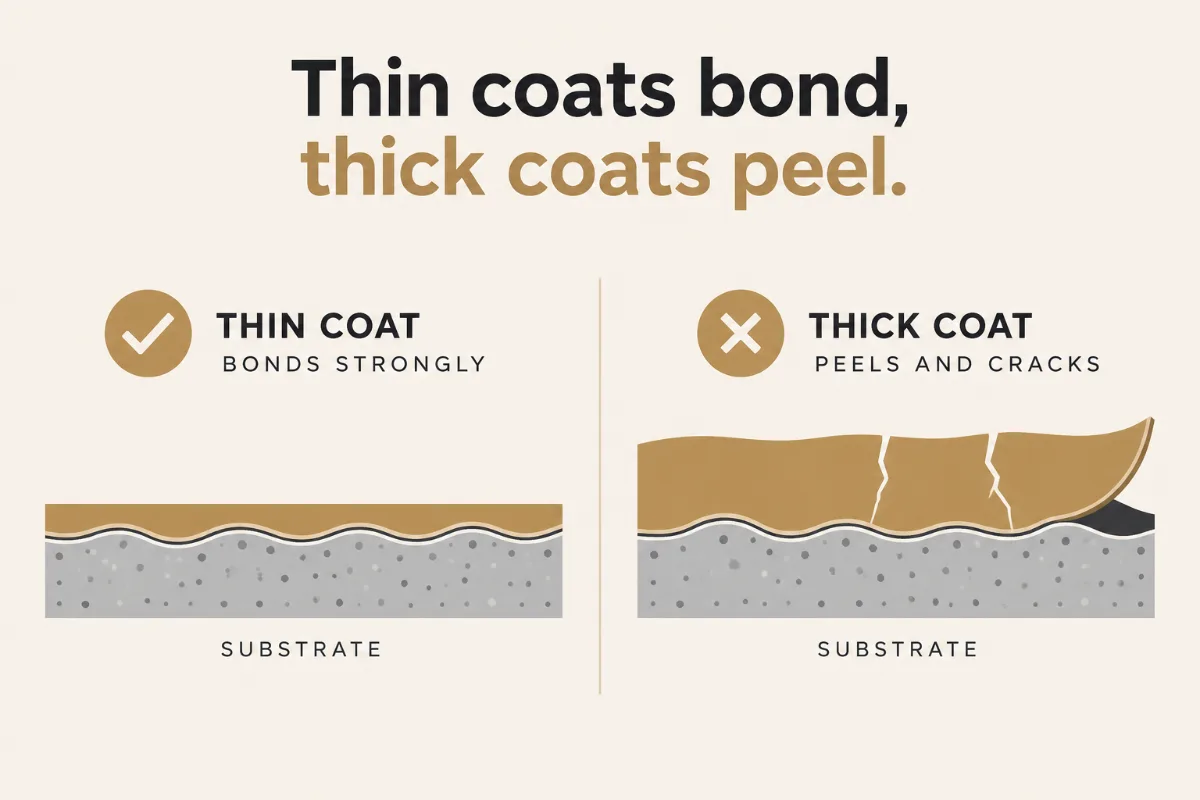
Seasoning flakes when it is built too thick or unevenly, so the top layers lose their grip and lift off. It is not dangerous and the pan is not ruined. Scrub the loose, flaking film back to a sound layer, then rebuild with very thin coats of oil. Thin layers bond to the metal. Thick ones peel.
Is flaking seasoning dangerous?
No. Take a breath before you do anything drastic. Those black bits are polymerized oil, which is simply cooking oil that heat has hardened into a solid film. If a flake ends up in your food and you swallow it, nothing bad happens. It is inert, food-safe carbon and oil, not a chemical coating and not rust.
That said, you do not want flakes in your dinner or a patchy surface that cooks unevenly. So the goal is not panic. The goal is a clean reset. The pan is fine. The seasoning just needs to come back correctly, and this article walks through exactly how.
It helps to know that flaking is one of the most common things new owners run into, and one of the least serious. It looks like the pan is falling apart. It is not. The steel underneath is untouched and will happily hold a fresh layer of seasoning. Once you understand why the old layer let go, you can rebuild in a way that never repeats the problem.
Quick answer: Our tested guide to carbon steel seasoning flaking keeps it simple: master the technique, keep the surface seasoned, and match your heat to the food. The full method, the key facts and the mistakes to avoid are all below.
Carbon Steel Seasoning Flaking: What Our Tests Found
Our team put carbon steel seasoning flaking through repeated real cooking sessions to see what actually works. Below we break down the method, the facts that matter, and the common mistakes so you get reliable results the first time.
Why seasoning flakes
The root cause is almost always the same: oil applied too thick. When you smear on a heavy coat and heat it, only the thin layer touching the metal fully hardens and bonds. The oil piled on top of that never cures properly. It sits there half-set, brittle, with a weak grip on the layer below. Cook a few times and it cracks and lifts, like old paint peeling off a wall.
Uneven application does the same thing in patches. If oil pools in the well of the pan or gathers along the edge, those thick spots flake while the thin areas stay put. That is why flaking often shows up first at the rim or in a ring where oil ran and settled.
A third trigger is heat abuse. Leaving an empty pan on high for a long stretch can scorch the seasoning, turning parts of it dry and crumbly so it sheds. This is why we tell people not to blast a bare pan unattended.
Age plays a smaller role. A pan seasoned well for years can eventually build layers so deep that the oldest strata lose contact and shed. That is rare and easy to fix, but it explains the occasional flake on a veteran pan that was never over-oiled.
The science behind it is worth a plain-language moment, because it makes the fix obvious. Seasoning forms through polymerization, a process where heat drives oil molecules to link into a hard, plastic-like network bonded to the iron. That reaction needs oxygen and a thin film to complete. A layer so thin it looks like nothing has all the air it needs and cures fully. Pile the oil deep and the inside of the puddle never gets enough oxygen or heat to finish, so it stays soft and gummy under a cured skin. That trapped, half-cured oil is the weak seam that lets the top break away. Food scientists and cast iron guides describe the same mechanism, and it is why the thin-coat rule is not a preference but physics.
Acidic cooking can speed flaking on a weak pan, too. Tomato sauce, wine, and citrus slowly dissolve seasoning, and if the layer underneath was thick and poorly bonded to begin with, acid gives the loose top an easier exit. A well-cured pan shrugs off the occasional acidic dish; a badly built one shows its flaws faster.
How to fix a flaking pan
The repair is simple. You remove the loose material, get back to solid ground, and rebuild thin. Here is the method we use.
Scrub back the loose seasoning
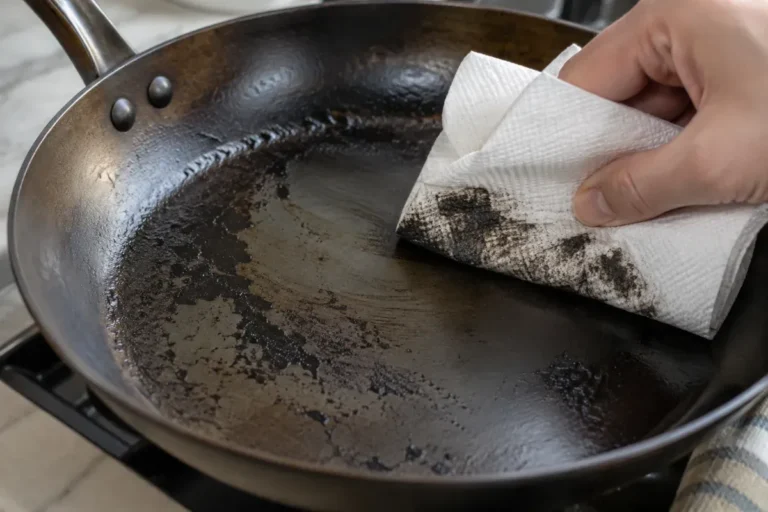
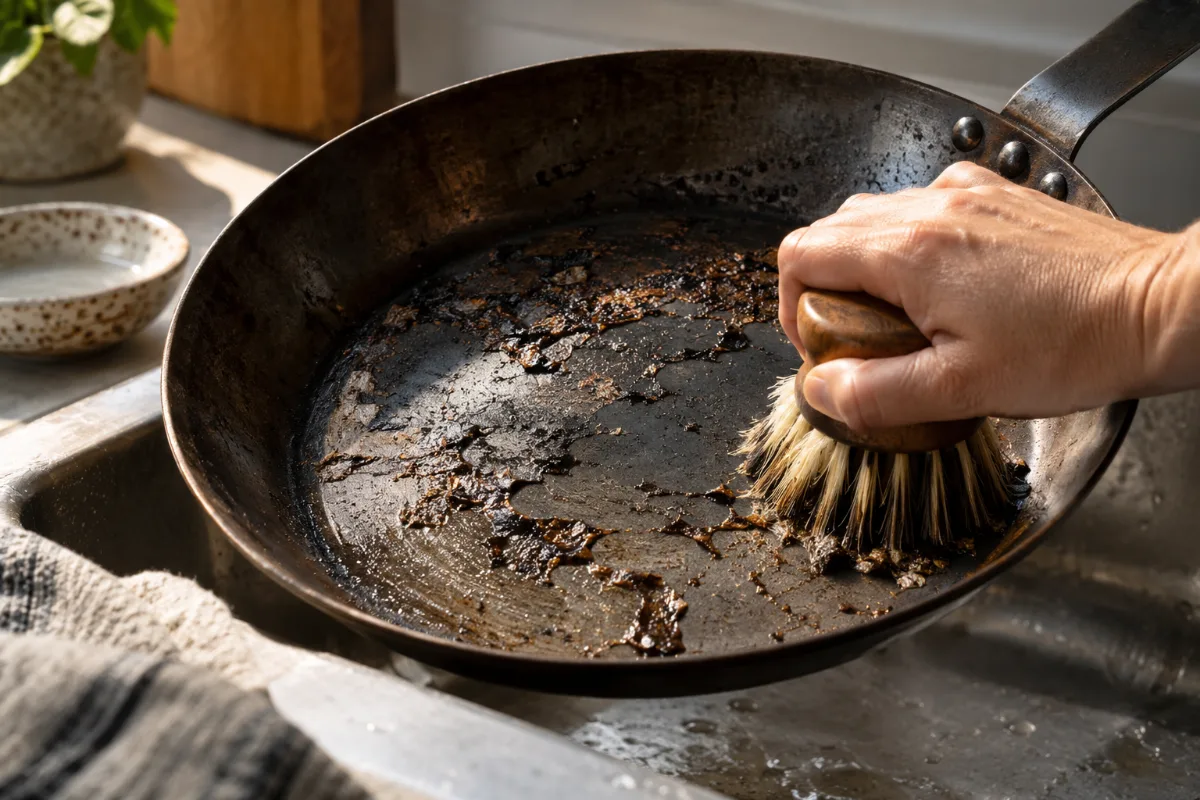
Work over a sink. Use a stainless scrubber, a chainmail scrubber, or coarse salt with a folded paper towel. Scrub the flaking areas firmly until the loose, lifting film is gone. You are aiming to reach either intact seasoning underneath or clean bare metal in the worst spots. Do not try to save the flakes. Anything that wants to peel has to go, or it will drag the new layer off with it.
You do not have to strip the entire pan. Solid, well-bonded seasoning that is not lifting can stay. Focus your effort where the trouble is.
Wash and dry with heat
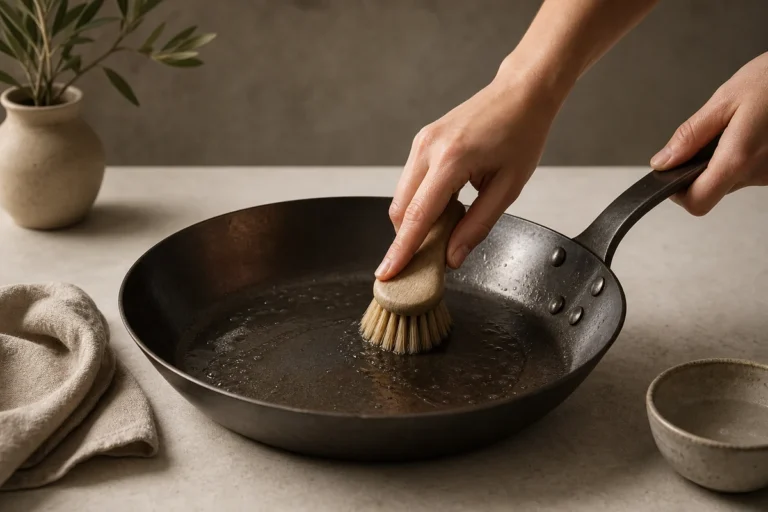
Once the loose material is off, wash the pan with hot water and a little dish soap. Soap is fine here because you are resetting, not protecting a finished surface. Rinse well. Then dry it fully. Set the pan on the burner over medium heat for a minute or two until every trace of water has steamed off and the surface looks dry. Water left in the metal invites rust and stops oil from bonding.
Rebuild with thin coats
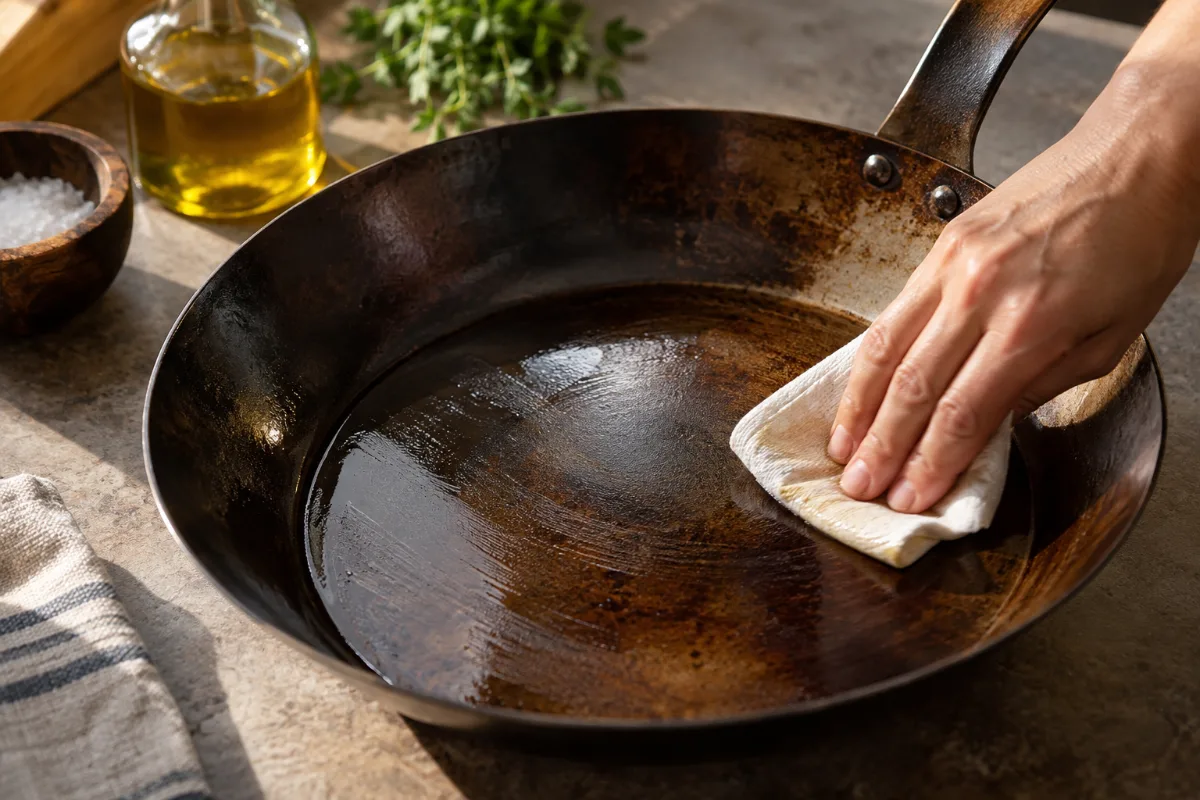
Now season it again, and this is where you break the habit that caused the flaking. Put a few drops of a high-smoke-point oil on the surface, spread it around, then wipe it off. Wipe until the pan looks almost dry, as if you had polished away the oil. Heat the pan until the oil stops smoking, let it cool, and repeat two or three times. Each near-invisible coat bonds and stacks into a durable surface. Follow how to season a carbon steel pan for the full step-by-step if you want oven timings and oil choices.
The thin-coat rule that prevents it
If you take one habit from this page, take this one. When you oil a pan to season it, wipe almost all of the oil back off before heating.
It feels wrong the first time. Your instinct says more oil means more protection. The opposite is true. The visible sheen you leave behind is the exact layer that will not cure and will flake later. A properly oiled pan going into the heat should look dry, not wet or glossy.
The test is your paper towel. After you spread the oil, wipe with a clean towel until it comes away with barely any oil on it. The pan should have only the microscopic film that clings to the metal. That film hardens into a rock-solid layer. Repeat the thin coat several times rather than laying down one thick one, and you build strength without the peeling.
America’s Test Kitchen and every serious seasoning guide land on the same instruction because the chemistry does not bend. Thin polymerizes. Thick traps uncured oil.
Oil choice supports the habit. Neutral oils with a high smoke point, such as grapeseed, canola, or refined avocado oil, cure into a hard film and are easy to wipe thin. Flaxseed oil builds a dark, glassy layer fast but is notorious for flaking if applied even slightly thick, so most testers have moved away from it. Whatever you pick, the wiping step matters more than the brand of oil. A cheap neutral oil wiped nearly dry beats a fancy one left glossy.
Temperature during seasoning counts as well. Heat the pan until the oil passes its smoke point and stops smoking, which signals the film has cured, then let it cool before the next coat. Stopping short of that point leaves the layer soft; blasting far past it can scorch. A steady, complete cure on each thin coat is what stacks into a surface that holds.
Flaking vs normal seasoning wear
Not every mark on your pan is a problem, and over-correcting a healthy pan is a common mistake. We see people strip a perfectly good surface every few weeks because it looks blotchy, which only resets the seasoning they worked to build. Learn to tell flaking from ordinary character before you reach for the scrubber.
Flaking is loose material physically lifting off. You can catch an edge with a fingernail, or you see black bits transferring to your food or your sponge. That needs the fix above.
Normal wear looks completely different. A pan develops light and dark patches, rings where food sits, and shades of brown to near-black across the surface. None of that lifts. It is just uneven color, the pan’s patina, and it is cosmetic. If the surface is smooth and food releases, leave it be. We cover this look in full under patchy seasoning (planned) so you can match what you are seeing to what it means. Stripping a pan that is merely blotchy throws away good seasoning for no reason.
Preventing it long term
Keeping flaking away comes down to a few habits, most of which you have already met.
Always season in thin coats and wipe back the oil. This alone prevents the majority of cases.
Do not leave an empty pan on high heat unattended. Add oil or food before the surface scorches, and pull the pan off the burner when you are done.
Keep the pan in regular use. A pan that cooks often builds seasoning naturally and evenly, which is stronger than a stack of dedicated seasoning sessions.
Store the pan dry and with airflow. Trapped moisture under a lid or in a damp cupboard can undermine seasoning over time and encourage the rust that leads to weak, lifting spots. A quick wipe of oil after drying and an open shelf go a long way.
Every so often, if a pan builds up heavy and starts to look lumpy, it is fine to strip it back and start fresh. A reset every year or two on a hard-working pan is maintenance, not failure. When you do, follow how to reseason a carbon steel pan and keep those coats thin.
Here is a quick reference for what causes flaking and how to head it off.
| Cause | Result | Prevention |
|---|---|---|
| Coats too thick | Top layer peels | Wipe oil almost all off |
| Oil pooled in spots | Uneven flaking | Buff evenly, no puddles |
| Overheated empty pan | Scorched seasoning | Avoid long dry high heat |
| Built up over years | Old layers shed | Occasional strip and reset |
Frequently asked questions
Why is my carbon steel seasoning flaking off?
Is flaking seasoning safe to eat?
How do I fix a peeling carbon steel pan?
How do I stop seasoning flaking again?
Is patchy color the same as flaking?
The takeaway
Flaking looks alarming and fixes easily. Scrub off what is loose, get the pan clean and dry, and build the surface back in coats so thin they look like nothing. That single change in technique, wiping the oil almost all away, is what separates a peeling pan from one that gets slicker every year. Keep cooking on it, and for broader upkeep see how to care for a carbon steel pan.