Is Carbon Steel Non-Toxic? PFAS-Free Cookware Explained
By the Carbon Steel Pan test team · Last updated September 2026
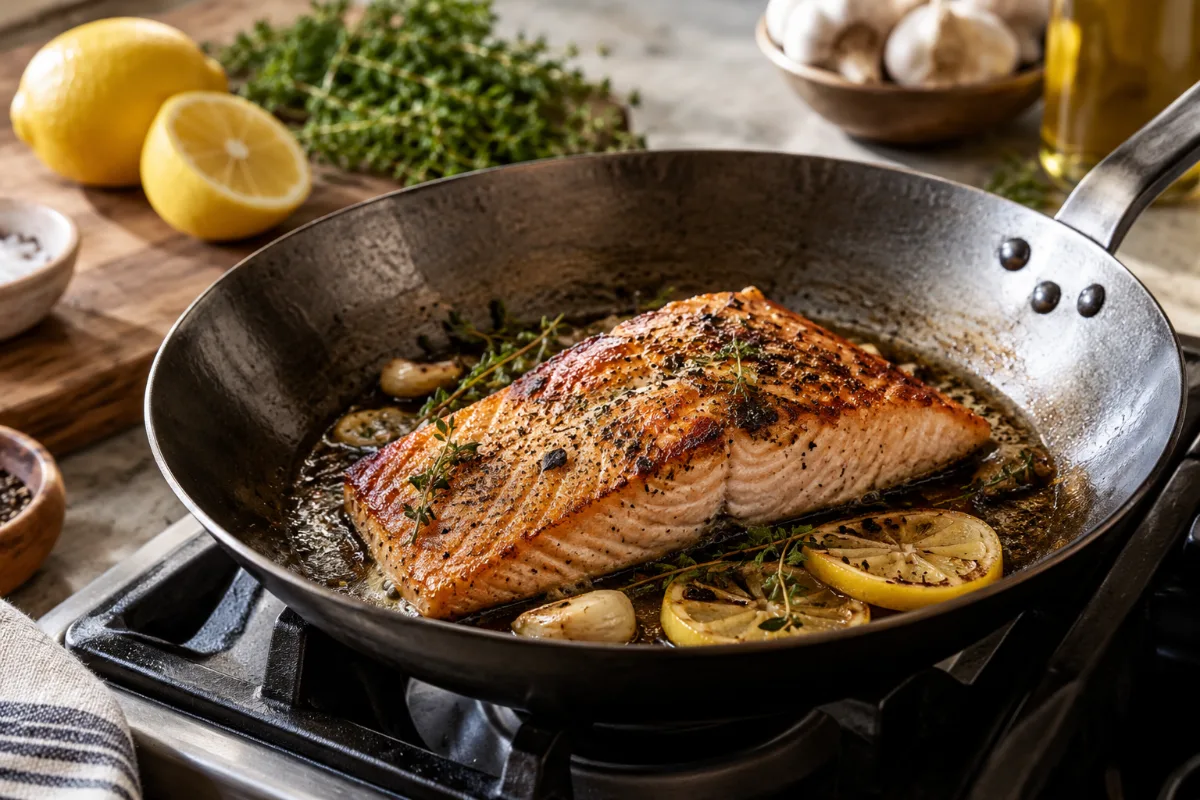
Quick answer: Yes, carbon steel non toxic pans are safe to cook with. Carbon steel non toxic cookware is made from just iron and carbon, with no synthetic coating, no PFAS and no PTFE. Its seasoning is polymerized oil, which is food safe, and the only thing it can add to food is a small amount of dietary iron.
Carbon Steel Non Toxic: What Our Tests Found
Our team cooked on carbon steel non toxic for months to check the safety claims. It has no PFAS, PTFE or PFOA, and the hardened seasoning is food safe. Below we cover the facts, the method, and the mistakes to avoid.
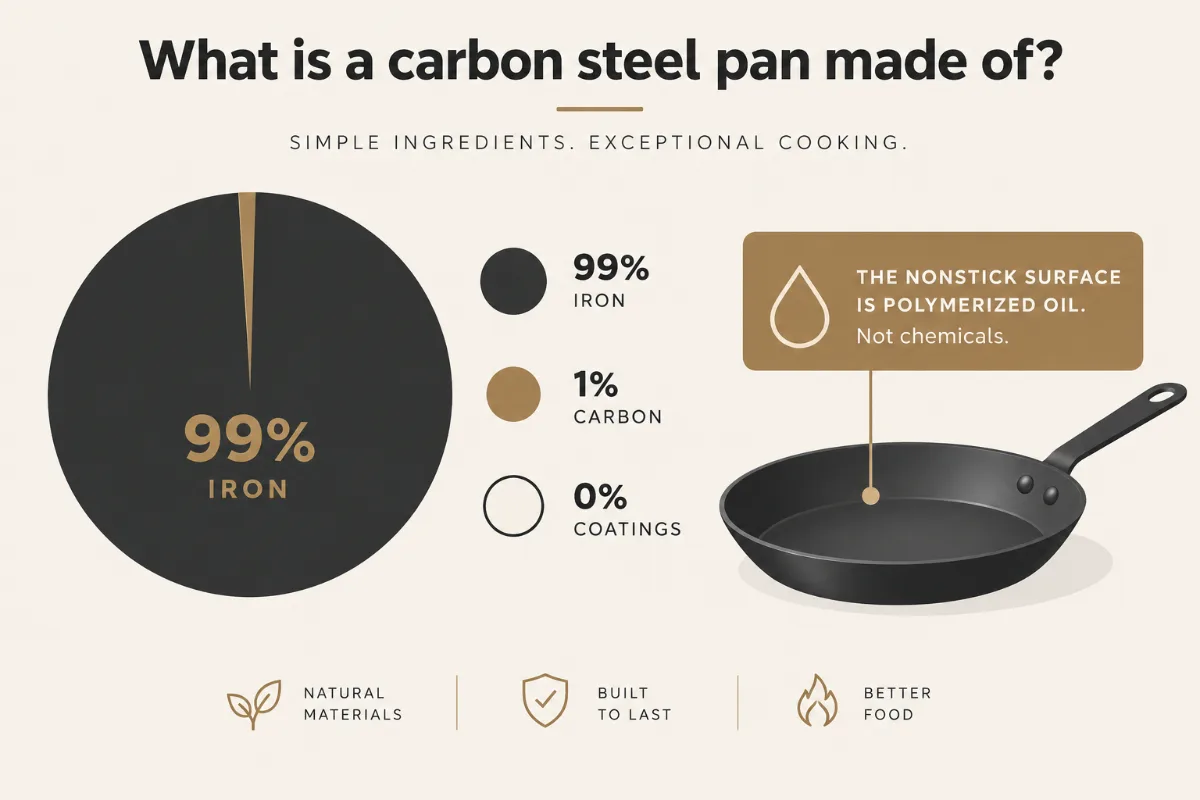
Yes. Carbon steel is non-toxic. The pan is about 99 percent iron and 1 percent carbon with no synthetic coating, so it holds no PFAS, PTFE (Teflon) or PFOA. Its slick surface is seasoning, a hardened layer of cooked oil that is safe to eat off. The only thing it adds to your food is a trace of dietary iron.
The short answer, and why people are asking now
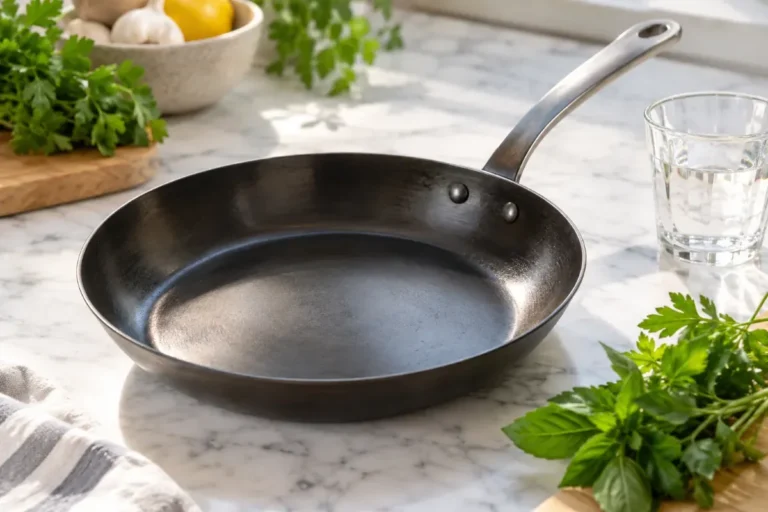
A carbon steel pan is safe to cook on because there is nothing on it to release. No plastic coating, no fluorinated chemicals, no factory nonstick that can chip into your eggs. It is bare metal that you protect with oil.
People search this term because the news made them nervous. Lawsuits over PFAS “forever chemicals,” a run of “toxic cookware” headlines, and new state bans have pushed cooks to question every pan in the cupboard. That worry is fair. It also has a clean answer here. Bare metal cookware sits outside the coating debate entirely.
If you want the reasoning, not just the verdict, the rest of this guide walks through what the metal is made of, what PFAS actually are, and whether the black surface and the iron itself are safe to eat.
What carbon steel is actually made of
Carbon steel is iron with a small amount of carbon mixed in, usually around 1 percent (verify exact range against a metallurgy or brand source). That is the whole recipe. There is no coating in the mix and no chemical layer added at the factory for cooking. A raw pan is just shaped metal.
This puts it next to two familiar materials. Cast iron is also mostly iron, but with more carbon (often 2 to 3 percent), which makes it thicker, heavier and more brittle. Stainless steel is iron blended with chromium and nickel, which is why it resists rust without any seasoning. Carbon steel lands between them. It heats fast like thin steel and builds a natural surface like cast iron.
Because the recipe is so plain, there is little room for hidden additives. Reputable makers like de Buyer and Mauviel state the composition on their spec pages, and it comes down to steel and, in some cases, a food-safe wax or oil applied at the factory to stop rust in the box. That factory film washes off before first use. What you cook on afterward is metal and the seasoning you build. The America’s Test Kitchen team makes the same point in its carbon steel coverage: the appeal of the material is that it is essentially bare, honest metal.
Carbon steel vs the coatings people fear
The pans that worry shoppers are the ones with a sprayed-on nonstick surface. Those coatings are a separate material bonded to the metal. Carbon steel skips that step. You buy bare steel and build your own nonstick layer from oil over time. Nothing gets sprayed, baked or laminated on at the plant.
Where the “black” comes from
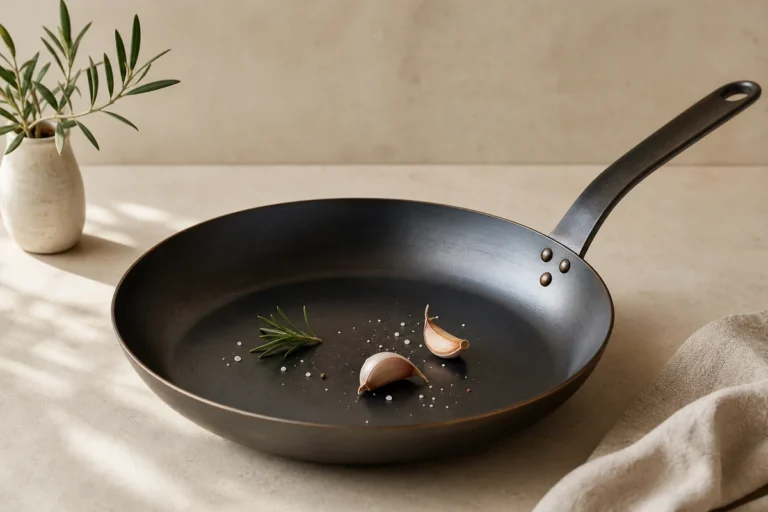
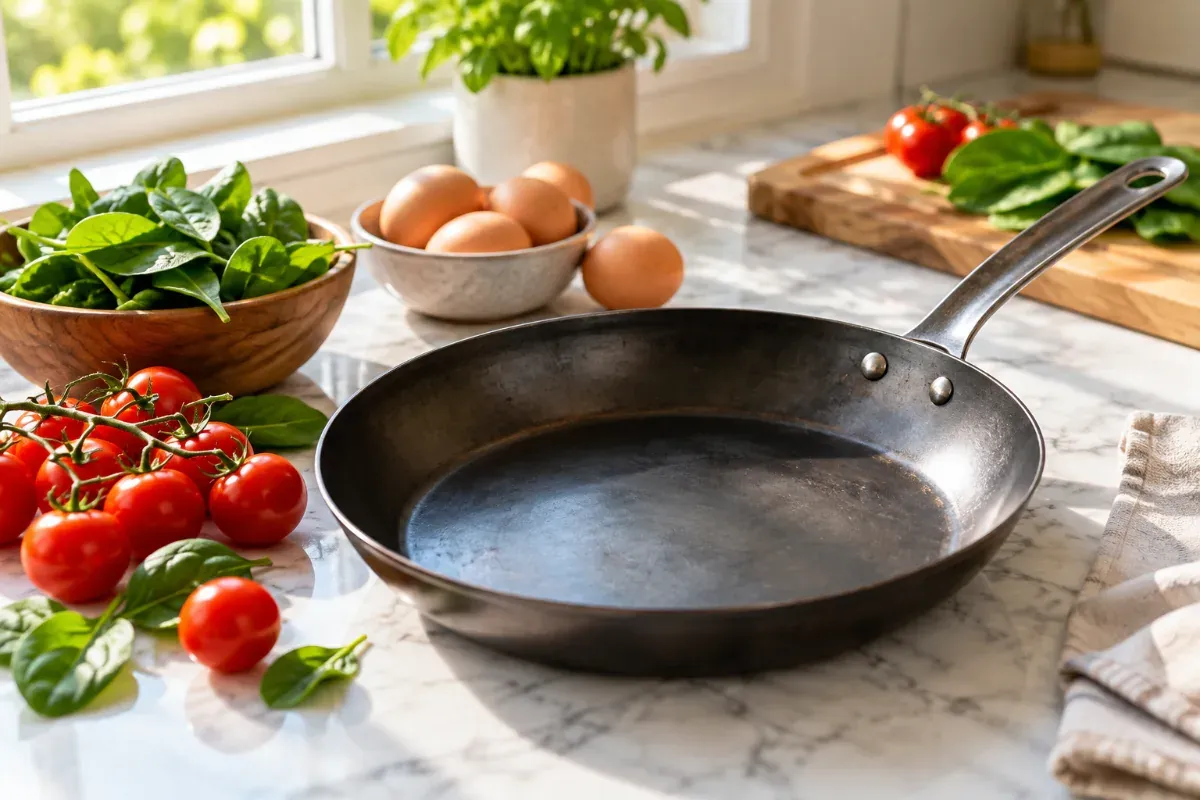
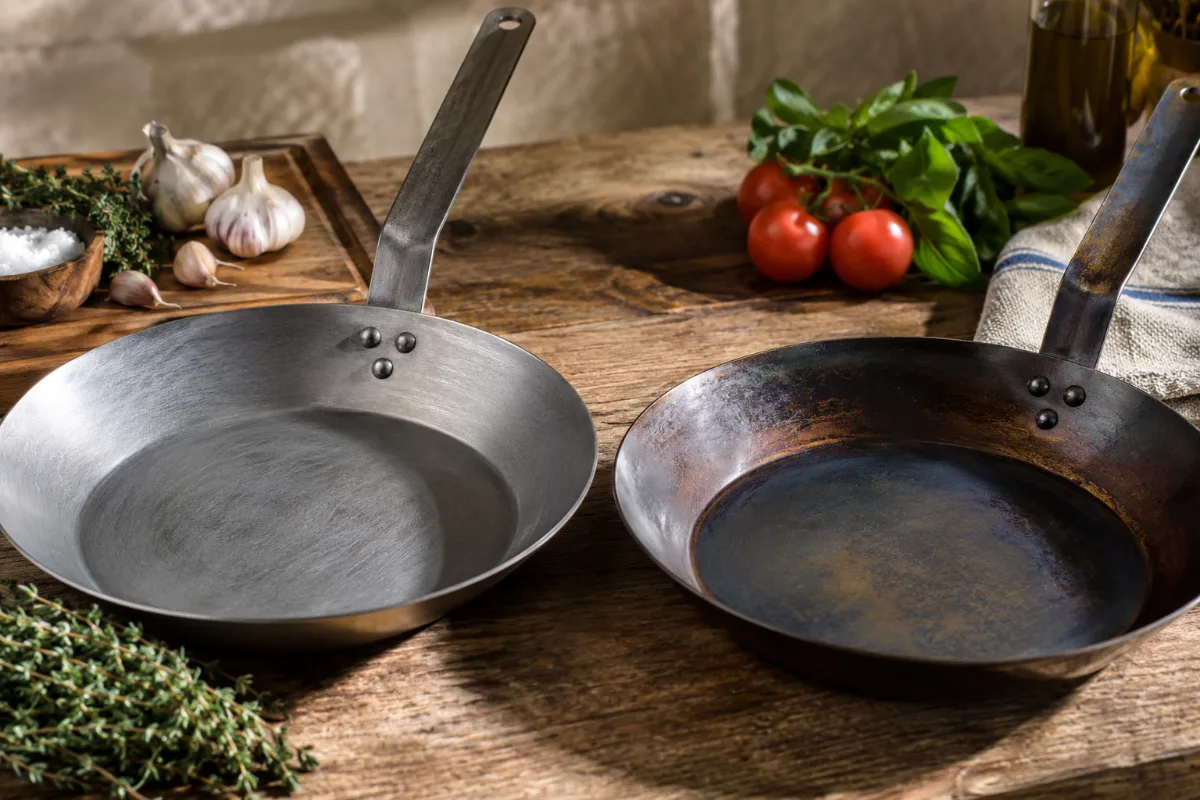
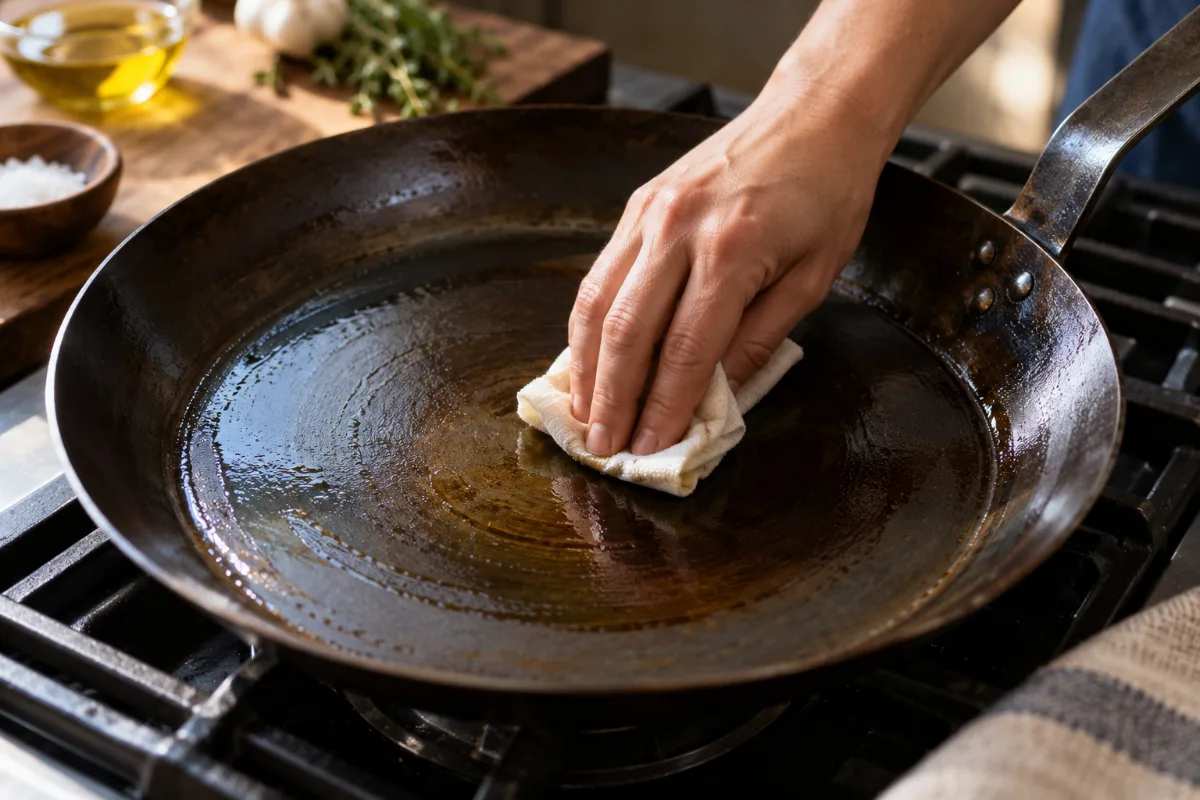
New carbon steel looks silver or grey. The dark, almost black color it takes on with use is seasoning, not paint or coating. Each time you cook with oil and heat, a thin film bonds to the metal and darkens. After a few months a well-used pan looks nearly black. That color is a good sign, not a warning.
Does carbon steel have PFAS, PTFE or Teflon?
No. Carbon steel contains none of these. PFAS, PTFE and PFOA all belong to synthetic nonstick coatings, and a bare steel pan has no coating for them to hide in.
Here is what those letters mean, in plain terms. PFAS stands for per- and polyfluoroalkyl substances, a large family of man-made chemicals used to make surfaces slippery and water-repellent. PTFE, sold under the brand name Teflon, is the specific coating on classic nonstick pans. PFOA was a chemical once used to make PTFE, now phased out of cookware in the United States (verify current status with the FDA).
The reason carbon steel is clear of all three is simple. Those chemicals live in a coating. This pan has no coating. There is no fluorinated layer to scratch, overheat or flake into food. The Environmental Working Group and the FDA both frame PFAS as a food-contact coating issue, which is a category bare metal never enters.
Is the seasoning safe to eat off?
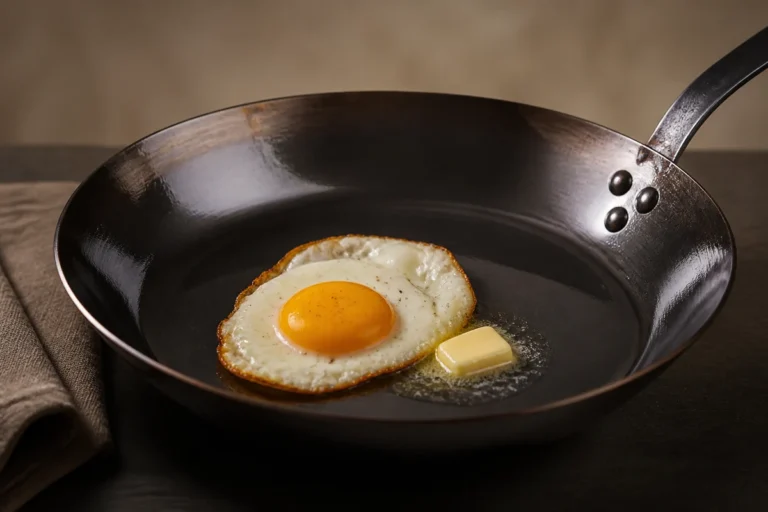
Yes. The seasoning on a carbon steel pan is safe to eat off. It is cooking oil that has hardened into a stable, food-safe film, not a chemical treatment and not burnt food.
The process behind it is called polymerization. When you heat a thin layer of oil past its smoke point, the oil molecules link together and set into a hard, dry surface bonded to the metal. This is the same chemistry that gives a decades-old cast iron skillet its glassy black finish. Cooks have relied on it for generations.
A common fear is that “burnt oil” is dangerous or carcinogenic. It helps to separate two different things. Seasoning is oil that has fully transformed into a solid layer through controlled heating. Burnt food residue is loose, flaky char left from cooking too hot or not cleaning. Seasoning is bonded and stable. Residue wipes away and should be cleaned off. One is part of the pan; the other is mess.
If your seasoning ever turns sticky, gummy or starts flaking, that is a sign the layer was applied too thick or the oil never fully set. The fix is to scrub it back and rebuild thin coats, not a safety emergency. A properly built layer stays put and does not migrate into food.
The oil you choose matters for how clean that layer sets. Neutral oils with a high smoke point, such as grapeseed, canola or refined avocado, polymerize into a hard, dry film. Very thick coats or low-smoke-point oils are the usual cause of a tacky surface, because the oil scorches on top before the layer underneath can set. None of that makes the pan unsafe. It just means the surface needs rebuilding. Thin and repeated is the rule that gives a smooth, food-safe finish.
Does carbon steel leach iron into food?
Yes, a little, and for most people that is a benefit rather than a risk. Cooking in iron or carbon steel can transfer a small amount of dietary iron into food, especially with acidic dishes like tomato sauce (cite a peer-reviewed nutrition source). Iron is a nutrient many people need more of, not less.
The amount is small and varies with the food, the cooking time and how well seasoned the pan is. A seasoned surface actually reduces transfer compared to bare metal, because the food touches the oil layer more than the steel. So the better your seasoning, the less iron moves across.
There is one group that should be careful. People with hemochromatosis or other iron-overload conditions store too much iron already, and extra dietary iron can add up. If that describes you, ask your doctor before cooking often in iron or carbon steel. For the general population, the trace of iron is either neutral or helpful, and for people who run low on iron it can be a small, welcome boost.
It helps to keep the scale in mind. The iron that transfers is measured in milligrams, and it varies a lot with the dish. A quick sear of steak picks up almost none. A tomato sauce simmered for an hour in a lightly seasoned pan picks up more, because acid and long contact pull more iron from the metal. This is also why cooks avoid simmering very acidic foods for long stretches in a young carbon steel pan: it can strip seasoning and add a faint metallic taste. Once the seasoning is mature, both effects shrink.
Carbon steel vs nonstick, cast iron and stainless on safety
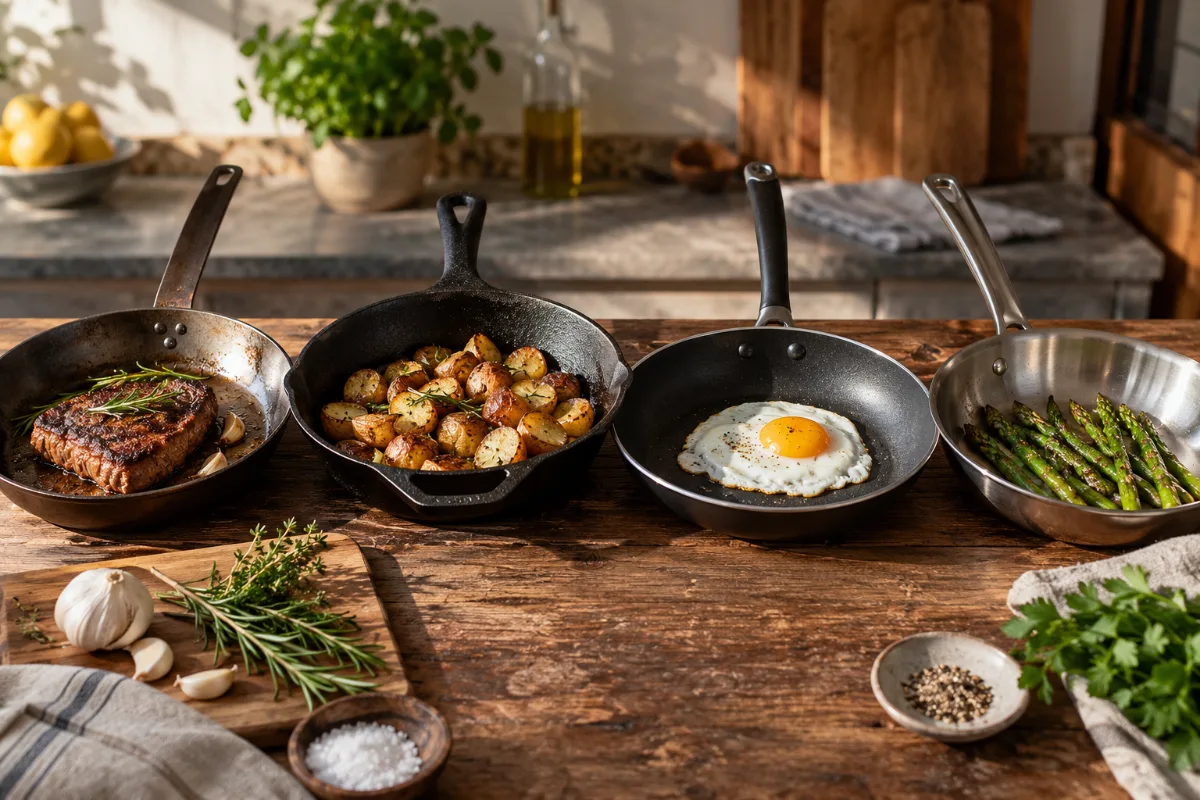
On safety, the coating-free pans win for peace of mind. Carbon steel and cast iron have nothing sprayed on, so there is nothing to break down. Stainless steel is inert and also coating-free. Traditional nonstick is the convenient option, but its performance depends on a coating that wears over three to five years. Ceramic nonstick avoids classic PFAS chemistry but its surface tends to wear faster still.
The honest read is that every material has a trade. Nonstick makes weeknight eggs easy but asks you to replace the pan and avoid high heat. Ceramic looks clean but often loses its slip within a couple of years. Stainless lasts forever and is fully inert, though food sticks more. Carbon steel and cast iron cost you some upkeep and seasoning, and in return they last for decades with no coating to fail.
The table below lines them up on the points that matter for a health-focused buyer.
| Cookware | Coating | Contains PFAS/PTFE | Leaches into food | Lifespan |
|---|---|---|---|---|
| Carbon steel | None (seasoning) | No | Trace iron (benefit) | Decades |
| Cast iron | None (seasoning) | No | Trace iron | Decades / heirloom |
| Nonstick (PTFE) | Synthetic | Historically yes | If coating degrades | 3 to 5 years |
| Ceramic nonstick | Sol-gel | Usually no | Coating wears | 1 to 3 years |
| Stainless steel | None | No | Trace nickel/chromium | Decades |
The 2026 PFAS rules you should know
Regulation is moving toward exactly the kind of cookware carbon steel already is: coating-free. Several states have passed or scheduled restrictions on PFAS in consumer goods, including cookware, and disclosure laws that force brands to say what is in the pan.
The pattern so far includes action in Minnesota, Maine, New Mexico (rules phasing in around 2027) and Vermont, plus a California disclosure law that requires cookware makers to list coating chemicals (verify current status and dates against each state’s current statute). The details differ by state, but the direction is the same. Lawmakers are targeting added PFAS in products people cook and eat with.
A bare carbon steel pan meets that direction without any change, because it never contained the chemicals in the first place. You are not betting on a coating that might get restricted next year. You are buying metal and oil. That is the freshness angle worth knowing: as the rules tighten, this material stays on the safe side by default.
The wider point is about future-proofing your kitchen. A nonstick pan bought today may be legal, but its coating still wears out in a few years and lands in the bin. A carbon steel pan bought today has no coating to fail and no chemistry to be restricted later. It is the rare purchase that does not get less safe or less legal with time. For a worried buyer, that stability is the real reason the material keeps showing up in “safest cookware” lists from independent sources.
How to keep a carbon steel pan non-toxic in real use
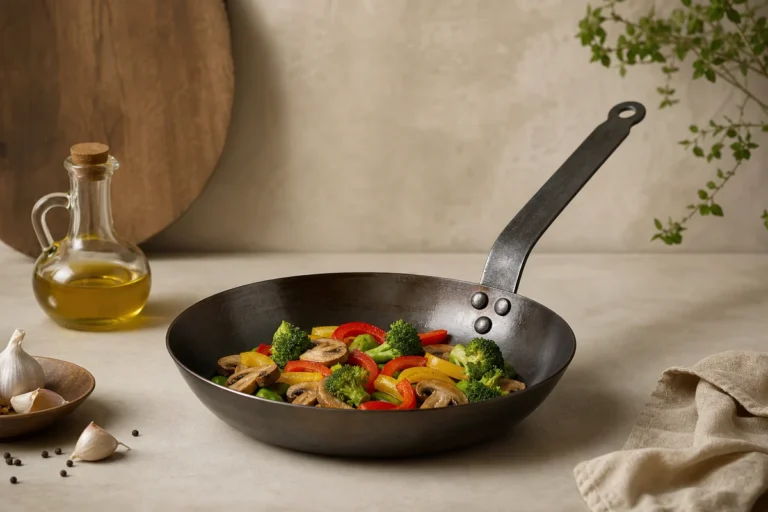
Keeping the pan safe is mostly about keeping the seasoning healthy. Use neutral oils with a high smoke point for cooking and seasoning, such as grapeseed, canola or refined avocado oil. These set into a clean layer and handle heat well.
Avoid cooking on very high, dry heat for long stretches with an empty pan, which can scorch the seasoning and cause flaking. If the layer ever chips, sticks or looks patchy, scrub the loose material off and rebuild a coat or two. A quick re-season restores the surface and keeps food touching oil, not raw metal.
For the full routine, see how to season a carbon steel pan and the everyday steps in how to use a carbon steel pan. Readers weighing materials for a first purchase can compare options in what is the safest cookware and the healthiest pan for frying guides, then move to the carbon steel frying pans buying guide when ready.
Frequently asked questions
Is carbon steel cookware toxic?
Does carbon steel have Teflon or PFAS?
Is the black seasoning on a carbon steel pan safe to eat?
Does carbon steel leach metal into food?
Is carbon steel safer than nonstick?
The bottom line
If you came here worried, you can relax. A carbon steel pan is metal and cooked oil, nothing more. It sidesteps the coating chemistry that worries people about nonstick, it adds a useful trace of iron rather than anything harmful, and it already fits where cookware rules are heading. Season it, keep it dry, and it will feed you safely for decades.
References
- Environmental Working Group (EWG), PFAS in cookware explainer.
- U.S. Food and Drug Administration (FDA), guidance on PFAS and food-contact substances.
- America’s Test Kitchen, carbon steel material and care notes.
- A peer-reviewed nutrition study on iron transfer from iron and carbon steel cookware (verify citation).