Patchy or Uneven Seasoning: What the Splotches Mean
By the Carbon Steel Pan test team · Last updated September 2026
Patchy seasoning on carbon steel is almost always cosmetic. Light and dark areas come from uneven heat, where food sits, and how oil settled while seasoning. As long as the surface is smooth and food releases, the blotches do not matter. Even color builds naturally with use, so most pans need no fix at all.
Most patchiness is normal
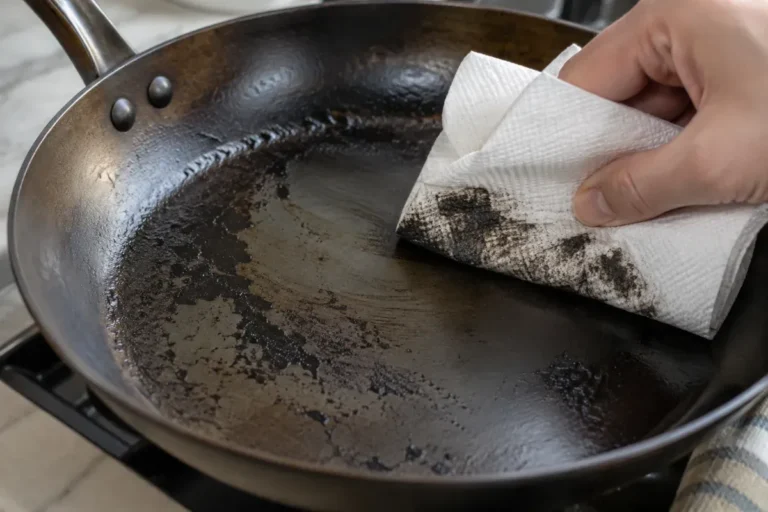
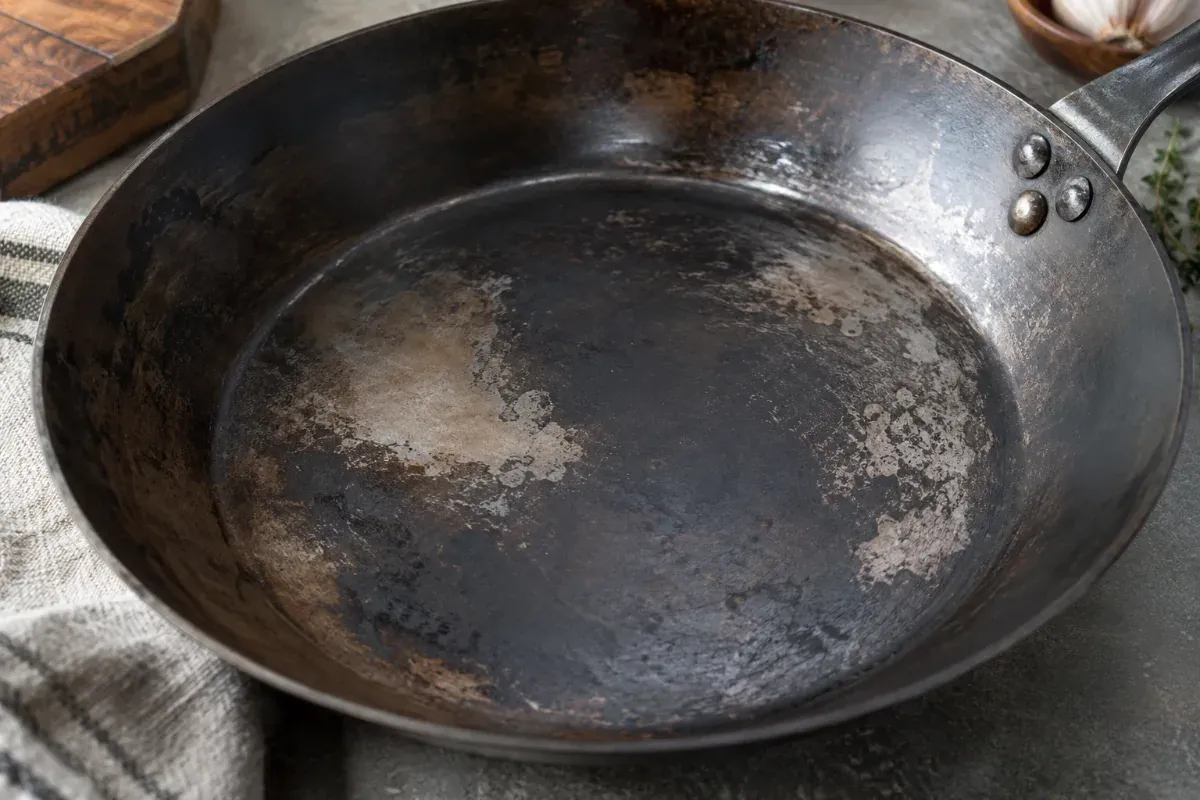
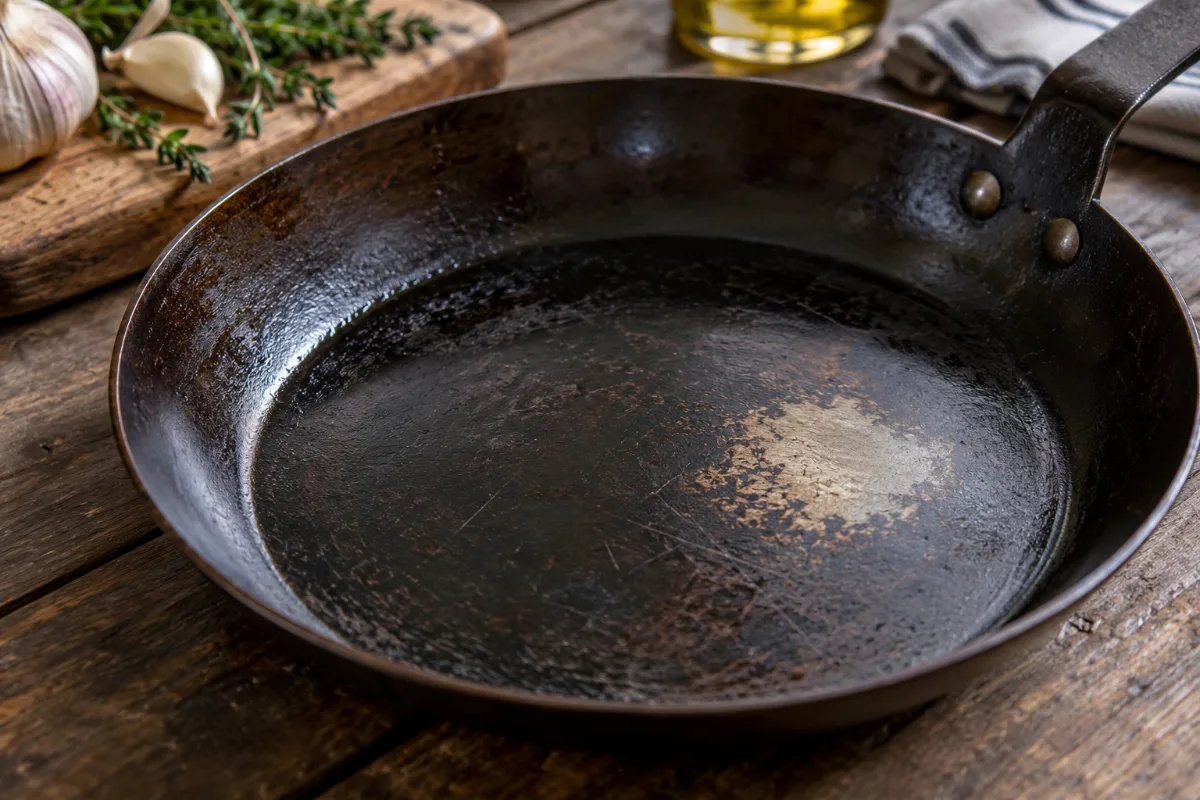
Carbon steel uneven seasoning worries new owners more than almost anything else. If you flipped your pan over after a few cooks and found a map of light rings, dark blotches, and gold-to-brown streaks, your first thought was probably that you did something wrong. You did not. This is the single most misread thing about owning a carbon steel pan, and it sends people scrubbing perfectly good surfaces down to bare metal for no reason.
Color on a seasoned pan is not meant to be uniform, especially early on. It develops the way a cast iron skillet does, in layers that darken at different rates across the surface. Uneven color is the pan doing exactly what it should. The glossy, jet-black, perfectly even pans you see in product photos are either brand new with a factory finish or carefully staged. Real pans in real kitchens look mottled, and that is the healthy norm rather than the exception. The look that matters is not the shade. It is whether food releases and whether the surface is smooth. Before you reach for a scrubber, understand what you are actually seeing.
Quick answer: Our tested guide to carbon steel uneven seasoning keeps it simple: master the technique, keep the surface seasoned, and match your heat to the food. The full method, the key facts and the mistakes to avoid are all below.
Carbon Steel Uneven Seasoning: What Our Tests Found
Our team put carbon steel uneven seasoning through repeated real cooking sessions to see what actually works. Below we break down the method, the facts that matter, and the common mistakes so you get reliable results the first time.
What causes the light and dark spots
The splotches follow a pattern once you know where they come from. Three forces shape almost every mark on the surface.
Burner hot spots
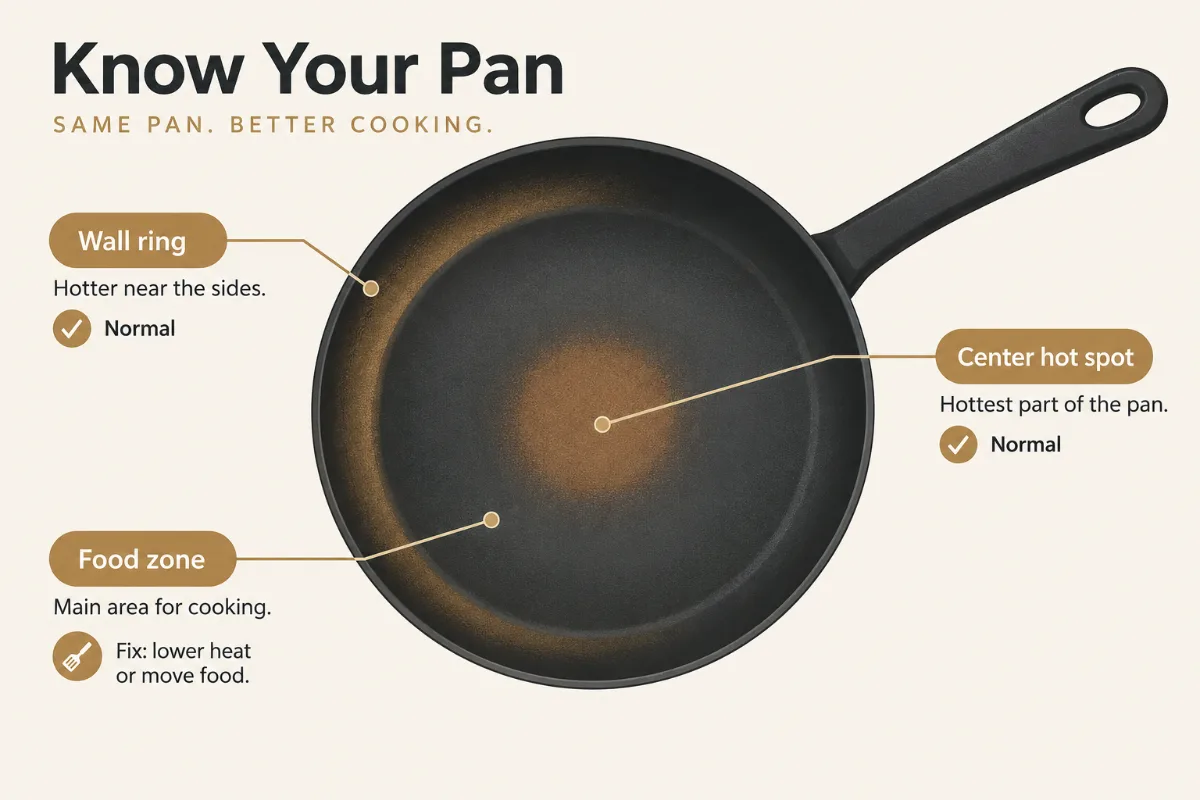
Your stove does not heat the pan evenly. A gas flame concentrates heat in a ring; an electric coil or induction zone heats where it makes contact. Seasoning cures faster and darker where the pan runs hottest, so a ring or a central patch often reads darker than the rest. Move the pan to a different burner and the pattern would shift. This is heat mapping itself onto the metal, nothing more.
Center vs walls
The base of the pan sees the most direct heat and the most food contact, so it darkens first and deepest. The sloped walls get less of both. That is why so many pans show a dark, well-worn center and lighter, younger-looking sides. It is the natural gradient of use. The walls catch up over months as splashes, basting, and the occasional high flame reach them.
Where oil pooled
During seasoning, oil does not always sit in a perfectly even film. It gathers slightly in the low point of the pan or runs to one edge. Thicker spots cure to a different shade than thin ones, leaving blotches that trace where the oil settled. This is harmless. It is only a color record of how the last coat lay before it hardened.
Put those three together and the blotchy map makes sense. Hot spots, the center-to-wall gradient, and oil flow account for nearly all of it.
There is a fourth, gentler cause worth naming: the food itself. Sugary and starchy foods leave darker deposits where they cook, so a spot where you often fry potatoes or sear a sugar-rubbed steak deepens faster than the rest. Acidic dishes do the reverse, lightening a patch by lifting a little seasoning. Over months your cooking habits get written onto the pan as a kind of record. A pan used mostly for eggs looks different from one used mostly for high-heat searing, and both are healthy.
Color also shifts by oil. Some oils cure to a warm brown, others to a near-black. If you switched oils at some point, or the factory prep used one oil and your seasoning used another, the layers can read as different shades. None of this affects cooking. It is surface chemistry showing its history, not a fault.
When patchy is fine (the release test)
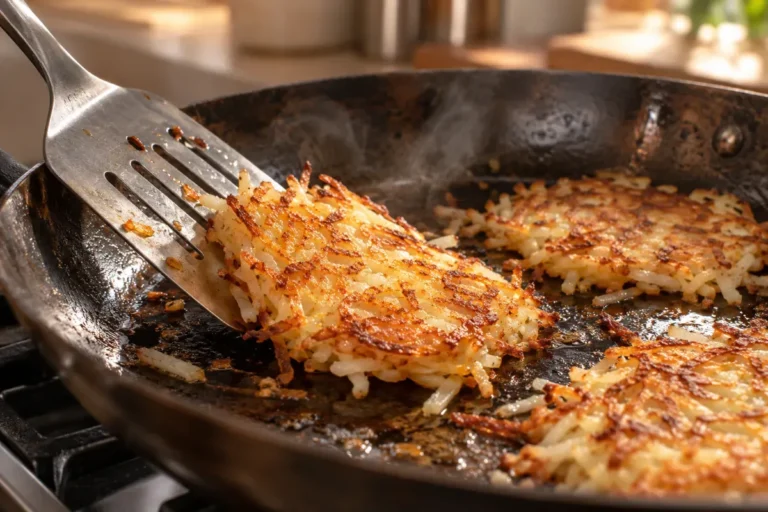
Here is the test that ends the worry. Cook an egg or a piece of protein and watch what the pan does, not what it looks like.
If food releases cleanly, the surface is smooth to the touch, and there is no rust or lifting material, the pan is healthy. Full stop. The color is irrelevant. We have pans in the test kitchen that look like abstract paintings and cook beautifully, and we would not touch them.
Performance is the only measure that counts. A uniform-looking pan that sticks is worse than a blotchy one that releases. So run the release test before you judge the pan by its looks. Nine times out of ten it passes, and the splotches turn out to be character rather than a flaw.
There is a second, tactile test that backs it up. Run a clean fingertip across the cooled surface. Healthy seasoning feels smooth and slightly slick, almost waxy. If it feels rough, sticky, or gritty in a patch, that spot may need attention. But smooth-and-blotchy is the normal, good state, and it describes most well-used pans. Trust your finger and a fried egg over a photo of what someone else’s pan looks like online. Everyone’s pan ages differently, and comparison is where a lot of needless stripping starts.
When patchiness signals a problem
Some marks do call for action. The trick is telling a cosmetic blotch from a real issue. Three signs mean the pan needs attention.
Bare shiny spots. If you see raw, silvery metal showing through, the seasoning has worn off in that area. This happens where a metal spatula scrapes the same spot or where acidic food stripped a patch. Bare metal will not release food and can rust. Re-season those areas, either spot-treating them or giving the whole pan a fresh thin coat with how to season a carbon steel pan.
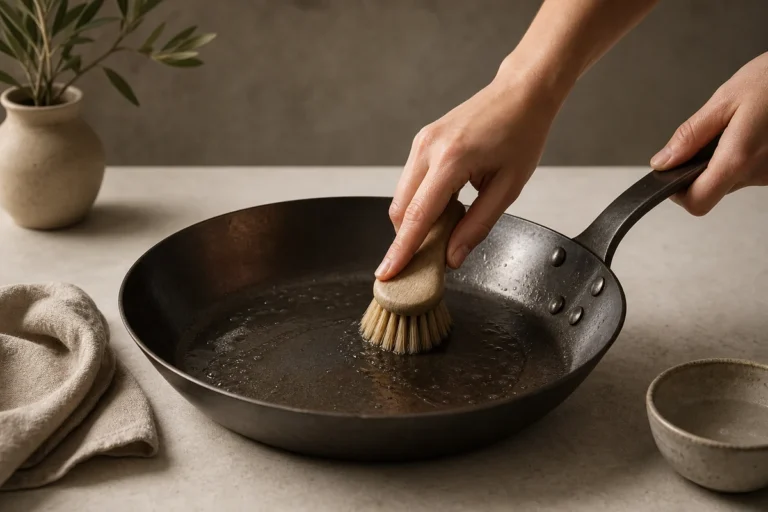
Orange or reddish patches. That is rust, and it means moisture got left on bare or thinly seasoned metal. Scrub the rust off with a scrubber or coarse salt until the orange is gone, dry the pan over heat, and re-oil it. Caught early it wipes away easily. Rust is the one issue worth catching fast, because left alone it spreads and pits the surface. A pan dried promptly after washing almost never rusts, so the fix is really a habit.
Lifting black bits. If the dark material is peeling or flaking rather than just sitting there as color, that is flaking seasoning, a separate issue. Scrub the loose layer back and rebuild thin. We cover the full method under seasoning flaking (planned).
A quick way to sort a real problem from a cosmetic one is to ask what the mark does, not what it looks like. Does it lift, rust, or refuse to release food? Then act. Does it just sit there as a different shade of brown or gray? Then leave it. Two of the three real signals, bare metal and rust, come from moisture and wear rather than seasoning gone wrong, so keeping the pan dry and oiled prevents most of them before they start.
Everything else, the browns and the blotches that stay put, is cosmetic.
Evening out the color, if you want to
Maybe you just prefer a uniform pan. That is fair, and you can nudge the color toward even without stripping anything. This is optional and purely about looks.
Cook fatty foods across the whole surface. Bacon, sausages, and shallow-fried items lay down seasoning wherever the fat reaches. Deliberately use the walls, not just the center, by tossing vegetables or basting so oil coats the sides.
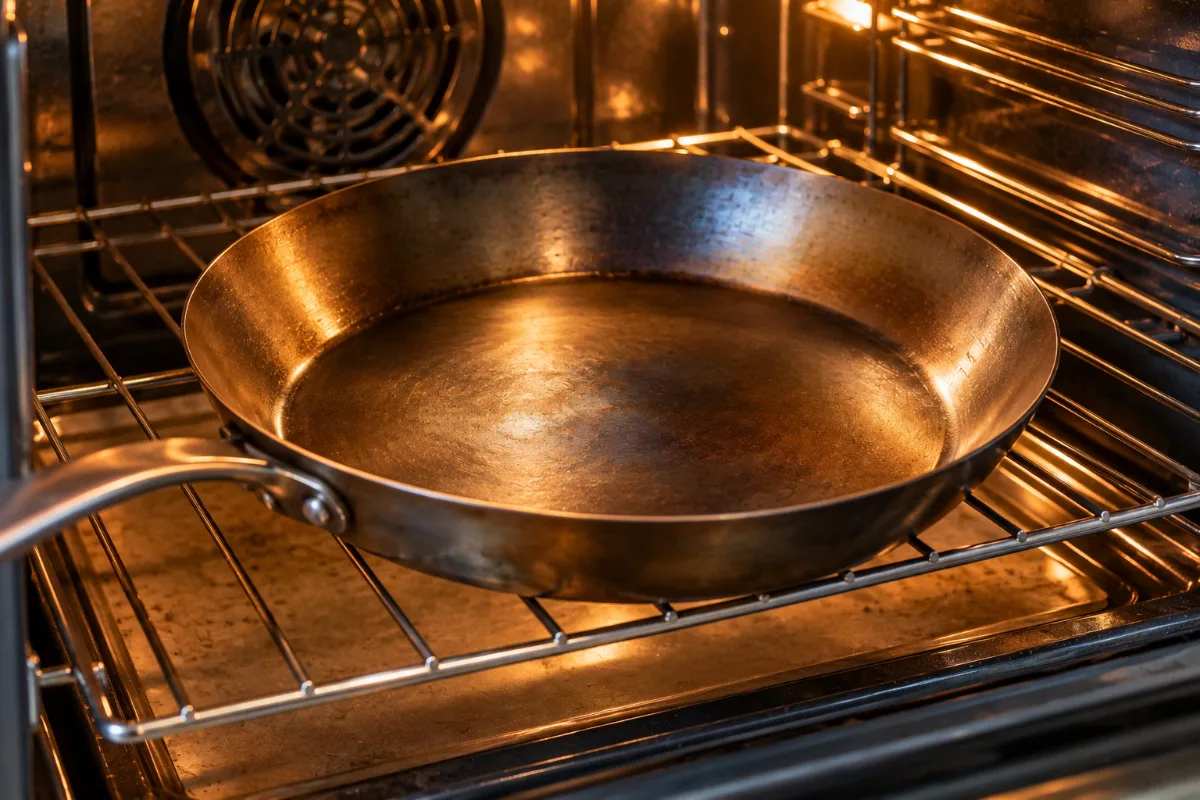
For the most uniform result, season in the oven. A stovetop burner heats one zone; an oven heats the entire pan at once, so a thin coat cures evenly across the base and walls. Wipe on a very thin layer of oil, invert the pan over a lined rack, and bake it hot for an hour. Repeat if you want it darker. The Kitchn and America’s Test Kitchen both favor oven seasoning for exactly this even-heat reason.
Keep the coats thin either way. Piling on oil to force a dark color is how pans end up flaking later.
A few everyday habits nudge the color toward even without any special effort. Rotate the pan a quarter turn during long cooks so no single zone always sits over the hottest part of the flame. Occasionally cook something that uses the whole surface, like a big batch of hash or a shallow fry, rather than always working a small area in the center. And baste or tilt the pan now and then so oil reaches the walls. None of this is required. It simply helps a pan that bothers you look more uniform sooner.
How color develops over months
Give it time and the pan sorts itself out. Every cook adds a little more seasoning, and the light areas slowly deepen toward the dark. A pan that looked patchy at three weeks often looks rich and close to uniform at three months. The center will always run a touch darker than the walls, and that is normal and even attractive.
The lesson from years of testing is simple: patience beats stripping. A pan left to build color through daily cooking ends up with a stronger, more even surface than one that gets scrubbed to bare metal every time it looks uneven. Cook on it, keep it dry, and let the patina mature. For the everyday routine that gets you there, see how to care for a carbon steel pan.
If you have owned cast iron, you already know this arc. New pans look mottled and awkward; old ones look deep and rich. Carbon steel walks the same path faster because the metal is thinner and heats more evenly once seasoned. The blotchy stage is not a detour on the way to a good pan. It is the good pan in progress. Give it a few months of real meals and the color question tends to answer itself.
Use this quick guide to read the marks on your own pan.
| What you see | Meaning | Action |
|---|---|---|
| Light and dark patches | Uneven heat and use | None, cosmetic |
| Shiny bare spots | Seasoning worn through | Re-season those areas |
| Orange spots | Rust | Scrub and re-oil |
| Lifting black bits | Flaking seasoning | Scrub back, rebuild thin |
Frequently asked questions
Is patchy seasoning on carbon steel bad?
Why is my carbon steel pan blotchy?
How do I make the color even?
When should I worry about uneven seasoning?
Will the patches go away?
The takeaway
A blotchy pan is not a broken pan. Most of what you see is heat and use written onto the metal, and it is cosmetic. Save your action for the three real signals: bare shiny metal, orange rust, and lifting flakes. Everything else is patina, and it deepens toward even color the more you cook. Trust the release test over the mirror test, and your pan will reward the patience.