Carbon Steel Pan Pros and Cons
As an Amazon Associate I earn from qualifying purchases, at no extra cost to you.
Carbon steel pans are light, fast to heat, free of synthetic coatings and effectively permanent. They also rust, cannot handle acidic food, and stick until you have built weeks of seasoning. The trade is maintenance in exchange for a pan that improves rather than wears out.
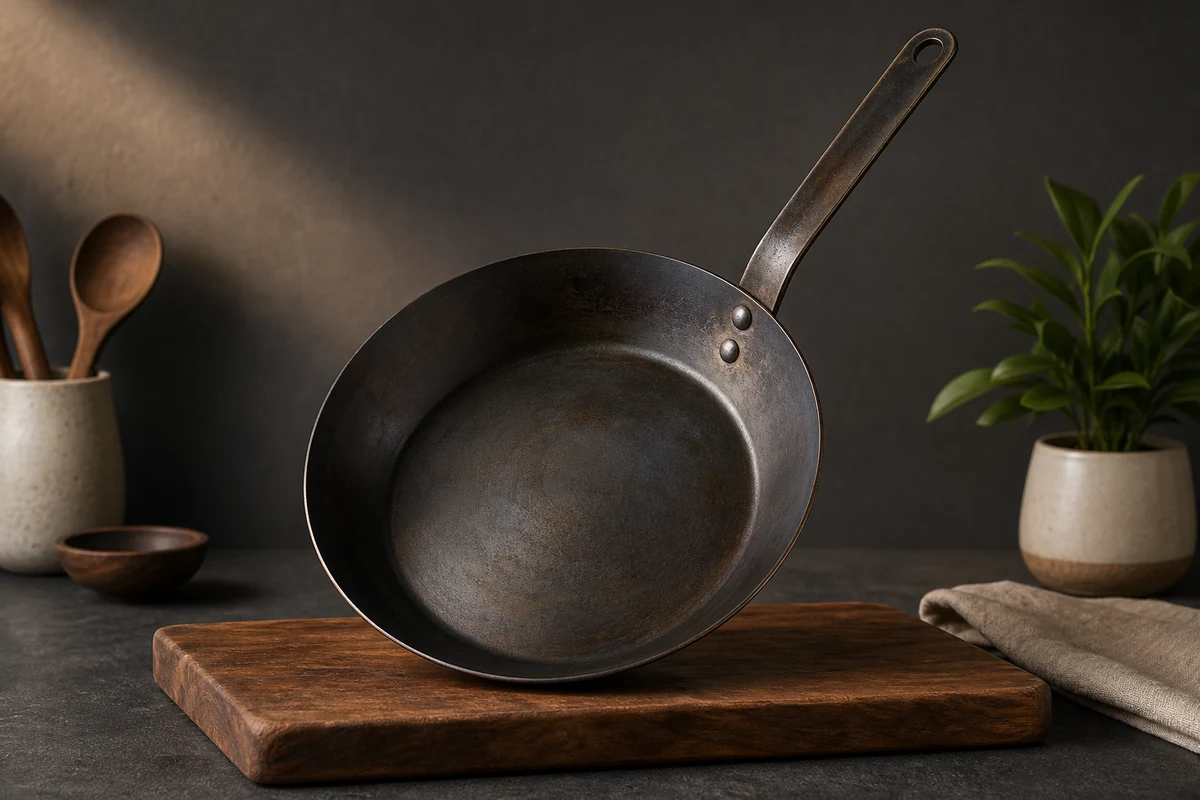
Quick answer: Our tested guide to carbon steel pan pros and cons keeps it simple: master the technique, keep the surface seasoned, and match your heat to the food. The full method, the key facts and the mistakes to avoid are all below.
Carbon Steel Pan Pros And Cons: What Our Tests Found
Our team put carbon steel pan pros and cons through repeated real cooking sessions to see what actually works. Below we break down the method, the facts that matter, and the common mistakes so you get reliable results the first time.
The advantages
Nothing to wear out
There is no coating to flake, scratch or degrade. A coated pan is a consumable with a two to five year life. Carbon steel has no equivalent failure mode, and the surface improves with age rather than declining.
Half the weight of cast iron
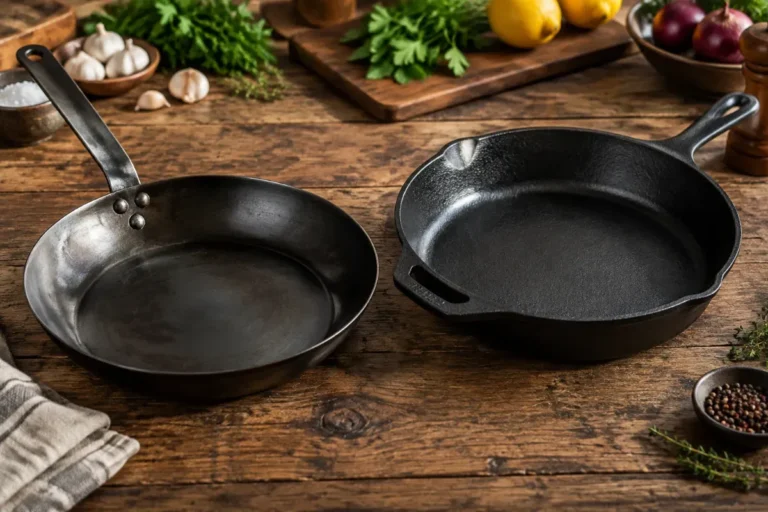
A 10 inch carbon steel pan runs about 3 lbs. The cast iron equivalent is 5 to 6. That difference decides whether you can toss food, lift the pan one-handed when full, and whether your wrist objects after a week.
Very fast heat response
Searing temperature in under two minutes, against three to four for cast iron. It also drops temperature quickly when you turn the burner down, which cast iron does not.
No PFAS, PTFE or PFOA
Uncoated steel contains no synthetic non-stick chemistry. For many buyers this is now the whole reason they are looking. More in are carbon steel pans safe.
Works on everything
Gas, electric, induction, oven, grill, open fire. Carbon steel is ferrous so induction always detects it, limited only by base size.
Repairable
Rust, sticky patches and flaking are all fixable by scrubbing back and reseasoning. You cannot say that about a scratched coated pan.
Cheap at entry
A usable carbon steel pan starts around $27. The expensive ones are better made, not easier to use.
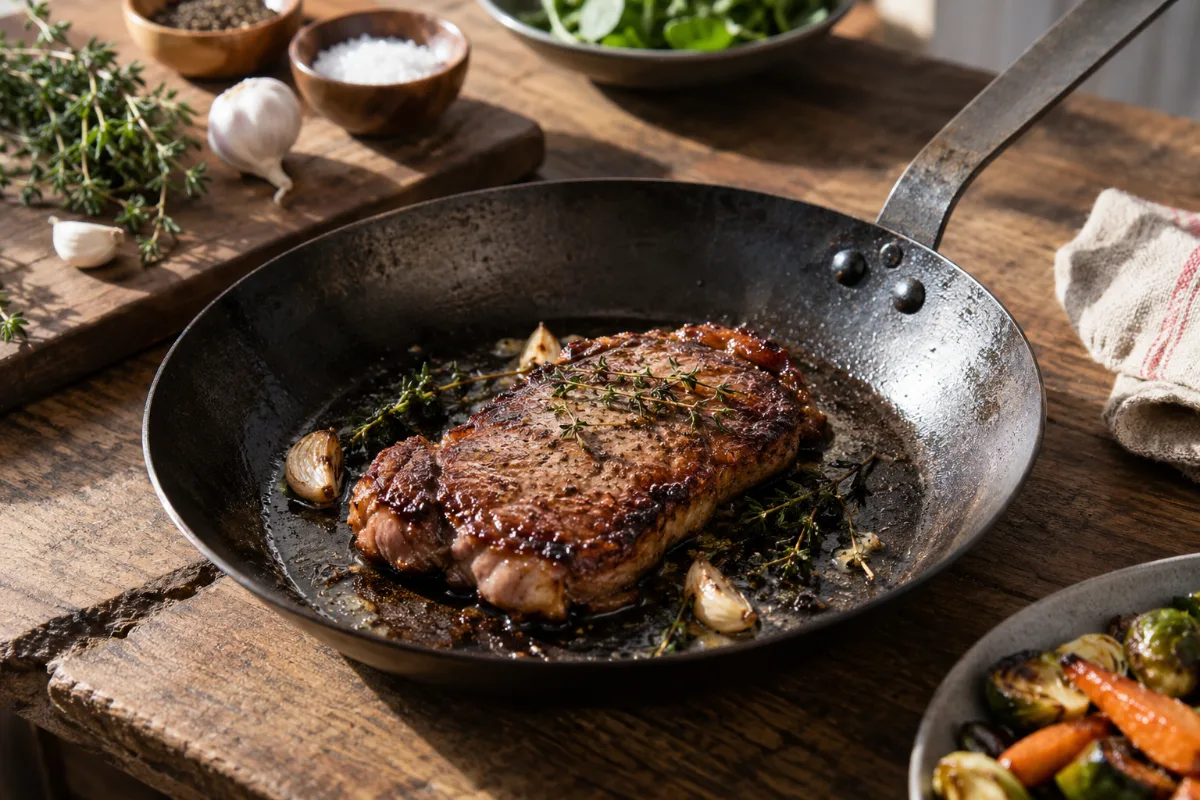
The disadvantages
It rusts
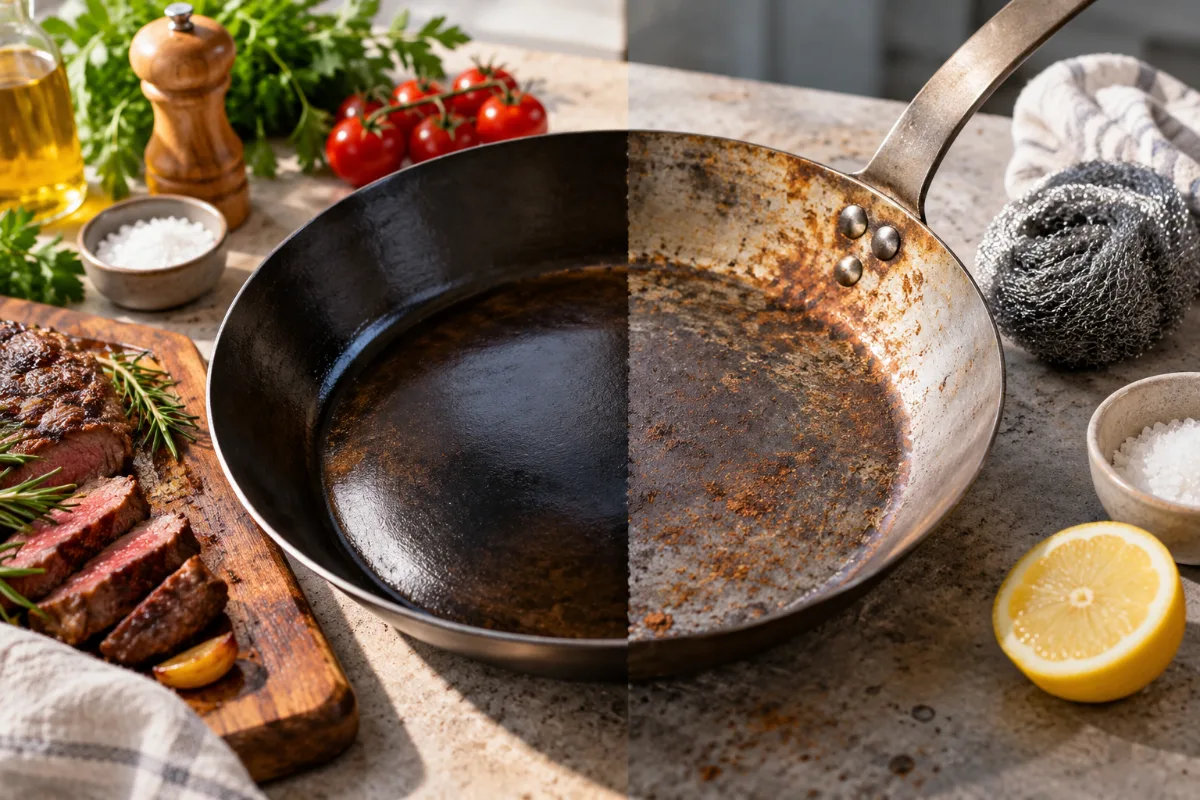
Roughly 99% iron with no chromium. Leave it wet and rust starts within hours. This is the single most common reason people abandon carbon steel.
Acid strips the seasoning
Tomatoes, wine, vinegar and lemon dissolve the layer and can leave a metallic taste. There is no workaround. Acidic cooking belongs in stainless.
A new pan sticks
It keeps sticking until the seasoning builds, which takes weeks. Most people who give up do so in the first month, convinced they bought a dud.
Sugar is a problem too
Melted sugar bonds to seasoning and pulls it off as it sets. Caramel and confection need a different pan.
Hot handles
All-metal handles get dangerously hot on the hob. Wooden handles stay cool but bar the pan from the oven.
Real maintenance
Dry on the hob, oil while warm, every time. Under two minutes, but it is not optional and it is forever.
It can warp
Thin steel plus thermal shock equals permanent bending. Cold water on a hot pan is the usual cause, and a warped pan will not sit flat on induction.
Side by side
| Advantage | Matching drawback |
|---|---|
| No coating to wear out | You build the surface yourself, over weeks |
| Thin and light | Thin steel warps under thermal shock |
| Bare metal takes seasoning | Bare metal rusts |
| Very high heat tolerance | Handles get correspondingly hot |
| Improves for decades | Requires maintenance for decades |
Almost every drawback is the direct consequence of an advantage. That is worth understanding before you buy, because it means you cannot engineer them away by spending more.
Who should buy one
Buy carbon steel if you sear regularly, want out of coated pans, cook stir-fry, or want one pan that handles hob, oven and fire.
Who should not
Skip it if you cook mostly acidic food, want zero maintenance, need day-one performance, leave pans in the sink, or have limited grip strength for a large pan.
Neither answer is wrong. It depends entirely on how you actually cook rather than how you imagine you will.
Which pan minimises the drawbacks
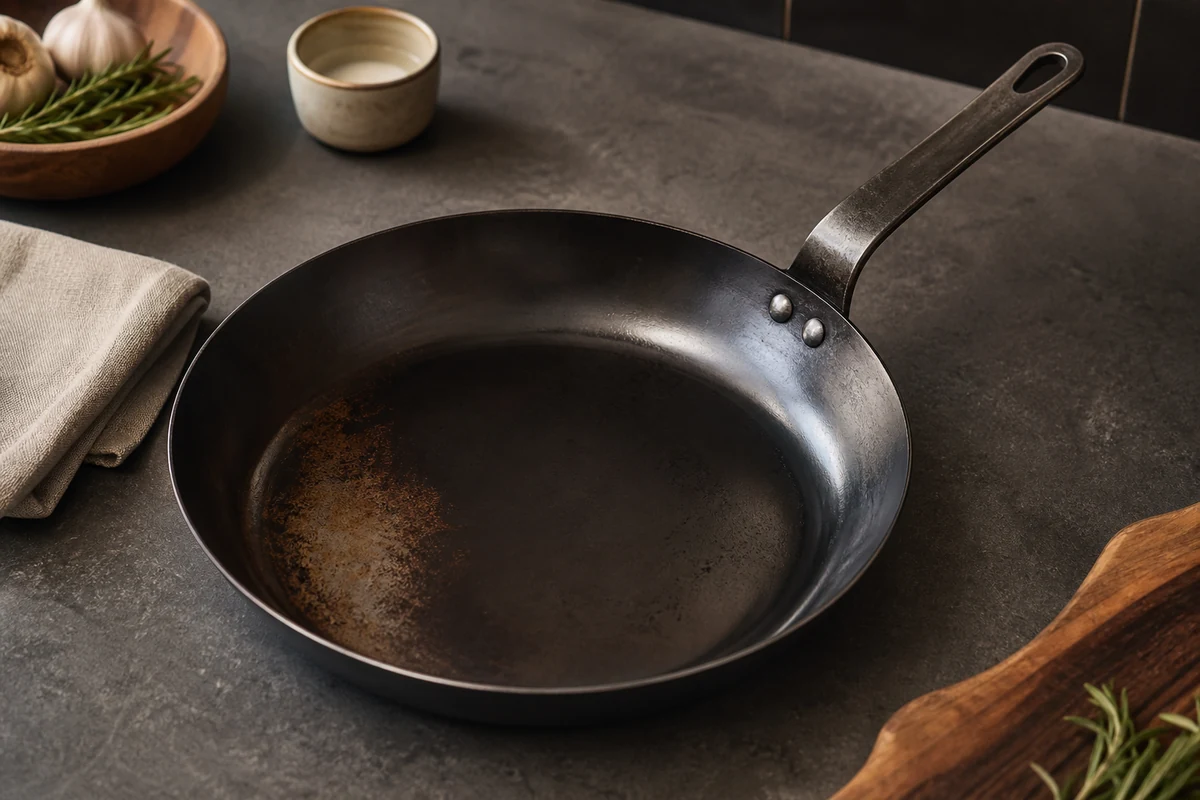
Rust and a sticky first month are the two complaints that make people give up. Both can be addressed at the point of purchase. Nitrided pans such as the Armorbear skillet at $26.99 and the SUMEIGUAN wok at $39.99 resist rust from the first wash. Pre-seasoned pans like the Lodge 10 inch at $39.90 shorten the sticky phase. Neither removes the work. They move the starting line.