Why Is My Carbon Steel Pan Smoking So Much?
By the Carbon Steel Pan test team · Last updated September 2026
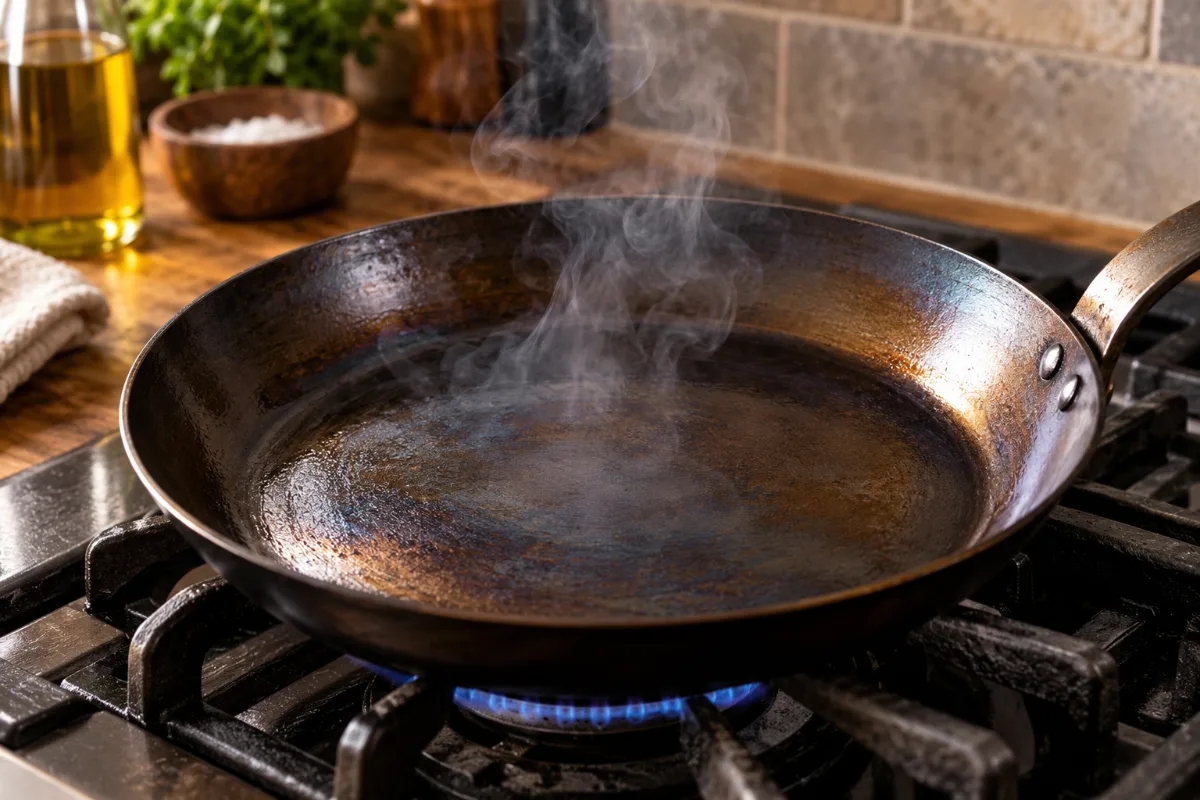
A little smoke from your pan is normal, especially while you season it or heat oil to its smoke point. Heavy smoke usually means one of three things: the pan is too hot, the oil has passed its smoke point, or old residue is burning off. Lower the heat, switch to a higher-smoke-point oil, and clean off any sticky buildup.
That covers most cases. But the reason smoke worries people is that it is hard to tell the harmless kind from the kind that signals a mistake. Below we sort one from the other and give you the fix for each.
Quick answer: Our tested guide to carbon steel pan smoking keeps it simple: master the technique, keep the surface seasoned, and match your heat to the food. The full method, the key facts and the mistakes to avoid are all below.
Carbon Steel Pan Smoking: What Our Tests Found
Our team put carbon steel pan smoking through repeated real cooking sessions to see what actually works. Below we break down the method, the facts that matter, and the common mistakes so you get reliable results the first time.
When smoke is normal
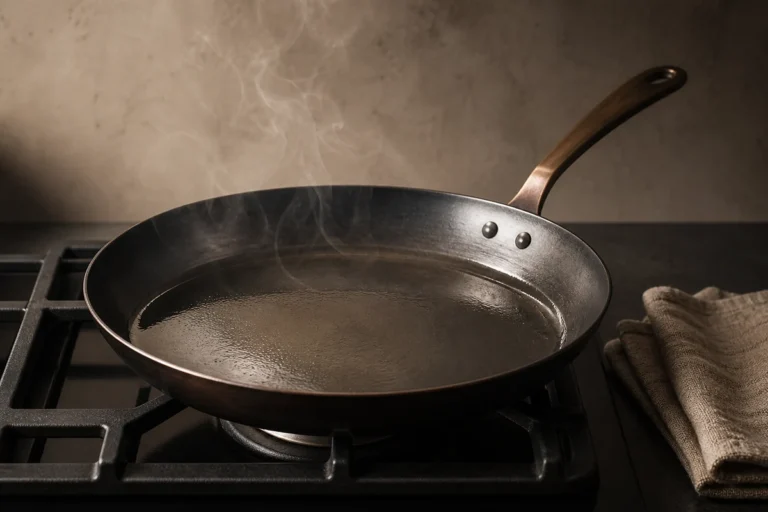
Some smoke is part of how these pans work. Seasoning is oil baked onto the metal until it hardens into a slick layer. That hardening, called polymerization, happens at high heat, and it gives off light smoke as it forms. If you see thin wisps while you season, the process is working.
The second normal source is oil reaching its smoke point during cooking. Every fat has a temperature at which it starts to break down and smoke. When you preheat a pan for searing, you often want the oil right at that edge. A shimmer followed by the first faint smoke is your cue that the surface is hot enough for a steak or a stir-fry.
So before you panic, ask what you are doing. Seasoning? Preheating for a hard sear? A small amount of smoke fits both. The pan is not damaged, and neither is your food. Add the food and keep going.
It also helps to know that carbon steel smokes more than the nonstick pans many people are used to. Nonstick coatings should never be run hot enough to smoke, so a coated-pan cook learns to treat any smoke as a red flag. Carbon steel is the opposite. It is built for the high heat that searing and stir-frying need, and at those temperatures a little smoke is part of the deal. Adjusting that mental setting removes a lot of the worry on its own.
The trouble starts when the smoke is heavy, dark, or arrives when you did not expect it.
When smoke means a problem
Three causes turn light smoke into a room-filling haze. Each has its own tell, so you can spot which one you are dealing with.
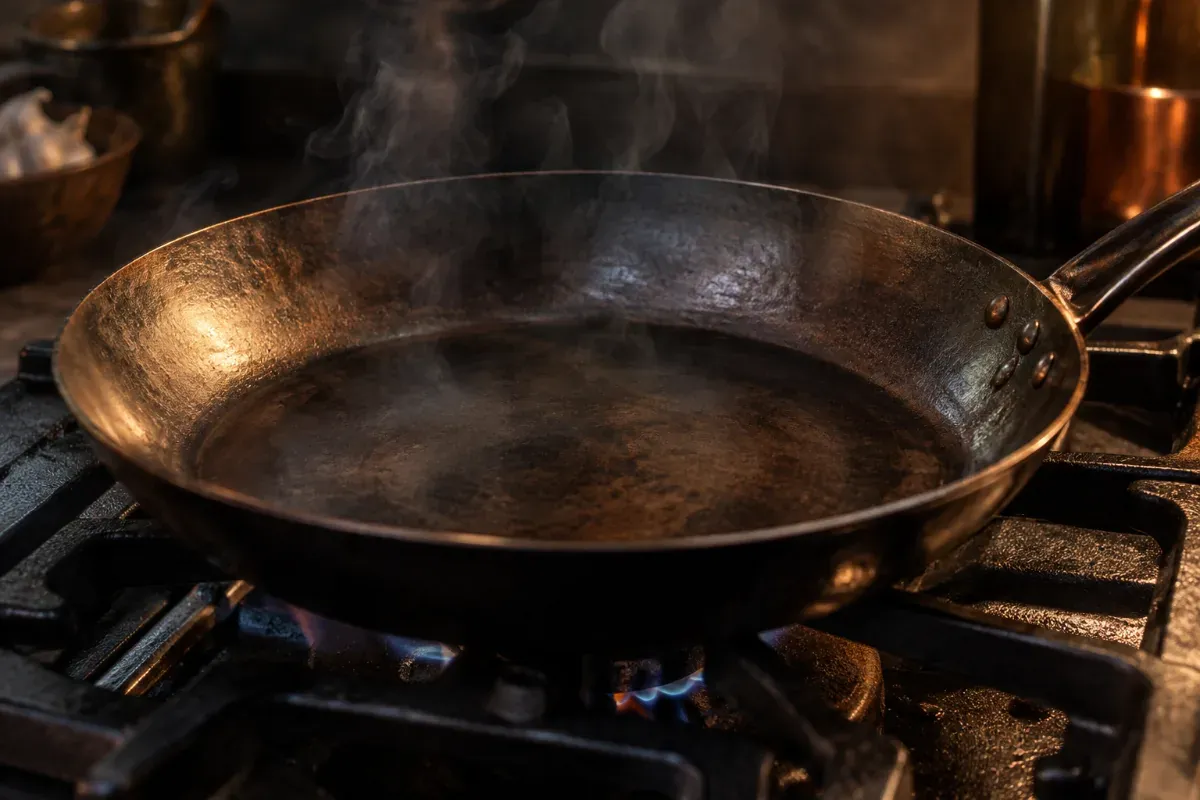
The pan is too hot. This is the most common cause. Carbon steel heats faster than most people expect, faster than a heavy cast-iron pan and far faster than a thick stainless one. A burner set to medium-high can push an empty pan past 400 degrees Fahrenheit in a couple of minutes. Oil dropped onto that surface smokes at once, hard and acrid. The tell is timing: the smoke pours out the instant the oil hits, before any food goes in.
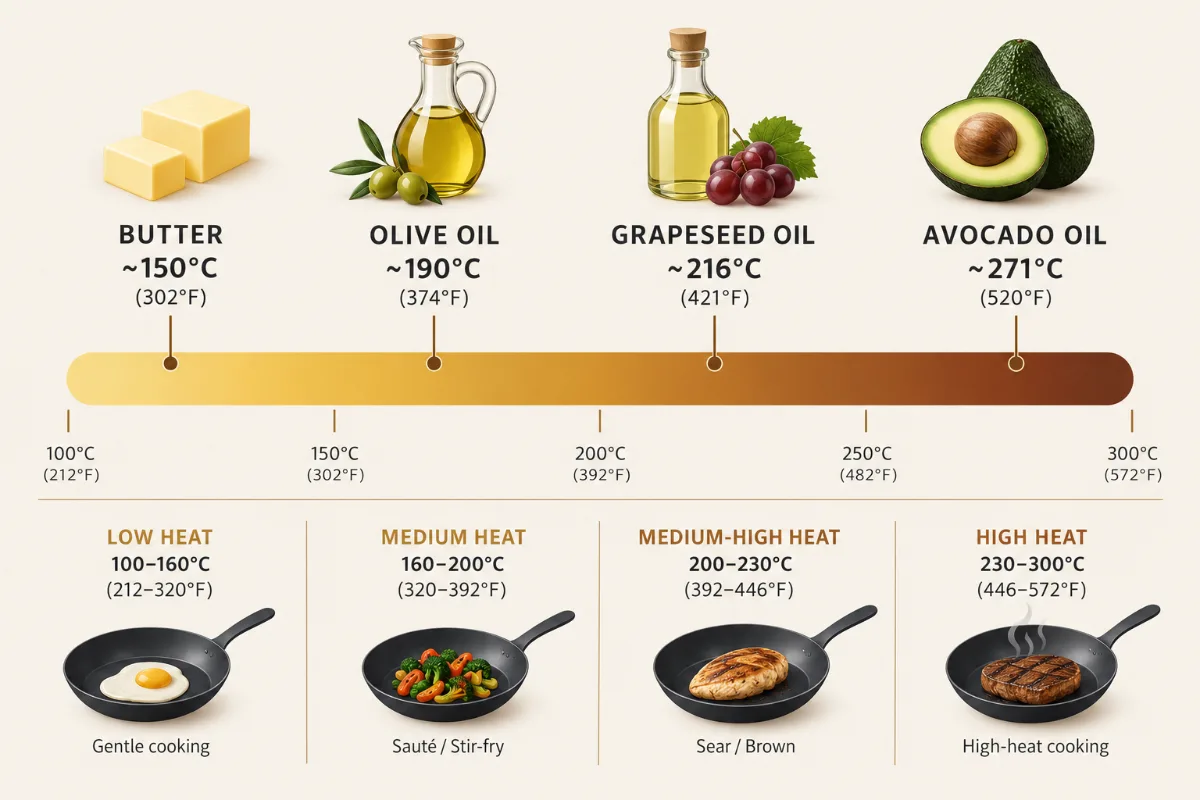
The oil is wrong for the heat. Butter and extra-virgin olive oil smoke at low temperatures, around 300 to 350 degrees Fahrenheit (verify). Push them to searing heat and they scorch. The tell here is a sharp, slightly burnt smell along with the smoke, and often dark flecks forming in the oil.
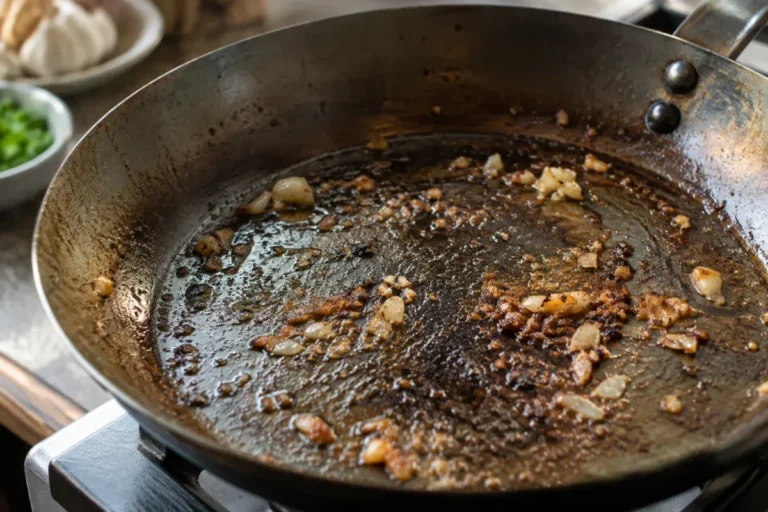
Old residue is burning. If your pan smokes while empty, before any oil goes in, the culprit is leftover food or a thick, gummy layer of oil that never fully hardened. It scorches on the next heat-up. The tell is blue-grey smoke that rises early from a dry pan, sometimes with a stale smell.
Two of these three are about how you cook, and one is about how the pan was cleaned or seasoned. That distinction matters for the fix. Heat and oil problems you solve in the moment by adjusting the burner or the bottle. A residue problem you solve between cooks by cleaning the pan properly. If your pan smokes hard every single time regardless of what you do, suspect residue. If it only smokes when you crank the heat or reach for butter, the cause is right there in front of you.
Match your situation to one of these three, then use the matching fix below.
Fix 1: lower the heat
Most smoke problems come down to heat, so start here. Carbon steel does not need a high flame to sear well. Its thin body reaches cooking temperature quickly and holds it, so a burner on medium often does what a heavier pan needs medium-high for.
Turn the dial down a notch and give the pan thirty seconds to settle. If you were preheating empty, cut the time. A good habit is the water-drop test: flick a few drops onto the hot pan, and when they skate across the surface as tight beads, the pan is ready for oil. If the drops vanish with a violent hiss, the pan is too hot. Pull it off the heat for a moment and let it cool.
There is a physical reason carbon steel runs so hot so fast. The pan is thin, often around 2 to 3 mm, so it has little mass to soak up energy. A thick cast-iron skillet takes several minutes to come up to temperature and buffers your heat changes. Carbon steel does not. It responds to the burner almost immediately, which is one of its great strengths for stir-frying and searing, and also why it overshoots when you leave it unattended. Treat the burner dial as more powerful than you are used to.
Learning your own stove matters more than any rule. After a week of cooking, you will know the setting that gets you a clean sear without a smoke cloud. Turn on the range hood or crack a window before you preheat, too. Even a well-run sear gives off some smoke, and good airflow keeps the kitchen comfortable and the alarm quiet.
Fix 2: match the oil to the heat
If the heat is right but the oil still smokes, the oil cannot handle the temperature you are cooking at. The fix is to match the fat to the job.
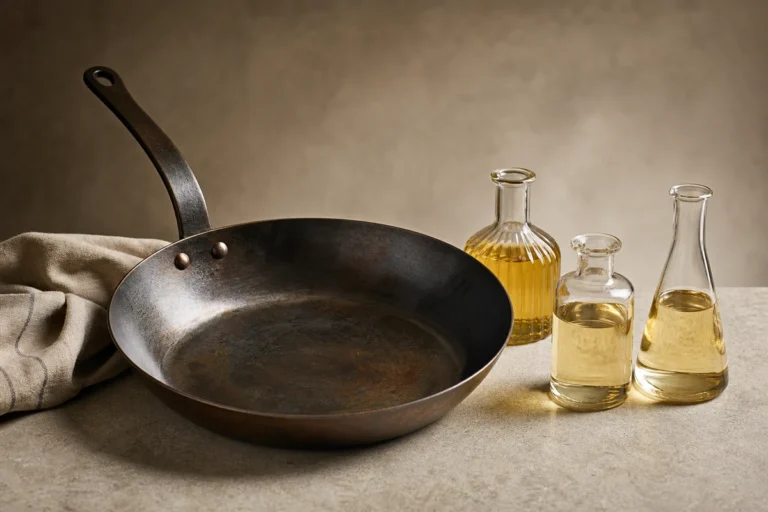
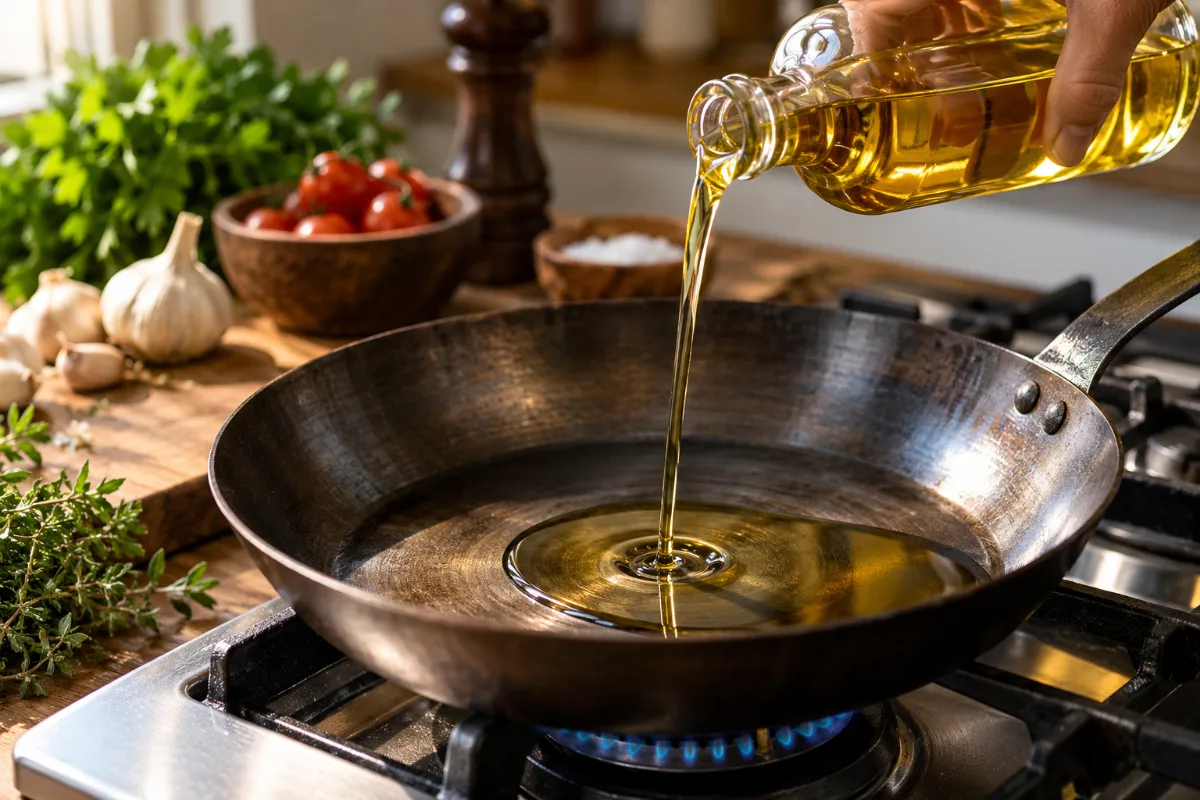
For high-heat cooking, searing steak, stir-frying, or blasting vegetables, reach for a refined oil with a high smoke point. Grapeseed, avocado, and refined peanut oil all hold up well past 400 degrees Fahrenheit (verify). These are also good choices for seasoning, since they take the heat needed to polymerize without turning bitter.
Save butter and olive oil for gentler work: eggs over medium heat, a quick sauté, or a finishing swirl added at the end once the pan comes off the flame. Serious Eats has a useful breakdown of cooking-oil smoke points if you want the full range.
One trick that helps: add the oil to a preheated pan rather than heating the two together. A cold pan with oil in it heats the oil the whole way up, so the oil spends longer near its smoke point. Heat the empty pan first, add the oil, swirl, and the food goes in within seconds, before the oil has time to break down. This also gives you better control, since you can judge the pan’s heat by the water-drop test before any oil is involved.
Here is the pattern to remember: high heat needs a high-smoke-point oil. Get that pairing right and the pan stays clear even during a hard sear.
Fix 3: clean off residue
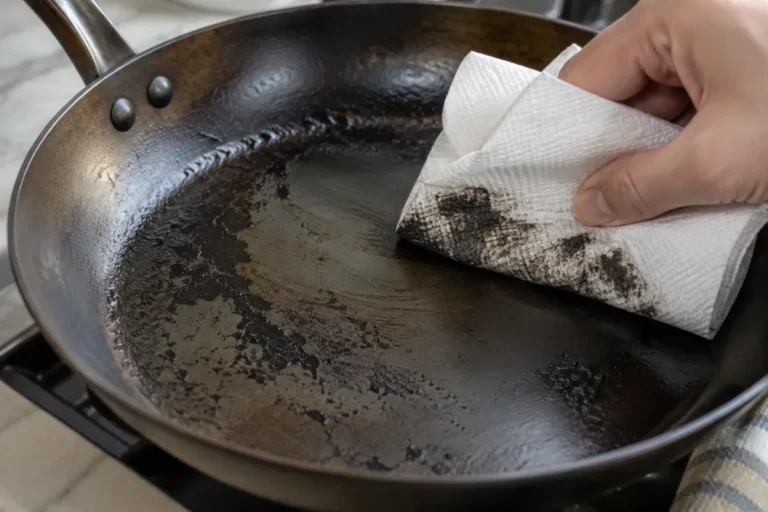
An empty pan that smokes is telling you it is dirty at a level you cannot see. Two things cause this. One is burnt food stuck in corners or around the rivets. The other is a layer of oil that was applied too thickly, never hardened properly, and now sits as a sticky film that scorches on each use.
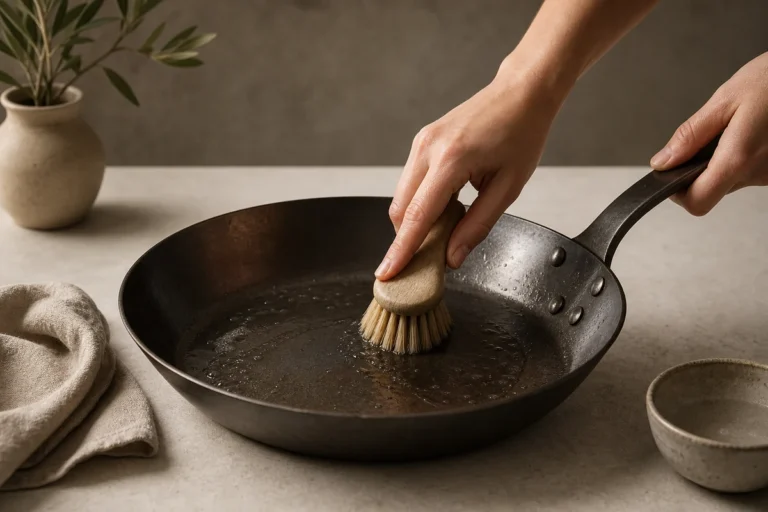
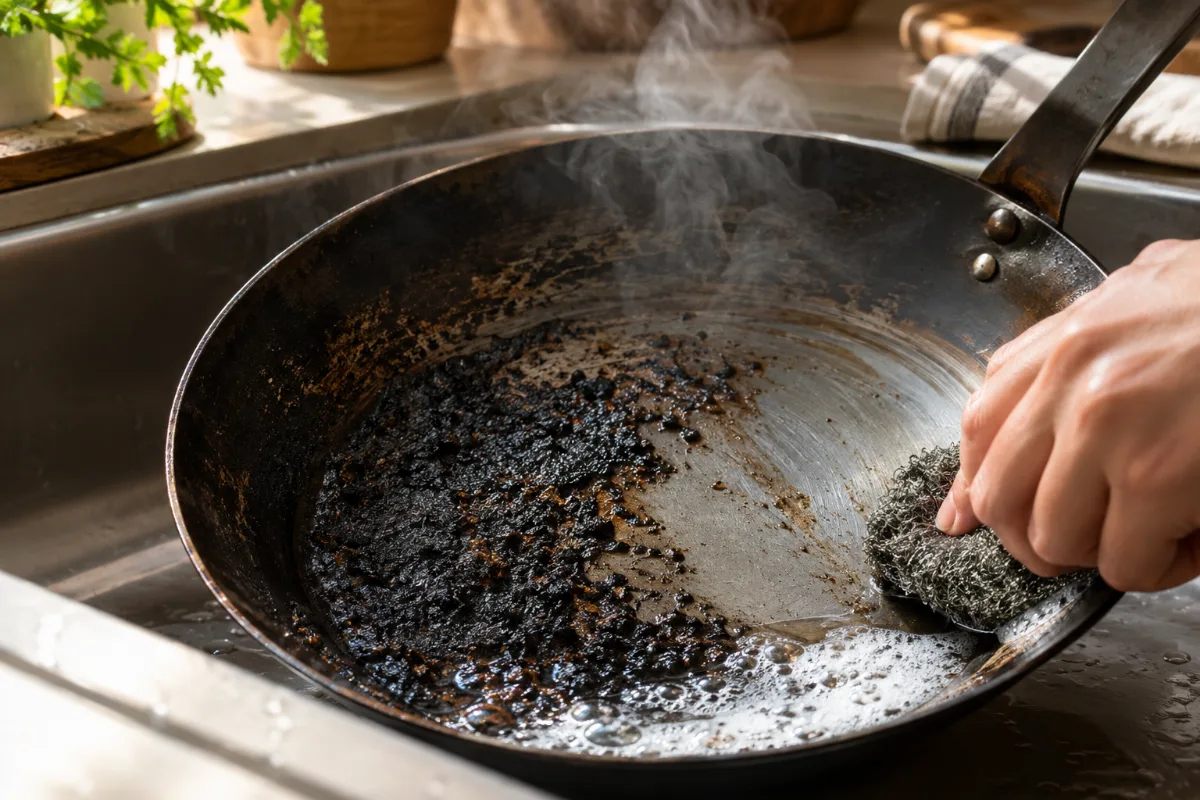
To clear it, heat the pan with a little coarse salt and scrub with a paper towel or a non-scratch pad. For tougher buildup, add water, bring it to a simmer to loosen the gunk, then scrape with a wooden or metal spatula. A chainmail scrubber cuts through stubborn spots without harming sound seasoning underneath.
Your goal is a smooth, dry surface with no tacky patches. You are not stripping the pan back to bare metal, just removing the loose, gummy layer. Once the surface is clean and smooth, wipe on the thinnest possible film of oil and heat it until the smoke stops. From then on the pan should run far cleaner.
There is a useful distinction here. Smooth, hardened seasoning is matte, dry to the touch, and does not smoke on its own. Soft, gummy buildup feels slightly sticky, may look glossy or streaky, and scorches when you heat the pan. You want to keep the first and remove the second. Run a fingertip across the cooled surface: anything tacky is the layer to scrub away.
If gummy buildup keeps returning, you are likely using too much oil when you season. Thin coats are the answer, covered in our guide to seasoning a carbon steel pan.
Reading the smoke at a glance
Use this table to place your situation fast and decide what to do.
| Smoke | Likely cause | Action |
|---|---|---|
| Light, while seasoning | Oil polymerizing | Normal, continue |
| At oil’s smoke point | Oil is hot enough | Normal, add food |
| Heavy, acrid, on contact | Pan too hot | Lower the heat |
| Sharp, burnt, dark flecks | Wrong oil for the heat | Switch to a higher-smoke-point oil |
| Blue-grey from a dry pan | Residue burning | Clean the pan |
Preventing excess smoke
Once you know the causes, keeping the air clear is simple. Three habits do most of the work.
Preheat with intent. Set a medium flame, wait until the pan passes the water-drop test, then add oil. Skip the long empty preheat on high that leaves the pan far hotter than you need.
Keep the right oils on hand. A bottle of grapeseed or avocado oil by the stove covers searing and seasoning. Butter and olive oil stay for low and medium work.
Clean while the pan is warm. A quick wipe or scrub after each cook stops residue from building into the sticky film that smokes later. Our cleaning guide walks through the routine, and our notes on carbon steel discoloration explain the color changes that often show up alongside smoke.
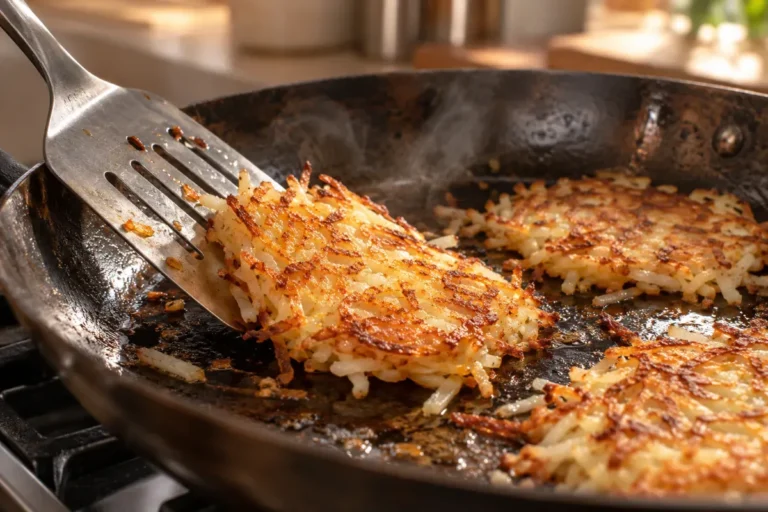
A well-kept pan on the right heat should sear a steak with only a thin curl of smoke, not a cloud that sets off the alarm.
Frequently asked questions
Why is my carbon steel pan smoking so much?
Is it normal for carbon steel to smoke?
What oil stops the pan smoking?
Why does my empty pan smoke when heating?
Does smoking mean I ruined the seasoning?
The short version
Smoke is not a warning light by default. Seasoning smokes, and oil at a sear-ready temperature smokes. Those are the pan doing its job. Heavy or unexpected smoke points to one of three fixable causes: too much heat, the wrong oil, or old residue.
Work through them in order. Turn the heat down first, since that solves most cases. Match your oil to the heat next. And if an empty pan smokes, clean it back to a smooth surface. Get the right oil for the heat and a clean pan, and you can cook hard and fast with the air staying clear.