Carbon Steel Discoloration: Is Rainbow, Blue or Dark Normal?
By the Carbon Steel Pan test team · Last updated September 2026
Color changes on carbon steel are almost always normal. Rainbow sheen and blue or straw tints come from heat reacting with the metal, and darkening is seasoning building up. None of it harms the pan or your food. The only color worth acting on is orange rust or bare, shiny metal where the seasoning has worn away.
If that settles your worry, good. But most people want to know exactly what they are looking at and why it appeared. This guide to carbon steel pan discoloration explains what each color means and when it actually matters.
Quick answer: Our tested guide to carbon steel pan discoloration keeps it simple: master the technique, keep the surface seasoned, and match your heat to the food. The full method, the key facts and the mistakes to avoid are all below.
Carbon Steel Pan Discoloration: What Our Tests Found
Our team put carbon steel pan discoloration through repeated real cooking sessions to see what actually works. Below we break down the method, the facts that matter, and the common mistakes so you get reliable results the first time.
Most color change is normal
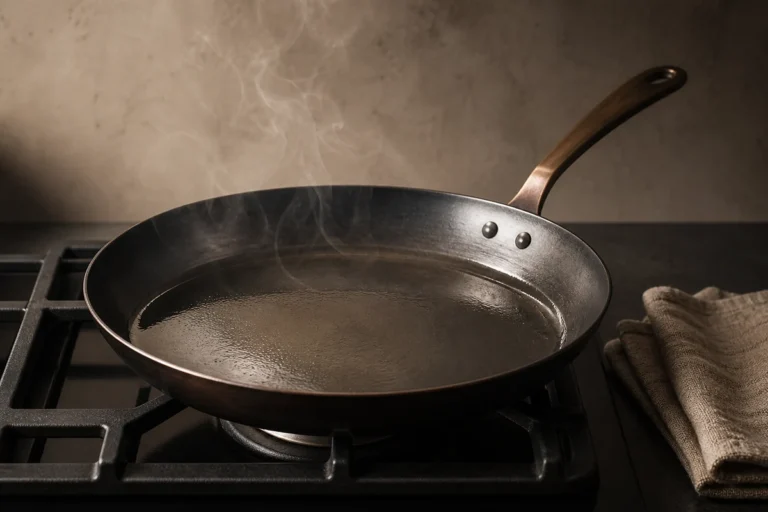
New owners often panic the first time a shiny grey pan turns patchy blue, gold, and brown after a few cooks. The instinct is to scrub it back to the factory finish. Resist that instinct. You would be stripping away the very changes that make the pan work.
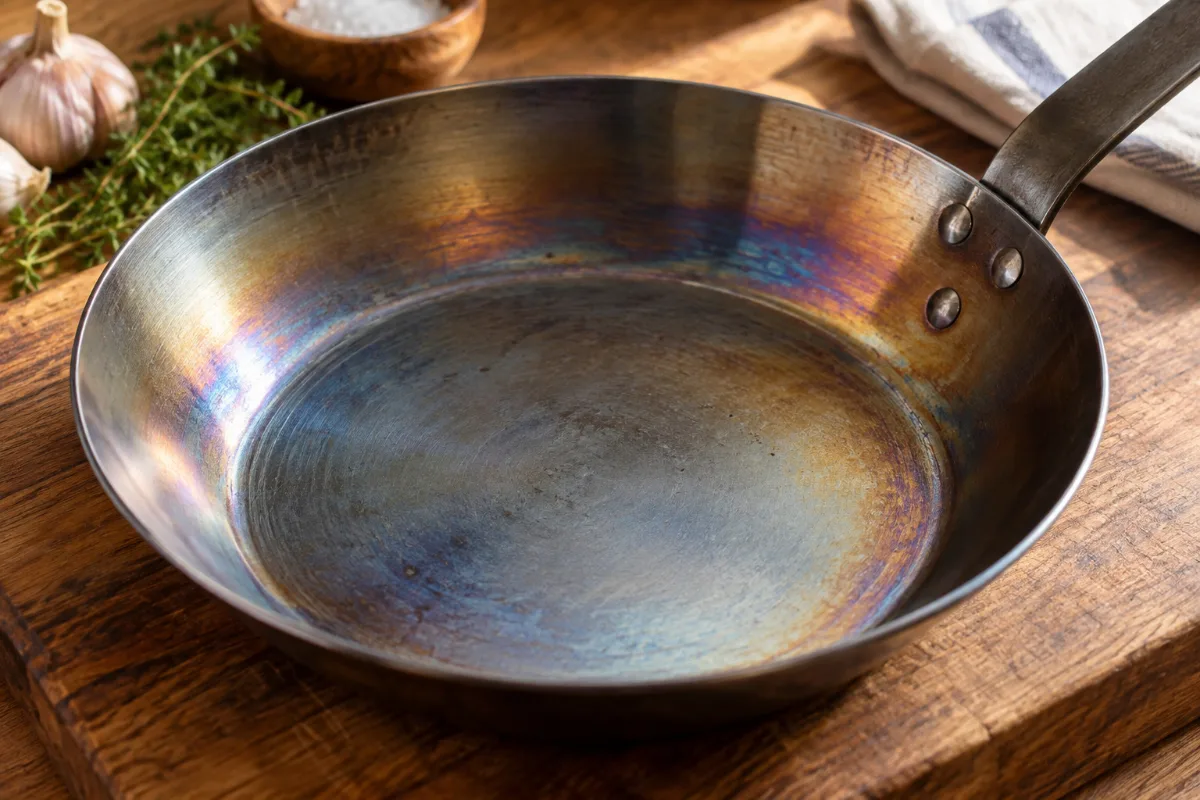
Two separate things drive the color you see. The first is heat tint, a thin oxide layer that forms on the steel surface at different temperatures and shows up as rainbow, straw, or blue shades. The second is seasoning, the hardened oil that darkens the pan from grey toward black over time. Both are cosmetic in the sense that neither affects safety, and both are signs of a pan being used the way it should be.
Bare carbon steel is reactive metal. It responds to heat and oil, and that response is visible. A pan that still looks factory-new after a month of cooking would be the real surprise. Color is the record of your cooking, not a fault.
This trips people up because most modern cookware is designed to look the same forever. Nonstick and stainless pans hide their age. Carbon steel does the opposite, and on purpose. The changing color is tied to the very thing that makes the pan cook well, the seasoning that builds a slick surface. If you wanted a pan that never changed color, you would be giving up the performance that made you buy carbon steel. So the color shift is not a defect to fight. It is the pan working exactly as designed.
Rainbow and blue tints explained
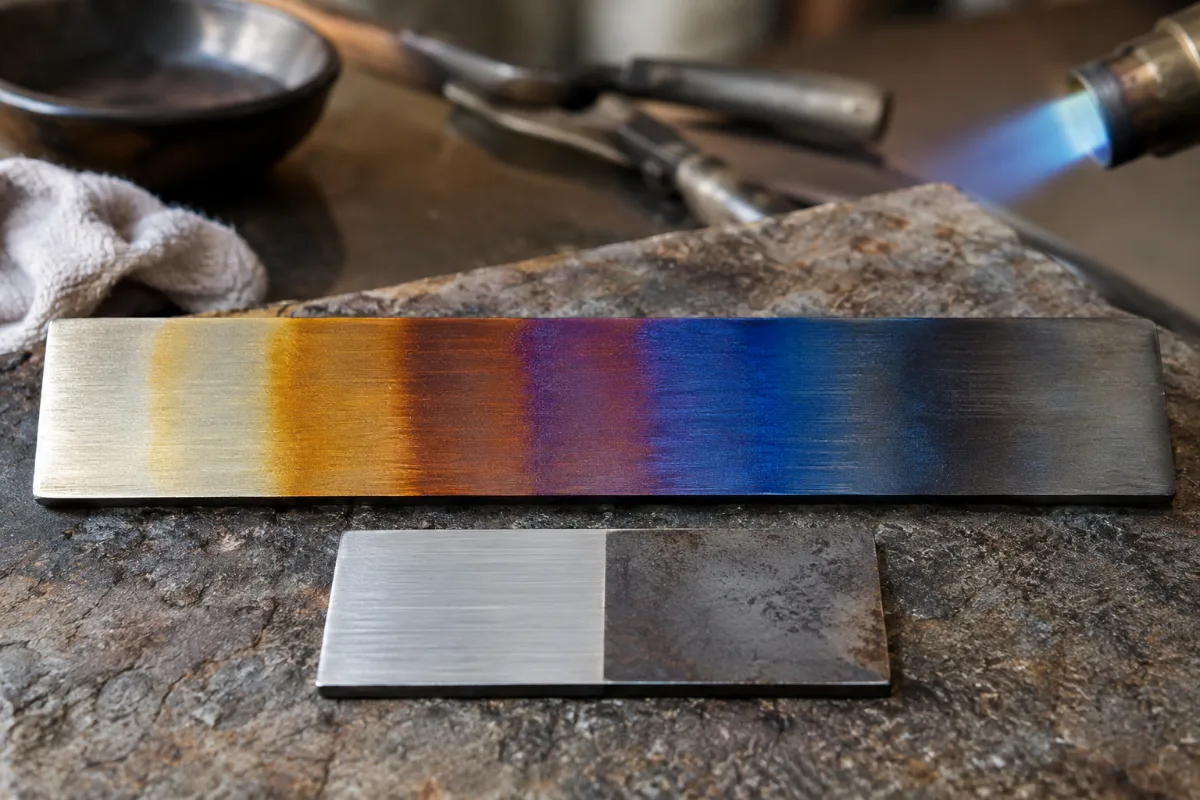
Heat tint is the most misunderstood change. When steel heats in air, a very thin layer of oxide grows on the surface. That layer is so thin it bends light, the way a soap bubble or an oil slick does, which is why it shows as color rather than as a dull film.
The shade depends on how hot that spot got. This is the same principle a blacksmith uses to judge temperature by eye.
Rainbow sheen
A shifting rainbow, gold sliding into purple and green, appears on areas that reached moderate heat. You see it most on the cooking surface and around the middle of the pan. It moves as you tilt the pan under light. It is harmless, does not flavor food, and does not weaken the metal. Cook on it exactly as you would a plain surface.
Blue and straw tints
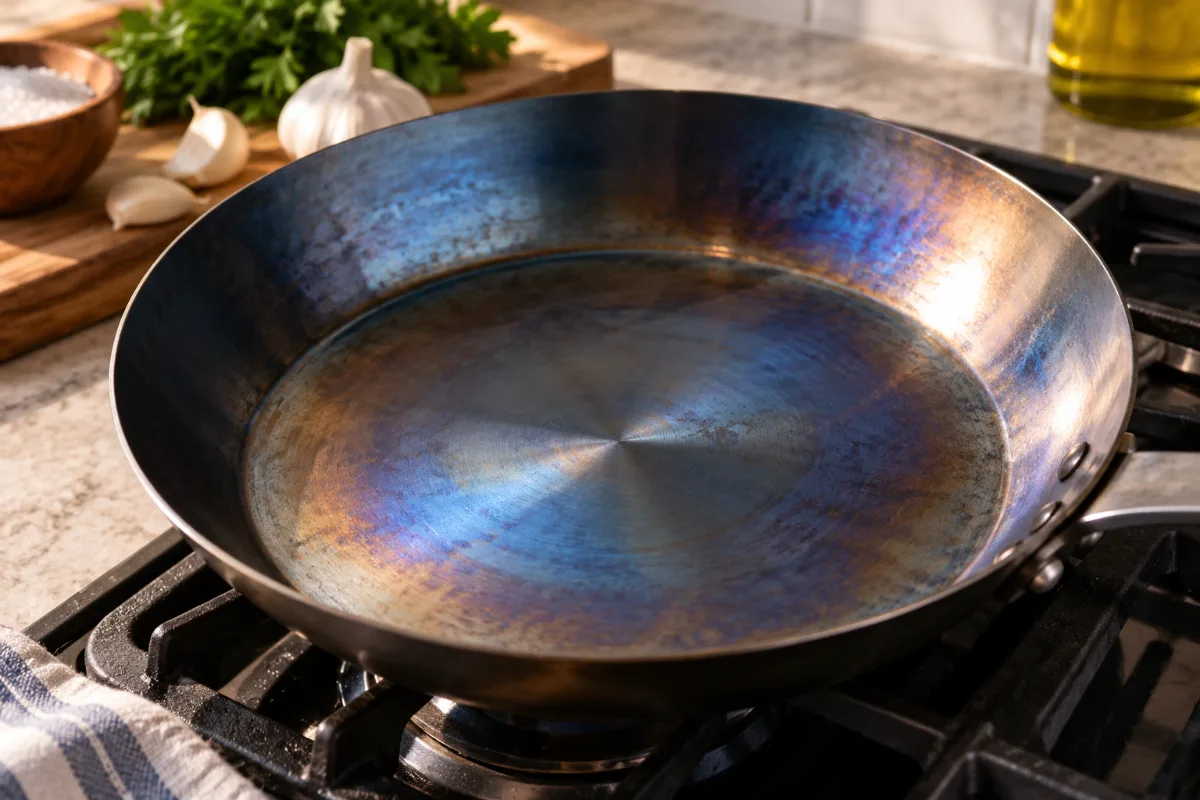
Push the steel hotter and the tint deepens through straw yellow toward blue and grey. Blue patches show up most on the walls and near the handle, spots that catch high flame or sit in a hot oven. A blue ring is common on pans used for hard searing. Like the rainbow, it is oxidation at the surface and nothing more. Metallurgists call these temper colors, and they are a normal feature of heated steel, not a defect.
The colors follow a rough temperature ladder. Faint straw or light yellow appears first, around 400 to 450 degrees Fahrenheit. Gold and brown-purple come next, then blue in the range where hard searing happens, and finally grey as the steel goes hotter still (verify). This is the same sequence a blacksmith or a knife maker watches to judge heat by eye, long before thermometers existed. Seeing it on your pan simply means different areas reached different temperatures, which is exactly what you would expect from a burner that heats the center more than the rim.
A common worry is whether these tints affect the taste of food. They do not. The oxide layer is bonded to the steel, not loose, and it does not transfer flavor or leach into what you cook. Neither tint needs any action, and they often blend into the darkening seasoning over the following weeks anyway.
Darkening is seasoning building
Separate from heat tint, the whole pan slowly goes from silver-grey to brown to a deep near-black. This is seasoning, and it is the result you want.
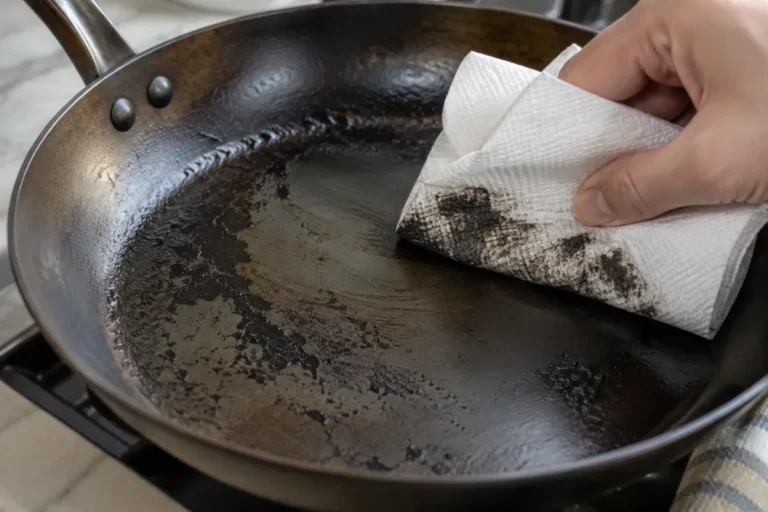
Each time you cook with fat, a microscopic amount of oil bonds to the surface and hardens. Layer builds on layer. Early on the color is uneven, dark where you cook most, lighter at the edges. That patchiness is not a problem. It evens out as the whole surface gets used.
A dark, even pan releases food better than a shiny new one. So when your carbon steel turns brown then black, read it as progress. You are watching the nonstick surface form. Our guide to seasoning a carbon steel pan explains how to speed that along with thin, deliberate coats between cooks.
This is worth stressing because the darkening is the opposite of a fault. Owners of well-loved cast iron know that a black pan is a good pan, and carbon steel works the same way. The two metals share this behavior: both are bare iron alloys that build a seasoning layer through use. If you have seen a decades-old cast-iron skillet with a glassy black surface, that is where a carbon steel pan is headed too, only faster, because it is thinner and heats more evenly.
The darker the pan, the closer it is to that slick, food-releasing surface people buy carbon steel for in the first place. Chasing the shiny factory look would undo months of good cooking.
The colors that do signal a problem
Only two color changes call for action, and both are easy to recognize.
Orange rust. Rust is orange, red-brown, or flaky, and it appears where bare metal met moisture and air. It shows up if a pan was left wet, stored damp, or scrubbed back to bare steel and not re-oiled. Rust is the one color you should not leave. Scrub the orange off with a bit of steel wool or a chainmail scrubber, dry the pan over heat, and wipe on oil. Our guide to removing rust from a carbon steel pan covers heavier cases.
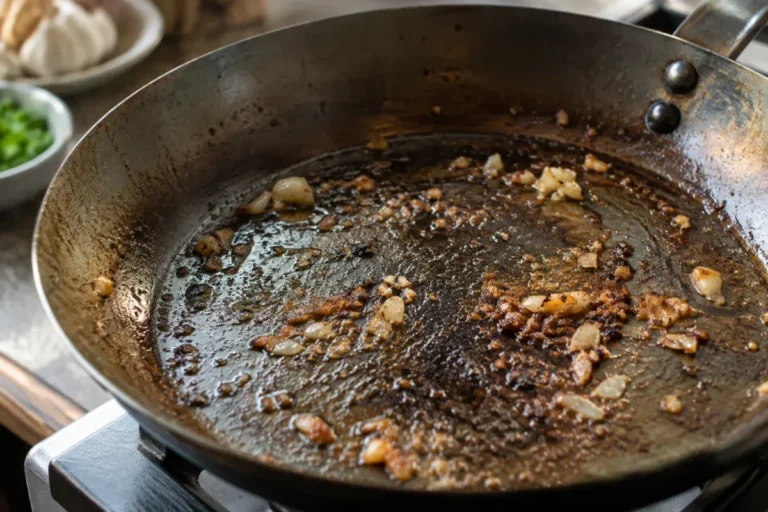
Bare shiny metal. A patch that has gone back to raw, bright silver means the seasoning wore off there, often from acidic food, harsh scrubbing, or a dishwasher. Bare spots stick and rust more easily, so re-season them. Heat the pan, wipe a thin film of oil over the bare area, and bake it in until it darkens. A few cooks usually blend it back into the rest.
The difference between these two problem colors and the harmless ones comes down to whether metal is exposed. Heat tint and seasoning both sit on top of a protected surface. Rust and bare metal mean the protection is gone in that spot, so moisture and air can attack the steel. That is why these two need action and the others do not. Catching either early keeps the fix to a couple of minutes.
So the rule is simple. Rainbow, blue, brown, black: leave them. Orange or bright bare metal: act.
Reading carbon steel colors
This table sums up every color you are likely to see and what to do about it.
| Color | Cause | Normal? | Action |
|---|---|---|---|
| Rainbow sheen | Heat tint | Yes | None |
| Blue / straw | Heat oxidation | Yes | None |
| Brown to black | Seasoning building | Yes | None |
| Orange | Rust | No | Scrub and re-oil |
| Bare shiny | Worn seasoning | No | Re-season the spot |
Can you remove heat tint?
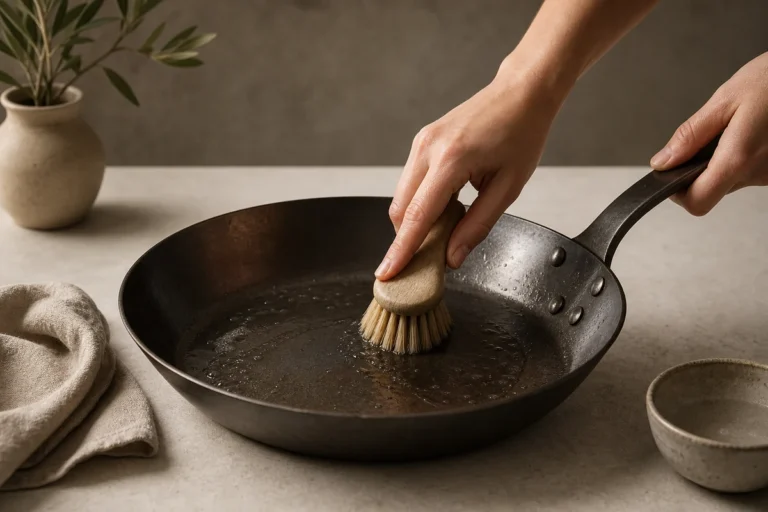
You can, but there is rarely a reason to. If a blue ring or rainbow patch bothers you before guests arrive, a mild scrub with a paste of baking soda and water lifts some of it, and a metal scrubber takes off more. Barkeeper’s Friend works too.
Understand what you are doing, though. You are polishing away a harmless layer for looks alone, and it will come right back the next time you cook at that heat. You may also thin the seasoning in that spot and have to rebuild it. For a working pan, the effort buys you nothing.
The Kitchn and other cooking sites make the same point: heat tint is cosmetic, and chasing a uniform finish on a used pan is a losing game. Cook on it and let it be.
How color settles over time
Left alone, a carbon steel pan trends toward an even, dark finish. The bright heat tints get overlaid by seasoning. The patchy early browns fill in as the whole surface sees regular use. After a few months of steady cooking, most pans settle into a deep brown-black that looks intentional, because it is.
The pans that stay blotchy or streaky are usually the ones that get scrubbed too hard between cooks or used only occasionally in one small spot. Cook across the whole surface, keep the seasoning intact, and the color takes care of itself.
If you want to nudge an uneven pan toward a uniform color, cook fatty foods across the full width of the surface and avoid harsh scrubbing. Some cooks give a young pan an even coat by wiping on the thinnest film of oil and heating it until it stops smoking, once or twice between cooks. That evens out the seasoning and, with it, the color. But this is optional. A blotchy pan cooks just as well as an even one, so treat uniform color as a preference, not a goal.
If you ever do see orange creeping in, especially in a damp kitchen, catch it early. Our notes on caring for a carbon steel pan cover the drying and oiling habits that keep rust from starting.
Frequently asked questions
Why is my carbon steel pan changing color?
Is rainbow color on carbon steel bad?
Why did my pan turn blue?
When should I worry about discoloration?
Can I remove heat tint from my pan?
The takeaway
Almost every color your pan shows is a good sign. Rainbow and blue tints are heat doing its work on the steel. Brown and black are seasoning forming the surface you want. You can leave all of it and simply cook.
Keep your attention on the two colors that matter: orange rust and bright bare metal. Both are quick to fix and quick to prevent with good drying and a light oil film. Almost all carbon steel pan discoloration is the pan telling the story of your cooking, and that is nothing to fix at all.