Black Residue on Food from Carbon Steel: What It Is and How to Stop It
By the Carbon Steel Pan test team · Last updated September 2026
Black residue coming off a carbon steel pan is usually loose seasoning or carbon, not anything harmful. It shows up on new pans still building their surface, or when excess seasoning starts to shed. Clean the pan well, cook a few fatty foods to settle it, and if it keeps shedding, scrub back the loose layer and re-season thinly.
Seeing black specks on your food or a dark smear on a paper towel is alarming the first time. The good news is that it is common, food-safe, and fixable. Here is what it is and how to make it stop.
Quick answer: Our tested guide to black residue carbon steel pan keeps it simple: master the technique, keep the surface seasoned, and match your heat to the food. The full method, the key facts and the mistakes to avoid are all below.
Black Residue Carbon Steel Pan: What Our Tests Found
Our team put black residue carbon steel pan through repeated real cooking sessions to see what actually works. Below we break down the method, the facts that matter, and the common mistakes so you get reliable results the first time.
Is the black residue dangerous?
No. The black you are seeing is polymerized oil, seasoning that has hardened onto the metal, or plain carbon from cooking. Neither is a chemical coating like the ones on nonstick pans, and neither is toxic. If a little ends up on your eggs, you can eat it without concern.
This is one of the real advantages of carbon steel over coated cookware. There is no synthetic layer to scratch off into your food. What sheds from a carbon steel pan is the same fat you cooked with, baked hard, plus a bit of carbon. It looks unappetizing, and you will want to fix it for that reason, but it is not a safety problem.
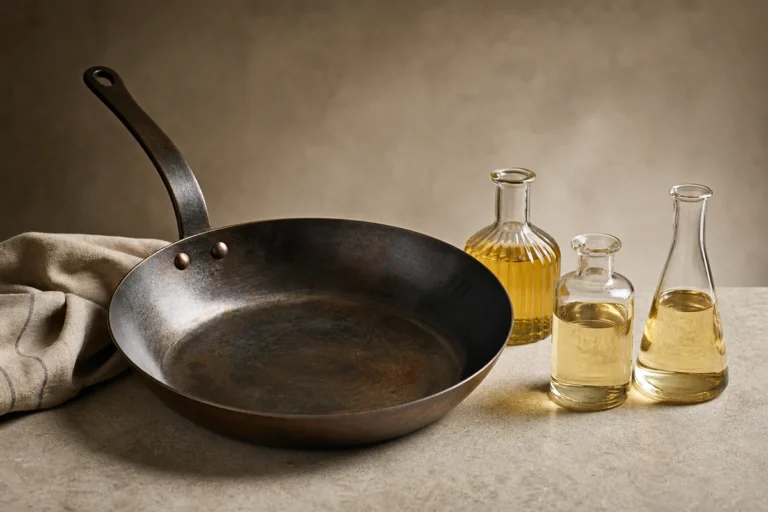
It helps to know what seasoning actually is. When you heat oil on bare steel, the oil goes through a chemical change called polymerization, linking into a hard, plastic-like film bonded to the metal. That film is what makes the pan release food. Black residue is simply small pieces of that film that have not bonded firmly, or plain carbon left from cooking. It is the same material you want on the pan, just in the wrong place. Understanding that takes the fear out of it.
So take a breath. The fix is about surface quality, not about protecting your health.
Why your pan leaves black marks
Three situations produce black residue, and the fix depends on which one you have. Look at when it happens and how much comes off.
A new pan settling in
A fresh pan, whether you seasoned it yourself or bought it pre-seasoned, has a young surface that is still bonding to the metal. In the first few cooks, tiny amounts of loose seasoning rub off onto food and cloths. This is the most common cause and the least worrying. It fades on its own as the surface hardens with use. A few cooks in, the wipe comes back clean.
Excess seasoning shedding
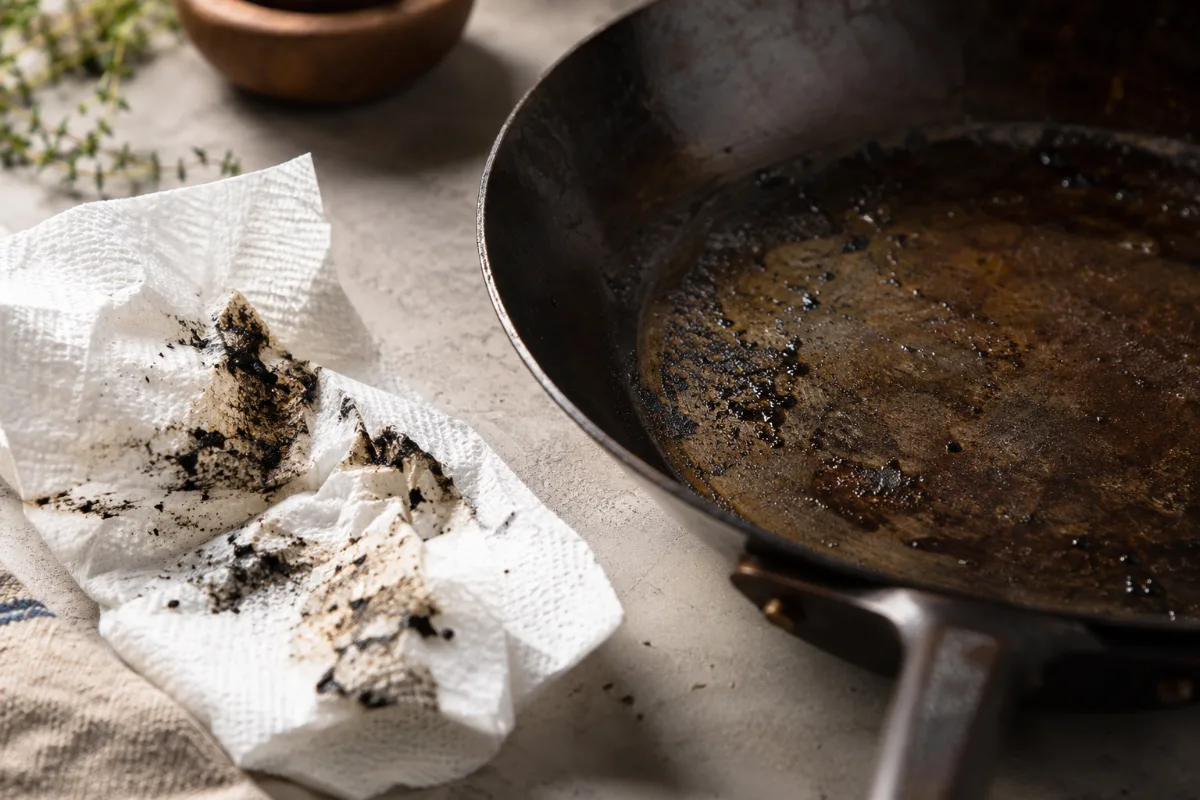
Seasoning added in thick coats never hardens all the way through. The top stays soft and gummy, and it flakes or smears off as black residue. This is the classic result of pouring too much oil into the pan when seasoning, then baking it. The tell is a lot of black on a paper towel even on a pan you have used for a while, sometimes with visible flaking. Excess seasoning is a leading cause of ongoing residue, and it needs more than patience to fix.
Burnt-food carbon
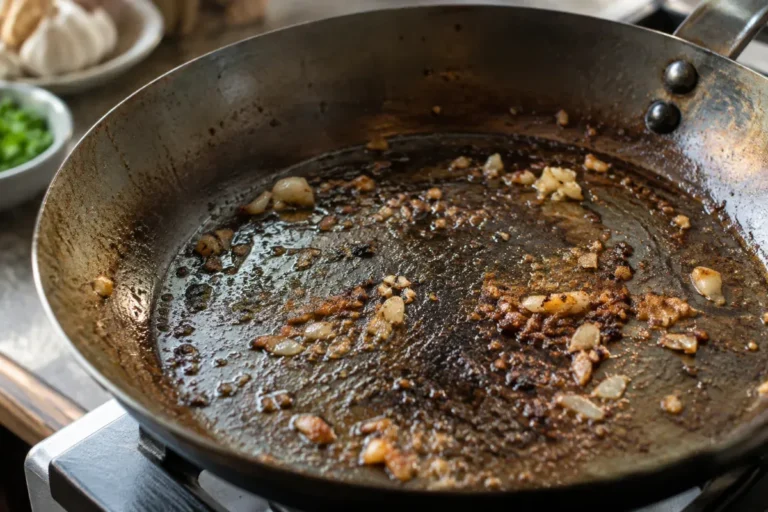
If you scorch food, cook on too high a heat, or leave bits stuck to the surface, they carbonize into black specks that lift into the next dish. This looks like small dark flecks rather than a smooth smear, and it tends to follow a meal you cooked too hot. The fix is prompt cleaning and a lower flame.
Telling the three apart is easier than it sounds. A new-pan smear is faint and fades cook by cook. Excess-seasoning residue is a heavy, consistent black that shows up on the towel even months in. Burnt-food carbon comes as distinct specks tied to a specific hot cook, not a general smear. Once you know which pattern you are seeing, you know whether to wait it out, scrub back, or just cook cooler. Match your case to one of these three before choosing a fix.
The quick fix
For a new pan or light residue, this settles the surface fast. Work through the steps in order.
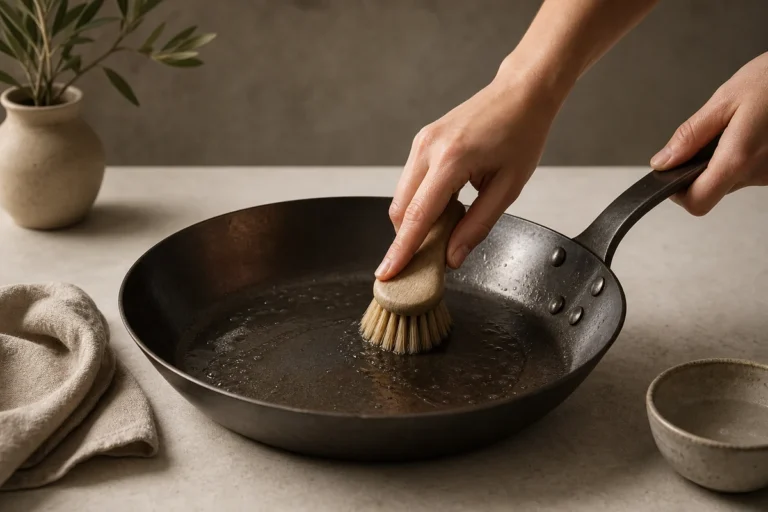
- Clean the pan well. Scrub with hot water and a non-scratch pad or chainmail to lift any loose, soft material. Get into the corners and around the rivets where residue hides.
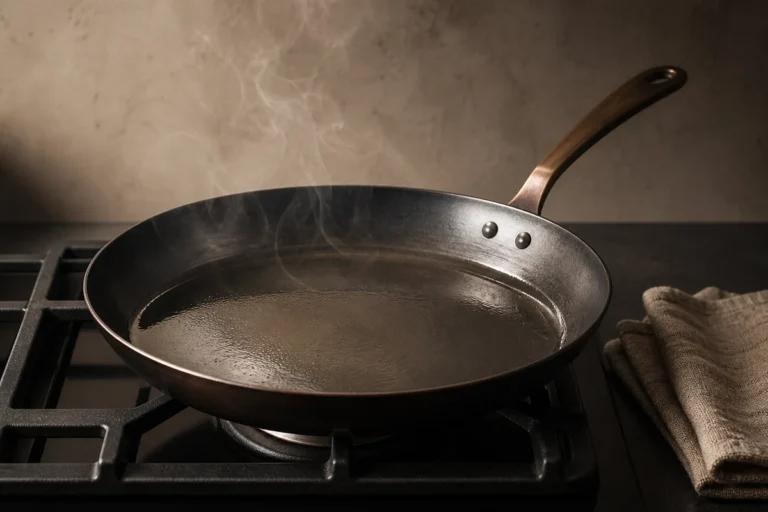
- Dry it fully over heat. Set the clean pan on a burner for a minute until every trace of water is gone. A dry surface is where good seasoning bonds.
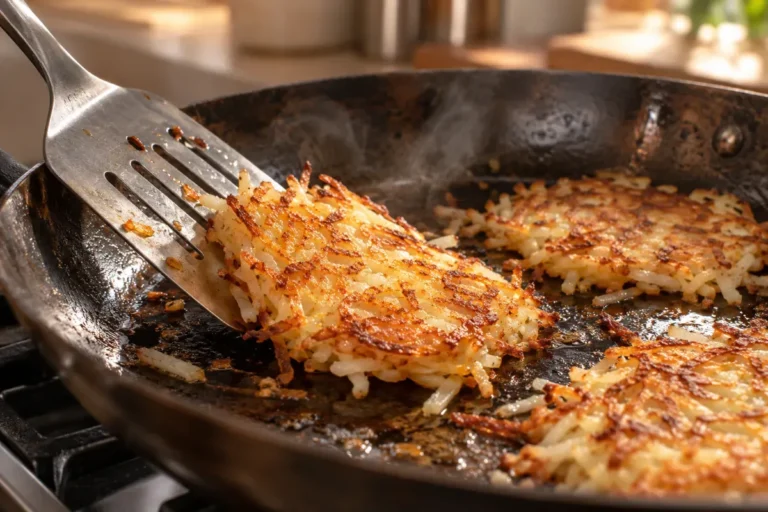
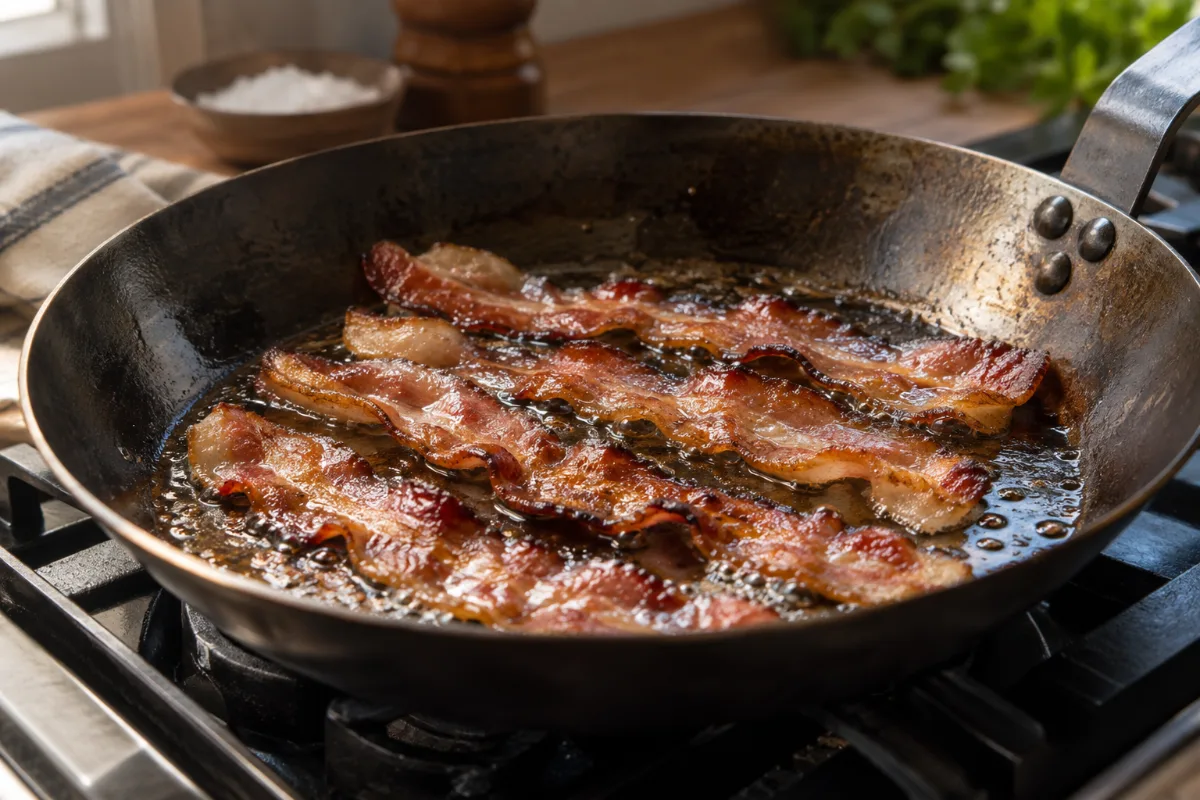
- Cook fatty foods. Fry bacon, sausages, or a batch of potatoes in oil. The rendered fat bonds a fresh, thin layer of seasoning onto the surface and helps settle the loose material.
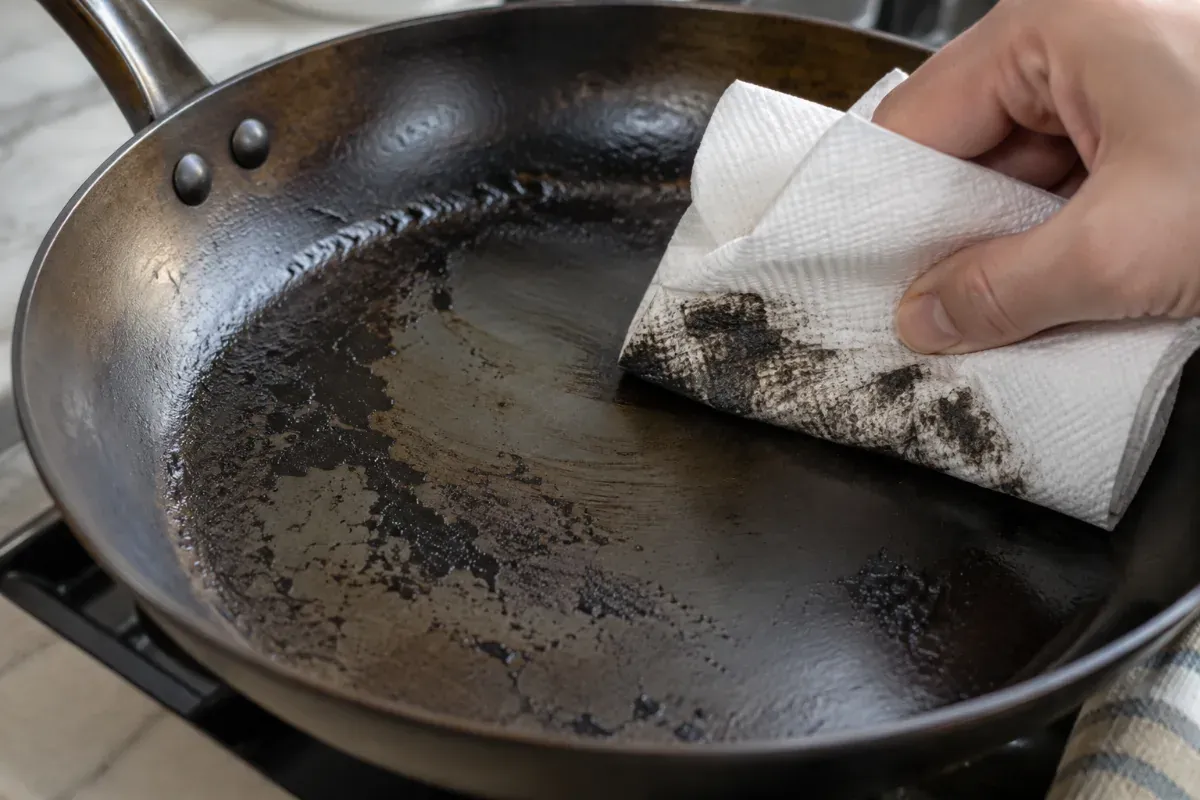
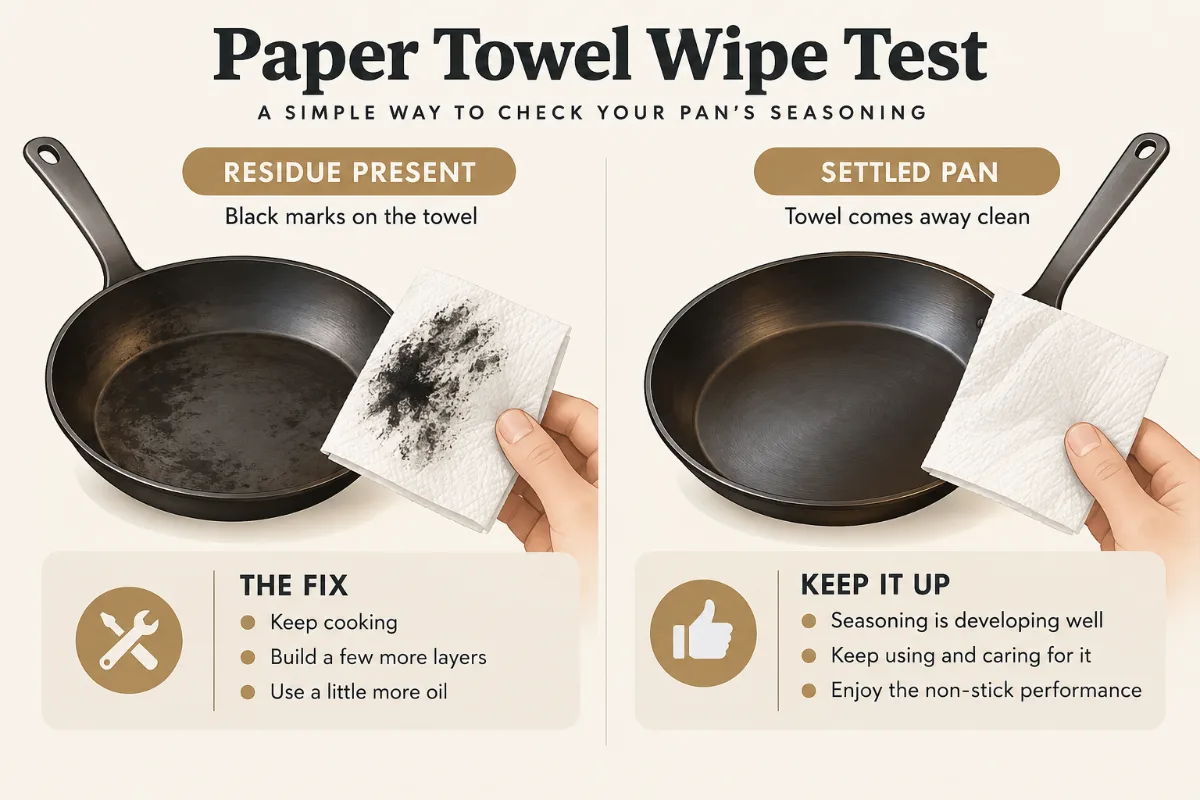
- Do the paper-towel wipe test. Once the pan cools a little, wipe the cooking surface with a folded paper towel. Some black on the first pass is normal. Repeat over the next few cooks. When the towel comes away nearly clean, the surface has settled.
For most new pans, a week of cooking fatty foods clears the shedding for good.
The paper-towel wipe test is worth doing properly, because it tells you exactly where you stand. Let the pan cool until it is warm rather than hot, then press a folded white paper towel firmly across the cooking surface. A brand-new or lightly used pan leaves a grey or black mark. After a few cooks the mark fades to a faint tan, and on a settled pan the towel comes away almost clean. Watching that mark lighten over a week is the clearest sign the surface is stabilizing. It also stops you from over-reacting: a little color on the towel is normal and does not mean the pan is failing.
If it keeps happening
If black still smears off after a couple of weeks, or the paper towel keeps coming back dark, you are almost certainly dealing with excess seasoning. Patience will not fix a layer that is too thick to harden. You have to take the loose material back to a sound base.
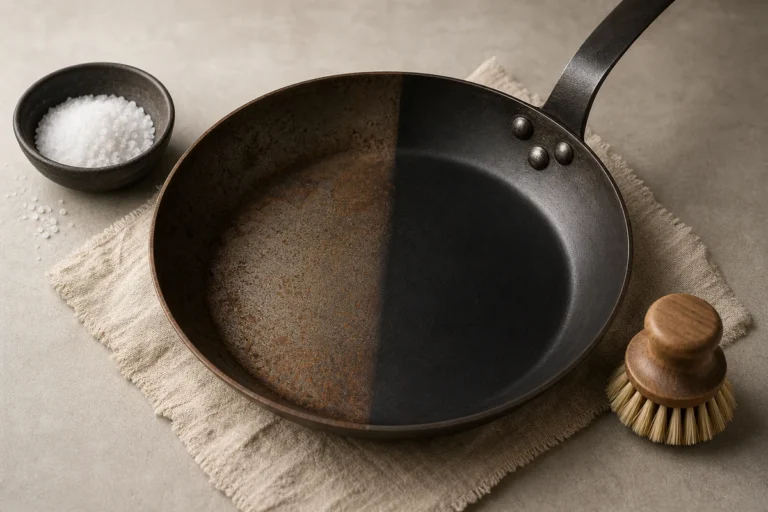
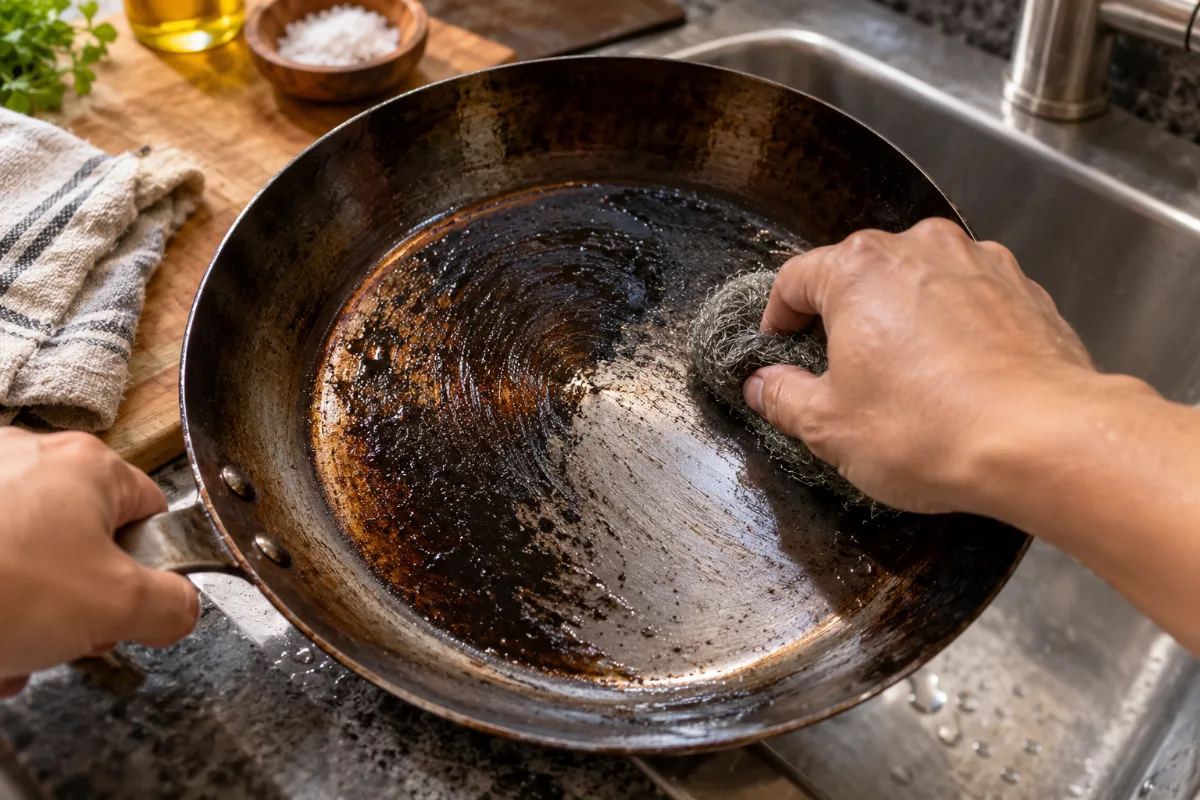
Scrub the surface firmly with a chainmail scrubber or fine steel wool, working until the smeary top layer is gone and you reach smooth, well-bonded seasoning underneath. You do not need to strip the pan to bare metal, just remove the soft excess. Some people simmer water in the pan first to loosen the layer, which makes the scrub easier.
Once you are down to a sound surface, rebuild with thin coats. Wipe on the barest film of oil, buff it until the pan looks almost dry, and heat it until it stops smoking. Thin is the whole point. Our guide to re-seasoning a carbon steel pan walks through the process, and it is the same approach that stops seasoning from flaking in the first place.
A properly thin, well-bonded surface does not shed. If yours does, the layer is too thick, and this is the cure.
People worry that scrubbing back will set them back to square one. It will not. You are removing only the loose top material, and the sound seasoning underneath stays put. Most pans go right back to cooking well after a rebuild, often better than before, because the surface is now smooth and stable instead of thick and flaky. A reset like this is a normal part of owning carbon steel, not a sign you did something wrong.
Preventing black residue
Once the pan is right, a few habits keep it that way.
Season in thin coats. This is the single biggest factor. Use so little oil that the pan looks dry before you heat it. Thick coats are the root of most residue.
Avoid scorching. Cook at moderate heat and do not walk away from a hot empty pan. Burnt food becomes carbon that lifts into your next meal.
Clean burnt bits promptly. Deglaze with a splash of water while the pan is still warm to release stuck food, then wipe or scrub. Our cleaning guide covers the routine.
Heat oil until it just stops smoking when you season. A seasoning coat is only done when the oil has fully polymerized. Pull the pan off the heat too soon and you leave a soft layer that sheds later. Give each thin coat enough time and heat to harden completely, then let the pan cool before the next one.
These are the same practices that build a smooth, even surface, so they pay off twice.
Reading the cause and its fix
| Cause | Sign | Fix |
|---|---|---|
| New pan settling | Fades after a few cooks | Cook fatty foods, wipe test |
| Excess seasoning | Black on paper towel, keeps coming | Scrub back, re-season thin |
| Burnt-food carbon | Dark specks after scorching | Clean promptly, lower heat |
New pan versus old pan residue
The same black smear means different things on a new pan and an older one, so treat them differently.
On a new pan, residue is the surface finding its feet. The loose material is thin, and the wipe test improves quickly. Cook fatty foods, be patient, and it clears within a week or two. No stripping needed. Our notes on seasoning a carbon steel pan help you build that first surface well.
On an older pan, ongoing residue usually means the seasoning got too thick over time, from heavy oiling or repeated thick re-seasons. Here the answer is to scrub back and rebuild thin, not to wait it out. An over-seasoned pan will keep shedding until you thin the layer.
Knowing which pan you have saves you from either scrubbing a new pan too soon or waiting forever on an old one that needs a reset.
Frequently asked questions
Why is black stuff coming off my carbon steel pan?
Is the black residue harmful?
How do I stop my pan leaving black marks?
Why does a new pan leave black residue?
Does black residue mean too much seasoning?
The bottom line
Black residue looks worse than it is. What comes off is hardened oil or carbon, both food-safe, so there is no health issue to solve. The job is cosmetic: get the surface smooth and stable so nothing lifts onto your food.
For a new pan, clean it, cook fatty foods, and let the surface settle over a week. For an older pan that keeps shedding, scrub back the excess and rebuild with thin coats. Keep every future coat thin, cook at moderate heat, and clean burnt bits while the pan is warm.
Do that and black residue from a carbon steel pan stops for good. It is one of the most common early scares for new owners, and one of the easiest to solve once you know it is only loose seasoning finding its footing. Give the surface a little time and a few good cooks, and the pan rewards you with clean, reliable release.